Connect with us

Published

on

It has been more than one year since the gavel came down at the last UN biodiversity summit, where almost every country in the world agreed on a plan to protect nature.

The Kunming-Montreal Global Biodiversity Framework was signed off at the COP15 summit in Montreal, Canada in December 2022. (See Carbon Brief’s in-depth summary of the key outcomes.)

The landmark deal contained a number of goals and targets for countries to achieve over the coming years – such as setting aside land for wildlife, reducing pesticide risks and restoring ecosystems.

In the months since, more nature pledges have been announced, a new biodiversity fund was established and more science showing the impacts of humans on nature has been published.

Countries will gather at the next UN biodiversity summit, due to be held in Colombia this October, to take stock of progress since the deal was given the green light and submit new national plans outlining how they will protect biodiversity.

Carbon Brief has taken an in-depth look at progress on individual nature issues and the key biodiversity updates since the COP15 summit.

What was agreed at the UN biodiversity summit in Montreal?

The UN biodiversity summit takes place every two years, unlike the climate COP, which takes place annually.

At COP15 – the last round of biodiversity talks in Montreal in December 2022 – almost every country in the world agreed to a landmark deal to repair nature.

The Kunming-Montreal Global Biodiversity Framework (GBF) included four long-term global goals and 23 specific targets, with an overall mission of halting and reversing biodiversity loss by 2030.

Some of the key targets include conserving 30% of the world’s land and 30% of the ocean by 2030, reducing the impact of invasive species, cutting pesticides, sustainably managing agriculture and prioritising involvement of Indigenous peoples and local communities in different ways.

Alongside the overall framework, dozens of other decisions were made around the more technical aspects of the negotiations, including figuring out ways to monitor national progress and gather finance to fund action, particularly in lower-income countries.

COP15 president and China's minister of ecology and environment, Huang Runqiu (4th R), and executive secretary of the UN Convention on Biological Diversity, Elizabeth Maruma Mrema (2nd R), applaud after the adoption of the Kunming-Montreal Global Biodiversity Framework, a UN deal aimed at reversing biodiversity loss and setting the world on a path of recovery, at the UN biodiversity conference, COP15, in Montreal, Canada, on 19 December 2022.
Delegates applauding after the Kunming-Montreal Global Biodiversity Framework was adopted at the COP15 summit in Montreal, Canada on 19 December, 2022. Credit: Xinhua / Alamy Stock Photo

Although the agreements made at the summit are not legally binding, nations also agreed on a plan to report on, review and voluntarily increase their ambitions to tackle biodiversity loss. This is similar to the plan drawn up to implement the Paris Agreement for climate change.

A lack of implementation was widely cited as one of the major factors behind the failure of the Aichi targets, the last set of global biodiversity aims.

Although the COP15 agreement was widely seen as a success, some countries – particularly the Democratic Republic of Congo – felt frustrated and outraged at the manner in which the GBF was given the green light.

Orla Dwyer on X: Listened back to the final moments before the gavel fell again.

In the final stages of the summit, the deal was seen to be quickly gavelled through by summit president, Chinese environment minister Huang Runqiu, despite objections from the DRC minutes earlier in the plenary.

Following the close of the plenary, there were arguments over the manner in which the final approval happened, but all countries eventually supported the deal.

Protesters interrupting a speech by Canada’s prime minister, Justin Trudeau, at the opening ceremony of the COP15 summit in Montreal, Canada on 6 December, 2022.
Protesters interrupting a speech by Canada’s prime minister, Justin Trudeau, at the opening ceremony of the COP15 summit in Montreal, Canada on 6 December, 2022. Credit: Paul Chiasson / Alamy Stock Photo

In the wake of the agreement, UN secretary general António Guterres said that “we are finally starting to forge a peace pact with nature”.

Canadian environment minister Steven Guilbeault said that the GBF is a “major win for our planet and for all of humanity”, which will chart a course “away from the relentless destruction of habitats and species”.

The International Indigenous Forum on Biodiversity welcomed the “timely recognition” of Indigenous peoples and local community contributions, roles, rights and responsibilities to nature. A statement from the group said:

“We have spoken and you have heard us, let us now put those words into action.”

Back to top

What has happened since the Global Biodiversity Framework was adopted?

Several events and meetings since COP15 have addressed nature and biodiversity in different ways.

On 15 February 2023, Dr David Cooper took over from Elizabeth Maruma Mrema as the new acting executive secretary of the Convention on Biological Diversity (CBD). The CBD is an international treaty established in 1992 with the objective of conserving and sustainably using biodiversity, and ensuring the fair sharing of benefits from the use of genetic resources.

Before his appointment, Cooper had assisted the CBD secretariat as deputy executive secretary, contributing to a “successful finalisation and adoption of the Kunming-Montreal Global Biodiversity Framework”, according to the CBD. He was a lead author of three editions of the Global Biodiversity Outlook and other assessments. 

Mrema was appointed deputy executive director of the UN Environment Programme

March saw the emergence of the High Seas Treaty, a legally binding global agreement for conserving and sustainably using areas of the ocean beyond national jurisdictions – also known as the “high seas” or international waters. Carbon Brief reported that the treaty “provides the framework for establishing protected areas where previously there had not been a clear mechanism for doing so”. (For more on the high seas treaty, see: Oceans.)

The Amazon Summit, held in August last year, gathered leaders of the eight Amazon basin countries, who delivered the Belém Declaration. The document will strengthen the Amazon Cooperation Treaty Organization to prevent the rainforest “from reaching the point of no return”. The summit’s outcomes were labelled as “hopeful, but insufficient” by various civil and Indigenous organisations for having no specific targets for curbing deforestation.

In late 2023, countries from the Amazon, the Congo Basin and south-east Asia agreed to protect their rainforests and boost nature finance during the Three Basins Summit in the Republic of the Congo. However, experts told Carbon Brief at the time that the meeting failed to reach a unified alliance and was, ultimately, “underwhelming”.

October marked the official end of COP15 with a meeting in Nairobi, which served to finish off some “outstanding business in Montreal” and advance the recommendations from the Subsidiary Body on Scientific, Technical and Technological Advice (SBSTTA) on implementation and review. Delegates also issued a draft recommendation on climate change and biodiversity.

Back to top

Key negotiation issues

Over the past year, there have been a number of summits, finance pledges and intergovernmental talks relating to biodiversity.

Below, Carbon Brief outlines the progress on the key biodiversity COP negotiation topics and related issues in the months since Montreal – from movement on the “30 by 30” goal to the focus on Indigenous rights.

Halting and reversing biodiversity loss

Back in Montreal, countries agreed that the overall mission of the GBF should be to “halt and reverse biodiversity loss by 2030”.

The GBF has been likened to the “Paris Agreement for nature”, with some comparing the 2030 goal of halting and reversing biodiversity loss to the aspirational 1.5C temperature limit.
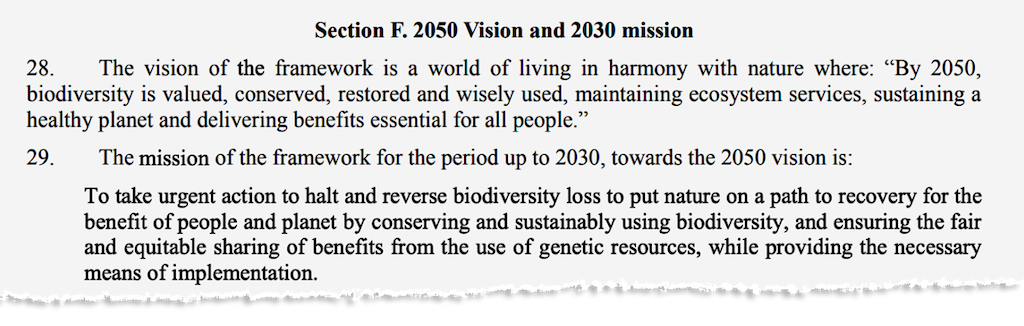
Section F of the Global Biodiversity Framework. Source: CBD

After the GBF was agreed, Carbon Brief spoke to a range of biodiversity scientists who said that halting and reversing biodiversity loss by 2030 would be incredibly challenging.

A landmark report released in 2019 by the world’s biodiversity authority, the Intergovernmental Science-Policy Platform on Biodiversity and Ecosystem Services (IPBES), found that one million animal and plant species now face extinction. This is more than at any other point in human history.

Across the world, populations of mammals, birds, amphibians, reptiles and fish decreased by an average of 69% between 1970 and 2016, according to a 2022 WWF report on more than 30,000 animal populations. In tropical central and South America, the animal populations covered by the study fell by an average of 94% over this period.

Scientists also told Carbon Brief that achieving the mission would largely be decided by meeting the targets of the GBF that tackle the direct causes of biodiversity loss.

These include target 18, which addresses subsidies harmful to biodiversity; target 7, which addresses pollution; and targets 5 and 9, which address the “sustainable use” of biodiversity. (Progress on several targets is discussed in more detail below.)

One issue that negotiators have continued to work on since the GBF was agreed is developing a set of indicators for measuring biodiversity loss.

While many people associate “biodiversity” with iconic species and tropical rainforests, the term actually covers the whole spectrum of Earth’s biological diversity, ranging from the organisation of genes within organisms to the communities of animals and plants that make up ecosystems. This complexity makes biodiversity loss particularly difficult to measure.

At COP15, countries decided to set up a technical group to develop biodiversity loss indicators ahead of COP16, spearheaded by Colombia and the UK. Comprising 45 experts, the group has met several times virtually in 2023 and will meet for in-person discussions in Cambridge, England in March of this year.

Back to top

30 by 30

One aim that grabbed the attention of politicians, media, activists – and even celebrities – at COP15 was the pledge to protect 30% of the world’s land and seas for nature by 2030, commonly referred to as “30 by 30”. It is contained within target 3 of the GBF.

Target 3 of the GBF.
Target 3 of the GBF. Source: CBD

The fight to get 30 by 30 into the GBF was spearheaded by a group of countries calling itself the High Ambition Coalition for Nature and People (HACN&P). It is led by Costa Rica and France, with the UK acting as a co-chair for the ocean component of the pledge.

Since COP15, the HACN&P set up a secretariat directed by former Costa Rican biodiversity negotiator Rita El Zaghloul.

During an interview at the COP28 climate summit in Dubai in December 2023, El Zaghloul told Carbon Brief that with the GBF agreed, the HACN&P has shifted its focus to ensuring the most vulnerable countries have the tools required to meet the target.

At COP28, she announced that the HACN&P had created a new “30 by 30 solutions toolkit” and a financial and technical “matchmaking” service. Explaining the purpose of these tools to Carbon Brief, she said:

“Because it was HACN&P that started the 30 by 30 movement, it is also our responsibility to ensure that countries have the sufficient support and tools to meet the target.

“We know that it is an ambitious target, because we have to move from approximately 17% on land and 8% on oceans [that is currently protected] to 30% on both. Many of the megadiverse countries are developing countries and small island developing states, so we need to provide them with the tools.”

Elsewhere at COP28, China surprised delegates by announcing that it was joining the HACN&P. The announcement came from COP15 president and China environment minister Huang Runqiu via videolink at a high-level session on 30 by 30.

Daisy Dunne on X: China has just announced it is joining the High Ambition Coalition for Nature and People

El Zaghloul told Carbon Brief that the announcement came after more than two years of talks with China, who were initially reluctant to join the initiative while still maintaining the “neutral” role of COP15 president.

As of the end of COP28 in December 2023, 118 countries had joined the HACN&P. This compares to 114 in December 2022. (There are 196 countries, including the EU, that are party to the CBD. All of these countries have committed to 30 by 30 through the GBF.)

Back to top

Finance

At COP15 in Montreal, the gavel went down adopting the GBF and its finance package amid controversy and objections from biodiverse developing countries. 

The final finance target seeks to mobilise “at least $200bn per year” by 2030 from “all sources” – domestic, international, public and private. For comparison, the biodiversity finance gap for conservation is estimated at roughly $700bn per year for this decade.

Developed countries – along with others that “voluntarily assume” their obligations – are expected to “substantially and progressively increase” their international finance flows for nature “to at least $20bn per year by 2025 and to at least $30bn per year by 2030”, according to the GBF’s Target 19l.
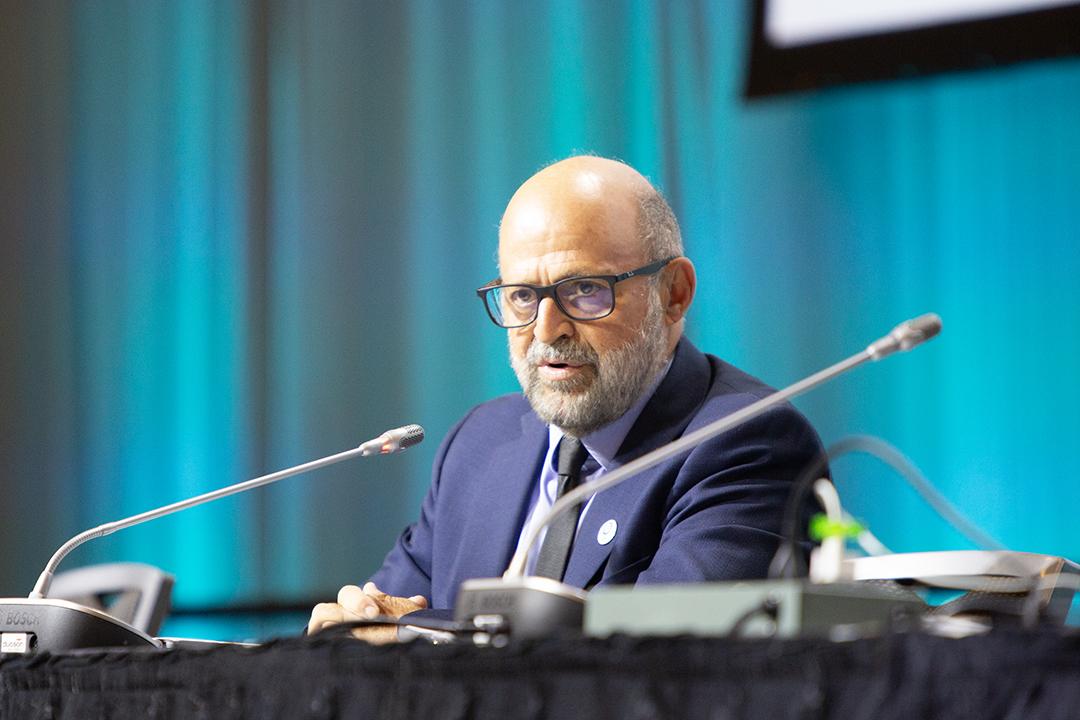
Carlos Manuel Rodríguez, GEF CEO and Chairperson as countries ratified the new Global Biodiversity Framework Fund.
Carlos Manuel Rodríguez, GEF CEO and Chairperson as countries ratified the new Global Biodiversity Framework Fund. Credit: IISD/ENB | Angeles Estrada (2023)

Despite calls from many developing countries for a distinct fund housed under the COP, COP15 requested the Global Environment Facility (GEF) set up a special trust fund. This would be called the “Global Biodiversity Framework Fund” (GBF Fund) and be established “in 2023, and until 2030” to receive “financing from all sources”.

On June 29 last year, the GEF’s governing board approved plans to set up this “game-changing” new fund to finance the Framework’s implementation.

The GEF’s governing board approved plans to establish the fund on 29 June last year. A month later, at the GEF assembly in Vancouver, 186 countries ratified and officially launched the GBF Fund. 

At the GEF assembly, COP15 hosts Canada contributed an initial capitalisation of C$200m ($147.3m), while the UK pledged £10m ($12.6m).

As much as 20% of the funds are intended for supporting Indigenous-led initiatives to protect and conserve biodiversity.

Sonia Guajajara, Minister of Indigenous Peoples, Brazil, spoke at the 7th GEF Assembly.
Sonia Guajajara, Minister of Indigenous Peoples, Brazil, spoke at the 7th GEF Assembly. Credit: IISD/ENB | Angeles Estrada (2023)

Indigenous groups – often sidelined from direct access to conservation funding – welcomed the dedicated allocation. Brazil’s Indigenous minister Sonia Guajajara pointed out that this “should not just be an aspirational criterion, but a concrete target that needs to be constantly updated” and called for “shared governance mechanisms that include recipient countries”.

Separately, at least 36% of the fund’s resources are to support small island developing states and least-developed countries.

At the assembly, Cuba and Honduras called for “simplified processes for obtaining” funding, the Earth News Bulletin reported. At the same time, the DRC, Namibia, Yemen and the Gambia “urged” more direct access to funds and minimising transaction costs.

At a side event on the sidelines of the UN general assembly in September, Germany pledged the final €40m ($43.3m) to put the fund into operation.

On Nature Day at COP28, Japan then pledged ¥650m ($43.8m). While this took the fund’s initial total capitalisation to about $247m, this falls far short of the “at least $20bn per year by 2025” target that developed countries were to raise. The US and EU, who supported and “welcomed” the fund, are yet to commit any new money.

The fund’s governing body will meet for the first time on 8 and 9 February this year in Washington DC to discuss its budget, business plan and how resources are allocated, with projects set to be funded by the end of 2024.

Projects backed by all eligible countries will have to go through consecutive selection rounds for funding based on criteria, including their potential to generate global environmental benefits, alignment with the GBF’s goals and National Biodiversity Strategies and Action Plans (NBSAPs), and their ability to raise resources from the private sector.  

Selection criteria for eligible countries submitting requests for funding to prepare a GBF project. Source: GEF (2024)

Not all the money raised will go to funding biodiversity projects directly: it will also have to cover staff costs, travel, consultants, monitoring and independent evaluation.

Additionally, if the fund’s current budget request is approved, it will have to pay the World Bank – the GEF’s host– an indirect charge of 11% on all direct costs for administrative support – a 300% increase from last year. 

The UN Environment Programme’s State of Finance for Nature 2023 report, released at COP28, found that public finance still accounts for the majority of conservation spending in the GBF’s first year. At the same time, it found that contributions from biodiversity offsets and credits grew sharply in 2022 as countries including the UK, France and Australia rolled out new nature markets. 

The report also noted that philanthropy – “driven by support for 30 by 30” – and private finance mobilised by debt instruments such as blue bonds and rhino bonds grew last year as well. But, it added, these small numbers paled in comparison with $7tn in nature-negative investments made the same year.

Back to top

Implementation

Ensuring that the targets contained within the GBF are actually implemented by countries will be the major challenge in the coming years, experts tell Carbon Brief.

Details for how the agreement should be implemented – the so-called “teeth” of the deal – are contained within Section J of the GBF itself and a separate document called “mechanisms for planning, monitoring, reporting and review”. (It is worth noting that the GBF and its underlying documents are not legally binding.)

The agreed plan for how the GBF should be implemented by countries follows three key steps – sometimes referred to as “present, review and ratchet”. This closely mirrors the implementation schedule of the Paris Agreement.

Section J of the GBF specifies that countries should present national biodiversity strategies and action plans, or “NBSAPs”, that are “in alignment” with the GBF and its goals and targets. The underlying document adds that this should be done “by COP16”.

Since the end of COP15, France, the EU, Luxembourg, Hungary, Japan and Spain have submitted updated NBSAPs. The UK has indicated it will release its new NBSAP in May of this year.

In September 2023, an “accelerator partnership” to “fast-track and upscale” new NBSAPs was officially launched at New York Climate Week, after first being agreed at COP15. The initiative is headed by Colombia and Germany, with the support of various UN bodies.

As for the “review” step, countries have agreed to conduct a global analysis of whether NBSAPs align with the GBF at COP16 and hold a “global review” of progress at COP17 and COP19.

After this, countries “may take the outcome of the global reviews into account in future revisions and implementation of their” NBSAPs. This is the “ratchet” element of the implementation mechanism.

In October 2023, negotiators met in Nairobi to officially close COP15. The aim of this meeting was to tie up loose ends remaining from the landmark agreement of the GBF in Montreal in 2022.

The event brought together scientific and technical experts to give advice on what should be included in the global review earmarked for COP17 in 2026. Bernadette Fischler Hooper, the head of global advocacy at WWF International, told Carbon Brief:

“The technical experts and scientific experts discussed what should be in this report. So it was very focused on what that report should contain.”

Back to top

Nature-based solutions

The use of nature to mitigate and adapt to climate change – known as nature-based solutions – featured a number of times in the GBF’s targets.

At COP28 in Dubai, nature-based solutions were also discussed at different stages. The global stocktake text – a key outcome of the summit that showed how countries can increase action to meet climate goals – “encourages” the implementation of nature-based solutions.

Section 55 of the first global stocktake text finalised at the COP28 climate talks in Dubai.
Section 55 of the first global stocktake text finalised at the COP28 climate talks in Dubai. Source: UNFCCC

A report released in June by the International Institute for Sustainable Development recommended ways to ensure that nature-based solutions will boost biodiversity and ecosystems.

In a list of draft recommendations from the final round of intergovernmental talks on nature-based solutions, the co-chairs suggested ways to support their use.

These include setting up a database of policies related to nature-based solutions to enable learning between countries, analysing the technical tools available to support implementing such solutions and making a how-to guide for accessing finance for these projects.

At COP28, more than 150 companies and financial institutions said they would increase investments in nature-based solutions.

At COP16, nature-based solutions will likely feature in many national biodiversity action plans and will continue to be one of the key talking points, experts tell Carbon Brief.

For example, Spain intends to prioritise a number of different areas including nature-based solutions over the next few years to meet its climate and biodiversity targets, according to its revised NBSAP.

Back to top

Invasive species

Invasive alien species are animals, plants or other organisms that have spread into places outside their natural habitats. These can negatively impact both nature and people, according to IPBES

Target 6 of the GBF aims to reduce the establishment and introduction of invasive alien species by 50% by 2030.

Target 6 sets out the need to identify and prevent the introduction of invasive alien species
Target 6 sets out the need to identify and prevent the introduction of invasive alien species. Source: CBD

Since the GBF was agreed at COP15, there have been advances in the knowledge of the distribution of invasive species across the world and the ways countries can handle biological invasions.

In September last year, IPBES published an assessment report on invasive alien species, which notes that humans have introduced 37,000 invasive alien species.

The report, based on more than 13,000 scientific studies, says that despite this, more than 80% of countries lack national legislation or regulations to address invasive species. However, it outlines three frameworks for governments to manage biological invasions, from introduction pathway management to species-based and site-based management. (For more, read Carbon Brief’s coverage of the IPBES report.)

According to reporting by the Earth Negotiations Bulletin (ENB), the CBD’s SBSTTA Nairobi meeting in October emphasised the need to develop strategies to simultaneously address two main causes of biodiversity loss – climate change and invasive alien species – and to step up collaboration among environmental agreements to implement the GBF.  

It also reported that the SBSTTA adopted eight resolutions, including one on invasive alien species. Among other things, such a resolution addresses how to identify and minimise cross-border e-commerce of live organisms or manage invasive alien species by preventing risks from climate change.

The secretariat of the CBD issued a document providing draft voluntary guidance and advice on matters regarding invasive alien species. These guidelines included the best methodologies for managing invasive alien species, such as cost-benefit, cost-effectiveness and multicriteria analysis.

The SBSTTA recommended the use of the IPBES report on invasive species for implementing the GBF, the CBD and NBSAPs. It also called on COP16 to acknowledge the importance of enhancing information availability and accessibility to strengthen the management of invasive species, according to the ENB.

The full IPBES assessment on invasive species could be approved at COP16, ENB reported.

Back to top

Links between climate and biodiversity

Several experts tell Carbon Brief that there was a marked increase in the attention paid to biodiversity and nature at the UN climate summit, COP28, compared to previous editions.

An event hosted during the summit’s thematic “nature” day saw the hosts of COP28 and COP15 – the United Arab Emirates and China, respectively – announce a Joint Statement on Climate, Nature and People.

The statement included a pledge by its signatories to work towards “comprehensiveness and cohesion” between countries’ national climate policies (“nationally determined contributions” or “NDCs”) and their national plans for nature (“national biodiversity strategies and action plans” or “NBSAPs”). Dr David Cooper, CBD acting executive secretary, says the statement was “very welcome”. He tells Carbon Brief:

“Countries have to now, in the light of the Kunming-Montreal [Global] Biodiversity Framework, develop their national targets and include them in their national biodiversity strategies and action plans, and they are currently doing that.

“It’s clear that in light of the stocktake [at COP28] NDCs will have to be ramped up. So that’s a big opportunity to make sure that the role of nature, the role of biodiversity [and] ecosystems is fully used in that…The need to protect those sinks and so on is also an additional motivation for strengthening the ambition of the NDCs.”

Pepe Clarke, global oceans practice lead at WWF-International, tells Carbon Brief:

“We’re continuing to see closer integration of biodiversity considerations into global climate negotiations, which is a really positive and continuing trend.”

Back to top

Indigenous rights

According to the International Indigenous Forum on Biodiversity (IIFB), Indigenous rights figure in seven of the GBF’s targets, including spatial planning, area-based conservation, sustainable use and participation and respect for the rights of Indigenous peoples and local communities.

For example, Target 22 aims to ensure the participation of Indigenous peoples and local communities in decision-making and the respect of their rights over their lands and territories.

Target 22 of the Kunming-Montreal Global Biodiversity Framework also acknowledges the participation of women, girls, children and youth in decision-making.
Target 22 of the Kunming-Montreal Global Biodiversity Framework also acknowledges the participation of women, girls, children and youth in decision-making. Source: CBD

After the framework was agreed, the IIFB welcomed such recognition and said it would collaborate to implement the GBF and apply the “monitoring and reporting framework through community-based monitoring”. 

In a meeting convened in November 2023, delegates reviewed the work programme for the section of the CBD that aims to respect and preserve Indigenous peoples’ knowledge and practices. They will continue these discussions at COP16. 

The working group also looked at creating a permanent subsidiary body to offer advice to the COP and to enhance the participation of Indigenous peoples and local communities in other subsidiary bodies of the CBD.

In a comment piece, WWF’s head of policy research and development, Guido Broekhoven, said one of the goals of the GBF Fund (GBFF), created in August 2023, is elevating funding for conservation actions undertaken by Indigenous peoples. 

The Global Environmental Fund, which administers the biodiversity fund, allocated 20% of funds from the GBFF to Indigenous peoples and local communities. The first instalment of the fund is expected to be delivered before COP16, Down to Earth reported.  

Lucy Mulenkei, co-chair of the IIFB, said in a press release that “the creation of this fund and its commitment to supporting Indigenous Peoples and local communities is an important and clear recognition of the fundamental role they have had for generations [in] protecting biodiversity”.

However, Broekhoven noted in his comment piece that there needs to be more climate finance directly reaching communities protecting ecosystems, such as the Amazon and the Congo rainforest. He said that doing so “is critical to encouraging all countries to announce ambitious NBSAPs ahead of COP16 and to keeping the goal of halting and reversing biodiversity loss by 2030 in sight”.

Back to top

Oceans

In the year since COP15, the world has moved forward on several marine-related treaties and policies, including the High Seas Treaty, an agreement on fishery subsidies at the World Trade Organization (see: harmful subsidies) and a global treaty on plastic pollution. In addition, debates around deep-sea mining have continued at both the national and international levels. 

Officially finalised in June, the High Seas Treaty – a legally binding framework governing the use and conservation of international waters – has garnered more than 80 signatures since it opened for countries to sign at the UN general assembly in September. Dr Rachel Tiller, a chief scientist at Norway’s SINTEF Ocean, tells Carbon Brief:

“The path of getting a treaty up and standing and walking, is that first you have to sign it. And that doesn’t mean anything else other than that you intend not to in any way hinder its continued life…You’ve only said that ‘we have an intention of continuing this process and we intend to be part of it’.”

On 22 January, Palau became the first country to ratify the treaty. In total, 60 countries must do so before the treaty can come into effect. During this time, Clarke says, technical preparatory work can be done, but no formal work under the treaty body can be undertaken.

Tiller adds:

“What I worry, and what some others worry, about is now it’s going to be a race to do everything before they ratify – that everybody wants to do whatever they need to do before there’s some kind of legal agreement stopping them or hindering them in some way.”

While Norway recently approved seabed mining in its territorial waters in the Arctic Ocean, debates around such mining in international waters have continued at the International Seabed Authority. There is a “steadily growing number of countries that are coming off the fence” to support a moratorium, or a precautionary pause, on seabed mining, Clarke tells Carbon Brief.

If a pause took effect, Clarke says, “there would also need to be a significant body of work done on the scientific and technical side of things, to better understand the risks associated with seabed mining”. But it is unlikely that an agreement will be reached this year, he adds.

Overall, Clarke tells Carbon Brief:

“There has been quite significant forward progress in terms of the foundational architecture of agreements and government commitments needed to take forward key elements of the ocean policy agenda…[But] we’ve not seen the step change, particularly in protection, that we’re going to need to deliver the GBF in full by 2030.”

Back to top

Digital sequence information

A new global mechanism and fund for sharing benefits from digital sequence information (DSI) was hailed by many as one of the big wins that clinched the deal at COP15. Digital sequence information refers to data derived from genetic resources, which is often sourced from biodiverse regions and communities who may not always benefit from its publication or use.

The COP decision on DSI established an ad hoc open-ended working group to finesse much of the crucial fine print that remains before COP16. 

The group held its first meeting in Geneva in November 2023, where it identified five sets of core questions on how the fund is governed, who contributes to it, who benefits, what “non-monetary benefits” should look like and how the mechanism could work with existing national and other multilateral approaches to benefit-sharing.

Martha Mphatso Kalemba from Malawi was the co-chair for the Committee of the Whole, tasked with making key recommendations on DSI for COP16. Credit: IISD/ENB / Kiara Worth.

According to the meeting report, countries agreed that the fund should contribute to achieving the GBF’s finance target and closing the $700bn biodiversity finance gap, with the COP deciding strategic funding priorities. 

Developing and developed countries differed on several subjects, such as legally binding obligations on donors versus voluntary contributions and potential sources of funding, such as profit-sharing or a 1% retail levy on products derived from DSI. Another unresolved issue is how to distribute these benefits: by country allocation, on a project basis or something else.

Japan, Switzerland and the US – which is not party to the CBD – stressed “solely voluntary” contributions to the fund in their submissions, claiming this would be simple and easy to implement quickly.

Countries came together in favour of elements around capacity-building and the fund being used to meet biodiversity-related Sustainable Development Goals and the self-identified needs of Indigenous peoples and local communities..

Brazil, India, Argentina, Indonesia and the African Group maintained that non-monetary benefit sharing should go beyond just capacity building on how to use DSI and could include collaborative research. 

According to Third World Network, “a very controversial question” that remains is whether funding allocations should be based, at least partially, on the geographical origins of genetic material.

In its closing plenary on 18 November, the working group adopted a final outcome on possible elements for the mechanism and fund.

But with much of the work still unfinished, they constituted an Informal Advisory Group to carry on intersessional work until the group’s second meeting in August 2024. That group convened online for the first time on 23 January to discuss data governance and DSI databases and is scheduled to meet five more times before August.

DSI developments under the CBD are being closely monitored for coherence with other treaty bodies and access-and-benefit sharing mechanisms, particularly the High Seas Treaty, the International Treaty on Plant Genetic Resources for Food and Agriculture (ITPGRFA) and the World Health Organization’s pandemic preparedness framework

Amid these ongoing negotiations, groups such as the DSI Scientific Network are calling for all current benefit-sharing mechanisms to be “harmonised” and saying that they should not “hinder” or “undermine” science.

Dr Siva Thambisetty, an intellectual property expert at the London School of Economics and an advisor to the G77+China bloc, tells Carbon Brief that the group’s viewpoint that “biology does not respect UN legal boundaries” is “catchy, but there is nothing natural about DSI use, circulation and storage – the consequences of which are closely connected to infrastructure, power and choice.” 

Thambisetty adds that the GBF “must not sideline consensually-formed gains on benefit-sharing” under the High Seas Treaty but, instead, follow its lead.

Back to top

Harmful subsidies

At COP15, countries agreed to identify – by 2025 – and then “eliminate, phase out or reform incentives, including subsidies” that are harmful for biodiversity.

The agreement also said that these incentives should be “substantially and progressively” reduced by at least $500bn each year by 2030, “starting with the most harmful incentives”.

Harmful subsidies were discussed at the COP28 climate summit in Dubai, particularly around fossil fuels.

The global stocktake text calls for the phasing out of ​​“inefficient…subsidies that do not address energy poverty or just transitions, as soon as possible”. (For more on how countries plan to reduce biodiversity harmful subsidies, read Carbon Brief’s Q&A.)

The UN Development Programme recently published a report outlining a “step-by-step” guide to redirecting biodiversity harmful subsidies. 

A World Bank report, published in June last year, said that explicit and implicit subsidies for fossil fuels, agriculture and fisheries now exceed $7tn each year. They are “harming people, the planet and economies”, the report said.

Early last year, the UK made moves away from harmful farming subsidies through its new funding scheme for farms in England, which is intended to replace the payments from the EU’s Common Agricultural Policy. The UK’s funding scheme was updated with more funding and incentives in recent weeks.

Over the past few months, German farmers have been protesting against government plans to phase out and cut some agricultural subsidies and tax breaks.

 Farmers and tractors at a protest at the Brandenburg Gate in Berlin, Germany on 16 January, 2024.
Farmers and tractors at a protest at the Brandenburg Gate in Berlin, Germany on 16 January, 2024. Credit: Kay Nietfeld / Associated Press / Alamy Stock Photo

In other subsidy developments, the UK and the Gambia were among the countries to recently accept the World Trade Organization (WTO) agreement on setting new rules to curb fishing-related subsidies.

The deal – agreed in 2022 – has now been accepted by 55 WTO members, which brings it halfway to the 110 needed for it to take effect.

It might “reach the necessary threshold over the next year or so” as subsidy negotiations continue, according to WWF’s Clarke.

These talks are ongoing and a draft text on curbing subsidies that add to overcapacity and overfishing will be discussed at a WTO ministerial conference in Abu Dhabi in February. Clarke tells Carbon Brief that the fishery negotiations are “complex”, adding:

“Colleagues who have now been engaging with this technical negotiation track have really expressed to me how concerned they are about the fact that this seems to be entering into a traditional trade negotiation, where each country is seeking to advance its own interests rather than deal with a common challenge.”

Back to top

What do we know about the next UN biodiversity summit?

The next biodiversity summit, COP16, will take place in Colombia from 21 October to 1 November 2024. Six cities have offered to host, but the exact location has yet to be decided, according to the CBD. 

Turkey withdrew as host last July after being hit by three earthquakes earlier in the year that killed more than 50,000 people and displaced millions.

It is understood that the CBD was in talks with a number of countries in Europe and South America in recent months until Colombia’s offer was announced at COP28 in December 2023.

The country plans to move away from fossil fuels under its current leftwing government, but still relies heavily on oil production revenue.

CBD acting executive secretary Cooper says it is “exciting” for the conference to take place in a “mega-diverse country” with “very strong Indigenous peoples’ organisations [and] a very strong scientific base”.

He adds that the Colombian environment minister, Susana Muhamed, is a “very inspiring leader” who could boost political will and “momentum in implementing the GBF”. 

Muhamad has said that the slogan of COP16 will be “peace for nature”.

Susana Muhamad, the environment minister of Colombia (second from the right), alongside other ministers and a climate envoy at the COP28 summit in Dubai, UAE on 13 December, 2023.
Susana Muhamad, the environment minister of Colombia (second from the right), alongside other ministers and a climate envoy at the COP28 summit in Dubai, UAE on 13 December, 2023. Credit: Peter Dejong / Associated Press / Alamy Stock Photo

Other environment ministers from around the world will attend COP16, but presidents and prime ministers are generally not invited to the UN biodiversity summits. Cooper says that there are currently no plans to invite them to Colombia either. He tells Carbon Brief:

“It is important, though, that leaders are fully engaged. We will only achieve the goals and targets of the Kunming framework through a whole government approach.”

Cooper says he wants to see nations to “come with a strong commitment and strong actions already in place”. He notes:

“The first important function of COP16 is to put the spotlight on countries in terms of what has been achieved, what is being achieved, what hasn’t been achieved and needs to be achieved.”

Ahead of COP16, countries need to submit updated national biodiversity strategies and action plans that better align with the Kunming-Montreal deal (See: Implementation). 

China, France, Japan, Hungary, the EU and others have already submitted their plans.

Other issues due to be finalised at COP16 include the monitoring framework for the GBF and a strategy for financial resource mobilisation. Talks on digital sequence information are also due to wrap up, and Cooper says that he wants to see “very clear progress” towards 2025 financial goals.

Another expected announcement is a global plan of action on the ties between health and biodiversity.

From left to right: Jihyun Lee, meeting secretary, SBSTTA chair Hesiquio Benítez Díaz and David Cooper, acting executive secretary of the CBD, at the SBSTTA meeting in Nairobi, Kenya on 19 October, 2023. Credit: IISD/ENB | Mike Muzurakis

Over the course of 2024, meetings of different groups focused on indicators, risk assessment, benefit sharing and implementation will take place. Key SBSTTA and implementation subsidiary body meetings will happen in Nairobi in May.

In addition, 2024 is a major election year for dozens of countries around the world – including biodiverse superpowers India, Indonesia, Mexico and Brazil. The DRC also held a presidential vote late last year.

Cooper says that while nature is “less of a political football than climate change”, there is always a risk of “populist politicians or vested interests trying to drive a wedge” between sectors – especially agriculture and biodiversity conservation. He tells Carbon Brief:

“We have to make the case and really try and prevent these communities from being driven apart.”

Road to COP16

22-26 Jan Conference on cooperation among the biodiversity-related conventions for implementation of the GBF Bern
5-9 Feb Meeting of the GEF Council Washington DC
26-29 Feb World Trade Organization ministerial meeting Abu Dhabi
26 Feb-1 Mar UN Environment Assembly Nairobi
18-29 Mar 29th session of the International Seabed Authority, Part I Kingston
10-12 Apr UN Ocean Decade conference Barcelona, Spain
23-29 Apr Intergovernmental Negotiating Committee on plastic pollution Ottawa
13-18 May CBD Subsidiary Body on Scientific, Technical and Technological Advice Nairobi
21-29 May CBD Subsidiary Body on Implementation Nairobi
17-21 Jun Meeting of the GEF Council Washington DC
15 Jul-2 Aug 29th session of the International Seabed Authority, Part II Kingston
12-16 Aug Meeting of the open-ended working group on digital sequencing information Montreal
10-24 Sep UN general assembly New York
16-18 Oct CBD Subsidiary Body on Implementation
21 Oct-1 Nov CBD COP16 Colombia

Back to top

The post Q&A: What progress has been made on protecting nature a year on from COP15? appeared first on Carbon Brief.

Q&A: What progress has been made on protecting nature a year on from COP15?

Continue Reading

Climate Change

CCC: Investing in ‘urgent’ UK adaptation action ‘cheaper than climate damages’

Published

on

Investing in flood defences, air conditioning and other measures to protect the UK from climate change will provide “long-term savings” for the country, according to the Climate Change Committee (CCC).

The government’s climate advisors have proposed a set of climate-adaptation actions that would require at least an extra £11bn per year in spending, largely from the private sector.

Most of this investment would go towards keeping buildings cool and protecting them from floods, as well as building reservoirs and supporting water-efficiency measures.

The committee says this is a “manageable level of investment” that will shave billions of pounds off climate change-driven damages that the UK will experience in the coming years.

Crucially, the CCC stresses that this approach would be “cheaper than facing the damages”.

This analysis comes from the CCC’s new “well-adapted UK” report, which sets out more than 100 actions that the committee says could help the UK prepare for global warming up to 2C above pre-industrial levels by 2050.

The CCC highlights 20 overarching objectives and a set of measurable targets that it says should be prioritised in the coming years, such as curbing deaths related to extreme heat.

This first-of-its-kind “solutions-focused” report will feed into the UK government’s upcoming fourth climate-change risk assessment, due in 2027, and inform its approach to climate adaptation.

Here, Carbon Brief provides an overview of the key messages in the 554-page report, including the actions highlighted by the CCC and the policy levers required to implement them.

What is the ‘well-adapted UK’ report?

The CCC’s new report on how to create a “well-adapted UK” sits alongside a legal process designed to ensure the country is prepared for the impacts of climate change.

It warns that the UK has not yet done enough to adapt to climate change and sets out priorities – as well as potential solutions – for the challenges ahead.

The CCC’s work stems from the Climate Change Act 2008, under which the UK government must publish a Climate Change Risk Assessment (CCRA) every five years. This must set out the risks and opportunities the nation is facing due to climate change.

A key pillar of the act is the creation of the CCC, an independent body that provides advice on the climate-related risks facing the UK and how it should adapt.

The CCC has previously produced three technical reports to advise the government on adaptation. Today sees the publication of the fourth set of advice, officially known as the CCRA4-IA technical report. The “well-adapted UK” report sits alongside this.

(The CCC also makes more frequent assessments of adaptation strategies produced by England, Scotland, Wales and Northern Ireland individually.)

This is the first time the CCC has produced “well-adapted UK”, which it describes as a “solution-focused report” providing suggested government actions to address adaptation needs.

Speaking during a press briefing ahead of the report launch, Baroness Brown, chair of the CCC’s adaptation committee, said:

“It’s a first for us, the first time we’ve produced a report of this sort.It forms part of our independent assessment for the fourth climate-change risk assessment and it contains our advice to government.

“It’s now nearly 20 years since the Climate Change Act was passed and, despite making very strong progress on reducing emissions since 2008, I think we all agree that we have done nothing like enough to address the increasing risk from the impacts of climate change to the UK today.”

The CCC report offers evidence to support action by individual UK governments, as well as other organisations focused on adaptation.

It highlights three priority areas as the UK prepares for 2C of warming by 2050: providing cooling to protect from heat; increasing flood preparedness; and improving water management.

The report says that deploying adaptation at scale around these priorities will help avoid loss of life, as well as disruption to people and the economy.

It also sets out climate risks, actions and enablers across 14 key systems, breaking the analysis down into sectors to allow for clear recommendations on what needs to be done and accountability for delivering progress.

However, the report notes that “climate risks do not simply sit in single systems. Many of the most dangerous risks will cascade across them.”

The CCC states that “adaptation cannot wait”, adding that the duty of the state to keep people safe and secure is being compromised by climate change. As such, it says adaptation needs the same level of focus and commitment as geopolitical and other threats.

The report says:

“Damage is already happening, which can be avoided. Taking action today is cheaper than taking action tomorrow. The main challenge is leadership, getting adaptation underway at sufficient scale and speed.”

Finally, the CCC states that adaptation cannot replace efforts to limit warming, but is instead an “essential complement” to cutting greenhouse gas emissions. It describes adaptation action as “both necessary and achievable, but also urgent”.

Back to top

What are the climate risks facing the UK?

The UK is already facing increased threats of heatwaves, extreme rainfall and sea level rise due to human-driven burning of fossil fuels and changes in land use, says the report.

Since 2000, the UK has experienced all 10 of its hottest years on record and temperatures passed 40C for the first time in 2022. There is a 50% likelihood of reaching those temperatures again in the next 12 years, says the CCC.

Warmer air can hold more moisture than colder air, with the result that these warmer temperatures have been accompanied by heavier and more intense rainfall in all seasons of the year across the UK.

Additionally, the UK has experienced about 200 millimetres of sea level rise since 1901, with this occurring at an accelerating rate over the last three decades, notes the CCC. The largest increases in sea levels have occurred on the country’s southern coast.

The level of risk facing the country in the future will be determined largely by the level of global emissions, states the report.

Under current emissions pathways, the world will reach around 2C of warming above pre-industrial temperatures by 2050, climbing to nearly 3C by the end of the century.

Lower warming levels are still possible, if countries strengthen their current climate policies and accelerate global emissions reductions. At the same time, scenarios involving even higher levels of warming “should be considered in long-term planning”, says the report.

The table below summarises potential changes to the UK’s climate hazards at 2C of global warming in 2050 and at 4C of global warming in 2100.

In addition to direct impacts on the UK, says the report, the country “cannot be isolated” from global climate risks, such as destructive extreme-weather events.

The report notes that risk is based on three components: hazard; exposure; and vulnerability.

Hazard refers to the physical event that can cause damage. Exposure refers to the presence of people or assets in the area that may be affected by a hazard. Vulnerability is how susceptible something or someone is to experiencing damage if it is exposed to a hazard, accounting for the ability to take adaptation measures.

Current vulnerability and exposure are both highly variable across the country, with marginalised groups likely to be disproportionately impacted by climate change. How these will change in the future is highly uncertain, it says.

Back to top

How much will it cost to prepare the UK for climate change?

The CCC estimates that delivering its package of adaptation actions will require additional investment of at least £11bn per year, shared between public and private sectors.

(The report notes that, given limits in available information, this is “likely to be an underestimate, but it gives a sense of the scale of investment needed”.)

Roughly a third of this investment will likely be needed for air conditioning and passive cooling measures, according to the committee. Another third will be required for flood defences and water conservation.

Overall, the CCC says around 36% of the expected investment is in areas “that have tended to be funded by the public sector”, while 41% will likely fall to the private sector. The remaining costs are “undetermined”.

The committee stresses that “acting now is cheaper than acting later” and that investing in adaptation is “cheaper than facing the damages” caused by climate change.

Climate-related damages are already costing the UK economy and could grow to around 1-5% of GDP by 2050 – roughly £60-260bn per year – under scenarios of around 2C global warming, according to the CCC.

(The CCC has previously suggested that cutting emissions to net-zero would require investments of £20-40bn per year, yielding savings of a similar magnitude.)

In this context, the £11bn a year “is a manageable level of investment for the UK economy” that will deliver “long-term savings for both public and private actors”, states the report.

CCC analysis of a new adaptation package covering heat and health, urban heat and water scarcity suggests that these measures alone could save up to £12bn a year in climate-damage costs by the 2050s. This can be seen in the chart below.

Potential for a package of additional adaptation measures
Potential for a package of additional adaptation measures (light blue) to reduce costs from climate-change impacts, £bn, compared to existing adaptation measures (dark blue). Source: CCC analysis.

The CCC stresses that many adaptation actions are “low-cost or low-regret”, highlighting numerous examples that show very favourable benefit-cost ratios. For example, flood resilience measures tend to produce benefits five-times greater than their costs.

In addition, 53 of the 120 adaptation actions for which costs were assessed provided additional “co-benefits”, such as the energy and water bill savings that can result from water-efficiency improvements.

While the CCC does not provide a comprehensive estimate of the financial impact of such co-benefits, it says they “strengthen the case for action”.

The report also emphasises that it makes financial sense to target adaptation measures at people or assets that are particularly vulnerable to and at-risk from climate impacts.

Back to top

What measures does the CCC recommend?

The CCC’s report sets out a range of climate risks and required adaptation actions across 14 “key systems”, including health, land and the economy as a whole.

As well as proposing more than 100 “actions”, the committee lays out the kind of policies that could be implemented to achieve them. For example, actions in the building sector might require changes to planning policy.

The report also sets out key “enablers” for adaptation in each of these key systems. Common enablers are adequate financial resources, better monitoring processes and improved public awareness of adaptation issues.

The CCC sets out 20 overarching objectives and 39 proposed targets to guide the UK’s adaptation progress out to 2050, which “set out a clear and measurable ambition for a well-adapted UK”. These objectives and targets can be seen in the table below.

The committee says its goals are “clearly measurable and time-bound” and will rely on actions being implemented – often cutting across different systems. For example, curbing deaths linked to extreme heat will rely on the construction of cooler buildings.

For each of the 14 key systems identified, the CCC says it has applied “10 principles for effective adaptation” in order to “inform meaningful recommendations to national government departments”.

Among other things, these principles include preparing for 2C of warming by 2050 and “considering” 4C of warming by 2100.

The following headings break down the key threats facing each of the key systems identified by the CCC – and the actions needed to prepare them for climate change.

Back to top

Health

Climate change poses a direct threat to population health, with extreme heat linked to everything from increased threat of heart attacks to the spread of climate-sensitive infectious diseases.

At the same time, heatwaves and flooding can disrupt the normal functioning of the UK’s health and social-care system, which can also harm people’s health.

The CCC identifies the following “priority adaptation actions” to protect people from climate change, with a particular focus on minimising excess heat-related mortality and morbidity:

  • Behavioural changes – supported by information services – to avoid health risks during hot weather;
  • Public cooling spaces to protect vulnerable people during heat events;
  • Visits by healthcare or community workers to high-risk people;
  • Mental health treatment for people exposed to flooding;
  • Surveillance and monitoring of climate hazards and climate-sensitive diseases;
  • Early warning systems, including the expansion of heat alerts beyond England;
  • Expanding natural areas that can provide shade and reduce the urban heat island effect;
  • Maintaining “safe” water bodies that reduce breeding of endemic mosquitoes and harmful algal blooms.

The CCC also identifies priority actions to protect health and social-care facilities from extreme weather:

  • Cooling measures in healthcare facilities, including retrofitting buildings with “passive cooling” measures and installing air conditioning;
  • Flood defences and other protective measures, such as waterproofed electricals, at hospitals and care homes;
  • Training for health professionals that focuses on climate-related health risks; 
  • Business continuity planning to manage staff absences during extreme-weather events;
  • Occupational support to protect healthcare staff during extreme weather;
  • Emergency scenario planning for climate-related emergencies.

Many of the required actions would fall to devolved governments and rely on public funding.

The CCC says the UK government could ensure facilities are built to cope with climate extremes by embedding adaptation in statutory health, building and environmental standards. It adds that there is also a need for education programmes to encourage behavioural change.

Crucially, the committee also highlights the need for sustained government funding for adaptation-specific measures. In total, the CCC says the known investment required to deliver adaptation in the health system could be around £0.7-1.7bn per year.

Back to top

Built environment and communities

Climate change presents numerous risks to the UK’s settlements, buildings and communities, according to the CCC.

The report notes that already, more than half of UK homes are at risk of overheating, 6.3m properties are located in flood-risk areas and extreme weather is causing millions of pounds of damage to properties every year.

Without additional adaptation measures by 2050, it says that the risk of overheating is projected to be 4.2 times higher and that 27% more homes are projected to be at risk of flooding and coastal erosion in England. In addition, the risk of subsidence in Great Britain will increase, with 11% of properties affected by the 2070s, as well as other impacts.

As such, the CCC has set out a series of recommended actions to ensure settlements, buildings and communities are fit-for-purpose and durable places to live and work:

  • Building out catchment-scale flood defences, including a mix of engineering “hard” defences and natural defences;
  • Expanding urban green infrastructure, for example, street trees, parks and waterways, to provide natural cooling and shade;
  • Introducing more “sustainable drainage systems”, such as green roofs, permeable paving, rain gardens and others;
  • Helping communities prepare for extreme-weather events;
  • Build out nature-based solutions to manage changes from sea level rise and coastal erosion;
  • Introducing cooling measures in buildings, including both active cooling – such as air conditioning – and passive cooling measures;
  • Utilising government schemes, such as Flood Re, to help ensure all households can access insurance and that it is affordable.

The CCC highlights engagement with communities, ensuring that they are well informed about the future climate risks they face from extreme-weather events, as a key enabler of the above actions.

Holland Park, an affluent area of West London.
Holland Park, an affluent area of West London. Credit: BBA Travel / Alamy Stock Photo

It notes that a number of policies are already in place to address flooding and overheating, as well as funding for large-scale flood-defence projects. However, it says more can be brought in to support the adaptation of the existing and planned building stock. 

Back to top

Public services

The CCC’s assessment of public services covers the facilities and operation of services outside of health and social care, such as education, justice and emergency services.

It highlights that hazards such as heatwaves and flooding can cause closure and disruption to the operation of services, as well as impact things such as children’s ability to concentrate. Even in the current climate, it says an estimated 4.3% of cumulative learning time is lost in England due to high temperatures.

Emergency workers are increasingly facing challenges created by climate change. For example, wildfires increase demand for fire and rescue, police and environmental-incident response services.

The CCC calls for the creation of new targets to help protect people from the impacts of increased temperatures and flood risk, including: internal temperatures in learning environments should be kept between 16-25C by 2050; and internal temperatures at prisons and justice facilities should be kept between 16-26C.

By 2030, all emergency services and incident responders should be equipped to meet all weather events, adds the committee.

The CCC sets out suggested actions the government could take to ensure that services operate during extreme weather at levels at least as good as today:

  • Introducing outdoor shading, such as trees and canopies, at sites such as playgrounds and outside school gates;
  • Rolling out passive cooling strategies;
  • Introducing active cooling, such as air conditioning, where necessary to reduce indoor temperatures;
  • Rolling out surface-water flood alleviation measures;
  • Ensuring key assets are adapted, such as backup generators and response vehicles, so that climate change does not impact the delivery of public services;
  • Rostering and timetabling should take into account climate-related travel and health issues, bolstered by flexible capacity within services and staff training;
  • Introducing surveillance and early warning systems.

The CCC adds that retrofitting buildings to allow them to adapt to climate change will require both up-front funding and long-term revenue budgets, as will expansions of personnel.

It says policy should be used to ensure that building regulations and design standards for public buildings are suitable for future climate conditions. Additionally, the government should look to provide public funding, accessible and reliable climate information and help to improve joint working between different departments, delivery bodies and responders.

Back to top

Cultural heritage

The CCC considers four aspects of cultural heritage in its report: cultural and archaeological sites and landscapes; buildings that are listed or otherwise significant; fixed assets, such as statues, monuments and shipwrecks; and moveable assets, such as art and historic documents.

Without adaptation, flooding, storms and coastal erosion may reduce access to these sites and assets, or even destroy them entirely. However, due to their varied nature, any adaptation plans need to be highly context-specific, it says.

Antony Gormley statue submerged in the Water of Leith at Bells Weir.
Antony Gormley statue submerged in the Water of Leith at Bells Weir. Credit: Craig Brown / Alamy Stock Photo.

The report notes that many of the CCC’s priority adaptation actions are broadly applicable across the four classes of cultural-heritage assets, such as:

  • Increasing the frequency of inspections and repairs for built assets;
  • Creating or strengthening flood barriers and coastal defences;
  • Improving drainage around cultural-heritage sites;
  • Adjusting opening times and access to help protect visitors and staff, such as temporary closures during extreme weather or installing raised walkways;
  • Incorporating technology and digital solutions, such as early-warning systems, digitising collections and creating virtual tours;
  • Managing loss, such as by relocating assets and transforming the use of historic buildings.

Adapting the UK’s cultural-heritage assets will require an unknown amount of funding, along with training to increase adaptation-planning capabilities, says the report. These plans must be developed for each context, it says, incorporating local risks, costs and the “potential acceptable future states” of these assets.

The report calls for heritage organisations to “plan for future climate conditions and share these plans for others to learn from”. It also recommends that such considerations should be required for projects receiving public funds in the future.

Back to top

Water and wastewater

The report groups together the UK’s water supply – both public and private – and wastewater infrastructure.

It notes that these systems are “not fit for the current, let alone future, climate”, with risks of both drought and floods expected to increase across the UK under future warming.

Droughts are the “most significant climate hazard” facing the water system, while heavy rainfall and flooding can damage both water and wastewater infrastructure and overwhelm the capacity of wastewater-transport systems.

The CCC proposes several priority adaptation actions for the water subsystem:

  • Installing water-efficient products, such as low-flow fixtures on taps and toilets;
  • Reusing non-potable water in specific instances, such as using rainwater to cool data centres;
  • Encouraging behavioural changes, including through smart metering and water-efficiency labelling;
  • Improving water-use efficiency in private use;
  • Repairing leaks quickly – particularly the largest and most damaging ones;
  • Installing protections against flooding and erosion;
  • Increasing the use of reservoirs to store excess winter rainfall for summer usage;
  • Improving pollution-management systems to protect existing water sources;
  • Increasing water-treatment capacity and efficiency.

The committee also proposes actions to address adaptation in the wastewater subsystem:

  • Separating the systems that carry rainwater from those that carry wastewater;
  • Reducing the area of impermeable surfaces to decrease runoff;
  • Encouraging behavioural changes to avoid blockages and flooding;
  • Increasing the volume that the wastewater system can treat at a given time;
  • Improving and decentralising water-treatment processes.

To adapt the water system to future climate change, the committee suggests creating minimum water-efficiency standards for appliances, as well as for new water users, such as data centres.

It also calls for increased planning and regulation between the water and wastewater sectors, as well as across other sectors that contribute heavily to water usage or wastewater generation.

Thames Water personnel fixing a burst water main near Windsor Castle.
Thames Water personnel fixing a burst water main near Windsor Castle. Credit: Maureen McLean / Alamy Stock Photo

Back to top

Energy

The CCC warns that climate change is already impacting the energy sector. This includes electricity generation, storage and transport, as well as fuel production, storage and transport of gas, oil, bioenergy and sustainable aviation fuels.

It says that electricity networks are vulnerable to damage from flooding, high winds and increased heat, while heat and drought can reduce efficiency and capacity across the electricity grid and at power plants.

For example, the CCC says that in England, 22% of the electricity infrastructure is currently at risk of flooding, but this is expected to increase to 26% by 2040 due to climate change.

Flooding and water scarcity are the areas of most concern for the fuel-supply system.

The CCC adds that there are interdependencies between fuel and electricity systems.

The committee identifies the following adaptation actions to reduce the climate risk facing the energy system and to allow the current level of resilience to be maintained:

  • Siting energy assets to reduce their exposure to climate hazards;
  • Building redundancy into the energy system design to avoid single points of failure;
  • Reinforcing existing energy assets and designing new ones with appropriate; protections; 
  • Ensuring that regular inspections of energy assets are undertaken and preventative maintenance is taken where possible;
  • Managing vegetation around electricity and gas networks; 
  • Preparing ways to anticipate, respond to and recover from extreme events, such as early warning systems;
  • Provide alternative sources of backup power.

The CCC identifies resources and funding as key enablers for undertaking these actions. It recognises the significant build-out of new equipment that is planned in the next five to 10 years in the energy sector, stating that it is “easier and more cost-effective to build resilience into infrastructure projects at the design stage rather than retrofitting later”.

Other enablers include clear plans, roles and responsibilities being set early and the use of technology and innovation.

The CCC notes that governance of the energy system is “complex”, with some elements centralised and others devolved, as well as splits across the public and private sectors. However, it says policy levers can be used to drive and monitor adaptation across segments, such as regulation, strategic planning and innovation provision.

The committee calls for continued UK government focus on timely and appropriate targets for investments, clarity on the future of the gas grid, wider mandatory adaptation reporting and other measures.

Back to top

Transport

The committee’s transport-system assessment includes roads, rail and public transportation systems, as well as maritime and aviation infrastructure and operations.

The report notes that the interconnected nature of the UK’s transport system “offers some built-in redundancy”, but also increases the risk of cascading climate impacts.

The biggest climate hazard facing the UK’s transport system is flooding. However, it is also at risk from subsidence, erosion, high winds and extreme heat, according to the report.

Rail track dangling after heavy snow and floods at Stover Canal, Newton Abbot, Devon.
Rail track dangling after heavy snow and floods at Stover Canal, Newton Abbot, Devon. Credit: nidpor / Alamy Stock Photo

The CCC recommends the following measures as priorities for physically adapting the transport sector:

  • Improving drainage systems across roadways, tunnels and urban rail systems;
  • Installing coastal flood defences, such as seawalls and “rock armour”, near infrastructure located in floodplains;
  • Reinforcing embankments, installing retaining structures and strengthening earthworks to protect against erosion;
  • Using materials that are durable at higher temperatures, as well as integrating other temperature-reducing measures, such as shading and airflow;
  • Reinforcing tall structures against high winds.

It also recommends several operational adaptations for the sector:

  • Increasing preventative maintenance, including by clearing drains, dredging waterways, patching tarmac and painting rails;
  • Using technology to optimise schedule, route and speed-limit adjustments;
  • Implementing contingency plans to protect system-critical assets during severe disruptions.

To implement these adaptation measures, the CCC recommends improving the available guidance and reporting for planners and operators. It notes that planning policies and design codes should embed an “appropriate consideration of climate risk”, such as exposure to hazards.

It also calls for improved resilience standards and engagement with the public to determine the level of service expected in the future and the level of investment required to achieve that.

Back to top

Waste

The waste sector is facing climate risks predominantly relating to mine tailings and historic landfill sites, with heavier rainfall increasing the risk of landslides that can threaten communities, according to the CCC.

For example, 368 out of 2,590 coal-mine tips in Wales are currently categorised as posing a potential risk to public safety. Increased rainfall and storms under a 2C of global warming in 2050 will increase the potential for landslides at these sites, as well as the number of sites that require adaptation.

The report says that government action is needed to reduce these risks. It adds that better data and monitoring should be used to prioritise the sites that pose the greatest risk.

The CCC sets out actions to ensure these waste sites are managed safely and do not harm people or the environment around them:

  • Improving drainage at waste sites and stabilising their slopes stabilised; 
  • Installing coastal and flood defences at waste sites where needed;
  • Treating waste to stabilise or remove hazardous materials; 
  • Permanently removing or relocating waste from vulnerable sites.

The biggest enabler for these changes will be resources and funding, according to the CCC.

Local authorities have some regulatory power to manage historic waste sites, which it says they should use to ensure adaptation actions are taken.

Back to top

Digital and telecoms

The digital and telecommunications sector is made up of both public and private networks, as well as infrastructure such as data centres, wired connections and other assets.

Climate change threatens the sector directly, by damaging or otherwise challenging this telecommunications infrastructure, according to the CCC. However, says the report, the “main climate risk” facing the telecoms sector is its “fundamental dependency on the power system”.

The report notes that storms and flooding can damage infrastructure and cause power failures, while high temperatures can overwhelm cooling systems and force systems to overheat.

The CCC calls for several physical adaptation measures to protect digital and telecoms assets:

  • Choosing infrastructure sites to reduce vulnerabilities to flooding and wind;
  • Installing physical protection measures, such as flood defences and underground cables, for existing infrastructure;
  • Completing the changeover to fibre-based digital systems, which are more water-resistant than existing networks;
  • Adopting cooling systems and upgrading existing ones to withstand projected future temperatures;
  • Adopting more water-efficient cooling systems to reduce vulnerability to water shortages.

Resilience can also be achieved through redundancy measures, it says:

  • Installing backup generators, on-site batteries and other redundancies for the power supply;
  • Providing backup batteries to consumers to ensure access to emergency services in case of power outages;
  • Creating redundancy in cooling systems and network connections;
  • Encouraging consumers to store key data in multiple locations to reduce the impact of data-centre outages.

Some of these actions are already underway, notes the report. For example, the changeover to fibre-based systems is expected to be completed by January 2027.

It says resilience will also require regulatory clarity, such as confirming that the UK’s Office of Communications (Ofcom) has a mandate to cover data centres, as well as climate resilience. It notes that this oversight is “expected to be confirmed” by the pending Cyber Security and Resilience Bill.

The CCC also calls for mandatory reporting of climate risks and resilience plans for companies that provide critical telecoms services.

Back to top

Land

Even if adaptation measures are taken, the land sector – including not just the UK’s terrestrial ecosystems, but also land-related commercial industries, such as farming and forestry – will “not all be able to stay the same as today”, says the report.

Changing temperatures and rainfall patterns are some of the most pressing challenges facing the land sector, with the hot-and-dry summer of 2025 causing more than £800m in revenue loss for England’s farmers.

Climate change is also increasing the frequency of threats, such as wildfires, pests and pathogens, as well as the spread of invasive alien species.

Flooded fields with hay bails on farmland on the Somerset Levels.
Flooded fields with hay bails on farmland on the Somerset Levels. Credit: Paul Glendell / Alamy Stock Photo

The CCC identifies several priority actions for adaptation in the land sector, with different types of terrestrial ecosystems requiring different measures:

  • Increasing the diversity and connectivity of habitats for both wild lands and land-based commercial activities;
  • Rewetting peatlands and allowing other ecosystems to naturally regenerate;
  • Managing the spread of invasive species, pests, pathogens and diseases;
  • Preparing for wildfires, as well as reducing their occurrence and spread through managing fuel loads and maintaining fire breaks;
  • Encouraging the use of resilient soil- and water-management practices and improving on-farm biodiversity;
  • Adjusting farm planning in response to the changing climate, such as by shifting to different crops or adjusting the timing of planting and harvesting;
  • Planting shade trees near riverbanks;
  • Creating new coastal habitats;
  • Manually moving vulnerable species to locations where they may be able to thrive under a changed climate.

It adds that achieving resilience in the land sector can also be aided by reducing the non-climate pressures that threaten habitats, such as pollution.

The committee notes that delivering on these actions will require both the support of government agencies and private landowners. It says that doing so will require public funding for adaptation, cultural awareness and acceptance of change, as well as flexible regulation and coherent frameworks on land use.

Back to top

Sea

Similar to the land sector, the CCC’s suggestions for sea-system adaptation measures cut across multiple other sectors, including human health, international trade and food security.

The UK’s seas are already both warming and acidifying in response to human-caused fossil-fuel emissions, with impacts up and down the marine food chain.

By 2050, without adaptation measures, the UK could experience seabird population declines of more than 70%, fisheries employment losses of up to 20% and a rise in disease outbreaks, says the report.

The CCC identifies the following priority adaptation actions focused on both marine habitats and on human activities related to the sea sector:

  • Creating larger, better-connected marine protected areas;
  • Improving international cooperation around marine protection;
  • Diversifying the species targeted by fisheries – moving away from cold-water species, such as cod and haddock, towards warmer-water ones, such as tuna;
  • Increasing the genetic diversity of farmed species to increase resilience to disease;
  • Sustainably managing wild fish populations, even if this means reducing fishing in the short term;
  • Investing in more resilient equipment to withstand stronger storms;
  • Relocating aquaculture away from the migration pathways of wild species;
  • Preventing the spread of invasive species, diseases, pests and pathogens.

Similar to the land system, the committee says that reducing external pressures – including pollution and harmful fishing practices – can support achieving resilience in the sea system.

The report notes several existing policies that can aid in adaptation for the sea system, including the UK Marine Strategy and the 2020 Fisheries Act. However, it notes that “many actions to adapt [the sector] sit within the industry itself”.

Specific government actions that can support adaptation include changing the licensing and quotas for the fishing industry to reduce the pressure of overfishing, it adds.

Back to top

Food security

The report considers the “food security” system to include food and agricultural inputs imported from abroad, separate from the country’s own farming and fisheries.

It notes that in 2023, 40% of the UK’s food was imported.

A number of extreme weather events pose hazards to food production and transport, potentially impacting food security both in the UK and globally. These events can also drive up food prices, while warming trends can lower average crop yields and drive changes in the suitability of growing regions.

While agricultural productivity is projected to continue to increase in the future due to improved technological efficiency, it is “unclear how these trends will interact with climate change and extreme weather shocks”, says the report.

Dry and cracked soil in a field in rural Worcestershire, during dry weather.
Dry and cracked soil in a field in rural Worcestershire, during dry weather. Credit: Alan Harbottle / Alamy Stock Photo

Adapting the UK’s food-security system will require undertaking a number of priority actions, says the CCC:

  • Shifting working hours for agricultural labourers, providing shading and taking other measures to protect workers from heat stress;
  • Investing in capacity-building, skills and technology to improve sustainability and efficiency for local producers;
  • Diversifying the supply chains of both imported foods and inputs to UK agriculture, such as fertilisers, animal feed and fuel;
  • Reducing food waste (edible food that is discarded at the retail level or by consumers);
  • Investing in resilient cold-chain infrastructure for transporting and storing temperature-sensitive food products;
  • Stress-testing the global commodity markets and preparing for potential shocks, such as export bans;
  • Considering centralised stockpiling of critical food supplies.

Many of these actions are “expected to be delivered by market forces and industry”, says the report, although doing so will require engagement with and improved information for these actors. It suggests that requiring food-related businesses to disclose their climate risks could facilitate adaptation decisions.

The report also suggests strengthening international collaboration, such as through food-trade agreements, as well as providing support to vulnerable groups to alleviate potential food-price inflation due to climate shocks.

Back to top

Economy and finance

The CCC divides the economy and finance sector into three subsystems: businesses, which provide goods and services; finance, which provides banking, investment and insurance services; and the macroeconomy, which accounts for the country’s overall economic strength through GDP, employment, inflation and other indicators.

All three of these subsystems are impacted by climate change, says the report.

Climate hazards, such as heatwaves, storms and flooding, can disrupt supply chains and daily operations in the business sector.

Climate-related damages can threaten financial assets and increase insurance costs, which can “reduce capacity to recover from climate events and create risks to financial stability and economic growth”, it says.

Meanwhile, macroeconomic indicators such as GDP and inflation can be “negatively affected by all climate-related impacts across sectors”, adds the report.

For the business subsystem, the CCC recommends the following priority adaptation actions:

  • Identifying and managing climate-related risks to commercial assets, such as by installing flood defences and air-conditioning systems;
  • Protecting workers from climate hazards, such as by adjusting working hours or providing shade and water;
  • Reducing supply-chain exposure to climate hazards by diversifying suppliers, stockpiling resources and making procurement decisions with climate risk in mind;
  • Identifying opportunities for businesses to provide adaptation innovations, goods and services.

For the finance subsystem, the committee outlines the following priorities:

  • Collecting company-level data on climate risks and adaptation;
  • Incorporating climate risks and adaptation costs into financial decisions;
  • Reducing financial risks by accounting for the climate risks posed to financial institutions’ capital assets;
  • Integrating adaptation into insurance products, pooling risk and issuing climate-responsive products, such as resilience bonds, which fund adaptation projects.

The CCC also details several priority actions for the macroeconomy:

  • Creating a fiscal framework for the UK government that incorporates adaptation costs and potential future climate-related spending;
  • Effectively responding to climate-related inflationary pressures;
  • Reducing the climate risks associated with critical supply chains, such as energy, food and pharmaceuticals.

Carrying out these actions will require resources and capacity-building for businesses and financial institutions, as well as clearly defined roles and responsibilities for all involved actors, says the report.

Back to top

National security and international engagement

The final sectoral section in the CCC’s “well-adapted UK” report looks at how international climate change poses risks to national security, foreign policy and development interests.

The committee says a key message is that the UK is interconnected with the rest of the world, meaning that no matter how well-adapted the country is domestically, it will be threatened by international climate risks.

The CCC says that national security ”cannot be ensured without climate resilience”. Moreover, it says that the UK has an obligation to help other countries adapt and build resilience – and that it will benefit from such aid.

This comes just days after the UK announced its intention to cut funding to the UN’s flagship Green Climate Fund, which provides climate financing for developing countries.

The CCC highlights that “climate-change impacts, weak economic development and inequality exacerbate each other”, as well as noting that climate hazards are a growing driver of involuntary migration.

It recommends the following measures to help maintain UK national security and fulfil international commitments in the face of global climate risks:

  • Adapting the defence sector, including training and equipping forces to operate in more extreme weather conditions;
  • Embedding climate considerations within decision-making processes;
  • Providing direct adaptation assistance to support other countries and territories;
  • Mobilising international private adaptation finance;
  • Sharing and exporting the UK’s capabilities internationally, both in climate science and financial services.

Financial resources are one of the most important enablers for these actions, alongside a clear division of roles and responsibilities and effective use of data and monitoring.

The CCC also calls for sustained diplomacy and engagement on climate adaptation.

Back to top

The post CCC: Investing in ‘urgent’ UK adaptation action ‘cheaper than climate damages’ appeared first on Carbon Brief.

CCC: Investing in ‘urgent’ UK adaptation action ‘cheaper than climate damages’

Continue Reading

Climate Change

Alabama Coal Ash Lawsuit Can Continue, Appeals Court Rules

Published

on

The lawsuit challenges Alabama Power’s plans to leave more than 21 million tons of coal ash in an unlined pond at the head of the Mobile-Tensaw Delta, an area sometimes called “America’s Amazon” for its rich biodiversity.

A yearslong court battle over the 21.7 million tons of coal ash sitting in one of Alabama’s most ecologically sensitive areas will continue after an appeals court ruling handed down Monday.

Alabama Coal Ash Lawsuit Can Continue, Appeals Court Rules

Continue Reading

Climate Change

Factcheck: Trump’s false claims about the IPCC and ‘RCP8.5’ climate scenario

Published

on

Among a flurry of posts on social media last weekend, US president Donald Trump declared “good riddance” to a specific emissions scenario used in global climate projections.

The “RCP8.5” scenario, which envisages a future of very high carbon emissions, was “wrong, wrong, wrong”, the president wrote in block capitals.

This was “just admitted” by the UN’s “top climate committee”, he falsely claimed, referring to the Intergovernmental Panel on Climate Change (IPCC).

The post was quickly picked up by right-leaning media, amplifying Trump’s misrepresentation of emissions scenarios and the role of the IPCC.

His claim follows the publication of a new set of emissions scenarios that will feed into the next IPCC reports.

While the new scenarios no longer include such high emissions as in RCP8.5, they also show it is “not possible” to limit global warming to 1.5C above pre-industrial levels without significant “overshoot”, one of the authors tells Carbon Brief.

Moreover, projections suggest that the world is still on course for between 2.5C and 3C of warming, another author says.

This level of warming was previously described as “catastrophic” by the UN.

In this factcheck, Carbon Brief looks at Trump’s comments, the debate around RCP8.5 and the “good” and “bad” news within the latest scenarios.

What did Trump say?

In the late evening of Saturday 16 May, Trump posted the following message on his Truth Social social-media platform:

“Dumocrats” is a derogatory nickname for Democrat politicians, debuted by the president in a televised Fox News interview on Thursday 14 May, according to the Independent.

By “top climate committee”, the president was presumably referring to the IPCC, the UN body responsible for assessing science about human-caused climate change.

However, the IPCC does not develop, control or own climate scenarios. Moreover, it has not published anything stating that any climate scenario is “wrong”. (For more, see: How is the IPCC involved?)

Nevertheless, right-leaning media outlets have reported on Trump’s comments, in many instances repeating his false assertion that the RCP8.5 climate scenario had been developed by the IPCC.

The New York Post misleadingly claimed that the IPCC “had quietly adjusted” its framework of emission scenarios. The Daily Caller, a pro-Trump conspiratorial US outlet, adds its own falsehoods stating that “IPCC researchers revised their modelling approach last month, swapping the extreme pathway for seven alternative scenarios”. The climate-sceptic Australian claimed that scientists had “quietly scrapped the apocalyptic forecasts that have terrified policymakers and the public”.

With Fox News also covering Trump’s comments, along with an earlier article by the Times, much of the reporting around RCP8.5 in recent days has been driven by media controlled by the climate-sceptic mogul Rupert Murdoch.

It is not the first time the Trump administration has attacked RCP8.5. In an executive order issued in May 2025 – entitled, “Restoring gold-standard science” – the White House included the climate scenario in a list of examples of how the previous government had “used or promoted scientific information in a highly misleading manner”.

Excerpt from White House executive order, saying: "Similarly, agencies have used Representative Concentration Pathway (RCP) scenario 8.5 to assess the potential effects of climate change in a “higher” warming scenario. RCP 8.5 is a worst-case scenario based on highly unlikely assumptions like end-of-century coal use exceeding estimates of recoverable coal reserves. Scientists have warned that presenting RCP 8.5 as a likely outcome is misleading."
Excerpt from White House executive order, issued in May 2025.

Federal agencies, it claimed, had been using RCP8.5 to “assess the potential effects of climate change in a higher warming scenario”, despite scientists warning that “presenting RCP8.5 as a likely outcome is misleading”.

The executive order came after Project 2025 – a policy wishlist for Trump’s second term published in 2023 by the Heritage Foundation, an influential rightwing, climate-sceptic thinktank in the US – criticised the climate scenario.

The manifesto said a “day-one” priority for the new government should be to “eliminate” the US Environmental Protection Agency’s “use of unauthorised regulatory inputs”, such as “unrealistic climate scenarios, including those based on RCP8.5”.

Back to top

What is RCP8.5?

Scientists use emissions scenarios to explore potential future climates, based on how global energy and land use could change in the decades to come.

These scenarios are not predictions or forecasts of what will happen in the future. Therefore, Trump’s declaration that projections under RCP8.5 were “wrong, wrong, wrong” misrepresents the purpose of emissions scenarios.

Different modelling groups have produced thousands of different scenarios over the years. RCP8.5 was developed by scientists back in the early 2010s as one of a set of four consistent “representative concentration pathways”, or RCPs, for climate modellers to use.

As their name suggests, the RCPs were representative of the vast array of scenarios in the scientific literature.

Their corresponding numbers – 2.6, 4.5, 6.0 and 8.5 – do not describe temperature rise (as some mistakenly assume), but the level of “radiative forcing” that each pathway reaches by 2100. This forcing level is a measure of the change in the Earth’s “energy balance” (in watts per square metre) caused by human-caused greenhouse gas emissions.

As the highest forcing of the set, RCP8.5 was a scenario of very high emissions and extensive global warming.

When it was originally published in 2011, RCP8.5 was intended to reflect the high end – roughly the 90th percentile – of the baseline scenarios available in the scientific literature at the time.

A “baseline” scenario is one that assumes no climate mitigation, explains Dr Chris Smith, senior research scholar at the International Institute for Applied Systems Analysis (IIASA) in Austria. He tells Carbon Brief:

“RCP8.5 was developed as a no-climate-policy scenario, often called ‘reference’ or ‘baseline’ scenarios. These are used to benchmark the actions of climate policy.”

Under RCP8.5, the IPCC’s fifth assessment report (AR5) in 2013 projected a best estimate of 4.3C of temperature rise by 2081-2100, compared to the pre-industrial period, with a “likely” range of 3.2C to 5.4C.

The RCPs were succeeded in 2017 by the “shared socioeconomic pathways”, or SSPs. The SSPs included a set of five socioeconomic “narratives”, which described factors such as population change, economic growth and the rate of technological development.

The SSPs were then used in the IPCC’s sixth assessment (AR6) cycle, which ran over 2015-23. The upper end of the AR6 temperature projections was provided by the successor to RCP8.5, known as SSP5-8.5, which indicated warming of 4.4C by 2081-2100, with a “very likely” range of 3.3C to 5.7C.

Back to top

Why is RCP8.5 so hotly debated?

Prof Detlef van Vuuren from Utrecht University, a leading figure in the development of emissions scenarios for many years, tells Carbon Brief that RCP8.5 is a “low-probability, high-risk scenario and it was always meant like that”.

The scenario assumed a world without climate policy and was designed to explore the consequences of high levels of greenhouse gases and global warming. It was not, van Vueren says, a “best-guess scenario” of what the future held in store.

However, in some research papers, RCP8.5 was characterised as “business as usual”, suggesting that it was the likely outcome if society did not pursue climate action.

This was “incorrect”, says van Vuuren, noting that RCP8.5 “is not a likely outcome”. He adds: “It’s never been a likely outcome.”

Over time, RCP8.5 became hotly debated in academic circles, with some scientists arguing that such high emissions were becoming increasingly unlikely and others claiming that RCP8.5 was still consistent with historical cumulative carbon dioxide (CO2) emissions.

Carbon Brief unpacked the arguments in this debate in a detailed explainer in 2019.

The charts below, originally included in a 2012 Nature commentary and then updated each year by the authors, shows how projected CO2 emissions under RCP8.5 (red line) compares with the other RCPs (bold coloured lines) and observations (black line).

The left-hand chart shows total CO2 emissions, including land-use change, while the right-hand chart shows CO2 emissions from burning fossil fuels and producing cement – the dominant drivers of 21st century emissions.

Global total CO2 emissions from fossil fuels and land use
Global total CO2 emissions from fossil fuels and land use (left) and global fossil CO2 emissions (left) for historical observations (black lines) and the four RCP (coloured bold lines) for 1980-2050. Originally produced as part of Peters et al. (2012) and since updated by Glen Peters and Robbie Andrew.

While emission trends up to the early 2010s approximately tracked RCP8.5, a flattening of emissions growth in the years since has meant they have not kept pace with the sustained rises that were assumed in the scenario.

Over the past decade, global emissions have more closely tracked RCP4.5, one of the two “medium stabilisation scenarios” of the original four RCPs.

The debate around RCP8.5 has not just focused on current emissions, but also on the scenarios underlying assumptions for the future.

When it was published in 2011, the world had just seen unprecedented growth in global CO2 emissions, which had increased by 30% over the previous decade. Global coal use had increased by nearly 50% over the same period. Cleaner alternatives remained expensive in most countries and the idea of continued rapid growth in coal use seemed realistic.

Critics of RCP8.5 point to its assumptions for a dramatic expansion of coal use in the future, as well as high growth in global population.

For example, in a 2017 paper, two scientists argued that the “return to coal” envisaged in RCP8.5 would require an unprecedented five-fold increase in global coal use by the end of the century. Such an outcome was “exceptionally unlikely”, the authors wrote.

However, others have argued that while high-emissions scenarios are becoming increasingly unlikely, they still have an important role to play. For example, they highlight risks that only emerge under higher levels of warming.

In addition, research has shown that feedbacks in the climate system – where warming triggers the release of more CO2 and methane, which warms the planet further – could mean that human-caused emissions lead to a higher radiative forcing and have a greater climate impact than initially assumed.

Back to top

How has RCP8.5 been replaced?

As the IPCC heads into its seventh assessment cycle (AR7), scientists have been developing the emissions scenarios and climate model projections that will – eventually – feed into its reports.

For the emissions scenarios, that process – known as ScenarioMIP – started back in 2023 at a meeting in Reading, UK. This involved scientists representing “different climate research communities”, explains van Vuuren.

This “brainstorming” session devised the outlines for the new scenarios, he says. After more meetings, these were subsequently developed into a proposal that was – after review – translated into a journal paper. After review from scientists and the public, the final paper was published in April.

The paper sets out seven all-new emissions scenarios, replacing the SSPs (and its predecessors, the RCPs). For simplicity, the new scenarios are named according to their levels of greenhouse gas emissions.

The figures below show the emissions (left) and the estimated global temperature changes (right) under the proposed scenarios, from the “low-to-negative” emissions scenario (turquoise) up to a “high-emissions” scenario (brown).

The greenhouse gas emissions for each of the CMIP7 climate scenarios (left) and the associated estimated average temperature change over 2000-2150 from a 1850-1900 baseline (right) using the FaIR emulator. Source: Adapted from Van Vuuren et al. (2026)

(It should be noted that, while the ScenarioMIP paper has been published, there remains an embargo on using the scenario data produced by integrated assessment models – often referred to as IAMs – to publish academic papers, analysis or even social media posts until 1 September this year. Carbon Brief will publish a detailed explainer on the new scenarios once the embargo lifts.)

When compared to the SSPs that came before, the range in future emissions in the new scenarios “will be smaller”, the authors say in the paper:

“On the high-end of the range, the…high emission levels (quantified by SSP5-8.5) have become implausible, based on trends in the costs of renewables, the emergence of climate policy and recent emission trends…At the low end, many…emission trajectories have become inconsistent with observed trends during the 2020-30 period.”

In other words, the combination of technological progress and action on climate change that, to date, remains insufficient, means that scenarios of very high or very low emissions are now not considered plausible.

Another way of looking at it is that the “range of potential futures has narrowed”, explains Smith, one of the authors on the paper.

If you “draw a fan or plume of potential future emissions that start in 2025”, it lies entirely within the spread of scenarios from a decade ago, he says:

“So you’ve ruled out futures at the high end. You’ve also ruled out futures at the low end – so it’s now not possible to limit warming to 1.5C, at least in the short term or the medium term.

This is a mix of “good” and “bad” news, Smith adds.

“In the latest set of scenarios, the lowest [scenario sees] peaking at about 1.7C, so we’ve also lost that low end, but the good news is we’ve lost the high end…Back in 2010, RCP8.5 wasn’t an implausible future, we’ve now made it an implausible future, because we’ve actually bent the curve [on emissions] enough to eliminate that possibility.”

The new “high” scenario projects warming in 2100 of closer to 3.2C (with a range of 2.5C to 4.3C).

To be clear, this “high” scenario would still come with catastrophic climate impacts, even if the level of warming would remain slightly below what was set out in RCP8.5.

Van Vuuren adds that the world is “now on a trajectory to 2.5-3C of warming”. As a result, “we don’t have any scenario anymore that can reach 1.5C with limited overshoot – we will have a significant overshoot”.

Back to top

How is the IPCC involved?

Contrary to Trump’s claims, the common set of future emissions scenarios used by climate scientists are not developed by the IPCC, the UN climate-science body that produces landmark reports about climate change.

Instead, the development process described above is driven by a group of Earth system modelling experts convened by the Coupled Model Intercomparison Project (CMIP).

CMIP – an initiative of another UN body, the World Climate Research Programme – coordinates the work of dozens of climate modelling centres around the world.

Working in six-to-eight year cycles, CMIP asks modelling centres around the world to run a common set of climate-model experiments – simulations that use the same inputs and conditions – that allows for results to be collected together and more easily compared.

For experiments that explore how the climate might change in the future, modelling centres are instructed to run simulations against a fixed set of future climate scenarios, each with different levels of concentrations of greenhouse gases, aerosols and other drivers of climate change.

These future emissions scenarios are revisited each time CMIP embarks on a new “phase” of climate-modelling coordination, to reflect advances in scientific understanding and the pace of real-world climate action.

The group tasked with producing the design of future scenarios, as well as the “input files” for climate models, is the “scenario model intercomparison project”, or ScenarioMIP.

CMIP aligns its work with the schedule of the IPCC, coordinating a new set of model runs for each IPCC assessment cycle.

For example, the IPCC’s AR5 in 2013 featured climate models from the fifth phase of CMIP (CMIP5), whereas AR6 in 2021 used climate models from CMIP’s sixth phase (CMIP6).

AR7 will feature models from CMIP’s ongoing seventh phase (CMIP7). The first results from CMIP7 model runs are expected later this year.

The IPCC is consulted during the CMIP process, van Vuuren tells Carbon Brief, but their input is “no different from any other review comment” that the ScenarioMIP team received.

Thus, while the IPCC relies on model runs coordinated by CMIP in its landmark reports, it does not play a role in designing future emissions scenarios, nor in deciding when they should be retired.

Dr Robert Vautard, co-chair of IPCC AR7 Working Group I, tells Carbon Brief that the IPCC does not “do or coordinate research”. Its role, he says, is to “synthesise existing knowledge” and produce “regular” reviews of climate-science literature.

He adds that ScenarioMIP is just one set of scenarios the climate-science body assesses in its reports:

“IPCC assesses all scenarios, or sets of scenarios, that the scientific community produces. IPCC does not produce scenarios. CMIP7 will be [one] set of scenarios assessed by IPCC [for AR7] – but there will be many others.”

Back to top

The post Factcheck: Trump’s false claims about the IPCC and ‘RCP8.5’ climate scenario appeared first on Carbon Brief.

Factcheck: Trump’s false claims about the IPCC and ‘RCP8.5’ climate scenario

Continue Reading

Trending

Copyright © 2022 BreakingClimateChange.com