

Last Updated on July 12, 2024
Did you know the average American spends 90% of their time indoors? The irony is getting outside is so good for our health: Spending just 20 minutes outside a day helps reduce stress.
You don’t even have to leave the comfort of home to reap the benefits: Enjoying outdoor spaces in your front yard, porch, patio, or backyard are a simple way to get outside.

This post was sponsored by TimberTech. All thoughts and opinions are my own; for more information please see my disclosure policy. Some of the links in this post are affiliate links; for more information please see my disclosure policy.
There are so many ways to create a sustainable outdoor space too: Planting a native pollinator garden, starting a veggie garden, thrifting secondhand outdoor furniture, and eco-friendly decking are just a few.
I’m a big advocate for shopping secondhand and not just with clothes. You can find so many unique and affordable outdoor furniture sets in thrift stores, Facebook marketplace, or your local Buy Nothing group.
Plus, there are so many creative ways to customize your finds, be it through an elaborate paint job or a quick polish. The more effort you put into making an outdoor space yours, the more likely you are to utilize it.
In Maine, we get a few months of absolute bliss during the summer. The weather is so perfect, and I want to soak up every single moment before the long winter. I love hosting parties and gatherings and if you do too, and you’re looking for sustainable decking or creating a more eco friendly space then look no further.
Sustainable decking is not exactly a hot topic most people talk about, let alone think about. But we should! Decking can take up a huge chunk of space in the backyard and it does require a lot of materials, energy and labor to put together.
That’s why I was so excited to find TimberTech, a sustainable decking company that utilizes recycled materials and conscious manufacturing processes. Their decking is crafted from high performance materials that are sourced thoughtfully and responsibly.
If you’re looking to upgrade your backyard space with minimal impact on the environment, here’s everything you need to know about sustainable outdoor decking.

what material should be used for a deck?
There are a few different materials to choose from when it comes to deciding on a deck. The most common materials include wood, recycled PVC, and composite decking.
Which material you use depends on your specific needs and circumstances. For example, if your deck will be near water, will encounter a lot of foot traffic, and you want it to stay cool to the touch, PVC may be the best choice.
While many think wood is the most sustainable material because it is natural, that isn’t necessarily the case. Wooden decks do not last as long as composite or PVC decking and they are susceptible to mold and mildew.
While wood has a natural feel and is biodegradable, this also means it will eventually deteriorate over time. On average a wooden deck will typically last 10 to 15 years. However, capped composite boards can last 25 to 30+ years and capped PVC can potentially last 50 years or more.
Also, TimberTech’s Advanced PVC has an 89% lower lifecycle carbon footprint vs. Brazilian Tropical Ipe decking. It also has a 26% lower lifecycle carbon footprint vs. pine decking. This means that not only does PVC decking last longer, but if it’s sustainably manufactured and mostly made from recycled content (like TimberTech’s PVC is), it has a smaller carbon footprint than some popular wood decking options.
Choosing materials and products that are designed to last will always be an eco-friendly option. Overall, less resources will need to be wasted or used to maintain that material.
If you are looking for PVC decking, I recommend looking into recycled PVC, which is what TimberTech uses (more on this later).
It’s also worth noting that composite decking is made from recycled plastic and reclaimed wood. This lasts twice as long as wood and doesn’t need frequent applications of harsh cleaners, stains, or sealers.
Ultimately, the most sustainable decking material to choose is the one that will last the longest in your specific climate and backyard.

what is an eco-friendly material instead of wood?
Recycled PVC and composite decking are eco-friendly materials to consider if you’re looking for something besides traditional wood. These materials will last longer and tolerate higher foot traffic in comparison to wood.
That said, not all PVC and composite decking are created equal. For example, unless stated otherwise, a brand may use virgin materials in their PVC decking, which have a higher carbon footprint.
TimberTech offers both recycled PVC and composite decking. Here’s why each of their decking materials are more sustainable than alternatives.
recycled pvc decking
- Made in the USA from approximately 60% recycled material, including post-construction scrap like vinyl siding and trim.
- It’s fully recyclable at the end of its useful life, through TimberTech FULL-CIRCLE.
- Lasts longer: Decking is highly resistant to moisture damage like mold and mildew, and it won’t splinter, crack, warp, peel, or rot.
- Less work, which equals less harsh cleaners, stains and seals. Just an occasional scrub and rinse are all that’s needed.
- Protected with a 50-year Fade & Stain Limited Warranty and Lifetime Limited Product Warranty.
composite decking
- TimberTech composite decking is made of a mix of high-performance and recycled polymers and reclaimed wood fibers.
- Made in the USA from approximately 85% recycled material including plastic bags, milk jugs, and other discarded plastics.
- Made to last and won’t splinter, crack, warp, or peel.
- Low maintenance: Just scrub and rinse.
- Protected by Limited Product and Fade & Stain Warranties that last up to 30 years
what does eco-friendly decking cost?
To get a feel for what eco-friendly decking costs, TimberTech has a decking cost calculator that can give you an estimate on how much a project may cost.
There are various factors that can drive the total cost of the project up or down, including the size and complexity of the deck, your location, the contractor you choose, permit fees, the landscaping of your property, and features like railing, stairs, or lighting.
The average 16×20 foot deck is 320 square feet. For this size, an estimated overall cost would be ~$10k to $16k. With railing, it bumps up to ~$15k to $22k.
While a TimberTech deck may cost more upfront, the savings over time are substantial since TimberTech decking won’t require the same annual maintenance and repairs as a wood deck.
Just remember that each project varies and the best way to determine the cost of yours is to use TimberTech’s cost calculator. You can also request a quote or find a contractor easily through TimberTech.

TimberTech: an environmentally friendly deck option
Recently, Justin and I moved to Maine and purchased an older home that we’ve spent a good chunk of time restoring. We’re trying to do it as sustainably as possible, all while honoring the history of the home.
Most all of my furniture is vintage and secondhand. We’re choosing energy efficient updates. Looking at sustainable materials, paint, and trying to choose timeless decor and design that won’t need to be consistently updated.
We are blessed to have a small deck where we host friends for bbqs, outdoor movie nights, and even just peacefully reading in the luscious weather. Our existing wooden deck is in super great shape, but when the time comes to replace it, TimberTech is on our list. I’m drawn to the ease, maintenance, and I love supporting companies who use recycled materials.
Putting your recycling in the bin is only one part of the process! Businesses actually have to have incentive to buy those raw materials and use them in the creation of their products.
And it’s not limited to just their decking. They also offer outdoor furniture and railing made from recycled materials, plus lighting, to complete your deck space.
But recycled materials are just the beginning! Here are a few reasons why TimberTech is an eco-friendly deck option.
recycled materials
Recycled materials have a lower carbon footprint than virgin materials, because you’re not extracting anything new from the environment, but using what’s already available.
Together with their parent company, The AZEK Company, TimberTech transforms hundreds of millions of pounds of landfill-bound waste and scrap into beautiful, low-maintenance, long-lasting products annually.
In fact, their parent company AZEK is the largest vertically integrated recycler of PVC in the U.S. Their recycling facilities are owned and operated in Ohio and Michigan where they process hundreds of millions of pounds of plastic waste and scrap each year.
TimberTech decking is engineered from 60 to 85% recycled content. They utilize landfill and ocean-bound wood and plastic waste, scrap and trash, like grocery bags, milk jugs, PVC pipe, construction waste, and old vinyl siding, to create their decking.
eco conscious manufacturing process
TimberTech’s sustainability doesn’t end at their products, but carries into the way they’re produced.
Their facilities in Wilmington, OH, Scranton, PA and Boise, ID, employ a closed-loop water filtration system that reuses and recycles millions of gallons of water daily. This saves ~96% of their water use annually.
On top of this, most of their manufacturing sites source carbon-free electricity and use energy-efficient systems for power, heating and cooling, water, and LED lighting.
Specific to their Boise, ID location, they’ve installed LED lighting upgrades, efficient water-cooled chillers, rainwater harvesting systems, bicycle and electric vehicle charging stations, and a state of the art AZEK University training center.
partnered with thredup
ThredUP is the world’s largest online thrift store that carries more than 35,000 name brand items. The store also accepts clothing for sale – all you have to do is request a Clean Out bag and fill it with high quality name-brand pieces.
RELATED: 7 Places to Resell Your Clothes Online
Thing is, ThredUP still ships their clothes in plastic bags, which aren’t known for being easy to recycle via curbside. But these aren’t going to waste. In fact, TimberTech is upcycling them into their composite decking material.
Through a partnership with ThredUP, TimberTech is responsibly transforming plastic film waste into new products. AZEK is collecting 100% of ThredUP’s polyethylene plastic Clean Out Bags after the contents have been processed.
On top of this, they are also collecting ThredUP’s post-industrial plastic film waste and transporting them to AZEK’s vertically integrated polyethylene recycling facility in Wilmington, Ohio. There, these materials are processed and incorporated into TimberTech’s composite decking material. Talk about a great example of a circular economy!
eco awards
Others are taking notice of TimberTech’s sustainable commitments too.
Together with their parent company, AZEK, TimberTech has been recognized through multiple awards showcasing how they’re revolutionizing outdoor living and creating a more sustainable future.
Some of their awards include:
- 2023 Green Builder Sustainable Product Of The Year
- 2022 ESG GameChanger Awards
- Architizer A+Products Winner
- Real Leaders Impact Awards Winner
So, would you give TimberTech decking a try? Which of their decking material appeals most to you? Let me know in the comments!
The post How to Create a Sustainable Outdoor Deck appeared first on Going Zero Waste.

Just like fashion has been overrun by fast fashion, home goods and furniture have similarly seen a rapid decline in quality. Rugs are no exception.
And similar to fashion, these cheap goods come at a high cost — namely, to the planet and to people. In fact carpet and rug production is rampant with exploitation.
On the other hand, fair trade rugs present the best of what a rug can bring to your home: artistry, craftsmanship, and heritage.
The brands featured in this guide are partnering with (and fairly paying!) skilled artisans who are using generations-old — and sometimes even centuries-old — techniques. These artisans are sustaining long lines of crafts, preserving their cultural diversity, and celebrating the richness of their time-honored crafts.
There’s simply no replacement for a timeless, quality artisan-made rug — they’re like pieces of art you can lay out on your floor or hang on your walls.
So, enjoy browsing through this guide to sustainable rug brands listed out below and best of luck on your search for the right fair trade rug!
Where to Find Ethical and Fair Trade Rugs
Note that this guide includes affiliates and partners. As always, brands must meet high standards for ethics and sustainability to be featured and all opinions are my own.
1. Obakki
Best for: warm-hued handwoven wool rugs
Categories: Area Rugs, Runners, Accent Rugs
Obakki partners with artisan weavers primarily in Oaxaca, Mexico — including individual makers like José — who hand-dyes and weaves rugs on a traditional pedal loom using locally sourced sheep’s wool and natural dyes derived from native plants. The brand also works with Rrres Design Studio, a Latin American studio dedicated to preserving traditional Oaxacan weaving techniques, and sources handwoven textiles from artisan communities beyond Mexico as well, including Morocco.
Each rug is made from 100% wool with no synthetic dyes or backing. Most pieces are made-to-order with a 4-8 week production window, shipped directly from the artisan partners.
Price Range: $460 – $4,159
Conscious Qualities: Natural Fibers, Natural Dyes, Craft Preservation

2. Kiliim
Best for: modern wool kilim rugs
Categories: Area Rugs, Accent Rugs
If you’re well-versed in rug terminology, you may recognize that this brand’s name looks similar to the word kilim.
Kiliim’s rug are made using authentic kilim rug craftsmanship by artisans in Egypt coming from generations of kilim artisans. To ensure ethical production and to support the preservation of this heritage craft, Kiliim pays living wages to all artisans.
Price Range: $95 – $4,812
Conscious Qualities: Ethical Production, Heritage Craft Preservation, Natural Fibers
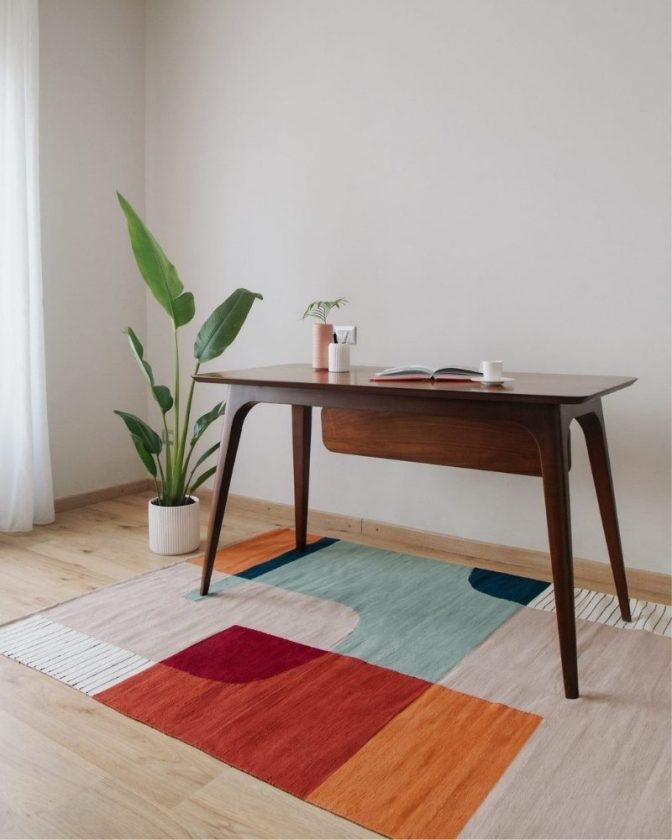
3. Urban Natural
Best for: browsing fair trade rugs in lots of styles and sizes
Categories: Outdoor, Area Rugs, and Accent Rugs
This natural home and lifestyle retailer has a beautifully curated selection of sustainably-made rugs crafted with materials like jute, sisal, wool, and cotton.
Several brands on Urban Natural are also ethically hand-loomed or hand-knotted, such as Loloi — a GoodWeave partner — and Jaipur Living — a brand that partners with thousands of local artisans to sustain heritage crafts.
Price Range: $259 – $9,755
Conscious Qualities: Eco-Conscious Materials
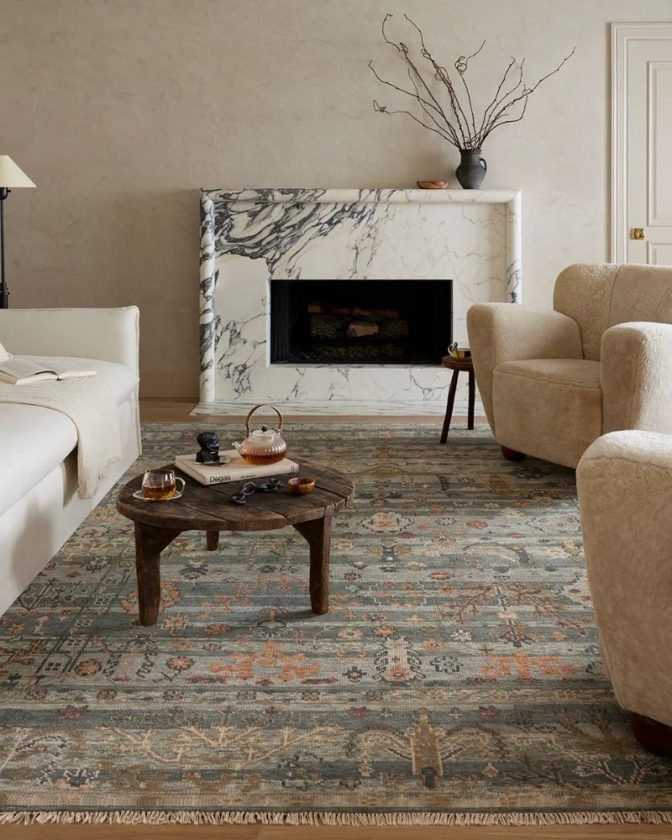
4. LOOMY
Best for: pet-friendly and performance rugs
Categories: Area Rugs, Accent Rugs, Runners, Outdoor Rugs
Founded by a weaver, LOOMY is dedicated to crafting beautiful artisan-made rugs that will last for decades to come.
LOOMY partners with highly-skilled artisan weavers who craft quality rugs made from eco-minded materials like banana silk, jute, and recycled cotton, plus performance options made from 100% recycled polyester built to withstand whatever life brings you.
Price Range: $298 – $8,298
Conscious Qualities: Natural Fibers, Craft Preservation, Vintage Options

5. West Elm
Best for: fair trade rugs in on-trend mainstream styles
Categories: Area Rugs, Accent Rugs
West Elm is bringing ethical rugs to a broader market with their collection of Fair Trade Certified wool and cotton rugs. While I recommend browsing the smaller shops listed above first, West Elm is supporting the movement to responsibly-made, fair trade rugs.
Price Range: $$$
Conscious Qualities: Fair Trade production, Majority Natural Materials
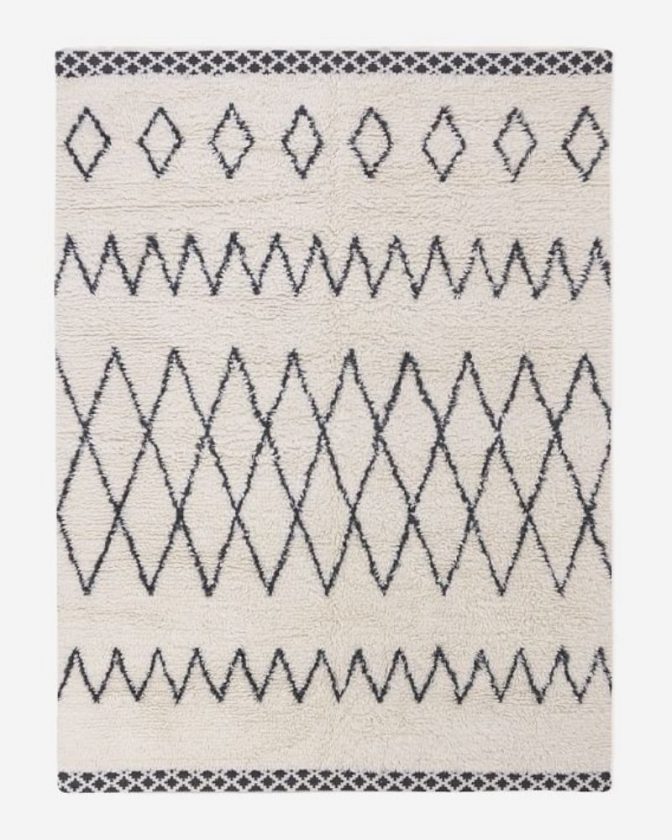
6. Jubi
Best for: Modern rugs in vibrant prints
Categories: Accent Rugs, Circle Rugs, Runners
Jubi is a Brooklyn studio founded by textile designer Cassie Dagostino. Every rug is handmade from New Zealand wool by fourth-generation weaving families in Bhadohi, India using traditional techniques. Each rug is made-to-order, meaning no excess stock. Since everything is made to order, expect between 3 and 7 weeks for your rug, depending on the technique used.
Conscious Qualities: Pays Above Market Rates, 100% Wool, Made-to-Order
Price Range: $228 – $668
Shipping: Free worldwide shipping

7. Rejuvenation
Best for: Classic rug styles made in Fair Trade factories
Categories: Accent Rugs, Runners, Area Rugs
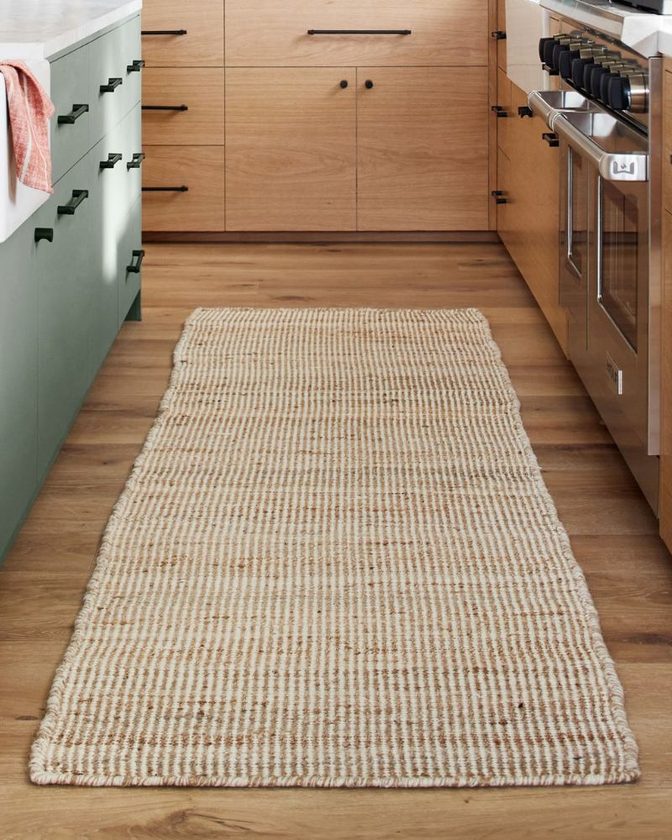
Home retailer Rejuvenation has a selection of rugs made in Fair Trade Certified factories. Their collection includes undyed hand-loomed rugs to geometric flatwoven wool rugs. And while I’d typically avoid synthetics, it tends to be unavoidable for outdoor rugs — so Rejuvenation’s Fair Trade 100% recycled poly rug is a good option.
Conscious Qualities: Fair Trade Certified, Mostly Natural Materials
Price Range: $79 – $1,649
Shipping: Contiguous U.S. shipping for 10% of product price (add $20 for HI, AK, and US. territorries)
Liked this guide to ethical rugs? You might also enjoy:
Ethical Home Decor Brands to Curate a Beautiful, Conscious Space
Eco-Friendly Furniture to Furnish Your Home Sustainably
Fair Trade and Eco-Friendly Blankets to Cozy Up With
The post 5 Best Ethical Fair Trade Rugs to Elevate Your Space appeared first on Conscious Life & Style.
As a longtime book lover, I may be biased, but I think a full bookshelf is one of the most beautiful additions to a space. There’s nothing better than seeing a showcase of your favorite reads alongside a TBR list.
A bookcase, though, can of course be used for all sorts of purposes from placing your favorite photos of family and friends to showcasing treasured vintage finds.
Whatever the case, this guide will help you find the right sustainable bookshelf for your living room, office, or wherever you like to cozy up with a good read!
So what make a bookcase more sustainable? What makes a bookshelf non-toxic?
First of all: sustainable and non-toxic are two overlapping — but distinct — criteria. And both of those terms can come with a lot of opinions and varying definitions.
When it comes to sustainable bookcases, I look for:
- Responsibly Sourced Materials: most bookshelves are made primarily with wood. While natural, unsustainable wood sourcing can be a cause of deforestation, so we want to see that the wood was from responsibly managed forests or made from reclaimed or repurposed wood. Some bookshelves may feature metal, in which case recycled materials here are important.
- High Quality Construction: sustainability includes longevity — how long will you be able to use that furniture piece before it goes to the landfill and gets replaced? Look for transparency around craftsmanship and woodworking processes. Another sign of quality is the length of warranty a company has for its products.
- Ethically Made: this one is straightforward in theory — were the people making it paid fairly and working in safe conditions? — but is unfortunately not always easy to find information. In this category, I look for transparency in practices, what relationship the brand has with the manufacturer (some produce in-house which is the best case scenario for transparency!), where it was made, and how well the makers were paid.
Ideally a sustainable bookshelf would also be non-toxic — as toxic chemical fumes aren’t exactly sustainable! But this isn’t always the case. For example, if a company prioritizes upcycled materials, they don’t necessarily have control over what inputs were part of the original materials. And sometimes a company focuses more on ethical artisan partnerships and sustainable wood sourcing, more than, say, using non-toxic finishes.
But when it comes to non-toxic bookshelves, this is what I look for. (Note that non-toxic doesn’t necessarily mean safe for all chemical sensitivities. Nor does it mean zero potentially irritating chemicals.)
- Solid Wood (where possible): MDF or pressed wood contains glue to stick the various wood pieces together, which can contain added formaldehyde. I prefer solid wood, or if it is engineered wood, I’d make sure the company is transparent around the type of glue used and/or they at least have a product certification like GREENGUARD. (More on that in a second.)
- Low or Zero VOC Finishes: most wood furniture is completed with some sort of finish to provide a protection against scratches or moisture. Many of these finishes are synthetic, and some can contain high levels of toxic chemicals. Look for a natural finish like linseed oil or beeswax or a low VOC synthetic finish.
Relevant Certifications
You’ll see a few certifications referenced throughout this guide. Here’s what each one covers:
- FSC Certified = the wood sourcing was responsibly managed; this is not a finish, foam, or textile guarantee.
- GREENGUARD / GREENGUARD Gold Certified = the finished product was tested for low chemical emissions, including VOCs, with Gold representing the stricter tier.
- Fair Trade Certified
 = verifies that a factory meets standards for fair wages, safe working conditions, and ethical labor practices.
 - Cradle to Cradle Certified (Gold) = evaluates a product or material across material health, circularity, clean air/climate, water/soil stewardship, and social fairness.
Where to Find Sustainable Bookcases and Shelving
I’m always a secondhand first proponent, and that goes for furniture, too. While your local thrift store might not have used bookshelves, check for dedicated furniture resale shops near you or estate sales. (I use EstateSales.net to find ones near me.) You can also find gently used pieces on online marketplaces like Facebook Marketplace, OfferUp or AptDeco.
If you can’t find some