Connect with us

Published

on

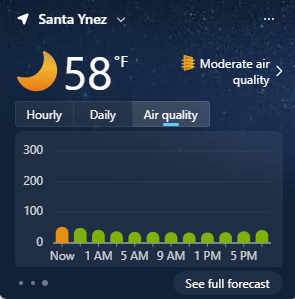
At left is a graph of the expected temperatures here at 2GreenEnergy headquarters here on the central coast of California.

As you can see, the temperature in Fahrenheit is extremely unlikely to exceed 300 degrees, nor fall below zero.  We won’t be baking turkeys in our backyards, nor will we be making ice.

As a guy who presented numeric data to clients all over the world for three decades, I always tried to make my graphics carry more informational content.

How Not to Provide Valuable Information

Continue Reading

Renewable Energy

Offshore Turbine Prices Jump, Data Centers Squeeze US Grids

Published

on

Weather Guard Lightning Tech

Offshore Turbine Prices Jump, Data Centers Squeeze US Grids

Rystad reports offshore turbine prices have jumped 45% since 2020, plus data centers squeeze US grids, Fortescue chases real zero by 2030, and GE Vernova battles Vineyard Wind in court.

Sign up now for Uptime Tech News, our weekly newsletter on all things wind technology. This episode is sponsored by Weather Guard Lightning Tech. Learn more about Weather Guard’s StrikeTape Wind Turbine LPS retrofit. Follow the show on YouTubeLinkedin and visit Weather Guard on the web. And subscribe to Rosemary’s “Engineering with Rosie” YouTube channel here. Have a question we can answer on the show? Email us!

The Uptime Wind Energy Podcast, brought to you by StrikeTape, protecting thousands of wind turbines from lightning damage worldwide. Visit striketape.com. And now, your hosts. 

Allen Hall 2025: Welcome to the Uptime Wind Energy Podcast. I’m your host, Allen Hall, and I’m here with Rosemary Barnes, who’s been busy in Australia up in Sydney at a energy conference.

Rosemary, what happened this past week?

Rosemary Barnes: Oh, yeah. I’ve been up in Sydney for the Smart Energy Conference and Exhibition. It’s a big… I don’t know if it’s the biggest. I think they get about 12,000 people or something through the doors. So yeah, it’s, it’s one of the big, maybe the biggest, um, energy conference in Australia.

It’s really focused on distributed energy households. So in the past, it was, like, nearly all solar, um, like rooftop solar. There used to be lots of installers that were there and, yeah, there’s heaps of solar [00:01:00] panels around in the exhibition hall. And over the last few years it’s been a mix of batteries and solar, and then now this year it was basically 99% batteries, 1% EV chargers, and almost not a solar panel to be seen.

I didn’t actually spend that much time in the exhibition this year. I mostly was, um, attending sessions. Andrew Forrest from Fortescue headlined, and that was really good. I haven’t seen him speak live before. Y- you know, he, he told about all the, like, good plans that Fortescue’s doing to get to real zero by 2030.

So he’s on a real rampage at the moment to try and get rid of the diesel rebate that we pay at the moment. We pay diesel users a, a, yeah, a fuel, fuel rebate. It was just cool to hear about y- you know, all of Fortescue’s plans, why they’ve got this big green grid that they’re building out in the Pilbara.

Um, I really liked when he said, you know, it’s not, it’s not magic, it’s, um, it’s just, what did he say? Like, maths, physics, engineering, and [00:02:00]economics, and a bit of courageous leadership. That’s what you need to make a green, a green electricity grid. So I really like that the, you know, engineering was mentioned, was mentioned there.

I did actually get the chance to ask him a question, too. Wanted to know, um, you know, like, Fortescue is, is really one of the most interesting things about the company is that they are using brand-new technologies or even not quite there yet technologies. I asked, uh, Andrew Forrest, I asked him, you know, like, how you make these bold, bold decisions, does it ever, you know, worry you that it’s not gonna work out?

And I was assuming he would say, “It doesn’t worry me,” um, because, you know, he has that kind of brash, confident personality. So I, you know, my follow-up was, what, what steps do you take so that you aren’t worried by it? And he said it does worry him, and he s- stays awake every night worrying, worrying about if these technologies aren’t going to work.

And that, uh, basically they try and have a really, really solid plan B that isn’t a [00:03:00] brand-new technology. So, um, you can, you know, infer from that, that if the– I mean, first of all, he said, “We don’t invest in the technology until they have demons- demonstrated with a good prototype that it’s likely to work.”

Um, but I guess that, you know, assuming that they’ve ran into problems in the rollout of all of these Naberebo towers, that, um, they have a backup of some conventional towers.

Speaker 2: Yeah, uh, the, the Fortescue people, when we talked to them about, pfoof, probably six months ago, maybe a little bit longer, we were helping to build a farm out in Western Australia.

It was a small team, much smaller than anything you would see in the US, and it does sort of align with the Australian approach to it, is that you don’t need a massive team of people to do these projects. You just need to know what you’re doing, and that was really remarkable. So e- I’m not surprised that Fortescue is continuing on in, in different aspects.

It does seem like they’re pretty bold about their engineering approach and taking on massive projects that otherwise wouldn’t be [00:04:00] done and-

Rosemary Barnes: It, it’s also really cool to hear, uh, Andrew Forrest or anyone from Fortescue talk because they’re talking about things that they’ve done. You know, like we have so much when you’re at these, uh, events and, you know, everyone’s doing these inspiring talks, it’s always about, “Oh, this is the possibility for the future.”

But Fortescue has actually, has actually done it. Yeah, there was a lot of, like, actual progress discussed at this conference. It wasn’t, “This is what we could do if we all joined hands and sang Kumbaya.” It wasn’t like that, you know? It’s like, this is what’s happening when the engineering is there, the economics are there, and the government isn’t standing in the way.

Um, y- you know, you can make a lot of, a lot of progress. And you know what? Like now we’ve got so much distributed energy in Australia. It’s the rooftop solar that we’ve been building for, you know, 20 years by now. Um, and it’s the, the batteries especially. Like it is a- starting to have a noticeable impact on electricity prices, and co- coal and gas are both reducing in the grid.

I think the last quarter of gas use in Australia was the lowest it’s [00:05:00] been since 1999. Like, um, yeah, so it’s, yeah, it’s, it, it’s dropping, you know? And so I think that that’s a really unique story for Australia is that households can actually really change the dial.

Speaker 2: Well, can I ask you about that? Because the data center issue is popping up again in the United States, and one of the things about data centers is they feel like you, you’re gonna need a good amount of batteries to support if the grid hops on or turns off, that they wanna be able to support this data center, so having a buffer and batteries would make a lot of sense.

However, there’s not a lot of battery storage in the US at the minute versus a place like Australia where there’s a lot of it. Doesn’t it make a lot of sense to start putting data centers in Australia? I still don’t understand Why that hasn’t been done? Because electricity prices are cheaper, the land is available, the infrastructure’s there.

It’s going [00:06:00] to be, you would think, easier to build in Australia than it would be in the United States. What’s the dilemma there?

Rosemary Barnes: I think certainly there are plenty of plans to build big data centers in Australia. Um, and now I’m gonna go, like, move a little bit outside my expertise, but I think that one of the issues is that at the moment, a lot of the data centers need to be quite close to where the work is happening.

So I mean, you’re always gonna need data centers close to any big city where people are, are using the internet. Um, but aside from that, you know, like, the tech sector in the US is much bigger, so the people actually developing, um, you know, training, um, uh, yeah, training AI models, um, are more likely to be sitting in the US and, you know, need a large amount…

Not all of their compute needs to happen nearby, but a fair chunk of it. And so I think that that is one reason why so far that’s where it is. Um, but it also doesn’t mean… I mean, there’s [00:07:00] plenty of smart, um smart computer types in Australia as well as the US, so you could start to see more companies moving, um, moving to where electricity is cheap.

I think that– And grid connections are fast.

Speaker 2: The one thing you notice about using any of the AI platforms today is, like, there’s a built-in delay. Unlike when you’re on Amazon or any other s- active site, when you click, you want something to happen immediately. With AI, they, they build in a little wait process, which means you can have a data center anywhere, because you’re not expecting an instantaneous response from it.

That means, in a sense, they’re setting it up to be a global industry. There is more of a delay now than there was a month ago. And I assume that has to do with usage, and they’re trying to manage all the data usage, right? So electricity is one of the limitations in the United States. That’s evident right now.

The amount of data centers is a problem, so they’re trying to spread out the usage, and they are definitely… At least Anthropic is slowing it down. [00:08:00] I’d imagine all the other ones are doing the same thing. So it does open up the world to cheaper electricity.

Rosemary Barnes: There’s heaps of really interesting work happening in trying to get, um, AI and data centers to be better grid citizens, not probably primarily out of the goodness of their heart, but because of two things.

One, grid connections are really slow, and so there’s a strong incentive that you can save, in some places, years off your development time if you can just bring in enough batteries, enough smart tech to make sure that you’re never going to, um, you know, add to peak, peak load in the grid, then you can- You know, change how things go.

It’s also a matter of, like, social license as well, because at the moment it’s probably not too bad. People don’t realize too much. But if people’s electricity prices start going up because, you know, grid had to be built out because of da- data centers, they’re gonna start getting pissed as soon as they realize what that is.

So I think [00:09:00] that, um, you know, these big companies, what do they call them? Hyperscalers. I think that they’re aware that that is gonna come and that that is a really strong incentive to do the right thing before they are made to do the right thing. Because, you know, like, if people got really upset then, um, you could easily have the rug pulled out from underneath a project that you thought was all set to go ahead, you know, could very easily be delayed indefinitely.

I mean, we’ve definitely seen in the US that-

Speaker 2: Right. In 30 states in the US have already put prohibitions or limitations on data centers. That means there’s only 20 states left. Alaska is probably not a prime choice, Hawaii is not either, so you even have fewer. It does seem odd that when these limitations pop up that the discussion doesn’t move to other countries.

Australia being an easy one, because electricity there is practically free. It seems like a smart move, but they haven’t made it yet.

Rosemary Barnes: Yeah, I mean, it’s not, it’s not [00:10:00] practically free in Australia yet, but I think that the, um, horizon, um, like the, you know, the outlook is it’s, it’s getting cheap. We… And we are finally seeing wholesale prices actually start to come down.

But there’s this really awkward middle period though, you know, like, because, um, at the moment we’ve still got all of the… nearly all of the coal generation there, nearly all of the gas generation is there, and you need to have it there until you build out the other stuff. But it’s like prices drop and drop and drop when you’ve got this oversupply problem.

But you’re gonna have the oversupply problem until you’ve got enough to start turning off, you know, gigawatt, two gigawatt, um, thermal generators. So it is a really weird middle, um, mid- mid-transition, I think is the term for it. You need planning. You know, you need… You actually do need… At some point you need a plan, and you need to execute it and expect that, like, every step you take is not gonna be better.

Y- you know, like [00:11:00] some steps you’re gonna take that are gonna make it, um, economically worse for the short term. But, you know, like, if you’ve got a mountain range in between you and your destination, then yeah, like it’s, it’s really hard going for a while. But you’ve gotta climb that mountain if you wanna get to the other side and, um, you, and you, you can’t do that without a plan.

Speaker 2: Well, what other place on the planet has or will have shortly unused gigawatts of old generation? I don’t think I know of one. It, it’s gonna be Australia So th-those gigawatt plants that were thermal plants that won’t be needed ’cause the price of electricity is so low, it does seem like a smart person would put a data center right next door to it.

Rosemary Barnes: No, but we wanna turn ’em off. I

Speaker 2: don’t think you’re gonna be able to, Rosemary. I’m just saying, the world needs, uh, AI and it’s coming.

Rosemary Barnes: We’ll see. I think that, um, you know, I did get quite energized by the event, the, um, SSE event that I was at this week because it’s like there are a few things that [00:12:00] Australia, um, you know, really has, like, an opportunity to be world leaders in.

And when you get to be the leader, then it means that the technologies that you invent to solve the problems that, you know, the early adopters have, you have the headstart on that. And, you know, as other countries follow in your footsteps, you have the opportunity to lead, lead those technologies.

Speaker 2: As wind energy professionals, staying informed is crucial, and let’s face it, difficult.

That’s why “The Uptime Podcast” recommends PES Wind Magazine. PES Wind offers a diverse range of in-depth articles and expert insights that dive into the most pressing issues facing our energy future. Whether you’re an industry veteran or new to wind, PES Wind has the high-quality content you need. Don’t miss out.

Visit peswind.com today. So if you want to build an offshore wind farm in Europe right now, you had better be ready to pay. A new analysis from Rystad Energy shows that the turbine selling prices have jumped between 40% and 45% [00:13:00] since 2020. And here’s the thing, manufacturing costs only went up about 20% to 25% over the same period.

The difference is pure pricing power. And with GE Vernova out of the new offshore order book and only Siemens Gamesa and Vestas left to supply Western markets, developers are facing a seller’s market in the most critical of components. Nacelles and blades are where the bottleneck hits hardest, and there is no quick fix in sight.

So Rosemary, Siemens Gamesa and Vestas are leveraging the, the lack of com- competition, particularly from China at the moment, to gather market share and to raise prices, which I think everybody would agree if you’re on the engineering side of wind turbines, the prices needed to come up because there’s some work that needs to be done, and the engineering side has been pretty thin.

To make these turbines more resilient, [00:14:00] you’re gonna need more engineering, it can be a little bit more on the manufacturing side. That takes money So prices had to come up

Rosemary Barnes: Yeah, I mean, I, I, I agree. It’s definitely n- not the case that everyone would agree. Anybody who has a spreadsheet and they’re trying to get the number, number right so that they can develop a new project is gonna say that it’s a bad thing, and it will also probably slow down development a little bit.

Although, I guess if there was a supply constraint, then that was already a natural, um, handbrake, so maybe there’s no difference. But I do think that, um, you know, and I’ve said it a lot of times, like, you know, wind power reduced, it had a really steep cost reduction curve through the 20-teens, and I think that it was just artificial.

You know, like it was driven by competition rather than true cost reductions in the technology. I think we undershot the price level that it needed to go for, and there just wasn’t enough money to do proper engineering, and, you know, w- we see that. Y- you know, you and I work in O&M, and we deal ev- every day with, with things where it’s like how did, [00:15:00] uh, how, how did they think that this technology was ready when they went and sold thousands of turbines with it?

And I know that the answer is not that, um, engineers were lazy or stupid or just didn’t s- see the problems coming up. It was just too, too fast a pace of technology, um, rollout, like new technologies combined with just relentless focus on, on cost. You know, like all of my projects, it’s just like you just have to reduce cost and reduce it and reduce it and reduce it and, you know, to the point where you’re making changes that you don’t have time to fully check.

Um, and, you know, then you have quality problems in the field.

Speaker 2: What’s the effect of an Indian manufacturing company in Europe on the offshore marketplace? If like an Adani or one of the other, Suzlon, one of the, one of the big manufacturers in India decides to make offshore wind turbines at scale, [00:16:00] wouldn’t that dramatically shift the marketplace in Europe?

Rosemary Barnes: Yeah, I guess if you’ve got a new player, it’s always gonna shift things a bit. I don’t think it matters specifically that it’s Indian. Um, but a new player is gonna wanna be making sales and probably, you know, setting their price at the point that, that they need to, to, um, get those sales, maybe not initially worried so much about profits.

If we were talking about Chinese manufacturers in Europe, and we have in the past, if we’re talking about that, then I think that that is a bit more relevant which, which country it is because China, you know, has just like essentially infinite money to put behind it and can keep on going long enough. You know, like they don’t need to make a, a profit every single year or every single five-year period even.

They can think longer term. I, I, as far as I know, India is not quite the same as that, so I would expect it to be a bit more short-lived, but that’s always the risk that, you know, someone comes in and [00:17:00] undercuts, um, undercuts for long enough that it- causes the local local, uh, manufacturers to not be able to compete and shut down

Speaker 2: Well, just knowing some of the operators that were doing offshore wind projects and their desire to bring in a alternative to keep prices to the level that they could accept, with Mingyang being shut out at the minute, they’re gonna have to look somewhere else.

So I think the only place they can find an alternative lower price competitor is gonna be India. Although the turbines aren’t at scale yet, I, I think you’ll see somebody make noise about it in the next six months on the operations side.

Rosemary Barnes: I think the European manufacturer is a probably better place to just scale up.

Speaker 2: Well, let’s talk about GE Vernova for a minute, because the legal fight over America’s first large off-scale wind farm just got more complicated because Vineyard Wind reached commercial operations on April 24th, about a week or [00:18:00] two ago, and activated its purchase power agreement. Well, uh, now GE Vernova is using those very milestones against Vineyard Wind in court.

GE Vernova filed an emergency motion arguing that the activation of those contracts undermines Vineyard Wind’s claims of irreparable harm. But Vineyard Wind’s attorney says the project is generating at less than half of its 806 megawatts capacity, and GE Vernova’s work is still needed to get it there.

The next court hearing is set for this week. This little battle continues, and it’s– Although it seems fairly quiet, you don’t hear a lot of news reports about it in, uh, particularly the mainstream press, not too much about it, it– this has huge ramifications because as we talked about offshore wind over in Europe, if, if GE is truly getting out, and particularly if they’re in a fight with one of their largest purchasers of turbines, it’s gonna [00:19:00] disincentivize Europeans from even considering GE.

In my opinion, I don’t know how you would think that GE would be one of the options. Although you would like to have three competitors bidding on every project in Europe, I think GE’s taken itself out of the marketplace because of this, this lawsuit.

Rosemary Barnes: Mm. You know what it reminds me of? It, um, it reminds me of the Justin Baldoni versus Blake Lively lawsuit that’s ongoing at the moment, where it’s just, like, mutually assured destruction.

Speaker 2: But at least they settled, Rosemary. They’re, they’re not fighting anymore.

Rosemary Barnes: They settled, but they didn’t settle all aspects of it.

Speaker 2: The only reason I know about that is because you keep mentioning it. So when I see it pop up, I would normally just let it go. But I figured Rosemary’s focused on this, I should probably at least dabble in it briefly.

That wraps up another episode of the Uptime Wind Energy podcast. If today’s discussion sparked any questions or ideas, we’d love to hear from you Reach out to us [00:20:00] on LinkedIn, and don’t forget to subscribe so you never miss an episode. And if you found value in today’s conversation, please leave us a review.

It helps other wind energy professionals follow the show. For Rosie, I’m Allen Hall, and we’ll see you next week on the Uptime Wind Energy Podcast.

Offshore Turbine Prices Jump, Data Centers Squeeze US Grids

Continue Reading

Renewable Energy

Eric Trump as U.S. Presidential Candidate

Published

on

The reader who sent me this writes, “Son of Satan.”

Yes. I think of him as Donald Trump, but without the intelligence, honesty, and charm.

Eric Trump as a U.S. Presidential Candidate

Continue Reading

Renewable Energy

The Sanctity of the Second Amendment

Published

on

From a reader:

We ask that all firearm owners put this on their wall. The Supreme Court of the United States has affirmed that the right to keep and bear arms is a fundamental right of the individual. If you believe in the 2nd Amendment, and you are not afraid to show it, re-post this!!! … I hope to see this re-posted by a lot of my friends. Remember, if we outlaw guns, then only outlaws will have guns!!!

My problem with the absolutism of these people is that they are unwilling or unable to differentiate between the right of a farmer in Wyoming to own a rifle, and some kid with a history of mental illness to own a cache of AR-15.

What about rocket-propelled grenades? Flame-throwers?  Surface-to-air missiles? Nuclear weapons?

A little sanity here would go a long way.

The Sanctity of the Second Amendment

Continue Reading

Trending

Copyright © 2022 BreakingClimateChange.com