

Can anyone remember a time when we didn’t start the year thinking that this time climate finance was key? Yet there is something historic and different this year. What’s on the table is a perfect combination for things to go really right or really wrong.
Last year ended with a historic outcome. After more than 30 years, the UN climate negotiations finally identified the core driver of the crisis – fossil fuels – and set out a series of steps to phase them out, which will require significant investment.
How significant? The high-level expert group on climate finance estimates that developing countries (excluding China) need $2.4 trillion annually in climate investment by 2030. Not an easy feat.
Renewables are the cheapest form of electricity generation in the majority of countries. They are projected to become even more affordable, as technology advancements and economies of scale drive down costs.
Witness bribing minister’s family own Congolese carbon credit company
They also offer greater price stability since they don’t rely on fuel purchases. However, the upfront capital investment needed is often higher than for fossil power plants. For many countries where market interest rates exceed 10 percent, this puts clean energy ambitions out of reach.
On top of this, mounting climate impacts are hitting the poorest and most vulnerable communities around the world. The cruel injustice of the climate crisis is that those who did the least to cause the problem are hit first and worst by its impacts, and have the least capacity to invest in their resilience.
New finance foundations
We know what needs to be delivered at Cop29 in Azerbaijan: all the way back in 2015 governments agreed to set a new climate finance goal, beyond the existing $100 billion per year target, before 2025.
But there are three foundations governments need to lay this year that can actually make an ambitious goal achievable: reforming multilateral development banks, addressing debt, and initiating innovative taxation.
Let’s start with the oldest of the multilateral development banks (MDBs). The World Bank turns 80 this year and is notorious for its overbearing and cumbersome bureaucracy.
Germany and US warn Brazil against using Amazon Fund to pave rainforest road
MDBs were created to provide financing to countries on more favourable terms than the market to invest in development, but have grown long in the tooth.
The ideas for what needs to change are all there: fully aligning with the Paris Agreement’s goals by ending financing for fossil fuels; reforming their blunt eligibility rules to allow middle-income countries to access cheaper financing for climate projects; and raising more capital through both conventional—government contributions and bond issuances—and unconventional means, such as rechanneling IMF Special Drawing Rights.
Debt debates
On debt, governments have finally recognised the link between countries’ fiscal space and their ability to undertake climate action, and emphasised the importance of low-cost financing to address this. The pandemic has turbocharged a sovereign debt crisis that was already brewing before 2020. The IMF has warned that 60 percent of low-income countries and 25 percent of emerging markets are in or near debt distress.
Underlying these countries’ fiscal situations are the fingerprints of climate change. Many developing countries face a climate investment trap: existing debts and high interest rates make it costly to borrow to invest in climate mitigation and adaptation.
As a result, they are more vulnerable when disasters hit, meaning higher recovery costs and a hit to credit ratings, making future investments even more expensive.
The United Nations Environment Programme estimates that climate change has raised average borrowing costs for vulnerable countries by 117 basis points, equating to an extra $40 billion in interest payments over the past decade. Countries need a way to break out of the climate investment trap if the world is to meet its climate goals.
“A la carte menu”: Saudi minister claims Cop28 fossil fuel agreement is only optional
The current multilateral process for dealing with sovereign debt, the G20 Common Framework, is not delivering; as a piecemeal approach, it is neither common nor a framework. Major economies in the G20 need to acknowledge this and develop a new fit-for-purpose strategy for dealing with debt.
A promising new initiative launched at Cop28 was the Expert Review on Debt, Nature and Climate. Led by Presidents Macron of France, Petro of Colombia and Ruto of Kenya, the review will bring together leading experts to independently examine how sovereign debt can hinder climate ambition and explore solutions.
Once debt crises are addressed, more sustainable financing options must be made available for countries, otherwise they are likely to fall back into crisis. Providers of climate finance must ensure that their finance is structured to best address country and project needs.
Too often it is the other way around: due to political constraints, contributors have preferences for debt-creating instruments and try to shape climate projects to fit these in ways that may not deliver the biggest benefits for people or the planet.
New taxes
Lastly, the most controversial words in a major election year are going to be unavoidable: new taxes. We know that current government contributions to climate funds have been a drop in the ocean until now.
Getting polluters to pay the costs of their actions—such as taxing the fossil fuel industry’s $4 trillion-a-year profits, a levy on the emissions of the shipping industry, and surcharges on business and first-class flights—offer much more equitable ways of raising revenues to finance the response to climate change.
Antigua and Barbuda, Barbados, France, Kenya and Spain have already come together to set up a Taskforce on International Taxation that will look into these and other measures and agree on specific proposals for raising additional climate finance by Cop30.
Progress on all of these fronts is essential to lay the groundwork for a successful finance outcome at Cop29. We have to learn from history: setting climate finance goals without the revenues and systems to deliver on them is a recipe for disappointment. This time must be different.
The post High stakes for climate finance in 2024 appeared first on Climate Home News.

A report from Greenpeace Australia Pacific and Springmount Advisory reveals the untapped green economic opportunity for Western Australia in a declining Asian gas market, which also offers a genuine solution for decarbonisation in Asia.
Is Western Australia clinging to a fading gas industry while a thriving green future passes it by? As major Asian trading partners rapidly pivot away from volatile gas imports toward cheap solar and battery storage, this report exposes a high-stakes choice: risk becoming stranded in an oversupplied fossil fuel market, or harness WA’s unmatched sun and wind to lead the global clean energy transition.
Summary
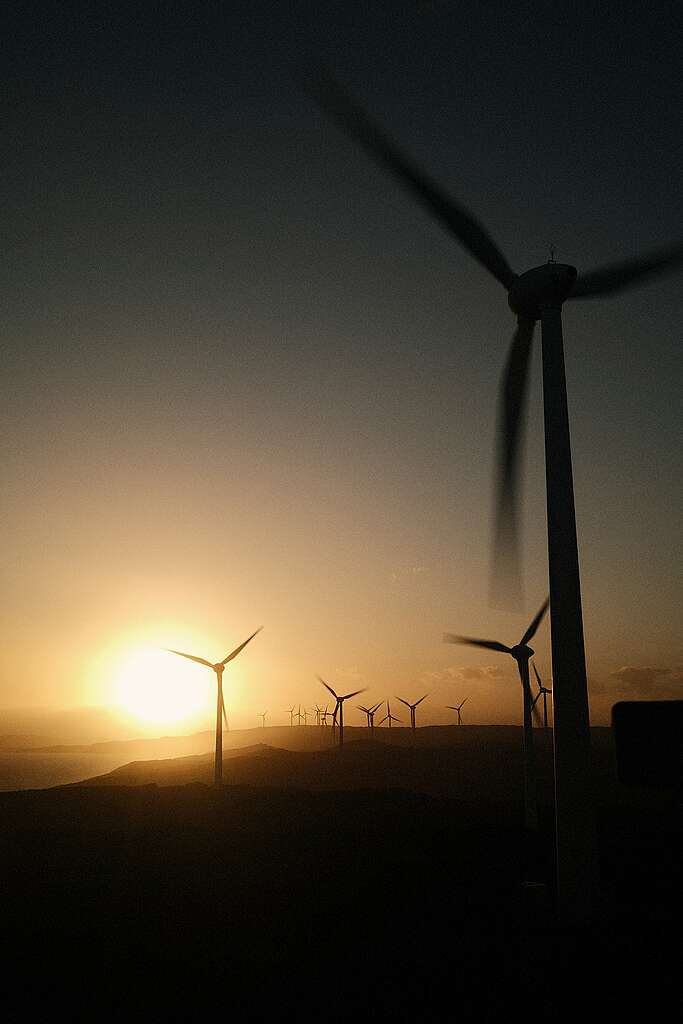
From Gas to Green: Building Western Australia’s Future State reveals that Western Australia (WA) faces a critical juncture as falling Asian gas demand, geopolitical gas supply volatility and accelerating renewable energy deployment undermine the long-term economic viability of gas exports. By harnessing its world-class wind and solar resources, the report demonstrates that WA can execute an orderly phase-out of gas and pioneer a green commodity export economy that could generate $987 billion in economic value by 2060, create 24,000 ongoing jobs, and drive a 9.6% reduction in global greenhouse gas emissions.
Key Findings
- Gas demand is falling in Asia – WA can no longer rely on gas exports: Gas demand in core Asian markets fell in 2025 and is projected to continue to decline in 2026. Legislated energy plans in Japan, South Korea, and China now prioritise renewables and nuclear over gas.
- Asia is increasing renewables, importing gas just gets in the way: Evidence from markets like Thailand suggests that gas imports are increasingly crowding out cheaper renewable energy investments and battery storage rather than displacing coal, locking in more emissions over time.
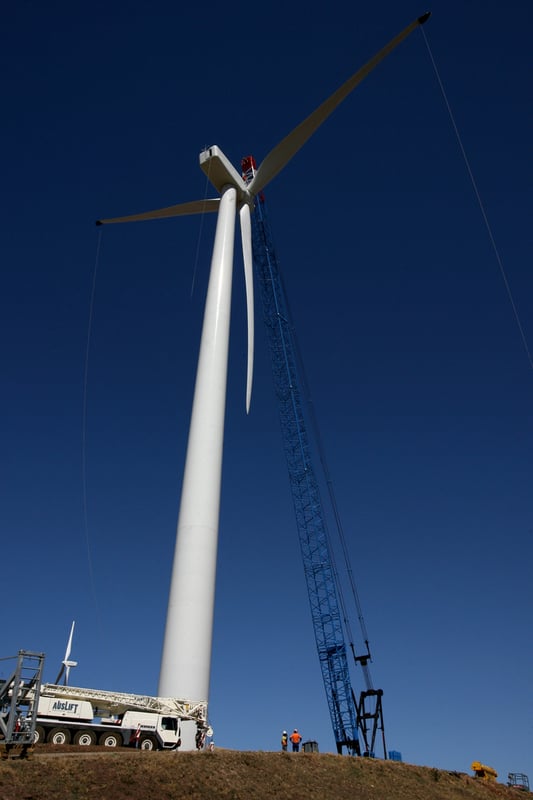
- Green commodities offer a real solution to decarbonise Asia – this is a major win for WA: With world-class renewables, WA can lead Australia’s green commodity exports, which by 2060 could be worth almost a trillion dollars ($987 billion) and support a genuine 9.6% reduction in global emissions.
Recommendations to WA government
Recommendation 1: Plan an orderly gas phase-out aligned with a trading partner pivot plan
Implement a managed, orderly phase-out of gas exports aligned with trading partners’ decarbonisation pathways, rather than waiting for demand to collapse, by:
- Developing and implementing a staged phase-out of gas facilities aligned with feedstock supply expiry or typical end of facility lifespans.
- Committing to no new gas development for gas expansion, including Browse and Kimberley fields.
- Developing new, reciprocal trade relationships with existing gas trade partners, structured to progressively replace gas exports with green commodities – integrated with recommendation 2.
Recommendation 2: Develop an integrated green commodity export strategy, positioning WA as a global green iron manufacturing hub
Establish an integrated green commodity export strategy that immediately prioritises green iron development, positioning WA as a global green iron manufacturing hub, by:
- Committing to green commodity export targets to give industry and investors a clear demand signal.
- Prioritising green iron as the lead sector within the broader green commodity strategy, given WA’s iron ore endowment and first-mover potential.
Recommendation 3: Reject false solutions such as carbon dumping (CCS) and blue hydrogen
Reject carbon dumping (also described as carbon capture and storage, or CCS) and blue hydrogen as viable decarbonisation technologies, and prioritise green hydrogen and proven renewables for clean energy and fuel production by:
- Excluding blue hydrogen projects (and CCS-dependent projects) from all government support programs.
- Requiring existing hydrogen-based production (including ammonia, methanol, synthetic fuels) to have clear, near-term transition timelines to switch to green hydrogen production.

What you can do
Together, we can push for a prosperous green future.
You can help by:
- Sending an email to Environment Minister Murray Watt and Prime Minister Anthony Albanese, calling on them to reject Browse.
- Sharing this story to help more Australians understand what’s at stake.
- Encouraging your friends and family to take action.
REPORT: “From Gas to Green” Building Western Australia’s Future State
Cleaner cooking projects in the UN carbon market will have to set aside a share of their credits to insure against the risk that the trees they save are lost to fire, drought or logging, after the market’s regulator rejected calls to exempt the sector.
The requirement is part of a new rulebook that the Paris Agreement carbon market regulator – the Article 6.4 Supervisory Body – approved last Friday for programmes that aim to cut emissions by distributing new and cleaner cookstoves in regions that still burn wood or charcoal for cooking.
These are the UN mechanism’s first rulebooks for cookstoves, one of the carbon market’s most popular credit types and also one of its most criticised for overstating climate benefits.
They consist of two methodologies: one for programmes that aim to cut greenhouse gas emissions by distributing more efficient cookstoves that burn less wood or charcoal, and a separate methodology for projects shifting households to lower-emissions cookers running on electricity or liquid petroleum gas (LPG).
Mkhuthazi Steleki, the South African chair of the Supervisory Body, said “this decision gives cleaner cooking projects a new pathway under the UN carbon market, with clear rules to ensure that each credit represents a real and credible emission reduction”.
Industry and NGOs lobby to weaken UN carbon credit rules in “coordinated” push
In copycat submissions and a private briefing to government officials, the groups have opposed a proposal to tighten safeguards for emissions offsetsLaunch of Africa Energy Bank delayed again in blow to oil and gas hopes
Repeated delays are raising questions about the bank’s momentum and whether it can mobilise investment to finance Africa’s oil and gas ambitions in an era of energy transition

Exemption push rejected
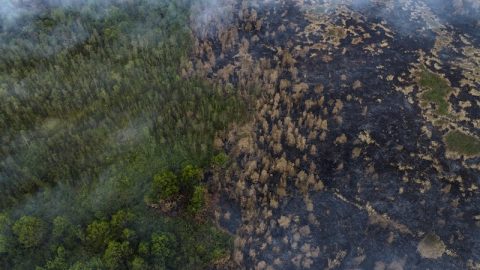
More efficient cookstove projects earn credits based on the amount of carbon they save by preserving trees that would have otherwise been cut down and burned for fuel. But if those trees later burn in a wildfire or are logged, the carbon stored would be released anyway, erasing the climate benefits of the credits.
Several carbon credit developers, conservation NGOs and the UN Environment Programme (UNEP) disputed that cookstove projects face this risk, in what critics described as a “coordinated lobbying campaign”.
They argued that, unlike forest protection schemes, this type of credit represents a “flow” of avoided emissions rather than a “stock” of stored carbon that can be released. They also warned that requiring a buffer would impose disproportionate costs and undermine the financial viability of these activities.
But the UN carbon market regulator was not persuaded by the argument. It decided that projects would have to protect against this reversal risk by handing over a percentage of credits to a so-called “buffer pool” instead of selling them.
‘New paradigm’
The amount of credits to be given up is calculated by applying different methods for natural risks, like wildfires, droughts or hurricanes, and human-caused ones, such as logging or land clearing.
For natural risks, project developers will need to apply local risk values derived from new modelling published by a group of independent scientists.
Campaigners have broadly welcomed the decision. Federica Dossi, an expert at Brussels-based advocacy group Carbon Market Watch, said it sets a new paradigm for calculating reversal risk based on empirical data. “This approach is grounded in science and we hope to see this now being adopted by other carbon crediting mechanisms in the voluntary market,” she added.
Backers claim this method is more rigorous than current practice in the voluntary carbon market, which largely relies on expert guesswork.
Pre-COP draws attention to Pacific’s climate plight and 1.5C goal
Pushback over science
As Climate Home News previously revealed, the same industry and NGO groups that sought an exemption from the “buffer pool”, along with some corporate buyers, criticised the use of a study backed by the UN carbon market’s experts that recommended the new risk assessment approach.
The groups pushed for more flexible rules that would have allowed natural risk values drawn from other sources, including national databases, or from the project developers themselves.
While the Supervisory Body rejected this approach, it gave project developers and countries the option to propose alternative values that would first need to be vetted by the mechanism’s expert panel and then approved by the regulator.
A carbon market expert told Climate Home News that, while it is too early to say how this provision will be used, they expect requests will have to be backed up with solid scientific evidence, lowering the risk of unfounded claims.

Policy discounts questioned
To guard against human-caused risks, projects will need to apply a flat 20% value set by the Supervisory Body, at the bottom of the 20-45% range recommended by its technical experts ahead of last week’s meeting.
That value can be further reduced by up to two-thirds if the host country has an emission-reduction plan covering forests, a long-term climate strategy and a framework for the UN’s REDD+ forest protection scheme.
Injy Johnstone, senior research fellow at the Munich-based Max Planck Institute, said that, while these are important governance measures, their existence does not necessarily demonstrate that the underlying risk of forest carbon loss has been reduced.
“It is important to distinguish between evidence of actual risk reduction and assumptions about the effectiveness of policy commitments,” she added.
Moving target
A UN source told Climate Home News that, under the approved formula, improved cookstove projects must set aside at least 9% of credits linked to saved wood if they operate in the lowest-risk areas and the host country can claim all available discounts. The share of credits rises significantly in regions with high natural risk values, such as Guyana, Sri Lanka and Timor Leste, or that do not have REDD+ programmes.
These factors could change in the future as the Supervisory Body asked its technical experts to recommend revisiting the risk values “should credible new evidence arise”.
Climate change is likely to make forest destruction events, such as wildfires or hurricanes, more frequent and more severe in certain regions. Meanwhile, national policies on forest protection can shift significantly depending on government changes.
Johnstone said the UN carbon market needs periodic reassessment to respond to new evidence showing that previously assumed levels of risk were too low.
“The integrity of credits is not guaranteed simply because a reversal risk tool exists,” she added. “The real test will be whether the mechanism provides equivalent atmospheric protection over time, rather than simply introducing another layer of accounting requirements”.
The post UN carbon market forces cookstove projects to protect against forest loss appeared first on Climate Home News.
UN carbon market forces cookstove projects to protect against forest loss
Next week, diplomats from around the world will descend on Yerevan, Armenia, to negotiate a series of decisions under the UN Convention on Biological Diversity (CBD).
Between 19 and 30 October, 196 parties will gather to hammer out the precise wording of the dozens of legal texts that make up the decisions under the Conference of the Parties (COP) to the CBD.
This year’s summit is particularly significant, as it marks the halfway point between the agreement of the Kunming-Montreal Global Biodiversity Framework and the deadline for achieving its targets.
The CBD has found that countries are currently not on track to meet 22 out of the framework’s 23 targets.
During the fortnight, delegates will also be negotiating decisions relating to the two supplemental protocols to the CBD: the Cartagena Protocol, which covers biosafety; and the Nagoya Protocol, which covers access and benefit-sharing for the use of genetic resources.
(The Cartagena and Nagoya Protocols, which are each governed by a “meeting of the parties”, or “MOP”, have fewer parties than the CBD as a whole, with 173 and 141, respectively.)
Carbon Brief is tracking the progress of countries towards consensus on dozens of negotiating texts using the interactive table below.
The tracker includes texts from the COP, as well as the MOPs for the Cartagena and Nagoya protocols. It also includes draft decisions from the most recent subsidiary body meetings, as these fo