

For the first time in millions of years, Earth’s atmosphere contained an average of 430.2 parts per million (ppm) of carbon dioxide, the result of humans burning fossil fuels.
The number, recorded in May at the National Oceanic and Atmospheric Administration (NOAA)’s Mauna Loa Observatory in Hawaii by scientists from University of California San Diego’s Scripps Institution of Oceanography, represents an increase of 3.5 ppm from May 2024.
“Another year, another record,” said Ralph Keeling, director of the Scripps CO2 Program, in a press release from Scripps. “It’s sad.”
The monthly @keelingcurve.bsky.social atmospheric carbon dioxide concentration clocked in at 430.2 parts per million in May for 2025, a 3.5 ppm increase over May 2024’s measurement of 426.7 ppm. Read more about the work led by Scripps Oceanography & @noaa.gov: bit.ly/43tMyeP
— Scripps Institution of Oceanography (@scrippsocean.bsky.social) June 5, 2025 at 3:17 PM
Meanwhile, scientists with NOAA’s Global Monitoring Laboratory reported a 430.5 ppm average.
Ralph Keeling’s father, Scripps scientist Charles David Keeling, in 1958 started monitoring concentrations of atmospheric carbon dioxide at the observatory’s NOAA weather station. Keeling was the first scientist to recognize that levels of Northern Hemisphere carbon peaked in May. He also discovered that the levels fell during the growing season, only to rise again when vegetation died in the fall.
Keeling documented the fluctuations in the planet’s carbon dioxide levels in what is now known as the Keeling Curve. This record helped him recognize another pattern: Carbon levels were rising with each passing year.
Exceeding the threshold of 400 ppm was unimaginable just decades ago, reported NBC News. It translates to more than 400 million molecules of carbon dioxide for every one million of gas in Earth’s atmosphere. The milestone was first reached in 2013, and now scientists are warning that carbon levels could reach 500 ppm in the next 30 years.
Keeling said the last time atmospheric carbon levels were so high was likely over 30 million years ago.
“It’s changing so fast,” Keeling told NBC News. “If humans had evolved in such a high-CO2 world, there would probably be places where we wouldn’t be living now. We probably could have adapted to such a world, but we built our society and a civilization around yesterday’s climate.”
The Mauna Loa Observatory sits at an elevation of 11.141 feet and is the world’s standard for monitoring average levels of carbon dioxide in the northern hemisphere.
Daily independent measurements by NOAA began in 1974.
The combined monitoring by Scripps at Mauna Loa and NOAA have provided a baseline for the establishment of a long-term record of the most important greenhouse gas.
“Like other greenhouse gases, CO2 acts like a blanket, trapping heat and warming the lower atmosphere. This changes weather patterns and fuels extreme events, such as heat waves, droughts and wildfires, as well as heavier precipitation and flooding. Rising CO2 levels also contribute to ocean acidification, a change in ocean chemistry that makes it more difficult for marine organisms like crustaceans, bivalves and coral to grow hard, carbonate skeletons or shells,” the press release said.
While Mauna Loa is considered the world’s standard for recording the global rise of carbon dioxide, it can’t capture all variations throughout the atmosphere. There are monitoring stations in the Southern Hemisphere with a reverse cycle that have yet to cross 430 ppm.
The measurements from Mauna Loa Observatory, along with data from other sampling stations all over the world, are incorporated into the Global Greenhouse Gas Reference Network, which serves as a basis for policymakers attempting to tackle climate change.
Carbon dioxide levels in Earth’s atmosphere are an indicator not only of how much humans are impacting the climate, but of the overall health of our planet.
“They’re telling you about your whole system health with a single-point measurement,” Keeling told NBC News. “We’re getting a holistic measurement of the atmosphere from really a kind of simple set of measurements.”
The post Earth’s Atmosphere Contains More CO2 Than It Has in Millions of Years appeared first on EcoWatch.
https://www.ecowatch.com/earth-atmosphere-co2-2025.html

As a longtime book lover, I may be biased, but I think a full bookshelf is one of the most beautiful additions to a space. There’s nothing better than seeing a showcase of your favorite reads alongside a TBR list.
A bookcase, though, can of course be used for all sorts of purposes from placing your favorite photos of family and friends to showcasing treasured vintage finds.
Whatever the case, this guide will help you find the right sustainable bookshelf for your living room, office, or wherever you like to cozy up with a good read!
So what make a bookcase more sustainable? What makes a bookshelf non-toxic?
First of all: sustainable and non-toxic are two overlapping — but distinct — criteria. And both of those terms can come with a lot of opinions and varying definitions.
When it comes to sustainable bookcases, I look for:
- Responsibly Sourced Materials: most bookshelves are made primarily with wood. While natural, unsustainable wood sourcing can be a cause of deforestation, so we want to see that the wood was from responsibly managed forests or made from reclaimed or repurposed wood. Some bookshelves may feature metal, in which case recycled materials here are important.
- High Quality Construction: sustainability includes longevity — how long will you be able to use that furniture piece before it goes to the landfill and gets replaced? Look for transparency around craftsmanship and woodworking processes. Another sign of quality is the length of warranty a company has for its products.
- Ethically Made: this one is straightforward in theory — were the people making it paid fairly and working in safe conditions? — but is unfortunately not always easy to find information. In this category, I look for transparency in practices, what relationship the brand has with the manufacturer (some produce in-house which is the best case scenario for transparency!), where it was made, and how well the makers were paid.
Ideally a sustainable bookshelf would also be non-toxic — as toxic chemical fumes aren’t exactly sustainable! But this isn’t always the case. For example, if a company prioritizes upcycled materials, they don’t necessarily have control over what inputs were part of the original materials. And sometimes a company focuses more on ethical artisan partnerships and sustainable wood sourcing, more than, say, using non-toxic finishes.
But when it comes to non-toxic bookshelves, this is what I look for. (Note that non-toxic doesn’t necessarily mean safe for all chemical sensitivities. Nor does it mean zero potentially irritating chemicals.)
- Solid Wood (where possible): MDF or pressed wood contains glue to stick the various wood pieces together, which can contain added formaldehyde. I prefer solid wood, or if it is engineered wood, I’d make sure the company is transparent around the type of glue used and/or they at least have a product certification like GREENGUARD. (More on that in a second.)
- Low or Zero VOC Finishes: most wood furniture is completed with some sort of finish to provide a protection against scratches or moisture. Many of these finishes are synthetic, and some can contain high levels of toxic chemicals. Look for a natural finish like linseed oil or beeswax or a low VOC synthetic finish.
Relevant Certifications
You’ll see a few certifications referenced throughout this guide. Here’s what each one covers:
- FSC Certified = the wood sourcing was responsibly managed; this is not a finish, foam, or textile guarantee.
- GREENGUARD / GREENGUARD Gold Certified = the finished product was tested for low chemical emissions, including VOCs, with Gold representing the stricter tier.
- Fair Trade Certified
 = verifies that a factory meets standards for fair wages, safe working conditions, and ethical labor practices.
 - Cradle to Cradle Certified (Gold) = evaluates a product or material across material health, circularity, clean air/climate, water/soil stewardship, and social fairness.
Where to Find Sustainable Bookcases and Shelving
I’m always a secondhand first proponent, and that goes for furniture, too. While your local thrift store might not have used bookshelves, check for dedicated furniture resale shops near you or estate sales. (I use EstateSales.net to find ones near me.) You can also find gently used pieces on online marketplaces like Facebook Marketplace, OfferUp or AptDeco.
If you can’t find something you love secondhand, and you don’t want to DIY your own bookshelf, then the next best choice is to shop from one of the sustainable furniture companies below. (If you’re simply looking for a bookstand, I’d suggest browsing Etsy for a collection of solid wood, bamboo, and reclaimed wood book stands and cookbook stands!)
Note that this guide includes affiliate links, which means we may earn a small commission if you purchase through these links which helps us continue to run this website and create resources like these. As always all brands meet strict sustainability criteria and are brands we love — and that we think you’ll love too!
1. Medley
Best for: low VOC wood bookcases
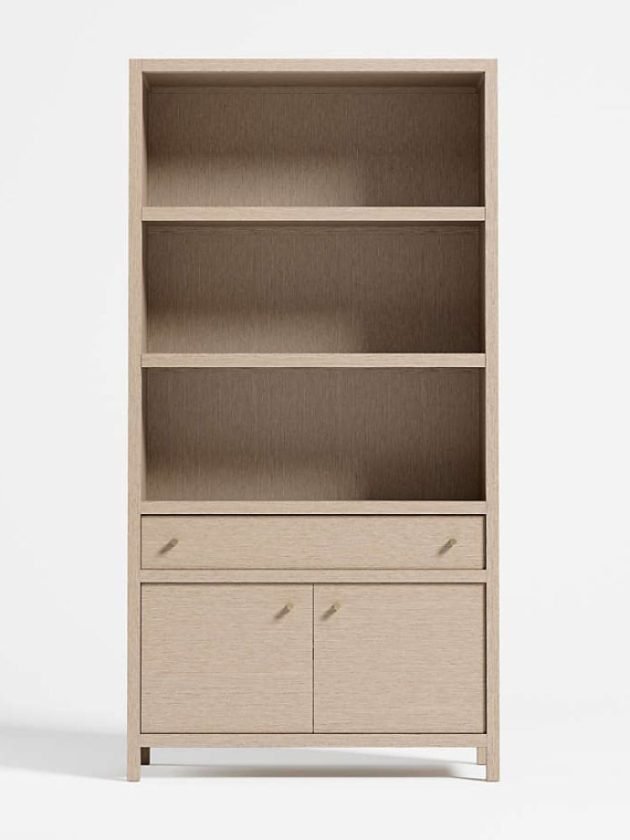
Medley’s bookshelves are elegant and elevated, perfect for a living room. Each piece is made with 100% solid FSC-certified hardwood for the tops and sides, though low-VOC CARB 2 compliant plywood is used for the shelves.
Every eco-friendly bookcase is handcrafted in the US (California or North Carolina) and completed with a low-VOC wood finish.
Price: $2,395 – $2,995
Materials: White Maple, American Walnut Wood
Conscious Qualities: Made-to-Order, US-Made, FSC-Certified Wood, Natural Finish
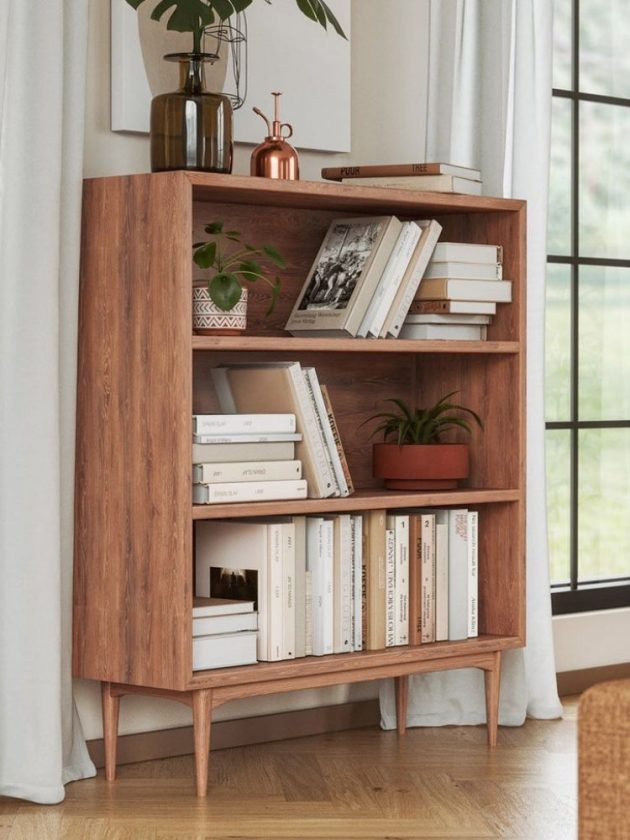
2. Thuma
Best for: non-toxic modular bookshelf
Thuma’s eco-friendly bookshelf is made from upcycled wood sourced from rubberwood trees no longer being used to source rubber. The brand’s bookshelf is also GREENGUARD Gold certified.
What makes Thuma’s bookshelf stand out to me, though, is its modularity — their Pillar Bookshelf can be set in 10 different configurations. And if you start with just a few shelves but later decide you want a larger bookshelf, you can simply buy an additional shelf or two to add on to it!
Price Range: $550 – $3,300
Materials: Upcylced Rubber Wood
Conscious Qualities: GREENGUARD Gold Certified, Repurposed Materials, Adaptable
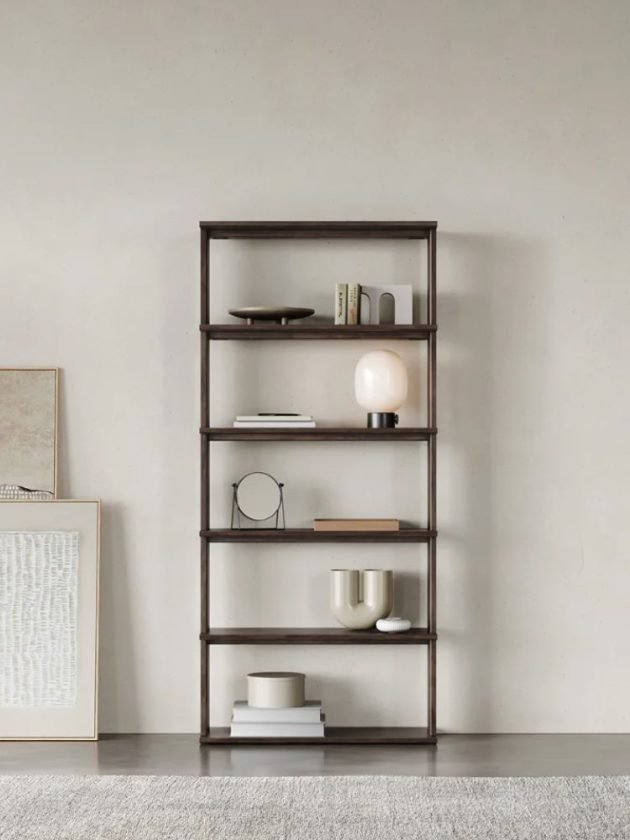
3. West Elm GREENGUARD Certified
Best for: low-tox bookcases and bookracks for kids
This furniture retailer has plenty of adorable, but functional, bookshelves for a playroom or kids’ bedroom. From cubby bookcases to mid-century bookracks, you’ll find plenty of options that are not only GREENGUARD certified, but made in Fair Trade Certifiedfactories, and/or with FSC-certified wood. Note that the company’s bookshelves are made with engineered wood, though.
West Elm also has GREENGUARD certified bookcases large enough for the adults too!
Price: $399 – $2,897
Materials: Solid Wood, Reclaimed Wood
Conscious Qualities: Fair Trade, FSC Certified, and GREENGUARD Certified Options
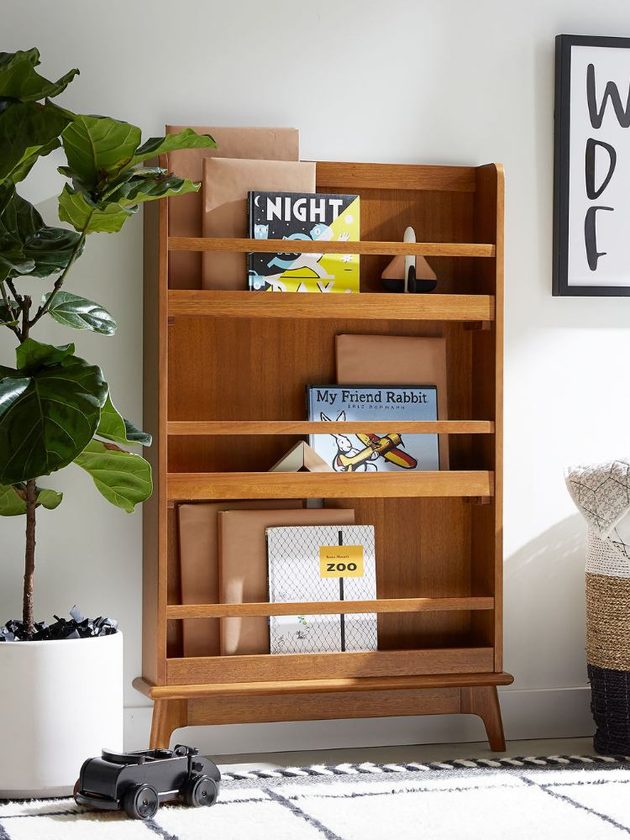
4. Urban Natural
Best for: a variety of eco-friendly bookshelves
This natural home retailer has sustainable bookcases in all shapes and sizes. From traditional bookcases to open-back asymmetrical shelving units, Urban Natural has options for any interior aesthetic. Each brand they carry values quality craftsmanship, responsible production, and sustainable sourcing.
Price: $1,099 – $5549
Materials: Solid Teak, Maple, Cherry, Walnut, Birch (varies by brand)
Conscious Qualities: FSC-Certified Options, USA-Made Options, Low VOC Finish Options (varies by brand)
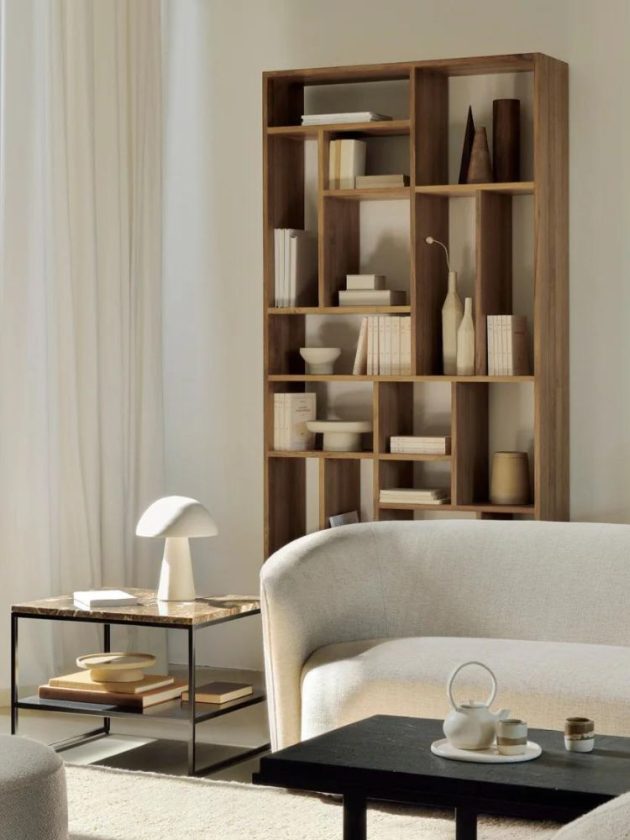
5. MasayaCo
Best for: sustainably-sourced wood bookshelves
MasayaCo has a stunning collection of sustainable shelves and bookcases handcrafted by artisans in Nicaragua. Not only is each piece of furniture made from responsibly harvested wood, but MasayaCo plants 100 trees for each order — and has planted 1.3 million trees to date. Plus they keep 40% of the reforestation projects completely untouched, to ensure the ecosystems have the chance to truly thrive.
The company shares that with the right care, their teak wood pieces can last up to 75 years. Note, though, that the finishes used aren’t disclosed, so if that’s one of your priorities, this might not be the top pick for you.
Price: $675-$1,295
Materials: Teak
Conscious Qualities: Artisan Made-to-Order, Reforestation Projects, FSC-Certified
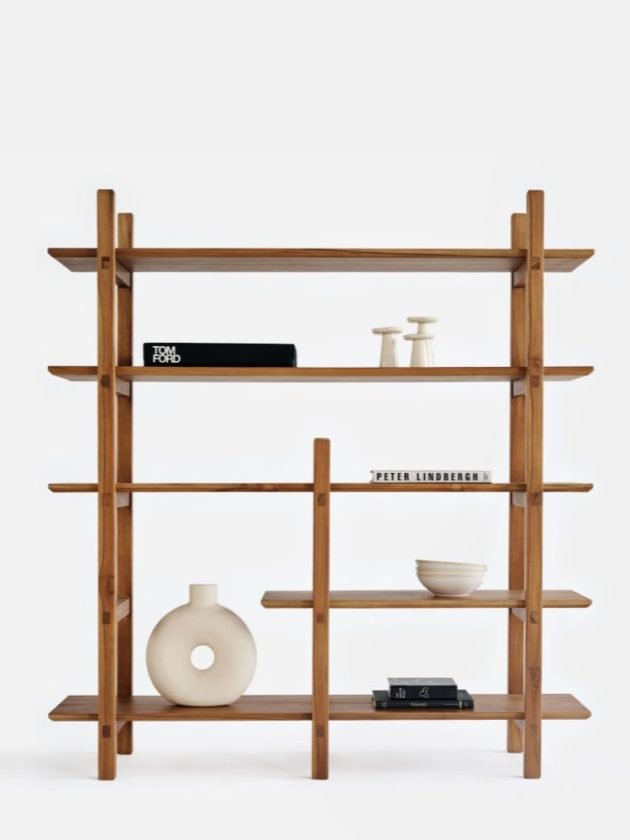
6. Healthier Homes
Best for: affordable non-toxic bookshelves
With shelving options starting at under $250, Healthier Homes is a more affordable option for finding sustainable, non-toxic bookcases and shelving.
Most of their wood furniture is made from Parawood, rescued from rubber tree farms after the trees stop producing latex. And their wooden bookcases come unfinished, so you can have full control over the color and any chemicals used. (The company also sells zero VOC furniture paint.)
Price: $238 – $2,160
Materials: Repurposed Wood, Metal, Zero VOC Finishes
Conscious Qualities: Repurposed Materials
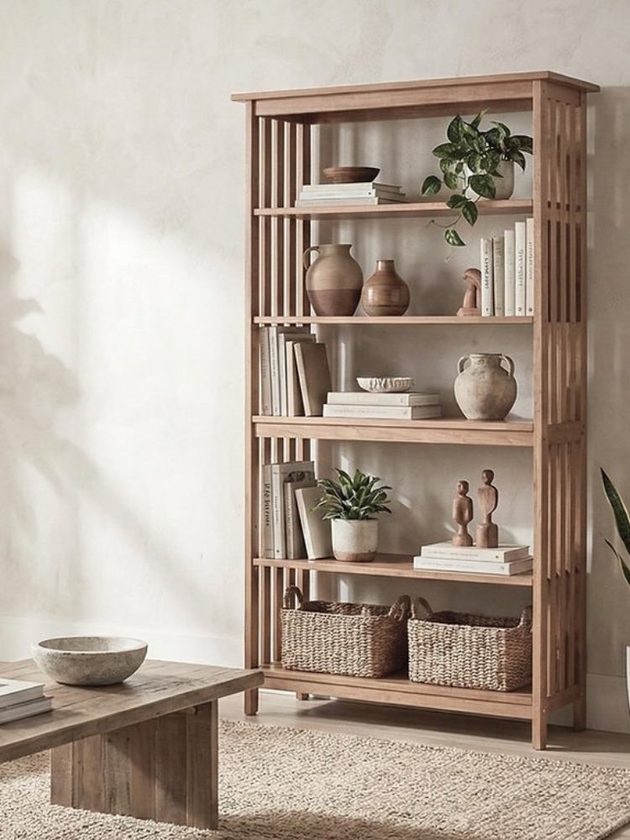
7. What We Make
Best for: reclaimed wood bookshelves
Illinois-based furniture company What We Make crafts non-toxic bookcases with a VOC-free finish.
The shop offers both modern Scandinavian styles (pictured here) using solid oak and industrial style sustainable bookshelves made with a stainless steel frame and the reclaimed wood salvaged from 100+ year old Midwestern barns.
Price: $2,025 – $5,055
Materials: Oak, Reclaimed Wood
Conscious Qualities: Made-to-Order, Repurposed Material Option, Zero-VOC Finish
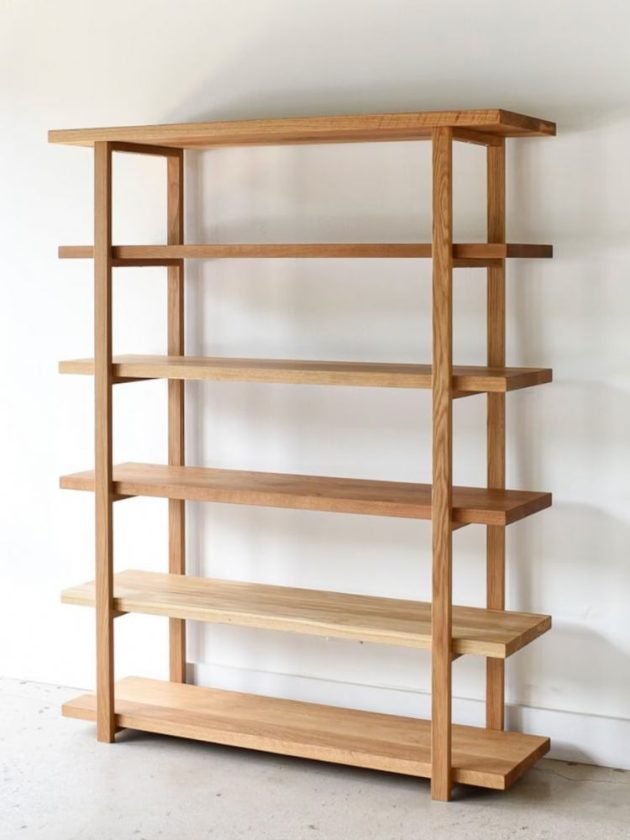
8. Greenington
Best for: bamboo bookshelves
Greenington is a furniture company with pieces crafted from sustainably hand-harvested Moso bamboo. Greenington sources mature bamboo — reached in just 5 years — for maximum strength and durability. And because bamboo is technically a grass, not a tree, it regenerates after being cut without any replanting.
The company uses every part of the bamboo culm, for zero waste production, winning the Sustainable Furnishings Council Green Ribbon Award in 2020.
Price: $809 – $2,139
Materials: Moso Bamboo
Conscious Qualities: Zero-Waste Production, Sustainable Materials
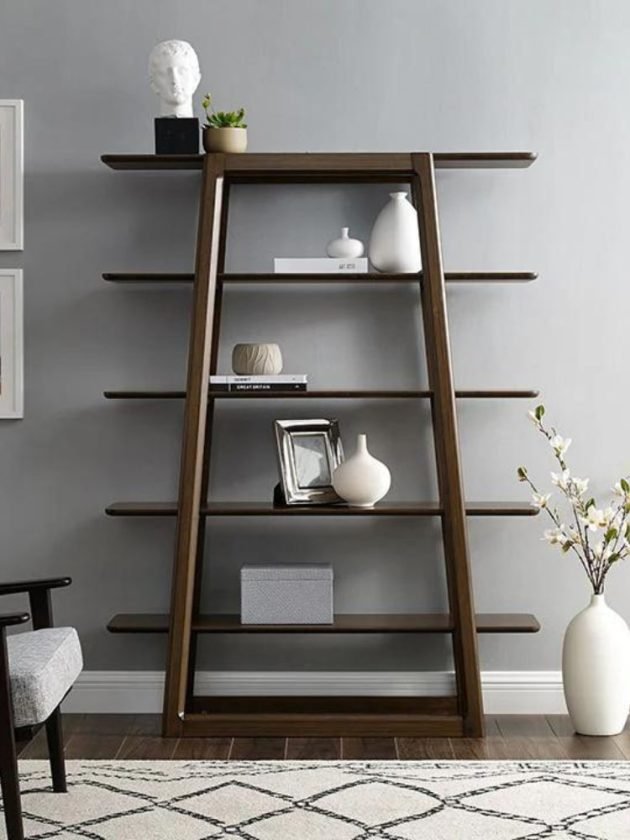
9. Crate & Barrel FSC-Certified
Best for: certified responsibly sourced wood shelving
Crate & Barrel’s FSC-Certified collection features bookshelves made with materials like solid oak, mahogany wood, teak, and rattan. And you can find a range of styles and finishes in their collection, from natural oak to espresso and driftwood.
It’s worth noting that the company’s bookshelves do contain veneer and engineered wood as well. There are also select products that are also GREENGUARD certified, but not all of them.
Price: $1,399 – $4,949
Materials: FSC-Certified Wood, Some GREENGUARD Certified Pieces
Conscious Qualities: Natural Materials, Responsibly Sourced
More Guides to Browse:
Sustainable Tables and Coffee Tables to Gather Around
The Best Non-Toxic Furniture Brands for a Healthier Home
Sustainable Storage Furniture: Dressers, Media Consoles, and More
The post 9 Sustainable Bookcases to Showcase Your Latest Reads appeared first on Conscious Life & Style.
Put your feet up and relax with the eco-friendly and non-toxic ottomans, benches, and poufs from these incredible sustainable furniture brands.
What makes an ottoman, pouf, or bench sustainable?
There are a lot of considerations that go into making sustainable furniture. Some brands may meet more of these criteria than others, and some criteria may be more or less important to you.
You might also engage with sustainability differently depending on your lifestyle, budget, aesthetic preferences, among other factors. But here’s a general idea of what to look for:
Look Secondhand
Used ottomans and benches are going to the most sustainable option since these furniture pieces have already been produced! Plus you’re preventing that furniture from heading to a landfill. You could browse an app like OfferUp or check your local Facebook Marketplace.
You can also check secondhand furniture sites like AptDeco and Chairish
Shopping for new sustainably-made ottomans and benches? Check out the following tips:
Eco-Conscious & Durable Materials
With the rise of fast furniture, the quality (and the sustainability) of materials used in furniture has declined. I’m consistently blown away by the incredible condition of so much vintage mid-century modern (1930s-1970s) furniture out there!
A sustainable ottoman (or sustainable bench) would be made durably so it lasts and would be constructed from responsibly sourced materials such as FSC-Certified and/or locally sustainably-harvested wood, recycled fabrics and organic natural fabrics for the upholstery, and non-toxic — ideally zero VOC — finishes. This guide has more non-toxic furniture brands.
Responsibly Made
Look into where the brand is producing their ottomans, benches, and/or poufs. Is it in their own workshop or a nearby production facility? Is it in a fair trade artisan workshop? A brand should have full transparency and traceability of their supply chain.
They also should ensure workers are earning living wages and work in safe environments. (This is where the overlap with non-toxic comes in — when there are toxic chemicals used in furniture, supply chain workers are exposed to these toxins in far greater quantities than consumers.)
Circular Practices
The EPA estimates that 12 million tons of furniture are thrown out annually. Yikes. A brand selling sustainable benches and ottomans would ideally consider the following:
- Quality construction so the furniture lasts a lifetime (or several)! If you’re moving a lot, it’s also worth considering how easy that piece of furniture is to move around and deconstruct/reconstruct if necessary. Though this probably is less of a concern with a smaller piece of furniture like a pouf, bench, or ottoman.
- Repairability. Is that material repairable? Does that brand have replacement parts? Is it a material that could be refinished or reupholstered easily? For example “vegan leather” (typically plastic) is very difficult to keep up or repair.
- Secondhand program or resellability. It would be incredible if the brand had a resale program for their furniture. Not many brands do, though. So you might also just think about if the style and quality of the piece would make it easy to sell again if you do think you might outgrow it.
Where to Find Sustainable Ottomans, Benches, and Poufs
Phew, that was a lot! But don’t worry: we’ve done the hard work of sifting through brands to curate the best options available right now. Check them out!
Note that this guide includes affiliate links, which means we may earn a small commission at no additional cost to you if you make a purchase which helps us continue to run this site. We only feature brands that meet strict standards for sustainability we love, and that we think you’ll love too.
1. Medley
Best for: non-toxic ottomans and poufs
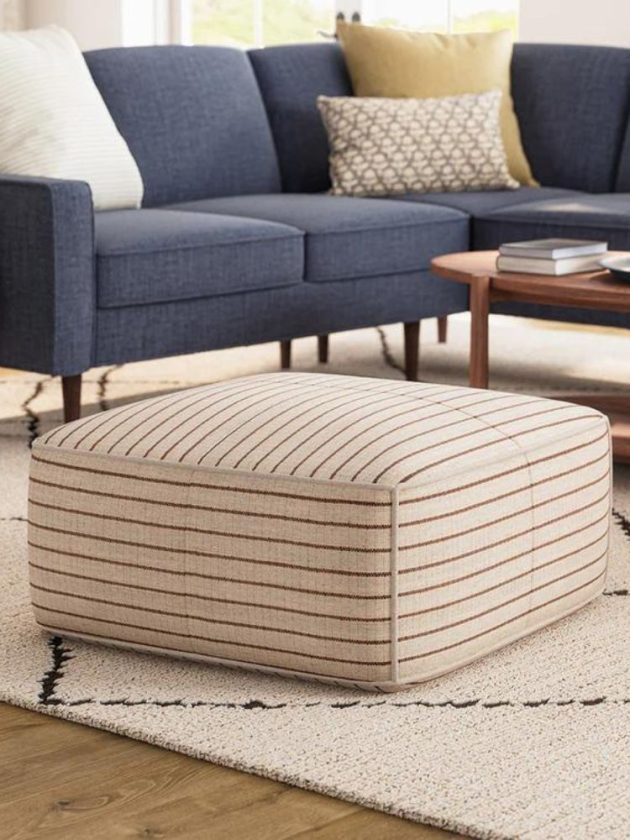
Medley has sustainable poufs, ottomans (including storage ottomans!), and benches handcrafted in the US to the highest quality standards. To back up their claims, Medley has a lifetime warranty on frames, 10-year warranty on fillings, and a 5-year warranty on fabric upholstery. Their benches and ottomans are made from domestically-sourced FSC-certified Alder hardwood and non-toxic fabrics (including GREENGUARD certified fabrics and natural fabrics like cotton and linen.
Conscious Qualities: US-Made, Quality Warranty, Natural Materials
Price Range: $595 – $1,985
Ships: International
2. Savvy Rest
Best for: organic ottoman made with all-natural materials
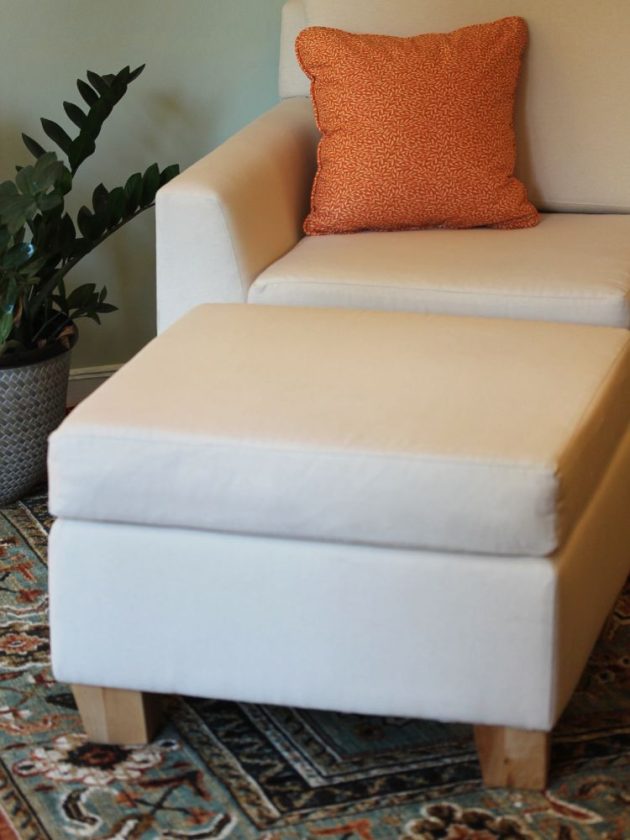
Savvy Rest has a non-toxic ottoman made from solid maple hardwood, GOTS-certified organic cotton and/or hemp upholstery, and Cradle to Cradle GOLD-certified Talalay latex. The brand also has a sustainable bench crafted by skilled woodworkers in Charlottesville, Virginia from sustainably-sourced maple. All of their furniture is available unfinished or with zero-VOC finishes.
Conscious Qualities: Non-Toxic, Organic & Natural Materials, Built In Virginia
Price Range: $1,149 – $1,498
Ships: Internationally
Use code CONSCIOUSSTYLE20 for 20% off!
3. MasayaCo
Best for: sustainable wood benches
Originally founded as a reforestation project, this sustainable furniture company is committed to responsibly-made furniture. They’ve planted 1.2 million trees to date!
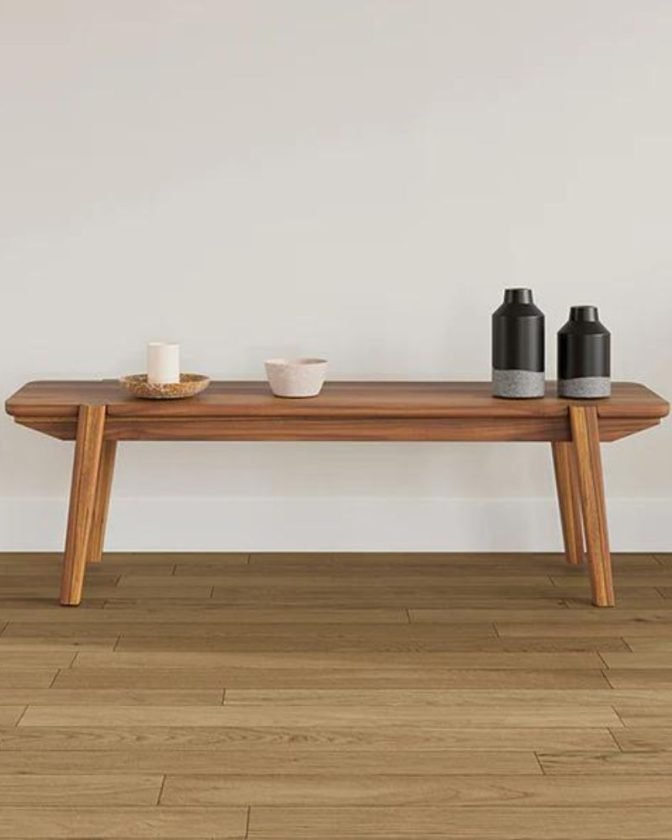
MasayaCo’s teak ottomans and benches are handcrafted to order by skilled artisans in Nicaragua. Many of the pieces are suitable for outdoor use as well. Note, though, that MasayaCo doesn’t include information on the finishes they use.
Conscious Qualities: FSC-Certified, Reforestation Projects, Artisan Handmade to Order
Price Range: $295 – $995
Ships To: US States & Territories
4. Urban Natural
Best for: design-forward sustainable benches and ottomans
This sustainable furniture and home retailer has a beautiful selection of functional ottomans, cozy poufs, and elegant benches.
Among their selection are reclaimed teak benches from Ethnicraft and organic ottomans made with all-natural materials from Cisco Home (select “Inside Green”). You’ll likely be able to find whatever you’re looking for on Urban Natural, from an ottoman with storage to a swivel pouf.
Conscious Qualities: Eco-Minded Materials
Price Range: $419 – $5,595
Ships to: Contiguous US; contact for overseas shipping
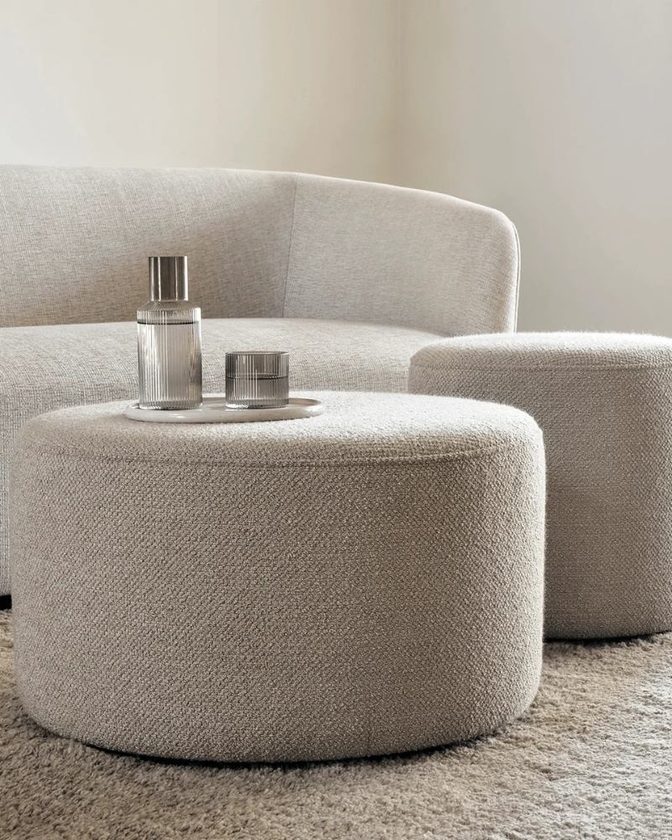
5. Sabai
Best for: repairable sustainable ottoman
Sabai’s sustainable seating and ottoman considers not only the production practices (like using recycled fabrics, FSC-certified wood, and CertiPUR-US certified foam) but also its use and end-of-life. The company offers replacement parts and has a buy back & resale program.
Conscious Qualities: Recycled & Natural Materials, Secondhand & Repair Program
Price: $425
Ships To: All US States + Canada
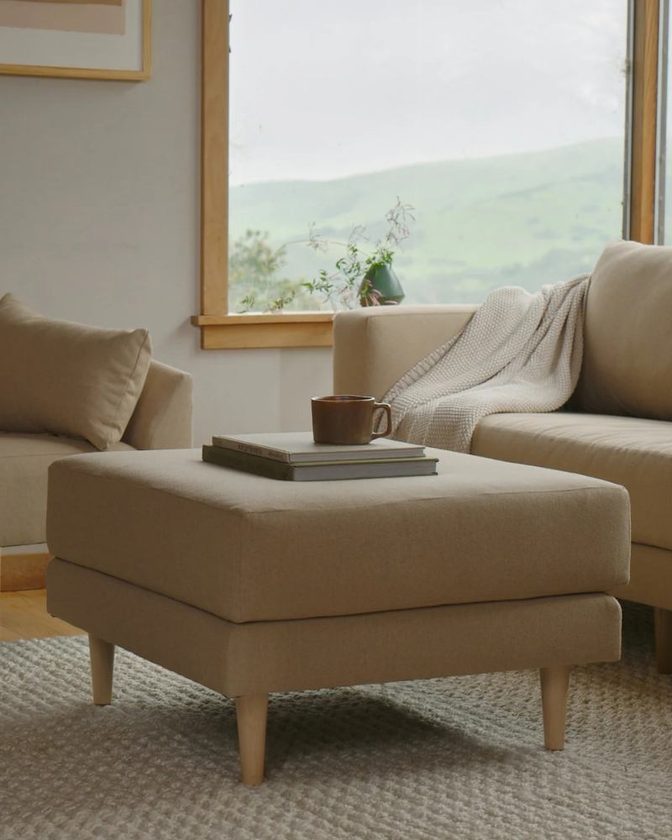
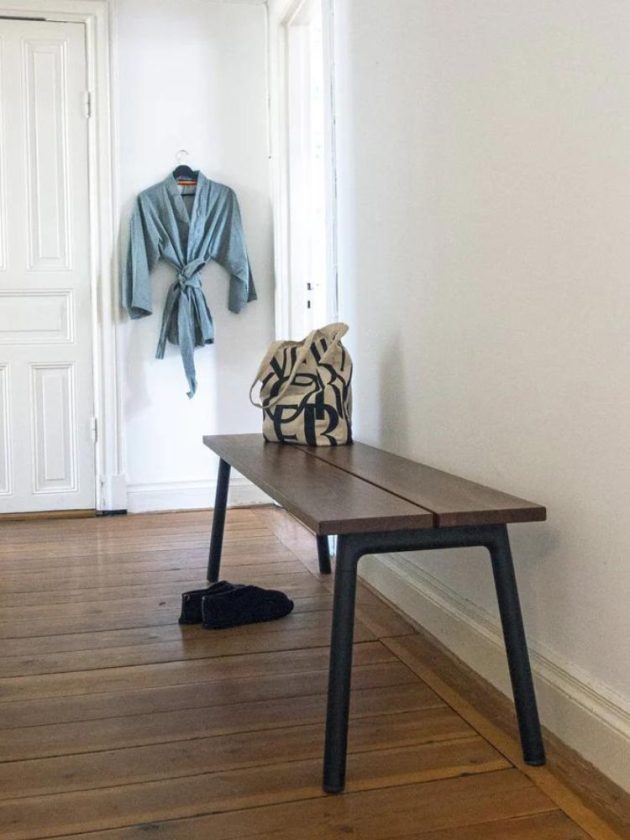
6. Emeco
Best for: quality benches with lifetime warranty
Handcrafted in Pennsylvania from recycled aluminum and responsibly-harvested Accoya wood, Emeco’s eco-friendly benches are built to last. In fact, every product passes commercial grade standards — so you know it’s durable. Emeco’s benches are also Cradle to Cradle Gold certified and are free of VOCs.
Conscious Qualities: Recycled & Sustainably Sourced Materials, Durable, Made in the US
Price Range: $1,435 – $2,395
Ships to: US
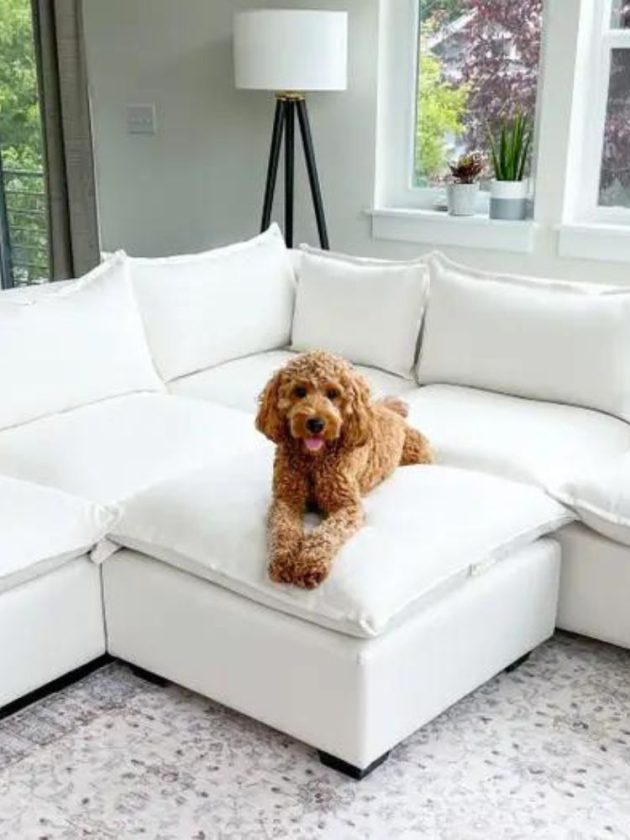
7. Natural Home
Best for: modular non-toxic ottomans
Natural Home by Futon Shop has non-toxic ottomans made from 100% natural materials. Their NBJ modular ottomans are crafted with natural Dunlop latex, coconut coir base, and wool upholstery. They also have a vegan ottoman made with potato-based PLA fiber. And if you want to go the extra mile, you can upgrade to organic latex fill for your custom ottoman.
Conscious Qualities: Non-Toxic, Natural & Organic Materials, Woman-Founded, Gives Back
Price Range: $699 – $2,125
Ships To: Contiguous US States
8. Loll Designs
Best for: sustainable outdoor ottomans
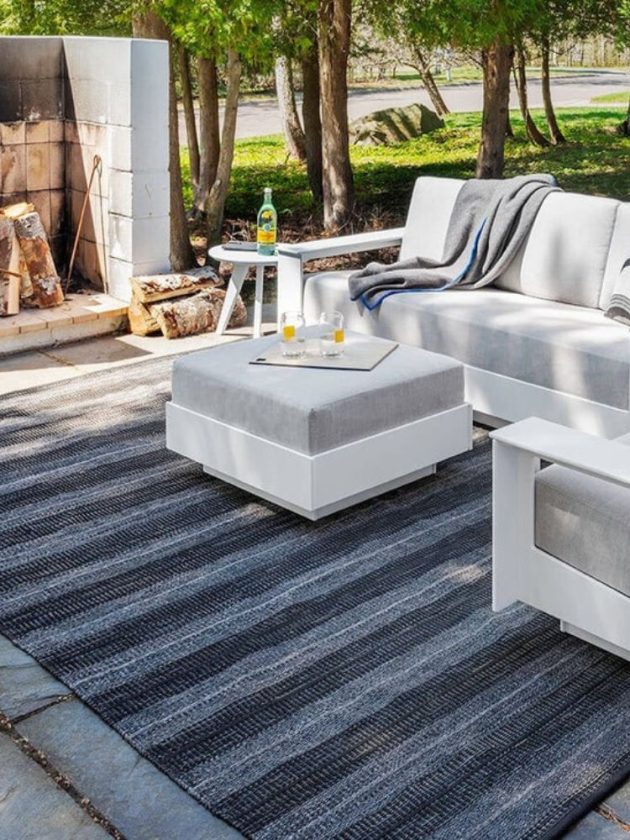
Loll Designs creates outdoor furniture (including an outdoor ottoman) from partially recycled high-density polyethylene (HDPE) — mostly from milk jugs – and the upholstery is made from Sunbrella acrylic, a long-lasting performance fabric. All of Loll’s materials are purchased within the US and the furniture is produced in Duluth, Minnesota.
Conscious Qualities: Recycled Materials, Made in the US
Price: $245 – $1,795
Ships to: US
More Sustainable Furniture Guides:
Sustainable & Non-Toxic Sofas To Relax In
Eco-Friendly Chairs To Take A Sustainable Seat In
Gorgeous Sustainable Tables To Gather Around
The post 8 Best Sustainable and Non-Toxic Ottomans, Poufs, and Benches appeared first on Conscious Life & Style.
8 Best Sustainable and Non-Toxic Ottomans, Poufs, and Benches
Curtains are often an afterthought when styling your interior spaces, but the right window treatment can honestly bring the entire room together — or add the perfect unexpected accent. The importance of choosing sustainable curtains is equally important in my opinion for several reasons, too.
Why does choosing sustainable curtains even matter?
Toxic Chemicals:
As with any other type of textile, the curtain market is full of plastic curtains made and treated with toxic chemicals. Vinyl curtains are among the worst culprits as they’re typically made from PVC. Research has shown that these PVC curtains contain toxic chemicals like volatile organic compounds (VOCs) phthalates, and organotins.
And sometimes you can feel the impact: when my husband and I moved into our home, the previous owners had left their curtains. At first, we thought: score! Free curtains. But then the rooms that had windows with full sun kept reeking of burning plastic. My husband would complain of headaches when he was in his office (one of said full-sun rooms). At first, he thought it was all the computer hardware, but as someone who’s written about sustainable fashion and home for a decade, I had a feeling it was the curtains. Sure enough, the second we removed the curtains, the burning plastic smell was gone as were the headaches.
Materials:
The vast majority of curtains are made from synthetic fabrics like polyester. In other words, plastic. In fact when we went shopping for curtains at our local hardware stores, we found that 100% — and I am not exaggerating here — of the options sold on the floor were 100% polyester. Not only is this an unsustainable material, but I do not want the heat of the sun hitting plastic fabric in my house all day long (see above for why!).
Labor Issues
Just as fast fashion is often made in exploitative conditions, home textiles are just as likely to be produced in manufacturing facilities with little transparency by workers earning low wages, working long hours. Sweatshops, child labor, and even forced labor are a reality in the home goods industry as well.
So, what are sustainable curtains?
Sustainable curtains will ideally address these various issues. While every curtain has to be made by human makers from fiber, dyes, and other inputs, all of those elements can be more considered.
Materials:
When it comes to sustainable materials, I look for natural fibers first and foremost. Of course not all natural fibers are low impact, but linen and hemp tend to require fewer resources to grow than cotton. Certified organic cotton can be a better alternative that does not use synthetic pesticides or herbicides for production. That doesn’t mean conventional cotton is “bad” — a lot depends on how that cotton was farmed — but it’s a consideration to keep in mind. I would still always choose cotton over polyester, which releases microplastics when washed.
Dyes and Chemicals:
Most dyes today are also made from petroleum. (It’s depressing, I know.) But there are some brands prioritizing natural, organic dyes for their products — including a few in this guide!
You can identify if a product was potentially made with toxic finishes if the product description says something like “wrinkle free” or “stain resistant”. Water or stain-repellent products can contain PFAS (also called “forever chemicals” because they don’t break down in the environment or in your body).
This information isn’t always disclosed and frankly, the majority of dyes even from brands using natural fibers are synthetic. So I’d suggest looking for the OEKO-TEX® STANDARD 100 certification which tests for over 1,000 hazardous and harmful chemicals. A product made with synthetic fibers and synthetic dyes can still hold this certification — it does not mean a product is natural — but it can be an assurance against avoiding the most widely known toxic chemicals in textiles.
Ethical Production:
This one is pretty straightforward. Were the people making these curtains treated fairly and paid well?
To ensure this, I look to see if the brand offers transparency into their production. Are they making the curtains themselves? Do they make the curtains in their own studio or production house? If they outsource production, how do they ensure fair wages and safe conditions, and reasonable working hours? One way this is done is through the Fair Trade Certified certification. While no certification is perfect, this is an added assurance that the facility where that product was made upheld good conditions for workers, and that workers earned a fair wage.
Another approach, particularly for small businesses, is close partnerships with artisan cooperatives. In these arrangements, the cooperatives often set the prices to the brands, giving them financial agency in their work. That doesn’t mean artisan partnerships are always ethical, though. I still like to see transparency into what that relationship is like between designer or brand and artisan.
If you’re thinking: wow, that’s a lot to look for! Don’t worry, I’ve got you covered. I researched and vetted dozens of brands to curate the best of the best for ethical and sustainable curtains. These brands use fair practices, source sustainably, craft with quality, and have beautiful designs, too.
Where to Find Sustainable and Fair Trade Curtains
Note that this guide includes affiliates. As always, all brands featured meet rigorous sustainability criteria and are brands we love — and that we think you’ll love too!
1. Ichcha
Best for: artisan handmade curtains
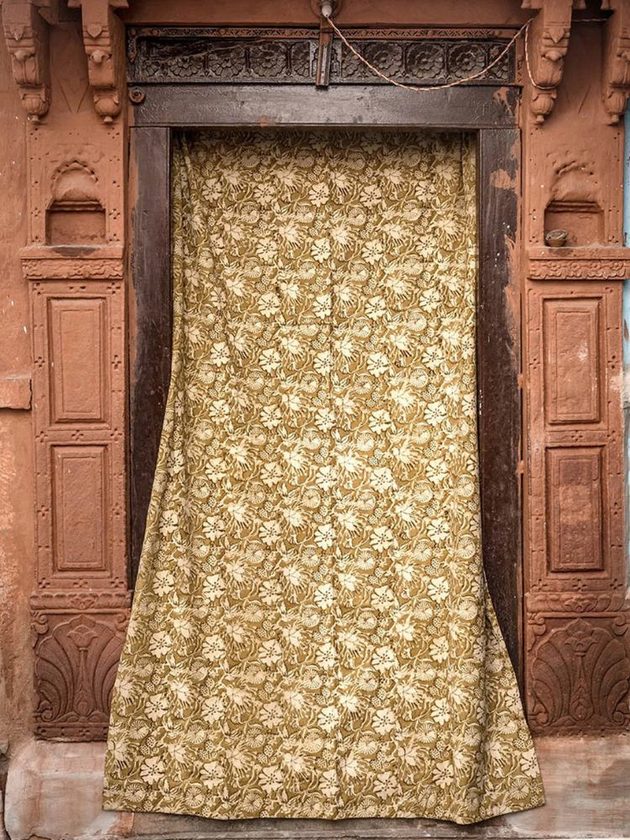
Many curtains say “handmade”, but what makes Ichcha special is that each curtain is not just sewn by hand but printed by hand using carved wooden blocks and dyed by hand with natural dyes in Rajasthan, India. Natural doesn’t mean dull though — the brand’s collection is full of vibrant hues.
In short: the craftsmanship behind Ichcha is the real deal. Just keep in mind that with the handcrafted nature of these products, there will be slight variations in products.
Conscious Qualities: Natural Dyes, 100% Cotton, Artisan Handmade
Price Range: $54 – $86
2. Magic Linen
Best for: high-quality 100% linen curtains
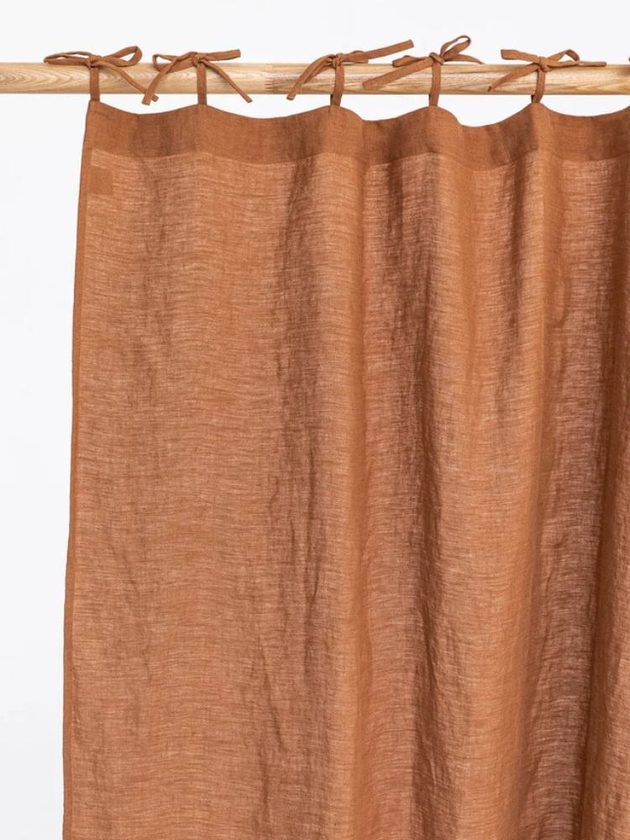
I purchased a set of Magic Linen curtains for my home a few years ago and was quite impressed with the weightiness of the brand’s stonewashed linen curtains. The color facing the full sun window has faded, which is to be expected with lower impact dyes, so we just keep the faded side facing outwards.
MagicLinen makes all of their linen products to order locally in Lithuania in-house, minimizing waste throughout production, and shipping products in compostable packaging.
Conscious Qualities: 100% Linen, In-House Production, Made to Order, Compostable Packaging
Price Range: $55 – $217
3. GreenRow
Best for: curtains with vintage-inspired prints
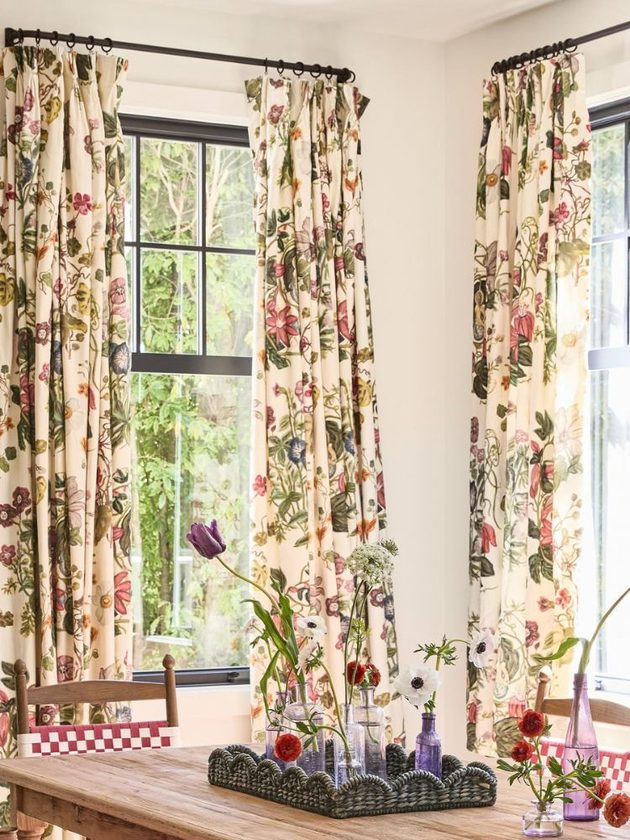
If you haven’t heard of GreenRow, you likely will soon. Part of the Williams-Sonoma network of brands, GreenRow was founded as a furniture and home company of exclusively sustainably-sourced pieces.
Their vibrant patterned curtains are among my favorite for their cozy meets vintage chic vibes. The natural fiber curtains are mostly linen/cotton blends, and several options are OEKO-TEX® STANDARD 100 certified and Fair Trade Certified. (Check each product’s description.)
Conscious Qualities: Natural Fibers, OEKO-TEX® STANDARD 100 certified and Fair Trade Certifiedoptions
Price Range: $129 – $559
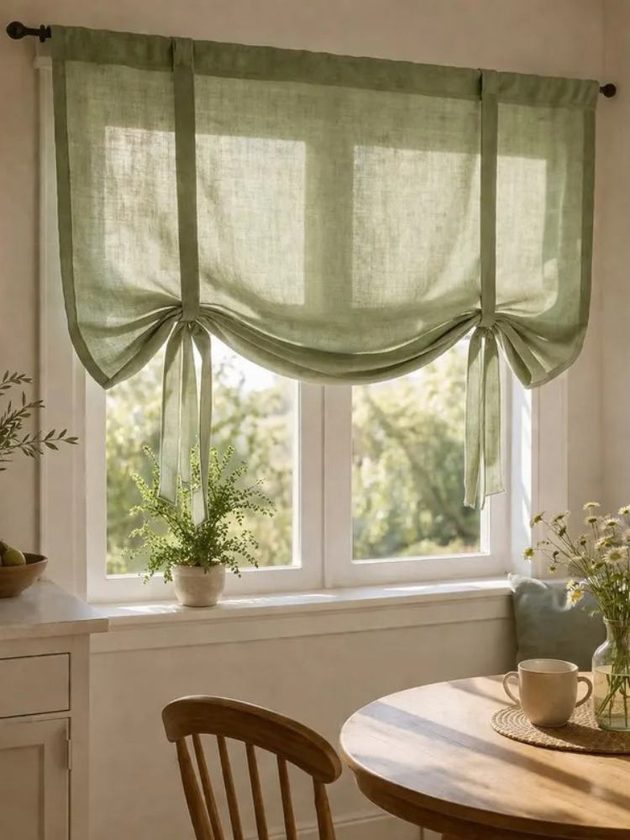
4. Linenistic
Best for: organic fiber curtains
Linenistic is one of the few curtain brands out there that has curtains made from GOTS-certified organic linen. The natural medium-weight curtains come in dozens of colors and customizable lengths and widths.
Styles include everything from Japanese Noren curtains and European-style café curtains to piped edge linen drapes and tie-up curtains ideal for a kitchen. You can also add on ruffles (a touch I love!) or add a second color if you choose.
Conscious Qualities: GOTS-Certified Organic Linen, Natural Dyes, Made to Order
Price Range: $35 – $128
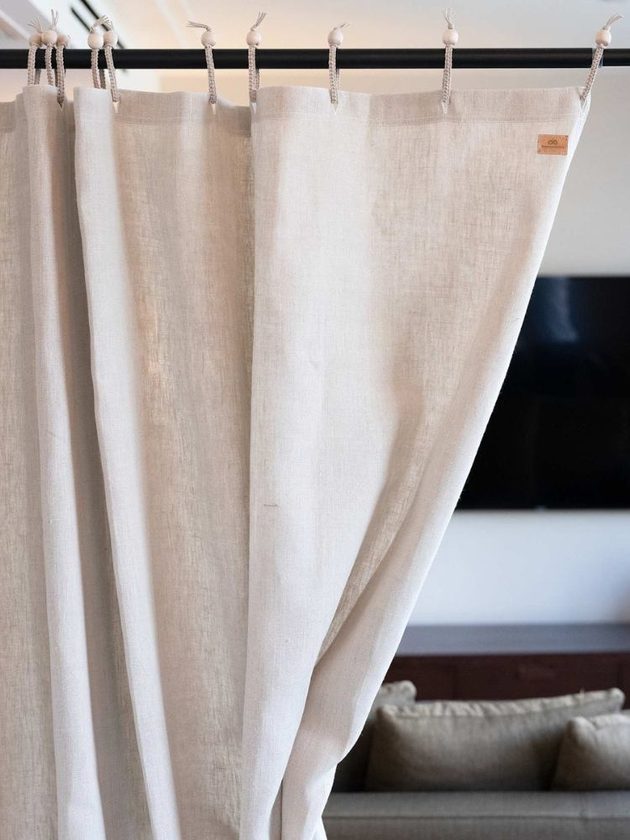
5. Rawganique
Best for: non-toxic curtains
If finding all-natural curtains is important to you, I’d steer you towards Rawganique. The brand not only uses top of the line sustainably-sourced materials like organic hemp and organic linen for the curtains, but even the thread is cotton, which from my experience in this industry, I know is quite rare. Further, the brand uses exclusively biodegradable organic dyes or leaves their curtains undyed for a natural look.
Rawganique also has the only fully plastic-free blackout curtain that I’ve seen on the market.
Conscious Qualities: Organic Fabrics, Non-Toxic Dyes & Finishes, In-House Production
Price Range: $79 – $249
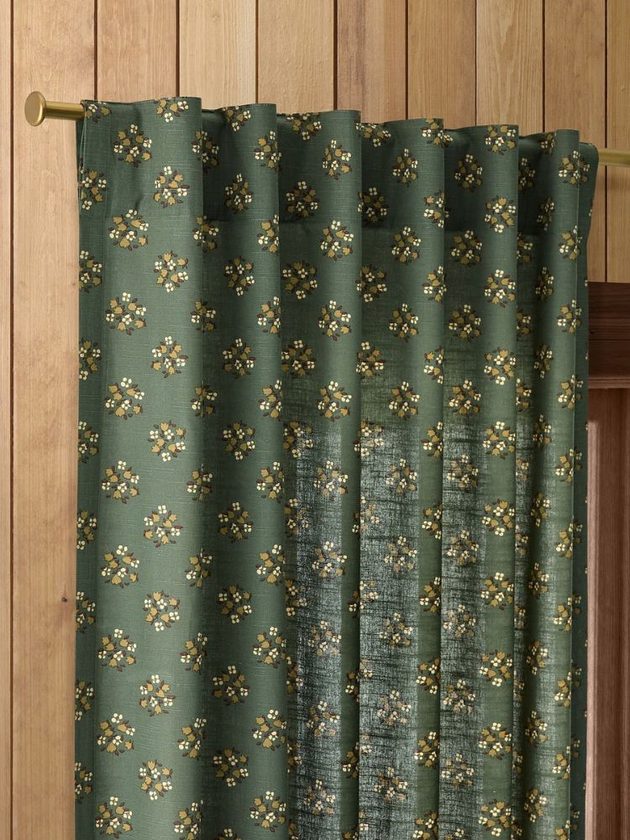
6. West Elm Fair Trade Certified
Best for: fair trade curtains
Home retailer West Elm has a sizable selection of Fair Trade Certifiedcurtains in plenty of pretty prints from floral to gingham. (My favorites are from the Emma Chamberlain collection.) If neutral solids are more your style, West Elm has plenty of more basic fair trade curtains as well.
Many of their curtains are made of 100% cotton or 100% linen and STANDARD 100 by OEKO-TEX® Certified as well. (Though not all of them, so you may want to double check the product description if natural fibers are a priority for you.)
Conscious Qualities: Made in Fair Trade Certified facilities, Natural Fiber Options
Price Range: $39 – $838
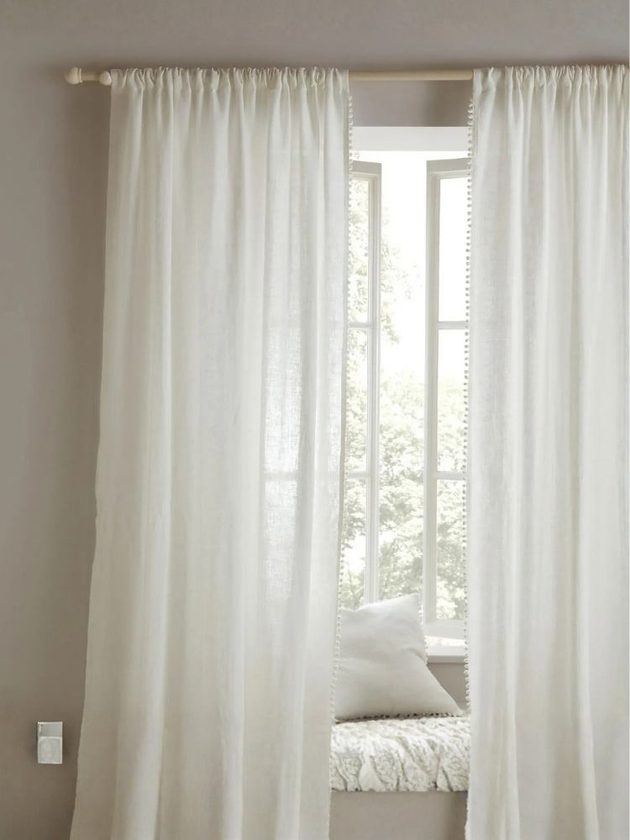
7. Linden Studio
Best for: customizable linen curtains
Run by a sister duo who have long been passionate about designing and crafting, Linden Studio is a shop creating made to order goods from 100% European linen in their Maryland studio. Among their curtain collection, you’ll find unique detailing like ruffles and pompoms. While pictured all in white, the brand has 12 different colors like cinnamon and terracotta to choose from.
What really makes this option stand out to me though is their custom sewing services — you can send them unused fabric you already picked out. Or if you want to remake old curtains or bedding, you can contact them for a custom quote.
Conscious Qualities: 100% Linen, Made-to-Order, Ethically Made
Price Range: $79 – $164
You May Also Want to Check Out
Ethical Home Decor Brands to Curate a Conscious Space
What is Sustainable Interior Design? Tips, Tricks, and Common Myths
Eco Friendly and Ethical Throw Pillows for Every Aesthetic
The post Fair Trade and Eco-Friendly Curtains to Accent Your Space Sustainably appeared first on Conscious Life & Style.
Fair Trade and Eco-Friendly Curtains to Accent Your Space Sustainably



-
Climate Change1 year ago
Guest post: Why China is still building new coal – and when it might stop
-

 Greenhouse Gases2 years ago
嘉宾来稿:满足中国增长的用电需求 光伏加储能“比新建煤电更实惠”
-
Greenhouse Gases1 year ago
Guest post: Why China is still building new coal – and when it might stop
-

 Climate Change2 years ago
嘉宾来稿:满足中国增长的用电需求 光伏加储能“比新建煤电更实惠”
-

 Renewable Energy12 months ago
Sending Progressive Philanthropist George Soros to Prison?
-
Climate Change2 years ago
Bill Discounting Climate Change in Florida’s Energy Policy Awaits DeSantis’ Approval
-
Greenhouse Gases1 year ago
嘉宾来稿:探究火山喷发如何影响气候预测
-

 Climate Change2 years ago
Analysis: China’s CO2 falls 1% in Q2 2024 in first quarterly drop since Covid-19