

Welcome to Carbon Brief’s DeBriefed.
An essential guide to the week’s key developments relating to climate change.
This week
Push for new climate targets
MISSED DEADLINE: During a virtual meeting of 17 world leaders, Brazilian president Luiz Inácio Lula da Silva and UN secretary general António Guterres urged countries to come forward with their overdue climate plans, according to Folha de São Paulo. Diplomats from Brazil, which is hosting COP30, are working with UN officials to encourage countries to launch their new 2035 “nationally determined contributions” (NDCs) by September, Reuters explained. Carbon Brief analysis showed nearly every country missed the original deadline to submit new NDCs in February.
CHINA PLEDGE: Chinese president Xi Jinping announced during the meeting that China will submit its new NDC, covering all economic sectors and all greenhouse gases, ahead of COP30 in November, according to Xinhua. In addition, China Daily reported that Xi told attendees China would not slow down its climate action, “regardless of changes in the international landscape”.
Worst coral bleaching on record
NO END IN SIGHT: Coral bleaching has struck 84% of the world’s reefs in what the International Coral Reef Initiative has described as the worst global bleaching event on record, the Associated Press reported. The ongoing incident, caused by warming oceans, began in 2023 and it is “not clear” when it will end, according to the news outlet.
GLOBAL THREAT: In total, reefs in at least 82 countries and territories “have been exposed to enough heat to turn corals white”, according to the Guardian. Scientists in north and central America “were among the first to raise the alarm” after record ocean temperatures in the summer of 2023 and in recent weeks bleaching has spread to east African reefs, the newspaper added.
Around the world
- CLIMATE-DRIVEN: The early arrival of an April heatwave in north India and Pakistan that saw temperatures reach 49C was “largely driven” by climate change, according to a new analysis by the French organisation ClimaMeter, reported by the Times of India.
- TRADE WAR: The US has announced plans to impose tariffs on solar-panel imports from four southeast Asian countries – with some Cambodian exporters facing duties as high as 3,521% – according to BBC News. Meanwhile, the Trump administration has responded to rumours by stating it has no plans “at this time” to attempt to remove tax exempt status from US climate NGOs, Reuters reported.
- NEW MARKET: Brazil is taking the “initial steps” to launch South America’s first-ever carbon market for major emitters within the country, which is expected to be operating by 2029, according to E&E News.
- AUSTRALIA ELECTION: As Australia’s election looms, right-leaning Coalition leader Peter Dutton has confirmed that he would “scrap a popular tax break” for electric-vehicle drivers, the Guardian reported. Carbon Brief examined where Australia’s major parties stand on climate, energy and biodiversity loss.
- HIGH ENERGY: An energy-security summit hosted in London by the UK government and the International Energy Agency saw prime minister Keir Starmer issue “some of his strongest comments yet” in support of net-zero policies, according to BusinessGreen.
$28 trillion
The scale of the climate-related damage caused by emissions from 111 of the world’s biggest companies, according to a new Nature paper that the Washington Post said could “fuel” global climate litigation.
Latest climate research
- A new study in Nature Climate Change concluded that the urban heat island effect – where cities experience higher temperatures than their surrounding rural areas – increases heat-related deaths, but also currently curbs deaths during cold spells at a higher rate.
- A paper in Nature Reviews Clean Technology, also covered in a Carbon Brief guest post, explored “realistic” roles for hydrogen in the global energy transition, concluding that fuel-cell cars and space heating are “among the least promising applications”.
- Sudden shifts from extreme warm to cold temperatures – and vice-versa – have become more frequent, intense and rapid over the past 60 years, according to new research published in Nature Communications.
(For more, see Carbon Brief’s in-depth daily summaries of the top climate news stories on Tuesday, Wednesday, Thursday and Friday.)
Captured

A Conservative victory over the Liberals in the upcoming Canadian election could lead to nearly 800m extra tonnes of greenhouse gas emissions over the next decade, according to Carbon Brief analysis. Modelling by researchers from Simon Fraser University and University of Victoria shows that if the Conservatives follow through on their pledges to cut various climate policies, Canadian emissions would likely start to creep up in the coming years. However, as the analysis shows, even the Liberals’ policy platform would not put Canada on track to meet any of its climate targets, on the way to net-zero emissions by 2050.
Spotlight
How do the top papal candidates compare on climate?
Following the death of Pope Francis, Carbon Brief explores the various papal contenders’ views on climate issues.
Pope Francis, who died this week, has been praised for making climate action a core part of his work as the spiritual leader of the world’s 1.4 billion Catholics.
His influence extended far beyond the church and included directly lobbying oil companies, engaging in UN climate talks and criticising world leaders’ lack of action.
In 2015, the pope published Laudato Si – the first papal encyclical dedicated to the environment. As Carbon Brief reported at the time, it drew heavily on climate science and even called for fossil fuels to be phased out.
There is much speculation about whether Francis’s successor will continue his relatively progressive agenda, including on climate change.
Below, Carbon Brief examines the climate credentials of the cardinals that have been tipped as most likely to be chosen as the next pope during the church’s secret “conclave” process.

Pietro Parolin
The current favourite to become pope is Pietro Parolin, an Italian cardinal who has served as the Vatican’s secretary of state since 2013. He leads the Holy See’s delegation at UN climate summits.
He has stressed the “unequivocal” evidence and “scientific consensus” behind climate change. Speaking on behalf of Francis at COP28, Parolin described environmental destruction as “an offence against God, a sin that is not only personal, but also structural”.
The Holy See ratified the Paris Agreement in 2022 and has been actively involved in COP negotiations. In 2024, Parolin’s delegation attracted controversy when diplomats accused it of aligning with Saudi Arabia, Iran and Russia to block gender discussions at COP29.
Peter Turkson
Ghanaian cardinal Peter Turkson, chancellor of the Pontifical Academy of Sciences, has been influential in international climate politics.
During his time as president of the Pontifical Council for Justice and Peace, Turkson spent 18 months guiding the drafting of Laudato Si. He was described by the Guardian as “the public face of Pope Francis’s war on global warming”.
The encyclical was launched to influence the nascent Paris Agreement and commentators have pointed to similarities in wording and themes between the documents. Turkson attended the Paris summit with a Vatican delegation and the goal of being a “catalyst” for action.
Luis Antonio Tagle
Another frontrunner, cardinal Luis Antonio Tagle has not had as much high-level involvement in climate politics as other candidates. However, he has often been compared with Francis due to his focus on social justice.
Tagle has been a vocal supporter of Laudato Si and has been involved in climate activism in his native Philippines. He has been active in the response to extreme weather in his country and has made the link between such events and climate change.
Robert Sarah
A conservative cardinal from Guinea, Robert Sarah has been welcomed by multiple right-leaning media outlets and is viewed by some as an “anti-woke” successor to Francis.
However, he has cited Francis’ teachings on the environment and pointed to the role of foreign interests in exploiting African resources. “They pollute the environment and leave the continent in endemic poverty,” he wrote in 2019.
Other contenders
There is huge uncertainty surrounding the conclave voting process to choose the new pope and several other candidates are thought to be in the running.
Among them are the Italian cardinal Matteo Zuppi, another progressive who has called for “bold” action on climate change.
Another is Péter Erdő, a leading conservative candidate from Hungary. While Erdő has not been vocal on climate change, he has close ties with Hungarian prime minister Viktor Orbán, a strong opponent of climate action.
Watch, read, listen
SILENT MAJORITY: Covering Climate Now has launched “the 89% project”, a global media collaboration based on the idea that there is a “silent majority” of people around the world who want climate action.
ATTRIBUTION AND LITIGATION: Dr Friederike Otto and Dr Joyce Kimutai from the World Weather Attribution project at Imperial College London appeared on the New Scientist Weekly podcast to talk about how climate attribution science can be used to achieve climate justice, in part through litigation.
NIMBY NEWSCAST: Tortoise Media’s Slow Newscast investigated the “so-called zealots” who have been taking legal action against everything from road-building to energy projects in the UK, in an episode titled “nimby nation”.
Coming up
- 28 April: Canada federal election
- 28 April: Trinidad and Tobago general election
- 28-30 April: Our Ocean conference, Busan, South Korea
Pick of the jobs
- Delft University of Technology, PhD in water security and climate adaptation in sub-Saharan Africa | Salary: €2,901 per month. Location: The Hague, Netherlands
- World Health Organization, climate and health communications manager | $70,212. Location: Geneva, Switzerland
- UK Department for Energy Security and Net-Zero, climate science advisor | Salary: £34,815-£41,355. Location: London
DeBriefed is edited by Daisy Dunne. Please send any tips or feedback to debriefed@carbonbrief.org.
This is an online version of Carbon Brief’s weekly DeBriefed email newsletter. Subscribe for free here.

The post DeBriefed 25 April 2025: Brazil calls for country emissions plans; Global coral bleaching; Where top pope contenders stand on climate appeared first on Carbon Brief.

Climate Change
After a week of plenty of activity and drama for Greenpeace at sea, I felt like writing to you on a much quieter theme…
Do you have a favourite book, poem or story about the ocean?
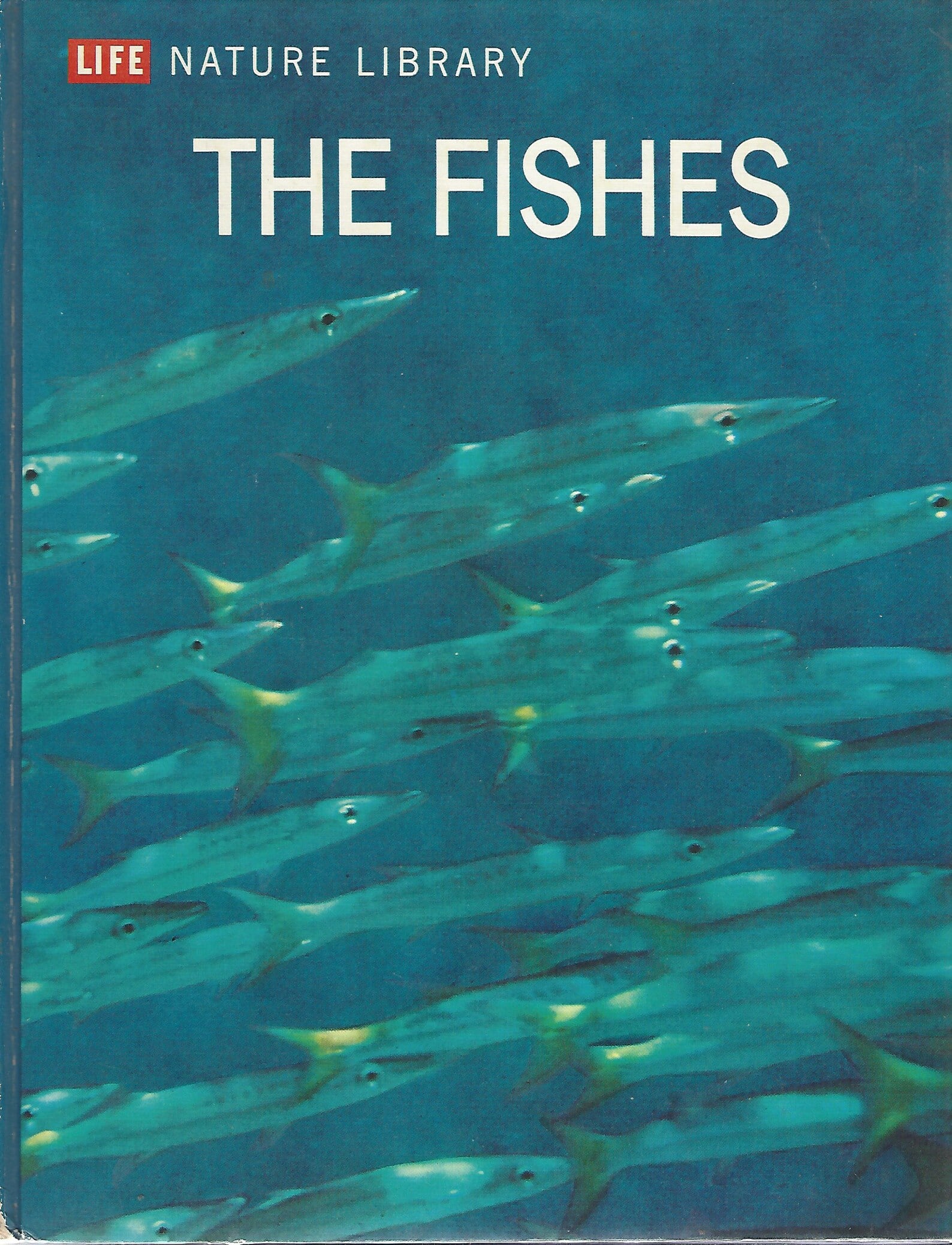
When I was very small, it was the TimeLife book of The Fishes, by F. D. Ommanney, which I remember endlessly poring over, my child’s mind gripped, in total fascination. The cover illustration showed a shoal of barracuda, mid-water and heading upwards, lit up as an iridescent blue by a column of sunlight. Oddly, it is only the cover and the illustrations of the deep sea creatures which I now remember—but I loved that book, as the weakened spine, blunted pages and dog-eared corners attested.
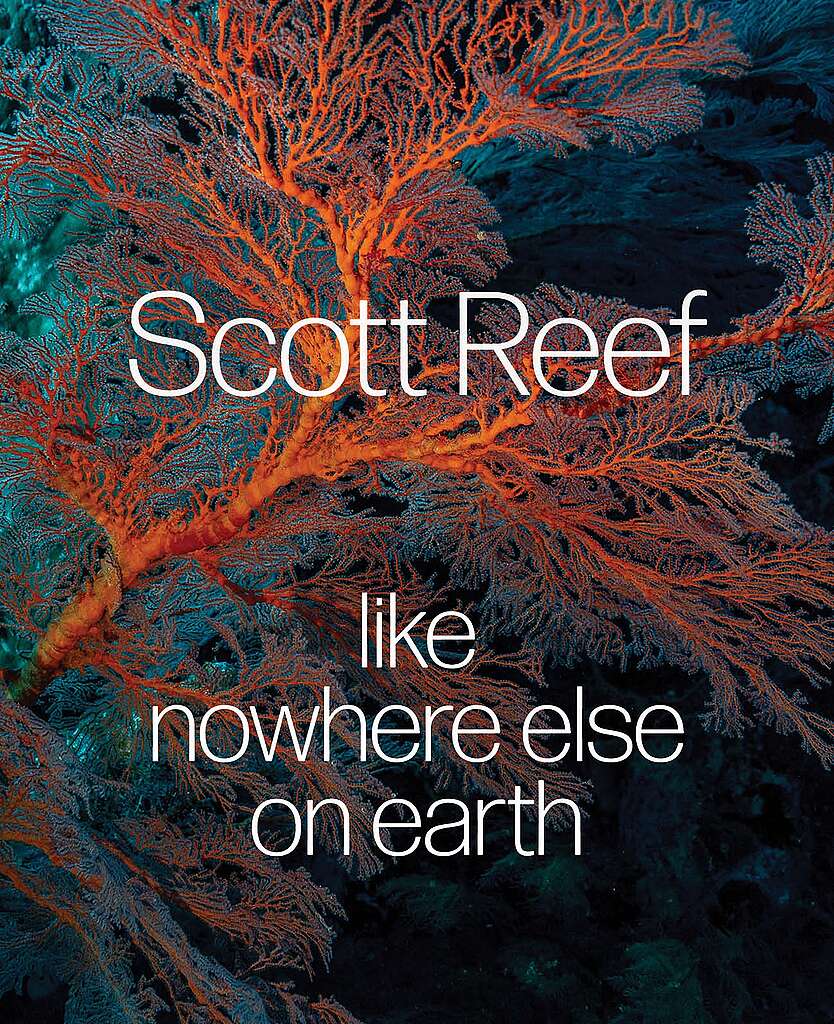
The Fishes has been on my mind recently, because I’ve been working with some dear friends on our own illustrated oceans book, to be published by Upswell Publishing. The book is called Scott Reef: Like Nowhere Else on Earth, and I want to share with you a bit of the story behind its creation.
Scott Reef is absolutely magnificent: Australia’s largest freestanding oceanic reef, brimming with life, including rare and threatened species such as a genetically distinct population of green sea turtles, pygmy blue whales and the wonderfully elegant dusky sea snake. But Scott Reef isn’t near our capital cities; it is way off the north-west coast of WA. And it is threatened with devastation by Woodside, which wants to drill up to 57 toxic wells at the Reef for its vast, dirty Browse gas project.
One of the main challenges in the fight to save Scott Reef from being turned into an industrialised gas zone by Woodside is bringing this incredible location to life for people who haven’t actually experienced it first hand. Because despite its ecological significance and dazzling beauty, ‘Scott Reef’ is also—at least not yet—exactly a household name.
To help get over this barrier, Greenpeace has enabled a number of photographers to travel to Scott Reef by boat (including the Rainbow Warrior) to document its astonishing diversity of colour and life. We then brought these images together in a remarkable photobook, produced by our talented in-house team, which we’ve been putting into the hands of as many leaders as possible—including the MPs whose decisions can determine the Reef’s future.
Back in June this year, I was sharing a copy of our in-house book at a business gathering in Perth when someone pulled me aside. Had we thought about publishing the book commercially? Apart from anything else, he wanted to buy a copy himself! He had a point. We were proud of what we’d created, but a commercially published version could reach a much wider audience and have even greater campaign impact. I immediately turned to my dear friend, Terri-ann White, who runs Upswell Publishing in WA, for advice.
Terri-ann has a huge heart and terrific vision. So many wonderful things in WA owe their existence to her doings, and, true to form, she was immediately encouraging and enthusiastic. “But,” she said, “it would add a whole new dimension if we had some words to accompany the incredible pictures.”
Fair enough, I thought. I could ask a few authors.
“And when would you like it published?” she asked.
“Ideally November,” I answered sheepishly.
Now, in publishing terms, nobody goes from idea to finished work, beautifully produced by a commercial publisher, in just four months. It. Just. Doesn’t. Happen. A book of this scale would ordinarily take nine months, I was told. But Terri-ann was undeterred. “If you can get a rapid turnaround on the writing, I will give it a shot.”
Over the following few days, I sent out 24 emails to prospective writers. To my joy and surprise 23 of them responded almost immediately with an enthusiastic yes!
Terri-ann was somewhat alarmed and perplexed when I told her the good news… we’d discussed a few authors, not more than twenty! “Impossible,” she texted. “Editing is important and you are talking about thousands of words!” But I also know Terri-ann. She does the impossible. And so, here we are… Terri-ann is going to hit that improbable deadline. Scott Reef: Like Nowhere Else on Earth will be on shelves in November.
The contributors are a wonderfully diverse bunch, united by their enthusiasm for Scott Reef — and their extraordinary speed!
It’s a brilliant mix. The book brings together national icons like Peter Garrett, Tim Winton, Mick Dodson, Janet Holmes à Court and Fiona Stanley; the intellectual heft of professors Frank Bongiorno, Jessica Meeuwig, Rick Steiner and Samantha Hepburn; the poetic vision of Prema Arasu, Berndt Sellheim and Saadiah Freeman; the field expertise and passionate first hand witnessing of Imogen Zethoven, Tooni Mahto, Ben Fitzpatrick, Geoff Bice, Olaf Meynecke, Paul Gamblin, Sarah Gittoes and Hayley Baillie; and the determination of emerging activist voices Jackson Reid and Emma Sangalli.
Their elegant words wrap themselves around the sheer wonder of the underwater world, brought to life by the work of the photographers — of whom one, Wendy Mitchell, has also contributed a wonderful essay.
Terri-ann showed me the full physical proofs this week and they are breathtaking. This book contains some of my absolute favourite images of wildlife beneath the waves -– and believe me, after almost 20 years at Greenpeace, I’ve been privileged enough to see some remarkable shots! The essays bring a whole new depth and richness to the story of Scott Reef.
If I am being honest, and maybe a bit sentimental, I hope that a four or five-year-old child somewhere in Australia will spend part of their summer holidays turning the pages of this book, wide-eyed with curiosity and awe at the beauty and strangeness of the creatures that call our oceans home.
Our shared commitment is to make sure that, as those children grow up, the wonders of Scott Reef will exist not just in the pages of the book, but out there in the wild waters off north-western Australia—alive, thriving, and every bit as extraordinary as they are today; a living wonder beneath the waves.
Pre-orders of Scott Reef: Like Nowhere Else on Earth are available here.


Q & A
Sometimes you get asked a question so often that you decide to produce a report to answer it!
We know there is strong public opposition to voter opposition to gas drilling at Scott Reef and fracking in the Kimberley in Western Australia. But I am frequently asked whether, even if people don’t want it, more gas drilling is a necessary evil to sustain WA’s prosperity?
The short answer is an unequivocal ‘No’. The longer answer is our new report, From Gas to Green: Building Western Australia’s Future State, which makes the comprehensive case that Asia’s gas market is declining — while WA has an enormous untapped opportunity to become a global leader in green industries and exports, helping drive the region’s shift away from fossil fuels. The faster that WA embarks on a decisive shift away from gas—and that includes no fracking in the Kimberley, or drilling at Scott Reef — so much the better for the state’s people, ecology and economy.