

Welcome to Carbon Brief’s DeBriefed.
An essential guide to the week’s key developments relating to climate change.
This week
UK election
SURPRISE: UK prime minister Rishi Sunak announced in a “surprise move” that a general election will be held on 4 July, Business Green reported. It quoted him saying that “this election will take place at a time when the world is more dangerous than it has been since the end of the Cold War”, highlighting “national and energy security” as key issues.
HEAVY DOWNPOUR: On the same day that Sunak made the announcement amid a downpour outside Number 10, a World Weather Attribution study covered by the Press Association found rainfall during storms across the UK and Ireland between October 2023 and March 2024 was made 20% more intense by global warming. The UK’s winters will continue to get wetter in future, according to the study, until the “world reduces emissions to net-zero”.
Oceans court ruling
MARINE PROTECTION: The International Tribunal for the Law of the Sea, the world’s highest court dealing with the oceans, issued a “groundbreaking opinion” on Tuesday ruling that greenhouse gases are a pollutant that could cause “irreversible harm to the marine environment”, the New York Times said. It added that, while “not binding”, the opinion stated that, legally, nations must “take all necessary measures” to cut back emissions to prevent marine pollution.
‘HISTORIC’ VICTORY: Climate Change News reported that the coalition of small island nations responsible for the case called the ruling a “historic” victory. It quoted Gaston Browne, prime minister of Antigua and Barbuda, saying the decision “will inform our future legal and diplomatic work in putting an end to the inaction that has brought us to the brink of an irreversible disaster”.
CLIMATE ‘VICTIMS’: Elsewhere, the Financial Times reported that a first-of-its-kind criminal case has been filed against the fossil-fuel company TotalEnergies and its shareholders by people who have lost family members or suffered harm in weather events made more extreme by climate change. The victims, along with non-profit groups, are accusing the company of criminal wrongdoing, including involuntary manslaughter, the FT said, adding that the company had not responded to its request for comment.
Around the world
- ANTARCTIC RECORD: The Press Association covered a study by the British Antarctic Survey finding record low sea ice levels around Antarctica last year “may have been influenced by climate change”.
- INDIA HEATWAVE: The Indian capital New Delhi felt like a “furnace” and recorded temperatures “soaring” above 46C on Monday, with high temperatures continuing throughout a crucial week in the country’s elections, the Hindustan Times reported.
- AUSTRALIAN COAL DEPENDENCE: Utility company Origin Energy will “delay the closure of Australia’s largest coal-fired power station”, Bloomberg reported, due to government concerns that there is not enough renewable energy to replace it.
- GERMAN BACKSLIDING: Germany approved a “controversial” reform of its climate protection law, eliminating sectoral targets and reducing pressure on sectors such as transportation and buildings to meet them, according to Die Zeit.
- EASTER ISLAND HERITAGE: The Guardian reported that the faces of Easter Island moai statues are being eroded due to “torrential rain”, quoting one conservator saying “we have much more extreme weather than before”.
- US OVERCAPACITY CALLS: US treasury secretary Janet Yellen urged the EU and G7 countries to “communicate to China as a group” regarding concerns about clean-energy industry overcapacity, Reuters said.
52%
The percentage of children in Pakistan who will not be in school next week, as heatwaves force closures in the country’s most populous province, according to the Associated Press.
Latest climate research
- A new study in Nature Communications underscored the importance of considering reliability and carbon pricing for the potential role of off-grid solar power in achieving universal household electricity access in Africa.
- Video gamers are “a worthwhile potential audience” for climate communications, according to a new Climatic Change study, in contrast to “the stereotype of video gamers as disengaged or antisocial” on the topic.
- New research in Proceedings of the National Academy of Sciences found that while “most of the Amazon does not show critical slowing down” of recovery from small disturbances, a “predicted increase in droughts could disrupt this balance”.
(For more, see Carbon Brief’s in-depth daily summaries of the top climate news stories on Monday, Tuesday, Wednesday, Thursday and Friday.)
Captured

A new Carbon Brief Q&A explored the continuing debate around the role of genetically modified organisms (GMOs) in a world dealing with climate change. Some argue that new gene-editing technologies could help crops deal with extreme weather and boost nutrition, while others cite concerns around production, regulation and patenting of gene-edited crops. Much of current GMO production is concentrated in a small number of countries. The figure above shows that 91% of the land growing genetically modified crops is in the US, Brazil, Argentina, Canada and India. By contrast, genetically modified crops are not currently widely grown in the EU.
Spotlight
The future of China and Russia’s energy cooperation
This week, Carbon Brief examines energy’s role in Sino-Russian relations and how this could change as China moves towards its goal of carbon neutrality by 2060.
Vladimir Putin chose to visit China on 16-17 May, shortly after beginning another term as Russian president.
Previously “sizeable” Sino-Russian energy cooperation has only grown since Russia’s war with Ukraine.
Russia leapfrogged Saudi Arabia in 2023 to become China’s largest supplier of oil. China is now Russia’s top purchaser of coal and crude oil, as well as a top three purchaser of oil products, liquefied “natural” gas (LNG) and pipeline gas.
‘Concrete plans to enhance cooperation’
The two sides published a joint statement during Putin’s visit, pledging to “consolidate Sino-Russian strategic energy cooperation…to safeguard [our] economic and energy security”.
It named oil, gas, LNG, coal and electricity as primary areas for cooperation, with renewables, hydrogen and the carbon market as “prospective” areas.
Progress on the Power to Siberia 2 gas pipeline negotiations, which could supply China with 50bn cubic metres of gas, was not mentioned.
Economic and geopolitical drivers
“Economic complementarities” have led to “robust” Russian imports of oil and gas to China.
Chinese reliance on substantial oil imports will likely “persist”, although future gas import requirements are more uncertain.
Dr Erica Downs, senior research scholar at the Center on Global Energy Policy at Columbia University, told Carbon Brief she does not think it has been “definitively decided in China” what role gas will play in its energy transition, but that this role may be smaller than previously assumed.
She added that Russian oil is attractive to Chinese policymakers, as overland oil pipelines reduce China’s reliance on “vulnerable” sealane routes and Russia’s war with Ukraine allows Chinese buyers to get discounted rates on Russian barrels.
China’s increased oil and gas imports, following western sanctions on Russian oil, provided an “economic lifeline” to Russia in exchange for “securing cheap supplies”, according to the Swedish Institute of International Affairs (UI).
Imports from a politically aligned partner are “vital” for China’s energy – and, therefore, economic – security, according to Chatham House.
Not changing with the times
However, this partnership could wane. The UI study argued that China could adopt a “more cautious approach”, depending on geopolitical and economic developments.
Downs told Carbon Brief that, in the near-term, China will remain reliant on oil and gas imports, but that China “has to decide how much…they want to be dependent” on Russia.
If Chinese demand for fossil fuels falls, she said, “Russia becomes a lot less important to China as an economic partner”, although the political partnership remains useful to both.
Despite “buried” statements on clean energy in Sino-Russian agreements, Downs noted, the two countries are not increasing tangible cooperation on non-fossil fuel energy – in stark contrast to increasing Chinese clean energy cooperation with Saudi Arabia, for example. She added:
“[Sino-Russian energy cooperation] is really a hydrocarbon story…I’m not really seeing the level of activity that I’m seeing [from] Chinese companies in other parts of the world in the renewable space.”
Watch, read, listen
‘BUSINESS OPPORTUNITY’: A Reuters investigation found that Japan, France, Germany, the US and other wealthy nations have reaped “billions of dollars” from a programme designed to help developing countries reduce emissions and adapt to extreme weather.
CLIMATE FUNDING: Climate Change News reported that “unsafe housing for cyclone survivors in Malawi, funded by a suspected fraudster”, adds weight to the need to operationalise the UN loss and damage fund.
HUMAN FOLLY: HARDTalk interviewed UN Intergovernmental Panel on Climate Change chair Prof Jim Skea on whether the world has missed its chance to limit warming to 1.5C.
Coming up
- 27-30 May: Fourth International Conference on Small Island Developing States (SIDS4), Antigua and Barbuda
- 27 May-1 June: 77th World Health Assembly, Geneva, Switzerland
- 27 May-29 May: Third G20 Energy Transitions Working Group Meeting, Belo Horizonte, Brazil
- 29 May: South Africa elections
- 30 May: International Energy Agency (IEA) Strategies for Affordable and Fair Clean Energy Transitions report launch
Pick of the jobs
- The Climate Museum, special assistant to the director | Salary: $65,000. Location: New York
- Shetland Islands Council, energy transition communication officer | Salary: £40,062-£41,703. Location: Shetland
- Climate Action Network UK, co-chairs and board directors | Salary: Expenses. Location: Remote
- Department for Business and Trade, head of responsible business and ESG policy | Salary: £53,560-£63,481. Location: Belfast, Birmingham, Cardiff, Darlington, Edinburgh, London or Salford
DeBriefed is edited by Daisy Dunne. Please send any tips or feedback to debriefed@carbonbrief.org.
This is an online version of Carbon Brief’s weekly DeBriefed email newsletter. Subscribe for free here.


The post DeBriefed 24 May 2024: ‘Surprise’ UK election; Oceans court ruling; China and Russia’s fossil-fuel pact appeared first on Carbon Brief.

Continue Reading
Climate Change
After a week of plenty of activity and drama for Greenpeace at sea, I felt like writing to you on a much quieter theme…
Do you have a favourite book, poem or story about the ocean?
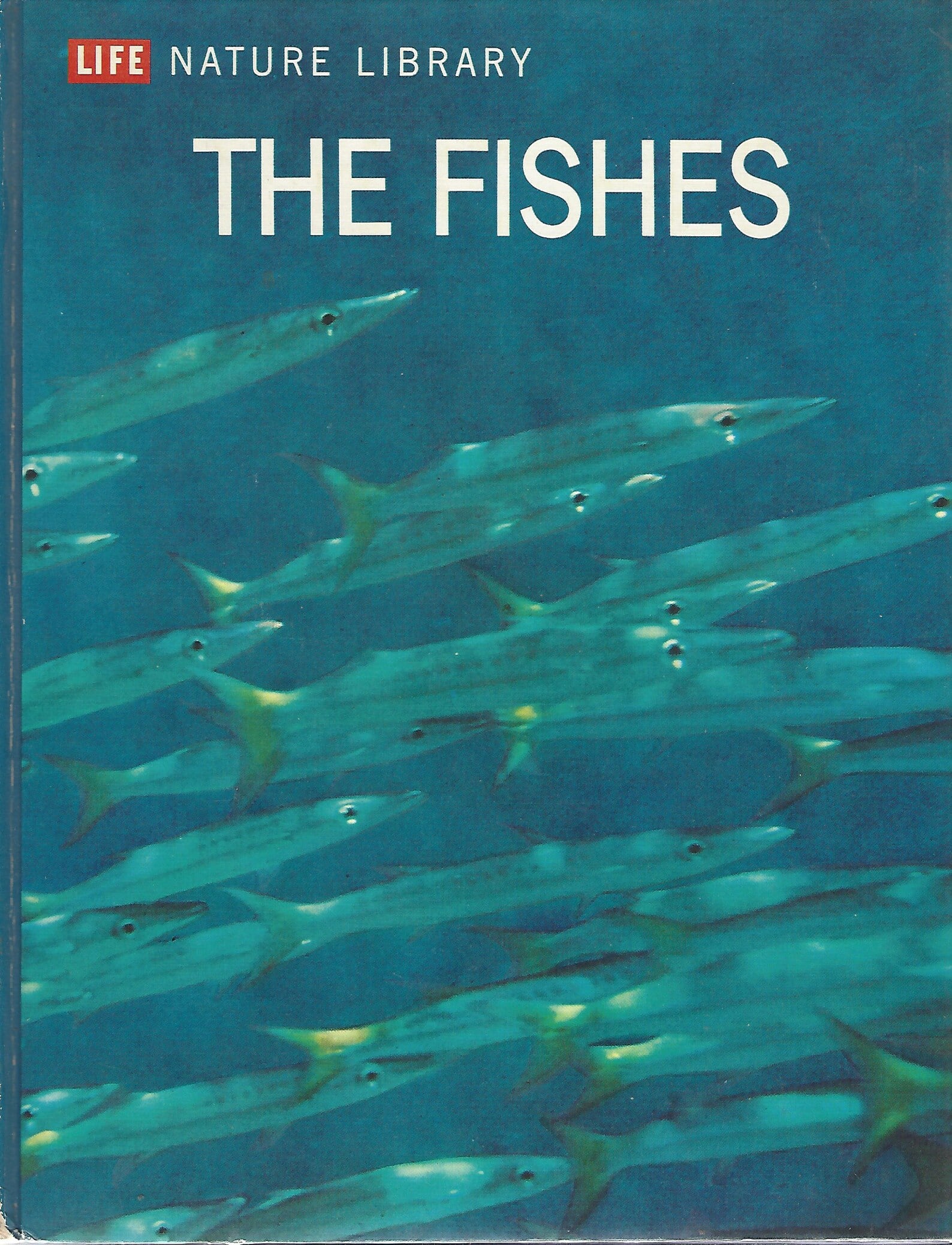
When I was very small, it was the TimeLife book of The Fishes, by F. D. Ommanney, which I remember endlessly poring over, my child’s mind gripped, in total fascination. The cover illustration showed a shoal of barracuda, mid-water and heading upwards, lit up as an iridescent blue by a column of sunlight. Oddly, it is only the cover and the illustrations of the deep sea creatures which I now remember—but I loved that book, as the weakened spine, blunted pages and dog-eared corners attested.
The Fishes has been on my mind recently, because I’ve been working with some dear friends on our own illustrated oceans book, to be published by Upswell Publishing. The book is called Scott Reef: Like Nowhere Else on Earth, and I want to share with you a bit of the story behind its creation.
Scott Reef is absolutely magnificent: Australia’s largest freestanding oceanic reef, brimming with life, including rare and threatened species such as a genetically distinct population of green sea turtles, pygmy blue whales and the wonderfully elegant dusky sea snake. But Scott Reef isn’t near our capital cities; it is way off the north-west coast of WA. And it is threatened with devastation by Woodside, which wants to drill up to 57 toxic wells at the Reef for its vast, dirty Browse gas project.
One of the main challenges in the fight to save Scott Reef from being turned into an industrialised gas zone by Woodside is bringing this incredible location to life for people who haven’t actually experienced it first hand. Because despite its ecological significance and dazzling beauty, ‘Scott Reef’ is also—at least not yet—exactly a household name.
To help get over this barrier, Greenpeace has enabled a number of photographers to travel to Scott Reef by boat (including the Rainbow Warrior) to document its astonishing diversity of colour and life. We then brought these images together in a remarkable photobook, produced by our talented in-house team, which we’ve been putting into the hands of as many leaders as possible—including the MPs whose decisions can determine the Reef’s future.
Back in June this year, I was sharing a copy of our in-house book at a business gathering in Perth when someone pulled me aside. Had we thought about publishing the book commercially? Apart from anything else, he wanted to buy a copy himself! He had a point. We were proud of what we’d created, but a commercially published version could reach a much wider audience and have even greater campaign impact. I immediately turned to my dear friend, Terri-ann White, who runs Upswell Publishing in WA, for advice.
Terri-ann has a huge heart and terrific vision. So many wonderful things in WA owe their existence to her doings, and, true to form, she was immediately encouraging and enthusiastic. “But,” she said, “it would add a whole new dimension if we had some words to accompany the incredible pictures.”
Fair enough, I thought. I could ask a few authors.
“And when would you like it published?” she asked.
“Ideally November,” I answered sheepishly.
Now, in publishing terms, nobody goes from idea to finished work, beautifully produced by a commercial publisher, in just four months. It. Just. Doesn’t. Happen. A book of this scale would ordinarily take nine months, I was told. But Terri-ann was undeterred. “If you can get a rapid turnaround on the writing, I will give it a shot.”
Over the following few days, I sent out 24 emails to prospective writers. To my joy and surprise 23 of them responded almost immediately with an enthusiastic yes!
Terri-ann was somewhat alarmed and perplexed when I told her the good news… we’d discussed a few authors, not more than twenty! “Impossible,” she texted. “Editing is important and you are talking about thousands of words!” But I also know Terri-ann. She does the impossible. And so, here we are… Terri-ann is going to hit that improbable deadline. Scott Reef: Like Nowhere Else on Earth will be on shelves in November.
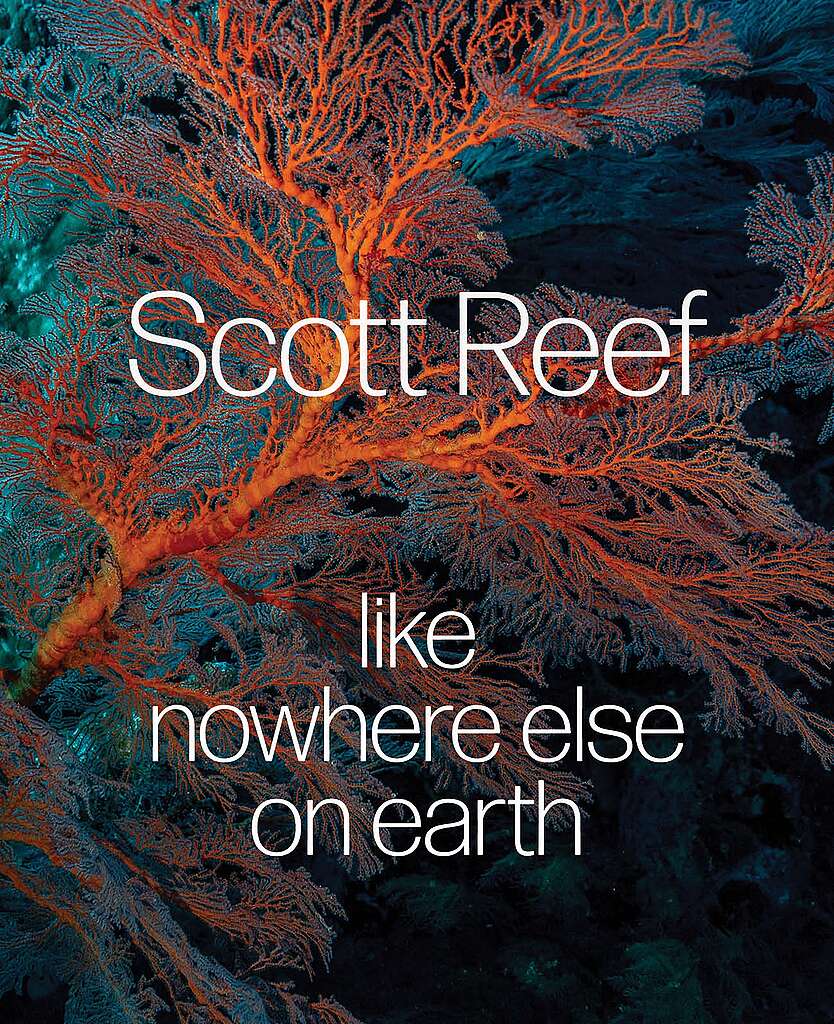
The contributors are a wonderfully diverse bunch, united by their enthusiasm for Scott Reef — and their extraordinary speed!
It’s a brilliant mix. The book brings together national icons like Peter Garrett, Tim Winton, Mick Dodson, Janet Holmes à Court and Fiona Stanley; the intellectual heft of professors Frank Bongiorno, Jessica Meeuwig, Rick Steiner and Samantha Hepburn; the poetic vision of Prema Arasu, Berndt Sellheim and Saadiah Freeman; the field expertise and passionate first hand witnessing of Imogen Zethoven, Tooni Mahto, Ben Fitzpatrick, Geoff Bice, Olaf Meynecke, Paul Gamblin, Sarah Gittoes and Hayley Baillie; and the determination of emerging activist voices Jackson Reid and Emma Sangalli.
Their elegant words wrap themselves around the sheer wonder of the underwater world, brought to life by the work of the photographers — of whom one, Wendy Mitchell, has also contributed a wonderful essay.
Terri-ann showed me the full physical proofs this week and they are breathtaking. This book contains some of my absolute favourite images of wildlife beneath the waves -– and believe me, after almost 20 years at Greenpeace, I’ve been privileged enough to see some remarkable shots! The essays bring a whole new depth and richness to the story of Scott Reef.
If I am being honest, and maybe a bit sentimental, I hope that a four or five-year-old child somewhere in Australia will spend part of their summer holidays turning the pages of this book, wide-eyed with curiosity and awe at the beauty and strangeness of the creatures that call our oceans home.
Our shared commitment is to make sure that, as those children grow up, the wonders of Scott Reef will exist not just in the pages of the book, but out there in the wild waters off north-western Australia—alive, thriving, and every bit as extraordinary as they are today; a living wonder beneath the waves.
Pre-orders of Scott Reef: Like Nowhere Else on Earth are available here.

© Wendy Mitchell / Greenpeace

Q & A
Sometimes you get asked a question so often that you decide to produce a report to answer it!
We know there is strong public opposition to voter opposition to gas drilling at Scott Reef and fracking in the Kimberley in Western Australia. But I am frequently asked whether, even if people don’t want it, more gas drilling is a necessary evil to sustain WA’s prosperity?
The short answer is an unequivocal ‘No’. The longer answer is our new report, From Gas to Green: Building Western Australia’s Future State, which makes the comprehensive case that Asia’s gas market is declining — while WA has an enormous untapped opportunity to become a global leader in green industries and exports, helping drive the region’s shift away from fossil fuels. The faster that WA embarks on a decisive shift away from gas—and that includes no fracking in the Kimberley, or drilling at Scott Reef — so much the better for the state’s people, ecology and economy.