

Welcome to Carbon Brief’s DeBriefed.
An essential guide to the week’s key developments relating to climate change.
This week
Landmark ruling repealed
DANGER DANGER: The Trump administration formally repealed the US’s landmark “endangerment finding” this week, reported the Financial Times. The 2009 Obama-era finding concluded that greenhouse gases pose a threat to public health and has provided a legal basis for their regulation over the past two decades, said the New York Times.
RACE TO COURT: Multiple environmental groups have already threatened to sue over the administration’s decision, reported the Guardian. The fate of the ruling is likely to ultimately be decided by the Conservative-majority Supreme Court, explained the New York Times.
‘BEAUTIFUL CLEAN COAL’: Separately, Donald Trump signed an executive order requiring the Pentagon to buy coal-fired power, a move aimed to “revive a fuel source in sharp decline”, reported the Los Angeles Times. Despite his efforts, Trump has overseen more retirements of coal-fired power stations than any other US president, according to Carbon Brief analysis.
Around the world
- CLIMATE TALKS: UN climate chief Simon Stiell said in a speech on Thursday that climate action can deliver stability in the face of a “new world disorder“ while on a visit to Turkey, which will host the COP31 climate summit later this year, reported BusinessGreen.
- IBERIAN CATASTROPHE: A succession of storms that hit Spain and Portugal in recent weeks have caused millions of euros worth of damage to farmlands and required more than 11,000 people to leave their homes in Spain’s southern Andalusia region, said Reuters.
- RISKY BUSINESS: The “undervaluing” of nature by businesses is fuelling its decline and putting the global economy at risk, according to a new report by the Intergovernmental Science-Policy Platform on Biodiversity and Ecosystem Services (IPBES), covered by Carbon Brief. Carbon Brief interviewed IPBES chair Dr David Obura at the report’s launch in Manchester.
- CORAL BLEACHING: A study covered by Agence France-Presse found that more than half of the world’s coral reefs were bleached over a three-year period from 2014-17 during Earth’s third “global bleaching event”. The world has since entered a fourth bleaching event, starting in 2023, a scientist told AFP.
- ‘HELLISH HOTHOUSE EARTH’: In a commentary paper, scientists argued that the world is closer than thought to a “point of no return”, which could plunge Earth into a “hellish hothouse” state, reported the Guardian.
7.4 gigawatts
The record amount of solar, onshore wind and tidal power secured in the latest auction for new renewable capacity in the UK, reported Carbon Brief.
Latest climate research
- Human-caused climate change made the hot, dry and windy weather in Chile and Argentina three times more likely | World Weather Attribution (Carbon Brief also covered the study)
- “Early-life” exposure to extreme heat “increases risk” of neurodevelopmental delay in preschool children | Nature Climate Change
- Climate change, urbanisation and species characteristics shape European butterfly population trends | Global Ecology and Biogeography
(For more, see Carbon Brief’s in-depth daily summaries of the top climate news stories on Monday, Tuesday, Wednesday, Thursday and Friday.)
Captured

China’s carbon dioxide emissions have “now been flat or falling for 21 months”, analysis for Carbon Brief has found. The trend began in March 2024 and has lasted almost two years, due in particular to falling emissions in major sectors, including transport, power and cement, said the analysis. The analysis has been covered widely in global media, including Agence France-Presse, Bloomberg, New York Times, BBC World Service and Channel 4 News.
Spotlight
UK’s ‘relentless rain’
This week, Carbon Brief takes a deep dive into the recent relentless rain and floods in the UK and explores how they could be linked to climate change.
It is no secret that it can rain a lot in the UK. But, in some parts of the country, it has rained every day of the year so far, according to Met Office data released this week.
In total, 26 stations set new monthly rainfall records for January. Northern Ireland experienced its wettest January for 149 years and Plymouth, in the south-west of England, experienced its wettest January day in 104 years.
Areas witnessing long periods of rain included Bodmin Moor in Cornwall, which has seen 41 consecutive days of rain “and counting”, reported the Guardian. The University of Reading found that its home town had its longest period of consecutive rain – 25 days – since its records for the city began in 1908.
The relentless rainfall has caused flooding in many parts of the country, particularly in rural areas.
There were more than 200 active flood alerts in place across England and Wales at the weekend, with flood warnings clustered around Gloucester and Worcester in the West Midlands, as well as Devon and Hampshire in southern England. A flood “alert” means that there is a possibility of flooding, while a “warning” means flooding is expected.
“Growing up, the road to my school never flooded. But the school has already had to close three times this year because of flooding,” Jess Powell, a local resident of a small village in Shropshire, told Carbon Brief.

Climate link
While there has not yet been a formal analysis into the role of climate change in the UK’s current lengthy period of rain and flooding, it is known that human-caused warming can play a role in wet weather extremes, explained Dr Jess Neumann, a flooding researcher from the University of Reading. She told Carbon Brief:
“Warmer air can hold more moisture – about 7% more for every 1C of warming, increasing the chance of more frequent and at times, intense rainfall.”
The UK owes its rainy climate in large part due to the jet stream, which brings strong winds from west to east and pushes low-pressure weather systems across the Atlantic.
Scientists have said that one of the factors behind the UK’s relentless rain is the “blocking” of the jet stream, which occurs when winds slow, causing rainy weather patterns to get stuck.
The impact of climate change on the jet stream is complex, involving a lot of different factors. One theory, still subject to debate among scientists, is that Arctic warming could play a role, explained Neumann:
“As the Arctic warms faster than the tropics, the temperature gradient that fuels the jet stream weakens, causing it to become slower and wavier. Blocking patterns develop that can cause weather conditions to get stuck over the UK, increasing the likelihood of extreme rainfall and flooding.”
Adaptation needs
Long periods of rain saturate the ground and can have adverse impacts on agriculture and wildlife.
Prof Richard Betts, a leading climate scientist at the Met Office and the University of Exeter, said that these impacts can have harmful effects in rural areas:
“The climate change-driven increase in flood risk is impacting food production in the UK. In 2024, the production of wheat, barley, oats and oilseed rape shrunk by 13% due to widespread flooding of farmland.
“Assistance with recovery after flooding is increasingly important – obviously, financial help via insurance and reinsurance is vital, but also action to reduce impacts on mental health is increasingly important. It’s very stressful dealing with the impacts of flooding and this is often not recognised.”
One key adaptation for floods in the UK could be to “integrate natural flood management, including sustainable urban drainage, with more traditional hard engineering techniques”, added Neumann:
“Most importantly, we need to improve our communication of flood risk to help individuals and communities know how to prepare. We need to shift our thinking from ‘keeping water out’ to ‘living with water’, if we want to adapt better to a future of flooding.”
Watch, read, listen
‘IRREVERSIBLE TREND?’: The Guardian explored how Romania’s emissions have fallen by 75% since the 1990s and have been decoupled from the country’s economic growth.
UNDER THE SEA: An article in BioGraphic explored whether the skeletons of dead corals “help or hinder recovery” on bleached reefs.
SPEEDING UP: Through dynamic charts, the Washington Post showed how climate change is accelerating.
Coming up
- 16-19 February: Sixth meeting of the subsidiary body on implementation of the Convention on Biological Diversity, Rome, Italy
- 20 February: Webinar on the key findings from the International Energy Agency policy brief: the value of demand flexibility: benefits beyond balancing
- 20 February: UN day of social justice
- 22-27 February: Ocean Sciences Meeting, Glasgow, UK
Pick of the jobs
- UN Food and Agriculture Organisation (FAO), national senior climate change expert | Salary: Unknown. Location: Dhaka, Bangladesh
- British Antarctic Survey, marine biologist | Salary: £31,183. Location: Antarctica
- Green Climate Fund, regional lead for resource mobilisation – Europe | Salary: $109,000. Location: Seoul, South Korea
- Scientific American, documentary film proposals | Up to $80,000 per commissioned film
DeBriefed is edited by Daisy Dunne. Please send any tips or feedback to debriefed@carbonbrief.org.
This is an online version of Carbon Brief’s weekly DeBriefed email newsletter. Subscribe for free here.


The post DeBriefed 13 February 2026: Trump repeals landmark ‘endangerment finding’ | China’s emissions flatlining | UK’s ‘relentless rain’ appeared first on Carbon Brief.

Scientists have vowed to keep working on the next flagship set of reports for the Intergovernmental Panel on Climate Change (IPCC), after a political row over the timeline for their release saw its latest session suspended on Friday evening without agreement.
During the weekend, government officials and scientists alike expressed disappointment over the inability to reach a compromise before some delegates from developing countries and small island states had to leave the week-long meeting in Ethiopia to catch flights home.
The disagreement – which has persisted since early 2024 – turns on whether the three key parts of the AR7 assessment should all be published before the conclusion of the UN’s next Global Stocktake of global climate action, which is due to be completed in late 2028.
The IPCC issued a statement after the close of the session, saying that “key agenda items” – the timelines for the three AR7 reports, as well as the IPCC budget – remain open and under discussion. It said the IPCC’s plenary session and its deliberations on the pending agenda “will resume at the earliest opportunity”, giving no further details of when.
IPCC Chair Jim Skea told delegates in closing remarks that recent months had been some of the most turbulent for the climate science panel and that, if there were stronger words than “profound disappointment” he would use them, according to a summary published by the Earth Negotiators Bulletin (ENB). IPCC discussions happen behind closed doors.
IPCC scientists remained committed
In an open letter, issued on Monday, a group of nearly 120 scientists – from a total of 664 AR7 authors – said they “stand committed to continue working to deliver the AR7 reports in a manner that is rigorous, timely and inclusive, in line with our mandate to be policy-relevant”.
“An assessment that arrives after the decisions it is meant to inform cannot serve its purpose,” they emphasised. “The second Global Stocktake in 2028 is such a decision point, and the world should not have to face it without the IPCCʼs latest assessment.”
Europe, small islands and the least developed countries, plus many Latin American and developed nations, want the IPCC to meet this deadline, arguing that the findings from the UN climate science body are irreplaceable in the UN climate policy-making process.
However, around a dozen developing countries plus Russia have argued that the reports should come later in order to allow for greater research input from the Global South – something that, in their view, would make the findings fairer. They also claim that a shorter timeline would put excessive pressure on experts.
-
Who shapes climate science? The equity question facing the IPCC
Early completion of the next global climate science assessment reports risks excluding research from the Global South, which is key to ensuring the findings are fair -
Governments that support climate science must stand firm against naysayers
The IPCC is meeting to decide the timing of its next major report, as some countries try to delay it and weaken the case for faster emissions cuts


The most vocal of this group at last week’s meeting were India and Saudi Arabia, according to the ENB summary and a developed country diplomat. Critics see this push for a longer timeline as an excuse to deprive government decision-makers of the latest science and ease pressure on emerging economies to raise their ambition, particularly on cutting emissions.
Commenting on last week’s meeting, France’s ambassador for climate negotiations Benoît Faraco said a broad coalition of developed and developing countries from all five continents, “united in their support for science and the timeline proposed by scientists”, had withstood pressure “from a few countries” seeking to slow down the process of adopting the IPCC reports.
He added that France would not back down and would “continue to fight tirelessly for science, protect the integrity of information, and convince our partners that without the best available scientific data, we will be less effective in tackling climate change and protecting our populations”.
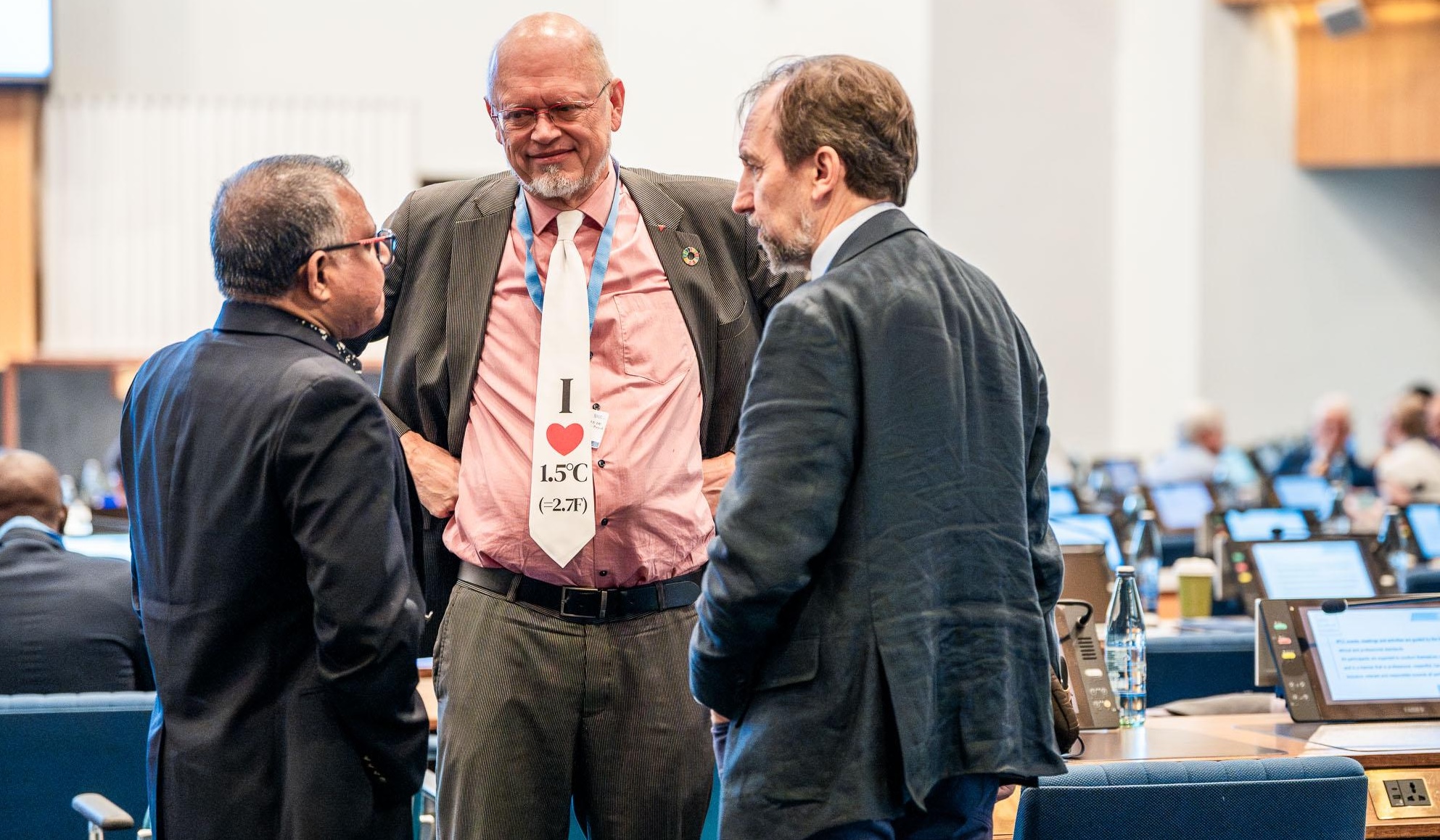
Inclusivity proposal stalled
In a bid to unlock a solution for the AR7 timeline, countries discussed ways to improve the inclusivity of the IPCC’s work. One option put on the table was for the IPCC to expand its funding for delegates from developing countries to attend some or all of its sessions from one to two participants, according to the ENB summary and a delegate speaking to Climate Home News.
That would increase the costs for the IPCC to complete AR7 by up to a quarter, according to an assessment shared by the secretariat. The panel’s budget is under severe strain and its officials have warned that, without additional voluntary contributions, it risks running out of money before it can deliver on this assessment cycle.
Climate Home News understands that some of the IPCC’s traditional donors – which mainly include European countries, Japan and Australia – indicated a willingness to support funding for an additional developing country participant. But without an agreement over the budget or the timeline for the reports, that option was ultimately not adopted.
‘Disappointed and worried’
The three reports are managed by working groups that collate and draw overall findings from the latest scientific studies and data on the physical effects of global warming around the world, how to adapt to it, and pathways for cutting planet-heating emissions in order to meet the temperature goals of the Paris Agreement.
Winston Chow, an urban climate professor at Singapore Management University who co-chairs Working Group II on adaptation, wrote in a LinkedIn post that he was “disappointed and worried” for the IPCC authors who have worked “extraordinarily hard” to assess the relevant climate science over the past two years.
He said he shared their concern that “the rigour, time and goodwill they’ve invested are now being put at risk by the Panel’s stalemate”.
As science comes under attack at UN talks, climate movement splits over how to respond
For Working Group II, a meeting for 250 experts writing that report is scheduled for January 2027, followed by the approval of a special report on cities and climate change in Singapore next March.
But because the IPCC’s budget has not been confirmed due to uncertainty about the AR7 schedule, travel support for those researchers is at risk, wrote Chow. “If they cannot participate, our assessments will lose vital expertise, perspectives and scientific breadth, and the collective effort of our authors will be undermined,” he warned.
Scientific work continues
Despite the political holdups, he – together with French climate scientist Robert Vautard, co-chair of Working Group 1 – agreed with IPCC head Skea who told the IPCC’s closing session on Friday: “The engine room of the IPCC is working, and it’s healthy.”
Vautard commented in a separate post on LinkedIn after it ended: “The boat is at full steam.” Working groups I and II are due to start revising the first drafts of their reports, while Working Group III on reducing emissions is finalising its first draft which will be out soon, he wrote.
“The most exciting two years of the cycle are ahead, for the authors. The momentum in the engine room is here and now. Trust the engine room!” he added.
The IPCC and some scientists report that progress has been made towards achieving an equitable balance of authors from the Global North and the Global South.
The group of researchers who signed the open letter on Monday noted that “inclusivity is at the heart of how we work”, with author teams bringing together experts from developed and developing countries with diverse backgrounds and at different stages of their careers.
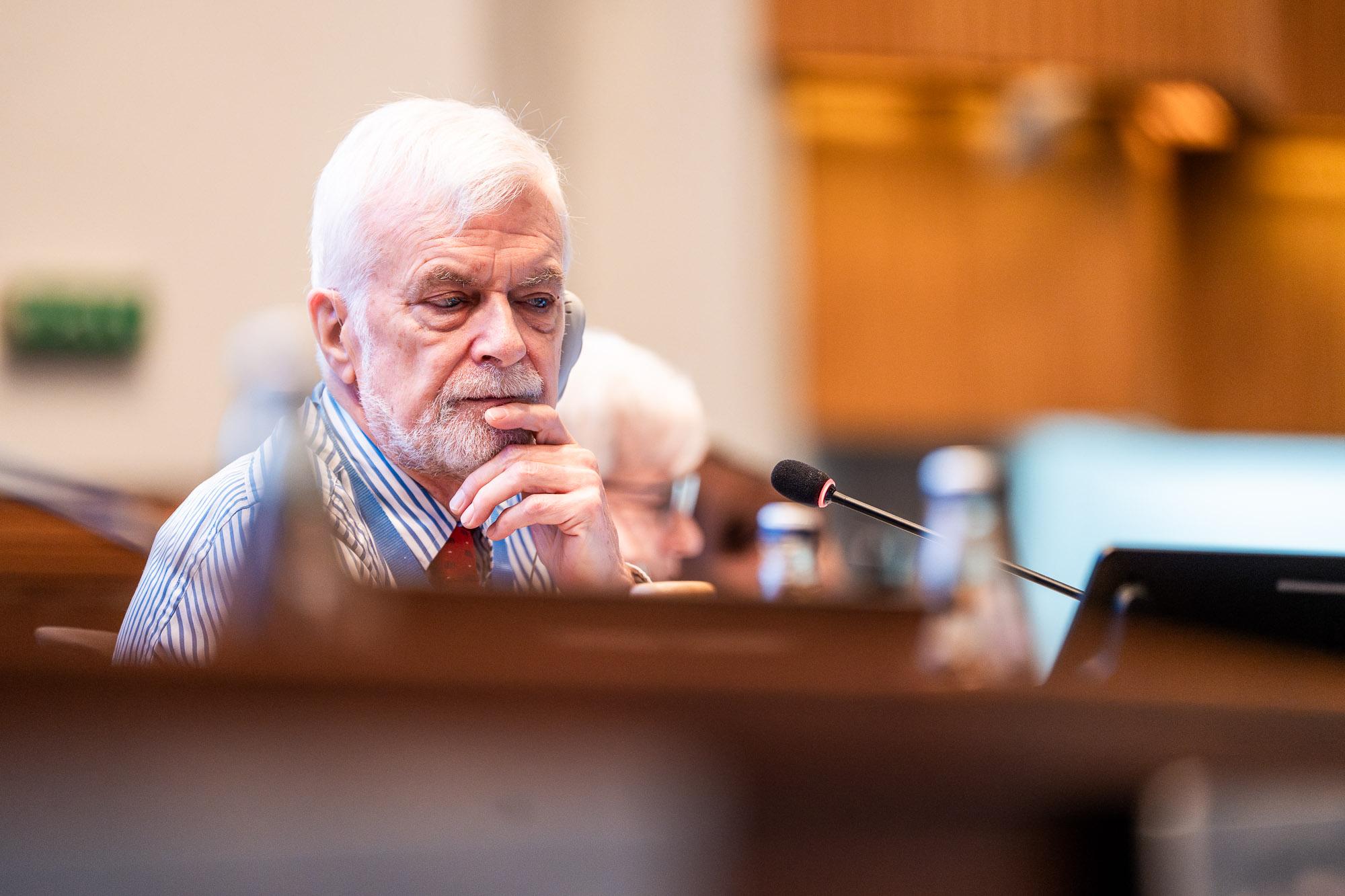
Plea to overcome political differences
The signatories include several scientists from some of the countries opposed to the alignment of all IPCC reports with the Global Stocktake.
“We are committed to an assessment in which the knowledge, experience and priorities of every region are fully reflected, a commitment we share with the leadership of the IPCC.
Equity is built into how our assessment is being drafted,” they added.
They appealed to governments that make up the IPCC “to overcome their political differences and work together as we do as a global scientific community, so that we can deliver the IPCC reports the world needs to hear”.
In a statement published on Monday, IPCC chair Skea said reaching consensus on the schedule for the reports is “vital”. He added that the assessments provide authoritative scientific evidence to inform national climate policies, strengthen adaptation and resilience and support access to climate finance, as well as helping communicate the scale of the climate crisis and the urgency of efforts to tackle it.
The post IPCC scientists vow to press on with climate reports despite political deadlock appeared first on Climate Home News.
IPCC scientists vow to press on with climate reports despite political deadlock
An Lambrechts is a biodiversity politics expert at Greenpeace International with extensive experience in biodiversity-related multilateral negotiations. She is the head of the Greenpeace delegation at the Convention on Biological Diversity (CBD) COP17 happening in Yerevan, Armenia.
In 2022, COP15 delivered the landmark Kunming-Montreal Global Biodiversity Framework to halt and reverse biodiversity loss by 2030. With COP17 starting in Yerevan, we are now halfway to the deadline, and according to the first Global Review of progress, countries are not on track to meet the biodiversity targets, and implementation must accelerate fast.
One of the main findings of the Global Review is that funding falls far short of the scale needed to halt and reverse nature loss. But the crisis facing the world’s biodiversity is not an absolute scarcity of capital – it is a profound public policy distortion.
The global economy currently spends roughly $30 destroying nature for every single dollar invested in its protection. According to a