

We handpick and explain the most important stories at the intersection of climate, land, food and nature over the past fortnight.
This is an online version of Carbon Brief’s fortnightly Cropped email newsletter. Subscribe for free here.
Key developments
Flooded food baskets
AG EMERGENCY: Flash flooding has destroyed thousands of acres of crops in Punjab, a province that accounts for 68% of Pakistan’s total annual food grain production, Bloomberg reported. Around 60% of the province’s rice crops and 30% of its sugarcane have been lost, according to preliminary estimates by the Pakistan Business Forum. Pakistan’s Dawn newspaper reported that the forum has written to the prime minister to ask the government to declare an “agricultural emergency”. The New York Times spoke to farmers affected by the flooding.
-
Sign up to Carbon Brief’s free “Cropped” email newsletter. A fortnightly digest of food, land and nature news and views. Sent to your inbox every other Wednesday.
CROSS-BORDER IMPACTS: In Indian Punjab, at least 148,000 hectares of cropland have been “submerged” by floodwaters, BBC News reported. It continued: “Punjab is often referred to as the ‘food basket’ of India and is a major source for agricultural production, particularly of staples like wheat and rice.” It added that a “quarter of Punjab’s 30 million people depend on agriculture” for their livelihoods. The Guardian spoke to Indian farmers left reeling from the impacts of flooding on their crops. Reuters reported that flooding has driven up the prices of aromatic basmati rice, grown exclusively in India and Pakistan.
CLIMATE ‘VULNERABLE’: In its coverage, Al Jazeera reported that there has not yet been a formal assessment of the role of climate change in the ongoing floods, but it is likely to be a key factor in their severity. It added that Pakistan “ranks among the top 10 most climate-vulnerable nations, but it contributes less than 1% of global emissions”. The Washington Post covered how deforestation has conspired with accelerating glacier melt and harsher monsoon rains to drive worse flash floods in the country.
‘Tropical forests forever’
FLAGSHIP FUND: Brazil is planning to make its Tropical Forest Forever Facility one of two priority initiatives at the COP30 climate summit in the Amazon city of Belém in November, according to a Financial Times report from São Paulo and Brasília. First proposed at COP28 in 2023, the facility aims to leverage finance from developed nations and philanthropic foundations to make protecting tropical forests in developing nations profitable, the Financial Times explained in a second report.
RAISING BILLIONS: A “crucial” aspect of the plan is to “not rely on donations”, the newspaper said, adding: “Instead it would be financed entirely by interest-bearing debt.” It noted that the fund “would become the world’s biggest ‘blended finance’ vehicle if it can get anywhere close to its target size [of $125bn]”. There are 74 developing countries with a total of more than 1bn hectares of tropical forests that could be eligible for the scheme if they can prove that they have an annual deforestation rate of less than 0.5%, the newspaper added.
SUBSIDY REFORM: Meanwhile, Astrid Schomaker, the executive secretary of the UN biodiversity convention, has written to countries urging them to identify subsidies that are harmful to nature in their long-overdue national biodiversity plans and “take concrete implementation action” to reform them. Reducing the amount spent on subsidies harmful to nature by $500bn by 2030 was one of the targets of the landmark Kunming-Montreal Global Biodiversity Framework (GBF). However, countries have so far done little to identify such spending or conceptualise paths for reform at talks following the agreement of the GBF, Carbon Brief reporting has shown.
News and views
TREATY AHOY?: Two more countries – Cape Verde and Saint Kitts and Nevis – ratified the landmark High Seas Treaty during preparatory meetings last week, Earth Negotiations Bulletin reported. Grenada and Cambodia also ratified the agreement, meaning only four more countries need to officially sign before the treaty can enter into force. Separately, the Philippines “br[oke new] ground” by establishing the 370-acre Bitaug marine protected area, creating a “safe space” for sharks and rays and allowing revenue-sharing from eco-tourism, Forbes reported.
ACT-ING UP: ACT, part of New Zealand’s ruling coalition, called for the country to leave the “broken” Paris Agreement, citing the “real cost to firms, farms and families” from net-zero targets, Radio New Zealand reported. The country’s prime minister, Christopher Luxon, pushed back against pulling out from the accord, it added, telling reporters that it would be the “quickest way” to hurt New Zealand farmers and that “competitor countries would like nothing more than to see New Zealand products off their shelves”.
FIRE-PROOFING: In the aftermath of August’s “heatwave-fuelled” wildfires, Spain’s prime minister, Pedro Sánchez, announced a 10-point plan to prepare the country for climate change, including a “rethink of forest management and land use”, the Guardian reported. Sanchez was quoted as saying: “If we don’t want to bequeath our children a Spain that’s grey from fire and flames, or a Spain that’s brown from floods, then we need a Spain that’s greener.” CBS News reported that two climate activists were arrested for throwing paint at Barcelona’s Sagrada Familia while protesting government “complicity” in the fires, which they attributed to livestock farming.
OCTOPUS ‘PLAGUE’: An unusual explosion in octopus numbers in English waters this summer has left UK shellfish harvesters at a loss, Agence France-Presse reported. A long-lasting marine heatwave gave a boost to octopus populations earlier in the year, delighting some fishers that were able to profit from the boom, but harming others that make a living from shellfish, the newswire said. “The tentacled molluscs are notoriously voracious eaters, hoovering up crustaceans such as crabs and shellfish,” the article explained, adding that many UK crab potters found their traps empty when octopus numbers increased.
JAGUARS RETURN: Jaguar numbers in Mexico have risen by 30% over the past 15 years following a “conservation drive”, the Guardian reported. Based on a census carried out with 920 motion-capture cameras across 414,000 hectares, researchers estimated that there are now 5,326 jaguars in Mexico, the newspaper said. A local expert listed three main reasons for the uptick: “Maintaining natural protected areas where jaguars can roam freely, reducing the conflict between cattle ranchers and jaguars and a publicity campaign that has put the jaguar on the map.”
LEGAL EFFORTS: Four residents of the Indonesian island of Pari are seeking damages from the world’s largest cement producer, the Swiss company Holcim, due to the impact of climate change on their lives, Reuters reported. A hearing was held in the Swiss city of Zug on 3 September, but ended with no decision, according to the European Center for Constitutional and Human Rights. Elsewhere, Climate Home News reported on how farmers in Zambia are threatening to sue a Chinese copper company following a “massive toxic spill”.
Spotlight
Grains of truth
This week, Cropped talks to the authors of a new graphic novel about food sovereignty and resilient rice cultures in India’s eastern Indigenous heartlands.
The eastern Indian state of Jharkhand is better known for its rich coal reserves than for its grain.
Unlike India’s breadbasket in the north-west, less than 10% of Jharkhand’s cultivated land is irrigated, making its rainfed paddy highly reliant on a changing Indian monsoon.
In 2022, the state received its lowest rainfall in 121 years.
‘Plastic’ rice
The previous year, many of Jharkhand’s Indigenous villages were among the first to taste the outcome of a new Indian government strategy to combat malnutrition and anaemia: fortified rice.
Essentially, “fortification” involves mixing broken rice kernels and rice powder with nutrients, such as iron and vitamin B12. After being passed through an extrusion machine, these new “grains” are then mixed with regular rice that is distributed to India’s poor under India’s National Food Security Act, the world’s largest and most far-reaching food safety scheme.
According to a three-part investigation by journalist Anumeha Yadav in the Wire, Jharkhand’s Indigenous rice-growing communities were not convinced of the new grain’s benefits, dubbing it “plastic rice” and questioning its effects on their health.
The Indian government attributed farmers’ reactions to a “lack of awareness” and has since expanded the programme.
Yadav’s reportage led to the publication of a new graphic novel, Our Rice Tastes of Spring, illustrated by Bangalore-based studio Spitting Image.
Yadav told Carbon Brief she wrote the novel to document diverse food cultures and as a response to “tech fixes” being promoted to address climate change and achieve the UN Sustainable Development Goals.
According to Yadav, there’s widespread consensus that farming methods ushered in by the Green Revolution have made diets cereal-heavy and depleted India’s soils, meaning the “food we’re eating is much, much worse than what even our parents ate”.
At the same time, the industrial agricultural industry – and even some NGOs – are pushing a “tech fix” aimed at India’s poor that “makes money for themselves”, she added.

Drawn from real life
Lead illustrator Sandhya Visvanathan told Carbon Brief she combined Yadav’s photographs – of “life and people as they are” on Jharkhand’s Netarhat plateau – with “painterly” drawings of daily life in a community “whose lives are intertwined with the land”.
While the plot is set in a fictional Indigenous village, the conversations, rituals and rice varieties the book depicts are very real.
For instance, Ranikajal rice grows longer stems as floodwaters rise and iron-rich red Agni-sal grain has stems known to resist even cyclones.
Anumeha warns that many of these varieties – and the creative, traditional knowledge systems associated with them – are at risk of being lost forever, as India promotes and procures input-intensive white rice.
She concluded:
“Many people looked at the images and said: ‘Hey, that seed used to grow here.’ But there’s also a question of dignity and agency here: even farmers know there is corporate interest involved in these saviour[-like] solutions. Someone actually said that to me: ‘The market is not the only principle in our life.’”
Watch, read, listen
SECTS, SOYA AND CATTLE: A new documentary by the Gecko Project investigated the key drivers behind the worst fires on record in Bolivia’s Chiquitano forest.
DURIAN DURIAN: The New York Times profiled “self-described fanatics” of the “odoriferous” durian fruit, who gathered in Puerto Rico to sample durian in a “judgment-free zone”.
SAVING THE ‘FATTEST PARROT’: The Guardian reported on efforts to protect New Zealand’s kakapos, the “world’s fattest parrot”, by vaccinating them against bird flu.
BEGIN AGAIN: A Financial Times column explored how “why veganism lost” out to “influencers and gym bros” pushing protein and how it could regain momentum in the public.
New science
- Human impacts on global marine ecosystems are expected to more than double by the mid-century | Science
- Deforestation accounted for about three-quarters of the reduction in rainfall and surface temperature increase recorded during the dry season in the Brazilian Amazon over the past 35 years | Nature Communications
- Nearly 40% of the world’s transboundary river basins could see conflicts arising from water scarcity in 2041-50, although these conflicts could be mitigated by “proactive measures” | Nature Communications
In the diary
- 18 September: Earthed Summit 2025: Generation Restoration | London
- 19 September: Call for evidence on EU fertiliser product regulation | Online
- 21-28 September: New York Climate Week | New York City
- 24 September: UN General Assembly high-level week climate summit | New York City
- 29 September-1 October: FAO global conference on sustainable livestock transformation | Rome
Cropped is researched and written by Dr Giuliana Viglione, Aruna Chandrasekhar, Daisy Dunne, Orla Dwyer and Yanine Quiroz. Please send tips and feedback to cropped@carbonbrief.org
The post Cropped 10 September 2025: Flooded ‘food baskets’; Brazil eyes forest finance; Resilient rice appeared first on Carbon Brief.
Cropped 10 September 2025: Flooded ‘food baskets’; Brazil eyes forest finance; Resilient rice

June Rubis is a steering group committee member for the Cali Fund, from Sarawak in Malaysian Borneo.
At COP16 in Cali, governments made a significant commitment: at least half of the funding from the new Cali Fund should support the self-identified needs of Indigenous Peoples and local communities, including women and youth. It was a watershed moment for multilateral benefit-sharing.
The challenge now is to translate that commitment into access arrangements that recognise the different institutions, priorities and decision-making processes of Indigenous Peoples and local communities.
For generations, biodiversity and traditional Indigenous knowledge have provided significant value to companies who depend on nature’s genetic diversity to discover new drugs that fight diseases, create products that improve health, and grow crops resilient to extreme heat and flooding events. While some compounds are sampled directly from the source country, increasingly the digital blueprints are held in online public databases which are freely accessible to use for innovation and research.
Countries urged to ramp up “insufficient” nature policies at COP17
The Cali Fund was established at COP16 to encourage commercial users of Digital Sequence Information, or DSI, to share benefits arising from its use. Estimates suggest it could generate over $3.5 billion a year – a stark contrast to the modest $10,656 currently committed to the fund from just five SMEs, underlining how much progress must be made at COP17 over the next two weeks.
The COP16 decision that set up the fund offers two routes for money to reach Indigenous Peoples and local communities: through government authorities, and through direct payments to institutions identified by Indigenous Peoples and local communities themselves.
Varied ways of organising
Indigenous Peoples and local communities organise through a wide range of institutions. Some have national or regional organisations experienced in managing international grants. Others work through territorial organisations, customary institutions, community associations, cooperatives or networks. Some have professional finance teams and audited accounts; others have extensive experience governing territories, collective resources or conservation work without having been organised around international funding requirements.
For direct access, some questions are already apparent. Which institutions should be able to receive funds? How should they be identified? What fiduciary standards should apply? How should safeguards and accountability work where institutional capacities differ? What support may be needed where institutions have strong community mandates but less experience with international finance?
Comment: Protecting nature is a public duty, not a Wall Street profit opportunity
If access is designed mainly around institutions that already meet the expectations of large international finance mechanisms, early funding will tend to favour those already familiar to funders. They will gain further experience and become better positioned for future funding, while institutions with less administrative capacity may remain outside the system despite strong community mandates and long histories of stewardship.
These first decisions matter most, because they set the terms for everyone who follows.
The role of intermediaries requires care. Some Indigenous organisations may want a fiscal host to hold and manage funds on their behalf. Communities may choose to work through an NGO they trust. Government-facilitated arrangements may work well in particular national contexts.
What matters is the function an intermediary performs and the authority that comes with it. Providing administrative support is different from deciding which Indigenous organisations qualify, which priorities can receive support, or how success will be assessed. Direct access means communities keep that decision-making authority.
Decision-making power
The COP16 decision refers to institutions that Indigenous Peoples and local communities identify. But authority among Indigenous Peoples does not sit in one kind of body. It may sit with territorial organisations, customary institutions, community associations or combinations of these. Legal recognition and customary authority do not always align neatly.
Global deforestation slowed in 2025 but Brazil’s election could undo “fragile” gains
An important feature of the Cali Fund’s governance is that Indigenous Peoples and local communities participate as full members of the Steering Committee, rather than as observers. Seven Indigenous Peoples and local community representatives, one from each of the seven socio-cultural regions, participate in consensus-based decision-making alongside representatives of governments and UN entities. Six additional representatives from civil society, scientific institutions and the private sector participate as observers.
That representation carries responsibility. Institutional legitimacy, access and representation take different forms across the seven socio-cultural regions. Indigenous Peoples and local communities members therefore have an important role in bringing those differences into the Fund’s governance and in ensuring that arrangements developed for one context do not become the assumed model for everyone else.
Safeguards and clear responsibilities
COP17 can establish the core principles and direction, while allowing operational pathways to develop in ways that respond to different regional contexts. The decisions countries take in Yerevan will shape how that flexibility is realised in practice.
The choices made around access will influence which institutions are able to participate, which routes become established and which forms of authority are recognised within the funding architecture. The aim should be an architecture with enough structure to maintain confidence while allowing for different forms of Indigenous and community governance.
A credible direct-access pathway will need safeguards, financial oversight and clear responsibilities. This would give the 50% commitment a stronger institutional foundation.
The Cali Fund’s importance will ultimately depend not only on how much funding reaches Indigenous Peoples and local communities, but on whether they are able to determine how the money is accessed, governed and used. This requires access pathways that recognise their institutions, priorities and decision-making processes, rather than requiring them to conform to a single predetermined model.
The post COP17 must settle who decides how Cali Fund money is disbursed appeared first on Climate Home News.
COP17 must settle who decides how Cali Fund money is disbursed
The UK government has approved extraction at the Jackdaw gas field in the North Sea, despite acknowledging that this decision could make it harder for Britain to convince other countries to move away from fossil fuel production.
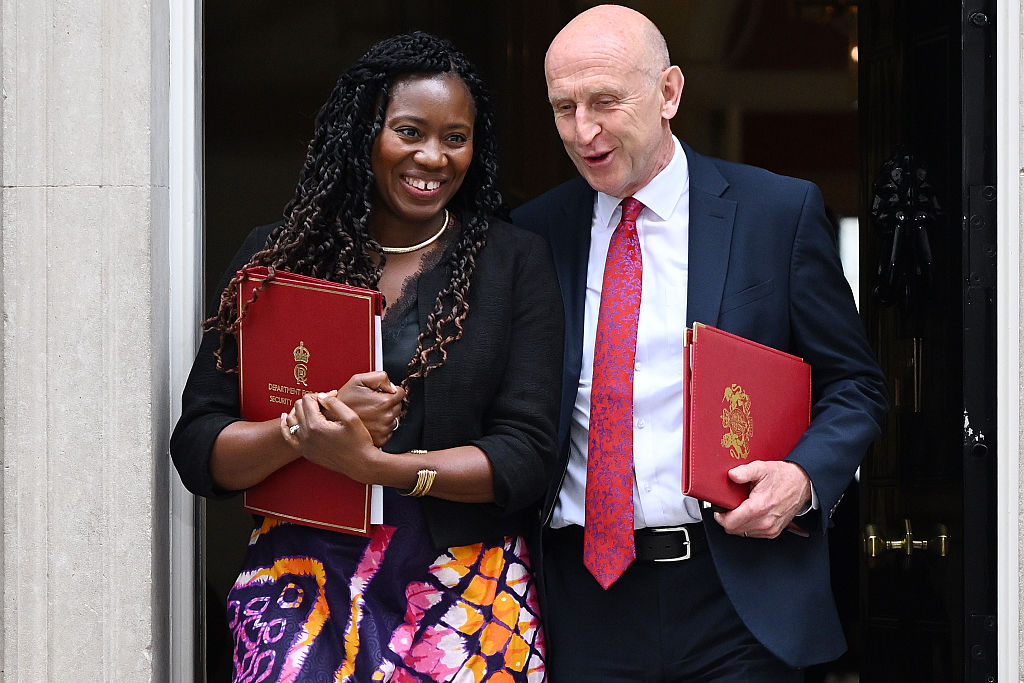
UK energy secretary Miatta Fahnbulleh approved the drilling on Wednesday after months of high-profile debate, fuelled in part by interventions from US President Donald Trump. She argued that the project would boost energy security in the wake of the Middle East fossil fuel crisis, protect hundreds of jobs and add £2.9 billion ($3.88bn) to the UK economy.
She said Jackdaw’s gas would be cleaner than imported gas and would not prevent the UK from meeting its legally-binding carbon targets and its goal of net zero by 2050. As the field is already licensed, she said extraction was consistent with the Labour Party’s 2024 manifesto promise not to issue any new oil and gas licenses.
The same morning, the government announced a new Energy Wealth Fund to reinvest oil and gas revenues in the climate transition. It will start with £2 billion ($2.67bn) from the government and be topped up over time with tax revenues from offshore oil and gas production.
Climate campaigners in the UK and abroad were quick to condemn the decision, while a leading legal expert told Climate Home News it goes against the advice of the International Court of Justice. Meanwhile, the government’s own documents reveal that it recognises the drilling could damage the UK’s reputation and its ability to push forward the global transition away from fossil fuels.
“Climate leadership” blow
The 92-page decision document says Fahnbulleh “acknowledges that international standing on climate is important and accepts that a decision to grant consent may not further the UK’s international climate leadership.”
It adds: “She acknowledges concerns about the potential implications for the UK’s credibility and influence – including the difficulty inherent in encouraging other states to move away from fossil fuel production while the UK continues, in a limited and transitional way, to draw on its own domestic resources.”
While noting that Jackdaw has not been issued with a new license – just permission to extract gas – the document says Fahnbulleh “accepts this does not fully resolve the underlying tension in the UK’s position” but “considers this alongside the substance of the UK’s wider record [on emissions reduction], which remains significant”.
It continues that she accepts these concerns are “legitimate” and weigh against approving gas extraction, but only gives this argument a “moderate negative weight” set against the benefits of gas production.
“Huge” wrong signal
In international climate talks, the UK has long supported the transition away from fossil fuels and is one of very few major oil and gas producers to ban new licenses. Across the North Sea, the Norwegian government continues to make offshore areas available for oil and gas exploration through annual licensing rounds.
Climate experts and campaigners shared the concern, acknowledged in the decision document, that approving Jackdaw could set a precedent for fossil fuel production elsewhere. Sam Fankhauser, professor of climate change economics at Oxford University, said the direct climate impact of Jackdaw is “much smaller than the debate around it would suggest” but the “wrong signal it sends, however, is huge”.
-
Carbon capture industry faces tough future, as UK raids green spending
Despite a spate of projects getting underway, the mood at an industry conference in London this week was low with government subsidies set to shrink -

