

Weather Guard Lightning Tech
Chinese Airborne Wind Turbines, Extended Blade Lifetimes
The crew discusses the Chinese S1500 airborne wind turbine, how NLMK DanSteel manufactures steel for offshore wind, and results from ORE Catapult showing extended blade lifetimes.
Sign up now for Uptime Tech News, our weekly email update on all things wind technology. This episode is sponsored by Weather Guard Lightning Tech. Learn more about Weather Guard’s StrikeTape Wind Turbine LPS retrofit. Follow the show on Facebook, YouTube, Twitter, Linkedin and visit Weather Guard on the web. And subscribe to Rosemary Barnes’ YouTube channel here. Have a question we can answer on the show? Email us!
You are listening to the Uptime Wind Energy Podcast brought to you by build turbines.com. Learn, train, and be a part of the Clean Energy Revolution. Visit build turbines.com today. Now here’s your hosts, Allen Hall, Joel Saxum, Phil Totaro, and Rosemary Barnes.
Allen Hall: Welcome to the Uptime Wind Energy Podcast. I’m your host, Allen Hall in the Queen City, Charlotte, North Carolina.
I’m here with Rosemary Barnes and. Australia Phil Totaro’s in California and Joel Saxum’s back home in Texas. We’ve all decided that we’re not gonna talk about anything negative this week. That’s good. Phil did have his pre-recorded rant. That’s always good. So there, there is some dirt going on out there in wind, but I don’t think we’re gonna talk about it this week ’cause we just need a little bit of a break.
The top of the order is, uh, this Chinese flying wind turbine that looks like a Zeppelin, and [00:01:00] they have supposedly tested over in China, the world’s largest airborne wind turbine, and it’s called the S 1500. It’s developed by Beijing’s Saws Energy Technology, and it made us made in flight recently in Hames.
The, it looks like a Zeppelin and, and Rosemary, there has been a previous version of this that was around, but I don’t think it went to anywhere, but it looks like it’s what? It’s about 40 meters tall, about 40 meters wide and about 60 meters long. So it’s sort of this long tube. And inside of this tube they have 1200 kilowatt generators.
So they’re creating power up at altitude, and they have a cable that bring down all the power. Down to earth. It’s kind of like a heliostat and some of these, uh, other tethered systems. My question is, why are we trying that now? And especially in China where they have huge, massive wind turbine is [00:02:00]being built.
Why this?
Rosemary Barnes: Yeah. Uh, I don’t know. I often question why China makes certain decisions with investments they make. ’cause they have, um, yeah, invested in a whole bunch of. Out there technologies as well as dominating most of the mainstream ones. And, uh, what I usually come up with is that they’ve gotta try everything.
Strategy, very, very similar concept came out of MITI think that they developed it originally as a power generating thing, you know, basically just based on the idea that, um, wind speeds are way higher the further up you go. So they wanna. Get, get up into those really high, um, wind speeds that, you know, way higher than what a tower can reach for a traditional wind turbine.
And yeah, this, these original concept that I saw out of MIT, that originally they were planning to use it for power generation, then I think that they pivoted to telecommunications. Um, and then I believe that they pivoted to not doing that anymore. Um, so I haven’t looked at it recently. Could, could be that [00:03:00]I’m a little bit outta date on that.
But it is interesting to see a concept picked up that. Like, I don’t think anybody would really say that that was the most promising of all the different kinds of airborne wind. Um, yeah. So it’s interesting to see that that’s the one that’s been picked up. I think it’s got some promise in that it’s, it’s true that the wind resource is much better at, um, at high wind speed, but there are a whole lot of challenges that need to be overcome.
Um, so it’s not yet I would say sure whether this. Is any of these technologies are ever gonna go anywhere? Um, we’re kind of at the point now where some companies are ready to find out, but it’s um, yeah, definitely not taking over the world anytime soon.
Joel Saxum: Yeah. I was gonna say, Rosie, I tend to agree with you.
I, we’ve, there’s the one I’m thinking about, Alan is the, it was containerized and it was like we had a winch. He let led the thing up and went up to higher altitudes. I just. I think there’s too many moving parts to these [00:04:00]solutions to be something that’s gonna be done at scale. I think there’s a great use for them in say, I don’t know, military operations or disaster response, um, those kind of things.
Or very remote areas where you can’t get anything else in, you know, like a Caribbean island or some crazy thing like that. I think there’s, there’s possibility there. However, to do this at scale. I just don’t see it, right? This one’s, this is by far the biggest one. I think I’ve heard of 1.2 megawatts.
That’s a lot of juice, right? That’s creating a lot of energy. So I think that you can see this like, oh, we’re trying to go to scale with this thing, but. What’s the practical use? I think, Phil, you actually said it before off air, like this is a solution looking for a problem almost.
Phil Totaro: Yeah, and it, what’s funny to me about this is there’s, there’s a couple of things here.
One is what you just mentioned, Joel, like the economies of scale on doing this as some kind of displacement to conventional power generation is just completely [00:05:00] impractical because we have so much infrastructure in place that’s not associated with. With Airborne, but we actually looked at, I just wanna say like 12 years ago as a company, we did the math on whether or not this type of technology made sense to use in, you know, like islands or, um, you know, displacement of like diesel generation basically, uh, places like Alaska or the Caribbean, like you said.
Um, so the math came out like if the price of oil is above. Something like 120 bucks a barrel, then a solution like this makes sense. Uh, otherwise you’re probably better off, especially now. ’cause again, when we did this analysis, it was years ago, but batteries are easily more dispatchable now. You know, the technology, this is one of those things like you were saying, like, yeah, the technology works and you can make this like a TL nine, but [00:06:00] for what?
Like, nobody’s gonna pay for this.
Rosemary Barnes: I don’t think that they’re up to TL nine yet. ’cause there’s some like, it, it works. And they’ve done autonomous operation, like in steady state operation. They’ve done some autonomous, um, like launches and. I dunno, what’s the opposite of a launch? Um, pulling, pulling back in.
You can’t just stay up there through any kind of storm, right? So they have to be able to launch and, um, re retract land, um, under deploy. You have to be able to do that autonomously if you are gonna imagine, you know, this having any kind of scale. And I think that, yeah, autonomous launch and, um, landing has been done.
But not in all conditions. At least last time I looked into it deeply, they, that was the last bit that was left. It’s like, yeah, it can, can be done autonomously in good conditions, but not bad ones. Um, yeah, so I think that there’s still some proving out to go and I think that failure raise a really good [00:07:00] point that it becomes like the further that other technologies develop, the less likely it is that airborne wind can catch up.
And also that people like those early. Early markets are going to want it now. Islands obviously solar panels, um, are already deployed on a lot of islands. And then when you do have batteries so cheap that you can start to build up a whole day, a couple of days, you know, a week worth of batteries would probably not be a totally non-comparable cost to the airborne wind.
And also just so much less maintenance required. So much less that can go wrong.
Joel Saxum: You know, there’s one thing I wanted to touch on here that we, we skipped, we kind of, we breezed by it because we do, we talk about these things all the time, but for people that are, aren’t used to r and d or aren’t used to technology development.
T when we mention TRL nine on the show here, uh, Phil mentioned it, Rosemary mentioned it. That is a scale. TRL one through TRL [00:08:00] nine, and it is, it was developed by NASA a long time ago, but basically TRL one means concept and idea all the way through. 2, 3, 4, 5, 6, 7, 8, 9, 9 means commercially ready. We’re ready to roll with this product as a, as a thing.
So when we say a one of those levels, that’s what we’re referring to.
Allen Hall: The United States had something very similar, or it still does, I think along the east coast they put up Aerostats around Washington DC and they had a little radar underneath them so they could look over the horizon. So along the east coast there are these big, massive aerostats, and I don’t know if you recall or not, but several years ago, probably 10 years ago now, they had one of those aerostats break loose in Maryland and that cable.
That holds it to the earth is conductive. So every power line it came across, started creating shorts and blackouts all along this pathway until it finally crashed in Pennsylvania. I think they had an F 16 [00:09:00] chasing it for a little bit, uh, once it broke free. But I remember that happening and thinking, man, that is a really difficult engineering, uh, design to create something as big as a basically a BLI size piece and have a cable and have it hold it.
For eternity.
Rosemary Barnes: That’s one of the biggest challenges. As aside from the autonomous operation, one of the biggest challenges is just the materials, properties of the cable itself. Because Yeah, the, the tether to get, and obviously it has to be conductive because the electricity has to, um, travel through it.
That’s the point. Um, yeah. And then, you know, to reach the really good wind speeds, you have to be very far above the ground. I mean, you would want to go like, what’s a jet stream? Is what, like a kilometer up or, or something. So, you know, that would be ideal. But at least, you know, several hundred meters and just the pure weight of that cable, um, you have to then, you know, like all of the lift that you need to keep in the, in the sky to support that cable is all just coming off, [00:10:00] you know, being subtracted from the, um, lift that is going into generation.
So it’s, yeah, it’s really tricky.
Allen Hall: I did work on one of those designs for a cable years ago. You’d be shocked how small those cables are for as high of altitude. That the balloon would go. So it’s maybe about twice the size of your thumb, at least my thumb, and it’s just full of really strong material plus power in it.
So if anything kinks or goes wrong in the winding process and you damage that cable, it’s a big deal. But if you do create a weak spot in it, your whole design floats away. Chaos reigns.
Phil Totaro: The other thing is that that’s why they wanna try the technology with the shroud design, because that obviously increases the rotor induction and everything like Rosie was talking about before.
The problem though, with it is it’s. Like, so theoretically you could [00:11:00]put it at a lower altitude with, with lower wind shear because you’re getting that acceleration when they’ve done these designs though on shore. Uh, ’cause there have been a number of companies that have tried doing shrouded turbine designs.
It, it. Ends up increasing the fatigue load on the blade route to such a degree that the, the blades end up shearing and you just, you lose all the benefit of the shroud. So
Rosemary Barnes: yeah, with ground, ground based, uh, ducted wind turbines, it’s always, it’s like a, almost like a little cheat because you can get higher, higher efficiency and, you know, beat the bets factor, which is a theoretical limit for how efficient a, a wind turbine can be.
A horizontal axis wind turbine can be, but it’s just, it’s just trickery because the shroud accelerates air from a, a bigger, like it’s capturing a bigger surface area. Um, the energy doesn’t come from nowhere, so it’s. You know, you can get the same effect by just having a bigger rotor, right? [00:12:00] Um, and then instead of a bigger rotor, you’ve used extra material to make the, the duct or the shroud.
And so it’s, you know, if they use the same amount of materials, do you actually improve anything? You can get a better efficiency number, but you’re not gonna get a better cost effectiveness. In any of the, like more advanced ducted designs that I have seen, they always end up using more material in the duct than they do.
They would to make a bigger wind turbine if it’s way up in the sky, like why are you limited on the diameter That it, it can be. So it’s like, yeah, I’m not, I’m not sure. Aside from the fact that they want the buoyancy from the, you know, the, the blimps of it, um. So they might as well make that into a shroud.
I guess If they’re not using any extra material to make the shroud, then sure. But in general, ducted desires like they, they work and depending on your. How you’re calculating efficiency. They can be more efficient, but they’re not more cost effective.
Allen Hall: [00:13:00] As wind energy professionals staying informed is crucial, and let’s face it difficult.
That’s why the Uptime podcast recommends PES Wind Magazine. PES Wind offers a diverse range of in-depth articles and expert insights that dive into the most pressing issues facing our energy future. Whether you’re an industry veteran or new to wind, PES Wind has the high quality content you need. Don’t miss out.
Visit PS wind.com Today in this quarter’s PS Wind Magazine. Lot of good articles need to go. Download it@pswind.com. Uh. I wanna highlight an article I’ve been reading about, ’cause this ties into things that Rosemary has been talking about in regards to steel and steel manufacturing, that it’s very carbon intensive and CO2 intensive, and there’s been a number of efforts to use electric arc furnaces to reduce amount of CO2.
And when you do that. You use recycled material, you throw back into the mix to create the, to bring the carbon into play. [00:14:00] Uh, but NLMK, Dan Steel, which is based in Denmark, uh, makes the heavy plate steel, it’s used in wind turbines, have been doing it for a long, long time. And the article on PES Wind talks about the complexities of doing that today because we’re asking wind turbine.
Towers out in the ocean to do more and more and more. We’re putting more weight on top of them so any sort of grain defect becomes, can become catastrophic over time. So the amount of effort going into the steel plate and the technology that’s going into making that steel is exponentially higher than it was even 10 years ago.
And. Rosemary, I, I know the effort to decarbonize steel has been there for a number of years, but NL MK is already starting that process and I think it’s really interesting to see it and see those pieces of steel that are using less or remitting less CO2 now being put out into service. It [00:15:00] does take a very specific process though, right?
To do that.
Rosemary Barnes: I don’t know if, um, if you saw it, but I actually got to tour an electric arc furnace when I was in Sweden earlier this year. So that was really cool. We didn’t talk a whole lot about what I was there mostly to see. It’s the world’s lowest emissions, um, steel production. So when the electricity price was low, they would make hydrogen and um, then burn.
Burn that. They’d burn it immediately. They don’t store it anywhere. They make it onsite and then. Use it immediately. Um, and then when the electricity price is high, then they’re using propane. So, um, it was kind of like, uh, a more economical way to retrofit, uh, facility to be lower emissions. But it was, it was such a cool thing to experience.
It’s, uh, you know, like a lot of the decarbonization things, uh, you know, like if you’re in your home, it’s like putting solar panels on a roof and a battery, uh, in the backyard and you don’t really like, it doesn’t feel that that. [00:16:00]Challenging. Uh, at least in Australia, it really doesn’t feel challenging. You know, electric car is nice to drive, plug it in at home.
You never have to go to a petrol station. It’s all good, good, good. But then when I was in a steel facility, it’s like, you know, like you’re standing. 20 meters away from this molten steel and, uh, you know, just the, the weight of it. They’re just like throwing around this like red hot steel, throwing it around like it’s, uh, a noodle, um, rolling it and yeah, just, just literally just throwing it around, grabbing it with claws and throwing it over there.
And, um, it’s like you just, the, the weight and the heat, it’s just so obvious how much energy is, is used. But that is an electrified process also. So you know, even then it is still quite similar.
Joel Saxum: Rosie, do you think this is Okay, so I’m just going further down the path of what N-N-L-M-K is doing here in this decarbonization of steel production.
’cause steel, the steel production industry is like, it’s not like cement, where cement is one of the highest energy. Users in the world, uh, but steel [00:17:00]uses a lot and that’s why there’s an effort to do this. Can you see, so in this electric arc furnace process, is there a possibility of these things having say, behind the meter, wind backed up by batteries or behind the meter solar, like, can that produce enough power to run one of these plants or enough constant power?
Because I imagine these things need on-demand power now. Can that happen or do they have to be hooked up to the grid?
Rosemary Barnes: I don’t know about behind the meter because that’s just, you know, like a whole lot of power and any one wind farm or any one set of solar panels is going to be quite variable. Um, so I don’t see that it would make sense really to separate from the grid, which can combine, you know, a lot of different sources and it’s all, you know, it’s whole, um.
Its whole operational existence is geared around being very, very, very reliable. So I’m not sure. I mean, it’s one of those things that I guess, um, as the, um, cost of batteries comes down, down, down, down, down, then you can start seeing people probably inch closer to that themselves. But I can’t really see why you would need to be [00:18:00] off.
Sure there’s lots of steel plants with power purchase agreements out there. Um, you know, with individual wind farms.
Joel Saxum: Yeah. What kind, what kind, what’s the demand? Did they tell you what the demand is? Like, what is, what is peak power usage? What do we use it?
Rosemary Barnes: I didn’t, I didn’t talk about it in in that one, but I mean, electric arc furnace, it’s very, it’s a very normal technology and it’s something that’s been around since way before anybody cared about the emissions.
Um, CO2 emissions of steel because it’s very cost effective to take existing steel and, you know, just makes a, a new kind of steel product out of it compared to taking dirt and trying to turn that into iron and then steel, um, it’s a lot more cost effective. To the extent that we have enough steel scrap that’s, you know, from steel use that’s being retired now.
Um, you would obviously go with that for everything you can, but at the moment we’re still, you know, as a, a planet, we’re still using more and more steel every, every year. So it’s definitely not the full solution, but it’s a part of it. [00:19:00]
Allen Hall: Did they make, make you leave your wallet and watch behind when you went into that arc furnace area?
That’s what happened when I used to work for Alcoa. Years ago because the arc furnace is there.
Rosemary Barnes: The arc furnace wasn’t on. They, they do a weekly, um, cycle, so they shut down every Friday and um, they kind of shut it down in, in order, you know, because the, yeah, so the ARC furnace had had already shut down for the week, but the rolling was still going on.
But it was kind of good ’cause I could get right up to the equipment. You can’t stand very close to it, obviously while it’s
Phil Totaro: operating. So co couple of things. First is the, the companies that have signed PPAs for steel production offtake, they’ve actually said that they’re, they’re not doing a hundred percent of their power demand because they still have to, like, there’s a certain amount of base load power that they need, which they’re actually taking from renewables instead of taking from some other base load power generation.
Um, but they still need to [00:20:00] have like a peaker uh, capability. From the utility company that they’re getting power from. Uh, so, uh, Zenger in Germany signed a PPA, like that. I, there’s another company in Scandinavia somewhere that also did that, um, like late last year, I wanna say, or early this year. Um, so there’s, there’s a couple of companies that are, that are, uh, doing that.
The other aspect of this that I find fascinating is the fact that. When you make a wind turbine tower, it contains what we call a, a specific type of detail category, um, of the steel. So it’s a certain grade and a certain thickness to it. What’s basically going on with the evolution of this kind of technology, and what’s so fascinating about it is that you can now make things cheaper.
Faster and thinner than you ever could before using this type of process. So there’s less carbon, it’s cheaper, it’s faster, it’s better, it’s everything. That’s what’s actually really kind [00:21:00] of cool about this and and really fascinating to me and Joel though, making plate about 10 inches
Allen Hall: thick. That’s amazing.
Joel Saxum: That’s crazy. While we’ve been talking, I’m curious about some numbers here. So I went and kind of just did a little bit of basic math and this stuff is probably gonna ring true to a lot, but. A seven, so a 70. They, they rate these electric arc arc furnaces in tons. So a 70 ton electric arc furnace when producing 500,000 tons of steel per year.
The annual power consumption via 190 million kilowatt hours. Wind farm operating at 40% capacity is a 54 megawatt wind farm dedicated to this one steel factory. So that’s like 36 G one fifteens. Just to power this one steel factory for the year. One furnace. One furnace outputting, right, outputting 500,000 tons, one furnace.
Allen Hall: It’s impressive. And if you want to be even more impressed, you wanna download the latest quarters PS WIN magazine, ps win.com. A lot of great [00:22:00] articles, a lot of people that we know in there this quarter, download it. It’s free. A lot of good stuff in there. Are you worried about unexpected blade root failures and the high cost of repairs?
Meet Eco Pitch by Onyx Insight. The standard in blade root monitoring. Onyx iss state-of-the-art sensor tracks blade root movement in real time, delivering continuous data to keep your wind farm running smoothly and efficiently. With eco pitch, you can catch problems early. Saving hundreds of thousands of dollars.
Field tested on over 3000 blades. It’s proven reliability at your fingertips. Choose Eco Pitch for peace of mind. Contact Onyx Insight today to schedule your demo of Eco Pitch and experience the future of blade monitoring. Well, what if we told you that winter term blades collapse 50% longer than their intended lifespan?
Rosie would say that’s crazy. Well, Ori Catapult has been working with RWE [00:23:00] on a breakthrough testing program, so what they have done is they’ve. Pulled a 20-year-old blade from one of rws e’s uh, harshest onshore insights and replicated real world conditions, and they did it with 11 I devices, Joel. And they simulated the aging process and they successfully compressed one year of real world impact into about 48 hours.
Doing that allows you to then rapidly test. Blades for lifetime extension. Sally Pakistan, who was a principal validation engineer at, or a catapult called this potentially a breakthrough moment for the wind industry, unquote,
Phil Totaro: and I would agree with her. What’s awesome is that they’re improving the reliability of.
The, the blades. But this is also fascinating for the companies that repair blades. ’cause anytime you make something, you know, cheaper, [00:24:00] better, higher quality, less repair work equals less revenue for them. So they’re not gonna like it that much. I’m gonna throw a red flag on this study.
Joel Saxum: I like, uh, the 11 I technology and I think it’s really good ’cause I’ve seen it work, right?
Um, bill and the team over there do a great job, however. All of the blade conferences, all of the blade knowledge, all of the experts that I’ve talked to over the last five years, everybody basically has the same synopsis of the blade industry. 20-year-old blades. Yes. They were tough. They were designed tough.
They’re gonna last a long time. I don’t care about those that much. I expect those the last 30 years. It’s the new blades that I’m concerned about. Those are the ones that I don’t believe. So if you’re gonna do this test again, I’m throwing the red flag. You’re gonna do this test, do it on a 1-year-old blade, do it on a brand new design we’re installing today, then I bet you it won’t last 30 years.
Allen Hall: Well, that’s the question, right? I think. The, all the E-cig groups and the [00:25:00] dvs and uls have to be wondering like, okay, now what? Because the certification test that Rosemary’s been involved with in terms of blade qualification, is that real? Because that test is supposed to show the blades last 20 years if they do these series of tests, right?
And now our catapult’s coming back and saying, we have a way to really hone in on it. I think lifetime tests could get. Much more advanced, I’d imagine.
Rosemary Barnes: So in the early days of the wind industry, when they started making blades out of composites, they had huge safety factors, or probably safety factor isn’t the right way to think about it.
’cause the safety factor itself has probably not changed or not changed much since those days. But what they used as their material. Properties that, you know, the, um, values that they would put in their design codes, they were incredibly conservative. You know, they didn’t know exactly how strong it was.
They didn’t know exactly what fatigue behavior would be like. Over decades, we’ve adjusted the materials properties, [00:26:00] so now it’s much closer to what it really is. But the problem is that then we’ve got, we’ve rightfully reduced the. Buffer in those kinds of areas, but it used to also kind of compensate for a bunch of other things that we didn’t know that well, like manufacturing defects and, um, yeah, like all, all sorts of funny operating methods or, um, weird things that can happen that was kind of all included in that fudge factor.
And now that we have, um, really, you know, come down, you get to the point where yes, you can pass a, a, a. Certification test, but then when you get it out into the real world, things don’t happen exactly the same way every time. And there’s, you know, like little shocks from the sudden gust of wind or some turbulence that you just behaved in some sort of way that you didn’t expect, or, you know, like breaking loads, all these sorts of things can start to [00:27:00]then cause failures.
Phil Totaro: So let me, let me ask a question on this Is. Is the fact that we started moving away from, you know, kind of traditional, um, composite to start including carbon. You know, ev basically everybody wants a longer blade with less weight. We had to start introducing carbon to be able to make that possible. Is, is it?
The carbon protrusions are, are part of the problem or what’s the, what’s really kind of behind this?
Rosemary Barnes: I mean, carbon protrusions are part of the solution and then part of the problem as well, you know, you solve, they solved some, some things immensely and introduce new, new, um, damage modes, value modes, which.
You would say for any kind of new technology? I don’t think it’s all to do with carwood. I see plenty of, plenty of interesting failures in all glass blades. Um, it’s to do with them being longer. I think definitely like composite [00:28:00]materials actually don’t like to be thick. Um, the thickness of um, just even fiberglass in a wind turbine blade is like really unusual for, you know, I was doing my PhD 10.
13 years ago I started and at that time, like thick, thick composites, that’s an area of research and what counted as thick then is not as thick as what we see in, um, wind turbine blades all the time. And it’s not, these aren’t being made under lab conditions, you know, so there’s just a lot more things that can go wrong and not be discovered in the factory.
You know, when you have a small blade, defects are more visible from the outside and from standard, um, non-destructive testing techniques. Um, so yeah, now they can kind of be, be a lot more hidden and you might not learn until you’ve already got, you know, 5,000 blades out in operation.
Joel Saxum: I know this is a factor of economics, but this is one of the troubles that I have with, with, with standards, certifications, and all these things.
Just what [00:29:00] you said earlier, Rosemary, is the testing, right? So everybody’s seen a test rig. If you’re listening to this podcast, you’ve seen a blade test rig. It sticks the blade out. You’re gonna do some flap wise, you might do some oscillations. You might do some edgewise. Great. However, there is not a test stand in the world that can simulate centrifugal forces, gravity loading, aerodynamic loading, and those are major things with that happen to these wind turbine blades.
All day, every day. So the answer to me is install them, run ’em for a year or two. Figure these things out before you build 5,000 of ’em.
Rosemary Barnes: Yeah, but they do. But the problem is, with any kind of certification, is you’re testing one thing, one example of something that’s gonna be serially produced with all sorts of random distributions.
And in some ways it’s conservative ’cause it’s your first blade and you probably haven’t figured out how to well make ’em that well. But on the other hand, you’ve made it really slow and everyone’s paying a lot of attention. Um, I don’t think necessarily people are making it differently because they know it’s gonna be tested.
I never saw that. But definitely [00:30:00] everybody’s paying attention for the first few blades because it’s not become second nature anymore. You know, you’re still reading the work instructions carefully and engineers are still there supervising everything. You just can’t get the statistical variation in a full population of blades by doing one test.
Allen Hall: Isn’t the 11 I sensors that were used during this process, I assume to show aging if they’re installing 11 I imus Joel, that’s basically what they are is like an IMU
Joel Saxum: multiple ones in each blade.
Allen Hall: You can detect different modes of vibration and how the blade is moving over time. If you can do that at some reasonable scale, seeing it’s even 1% of the blades that are out in service for a particular farm, why wouldn’t you?
Because the lifetime issue is gonna come up at some point you would be able to tell if the blade has changed vibration modes or whatever else these structural engineers are [00:31:00] doing. You would be able to see that over time. And I’m guessing that’s what they’re doing at, or a catapult is looking at structural changes.
That would occur naturally over time in the aging process, and they can accelerate that and that’s how they’re validating it. But the same token, you can use that same technology to look at existing blades to predict what the lifetime of the blade would be.
Joel Saxum: It’s, it’s another thing what the, like Rosemary is saying though, popula, when we’re we’re talking about this, we, we have to introduce the conversation of statistics.
Populations samples. What is pop? What are proper statistics? What do they look like? How do you test for ’em? Because if I’m a, say I’m a big operator and a, or a small operator, I don’t care, or a consortium, this is what it should be. A consortium of operators gets together and says, Hey, we buy a bunch of these type of turbines between the five of us.
Why don’t we force this OEM to put these sensors in here on five of your turbines? Five of mine, five of mine, five of mine. That would be great, and then we would have a picture of what’s going on. However, here’s the practical problem there. If you’re, if you’ve got [00:32:00] 500, we’ll throw this out there. GE two X, we look at a ton of them.
One 20 sevens ge, two x one 20 sevens. If you’ve got 500 of these, the chances are those 500 turbines, 1500 blades came from probably eight different factories from three different manufacturers, or four or five different manufacturer. And they may be any of 10 different versions from a, a one, A two B two, B three, C one, C two, C3, and now we’ve even seen Gen D.
So all of the results you’re gonna have to repeat for every one of those generations of that same blade. Like it’s a, it’s a problem that we have in wind that is a, it’s a very unique, because we’re doing things in serial production like we, like we talk about, but the serial production changes so much and there’s so much variability that to get statistically meaningful.
Data is tough. Yeah. But the cost is relatively
Allen Hall: low.
Rosemary Barnes: The cost that’s, that’s, that’s relevant. It’s not even so much the cost of the sensors, it’s the people to manage the data. That’s, that’s what I found. [00:33:00] Um, yeah. When I was always like, why can’t I just install all of the sensors and, you know, just record all of his information and gimme all of the scatter data?
And they’re just like, no, we can’t, you know, we can’t manage that. And it’s one thing to do it on the prototype, I, I would. Um, you know, I could just install a, a separate system and manage that on my own. But if you want to do it, um, operationally, then um, that’s the, the biggest challenge. I mean, these OEMs are all, you know, they wanna hire the fewest number of engineers possible, right?
Because that’s, uh, they’ve gotta, gotta keep costs down and they just, I don’t think there’s enough human power to be this smart in, you know, across the board. Unfortunately,
Phil Totaro: Joel, this goes back to the issue in the industry that we’ve had absolutely forever, which is the OEMs have some, but not necessarily all of that kind of data because they obviously have an outfitted every single.
Turbine with sensors, but they are the ones that [00:34:00] hold all the keys when it comes to what Blade was manufactured, where, uh, what gearbox was manufactured where. ’cause that’s also a consideration too, just talking about general things. But, so from the standpoint of the owners and operators, they’re maybe not even gonna have visibility to some of that kind of information.
Even if they retrofit a sensor platform onto the turbines that they own, that may give them visibility. You know, Rosie’s point notwithstanding like, you know, doing the, the data analysis and, and all that, and the resources and money that, that’s necessary to commit to that. But there’s a missing piece that the OEMs are just fundamentally unwilling to share.
We’ve been begging them for 20 years to let’s do a project together where you give us some access to that type of information for purposes of benchmarking this, that, and whatever. Like, Hey, you think you’re better than Vestas? Then tell us ge, how you’re better than Vestas. Let us see some of your data.
We don’t need all of it, [00:35:00] but some of your data, they won’t even do it. Not even a little bit. So
Joel Saxum: I mean, what, what it would take in my mind, and this is a macro thing, but what it would take in my mind is. A consortium of people in the industry that are saying, okay, enough, we got our insurance company together.
We got a finance company together. We got a couple of operators together. We’re gonna put together a, well, what would we call A-J-I-P-A joint industry project. Everybody devotes a little bit of resources to it, and we stare at an OEM and say, we’re not buying any more turbines until you give us some of this data or let us instrument these things.
Rosemary Barnes: I reckon that’s the path through. If, um, insurance companies can say, you know, this is costing us too much and start offering a discount to clients that have this kind of monitoring, then I think that that will, you know, create a big enough push pull to get this happening. ’cause you know, maybe. Um, the OEMs can see they can charge more for a product that has this because they just never wanna include sensors [00:36:00] even, you know, just operationally when I want to, you know, get my client who owns a wind farm to, you know, stick a sensor somewhere that’s totally not affecting any structure.
Doesn’t need to get into scatter or power through. Its solar powered and remotely. Um. Uh, monitored. They still often say, no, you can’t do that. And it’s, you know, to a turbine that they, that the my client owns. Um, so they just hate to allow anything at all. It’s so, it’s so irritating and so senseless because it’s actually, uh, preventing the industry from maturing in the way that it would need to, to, you know, be future-proof as a, you know, long-term, major technology.
Phil Totaro: And here’s, here’s what’s interesting is in in industries like automotive, there’s been a mandate in industries like aerospace and aviation, there’s been a mandate for that kind of. Transparency there has not been a mandate. And going back to Rosie, your question, why do the [00:37:00]insurance companies not have the power of mandate through, you know, the insurance?
It’s because they’re not actually backstopping every single thing that goes on out there. The only way we’re gonna get access to the type of data that we want. That we’re all talking about right now that’s gonna solve these problems and help move the industry forward is through some kind of mandate.
Allen Hall: That wraps up another episode of the Uptime Wind Energy Podcast. Thanks for joining us. We appreciate all the feedback and support we receive from the wind industry, and if today’s discussion sparked any questions or ideas, we’d love to hear from you. Just reach out to us on LinkedIn and please don’t forget to subscribe so you never miss an episode.
For Joel Rosemary and Phil, I’m Alan Hall and we’ll catch you here next week on the Uptime Wind Energy [00:38:00] Podcast.
https://weatherguardwind.com/airborne-wind-extended-blade/

 The vast majority of Americans have liberal views. We favor a woman’s right to choose abortion, high-quality public education, affordable healthcare, clear air and water, the use of science in policymaking, equal rights for minority ethnicities and religions, and efforts to trim the enormous gap between rich and poor.
It would be very interesting to know what percentage of U.S. voters believe that liberals hate America, that we believe our country “is fundamentally evil and the only remedy is destroying our nation with mass migration (sic).”
Trump’s approval rating is about 30%, and a few percent of that is the amoral super-rich. So, possibly it’s in the high 20s.
But aren’t there at least some MAGA folks who would concede that educated people don’t necessarily hate America? My mother lived on a steady diet of Fox News, but even she had respect for Bernie Sanders, about whom she said, “I admire his sincerity, misguided though it is.”
An Important Republican Position: The Left Really IS “Radical”–But Who Believes This?
 Whoa. Let’s take a step back. Is it really either A or B?
You could on the side of the morons, those incapable of any level of critical thinking, like the author of the meme here.
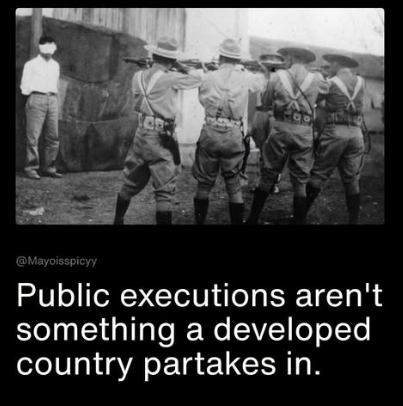 The United States seems set on propelling itself backwards.