

Carolina Pasquali is executive director of Greenpeace Brazil and Jasper Inventor is executive director of Greenpeace Southeast Asia.
In times like these, we must ask ourselves some fundamental questions. Why is war perpetual? Why do so many people lack the basic necessities of life while oligarchs burn a billion dollars to travel to space for a few seconds? Why do we value dead trees but not living forests?
Something is very wrong in the prevailing global logic and systems. For one, we reward the destruction and degradation of the Earth. Reigning economic logic sees value in logs, gold, palm oil, meat and dairy – but none in the Amazon rainforest, or the great forests of Indonesia or the vast Congo Basin in Africa. This green belt of life crosses oceans and sustains all of us – providing clean air, regulating the weather, storing carbon, and basically ensuring a livable Earth.
Yet we allow these forests to be razed, burned, mined or auctioned for carbon credits while a small minority reap the spoils. This plunder that has hurt Indigenous communities for centuries continues to this day, and now threatens all life on Earth with runaway ecological and climate breakdown.
Globally, we lose the equivalent of 11 football fields of forest with each passing minute, resulting in the release of 2.7 gigatonnes of CO2 into the atmosphere—as much as India’s annual fossil fuel’s emission.
Reward those who protect forests
All this could change if a planned new ecologically-minded investment mechanism, the Tropical Forests Forever Facility (TFFF), is successfully developed. Proposed in Dubai at COP28, the Facility is expected to launch when Brazil hosts the next COP in November.
In simple terms, the Facility proposes to help correct the basic illogic of our global economic system. Instead of rewarding the destruction of the forests, we will reward those who protect them. It is an idea supported by Global South nations around the world.
Global forest loss hits “frightening” record high with climate-fuelled fires
With an initial investment of $25 billion raised through high-income countries and philanthropic sources, the Facility will act as an investment portfolio, intending to yield returns for loan providers and eventually generating $4 billion annually for nations that protect their tropical forests.
Initial versions of the TFFF concept have been shared publicly and are now in a period of review. As executive directors of Greenpeace offices in tropical forest regions, we welcome the initiative with caution. For too long we have seen empty commitments from companies and governments alike to end deforestation, without success.
Fighting corporate capture
To succeed where so many have failed, the Facility must effectively prevent corporate co-optation and greenwashing. As long-time members of the environmental movement, we have witnessed the steady and alarming pace of corporate capture of our public institutions everywhere.
The last three climate COP negotiations were flooded by polluting corporations. Meanwhile civil society, Indigenous groups, and local communities were sidelined in the halls they built—and none of the powerful nations delivered on any of their promises.
Brazilian President Luiz Inácio Lula da Silva can be successful in his administration’s proposed Facility if it genuinely centres Indigenous Peoples and local communities. This means recognizing that although they make up just 5% of the world’s populations, Indigenous Peoples safeguard at least a fifth of all land on Earth.
“It’s shameful”: Amazon Indigenous people call for oil drilling ban at COP30
After years of advocacy by tribes in Papua, Indonesia, local governments have begun issuing formal recognition of Indigenous land rights, a true milestone for climate and biodiversity protection.
In Africa, meanwhile, the Congo Basin is gravely threatened by oil drilling, industrial logging, and agribusiness. Its carbon-rich peatlands, crucial for climate stability, face uncertain futures. And in Brazil, the National Congress seeks to advance bills that open Indigenous lands for exploitation and threaten their very existence.
Put forest communities at the centre
Communities across these forests are gravely threatened by violent and insatiable plunder. Yet they have not turned their backs on the forests. Simply put, this Facility must provide the people connected with tropical forests the necessary respect, audience, and funds to protect their ancestral homes.
We need to see mechanisms for direct access of funds to Indigenous Peoples and local communities, along with their strong participation in governance and decision-making structures.
The Facility must also ensure strong monitoring of deforestation and forest degradation methods, and ensure that destructive industries are ineligible for investments. Investments must not further drive biodiversity loss and the climate crisis, or fuel armed conflicts.
Cobalt and nickel-free electric car batteries boom in “good news” for rainforests
New opportunity to fund forests
Critics of the Facility have cited its controversial origins as well as its potentially misguided attempt to protect forests through assigning monetary value (often too low). They have raised questions about funding sources, monitoring, and mechanisms.
Yet we urgently need to find ambitious means to preserve our great forests. The UN’s Sustainable Development Goals are short trillions of dollars and TFFF will not be able to fill this gap on its own. But it is a start – an opportunity and a new model that can ultimately halt deforestation and forest degradation globally.
Set to be launched at November’s COP30 in the heart of the Amazon forest, what better homage to the biggest rainforest in the world than for Brazil to announce a truly effective initiative for a change?
In times like these, at our darkest hour, change isn’t just possible—it’s necessary and inevitable. Brazil’s offering is a sign of the change that is to come. This Facility has a critical opportunity to forge a new path that can benefit all life on Earth.
The post Brazil’s new funding initiative can help bring rainforests back from the brink – if done right appeared first on Climate Home News.
Brazil’s new funding initiative can help bring rainforests back from the brink – if done right

Next week, diplomats from around the world will descend on Yerevan, Armenia, to negotiate a series of decisions under the UN Convention on Biological Diversity (CBD).
Between 19 and 30 October, 196 parties will gather to hammer out the precise wording of the dozens of legal texts that make up the decisions under the Conference of the Parties (COP) to the CBD.
This year’s summit is particularly significant, as it marks the halfway point between the agreement of the Kunming-Montreal Global Biodiversity Framework and the deadline for achieving its targets.
The CBD has found that countries are currently not on track to meet 22 out of the framework’s 23 targets.
During the fortnight, delegates will also be negotiating decisions relating to the two supplemental protocols to the CBD: the Cartagena Protocol, which covers biosafety; and the Nagoya Protocol, which covers access and benefit-sharing for the use of genetic resources.
(The Cartagena and Nagoya Protocols, which are each governed by a “meeting of the parties”, or “MOP”, have fewer parties than the CBD as a whole, with 173 and 141, respectively.)
Carbon Brief is tracking the progress of countries towards consensus on dozens of negotiating texts using the interactive table below.
The tracker includes texts from the COP, as well as the MOPs for the Cartagena and Nagoya protocols. It also includes draft decisions from the most recent subsidiary body meetings, as these form the starting point for the negotiations in Yerevan.
The CBD has three subsidiary bodies: the subsidiary body on scientific, technical and technological advice (SBSTTA), the subsidiary body on implementation (SBI) and the subsidiary body on article 8(j) and other provisions (SB8J).
SB8J focuses on issues related to the Indigenous peoples and local communities. It was established at COP16 in Cali, Colombia, in 2024.
The first two columns of the interactive tracker list the topic of each agenda item and the relevant body, with subsequent columns including dates, page counts and links to the original documents.
The table is searchable and can be sorted using the arrows in the header.
Areas of disagreement in UN draft texts are denoted by square brackets. Counting the brackets in a particular iteration of a text therefore gives a sense of how far parties are from reaching consensus.
The bracket column is colour-coded, with dark green indicating a low number of brackets and red indicating a high number of brackets remaining.
Texts can also present parties with choices using “options” or alternatives (“alt”), which are counted together in the sixth column of the table.
The key discussions in Yerevan will centre around two agenda items in particular. The first is the global review, which will assess progress towards the GBF and make recommendations for accelerating action.
The second is finance, which can be separated into two parts: resource mobilisation and the financial mechanism. On resource mobilisation, biodiverse global south countries are likely to push for an increased amount of international finance for conservation.
Disagreement over the creation of the financial mechanism led to the suspension of COP16 in Cali in October 2024, as parties failed to find agreement on the mobilisation of finance before the end of the summit.
Global south countries want the establishment of a separate financial mechanism under the control of the CBD; global north countries largely prefer to maintain the existing mechanism, which sits under the Global Environment Facility.
At the resumed session of COP16 in Rome in early 2025, countries agreed on a roadmap that would lead to the establishment of a permanent mechanism.
related
Analysis: Lula presidency saved at least 20,000km2 of Brazilian Amazon since 2022
Why land-use emissions have fallen by a third this century – in six charts
Analysis: 84% of nations miss deadline to identify ‘nature-harming’ subsidies by 2025
UK withdraws millions in funding from world’s second-largest rainforest in Congo
The post Interactive: Tracking negotiating texts at the COP17 biodiversity summit appeared first on Carbon Brief.
Interactive: Tracking negotiating texts at the COP17 biodiversity summit
A beacon of love
On an outer island of Fiji, two thousand nautical miles from Sydney, is a shining light of hope and resilience for our troubled world.
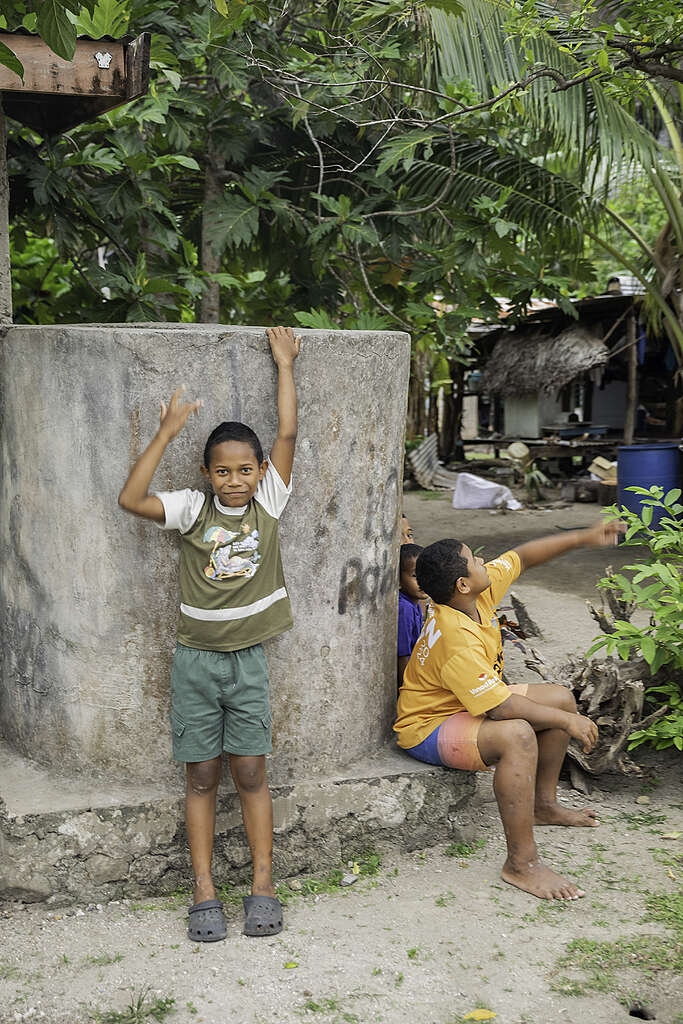
The island of Kioa is home to a Tuvaluan community who migrated from their atoll of Vaitupu in the late 1940s. It is a land of warm hearts, big smiles, and deep cultural roots; a place where the sound of a conch still summons the island together, where islanders paddle out to fish in carved outrigger canoes, and healthy happy children walk barefoot to school.
Here, culture is life. Kioans live sustainably through their traditional knowledge and practices. The island is alive with song, dance and the rhythms of a life tied to the tides, the winds, and the seasons.
Facing the future
Greenpeace has been lucky to have a relationship with Kioa for a number of years now, and we are continually learning from this remarkable community.
Last week, as part of our Voyaging Oceania project, we returned to the island. Our purpose was twofold —- to carry messages from the island to leaders gathering in Nadi this week for the Pacific Pre-COP, and to support the Kioa community in their efforts to improve water security for the island.
Unlike Tuvalu itself, with its eight atolls, Kioa is a mountainous, forested and richly fertile island. It will remain habitable far into the future. Kioans did not initially migrate from Vaitupu due to climate change, but the move was prophetic. They now have a lifeboat.
However, even Kioa faces challenges on our rapidly warming planet, in particular when it comes to water. Climate change is shifting once reliable rainfall patterns. On top of this, the island is already feeling the effect of this year’s intensifying El Niño event, which for Fiji means reduced rainfall and prolonged dry spells.
Right now, fresh water has to be carefully rationed, and is only available for a few hours a day. During last week’s visit aboard our campaigning ship Oceania, Greenpeace was privileged to work with the Kioa community on a new solar-powered water distribution project for the island.
Designed and led by the island, the project involves using a solar pump to move water from a reliable source to a storage tank and then using gravity to distribute the water around the village.
It was a lesson in how local knowledge and ingenuity can be the backbone of today’s climate solutions. To build a dam around the source, the local community knew the exact spot where they could gather gravel at low tide to mix with the cement. They took only what was needed, knowing that all resources must be carefully conserved. Kioa has no roads and no machinery, and it was an all-of-island effort to carry the materials up to the project site, including many heavy bags of sand and rock.
Such projects truly bring to life the vision of a resilient, locally-led, fossil fuel free Pacific.
Gallery photos taken by Raeed Ali, Pacific Community Mobiliser at Greenpeace Australia Pacific