

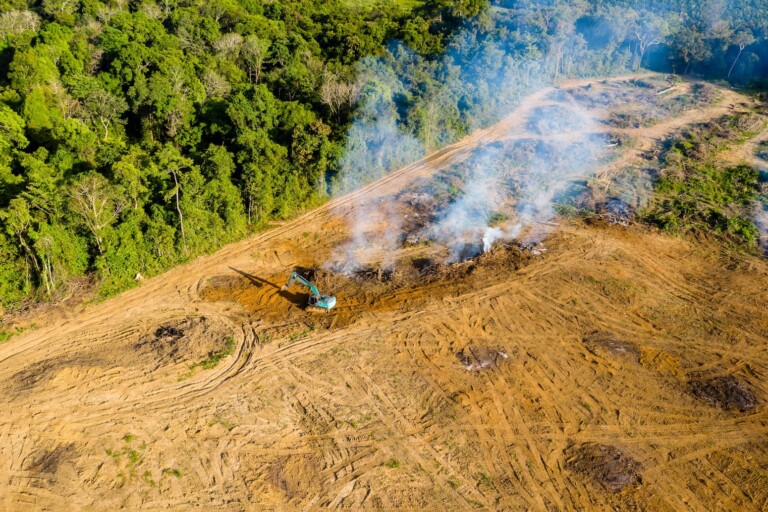
Brazil’s Congress has pushed through legislation to weaken environmental safeguards for mining, infrastructure and agricultural projects, overriding a partial presidential veto just days after the end of COP30 and setting the stage for a possible showdown in the Supreme Court.
Earlier this year, President Luiz Inácio Lula da Silva vetoed some of the most controversial sections of the environmental licensing legislation, dubbed the “devastation bill” by environmentalists, who say it would sweep away Indigenous land protections and could help fast-track the paving of an Amazon highway.
But in a November 27 plenary vote led by lawmakers aligned with Brazil’s powerful farm lobby, Congress reinstated 56 of the 63 articles vetoed by Lula in August – essentially returning the legislation to its original form.
-
Tanzania pushed African nations to oppose fossil fuel transition at COP30
While chairing the African group at the summit, the gas-dependent nation advised the continent’s ministers to block language on transitioning away from fossil fuels -
How Sumatra’s lost trees turned extreme rain into catastrophe
Deforestation by both legal and illegal means has steadily eroded ecological resilience in Indonesia, worsening the impacts of flooding in recent days -
For blighted Niger Delta communities, oil spill clean-ups are another broken promise
Many local people are disappointed by efforts to repair the devastation left by foreign oil firms even as the Nigerian government plans to restart drilling


Warning that the legislation will effectively do away with environmental licensing requirements, several Brazilian NGOs and the left-wing PSOL party said they planned to mount a legal challenge over the constitutionality of the new rules at the country’s Supreme Court.
Juliano Bueno, president of the Arayara Institute NGO, one of the groups planning a legal fight, said the legislation meant “Brazil will be unable to meet its climate targets or the commitments it recently made at COP30”.
“Death blow” for Brazil’s climate push
Lula’s allies said the congressional decision was a sharp blow as Brazil strives to play a prominent role in global efforts to fight climate change and deforestation, including in the Amazon.
Institutional Relations Minister Gleisi Hoffmann said it “contradicts the government’s environmental and climate efforts just made at COP30″, calling the decision “very bad news”.
Government-allied Senator Eliziane Gama told the plenary session the new licensing rules were “shameful for Brazil” and “a death blow to the main agreements formed at COPs”. Others warned that scrapping the vetoes would open the doors to lawsuits from Indigenous and environmental rights groups.
Despite record turnout, only 14% of Indigenous Brazilians get access to COP30 decision-making spaces
The bill’s backers, who include agribusiness and the mining association, have said Brazil needs to streamline environmental licensing to boost production of minerals vital to the clean energy transition, and foster economic development in remote parts of the country.
Davi Alcolumbre, an ally of the ruralist caucus and president of the Senate, told the plenary overturning the veto was “fundamental to clearing the issue of environmental licensing as a whole”.
“There are entire regions waiting for Congress to finish this discussion, so that great projects can move past the paperwork, generating work, generating income and economic growth, always with environmental responsibility,” he told the session.
After being approved by the Senate and Congress with a strong majority, the legislation is expected to be ratified by both chambers this Wednesday.
Oil exploration fast track?
Among other provisions, the new environmental licensing rules fully reinstate two controversial figures: a system that allows some projects to issue their own licences, called Environmental Licence by Adhesion and Commitment (LAC), and a Special Environmental Licence (LAE) to fast-track “strategic projects”.
Bueno of the Arayara Institute said the LAE in particular could weaken controls on oil exploration, mining projects and gas-powered plants, which could be labelled as strategic for national development.

Lula’s veto had lowered the scope of the self-licensing process in the LAC, by only allowing small-scale projects to qualify for it. Observers interpreted this as mostly roads and infrastructure upkeep. With the veto gone, it would allow for larger projects, too.
A controversial expansion of the BR-319 highway connecting the Amazon cities of Manaus and Porto Velho could benefit from the LAE, despite environmental groups saying it could cause deforestation in the area to skyrocket by allowing new routes into the forest. Under the new law, the road could be paved without new environmental studies.
-
EU refuses to review “strategic” mineral projects for energy transition
Brussels says requests by NGOs to reassess the “strategic” designation of new mining projects because of environmental concerns are “unfounded” -
“Coordinated backlash”: Activists say COP30 gender spat reflects wider threat
The climate summit ended with a hard-won agreement on a Gender Action Plan, but only after a bitter row over definitions of gender driven by reactionary views outside -
EU alliance with climate-vulnerable nations frays over finance trade-off
Negotiators from the EU and from small island states – usually well-aligned at UN climate talks – have expressed disappointment in each other after COP30


The new regulations also exempt states from having to consult Indigenous and Afro-descendant communities that lack formal land ownership titles on infrastructure projects. Land tenure was one of the main Indigenous demands at COP30.
Before the Congress vote, Brazil’s National Foundation for Indigenous People said 297 Indigenous lands – accounting for more than 40% of the total – would be left unprotected if the bill returned to its original form.
Brazil’s Supreme Court has ruled in the past that Indigenous lands can pre-exist current land demarcation titles, meaning the titles are not always necessary for land rights to be recognised.
“Congress has institutionalised environmental racism and amplified conflicts in traditional territories,” said Alice Dandara de Assis Correia, environmental lawyer at the Socioenvironmental Institute (ISA), a Brazilian NGO, one of the other groups planning a legal challenge.
The post Brazil’s Congress defies Lula to push through “devastation bill” on COP30’s heels appeared first on Climate Home News.
https://www.climatechangenews.com/2025/12/03/brazils-congress-defies-lula-to-push-through-devastation-bill-on-cop30s-heels/

Next week, diplomats from around the world will descend on Yerevan, Armenia, to negotiate a series of decisions under the UN Convention on Biological Diversity (CBD).
Between 19 and 30 October, 196 parties will gather to hammer out the precise wording of the dozens of legal texts that make up the decisions under the Conference of the Parties (COP) to the CBD.
This year’s summit is particularly significant, as it marks the halfway point between the agreement of the Kunming-Montreal Global Biodiversity Framework and the deadline for achieving its targets.
The CBD has found that countries are currently not on track to meet 22 out of the framework’s 23 targets.
During the fortnight, delegates will also be negotiating decisions relating to the two supplemental protocols to the CBD: the Cartagena Protocol, which covers biosafety; and the Nagoya Protocol, which covers access and benefit-sharing for the use of genetic resources.
(The Cartagena and Nagoya Protocols, which are each governed by a “meeting of the parties”, or “MOP”, have fewer parties than the CBD as a whole, with 173 and 141, respectively.)
Carbon Brief is tracking the progress of countries towards consensus on dozens of negotiating texts using the interactive table below.
The tracker includes texts from the COP, as well as the MOPs for the Cartagena and Nagoya protocols. It also includes draft decisions from the most recent subsidiary body meetings, as these form the starting point for the negotiations in Yerevan.
The CBD has three subsidiary bodies: the subsidiary body on scientific, technical and technological advice (SBSTTA), the subsidiary body on implementation (SBI) and the subsidiary body on article 8(j) and other provisions (SB8J).
SB8J focuses on issues related to the Indigenous peoples and local communities. It was established at COP16 in Cali, Colombia, in 2024.
The first two columns of the interactive tracker list the topic of each agenda item and the relevant body, with subsequent columns including dates, page counts and links to the original documents.
The table is searchable and can be sorted using the arrows in the header.
Areas of disagreement in UN draft texts are denoted by square brackets. Counting the brackets in a particular iteration of a text therefore gives a sense of how far parties are from reaching consensus.
The bracket column is colour-coded, with dark green indicating a low number of brackets and red indicating a high number of brackets remaining.
Texts can also present parties with choices using “options” or alternatives (“alt”), which are counted together in the sixth column of the table.
The key discussions in Yerevan will centre around two agenda items in particular. The first is the global review, which will assess progress towards the GBF and make recommendations for accelerating action.
The second is finance, which can be separated into two parts: resource mobilisation and the financial mechanism. On resource mobilisation, biodiverse global south countries are likely to push for an increased amount of international finance for conservation.
Disagreement over the creation of the financial mechanism led to the suspension of COP16 in Cali in October 2024, as parties failed to find agreement on the mobilisation of finance before the end of the summit.
Global south countries want the establishment of a separate financial mechanism under the control of the CBD; global north countries largely prefer to maintain the existing mechanism, which sits under the Global Environment Facility.
At the resumed session of COP16 in Rome in early 2025, countries agreed on a roadmap that would lead to the establishment of a permanent mechanism.
related

Analysis: Lula presidency saved at least 20,000km2 of Brazilian Amazon since 2022
Why land-use emissions have fallen by a third this century – in six charts

Analysis: 84% of nations miss deadline to identify ‘nature-harming’ subsidies by 2025
UK withdraws millions in funding from world’s second-largest rainforest in Congo
The post Interactive: Tracking negotiating texts at the COP17 biodiversity summit appeared first on Carbon Brief.
Interactive: Tracking negotiating texts at the COP17 biodiversity summit
A beacon of love
On an outer island of Fiji, two thousand nautical miles from Sydney, is a shining light of hope and resilience for our troubled world.
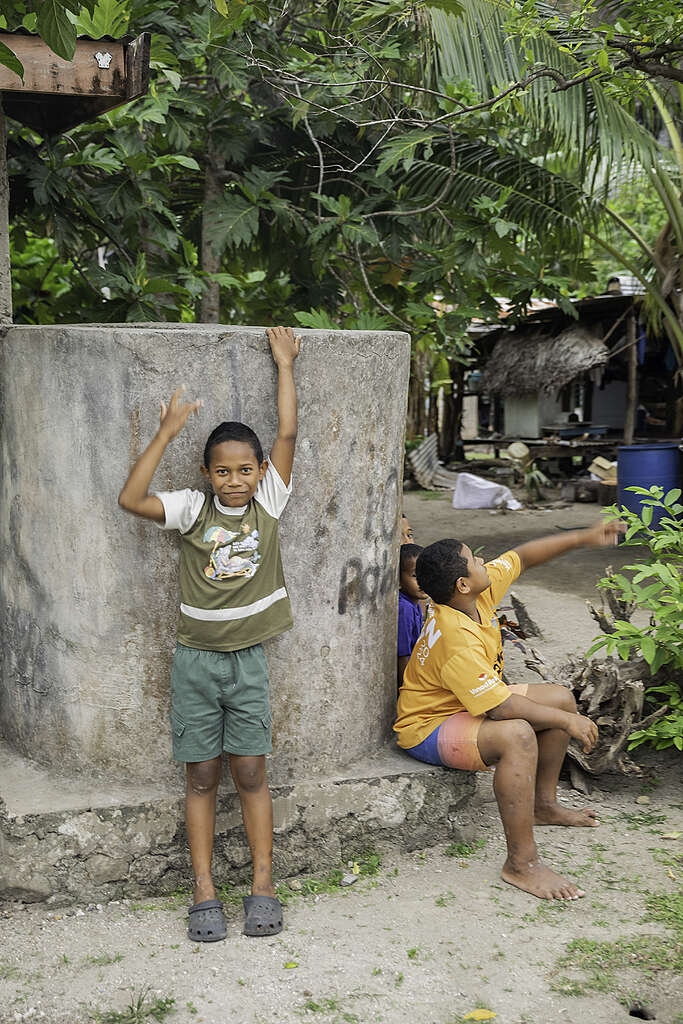
The island of Kioa is home to a Tuvaluan community who migrated from their atoll of Vaitupu in the late 1940s. It is a land of warm hearts, big smiles, and deep cultural roots; a place where the sound of a conch still summons the island together, where islanders paddle out to fish in carved outrigger canoes, and healthy happy children walk barefoot to school.
Here, culture is life. Kioans live sustainably through their traditional knowledge and practices. The island is alive with song, dance and the rhythms of a life tied to the tides, the winds, and the seasons.
Facing the future
Greenpeace has been lucky to have a relationship with Kioa for a number of years now, and we are continually learning from this remarkable community.
Last week, as part of our Voyaging Oceania project, we returned to the island. Our purpose was twofold —- to carry messages from the island to leaders gathering in Nadi this week for the Pacific Pre-COP, and to support the Kioa community in their efforts to improve water security for the island.
Unlike Tuvalu itself, with its eight atolls, Kioa is a mountainous, forested and richly fertile island. It will remain habitable far into the future. Kioans did not initially migrate from Vaitupu due to climate change, but the move was prophetic. They now have a lifeboat.
However, even Kioa faces challenges on our rapidly warming planet, in particular when it comes to water. Climate change is shifting once reliable rainfall patterns. On top of this, the island is already feeling the effect of this year’s intensifying El Niño event, which for Fiji means reduced rainfall and prolonged dry spells.
Right now, fresh water has to be carefully rationed, and is only available for a few hours a day. During last week’s visit aboard our campaigning ship Oceania, Greenpeace was privileged to work with the Kioa community on a new solar-powered water distribution project for the island.
Designed and led by the island, the project involve