

Santa Marta, Colombia, 29 April 2026 — The landmark Santa Marta conference for the transition away from fossil fuels represents an important milestone on the road to long-term climate and energy stability.
The coalition of countries emerging from the conference now need to spearhead ambitious national action at home and help drive momentum and concrete progress in the UNFCCC and beyond. A second conference will be jointly held by Tuvalu and Ireland in April 2027.
Among the key outcomes in Santa Marta, Greenpeace has also welcomed the establishment of a scientific panel, Science Panel for the Global Energy Transition, which will provide scientific input to policymakers to enable the clean energy transition.
Shiva Gounden, Greenpeace Head of Delegation in Santa Marta and Head of Pacific at Greenpeace Australia Pacific: “Santa Marta was a breath of fresh air, a real sign that the wind is finally shifting. But a signal isn’t a solution and the transition is still moving far too slowly for my people in the Pacific and all climate vulnerable communities. We’ve taken a much-needed first step, but now comes the hard work to actually break the hold fossil fuels have on our global security and keep the world within 1.5°C.
“When we get to Tuvalu, the conversation has to change. We can’t just bring more ambition; we have to bring proof of implementation. Santa Marta gave us the momentum, but Tuvalu must be where we turn that momentum into a reality that keeps our homes and our people above water and our future safe.”
To coincide with the First International Conference on Transitioning Away from Fossil Fuels in Santa Marta, Greenpeace International has produced a policy briefing outlining the core elements of a just transition away from fossil fuels and the urgent, priority actions needed from national governments and through global co-operation to make it a reality.[1]
Laura Caicedo, Campaigns Coordinator, Greenpeace Colombia said: “This conference was an important space to put the just energy transition on the agenda ahead of the Climate COP. There is willingness and a sense of fresh momentum that is worth celebrating, but this is only the beginning: more time is needed for this process to mature into a true platform for dialogue that can inform decision-making in this and other cooperation spaces on key energy issues. However, it cannot become an excuse to delay the fulfillment of national commitments already made on emissions reductions, ecosystem protection, and the inclusion of people.”
Anna Cárcamo, Climate Politics Specialist at Greenpeace Brazil said: “The Santa Marta conference was an important moment to listen to countries, subnational governments, scientists, civil society, Indigenous Peoples, people of African Descent, other important representative groups and the voices from the streets calling for a transition away from fossil fuels and presenting solutions.
“Now we need to see this movement extend to action, while ensuring that the transition is fair, fast and funded and built on foundations of justice. Countries need to develop and implement their national roadmaps, with developed countries moving faster and providing quality finance to developing countries to implement their transitions, in a manner that does not deepen their debt.”
Rodrigo Estrada, Senior Climate Advisor, Greenpeace International said: “Amid a tense geopolitical context and worsening climate extremes, Santa Marta helped spark a feeling of renewed energy, but delegates must now follow through to deliver action, not just words. While households struggle with rising costs as the US-Israel war on Iran drives oil and gas profits higher, 57 nations in Santa Marta have also been looking for ways to finance a just transition. That solution starts with permanently taxing the profits, not just windfalls, of fossil fuel majors and replacing this system with renewable energy.”
ENDS
Photos are available in the Greenpeace Media Library.
Notes:
[1] A Just Transition Away from Fossil Fuels: Policy Briefing
Contact:
Kate O’Callaghan on 0406 231 892 or kate.ocallaghan@greenpeace.org
Santa Marta conference to end fossil fuels a landmark moment for climate and energy stability

Climate Change
Greenpeace Australia Pacific activists in police custody after two-day protest against Woodside’s Browse gas project at Scott Reef
PERTH, Sunday 18 October 2026 — Two Greenpeace Australia Pacific activists are in police custody after occupying a gas platform at Woodside’s Scarborough gas project, in peaceful protest of the fossil fuel corporation’s plans to drill for oil and gas at Scott Reef.
NEW footage and photos of the peaceful protest available here and on Instagram
The activists used specialised climbing equipment to scale and attach themselves to a Floating Production Unit (FPU), a key piece of gas processing infrastructure at the Scarborough gas field over 200km off the coast of Exmouth, at around 05:45am AWST on Saturday and proceeded to occupy the platform for two days, displaying banners reading “Stop Woodside’s Dirty Gas. Save Scott Reef.”
Special police forces landed a helicopter on the FPU at around 11:30am AWST. The activists safely removed themselves from their equipment before being taken into police custody around 1:00pm AWST. At the time of writing, no charges have been laid.
David Ritter, CEO at Greenpeace Australia Pacific, said: “It takes guts and conviction to do what our activists have done, peacefully protesting Woodside’s reckless gas plans at Scott Reef.
“Woodside’s plans to drill up to 57 toxic wells at Scott Reef are outrageous. If allowed to go ahead Woodside would turn Scott Reef, Australia’s largest oceanic reef, home to nesting green sea turtles and elusive pygmy blue whales, into an industrial gas zone. Around half a million people have called on our governments to stop Woodside and to save Scott Reef.
“Our activists are highly trained and experienced in these activities. West Australia has a proud history of peaceful, democratic protest at sea, to protect our oceans from environmental threats. From whaling in Albany in the seventies, to Woodside’s threat to Scott Reef today, there’s more than fifty years of history, of Greenpeace taking action off WA’s coast to protect the places we love.
“Peaceful protest has long been part of what has given us so many of the things that are great about Australia and is part of the fabric of our democracy and our national identity.”
“The right to peaceful protest is fundamental to a healthy democracy. From Australia to the Arctic and the Amazon, Greenpeace has been peacefully protesting for more than 50 years to expose the biggest environmental threats around the world. We will not be silenced by corporations like Woodside who actively try to stop everyday people from speaking out against their reckless plans.
“Woodside’s reckless proposal to drill at Scott Reef is an unacceptable risk to Scott Reef and to the climate, which our government should emphatically reject.”
Speaking from the Rainbow Warrior, Captain of the Rainbow Warrior Hettie Geenen, said:
“It felt powerful watching from the Rainbow Warrior as these brave activists scaled Woodside’s enormous and imposing gas infrastructure, which has no place at Scott Reef. We are all out here because we feel an urge to act, in the face of Woodside’s grave threat to Scott Reef and to our climate. Now we ask for the Australian government to act too, and reject Woodside’s reckless Browse project.
“Just before this peaceful protest, the Rainbow Warrior sailed to Scott Reef, where our whole crew got to witness the magic of an untouched, healthy reef ecosystem full of marine life. It was my second time visiting Scott Reef with the Rainbow Warrior. When you see Scott Reef up close and witness its magic first hand, it is impossible not to feel driven to try and protect it.”
The activists sailed to Scarborough on the Rainbow Warrior, Greenpeace’s flagship vessel, which is in the region campaigning to protect Australia’s oceans, including Scott Reef.
-ENDS-
Media contact
Greenpeace Australia Pacific media team in Perth on +61 406 231 892 or +61 407 581 404 or email media.au@greenpeace.org
Climate Change
GREENPEACE GAS PROTEST DAY TWO: Activists spend first night on Woodside’s Scarborough gas platform, “in this for the long haul”
- NEW footage and photos available here and on Instagram – more being uploaded today.
- Interviews available with campaigners on board the Rainbow Warrior on request.
Greenpeace Australia Pacific activists have slept overnight on Woodside’s Floating Production Unit and dropped a massive 12×14-metre banner reading “Stop Woodside’s Dirty Gas. Save Scott Reef”.
Two activists have set up temporary hanging tents on the South East pillar, while the other two returned to the Rainbow Warrior late yesterday afternoon, after fulfilling their initial role. The activists will occupy the platform for as long as possible.
The environmental advocacy group is peacefully protesting Woodside’s plans to drill for oil and gas at Scott Reef as part of its Browse proposal.
Sakyo Noda, one of the Greenpeace Australia Pacific activists, said: “As a Japanese person living in Australia, I feel incredibly passionate about stopping Australia’s gas exports to Asia.
“Despite what the gas industry tells us, Australia’s gas is not helping to decarbonise Asia. It is simply not true. We shouldn’t be allowing fossil fuel companies like Woodside to extract new fossil fuels, let alone at extraordinary places like Scott Reef”.
Aboard the Rainbow Warrior, Geoff Bice, WA Campaign Lead at Greenpeace Australia Pacific, added, “Everyone is in good spirits. We’re in it for the long haul.”
Links:
Photos and video of Scott Reef here
Audio and footage of yesterday’s press conference here
Content and live updates will be uploaded to a live blog and Instagram
In-person interviews in Perth with David Ritter, CEO of Greenpeace Australia Pacific, can be organised. Dial-in, SimSat and Zoom interviews with Geoff Bice, WA Campaign Lead at Greenpeace Australia Pacific, currently aboard the Rainbow Warrior, can be organised.
Saturday, 17 October 2026
7.18 AM AWST
Hi folks! We’re joining you live from the Rainbow Warrior where we will be providing you with updates as our four activists continue scaling and occupying Woodside’s gas platform. The activists are peacefully protesting against Woodside’s latest gas expansion plans, the Browse project, which would see up to 57 toxic wells drilled at Scott Reef.
“Right now our activists are scaling Woodside’s massive Floating Production Unit. They are scaling the South-East pillar and the underside of the Helideck. They’ll be setting up camp soon and have plenty of provisions with them – so stick around!”
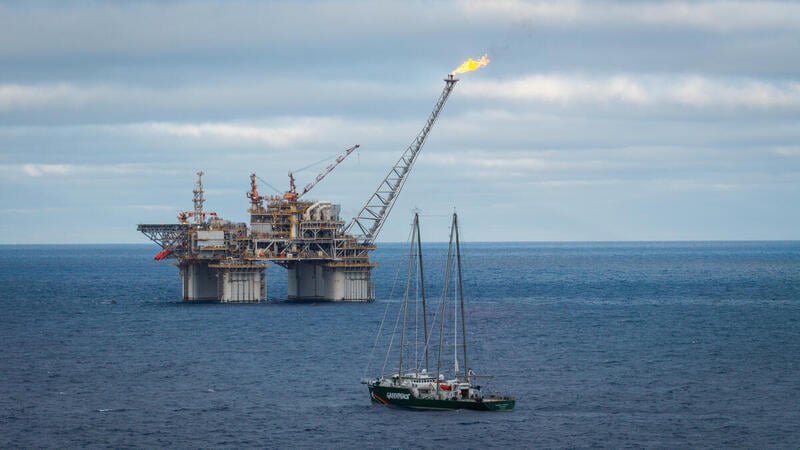
5:45 AM AWST
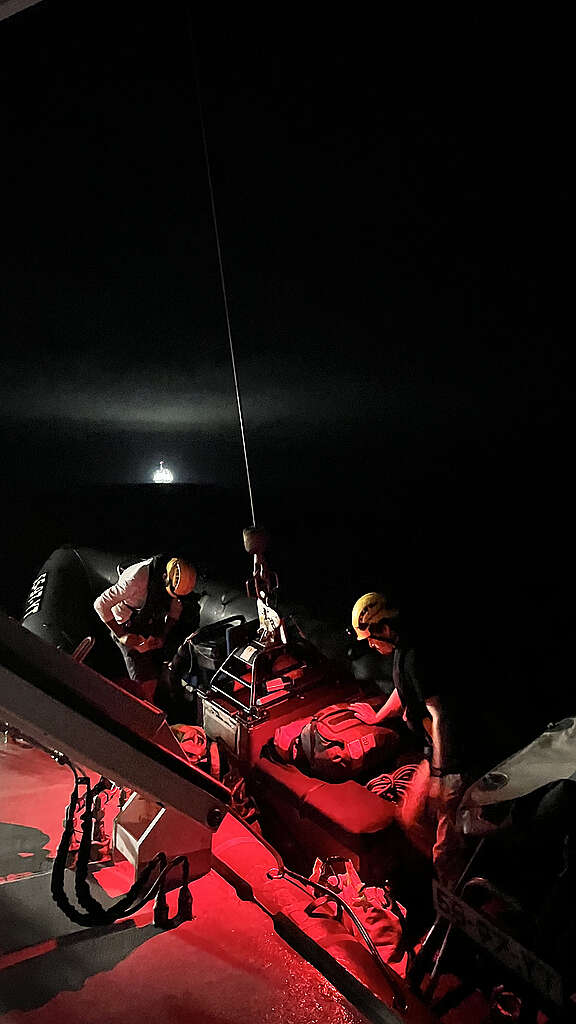
Our RHIBS are in the water! We’ve deployed our four activists and our ship crew on our small fast boats, headed to the gas platform. We’re carrying crew and equipment, plenty of food, all of our safety climbing gear, some big banners, cameras and a whole lot of heart… someone even has something to read after they get settled in.
5:26 AM AWST
Before sunrise activists prepared to launch RHIBS from the Rainbow Warrior.
Looking for a front seat view?
You can follow along with the Live Rainbow Warrior bow cam here!
Looking for more?
Follow us on Instagram for a peek behind the scenes and hear from our Rainbow Warrior crew.
Live blog: Greenpeace activists occupy Woodside gas project to save Scott Reef

Greenpeace Australia Pacific activists in police custody after two-day protest against Woodside’s Browse gas project at Scott Reef
GREENPEACE GAS PROTEST DAY TWO: Activists spend first night on Woodside’s Scarborough gas platform, “in this for the long haul”

Making Billions by Harming Others
-
Climate Change1 year ago
Guest post: Why China is still building new coal – and when it might stop
-

 Greenhouse Gases2 years ago
嘉宾来稿:满足中国增长的用电需求 光伏加储能“比新建煤电更实惠”
-
Greenhouse Gases1 year ago
Guest post: Why China is still building new coal – and when it might stop
-

 Climate Change2 years ago
嘉宾来稿:满足中国增长的用电需求 光伏加储能“比新建煤电更实惠”
-

 Renewable Energy12 months ago
Sending Progressive Philanthropist George Soros to Prison?
-
Climate Change2 years ago
Bill Discounting Climate Change in Florida’s Energy Policy Awaits DeSantis’ Approval
-
Greenhouse Gases1 year ago
嘉宾来稿:探究火山喷发如何影响气候预测
-

 Climate Change2 years ago
Analysis: China’s CO2 falls 1% in Q2 2024 in first quarterly drop since Covid-19