

AMSTERDAM, Netherlands, 30 April 2026 – Greenpeace Netherlands has taken the first step towards legal action against meat giant JBS, demanding disclosure of information on its climate, nature and human rights impacts in order to challenge in court its business policies, including its planned US$6 billion global expansion, of which almost half is for Nigeria.
Just hours later, Greenpeace Netherlands activists shut down JBS’ first shareholder meeting in the Netherlands since relocating to the country last year. Activists from across Europe disrupted the meeting at the Sheraton Hotel at Amsterdam’s Schiphol Airport, installing a banner bearing the slogan ‘JBS: Keep Your Bloody Business Out of Africa’, which rained fake blood over the entrance to the hotel.
Inside the hotel, a 10m x 15m banner featuring JBS’ majority shareholders, Brazilian billionaires Joesley and Wesley Batista, was unveiled in the 8-story hotel atrium. Activists then entered the conference room where the meeting was taking place, leading to the suspension of the meeting.
Elizabeth Atieno, Food Campaigner at Greenpeace Africa, said: “The growth of JBS’ meat empire has been hand-in-glove with environmental destruction, colossal emissions, human rights scandals, corruption, and a lack of transparency. Now it plans to export this business model to other sub-Saharan Africa countries. As well as locking-in spiralling emissions for decades to come, JBS’ expansion in Nigeria threatens to cause irreversible environmental damage and displace smallholder farmers to line the pockets of wealthy international elites.
“Nigerians know well from the legacy of companies like Shell the destructive impact wrought by unchecked corporate power. This legal intervention affirms that corporations have obligations to transparency and human rights regardless where they operate in the world. The time of extractive industries operating with impunity on this continent is over. We must stop this new wave of destruction before it starts.”
In a legal letter delivered to the Amsterdam headquarters of JBS parent company JBS N.V. this morning, Greenpeace Netherlands’ lawyers set out multiple alleged breaches by JBS of Dutch law stemming from the extensive emissions and long history of environmental damage and human rights abuses linked to its business. JBS’ expansion plans risk further exacerbating these harms, it argues, raising serious concerns that expansion will be inconsistent with the company’s climate and biodiversity obligations and represent a continued breach of Dutch duty of care, which requires companies to act in line with international human rights law. [1]
Under new legislation that allows access to data held by Dutch companies for the purpose of bringing litigation, the letter demands that JBS disclose within three weeks assessments it holds relating to the climate, nature and human rights impacts of its historic operations and its planned expansion. Should the company fail to comply, Greenpeace Netherlands is entitled to seek the required information in the form of documents and from senior JBS figures under oath, raising the prospect of the Batista brothers being forced to testify in Dutch court.
Marieke Vellekoop, Executive Director at Greenpeace Netherlands, said: “JBS was warned that if it brought its bloody business to the Netherlands, we would do everything in our power to ensure it complies with Dutch law. Today, we are following through on that promise.
“JBS’ six billion dollar global expansion is following its usual playbook: peddling empty promises, refusing transparency and sidelining communities. Greenpeace Netherlands’ innovative legal intervention forces JBS out of the shadows, exposing its historic and ongoing destructive impacts and laying the ground for a first major climate and nature lawsuit against the predatory expansion of the global meat industry.“
In November 2024, JBS announced an agreement with the government of Nigeria for US$ 2.5 billion investment over five years comprising the construction of six meat-processing plants.[2] Civil society groups in Nigeria have raised serious concerns, citing environmental, health, and social risks associated with industrial animal farming, which is yet to establish a foothold in Africa.[3]
“We have seen this before,” said Elujulo Opeyemi, Executive Director at Youth in Agroecology and Restoration Network (YARN), on behalf of Nigeria’s Climate Justice Movement. “A foreign company arrives with big promises: jobs, development, progress, and instead leaves a trail of destruction whose price communities pay for decades. The Niger Delta is our reminder of what happens when governments open the door to destructive corporations without asking the hard questions first. We are asking those questions now, and we expect answers before a single plant is built.”
There is no available evidence that JBS has conducted any environmental and social impact assessments or consultations with communities and other stakeholders in Nigeria, and efforts by civil society to gather more information via Freedom of Information requests have reportedly been ignored.[4] Last month, Greenpeace Africa submitted an amicus curiae brief before the African Court on Human and Peoples’ Rights arguing that allowing multinational corporations to expand without meaningful environmental safeguards constitutes a failure of the State’s duty to protect human rights. The brief points specifically to JBS’ Nigeria expansion as an example.
In June 2025, JBS concluded a decade-long effort to list shares on the New York Stock Exchange. As part of the listing, JBS reconstituted as a Dutch company, moving its headquarters from Sao Paulo to Amsterdam. Before the listing, Greenpeace International warned JBS shareholders that it would ‘do its part to make sure JBS operates within Dutch law’.
— ENDS —

Climate Change
GREENPEACE GAS PROTEST DAY TWO: Activists spend first night on Woodside’s Scarborough gas platform, “in this for the long haul”
- NEW footage and photos available here and on Instagram – more being uploaded today.
- Interviews available with campaigners on board the Rainbow Warrior on request.
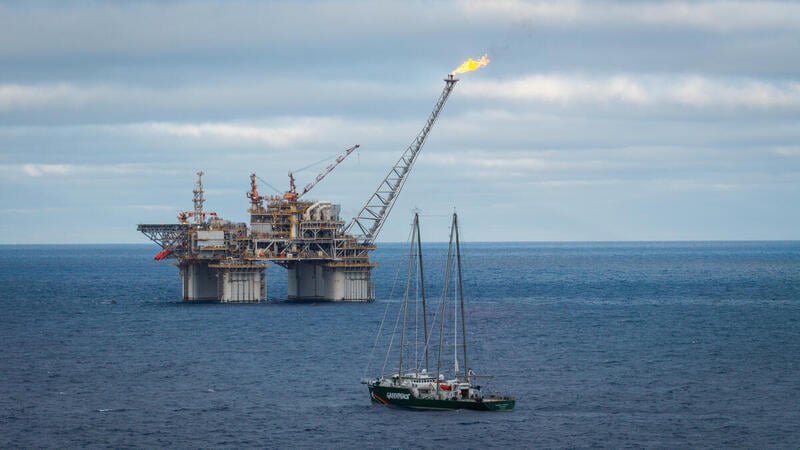
Greenpeace Australia Pacific activists have slept overnight on Woodside’s Floating Production Unit and dropped a massive 12×14-metre banner reading “Stop Woodside’s Dirty Gas. Save Scott Reef”.
Two activists have set up temporary hanging tents on the South East pillar, while the other two returned to the Rainbow Warrior late yesterday afternoon, after fulfilling their initial role. The activists will occupy the platform for as long as possible.
The environmental advocacy group is peacefully protesting Woodside’s plans to drill for oil and gas at Scott Reef as part of its Browse proposal.
Sakyo Noda, one of the Greenpeace Australia Pacific activists, said: “As a Japanese person living in Australia, I feel incredibly passionate about stopping Australia’s gas exports to Asia.
“Despite what the gas industry tells us, Australia’s gas is not helping to decarbonise Asia. It is simply not true. We shouldn’t be allowing fossil fuel companies like Woodside to extract new fossil fuels, let alone at extraordinary places like Scott Reef”.
Aboard the Rainbow Warrior, Geoff Bice, WA Campaign Lead at Greenpeace Australia Pacific, added, “Everyone is in good spirits. We’re in it for the long haul.”
Links:
Photos and video of Scott Reef here
Audio and footage of yesterday’s press conference here
Content and live updates will be uploaded to a live blog and Instagram
In-person interviews in Perth with David Ritter, CEO of Greenpeace Australia Pacific, can be organised. Dial-in, SimSat and Zoom interviews with Geoff Bice, WA Campaign Lead at Greenpeace Australia Pacific, currently aboard the Rainbow Warrior, can be organised.
Saturday, 17 October 2026
7.18 AM AWST
Hi folks! We’re joining you live from the Rainbow Warrior where we will be providing you with updates as our four activists continue scaling and occupying Woodside’s gas platform. The activists are peacefully protesting against Woodside’s latest gas expansion plans, the Browse project, which would see up to 57 toxic wells drilled at Scott Reef.
“Right now our activists are scaling Woodside’s massive Floating Production Unit. They are scaling the South-East pillar and the underside of the Helideck. They’ll be setting up camp soon and have plenty of provisions with them – so stick around!”
5:45 AM AWST
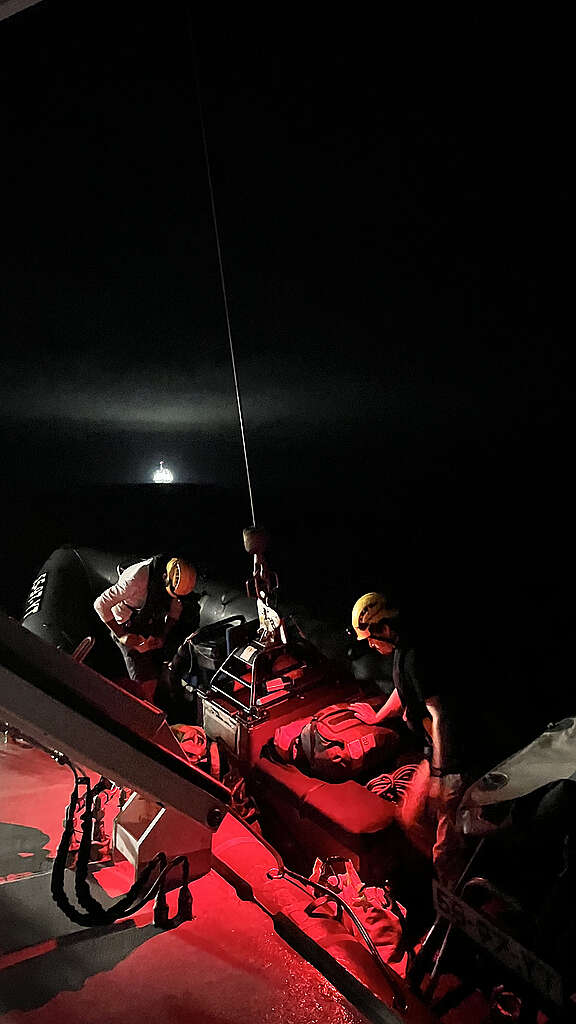
Our RHIBS are in the water! We’ve deployed our four activists and our ship crew on our small fast boats, headed to the gas platform. We’re carrying crew and equipment, plenty of food, all of our safety climbing gear, some big banners, cameras and a whole lot of heart… someone even has something to read after they get settled in.
5:26 AM AWST
Before sunrise activists prepared to launch RHIBS from the Rainbow Warrior.
Looking for a front seat view?
You can follow along with the Live Rainbow Warrior bow cam here!
Looking for more?
Follow us on Instagram for a peek behind the scenes and hear from our Rainbow Warrior crew.
Live blog: Greenpeace activists occupy Woodside gas project to save Scott Reef
Climate Change
Greenpeace activists climb and occupy Woodside’s Scarborough gas project calling on the Australian government to “Stop Woodside’s Dirty Gas” and “Save Scott Reef”
PERTH, Saturday 17 October 2026 — Four Greenpeace Australia Pacific activists are scaling and occupying a Floating Production Unit at Woodside’s Scarborough gas project off the coast of Western Australia, displaying banners reading: “Stop Woodside’s Dirty Gas. Save Scott Reef.”
- Photos and video available here and here. More will be uploaded throughout the day.
- Content and live updates will be uploaded to a live blog and to Instagram
Early this morning at 05:45 AWST, Greenpeace Australia Pacific activists launched from the Rainbow Warrior, Greenpeace’s flagship vessel, scaling and attaching themselves to a Floating Production Unit (FPU), a key piece of gas processing infrastructure at the Scarborough gas field over 200km off the coast of Exmouth.
Woodside has since confirmed it has initiated a temporary shut down of the FPU.
Greenpeace Australia Pacific is occupying the gas platform in peaceful protest of Woodside’s plans to drill for oil and gas at Scott Reef as part of its Browse proposal.
David Ritter, CEO at Greenpeace Australia Pacific, said: “Greenpeace Australia Pacific is taking action today to expose the unacceptable risk to Scott Reef posed by Woodside’s plans.
“Australians love our oceans. Woodside’s reckless Browse gas proposal would turn the magnificent Scott Reef into an industrial gas zone. Woodside wants to drill up to 57 toxic wells around Scott Reef, Australia’s largest oceanic reef, home to nesting green sea turtles, and endangered species like pygmy blue whales and the dusky sea snake; it is a place like nowhere else on Earth.
“Woodside has an alarming track record of oil spills, incidents and environmental neglect, and can’t be trusted with our oceans. From whaling in Albany in the seventies, to Woodside’s threat to Scott Reef today, there’s more than fifty years of history, of Greenpeace taking action off WA’s coasts to protect our oceans.
“There’s no future in new gas projects. Our future is in secure homegrown renewable energy, green industry and exports, where communities and places like Scott Reef are protected — there’s no future in dirty gas shipped offshore.
“The prospect of drilling for oil or gas on the Great Barrier Reef would be considered absolute madness today, but that is exactly the decision before the government: save Scott Reef or risk its destruction at the hands of a gas corporation.”
From aboard the Floating Production Unit, Dr Chris Holden, Greenpeace Australia Pacific activist said: “As a doctor, when I see new fossil fuel projects like Woodside’s Browse project being put forward, I can’t help but think about the impact this is going to have on the health of our communities and planet, and feel a sense of duty to act.
“Not only will this project do irrevocable harm to nature at Scott Reef, it will have a terrible impact on our climate, putting all of our lives at risk.
“On the Rainbow Warrior I’m carrying a copy of the 2025 Lancet countdown report, which warns that health impacts of climate change are worsening, with millions dying needlessly each year due to fossil fuel dependence, growing emissions, and failure to adequately adapt.
“With warnings like this from the leading global health professionals, our government simply can’t allow fossil fuel projects like Woodside’s Browse project to go ahead. It is their duty to do what is in the best interest of our communities.”
Almost half a million people have signed a petition calling on the government to Save Scott Reef and Woodside’s Browse gas project.
-ENDS-
Notes:
- Dial-in, SimSat and Zoom interviews with Geoff Bice, WA Campaign Lead at Greenpeace Australia Pacific, currently aboard the Rainbow Warrior, can be organised separately
Media contact:
Greenpeace Australia Pacific media team on +61 406 231 892 or +61 407 581 404

GREENPEACE GAS PROTEST DAY TWO: Activists spend first night on Woodside’s Scarborough gas platform, “in this for the long haul”

Making Billions by Harming Others

Is a Team of Is a Bunch of MAGA Thugs Beating the Snot Out of a Woman a New Low, or Is it What We Now Need to Expect?
-
Climate Change1 year ago
Guest post: Why China is still building new coal – and when it might stop
-

 Greenhouse Gases2 years ago
嘉宾来稿:满足中国增长的用电需求 光伏加储能“比新建煤电更实惠”
-
Greenhouse Gases1 year ago
Guest post: Why China is still building new coal – and when it might stop
-

 Climate Change2 years ago
嘉宾来稿:满足中国增长的用电需求 光伏加储能“比新建煤电更实惠”
-

 Renewable Energy12 months ago
Sending Progressive Philanthropist George Soros to Prison?
-
Climate Change2 years ago
Bill Discounting Climate Change in Florida’s Energy Policy Awaits DeSantis’ Approval
-
Greenhouse Gases1 year ago
嘉宾来稿:探究火山喷发如何影响气候预测
-

 Climate Change2 years ago
Analysis: China’s CO2 falls 1% in Q2 2024 in first quarterly drop since Covid-19