

The environmental impact of AI is becoming harder to ignore, from soaring energy use and water consumption to the rapid expansion of data centres and microchip production. What is being built in the name of innovation is also concentrating power, intensifying surveillance and deepening democratic risk.
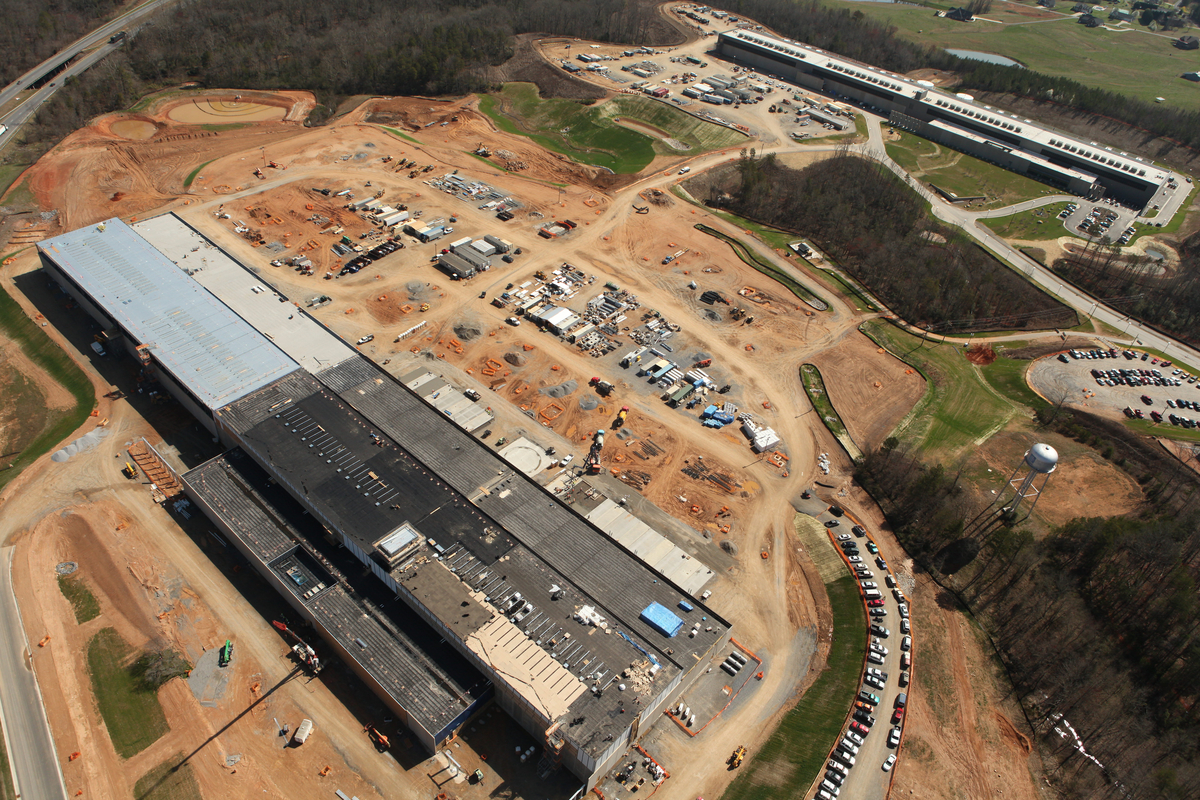
In Australia, data centres threaten the energy transition
Amid the frenzied global expansion of AI-driven data centres, Australia has emerged as the second-largest market for investment in data centres in the world, behind only the United States.
This out-of-control expansion threatens to derail Australia’s energy transition by adding enormous new energy demand and prolonging reliance on polluting fossil fuels, with many data centre operators even looking to build new gas plants just to power their own operations. Data centres are being rolled out at a feverish pace, with some of the largest planned for Australia needing as much electricity as a small city.
Without strong guardrails, Australia risks replicating the disastrous US pattern — local communities paying the price with higher electricity bills, noise and environmental pollution, while AI and Big Tech companies receive priority access to power and resources.
The environmental impact of AI: energy, water and emissions
The AI boom is being sold as inevitable progress, but the real question is not whether artificial intelligence can do useful things in theory. It is who owns it, who profits from it, what it is mostly being used for, and who pays the environmental and political bill when the hype turns into microchip manufacturing plants, data centres, rising power demand, water stress, surveillance and attacks on democratic life.
A Greenpeace Germany report released in 2025 warned that AI’s electricity demand, emissions, water use and raw material needs are all rising fast, and that AI data centre electricity demand could be 11 times higher in 2030 than in 2023 unless governments intervene. A February 2026 report backed by Beyond Fossil Fuels made the greenwashing problem even clearer, finding that 74% of industry claims about AI’s climate benefits were unproven and that it could not identify a single case where consumer generative AI systems such as ChatGPT, Gemini or Copilot were delivering material, verifiable and substantial emissions cuts.
This matters because it punctures one of the sector’s favourite talking points, namely that energy-hungry generative AI can be excused by vague future climate benefits. In reality, the buildout itself is locking in more extraction, more infrastructure and more corporate power, while the largest firms try to present that expansion as climate leadership.
That is why the debate cannot be reduced to whether AI might do good one day, because the system being built right now is already redistributing power upwards while pushing environmental costs and information risks outwards.
AI data centres and why communities are pushing back
Across different countries, people are fighting data centres not because they are anti-technology, but because they recognise the pattern: land grabbing, noise pollution, pressure on water systems, strain on local grids and the steady erosion of community control over land and infrastructure.
Near Perth, a three-storey, 120-megawatt data centre will no longer go ahead after the developer withdrew plans amid community opposition over its impact on culturally significant sites. In New Brunswick, New Jersey, city leaders removed data centres from a redevelopment plan after public backlash and restored a park requirement, while residents and campaigners explicitly raised concerns about environmental harm, energy consumption, water use and noise pollution. In San Marcos, Texas, the city council voted 5-2 to block a proposed data centre after an hours-long meeting and more than 100 public comments.
In September 2025, South Dublin County Council in Ireland passed a motion calling for a nationwide ban or moratorium on new data centres, or strict conditions including 100% renewables, amid concern that communities are being forced to absorb the economic and ecological costs of someone else’s digital expansion. In the UK, campaigners won permission for a legal challenge against a 90MW hyperscale data centre in Buckinghamshire after the government admitted it had made a “serious error” in approving the scheme.
South Africa shows the growing disconnect between the push for AI infrastructure and the ecological realities of water stress and climate disruption. Australia, meanwhile, shows how rapidly this model is being scaled up globally, with the world’s second-biggest data centre buildout after the United States.
These are not fringe skirmishes. They are early signs of a broader democratic backlash against a model of digital expansion that expects local communities to absorb the costs while distant corporations and billionaires bank the gains.
Resistance is also becoming cultural, not just local. The QuitGPT boycott has gained traction as a symbolic rejection of the idea that ChatGPT should become the default interface for work, knowledge and everyday life. The movement is explicitly a reaction to OpenAI’s deal with the US Department of Defense, and it took on added urgency as the US and Israel began bombing Iran almost immediately afterwards. Dutch historian and author Rutger Bregman has helped amplify it by urging people to cancel their subscriptions, first pointing to more than 700,000 supporters, then more than one million. More than 2.5 million users are now boycotting ChatGPT.
The opposition to OpenAI and ChatGPT is no longer confined to specialists but is reaching writers, organisers, educators and mainstream audiences who are starting to question what exactly they are being asked to normalise.
Big Tech, AI power and the threat to democracy
If you want to understand why campaigners are increasingly focusing on chips as well as chatbots, start with Nvidia, the American chipmaking giant, and its CEO, Jensen Huang. Nvidia announced a staggering annual revenue of US$ 215.9 billion, underscoring just how central the company has become to the global AI boom. Recent earnings show Nvidia’s business is now dominated by data centres and AI chips, not gaming, with roughly 80% to 90% of revenue coming from data centres while gaming has fallen below 10%.
Huang has framed AI as “the largest infrastructure build-out in human history” and as foundational infrastructure for the modern world, which is precisely why Nvidia cannot be treated as a passive supplier standing outside the social and ecological consequences of the boom. Without Nvidia’s chips, much of the present generative AI race simply would not happen at its current scale.

Greenpeace East Asia’s October 2025 findings rank Nvidia last on AI supply-chain decarbonisation and argue that the company’s record revenues are being built on a “decarbonisation deficit” outsourced to suppliers in Taiwan and South Korea that still depend heavily on fossil power.
Greenpeace East Asia’s reporting also highlighted a 4.5-fold increase in emissions from AI chip manufacturing in a single year, showing how quickly the environmental cost of this infrastructure race is escalating. This is not a side effect of the boom. It is part of the industrial model that underpins OpenAI, Anthropic, Amazon and the wider rush to scale generative AI as fast as possible.
Amazon tells a similar story. Jeff Bezos’s Amazon made more than US$ 77 billion in profits in 2025 while cutting around 30,000 workers as it ramped up AI spending. This is what “innovation” looks like when it is steered by monopoly power: record profits, job cuts, rising capital expenditure and a false promise that more automation will somehow trickle down into public good.
AI, war and manipulation
The political economy of the AI boom should worry anyone who cares about democracy and civil liberties. Tech leaders and companies spent heavily to curry favour with Donald Trump after his reelection, including OpenAI chief executive Sam Altman’s US$ 1 million donation to Trump’s inauguration fund, while reporting also tied OpenAI co-founder Greg Brockman to a US$ 102 million Trump war chest drive.
Palantir and Alex Karp have gone further into the architecture of state power. ICE agreed to pay Palantir $30m to build its “ImmigrationOS” surveillance platform, while Karp defended the company’s work with ICE and later said critics of ICE should be protesting for “more Palantir”, not less. That tells you a great deal about what counts as “progress” when AI, border violence, data extraction and executive power converge.
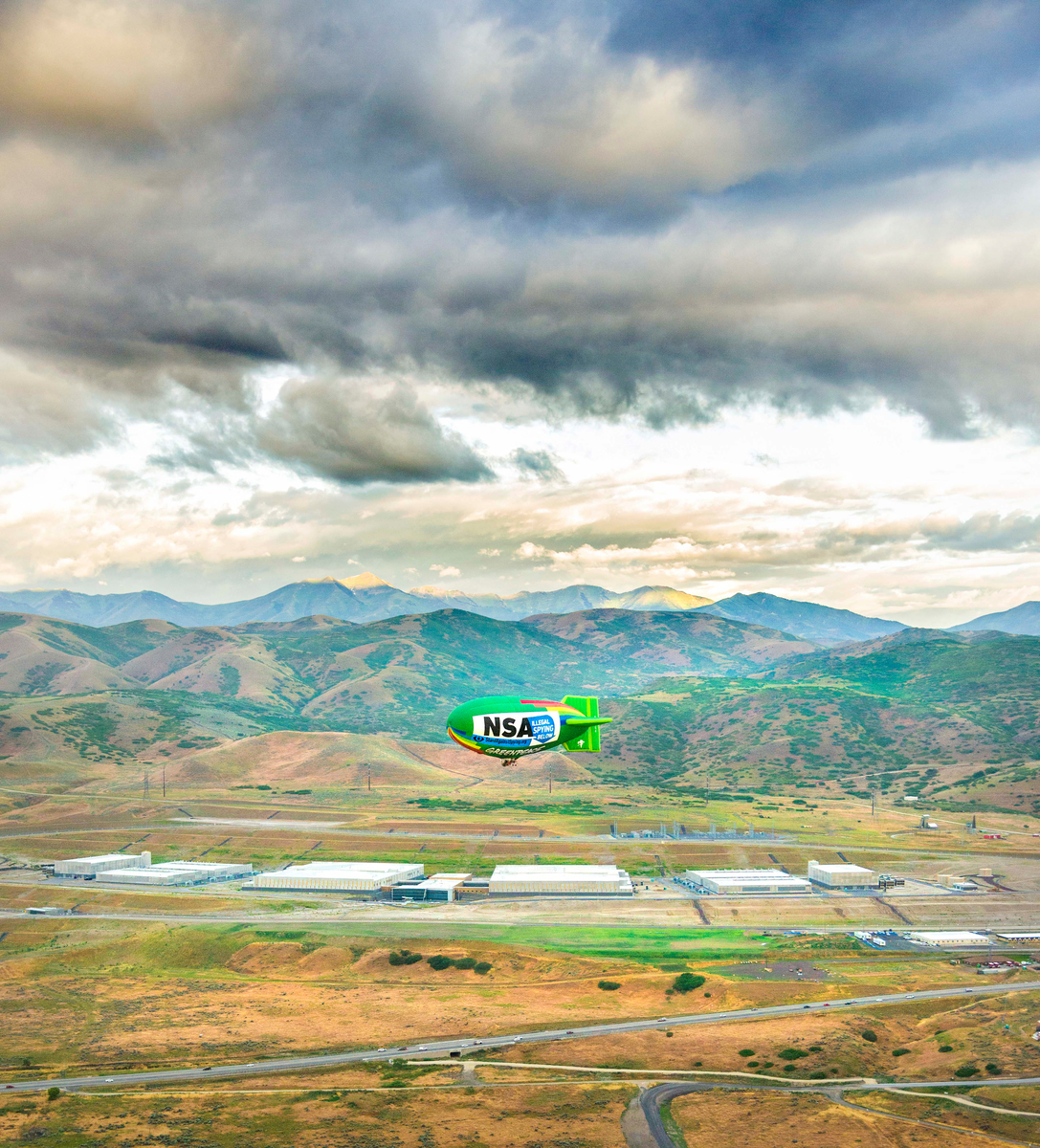
The debate over AI and war has become sharper too. Anthropic reportedly sought explicit contractual prohibitions on mass domestic surveillance and fully autonomous weapons, and has been in conflict with the Pentagon over refusing to broaden those terms, while OpenAI struck a Pentagon deal for classified systems and revised it only after backlash, adding stronger restrictions against domestic surveillance and autonomous weapons without human oversight. That does not make Anthropic harmless, but it does show that even inside this industry there are real fault lines over how far companies are willing to go in militarisation and state surveillance.
Amnesty International has called for bans on AI-based practices including public facial recognition, predictive policing, biometric categorisation, emotion recognition and migrant profiling, while Forbidden Stories has investigated firms pitching AI-enabled surveillance tools that can target journalists, dissidents and activists.
Culture and information are being reshaped at speed as well. Deezer says it is now receiving more than 60,000 fully AI-generated tracks a day, roughly 39% of all music delivered to the platform daily. Six of Spotify’s top 50 trending songs in the US in late January were fully AI-generated. Suno was generating 7 million songs a day. Suno chief executive Mikey Shulman gave the game away when he said: “It’s not really enjoyable to make music now. It takes a lot of time, it takes a lot of practice”, reducing musical craft to a friction problem for software to remove. Sam Altman’s remark that it takes “20 years of life and all of the food you eat” to “train a human” landed for the same reason, because it exposed a worldview in which human creativity and ecological limits are treated less as values than as inefficiencies.
The biggest AI companies have not just disrupted creative industries, they have been repeatedly accused in court of building their products on unlicensed human work, with lawsuits from authors and visual artists, from major news organisations including The New York Times, and from Hollywood studios such as Disney and Universal alleging large-scale copyright infringement. Whether every case succeeds or not, the pattern is clear: companies that present themselves as engines of innovation have been credibly accused of treating books, journalism, music and art as raw material to be scraped, absorbed and monetised without consent, compensation or democratic accountability.
The same systems are also corroding the information environment. Research from Proof News found that leading AI tools gave inaccurate, harmful or incomplete answers to basic election questions more than half the time, while a separate GroundTruthAI analysis reported by NBC found that popular chatbots answered election queries incorrectly 27% of the time.

Grok on X has already shown how this can play out in practice. Election officials traced false claims about ballot deadlines and candidate eligibility back to Grok during the 2024 US race, and later warned that such errors could mislead or confuse voters at scale. With more high-stakes elections approaching, that is not a marginal bug. It is a democratic risk amplified by billionaire-owned platforms, automated recommendation systems and synthetic content designed for maximum engagement rather than truth.
Technology for the common good: democratic control, privacy and renewable energy
A different future is possible.
Technology for the common good would mean a society where digital tools are built first to meet real social and ecological needs, not to deepen billionaire control or chase speculative profit, and where AI is not treated as an automatic solution but used only when it is appropriate, justified and not more resource-intensive than simpler alternatives.
It would run on 100% additional renewable energy, disclose its full energy, water and supply-chain footprint, and be designed so communities are not left paying the price through higher bills, water stress or pollution.

Ownership and governance would be far more democratic, with strong public rules, limits on monopoly power, meaningful community consent, and institutions able to steer technology towards climate resilience, public services, biodiversity protection and other shared needs. It would also mean building forms of sovereign AI, where data and models are not simply extracted into distant corporate clouds but remain subject to local democratic control, clear auditability, strict privacy safeguards and public-interest rules. Access would be broad, affordable and accessible by design, and the freedoms it protects would include privacy, freedom of expression, the right to dissent, and protection from surveillance, manipulation and exclusion, so that technology expands people’s power instead of shrinking it.
This is an edited version of a blog first posted by Mehdi Leman for Greenpeace International.
Note: Greenpeace’s approach to AI is cautious, human-led and grounded in accountability. We do not support the use of AI-generated content in public-facing communications, and any limited use of AI must be carefully reviewed by humans for accuracy, bias, transparency, security and alignment with Greenpeace’s values. We also respect artists’ work and intellectual property rights, and we value the labour of artists, creatives and content creators; creative work should not be copied, exploited or repurposed in ways that undermine authorship, consent, attribution or livelihoods.
https://www.greenpeace.org.au/learn/the-energy-and-environmental-impact-of-ai-and-how-it-undermines-democracy/

Climate Change
Greenpeace Australia Pacific activists in police custody after two-day protest against Woodside’s Browse gas project at Scott Reef
PERTH, Sunday 18 October 2026 — Two Greenpeace Australia Pacific activists are in police custody after occupying a gas platform at Woodside’s Scarborough gas project, in peaceful protest of the fossil fuel corporation’s plans to drill for oil and gas at Scott Reef.
NEW footage and photos of the peaceful protest available here and on Instagram
The activists used specialised climbing equipment to scale and attach themselves to a Floating Production Unit (FPU), a key piece of gas processing infrastructure at the Scarborough gas field over 200km off the coast of Exmouth, at around 05:45am AWST on Saturday and proceeded to occupy the platform for two days, displaying banners reading “Stop Woodside’s Dirty Gas. Save Scott Reef.”
Special police forces landed a helicopter on the FPU at around 11:30am AWST. The activists safely removed themselves from their equipment before being taken into police custody around 1:00pm AWST. At the time of writing, no charges have been laid.
David Ritter, CEO at Greenpeace Australia Pacific, said: “It takes guts and conviction to do what our activists have done, peacefully protesting Woodside’s reckless gas plans at Scott Reef.
“Woodside’s plans to drill up to 57 toxic wells at Scott Reef are outrageous. If allowed to go ahead Woodside would turn Scott Reef, Australia’s largest oceanic reef, home to nesting green sea turtles and elusive pygmy blue whales, into an industrial gas zone. Around half a million people have called on our governments to stop Woodside and to save Scott Reef.
“Our activists are highly trained and experienced in these activities. West Australia has a proud history of peaceful, democratic protest at sea, to protect our oceans from environmental threats. From whaling in Albany in the seventies, to Woodside’s threat to Scott Reef today, there’s more than fifty years of history, of Greenpeace taking action off WA’s coast to protect the places we love.
“Peaceful protest has long been part of what has given us so many of the things that are great about Australia and is part of the fabric of our democracy and our national identity.”
“The right to peaceful protest is fundamental to a healthy democracy. From Australia to the Arctic and the Amazon, Greenpeace has been peacefully protesting for more than 50 years to expose the biggest environmental threats around the world. We will not be silenced by corporations like Woodside who actively try to stop everyday people from speaking out against their reckless plans.
“Woodside’s reckless proposal to drill at Scott Reef is an unacceptable risk to Scott Reef and to the climate, which our government should emphatically reject.”
Speaking from the Rainbow Warrior, Captain of the Rainbow Warrior Hettie Geenen, said:
“It felt powerful watching from the Rainbow Warrior as these brave activists scaled Woodside’s enormous and imposing gas infrastructure, which has no place at Scott Reef. We are all out here because we feel an urge to act, in the face of Woodside’s grave threat to Scott Reef and to our climate. Now we ask for the Australian government to act too, and reject Woodside’s reckless Browse project.
“Just before this peaceful protest, the Rainbow Warrior sailed to Scott Reef, where our whole crew got to witness the magic of an untouched, healthy reef ecosystem full of marine life. It was my second time visiting Scott Reef with the Rainbow Warrior. When you see Scott Reef up close and witness its magic first hand, it is impossible not to feel driven to try and protect it.”
The activists sailed to Scarborough on the Rainbow Warrior, Greenpeace’s flagship vessel, which is in the region campaigning to protect Australia’s oceans, including Scott Reef.
-ENDS-
Media contact
Greenpeace Australia Pacific media team in Perth on +61 406 231 892 or +61 407 581 404 or email media.au@greenpeace.org
Climate Change
GREENPEACE GAS PROTEST DAY TWO: Activists spend first night on Woodside’s Scarborough gas platform, “in this for the long haul”
- NEW footage and photos available here and on Instagram – more being uploaded today.
- Interviews available with campaigners on board the Rainbow Warrior on request.
Greenpeace Australia Pacific activists have slept overnight on Woodside’s Floating Production Unit and dropped a massive 12×14-metre banner reading “Stop Woodside’s Dirty Gas. Save Scott Reef”.
Two activists have set up temporary hanging tents on the South East pillar, while the other two returned to the Rainbow Warrior late yesterday afternoon, after fulfilling their initial role. The activists will occupy the platform for as long as possible.
The environmental advocacy group is peacefully protesting Woodside’s plans to drill for oil and gas at Scott Reef as part of its Browse proposal.
Sakyo Noda, one of the Greenpeace Australia Pacific activists, said: “As a Japanese person living in Australia, I feel incredibly passionate about stopping Australia’s gas exports to Asia.
“Despite what the gas industry tells us, Australia’s gas is not helping to decarbonise Asia. It is simply not true. We shouldn’t be allowing fossil fuel companies like Woodside to extract new fossil fuels, let alone at extraordinary places like Scott Reef”.
Aboard the Rainbow Warrior, Geoff Bice, WA Campaign Lead at Greenpeace Australia Pacific, added, “Everyone is in good spirits. We’re in it for the long haul.”
Links:
Photos and video of Scott Reef here
Audio and footage of yesterday’s press conference here
Content and live updates will be uploaded to a live blog and Instagram
In-person interviews in Perth with David Ritter, CEO of Greenpeace Australia Pacific, can be organised. Dial-in, SimSat and Zoom interviews with Geoff Bice, WA Campaign Lead at Greenpeace Australia Pacific, currently aboard the Rainbow Warrior, can be organised.
Saturday, 17 October 2026
7.18 AM AWST
Hi folks! We’re joining you live from the Rainbow Warrior where we will be providing you with updates as our four activists continue scaling and occupying Woodside’s gas platform. The activists are peacefully protesting against Woodside’s latest gas expansion plans, the Browse project, which would see up to 57 toxic wells drilled at Scott Reef.
“Right now our activists are scaling Woodside’s massive Floating Production Unit. They are scaling the South-East pillar and the underside of the Helideck. They’ll be setting up camp soon and have plenty of provisions with them – so stick around!”
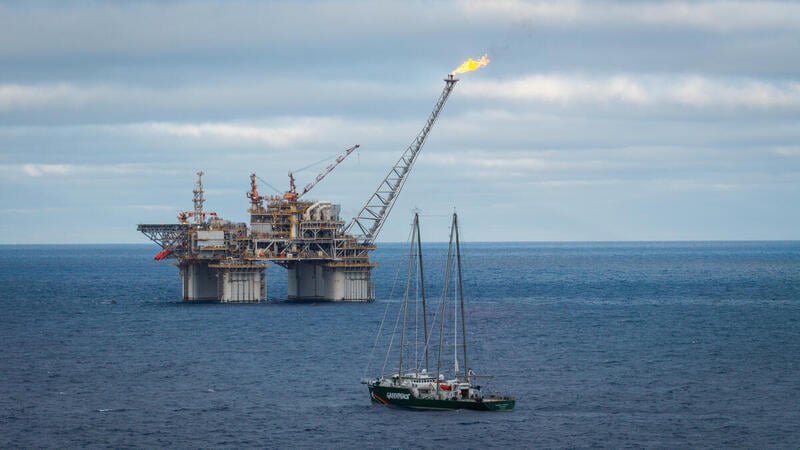
5:45 AM AWST
Our RHIBS are in the water! We’ve deployed our four activists and our ship crew on our small fast boats, headed to the gas platform. We’re carrying crew and equipment, plenty of food, all of our safety climbing gear, some big banners, cameras and a whole lot of heart… someone even has something to read after they get settled in.
5:26 AM AWST
Before sunrise activists prepared to launch RHIBS from the Rainbow Warrior.

Looking for a front seat view?
You can follow along with the Live Rainbow Warrior bow cam here!
Looking for more?
Follow us on Instagram for a peek behind the scenes and hear from our Rainbow Warrior crew.
Live blog: Greenpeace activists occupy Woodside gas project to save Scott Reef