

Nitrogen fertilisers, manure and other agricultural sources drove almost three-quarters of human-caused nitrous oxide emissions in recent years.
That is according to the Global Carbon Project’s second “global nitrogen budget” – an assessment of the origins and climate impacts of the world’s nitrous oxide emissions.
The research, published in Earth System Science Data, finds that nitrous oxide emissions from human activities rose by 40% over the past four decades, partly driven by growing global demand for meat and dairy.
Nitrous oxide emissions over the past decade exceeded even the highest projected levels in emissions pathways, the research finds.
Continuing to emit the greenhouse gas at current rates would “really affect” the world’s ability to achieve the long-term goal of the Paris Agreement to limit global warming to “well below” 2C, the lead author of the study tells Carbon Brief.
One expert, who was not involved in the research, says the findings show “all too clearly” that nitrous oxide emissions “are still going rapidly in the wrong direction”.
Potent greenhouse gas
Nitrous oxide (N2O) is a long-lasting greenhouse gas that is around 270 times more potent than CO2. It is the third-largest contributor to climate change, after CO2 and methane.
Various natural sources generate nitrous oxide, including tiny organisms in the world’s oceans and soils. These natural emitters accounted for 65% of all nitrous oxide emissions over 2010-19.
Human activities caused the remaining 35% of emissions, particularly nitrogen fertiliser use and manure management in agriculture. The burning of fossil fuels and biomass also produce nitrous oxide, but to a lesser extent.
The new study assesses both natural and human-caused sources of nitrous oxide to see how they have changed over time and how they are contributing to climate change.
It divides the sources and sinks into 21 categories, such as direct emissions from nitrogen use in agriculture and the exchange of CO2 between the land and atmosphere .
The researchers use a range of satellite data, models, algorithms and inventories to assess emissions over time.
The study finds that human-caused nitrous oxide emissions “significantly increased” from 1980 to 2020, growing by 40% during this time period. This rise was spurred on, in part, by growing demand for meat and dairy.
This is a jump of 10% in these human-caused emissions from the last nitrous oxide assessment, which covered data over 1980-2016.
However, the new study includes more categories than the previous global assessment, including emissions from microbe activity in the shallow waters over continental shelves. The researchers in the study say this explains some of the higher estimates in the new report.
Concentrations of the greenhouse gas in the atmosphere have also risen faster in the past three years than any other time since 1980.
Prof Hanqin Tian is the lead author of the study and an environmental sciences professor at Boston College. He tells Carbon Brief that nitrous oxide emissions continuing at current rates would “really affect the Paris climate agreement” goals.
Natural nitrous oxide emissions, on the other hand, were “relatively stable” over the period covered by the research. Tian explains:
“In terms of the total number, natural emissions are very high. But over long time periods, they stay stable. So natural emissions do not really contribute to climate change from pre-industrial times to now.”
Human-caused emissions have increased significantly. The below infographic outlines the changes in different nitrous oxide emissions sources from 2010 to 2019.

Prof Dave Reay, the chair in carbon management and education at the University of Edinburgh, who was not involved in the study, says that the research is “really significant” for both scientists and policymakers. He tells Carbon Brief:
“Nitrous oxide’s importance can sometimes be obscured by the larger climate forcing effects of CO2 and methane, yet every missed opportunity to cut nitrous oxide emissions drags the world still further away from achieving the Paris climate goals.”
The researchers highlight that human-caused nitrous oxide emissions need to be cut by at least one-fifth by 2050 to help limit long-term warming to 2C, according to the Intergovernmental Panel on Climate Change (IPCC).
Reay says this study shows “all too clearly” that these emissions are “still going rapidly in the wrong direction”.
Agricultural emissions
Agriculture was the “major driver” of increased human-caused nitrous oxide emissions over the past four decades, the study says. In total, the researchers find that the sector was responsible for 74% of these emissions over 2010-19.
While agricultural emissions increased over time, other human-caused nitrous oxide emissions from fossil fuels and industry decreased slightly between 1980 and 2020.
Cutting nitrogen use in agriculture is a “quite complex issue related to food production, food security” and a range of other issues, Tian says.
Requirements to cut nitrous oxide emissions, particularly from livestock, have been a major political issue in the Netherlands and other countries. Nitrous oxide emissions are “expected to continue rising” over the next few decades due to the growing demand for food, the study says.

Reay says that reducing nitrogen use in agriculture “can yield benefits not just for climate change mitigation, but for food production, air and water quality and biodiversity, too”. He adds:
“The array of strategies to address these losses – primarily through improving so-called nitrogen use efficiency across our food systems – are already showing positive results in some areas of Europe and south-east Asia.”
An excess of nitrogen used on the land can wash into lakes, rivers and oceans. This run-off causes damage to plants, animals and humans and spurs on toxic algae. Nitrous oxide also contributes to depletion of the ozone layer.
Top-emitting countries
The study also examines emissions in 18 different regions, finding that they grew in some countries and decreased in others over the past four decades.
China, India, the US, Brazil and Russia were the five biggest nitrous oxide emitters in 2020, the study findings show.
Human-caused emissions increased by 157% in India, 135% in China and 131% in Brazil over 1980-2020.
China alone made up 40% of the overall increase in global human-caused nitrous oxide emissions between 1980 and 2020.
Although the country remains the biggest emitter, China’s nitrous oxide emissions have decreased in recent years as a result of efforts to use nitrogen fertilisers more efficiently, Tian says.

Nitrous oxide emissions have reduced in several parts of the world since 1980: Europe, Russia, Australia, New Zealand, Japan and Korea.
Europe – the biggest nitrous oxide emitter in 1980 – has seen the most significant drop in the four decades since. Emissions fell by one-third (31%) during this time, largely due to fossil fuel and industry emissions cuts in the 1990s.
Agriculture-related nitrous oxide emissions also decreased in Europe during this time, but the drop has levelled off since the 2000s, the study notes.
Exceeding future projections
The scientists also explore how current nitrous oxide emissions compare with those from scenarios of future projections of climate change.
The charts below show how global nitrous oxide concentrations in the atmosphere (black line) compare with projections under the “Representative Concentration Pathways” (RCPs, left) and the “Shared Socioeconomic Pathways” (SSPs, right).
The charts highlight that atmospheric concentrations of the greenhouse gas over the past decade have exceeded even the projections under the very-high-emissions trajectory, RCP8.5 (red dashed line).

The researchers outline some “major uncertainties” with their findings and the scientific understanding of where nitrous oxide comes from.
These include the understanding of emissions from soils in tropical ecosystems in the Amazon Basin, the Congo Basin and south-east Asia, alongside areas using high levels of fertilisers, such as the US “corn belt”.
The study also mentions uncertainties around estimates for the impact of deforestation on nitrous oxide emissions.
The researchers propose setting up a global network to better monitor and model nitrous oxide emissions. Reay says that this is a “very timely suggestion”, adding:
“With all nations needing to submit their updated national plans for climate action in the run up to COP30 in Brazil next year, better measurement of nitrous oxide emissions holds the promise of better reporting and, crucially, better efforts to cut them.”


The post Agriculture ‘major driver’ of rise in nitrous oxide emissions over past 40 years appeared first on Carbon Brief.
Agriculture ‘major driver’ of rise in nitrous oxide emissions over past 40 years

Scientists have vowed to keep working on the next flagship set of reports for the Intergovernmental Panel on Climate Change (IPCC), after a political row over the timeline for their release saw its latest session suspended on Friday evening without agreement.
During the weekend, government officials and scientists alike expressed disappointment over the inability to reach a compromise before some delegates from developing countries and small island states had to leave the week-long meeting in Ethiopia to catch flights home.
The disagreement – which has persisted since early 2024 – turns on whether the three key parts of the AR7 assessment should all be published before the conclusion of the UN’s next Global Stocktake of global climate action, which is due to be completed in late 2028.
The IPCC issued a statement after the close of the session, saying that “key agenda items” – the timelines for the three AR7 reports, as well as the IPCC budget – remain open and under discussion. It said the IPCC’s plenary session and its deliberations on the pending agenda “will resume at the earliest opportunity”, giving no further details of when.
IPCC Chair Jim Skea told delegates in closing remarks that recent months had been some of the most turbulent for the climate science panel and that, if there were stronger words than “profound disappointment” he would use them, according to a summary published by the Earth Negotiators Bulletin (ENB). IPCC discussions happen behind closed doors.
IPCC scientists remained committed
In an open letter, issued on Monday, a group of nearly 120 scientists – from a total of 664 AR7 authors – said they “stand committed to continue working to deliver the AR7 reports in a manner that is rigorous, timely and inclusive, in line with our mandate to be policy-relevant”.
“An assessment that arrives after the decisions it is meant to inform cannot serve its purpose,” they emphasised. “The second Global Stocktake in 2028 is such a decision point, and the world should not have to face it without the IPCCʼs latest assessment.”
Europe, small islands and the least developed countries, plus many Latin American and developed nations, want the IPCC to meet this deadline, arguing that the findings from the UN climate science body are irreplaceable in the UN climate policy-making process.
However, around a dozen developing countries plus Russia have argued that the reports should come later in order to allow for greater research input from the Global South – something that, in their view, would make the findings fairer. They also claim that a shorter timeline would put excessive pressure on experts.
-
Who shapes climate science? The equity question facing the IPCC
Early completion of the next global climate science assessment reports risks excluding research from the Global South, which is key to ensuring the findings are fair -
Governments that support climate science must stand firm against naysayers
The IPCC is meeting to decide the timing of its next major report, as some countries try to delay it and weaken the case for faster emissions cuts


The most vocal of this group at last week’s meeting were India and Saudi Arabia, according to the ENB summary and a developed country diplomat. Critics see this push for a longer timeline as an excuse to deprive government decision-makers of the latest science and ease pressure on emerging economies to raise their ambition, particularly on cutting emissions.
Commenting on last week’s meeting, France’s ambassador for climate negotiations Benoît Faraco said a broad coalition of developed and developing countries from all five continents, “united in their support for science and the timeline proposed by scientists”, had withstood pressure “from a few countries” seeking to slow down the process of adopting the IPCC reports.
He added that France would not back down and would “continue to fight tirelessly for science, protect the integrity of information, and convince our partners that without the best available scientific data, we will be less effective in tackling climate change and protecting our populations”.
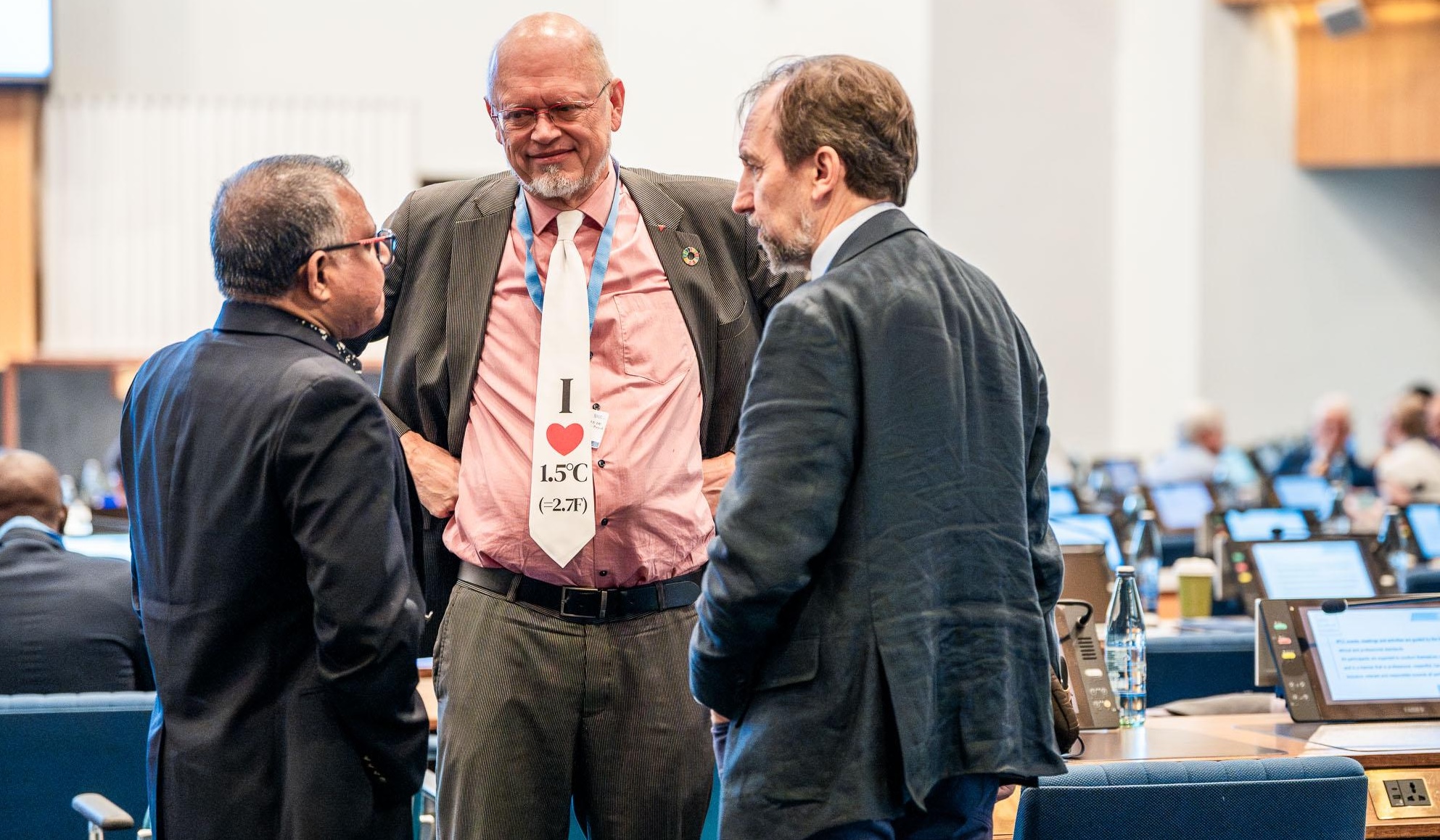
Inclusivity proposal stalled
In a bid to unlock a solution for the AR7 timeline, countries discussed ways to improve the inclusivity of the IPCC’s work. One option put on the table was for the IPCC to expand its funding for delegates from developing countries to attend some or all of its sessions from one to two participants, according to the ENB summary and a delegate speaking to Climate Home News.
That would increase the costs for the IPCC to complete AR7 by up to a quarter, according to an assessment shared by the secretariat. The panel’s budget is under severe strain and its officials have warned that, without additional voluntary contributions, it risks running out of money before it can deliver on this assessment cycle.
Climate Home News understands that some of the IPCC’s traditional donors – which mainly include European countries, Japan and Australia – indicated a willingness to support funding for an additional developing country participant. But without an agreement over the budget or the timeline for the reports, that option was ultimately not adopted.
‘Disappointed and worried’
The three reports are managed by working groups that collate and draw overall findings from the latest scientific studies and data on the physical effects of global warming around the world, how to adapt to it, and pathways for cutting planet-heating emissions in order to meet the temperature goals of the Paris Agreement.
Winston Chow, an urban climate professor at Singapore Management University who co-chairs Working Group II on adaptation, wrote in a LinkedIn post that he was “disappointed and worried” for the IPCC authors who have worked “extraordinarily hard” to assess the relevant climate science over the past two years.
He said he shared their concern that “the rigour, time and goodwill they’ve invested are now being put at risk by the Panel’s stalemate”.
As science comes under attack at UN talks, climate movement splits over how to respond
For Working Group II, a meeting for 250 experts writing that report is scheduled for January 2027, followed by the approval of a special report on cities and climate change in Singapore next March.
But because the IPCC’s budget has not been confirmed due to uncertainty about the AR7 schedule, travel support for those researchers is at risk, wrote Chow. “If they cannot participate, our assessments will lose vital expertise, perspectives and scientific breadth, and the collective effort of our authors will be undermined,” he warned.
Scientific work continues
Despite the political holdups, he – together with French climate scientist Robert Vautard, co-chair of Working Group 1 – agreed with IPCC head Skea who told the IPCC’s closing session on Friday: “The engine room of the IPCC is working, and it’s healthy.”
Vautard commented in a separate post on LinkedIn after it ended: “The boat is at full steam.” Working groups I and II are due to start revising the first drafts of their reports, while Working Group III on reducing emissions is finalising its first draft which will be out soon, he wrote.
“The most exciting two years of the cycle are ahead, for the authors. The momentum in the engine room is here and now. Trust the engine room!” he added.
The IPCC and some scientists report that progress has been made towards achieving an equitable balance of authors from the Global North and the Global South.
The group of researchers who signed the open letter on Monday noted that “inclusivity is at the heart of how we work”, with author teams bringing together experts from developed and developing countries with diverse backgrounds and at different stages of their careers.
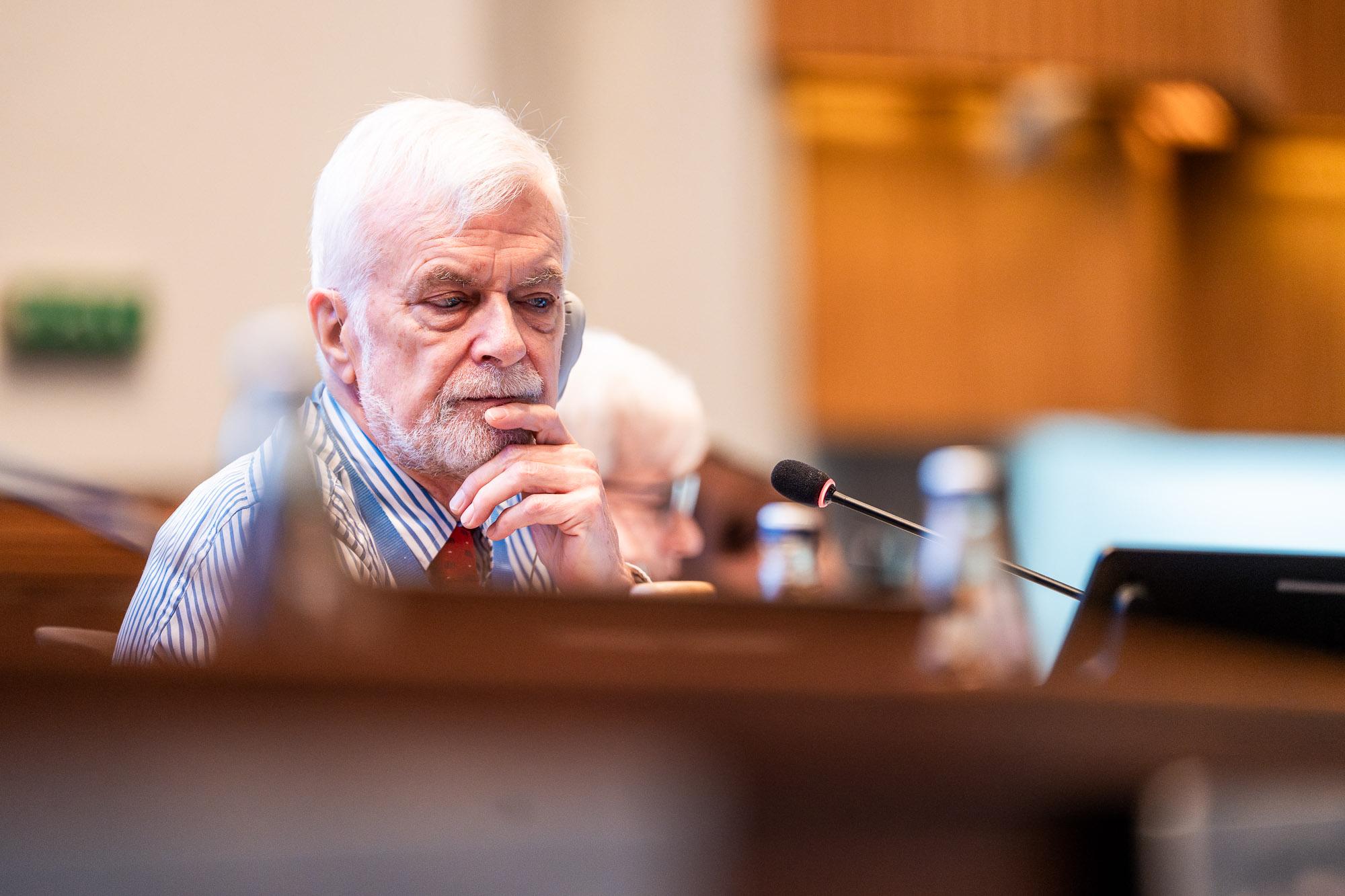
Plea to overcome political differences
The signatories include several scientists from some of the countries opposed to the alignment of all IPCC reports with the Global Stocktake.
“We are committed to an assessment in which the knowledge, experience and priorities of every region are fully reflected, a commitment we share with the leadership of the IPCC.
Equity is built into how our assessment is being drafted,” they added.
They appealed to governments that make up the IPCC “to overcome their political differences and work together as we do as a global scientific community, so that we can deliver the IPCC reports the world needs to hear”.
In a statement published on Monday, IPCC chair Skea said reaching consensus on the schedule for the reports is “vital”. He added that the assessments provide authoritative scientific evidence to inform national climate policies, strengthen adaptation and resilience and support access to climate finance, as well as helping communicate the scale of the climate crisis and the urgency of efforts to tackle it.
The post IPCC scientists vow to press on with climate reports despite political deadlock appeared first on Climate Home News.
IPCC scientists vow to press on with climate reports despite political deadlock
An Lambrechts is a biodiversity politics expert at Greenpeace International with extensive experience in biodiversity-related multilateral negotiations. She is the head of the Greenpeace delegation at the Convention on Biological Diversity (CBD) COP17 happening in Yerevan, Armenia.
In 2022, COP15 delivered the landmark Kunming-Montreal Global Biodiversity Framework to halt and reverse biodiversity loss by 2030. With COP17 starting in Yerevan, we are now halfway to the deadline, and according to the first Global Review of progress, countries are not on track to meet the biodiversity targets, and implementation must accelerate fast.
One of the main findings of the Global Review is that funding falls far short of the scale needed to halt and reverse nature loss. But the crisis facing the world’s biodiversity is not an absolute scarcity of capital – it is a profound public policy distortion.
The global economy currently spends roughly $30 destroying nature for every single dollar invested in its protection. According to a report from the Intergovernmental Science-Policy Platform on Biodiversity and Ecosystem Services, a staggering $2.4 trillion is spent in public subsidies for fossil fuels, agriculture and water use, while global investment in biodiversity conservation and restoration stands at a mere $220 billion.
Countries urged to ramp up “insufficient” nature policies at COP17
Yet, discussions about how to close the biodiversity finance gap continue to claim that salvation lies in mobilising private capital, scaling offsets and “derisking” investments in nature. This is a fundamental misunderstanding of both the nature of ecological stewardship and of the global financial architecture.
Biodiversity conservation is not a speculative investment portfolio – it is the foundation of human survival. The health of our planet is a non-monetisable, non-excludable public good. Expecting profit-seeking private capital to protect nature perpetuates the structural drivers of ecosystem destruction in the first place.
But if private market mechanisms cannot save biodiversity, where will the necessary public resources come from?
Money going to the wrong places
The answer lies in recovering the vast public wealth currently drained by cross-border tax abuse, financial secrecy and corporate impunity. Finance and environment ministers meeting in Yerevan must give a strong political signal that, to avert ecological breakdown, countries need to take swift action to reform global tax rules, eliminate harmful public subsidies and cancel unsustainable sovereign debts for the public revenues to end up where they belong.
Extractive sectors such as industrial agriculture, fishing, timber and mining continue business-as-usual, often heavily subsidised by public treasuries, while voluntary carbon and biodiversity offset markets pose a serious risk to nature conservation. Offset schemes have delivered only a negligible fraction of the funding needed to preserve ecosystems, allowing industries to continue with their destructive business-as-usual practices.