

Civil society groups have called for an investigation into the first carbon credits approved under a new UN mechanism, alleging the project is linked to Myanmar’s military junta – which the UN says is guilty of human rights abuses – and has “massively” overstated its climate impact.
The programme, which aims to cut emissions by distributing efficient cookstoves across Myanmar, received approval to issue around 650,000 carbon credits from the Article 6.4 Supervisory Body in February, in a landmark moment for the Paris Agreement’s carbon market. Only two projects have been given the green light by the mechanism’s regulator so far.
But two reports published last week, led by the Global Forest Coalition and Brussels-based NGO Carbon Market Watch, raised serious concerns about the project’s implementation in conflict zones where civilians have faced airstrikes and mass displacement as well as its emission-reduction calculations.
Project continued after military coup
Myanmar has been ravaged by a brutal civil war since the country’s military overthrew the democratically elected government in a coup d’état in February 2021. The military regime has attacked civilian populations, persecuted ethnic minorities and committed widespread sexual violence, among other serious human rights violations, the UN Special Rapporteur on the situation of human rights in Myanmar said in April.
The cookstove programme started in 2018 under the previous UN-run carbon offsetting scheme – the Clean Development Mechanism (CDM) – as a partnership between Myanmar’s Ministry of Natural Resources and Environmental Conservation (MONREC) and the Climate Change Center (CCC), a South Korean NGO, with investment from private South Korean firms.
-
European, island states seek clear future for global roadmap to cut fossil fuels
Some European, small island and other nations argue the forthcoming roadmap should be part of UN climate talks, while Russia has resisted this idea

The project continued operating after the coup. For most of the period between 2021 and 2022 in which the issued credits were generated, MONREC was led by Colonel Khin Maung Yi, who was sanctioned by the European Union in 2021 for supporting the military regime, the Global Forest Coalition report said.
CCC acknowledged engaging with government authorities after the coup but said this “should not be interpreted as political endorsement” of the junta. The South Korean NGO added that abandoning the programme when political circumstances changed “would not necessarily have been the most responsible outcome for the households involved”.
Conflict prevents on the ground verification
The Global Forest Coalition report raised particular concerns about the project’s implementation in Myanmar’s central Dry Zone, including Sagaing Region, an anti-junta resistance stronghold that has been most heavily affected by the conflict and routinely targeted by airstrikes and violent attacks. The region accounts for more than a third of Myanmar’s 3.8 million internally displaced people.
The NGOs said that, in addition to ethical concerns about carbon credits being produced by the military government in an area actively affected by its attacks, this raises questions over the ability to effectively verify the climate integrity of the projects.

Before carbon credits are issued, external auditors need to validate the claims made by project developers and confirm that the emission reductions claimed are correct. This process usually includes site visits to a representative sample of households to check how the improved cookstoves are being used.
But, because of the “volatile political situation” in Myanmar, the auditing team was not able to leave the capital Yangon and could only speak to project participants remotely via Zoom, project documents show.
“Due to ongoing armed conflict on the ground, the data currently used to justify carbon credit issuance in Sagaing by the Burmese military junta is unverifiable and highly likely fraudulent,” said Zaw Tuseng, founder and president of the Myanmar Policy Institute, which contributed to the report, in a written statement. “This demands an immediate suspension of credit transfers until a neutral, conflict-sensitive audit can be conducted.”
“Exceptional circumstances”
CCC told Climate Home News that, although it recognises that on-site verification is “generally preferable, particularly in complex operating environments”, the decision to opt for remote controls was not taken “as a discretionary shortcut, but as an approved alternative under exceptional circumstances”.
The South Korean NGO added that it reviewed the feasibility of the project at community level “on an ongoing basis” and it “did not identify conflict-related incidents that directly affected project implementation activities in participating communities during the monitoring period”.
A spokesperson for the UN climate change body told Climate Home News that, when site access is not possible, the UN carbon credit mechanism allows for “alternative verification approaches while still maintaining conservative assumptions and environmental integrity safeguards”. “These provisions ensure that crediting can only proceed where evidence is reliable,” they added.
Contested methodology
Carbon markets are seen as an important channel to raise money to help low-income communities in developing countries switch to less polluting cooking methods, both reducing CO2 emissions and improving air quality. But several cookstove offsetting projects have faced criticism from researchers and campaigners who argue that climate benefits are often exaggerated and weak monitoring can undermine claims of real emission reductions.
The project in Myanmar uses a contested methodology developed under the earlier Kyoto Protocol that was rejected last year by The Integrity Council for the Voluntary Carbon Market (ICVCM), a watchdog that issues quality labels to carbon credit types, because it found it “insufficiently rigorous”.
EU carbon credits could supercharge world’s clean cooking push, France says
After transitioning from the CDM to the new mechanism, the project was required to apply “more conservative” assumptions to calculate emission reductions, which resulted in 40% fewer credits being issued, according to the UN climate change body.
“The result is consistent with environmental integrity requirements and ensures that each credited tonne genuinely represents a tonne reduced and contributes to the goals of the Paris Agreement,” Mkhuthazi Steleki, the South African chair of the Article 6.4 Supervisory Body, which oversees the mechanism, said in February.
Too many credits issued
But Carbon Market Watch claimed in a second report last week that, despite the adjustment, the project is still likely to issue seven times more credits than its real climate impact justifies, comparing its calculations with values from peer-reviewed scientific literature.
The biggest driver of the credit inflation, the group said, is the failure to account for “stacking” – the widespread practice of households using multiple stoves at the same time, including more polluting ones the project does not monitor.
Peer-reviewed science considers a stacking rate of 68% a conservative assumption, but the methodology used by the Myanmar programme makes no allowance for it at all, the report said.
CCC disputed those findings. In a written response to Climate Home News, it said the project was developed under methodologies approved within the UN climate framework and that external recalculations by researchers are not “determinative of the level of crediting achieved”.
The credits are expected to be used primarily by major South Korean polluters to meet obligations under the country’s emissions trading system – a move that will also enable the government to count those units toward emissions reduction targets in its nationally determined contribution (NDC), the UN climate body told Climate Home News.
Myanmar will use the remaining credits to achieve in part the goals of its own national climate plan under the Paris Agreement.
“Over-crediting, at any magnitude, cannot be compatible with the climate ambition of a world striving to limit global warming to 1.5ºC,” said Isa Mulder, an expert at Carbon Market Watch.
The post UN’s first Paris Agreement carbon credits face human rights and climate concerns appeared first on Climate Home News.
UN’s first Paris Agreement carbon credits face human rights and climate concerns

Next week, diplomats from around the world will descend on Yerevan, Armenia, to negotiate a series of decisions under the UN Convention on Biological Diversity (CBD).
Between 19 and 30 October, 196 parties will gather to hammer out the precise wording of the dozens of legal texts that make up the decisions under the Conference of the Parties (COP) to the CBD.
This year’s summit is particularly significant, as it marks the halfway point between the agreement of the Kunming-Montreal Global Biodiversity Framework and the deadline for achieving its targets.
The CBD has found that countries are currently not on track to meet 22 out of the framework’s 23 targets.
During the fortnight, delegates will also be negotiating decisions relating to the two supplemental protocols to the CBD: the Cartagena Protocol, which covers biosafety; and the Nagoya Protocol, which covers access and benefit-sharing for the use of genetic resources.
(The Cartagena and Nagoya Protocols, which are each governed by a “meeting of the parties”, or “MOP”, have fewer parties than the CBD as a whole, with 173 and 141, respectively.)
Carbon Brief is tracking the progress of countries towards consensus on dozens of negotiating texts using the interactive table below.
The tracker includes texts from the COP, as well as the MOPs for the Cartagena and Nagoya protocols. It also includes draft decisions from the most recent subsidiary body meetings, as these form the starting point for the negotiations in Yerevan.
The CBD has three subsidiary bodies: the subsidiary body on scientific, technical and technological advice (SBSTTA), the subsidiary body on implementation (SBI) and the subsidiary body on article 8(j) and other provisions (SB8J).
SB8J focuses on issues related to the Indigenous peoples and local communities. It was established at COP16 in Cali, Colombia, in 2024.
The first two columns of the interactive tracker list the topic of each agenda item and the relevant body, with subsequent columns including dates, page counts and links to the original documents.
The table is searchable and can be sorted using the arrows in the header.
Areas of disagreement in UN draft texts are denoted by square brackets. Counting the brackets in a particular iteration of a text therefore gives a sense of how far parties are from reaching consensus.
The bracket column is colour-coded, with dark green indicating a low number of brackets and red indicating a high number of brackets remaining.
Texts can also present parties with choices using “options” or alternatives (“alt”), which are counted together in the sixth column of the table.
The key discussions in Yerevan will centre around two agenda items in particular. The first is the global review, which will assess progress towards the GBF and make recommendations for accelerating action.
The second is finance, which can be separated into two parts: resource mobilisation and the financial mechanism. On resource mobilisation, biodiverse global south countries are likely to push for an increased amount of international finance for conservation.
Disagreement over the creation of the financial mechanism led to the suspension of COP16 in Cali in October 2024, as parties failed to find agreement on the mobilisation of finance before the end of the summit.
Global south countries want the establishment of a separate financial mechanism under the control of the CBD; global north countries largely prefer to maintain the existing mechanism, which sits under the Global Environment Facility.
At the resumed session of COP16 in Rome in early 2025, countries agreed on a roadmap that would lead to the establishment of a permanent mechanism.
related
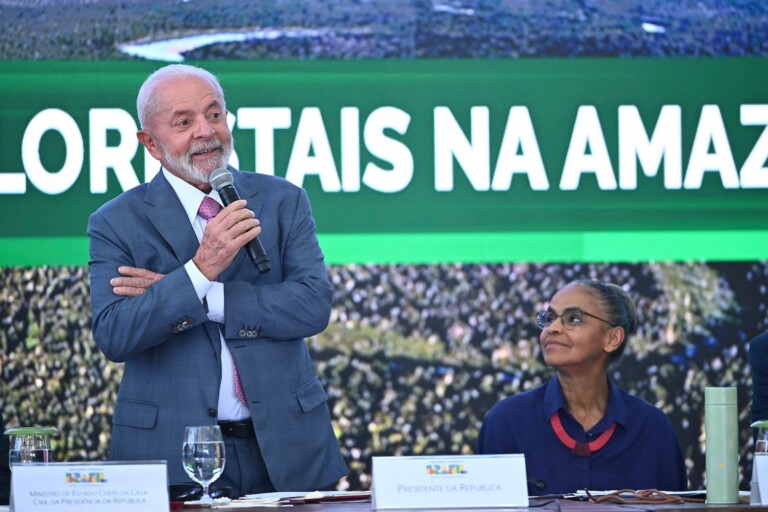
Analysis: Lula presidency saved at least 20,000km2 of Brazilian Amazon since 2022
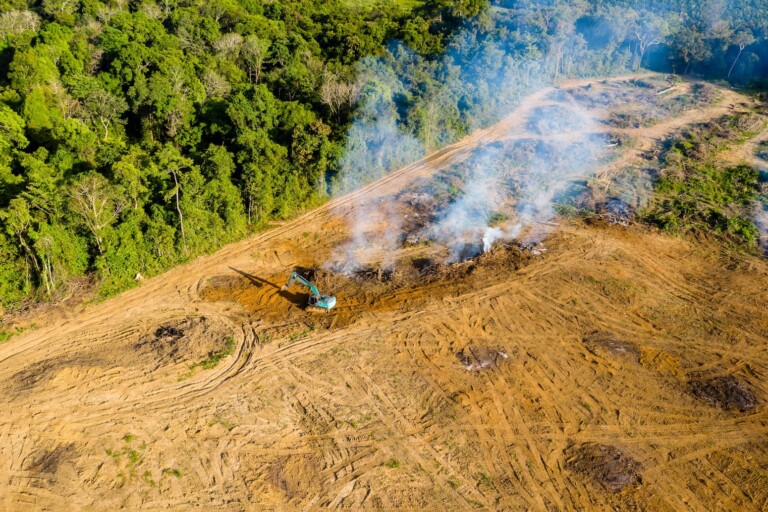
Why land-use emissions have fallen by a third this century – in six charts

Analysis: 84% of nations miss deadline to identify ‘nature-harming’ subsidies by 2025
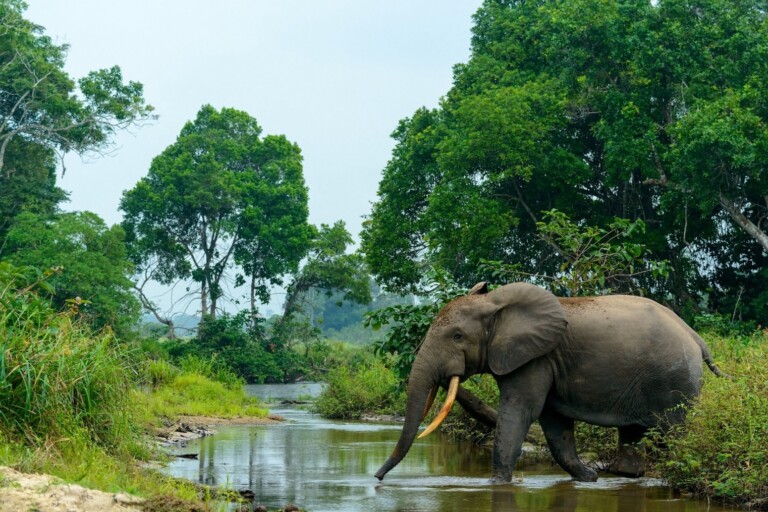
UK withdraws millions in funding from world’s second-largest rainforest in Congo
The post Interactive: Tracking negotiating texts at the COP17 biodiversity summit appeared first on Carbon Brief.
Interactive: Tracking negotiating texts at the COP17 biodiversity summit
A beacon of love
On an outer island of Fiji, two thousand nautical miles from Sydney, is a shining light of hope and resilience for our troubled world.
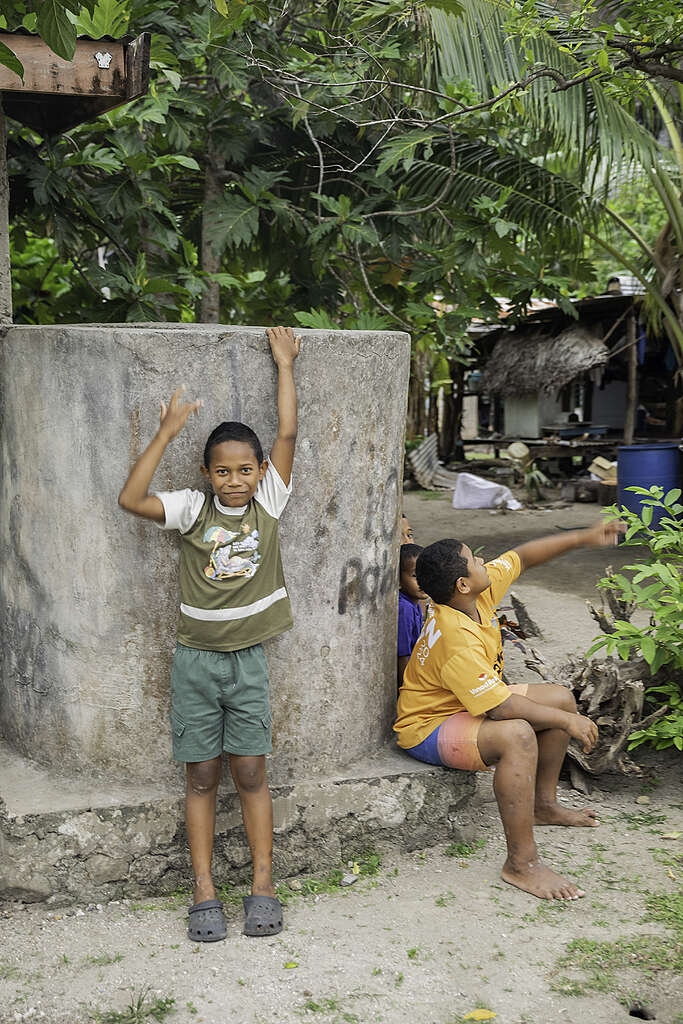
The island of Kioa is home to a Tuvaluan community who migrated from their atoll of Vaitupu in the late 1940s. It is a land of warm hearts, big smiles, and deep cultural roots; a place where the sound of a conch still summons the island together, where islanders paddle out to fish in carved outrigger canoes, and healthy happy children walk barefoot to school.
Here, culture is life. Kioans live sustainably through their traditional knowledge and practices. The island is alive with song, dance and the rhythms of a life tied to the tides, the winds, and the seasons.
Facing the future
Greenpeace has been lucky to have a relationship with Kioa for a number of years now, and we are continually learning from this remarkable community.
Last week, as part of our Voyaging Oceania project, we returned to the island. Our purpose was twofold —- to carry messages from the island to leaders gathering in Nadi this week for the Pacific Pre-COP, and to support the Kioa community in their efforts to improve water security for the island.
Unlike Tuvalu itself, with its eight atolls, Kioa is a mountainous, forested and richly fertile island. It will remain habitable far into the future. Kioans did not initially migrate from Vaitupu due to climate change, but the move was prophetic. They now have a lifeboat.
However, even Kioa faces challenges on our rapidly warming planet, in particular when it comes to water. Climate change is shifting once reliable rainfall patterns. On top of this, the island is already feeling the effect of this year’s intensifying El Niño event, which for Fiji means reduced rainfall and prolonged dry spells.
Right now, fresh water has to be carefully rationed, and is only available for a few hours a day. During last week’s visit aboard our campaigning ship Oceania, Greenpeace was privileged to work with the Kioa community on a new solar-powered water distribution project for the island.
Designed and led by the island, the project involves using a solar pump to move water from a reliable source to a storage tank and then using gravity to distribute the water around the village.
It was a lesson in how local knowledge and ingenuity can be the backbone of today’s climate solutions. To build a dam around the source, the local community knew the exact spot where they could gather gravel at low tide to mix with the cement. They took only what was needed, knowing that all resources must be carefully conserved. Kioa has no roads and no machinery, and it was an all-of-island effort to carry the materials up to the project site, including many heavy bags of sand and rock.
Such projects truly bring to life the vision of a resilient, locally-led, fossil fuel free Pacific.