

The first Earth Day was celebrated on April 22, 1970 — 56 years ago — and, goodness, how the world has changed since then. We’ve come a long way since the days of burning our trash and pumping our gas guzzlers with leaded gasoline. In honor of those 56 years, here are 56 important changes and milestones since the first Earth Day.
Legislation
The U.S. government has led much of the environmental charge, starting with the implementation of the EPA (1) in July 1970. Later that year, the Clean Air Act (2) targeted air pollutants, followed by the Clean Water Act (3) in 1972 and the Endangered Species Act (4) in 1973.
Some lesser-known national laws included the Safe Water Drinking Act (5) in 1974, the Resource Conservation and Recovery Act (6) in 1976, the Toxic Substances Control Act (7) in 1976, the National Energy Act (8) in 1978, and the Medical Waste Tracking Act (9) in 1988.
In some cases, states have led the charge. Oregon passed the first bottle bill (10) in 1971, Minnesota’s Clean Indoor Air Act (11) was the first law to restrict smoking in public places (1975), and Massachusetts required low-flush toilets (12) for construction and remodeling in 1988.
Green Innovations: The Early Years
In order to comply with all the laws from the 1970s, we needed new technology to ensure consumers could adhere to the new standards. Consider:
- The “Crying Indian” PSA debuts in 1971 (13)
- Dichlorodiphenyltrichloroethane (DDT) gets banned in 1972 (14)
- The energy-efficient compact fluorescent light bulb launches in 1973 (15)
- Cars begin displaying fuel economy labels in the mid-1970s (16)
- In 1975, all cars are manufactured with catalytic converters to limit exhaust emissions (17)
- Chlorofluorocarbons are banned from aerosol cans starting in 1978 (18)
- The first curbside recycling program begins in New Jersey in 1980 (19)
- In 1986, McDonald’s switches from foam to paper food containers (20)
- Mercury is removed from latex paint in 1990, providing a viable alternative to banned lead paint (21)
- Earth911 launches the first U.S. recycling directory in 1991 (22)
- Energy Star certification debuts in 1992 for appliances and electronics (23)
- The U.S. Green Building Council begins in 1993 (24)
The Political Movement
The Green Party (25) launched in 1984, which was just the beginning of green issues entering the mainstream. One Percent for the Planet (26) was founded in 2002 to challenge businesses to donate to environmental causes, and the ISO 14001 standard (27) established environmental management. Companies are now facing pressure to allow employee telecommuting (28).
Things really developed after the release of Al Gore’s An Inconvenient Truth (29) in 2006. NBC debuted Green Week (30) in 2007. Carbon offsets (31) alleviated corporate green guilt. Bisphenol A (32) made us all question plastic purchases. Hybrid vehicles (33) generated tax credits and gas savings. Plastic bag bans gave rise to a reusable bag (34) craze. Fracking (35) and the Dakota Access Pipeline (36) were two of the most hotly contested news stories of the decade, at least until the 2016 election.
Green Tech: The Next Wave

In the past 10 years, emerging green tech has made eco-friendly a way of life, including:
- LED light bulbs (37)
- Portable solar panels on backpacks and watches (38)
- Plant-based plastics (39)
- Motion sensor lighting (40)
- Faucets with automatic shut-off (41)
- Low volatile organic compound (VOC) paint (42)
- Recycled plastic clothing (43)
- Ride-sharing mobile applications (44)
- Natural cleaning products (45)
- Biodiesel engine vehicles (46)
- Food waste composting (47)
- Portable air purifiers (48)
- Europe’s Green Deal introduced global recyclables shipping regulations to reduce pollution in low-income nations (49)
- Corporate borrowers headed toward $500 billion in bond financings for the renewables transition (50)
- President Biden rejoins the Paris Climate Accord on his first day in office. (51)
The Latest Five: 2022–2026
The pace of innovation has not slowed. Five more milestones have reshaped the environmental landscape since that 51st Earth Day:
- The Inflation Reduction Act (52), signed into law in August 2022, became the largest climate investment in U.S. history, directing roughly $370 billion toward clean energy tax credits, EV incentives, methane reduction, and domestic clean manufacturing. Analysts projected it will drive more than $4 trillion in cumulative capital investment over a decade and put the U.S. on track for a 40% emissions reduction by 2030. Sadly, many of its key provisions have been defunded or eliminated by the Trump Administration.
- The Kunming-Montreal Global Biodiversity Framework (53), adopted by 188 governments in December 2022, set the most ambitious biodiversity protection commitment in history. Its headline “30×30” target calls for conserving 30% of the planet’s land, freshwater, and ocean areas by 2030, a goal that would require doubling current protected land coverage and quadrupling marine protections.
- America’s first commercial direct air capture plant (54), opened by Heirloom Carbon Technologies in Tracy, California in November 2023, marked the arrival of atmospheric carbon removal at commercial scale on U.S. soil. The plant uses limestone to absorb CO₂ directly from the air, with the captured carbon injected into concrete for permanent storage. In May 2024, Climeworks activated the world’s largest direct air capture facility, the Mammoth plant in Iceland, with a design capacity to remove 36,000 tons of CO₂ per year.
- Solid-state batteries (55), a next-generation alternative to conventional lithium-ion technology, moved from laboratory promise toward commercial reality between 2022 and 2026. Unlike liquid-electrolyte batteries, solid-state versions are less flammable, achieve higher energy density, and degrade more slowly. In early 2025, Mercedes-Benz began road-testing a prototype EV powered by a lithium-metal solid-state cell that extended driving range 25% over comparable liquid-battery models. Multiple automakers and cell manufacturers now target commercial production between 2027 and 2030.
- Perovskite and tandem solar cells (56), a new photovoltaic technology that pairs conventional silicon with thin perovskite layers, pushed solar efficiency into territory once considered theoretical. By 2024, tandem cells in laboratory settings exceeded 34% efficiency — well above the roughly 22% ceiling of standard silicon panels only a few years ago. manufacturers in Asia and Europe began scaling pilot production lines. Because perovskite cells can be printed on flexible substrates, they open the door to solar surfaces on buildings, vehicles, and everyday objects that conventional panels cannot reach.
The past 56 years have been huge when it comes to saving the environment. Expect more to come, including a resurgent EV industry, nuclear fusion, regenerative agriculture, restorative forestry, and more, as costs and the cool factor improve.
Editor’s Note: Originally published on April 18, 2018, this article was most recently updated in April 2026.
The post 56 Environmental Innovations in the 56 Years Since Earth Day Began appeared first on Earth911.
https://earth911.com/eco-tech/eco-friendly-innovations/

When it comes to establishing a “natural” skincare routine there are a few relatively simple swaps you can make: shampoo, skincare, deodorant, makeup and makeup remover — but, there’s one category that most people tend to struggle with and that’s non-toxic and eco-friendly perfume.
In this post, Madeleine of The Wise Consumer dives into what fragrance really is, if we should avoid all perfumed products, and how one goes about selecting an eco-conscious and natural perfume!
What is Fragrance Anyway?
For years I avoided any kind of perfume, eau de toilet, or spray — not because I didn’t love these kinds of products but because I was intentionally trying to avoid anything fragranced. And perfume is, in a word, just that — fragrance.
But what is “fragrance” actually?
As you’re most likely aware, fragrance is used to make things smell better, to mask unwanted odors, or to give something a more pleasant smell. According to the International Fragrance Association (IFRA), “fragrance is a chemical mixture that has a smell or odor…The mixtures that make a fragrance may include natural aromatic raw materials, obtained from plants using distillation, expression, and extraction, or synthetic materials.”
And, fragrance is everywhere!
It’s in our shampoo, our deodorant, candles, cleaning products, laundry detergents, and even in certain menstrual hygiene products. Sometimes, even “unscented” products can contain fragrance. As the FDA explains, this is because the manufacturer may add just enough fragrance to mask the unpleasant smell of other ingredients, without giving the product a noticeable scent. Like, I said, it’s everywhere.
As a whole, the concept of fragrance isn’t bad. In fact, could you imagine how dull life would be without scents? I am the first to admit that I love soaking in a warm eucalyptus or lavender-scented bubble bath. But, as a conscious consumer, I also like to know what ingredients are in my lavender-scented bubble bath, or any cosmetic product I use for that matter.
Unfortunately, when it comes to fragranced products it’s not always clear what chemical mixtures and ingredients go into making these scented products, even “naturally” fragranced products don’t always disclose their ingredients.
Why is the Ingredient “Fragrance” So Opaque?
Generally speaking, any cosmetic product sold to a consumer must display a list of ingredients. But according to the FDA, “under U.S. regulations, fragrance and flavor ingredients can be listed simply as “Fragrance” or “Flavor.”
This is because “fragrance and flavor formulas are complex mixtures of many different natural and synthetic chemical ingredients, and they are the kinds of cosmetic components that are most likely to be ‘trade secrets’”.
In a way, this makes sense. If a company spends hours of research, time, and money formulating the perfect fragrance for their product, they’re not going to want to disclose the list of ingredients that went into making that product.
But, this can be especially problematic for people with skin sensitivities and/or allergies.
If you’re allergic to a certain ingredient being used in the fragranced product but that ingredient isn’t disclosed, then it’s going to be much harder to know which products to avoid.
In these cases, the FDA recommends that you choose products that are fragrance-free, and check the ingredient list carefully.
Easier said than done seeing that, as I mentioned above, even unscented products can contain small amounts of fragrance to mask unpleasant odors!
As Made Safe shares, “without information about what ingredients actually make up a fragrance, it is difficult to understand the true extent to which our health is compromised by fragrance ingredients.”
This can get even more challenging if you’re extremely sensitive to certain fragranced products and their scents. Products such as laundry detergents, shampoos, cleaners, and body splashes make me nauseated and give me headaches. As it turns out I am not alone.
A 2016 study found that approximately 35% of the population studied reported health problems — such as migraine headaches and respiratory difficulties — when exposed to fragranced products.
According to their research, “fragranced consumer products, such as cleaning supplies, air fresheners, and personal care products, are a primary source of indoor air pollutants and personal exposure….even those called green and organic emitted hazardous air pollutants.”
Not to mention that over the years certain fragranced products have been found to contain ingredients such as phthalates, synthetic musks, formaldehyde, and allergens, just to name a few, that have been shown to have negative health impacts, especially on pregnant women.
Are “Natural” Fragrance and Essential Oils Non-Toxic?
Even “natural” extracts, such as essential oils, can trigger allergic reactions and skin sensitivities. In fact, according to the Environmental Working Group, certain essential oils, such as several citrus oil extracts or rose flower oil, which the European Commission has categorized as established allergens, “may trigger an allergic reaction after a few contacts or can cause someone to develop an allergy over a longer period of time”, EWG reports.
Additionally, a 2018 study found that essential oils, similar to certain synthetic fragrances, have also been found to emit numerous volatile organic compounds (VOCs).
According to the report, “some of these VOCs are considered as potentially hazardous under federal regulations. However, essential oils are exempt from disclosure of their ingredients on their label. Thus, the public may lack information on emissions and potential hazards from essential oils.”
What I’ve learned over the course of my research is that sometimes a synthetic ingredient may actually contain fewer allergens than a “natural” ingredient. As discussed in a previous post about non-toxic skincare, the word natural doesn’t always mean better.
And, when it comes to fragrance, the Breast Cancer Prevention Partners shares, “It is important that companies look for safer alternatives where available and report all ingredients in their fragrances, both natural and synthetic, so that consumers are able to avoid potential allergic reactions and other health consequences.” We can all agree on that!
The good news is today more perfume brands are creating products that are not only free of potentially harmful ingredients but that are also eco-friendly, ethically manufactured, and, best of all, provide complete ingredient transparency so consumers can know what they’re buying!
How to Choose a Non-Toxic and Eco-Friendly Perfume
Check the brand’s website for a list of ingredients. What ingredients are being used? Are the ingredients safe? Are they phthalate-free?
If you have any concerns or doubts about a specific ingredient you can always get more information on the EWG Skin Deep Database.
If the brand doesn’t list the ingredients on their website, feel free to contact them directly and ask them to share their list of ingredients with you. If they don’t, it may be time to find an alternative brand.
Ideally, an eco-friendly perfume brand will not only be transparent about its ingredients as well as conform to IFRA guidelines but will also focus on low or zero waste packaging and ethical manufacturing.
To help save you time on your hunt for a sustainably-made non-toxic perfume, check out the brands below!
Editor’s note: this guide includes affiliate links, which means we may earn a small commission if you choose to make a purchase through these particular links. As always, all product and brand selections meet rigorous standards for sustainability and are brands we genuinely love — and that we think you’ll love too!
The Best Eco-Friendly Perfume Brands
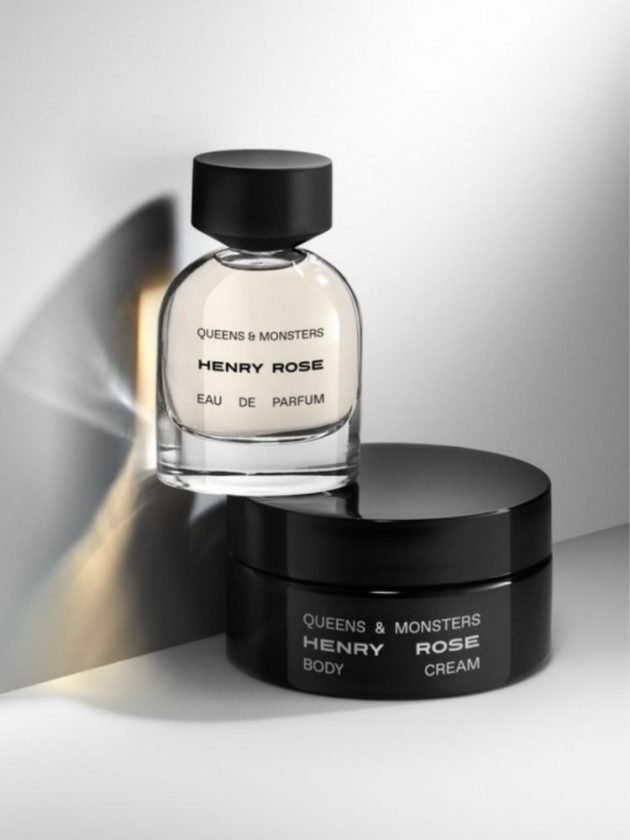
1. Henry Rose
This sustainable perfume brand provides an array of fragrances that are EWG and Cradle to Cradle Certified. Henry Rose perfumes are made of a combination of both safe synthetics and natural ingredients and are free of harmful ingredients such as phthalates, formaldehyde, and styrene. This nearly zero waste perfume brand also uses 90% recycled and 100% recyclable packaging.
Conscious Qualities: 100% Ingredient Transparency, EWG-Verified, Cradle to Cradle Certified (Gold), Eco Packaging, Gives Back
Scent types: Clean, Smooth, Spicy, Earthy
Price: $$
2. PHLUR
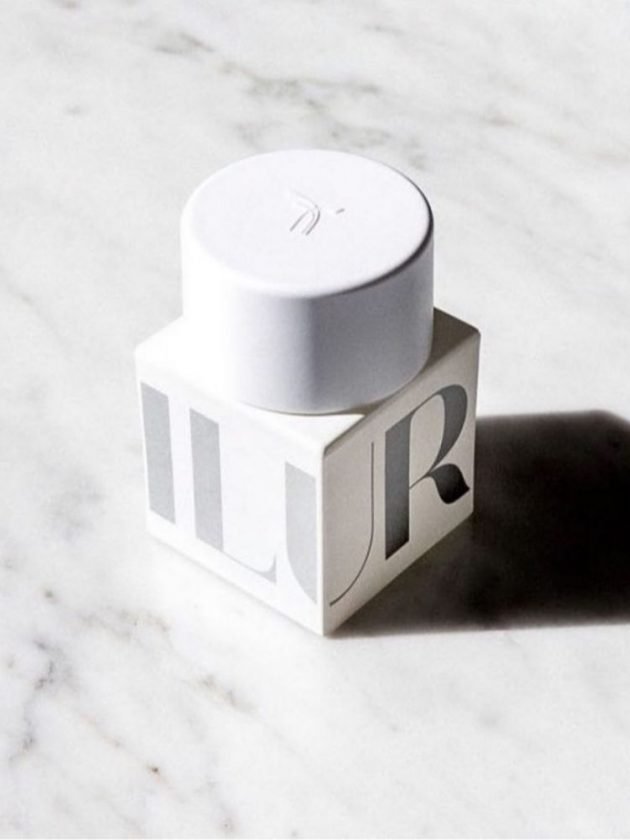
This certified B-Corp and eco-friendly perfume brand crafts their fragrances using only clean and safe ingredients. In fact, they vow to never use materials listed on the International Union for the Conservation of Nature’s Red List of threatened plants so as to ensure that their ingredients are always responsibly sourced. PHLUR is fully transparent about the ingredients used within their fragrances, both botanical and synthetics.
Conscious Qualities: 100% Ingredient Transparency, Gives Back, Recycled Packaging, Made Safe Supporter
Scent Types: Floral, Crisp and Fresh, Spicy
Price: $$
Check it Out: PHLUR | Credo Beauty | Sephora
3. One Seed
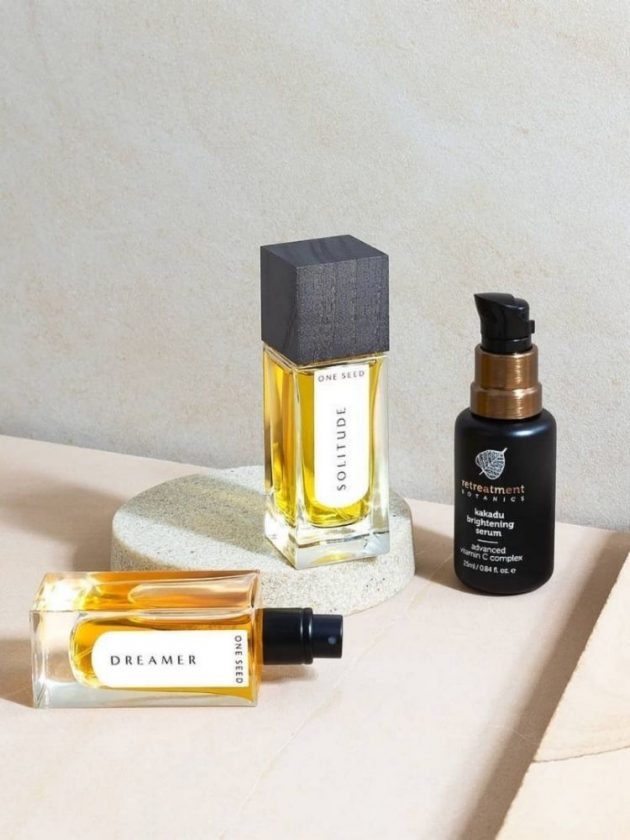
One seed makes honest natural and eco-friendly perfume from plants and tells you exactly what’s in it. Fully transparent about their ingredients, One Seed, uses no synthetic ingredients and is packaged in recyclable and reusable materials. In addition to working closely with their suppliers to ensure all their ingredients and materials are sustainably sourced. One Seed also offers customized fragrance blends of their sustainable perfume!
Conscious Qualities: 100% Ingredient Transparency, Only Natural Ingredients (80% Organic), Eco Packaging, Gives Back
Scent Type: Woodsy, Floral, Fresh, Warm
Price: $$
Check it Out: One Seed | Nourished Life
4. Leland Francis
Reviewed by CL&S Editor Elizabeth Joy
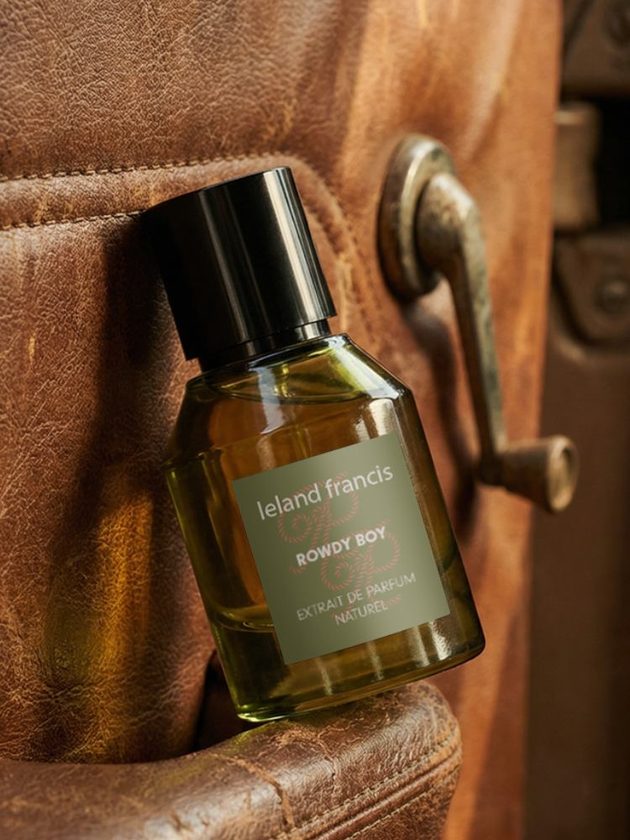
Crafted in small batches in Los Angeles with full ingredient transparency, Leland Francis fragrances are made entirely with plant-derived ingredients. Any sprays are blended with organic sugarcane alcohol.
When I read the scent profile of their fragrance, Rowdy Boy — made in collaboration with a queer-owned farm in Oklahoma City — of bergamot, clary sage, sandal wood, and vetiver, I was in. Their fragrances are unisex, but this one is an extrait de parfum which is more intense, so it was a better fit for my husband. We both love the scent!
Conscious Qualities: Cruelty-Free, Ingredient Transparency, 100% Naturally Derived Scent
Scent Type: Woody & Warm, Earthy, Herbal
Price: $$
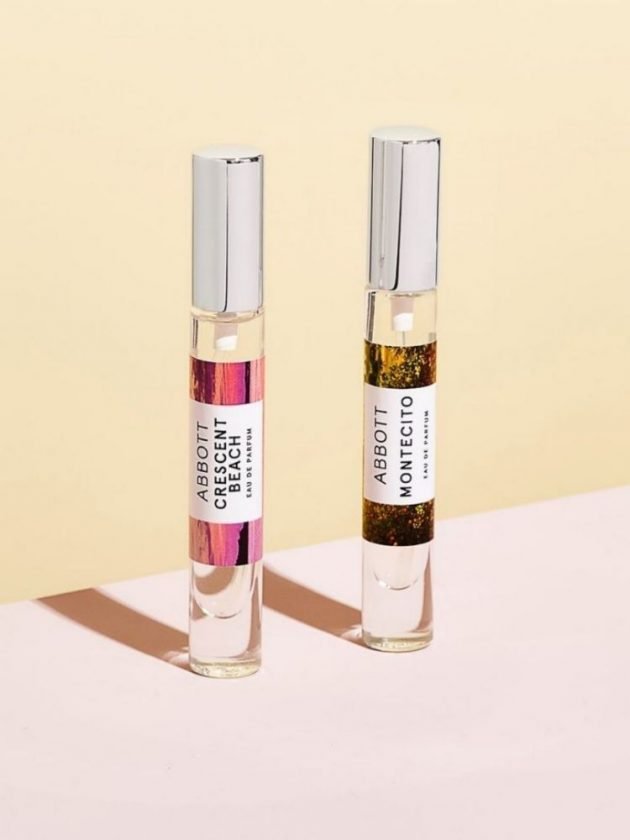
5. Abbott
Abbott’s eco-friendly perfume is made using the cleanest conscious ingredients. These unisex fragrances are free of parabens, phthalates, sulfates, and other questionable ingredients. Carefully crafted using a mixture of natural and synthetic ingredients, Abbott discloses a full list of their ingredients on their website. Plus, their ingredients are sustainably sourced and they work closely with their suppliers to produce eco-minded packaging.
Conscious Qualities: 100% Ingredient Transparency, Vegan & Cruelty-free, Sustainably-Sourced Ingredients, Recyclable Packaging, Gives Back
Scent Type: Cool and Crisp (with a hint of spice), Fresh, Citrus, Floral
Price: $$
Check it Out: Abbott | Credo Beauty
6. The 7 Virtues
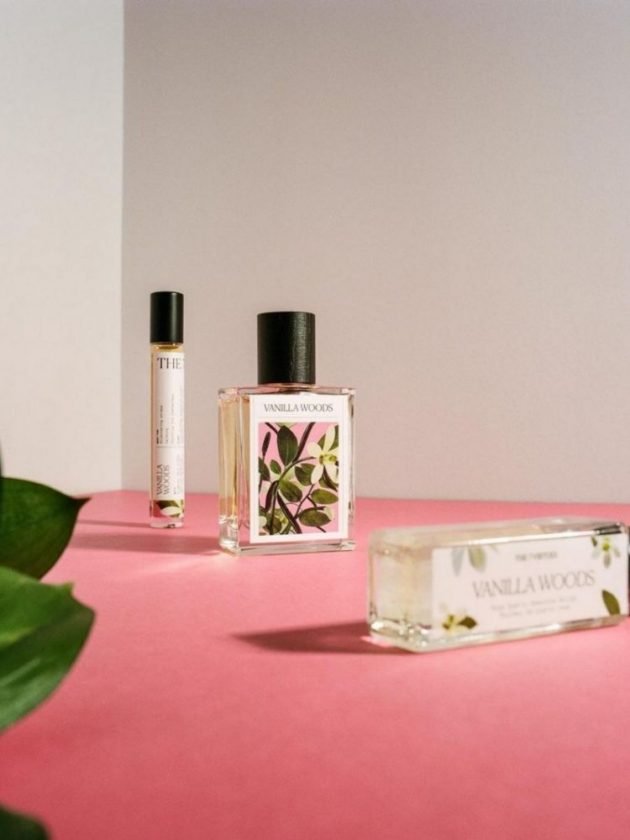
This fragrance brand is more than a fragrance, “it’s a movement to use business for peace. 7V (The 7 Virtues), founded by Barb Stegemann, a former journalist who never set out to make perfume, is a fair-trade, ethically sourced, and eco-friendly perfume brand on a mission to provide alternatives for farmers in nations rebuilding after war and strife around the world. Ingredients are ethically sourced from countries such as Afghanistan, Haiti, Rwanda, and Iran. In addition, 7V uses only clean and natural ingredients and is transparent about ingredients used in each fragrance.
Conscious Qualities: Fair Trade and Organic ingredients, Ingredient Transparency, Supports Farmers, Cruelty-Free & Vegan
Scent Types: Warm, Spicy, Floral, Woodsy
Price: $$
7. DedCool
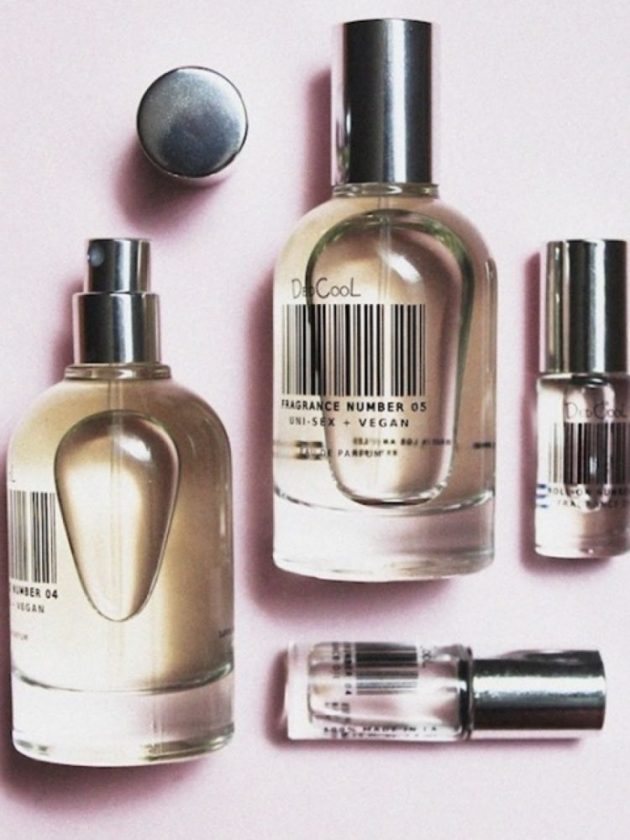
This LA sustainable perfume brand, founded by Carina Chaz, provides a variety of gender-neutral fragrances that are composed, crafted, filled, and packaged in reusable and recyclable glass bottles. Made in small batches, Ded Cool uses only safe synthetics and essential oils in their formulas and is free of carcinogens, harmful stabilizers and preservatives, and water, which many brands use to dilute their formulas.
Conscious Qualities: 100% Ingredient Transparency, Low Waste Packaging, Unisex Scents
Scent types: Citrus, Fresh, Light, Fruity
Price: $$
8. By Rosie Jane
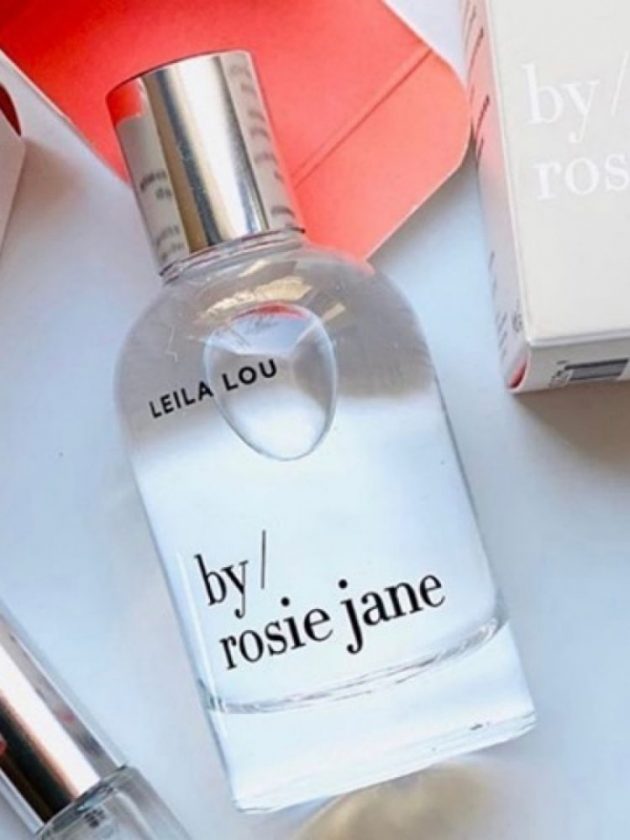
Handmade in Los Angeles, California by/Rosie Jane products are mixed and formulated using sustainably sourced safe synthetic and botanical ingredients. Free of endocrine-disrupting ingredients, by/Rosie Jane provides complete ingredient transparency and uses certified organic ingredients whenever possible. The sustainable perfume also comes in recyclable packaging made using wind power, vegetable-based inks, and responsibly-sourced paper.
Conscious Qualities: 100% Ingredient Transparency, Eco Packaging, Responsibly-Sourced Ingredients
Scent Types: Musky, Fresh, Floral, Vanilla
Price: $-$$
Check it Out: by/Rosie Jane | Credo Beauty | Sephora
9 Cultus Artem
Handcrafted in small batches in the US, Cultus Artem’s eco-friendly perfume can be summed up in one word, elegant. These gender-neutral fragrances — which are free of BHA, BHT, color additives, ethanolamines (ETA, DEA, and TEA), formaldehyde, parabens, phthalates, and other questionable chemicals — undergo rigorous quality control and analysis. Cultus Artem values slow beauty and strives to reduce waste every step of the way, including in their packaging.
Conscious Qualities: Safe and Natural Ingredients, 100% Ingredient Transparency
Scent Types: Woodsy, Musky, Floral, Citrusy, Warm & Earthy
Price: $$$-$$$$
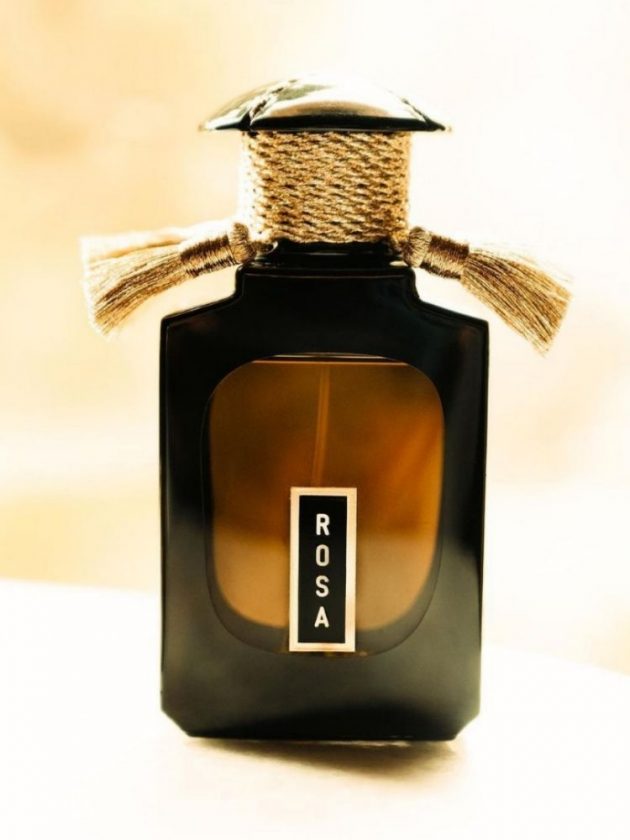
10. Skylar
On a quest for safe and clean scents, Skylar formulates their fragrances with the strictest standards, excluding questionable ingredients such as phthalates, formaldehyde, and synthetic dyes, amongst others. Skylar uses natural ingredients and lab-made ingredients to make their safe and hypoallergenic perfumes. They do not disclose their complete ingredient list, preferring to keep their proprietary formulas to themselves. However, they are happy to answer any questions you may have.
Conscious Qualities: Cruelty-Free, Vegan, Eco Packaging, Made in the US, Ethically-Sourced
Scent Type: Citrus, Dewy, Fresh, Floral, Warm
Price: $$