

This week, we discuss Siemens Gamesa’s MASSIVE 21 MW turbine prototype, Vestas and Siemens Gamesa layoffs in Europe, trade relations between the US and EU in 2025, and the proper out-of-office email etiquette.
Fill out our Uptime listener survey and enter to win an Uptime mug! Register for Wind Energy O&M Australia! https://www.windaustralia.com
Sign up now for Uptime Tech News, our weekly email update on all things wind technology. This episode is sponsored by Weather Guard Lightning Tech. Learn more about Weather Guard’s StrikeTape Wind Turbine LPS retrofit. Follow the show on Facebook, YouTube, Twitter, Linkedin and visit Weather Guard on the web. And subscribe to Rosemary Barnes’ YouTube channel here. Have a question we can answer on the show? Email us!
Pardalote Consulting – https://www.pardaloteconsulting.com
Weather Guard Lightning Tech – www.weatherguardwind.com
Intelstor – https://www.intelstor.com
Allen Hall: If you want to know why Siemens Gamesa is betting big on a 21 megawatt offshore turbine while others scale back, what Norway’s 25 billion oil and gas investment means for renewables, and how manufacturing challenges are reshaping European wind energy, stick around. Plus, we’ve got big news about Wind Energy O& M Australia and a chance to win an exclusive Uptime Podcast mug in our first ever listener survey.
I’m Allen Hall, and this is the Uptime Wind Energy Podcast.
You’re listening to the Uptime Wind Energy Podcast, brought to you by BuildTurbines. com. Learn, train, and be a part of the clean energy revolution. Visit buildturbines. com today. Now here’s your hosts, Allen Hall, Joel Saxum, Phil Totaro, and Rosemary Barnes.
Allen Hall: Just the season of giving, and this year we want to give you a voice in shaping Uptime’s future. As we wrap up another amazing year of wind energy conversations, we’re launching our first in person event. And yes, there’s a special holiday surprise involved. Picture yourself sipping your morning coffee from an exclusive Uptime Podcast mug.
Which could be yours just for participating. All we need is five minutes of your time to tell us what sparks your interest and what you’d love to hear more in 2025. Whether you’ve been with us since day one or just caught your first episode, your thoughts matter to us. So dash over to uptimewindenergy.
com or slay down to the show notes below. And from all of us at Uptime, thank you for making this community possible. Second, wind energy professionals won’t want to miss the premier O& M event in the Asia Pacific region, the Wind Energy O& M Australia conference happening February 11th and 12th in Melbourne.
And we’re thrilled to have industry powerhouses like Tilt Renewables, Worley, Aerones.
Phil Totaro: And we’re pleased to announce Sky Specs is actually going to be joining us as a corporate roundtable sponsor for the event.
Allen Hall: The conference tackles crucial topics that directly impact your operations, leading into erosion, lightning protection, CMS, insurance, and life extension strategies.
This is your chance to connect with the industry leaders and gain practical insights that you can implement immediately. So secure your spot now by visiting And finally, don’t miss out on a game changing opportunity for your safety program. Active training team known for their innovative and immersive safety training methods.
ATT is hosting a free expo in Houston on January 24th, and this isn’t your typical safety presentation by no means. ATT brings safety culture to life through dynamic hands on experiences that have transformed safety programs across the energy sector. So this is a rare chance to experience their methods first hand.
Spacers are filling up fast, so register now by emailing florence@activetrainingteam.co.uk or visiting activetrainingteam.us/contact.
Unlock your wind farm’s best performance at Wind Energy O& M Australia, February 11th to 12th, in sunny Melbourne. Join industry leaders as they share practical solutions for maintenance, OEM relations, and asset management.
Discover strategies to cut costs. Keep your assets running smoothly and drive long term success in today’s competitive market. Register today and explore sponsorships at www. windaustralia. com.
Allen Hall: There’s a dynamic story in international trade relations happening at the moment where the president elect of the United States has issued a statement regarding US EU trade dynamics and through a social media post U. S. leadership has called for a European Union to address its trade deficit with the United States through increased purchases.
Of all things, American oil and gas. Now this threat comes in to light with all the tariff discussions that have been happening over the last several weeks. And the EU and the U. S. I think privately behind closed doors have been talking and trying to tap this down a little bit. But this comes in light of, Joel, that Norway is busy drilling away also, that they plan to spend about 25 billion dollars in 2025 drilling a number of holes, looking for more oil and gas, which I assume are headed right to the EU.
Joel Saxum: Yeah, absolutely. I think the thing about this that we have to understand is we’re, this is a wind energy podcast, so we’re into renewable energy. We want we’re looking for energy transition. I think the thing that we all need to understand is that the energy transition is not going to be a flick of a switch, right?
We’re oil and gas is in literally everything that you touch every day. Like the mouse, my computer, my cell phone, my coffee cup, like petroleum products are in everything. So until we find out. different source for that, those products, it’s not going to go away. So with that being said, the, you also have to understand that it’s going to play a huge factor on global economics because like we’re talking here, EU in the U S and you have Norway, there.
So Norway being the, one of the largest natural gas producers in the world, I think they’re number four behind like the U S Russia and Qatar, however you want to say it. But we saw this in the last few years, the economics and the political geopolitical strife play out in Eastern Europe with the, the conflict we’re having over there.
And then we had this last Presidential campaign series over here in the United States. One of the big things that president elect Trump said was drill, baby drill. We’re going to continue to push the United States on what we can do for output for natural gas and oil, which we’ve hit records year after year in the last few years.
So it’s a way to balance the books globally, right? So if we want to if the U S wants to flex muscle this is a way to do it, definitely force, force some of our trade partners to take some oil and gas.
Allen Hall: Does this change the dynamic though in terms of renewable energy in Northern Europe or greater EU?
Joel Saxum: I don’t think so as of yet. I think people will continue to push for renewable energy projects. They’re just not happening quick enough, right? You can’t, there’s only so many goods, like spots for wind farms, say like in Germany that have been cited for their wind farms are built there, they’re in operation.
So you’re seeing, instead of all kinds of new field, like we have in the United States, a hundred, 120 turbine wind sites that just not being built. So you still have this gap where the thirst for natural gas for heating and power is very. It’s going to continue to happen. I don’t think it’ll change in the near term a whole lot.
I think you still have, in my opinion, we still have 10, 20 years left of the same kind of hydrocarbon thirst that we have right now.
Allen Hall: Phil, is there going to be a big push in terms of growth in the EU to grab more oil and gas exploration while
Phil Totaro: they can? But let’s keep a couple of things in mind with this conversation.
One is that the trade imbalance between the U. S. and Europe is roughly only about 200 billion. Obviously that’s a lot of money, but in the grand scheme of things I don’t know why. This is coming up as a topic when that’s something that could, it could be closed by them buying more, liquefied natural gas from the U.
S., which is what they’re obviously trying to accomplish. But I don’t know why this is a big thing. And in the meantime, Europe has bigger issues with having Norway basically replacing, Norway’s drilling, replacing Russian gas supply when they could also be investing equally as heavily into, repowering repowering in Spain, repowering in France, repowering in Germany.
And Portugal although that’s already happening a little bit but, they’re just not doing what they could be doing to take advantage of renewable energy as power source as opposed to continuing to operate on an oil and gas based infrastructure.
Allen Hall: It just seems like there’s a limited amount of growth in oil and gas in Europe.
I know there’s, they’re trying to deal obviously with a lack of resources coming further from the east, but that won’t last that long. It doesn’t seem like it with all the electricity generation that’s happening. Off the coast of the United Kingdom and other places. There’s going to be a lot of electricity feeding Europe here shortly.
It doesn’t seem like it would be the right time necessarily to put a bunch of money into oil and gas, but Equinor, being one of the players here, is doing it, in which is. Odd also because Equinor is what, the second largest stakeholder in Orsted, which is the renewable energy leader in Europe for the most part.
There is, there’s a lot of dynamics happening here. Do you think that this is going to over the next couple of months as the new administration comes in, do you think this is going to tamper down or is this just going to get elevated even more and more as the discusses about trade deficits and tariffs pick up?
I think it’ll ramp up. To
Joel Saxum: be honest with you, I guess let’s look, let’s go back and look at Norway. Why Norway does what they do in the oil and gas world. Even though they’re touted as, one of the most green societies. They have the highest adoption rate of EVs. They run on a lot of renewable energy themselves.
The majority of it’s renewable, a lot of hydro up there. They’re, they are also like, I believe it is, and Phil correct me if I’m wrong here, but per capita the richest country in the world. Or one of the richest countries, the top three. Because and all of that is based on oil and gas monies in the sovereign wealth fund of the country of Norway.
So they’ve been, they’ve built their economy on oil and gas. They know how to do it. They know how to do it well. And they see that over the next, I think there was a study that came out by 2050. There’s a reserves that they should be exploring internally right now that are worth like 1. 4 trillion.
So they, I think they’re trying to set themselves up for the future. No matter what the future looks like, them, they, themselves, they’re pretty set for renewable energies in that transition. But they’re building as much wealth as they can now
Phil Totaro: for what happens next. To their credit, they have been investing some of that sovereign wealth fund money in but as their pot grows, the percentage that they’re investing in renewables hasn’t necessarily grown.
It’s just that they’re, incrementally as their pie gets bigger, they’re spending more money, as an absolute value, but they’re still spending the bulk of that sovereign wealth fund money and reinvesting in oil and gas exploration and extraction as opposed to, spending more on renewables.
We still need to get them to shift that percentage so that we increase more money flowing to, more capital flowing to to renewable energy projects.
Allen Hall: As wind energy professionals, staying informed is crucial, and let’s face it, difficult. That’s why the Uptime Podcast recommends PES Wind magazine.
PES Wind offers a diverse range of in depth articles and expert insights that dive into the most pressing issues facing our energy future. Whether you’re an industry veteran or new to wind, PES Wind has the high quality content you need. Don’t miss out. Visit PESWind. com today. On the tails of our discussion about oil and gas in Norway.
It, there are effects happening downstream, not directly related, but somewhat related. Siemens Gamesa has reached a pre agreement with unions to implement temporary layoffs, affecting a little over 400 workers at several of its wind turbine manufacturing sites in Spain. Now these temporary layoffs, Involve benefits up to 85 percent of the workers salaries.
So the workers get 85 percent of their base salary for the time they’re being laid off. And it requires the workers to agree to this. But you see this kind of ebb and flow within Siemens Gamesa where they’ve had trouble with some of 5X machines that seem to be mostly based in Spain. And the 4X machine just started reselling a couple of months ago.
The 5X, who knows, haven’t heard much about it lately. And meanwhile, Siemens Gamesa is selling offshore turbines that are made elsewhere outside of Spain. And it just seems like Spain and the older Gamesa parts of Siemens Gamesa are going to be impacted over the next couple of months. And similar things are happening up in Vestas in the Isle of Wight.
It’s made of manufacturing facility there. The plan was to shut it all down. There was 600 workers there. But it looks like they’re going to try and negotiate with the UK government to save about 300 manufacturing positions for onshore wind blade projects. Basically they ran out of sales on the offshore blade that was being manufactured there and it was over.
They didn’t have any more orders. So they were just going to close it. That’s a huge problem. Now, remember Vestas and some of the people we. Talk to regularly like Nicholas Goddard and some others. There’s a technology center at the Isle of Wight that is not being affected. So that will remain open and part of their R& D blade development will still exist there, but the manufacturing is in trouble, which leads to the greater discussion of wind turbine manufacturing in Europe is generally in trouble.
You don’t see the amount of growth that you would like to see there at the minute, and with the shifting of resources and the closing of some facilities and temporary layoffs, although they’d be temporary, It’s not indicative of growth over in 2025 or 2026. Is that how you’re reading these tea leaves, Joel?
Joel Saxum: Yeah, a hundred percent. And what I’m seeing is okay, so let’s go let’s dial it back to the Siemens thing we’ve heard for the last year and a half. We were sitting having this same conversation almost last year at this time about the 4X and 5X machines not being sold. And once they do say, you know what, we’ve fixed the problems.
And we’re going to start selling them again. There’s going to be a ramp up period to get those sails back out, to get these, to get wind farms, permitted and sited. And this is going to be our turbine of choice. And in the meantime, there is other 4x and 5x machines out there on the market.
Nordex is out there, I’ve seen some GE 5.5x being installed in the States. So other turbines have backfilled some of that spot. So I think In my mind, I expected this to happen in Spain earlier. I expected this to happen back this past summer. But now that we’re seeing that they’ve gone back to sales of this platform that was manufactured here, and the sales may not look that good or that promising, I think at a certain time you just gotta You got to start trimming the fat.
You got to get back to that what, I guess what GE was saying is going lean.
Allen Hall: Phil, does that bode well? Because we’re not seeing closure in Spain, for example, is not being offset by more factories being built in Brazil or in India. You’re not seeing a shift in manufacturing. You’re just seeing the closing or the reduction of some of the sites.
That can’t be good. And is that just then forcing a real significant play? For European manufacturers, Vestas and Siemens, into offshore. Is that where the money’s going to be?
Phil Totaro: Ultimately, factory closures or even temporary reductions are usually tied to order book. If they’re not getting the order book that those factories normally serve, then it’s just a pay cut.
to ramp down, even though, again, in the case of Siemens Gamesa, they’re going to be paying out 85 percent of the salaries for a period of technically up to two years, according to the agreement they have in place with the the union over there. So You know, I don’t think it’s going to, people are going to be sitting on the sidelines for two years.
At least I certainly hope not their factory workers should be able to get back to work in late 2025, early 2026. But the reality of that is it’s again, as Joel said, it’s predicated on the order book that they’ve got and what they need to be able to do to deliver. Now, in the meantime, as you’ve proposed.
How do they make money? It’s going to be on services for which a lot of the installed capacity in Europe that they’ve deployed, whether it’s Siemens, Vestas, GE, or Nordex, or even Enercon for that matter in the past five or so years, Pretty much, I don’t have a precise number, but I’m going to, I’m going to venture a guess and say it’s got to be 80 to 85 percent of the capacity installed in Europe has an OEM service contract, maybe not a full wrap service contract to go with it, but a lot of it’s, OEM service.
So that is revenue generator for them. And then also, as you mentioned, offshore. Is also a possibility both on the turbine manufacturing and installation as well as services in offshore as well. Talking Vestas
Joel Saxum: in the same thing, downsizing, changing over a facility, what to do with the people.
They’re going to offer the people that lose jobs at theirs. They’re going from 600 people down to 300. They’re going to offer them positions in different places within Vestas greater. So that’s a I like that approach because you keep those employees and you keep some of the knowledge base there.
But on the other side of this, some of the repurposing of that facility that we were talking about with Vestas. is driven by the UK government because they’re going to start making more onshore blades out of what was at a facility for offshore blades. That helps for growth as well. So the Vestas you’re seeing, I don’t want it to be doom and gloom, right?
You’re talking about Siemens layoffs and Vestas cutting jobs and stuff. But some of the Vestas facilities will be repurposed as well.
Allen Hall: Dealing with damaged blades? Don’t let slower repairs keep your turbines down. Blade platforms get you back up and running fast. Blade Platform’s truck mounted platforms reach up to 100 meters, allowing for a quick setup, improved safety, and efficient repairs.
Book soon to secure your spot and experience a difference in blade access, speed, and efficiency. Visit BladePlatforms. com and get started today. That leads into another discussion about Siemens Gamesa, because there’s been photos taken and images shown on the interwebs of Siemens offshore wind turbine prototype headed to Denmark’s Österlund Test Center.
And the unannounced turbine, which is being dubbed the SG21 276DD, features 135 meter blades and a 276 meter rotor diameter, making it that would be the largest wind turbine ever built in Europe. And the specifications include Obviously, in the name, direct drive, DD, and a pitch power output of 21 to 23 megawatts, and a 132 kilovolt output voltage.
So that’s unique. Now, this has got to be a huge risk for Siemens Gamesa, just because of the size of the turbine, with all the things we just saw with Bing Yang, and those blades break that dramatic video, and all the problems that GE’s been, Vernova’s been having, offshore in the UK and off the coast of Massachusetts with blades of a pretty significant size.
Is the Siemens Gamesa 21 megawatt make a lot of sense here now that sort of Vestas and GE have backed off and said 15 is where they’re going to stop and GE Vernova basically saying they’re not going to build any offshore wind turbines for a while so they’re just competing with Vestas. Vestas will sit at 15, Siemens Gamesa will be at 21 with completely in their turbine.
How is Siemens Gamesa going to de risk this and get People to the table to order these turbines.
Phil Totaro: You’ve got a couple of things going on here. One is they wouldn’t be building a turbine unless there was demand. Because it’s, 250 million in non recurring engineering costs to design and build a brand new product, turbine.
So there’s that. At the end of the day, if Siemens doesn’t build. A 21 megawatt wind turbine, and the Chinese have them. Aren’t you going to expect that unless there’s some kind of regulation put in place by the EU that says thou shall not buy Chinese wind turbines that what’s their other option going to be?
Developers are going to, again, want the biggest thing they can get their hands on, so if there’s no Western OEM that’s offering them that option, it almost necessitates them, Taking the Chinese offering, product offering, seriously. We know that GE is stopping,
Joel Saxum: right? We know GE said no, we’re not doing the 18 megawatt machine, we’re not doing offshore, all sales stop, everything there.
Alan, do you believe that Siemens move here will force Vestas into
Allen Hall: making a bigger turbine? Vestas isn’t doing anything. I think they’re gonna hold pat. They’re gonna let Siemens Gamesa head down this 20 plus megawatt turbine route. My question is, if Siemens is gonna go after this, how long will they have to test it at the test site before they give it the green light and decide to get into some sort of production sense?
I think it’ll have to sit there at least a year. Maybe longer before they’ll build confidence in it because everything’s new, right? It’s such a risky thing. If you just watch the internet two weeks ago, it would scare the heck out of you. Anything that was above 15 megawatts.
Phil Totaro: Again, it comes back to.
to the developers wanting a turbine of that size. So how long it gets tested for is ultimately going to be down to if there’s a developer that says they need that thing in 36 months for a commercial project, to be, for it to be manufactured at scale for delivery in 36 months to a commercial project, that’s what they’re going to have to do.
Allen Hall: But that’s a huge risk, Phil. Who’s going to insure that thing? And who’s gonna, who’s gonna backstop it on the downside, on the financing? That’s a big question. It’s particularly for Europe.
Phil Totaro: This has also been the challenge, right? Because the insurance companies are already complaining about the payouts on megawatt turbines.
We haven’t even gotten to the 15 megawatt turbines even operating really yet. And when we get to 20 megawatt turbines, again, we’ve talked about this ad nauseum on the show, we don’t have the vessels to install or service these things. And we don’t have, all these other ancillary things that are going to come into play for deploying anything that large.
So it’s an absolutely enormous risk.
Allen Hall: Wouldn’t the plan be, though, if China’s developing these 20 plus megawatt turbines to use the ships from China and just send them over to France or wherever these things are going to go, Germany, and have them install the turbines
Phil Totaro: there? Works fine for any country that doesn’t have the equivalent of the Jones Act, doesn’t it?
Allen Hall: Yeah, Europe doesn’t have that restriction. So is that then the play that Siemens says, I’m watching all the ship turbines? Building happening in China. So I don’t have to do that infrastructure build here in the EU. I’m just going to tap into the China ship brigade. I’m going to put somebody on a calendar.
I don’t know who that developer is at the minute because there’s been no talk of that at all. I got a couple of guesses, but nothing that’s firm. It does seem like a huge risk, though, that I don’t, it’s not a typical European thing to do. Usually in these new developments, they’re gonna sit there for a year or two and make sure that everything is working just fine and not trying to have the problem that GE is having because Siemens is not in any financial state to take that huge risk at the minute I wouldn’t think.
Joel Saxum: We’ve seen Allen, you and I have talked to people, oh big wind farms, just onshore ones, even. These turbines are getting bought, developed, and everything trucked to site right now and they still don’t have type certificates, right? So we, there’s still, so in my mind, I think if I’m, if I am a certification body or if I’m anybody involved in certifying that turbine to go into a wind farm, whether it’s the person on the hook for insurance, the person on the hook for finance, I’m thinking I’m staring at the third, independent third party that’s supposed to validate this thing.
And if I’m in that person’s shoes, I’m thinking, man, we are need to go through this with a fine tooth comb because the whole ding world in offshore wind is the whole supply chain’s watching. So let’s not get this one
Phil Totaro: wrong. Joel, an independent third party validated LM Wind Power’s blade manufacturing facility in Gaspé, didn’t they?
So I don’t think that certification matters that much.
Joel Saxum: Yeah. I want to think with what has happened lately. In, in the headline news headlines may churn up or spur the, churn the waters up a little bit more, or get someone to stand up and say, Hey, we’ve got to make sure the thing is.
Phil Totaro: But then you’re talking about, now insurance companies are recognizing that maybe the certification body’s not doing their job and they’re going to start raising premiums because there’s more risk exposure for them, which again as we’ve talked about with high insurance rates, high, supply chain limitations and high prices for components, you’re now adding, You know, extra insurance premiums on top of all that, eventually, at some point, that’s got to not make commercial sense to do 21 megawatt wind turbines.
So I, there’s got to be a tipping point here that we haven’t reached yet, but we got to be approaching it.
Joel Saxum: I’m with you, Phil. And I think that at an early stage if deal with the insurance industry quite a bit, there is not a, there is not a. A lot of dedicated engineers there, right?
You’d think at an early stage, you need to get finance and engineering representative for a finance, which would have more likely be a consultant engineering representative for whoever’s going to insure it, or the group that’s going to insure it and more likely a consultant, you would think that you’d want to grab those people and get them involved as early as possible.
And we know that. Unlike industry norms where manufacturers announce turbines at the design stage, Siemens Gamesa has kept this thing very secretive. So that means that more than likely that’s not happening right now.
Lightning is an act of God, but lightning damage is not. Actually, it’s very predictable and very preventable.
StrikeTape is a lightning protection system upgrade for wind turbines made by WeatherGuard. It dramatically improves the effectiveness of the factory LPS, so you can stop worrying about lightning damage. Visit weatherguardwind. com to learn more, read a case study, and schedule a call today.
Allen Hall: A growing trend in workplace communication is emerging as professionals adopt a more direct and assertive out of office message.
If you’ve seen a lot of the out of office messages around the holidays now they range from, I will be out until January 3rd kind of message, or they’re, I’m going to my ski chalet and I will be back in February. Two, I will be out, however, if you need something, here’s the person to contact. So there’s a wide range of them, and some of them are, don’t try emailing me, don’t try calling me, my cell phone is off, you have no contact with anybody, don’t even try it.
Messages, which, guys, I’m not sure that makes any sense at all, but that seems to be where we’re at right now, and it’s getting a lot of pushback.
Joel Saxum: I think it’s like anything else where the pendulum swings, right? In the United States, we’ve been so Available and open to, making business work and those kind of things forever.
That’s part of our culture here. It’s not more like the European culture. They’re like, I’m on vacation, don’t talk to me. We don’t have that. We’re like, you know what? We’ll make it happen. Just shoot me a note. I think the, I didn’t, I never put an out of office reply in an email until I worked for a Danish company.
Because I was just like, I’m actually not gone. If I’m available, I will try to help. So I think that I just think, while we should respect people’s, time off, from a business standpoint, you’ve got, you can’t, don’t be rude, put it in the hey, I, I’m gonna be gone, if you need to talk contracts, call Phil, if you need to talk lightning, call Alan and give the, whoever’s contacting you some kind of call to action that they can actually make
Allen Hall: Have you seen more aggression in those over the years?
Because when it first started with email years ago, when you could have an automated message go out, it was very direct. And a lot of times the corporate overlords would tell you what you could write on those messages. And it was, it came down to, I will be out of the office from here to here. This is who to reach in my absence.
I’ll see you when I get back kind of message. But really now it could be anything. A lot of them are really snarky. Have you noticed that for whatever reason they get a little bit aggressive and I’m not sure that’s a good idea. I’m not sure your management would approve of that message, but I do see them quite often.
We deal with companies all over the world, obviously. So we see a little bit of everything.
Joel Saxum: I think it’s corporate communications, right? It’s the same thing as someone handing you like when you hire on at a company and they’re like, here’s your email signature. Some companies will give you, here’s what your out of office replies are, this is the template, use this.
And I think that’s smart, because then you can drive it from the proper perspective. Especially people that are more external facing than internal.
Phil Totaro: And some of us don’t I don’t think I’ve ever used ever in 20 plus years of working and out of office thing, not just because I’m some American workaholic, but, it also comes back to what Joel was talking about.
Like work life balance means that you’re available when the company needs you to be, but you can also go manage your time however you want. If you’re a salaried employee, you’re not supposed to be chained to a desk nine to five. And especially in today’s Although everybody’s trying to force everybody to come back to an office now.
But after COVID with the hybrid work or remote work possibilities, I don’t, people are paid to get a job done, not drive a desk for 40 hours a week. So let them get the job done for you. If they’re not, they’re out the door. Yeah, don’t create a hostile environment with potential customers by putting up a message that.
Makes it sound like you’re not open for business.
Allen Hall: And when you do come back, make sure you turn that system off. I’ve been around a lot of email where I know the person is back, but they’re still getting the auto reply back. Hey, you know that auto reply is still on? Oh my gosh, I’ve completely forgot.
That explains a lot. That one’s always a funny one. Same thing with the phones, right? Sometimes they forward their phone number to the The person at the next desk over, and they wonder why they don’t get any phone messages while the person down the row is swamped with work. Yeah, when you come back, you may have to make sure you get back into the system and get rowing again with the rest of the team.
Joel Saxum: This week’s Wind Farm of the Week is Timber Mill Wind over in Chowan County, North Carolina. And this is a, if you’re familiar with North Carolina, this is a rural community. A lot of farming and a lot of of course, Timber Harvesting, hence the name Timber Mill. But the project will have a capacity of up to 189 megawatts producing enough power to juice up 47, 000 homes per year.
It’s gonna have about 45 turbines, spaced a quarter to a half mile apart. And it’s planned to be located on managed timberland and open farmland. So the idea behind it was, we’d love to put some wind in here, we’d love to get some renewable energy and some jobs. And a bit of an economic boom to this rural area, but we do not want to affect how the area actually produces and goes about its daily lives.
So they’ve got this thing set up, so it’s not affecting farmland very much. And it’s not affecting timber harvesting, which is a big revenue generator there. So the in Chowin County, I want to focus on that a little bit. It’s a, it’s a good wind resource there. There’s existing onsite transmission lines.
And road infrastructure and they avoided a bunch of sensitive military and environmental areas when they built this thing. So North Carolina, not usually what you think of when you hear of new big wind farms, but the timber mill wind project is just that. So you are our wind farm of the week.
Allen Hall: That’s going to do it for this week’s Uptime Wind Energy podcast. And thanks for listening. And please give us a five star rating on your podcast platform and subscribing the show notes below to Uptime Tech News or Substack Newsletter. And we’ll see you here next week on the Uptime Wind Energy Podcast.
https://weatherguardwind.com/siemens-eu-norway-oil/

Weather Guard Lightning Tech
What Rosie Learned in Europe’s Wind Turbine Test Labs
Rosie returns from Denmark and shares her experiences seeing DTU blade testing, a lightning lab, and a 15 MW Vestas test turbine.
The Uptime Wind Energy Podcast is brought to you by Weather Guard Lightning Tech, creators of the StrikeTape Ultra LPS retrofit. Subscribe to Uptime’s Substack newsletter. And check out Rosemary’s “Engineering with Rosie” Youtube channel. Have a question we can answer on the show? Email us!
 In a recent post, I argued that our brains are wired in a certain way, and that we have little in any control over our values and beliefs.
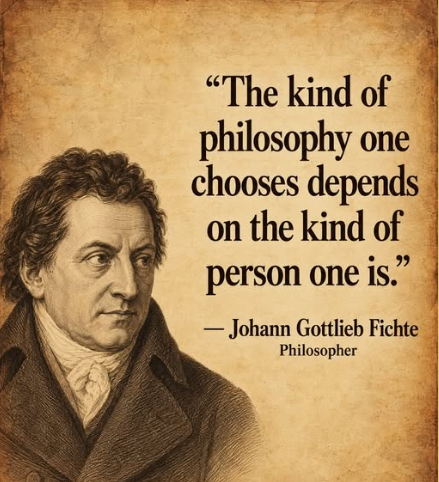
German philosopher Johann Gottlieb Fichte seem to be saying something similar here. To take me as an example, I’m no more capable of being a Trump supporter than I am in believing in the tooth fairy or Santa Claus.
It’ s true that MAGA votes against its own financial interests. But keep in mind that they have other more important interests. e.g., punishing immigrants and other people of color.



