

Thoughtfully selecting furniture that’s both safe for us and the planet — like sustainable, non-toxic sofas — is a key component of a journey towards a holistically healthy home.
But the fact is that there is a lot to look for when it comes to the hunt for a non-toxic and/or eco-friendly sofa. Below are a few of the things to watch out for!
Note that this article includes affiliate links. As always, we only feature brands that meet high standards for sustainability that we love — and that we think you’ll love too!
What Makes a Sustainable and/or Non-Toxic Sofa?
Unsurprisingly, the same toxic chemicals that are unhealthy for us are just as terrible for the environment. After all we are part of — and interconnected with — the rest of the planet and natural world. Here’s what to look out for when shopping for a non-toxic sofa or sustainable couch:
Non-toxic sofas will be free of flame retardant treatments.
Flame retardants are toxic chemicals — once required by law — that were and continue to be used to treat polyurethane foam in sofas and other furniture. Now, many companies are shifting away from using flame retardants. Toxic-Free Future has more information on toxic flame retardants.)
Sustainable sofas are made with responsibly-sourced and safely treated wood.
Wood is a renewable material, but it’s still important to ensure that the wood was harvested from responsibly-managed forests and is not contributing to deforestation. Deforestation is is a major contributor to climate change and biodiversity loss. While not perfect, the Forest Stewardship Council (FSC) certification is the most widely recognized certification for sustainable forestry management.
What about plywood? Pressed wood, like plywood, is typically made with formaldehyde, a chemical that has been linked to cancer risk in studies and listed as a known or probable carcinogen by multiple health groups.
Solid wood furniture is not always financially accessible, though (or realistic if you’re on the move often — it can be heavy!!) so look for formaldehyde-free plywoods if you have to go that route.
Finally, look for low- or zero-VOC (VOC stands for volatile organic compounds) finishes on the wood.
Eco-friendly couches have upholstery made with organic, recycled, and natural fabrics.
Many companies make their sofas with harsh chemical-laden fabrics such as chrome-tanned leather and polyester. Even “natural” cotton is not always toxin-free, when heavily treated with synthetic pesticides. Plus many natural materials are treated with harmful dyes (such as azo dyes, which can impact human health) and finishes.
When possible look for organic cotton, linen, or hemp fabric that is not treated with toxic chemicals. The best label to look out for is GOTS (Global Organic Textile Standard) certification. If you want a leather couch, look for vegetable-tanned leather, as the chrome (short for chromium) tanning process uses extremely toxic chemicals.
These fabrics are not widely available for sofas though, so you might also consider sofas made with recycled synthetic materials. Not ideal, but we can only purchase from what is available and what is within our budget and do the best we can.
Non-toxic couches haveh natural and/or non-toxic foam.
Most foams are petroleum-based (poly-foam), which is as unsustainable as it sounds! Look for natural fillers such as organic cotton, responsibly-sourced wool, and GOLS-certified organic latex where possible. If not feasible, look for the CertiPUR-US® seal, a certification that tests for a host of toxic chemicals like formaldehyde, toxic flame retardants, heavy metals, among many others.
What About Secondhand Sofas?
Investing in sustainably-made furniture can be quite expensive, but shopping used is a great way to find eco-friendly sofas and other furnishings for far less.
A sofa on the secondhand market is most likely not non-toxic. But since the most off-gassing happens when furniture is new, your exposure to VOCs will be reduced compared to what it would have been if you bought that same piece of furniture new.
What are some places to find sustainable sofas secondhand?
Checking out your local furniture resale shops, consignment stores, and any nearby estate sales or garage sales is a great place to start. (I have found some *amazing* pieces at estate sales!)
Prefer shopping online? Check out Facebook Marketplace, Craigslist or OfferUp for local pick-up options.
And if you’re in the US you’ve likely seen people leave their unwanted furniture out on their curb. This is called “stooping” and yup, it’s totally free. Of course you’ll want to do a thorough inspection of the sofa and you may have to be prepared to do some reupholstering since you never know exactly why someone left the sofa out. The condition might be less than desirable, but it’s free! So you may be willing to invest in some repair costs.
For more curated secondhand and vintage sofa options, check out:
Eco-Friendly and Non-Toxic Sofa Brands
If you’re in the market to purchase a new eco-friendly sofa, check out these sustainable and/or non toxic sofa companies!
Each brand uses a different set of materials and has slightly different standards, priorities, and values. This guide is a starting point. I encourage you to also do your own research to find which brand would be best for you. Especially because some sofas were chosen for their sustainability credentials, some for their non-toxic credentials, and some for both.
Best Eco-Friendly Sofa: Savvy Rest
Savvy Rest makes their sustainable organic sofa with some of the best materials available for non-toxic couches. The brand uses Cradle-to-Cradle certified Natural Talalay latex foam and GOTS-certified organic hemp or organic cotton upholstery. The brand’s eco-friendly couches are made with organic wool batting, jute webbing, natural coir, and zero-VOC finishes for their eco-friendly couches.
Price Range: $3,799 – $4,099
Use code CONSCIOUSSTYLE20 for 20% off!
Shipping: Free White Glove delivery in continental U.S. Contact for quotes outside 48 contiguous states.

Best Non-Toxic Sofas: Medley
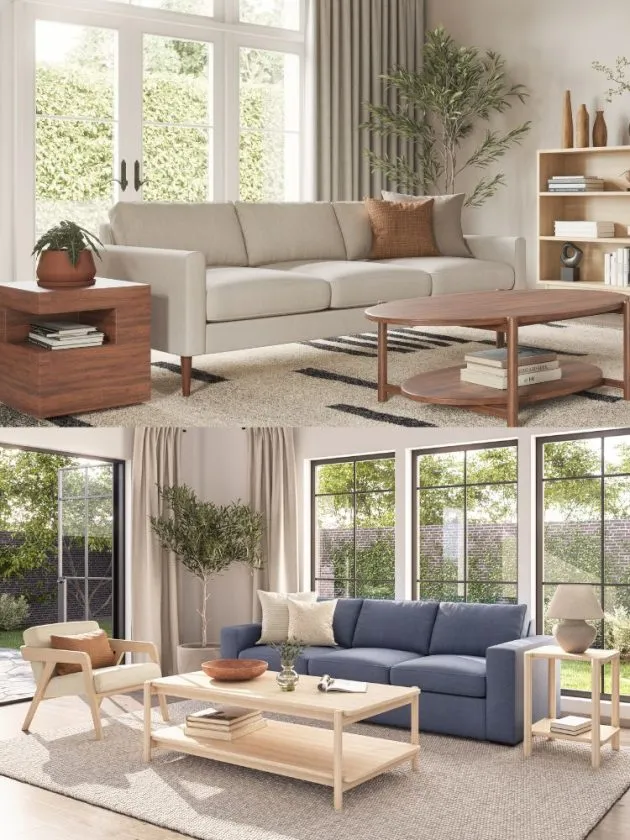
Free of harmful chemicals like fire retardants, and formaldehyde, Medley makes non-toxic sofas you can kick back in with peace of mind.
What materials does Medley use? For their non-toxic sofa cushions, you can choose from either CertiPUR-US® certified foam or organic natural latex. Their upholstery options are made up of Oeko-Tex certified fabrics and they use FSC-certified wood. Medley also uses water-based, VOC-free glue. This sustainable sofa brand has truly covered every detail.
Price Range: $1,545 – $5,000+ (check out Medley’s returned pieces for discounted options)
Shipping: Ships out of the U.S. Contact Medley for a quote for shipping to other countries.
Best Affordable: Sabai
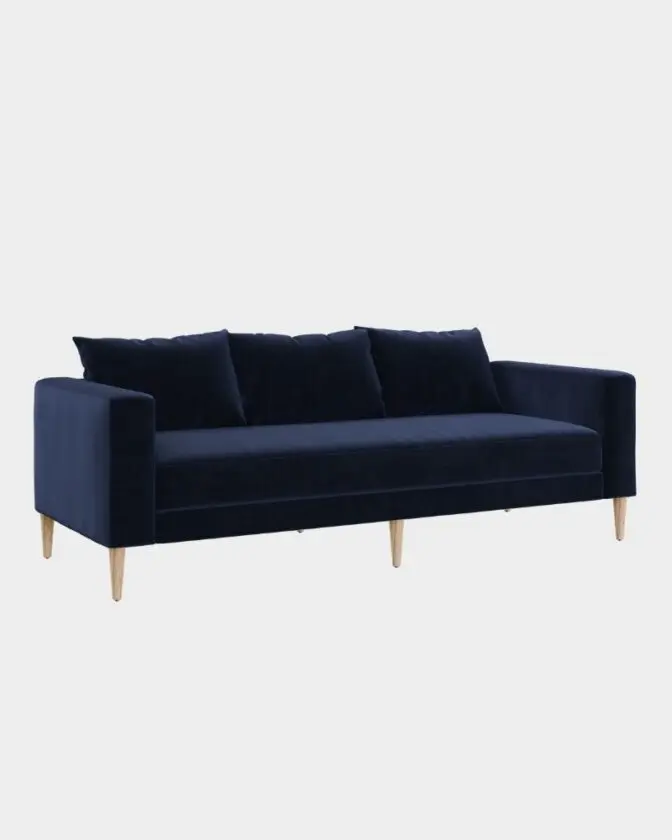
Beyond using sustainable and non-toxic materials like FSC-certified wood, CertiPUR-US® certified foam, and recycled fiber filling, this B-Corp certified furniture brand has programs to extend the life of their eco-friendly couches.
In Sabai’s Repair Don’t Replace program the company sells various parts you can switch out. With their Revive Program, you can send back your Sabai pieces for consignment.
Price Range: $1,095 – $1,395
Shipping: Ships within the U.S. (shipping is carbon offset and packaging is 100% recycled)
Best Heirloom Quality: Cisco Home @ Urban Natural
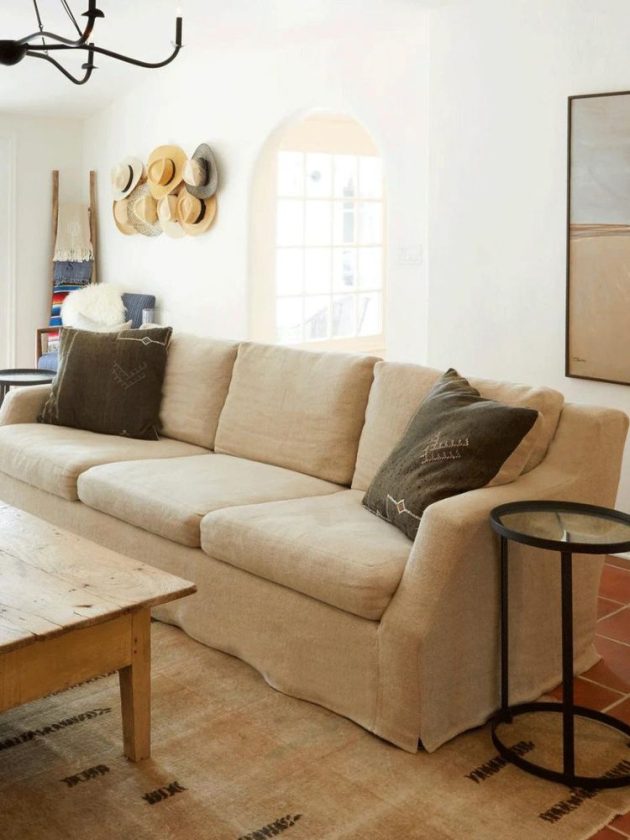
A leader in the eco-friendly furniture space, Cisco Home has been handcrafting sustainable sofas in California for decades and was a founding member of the Sustainable Furniture Council.
Select “Inside Green” on the product page and your sofa (or sectional) will be made from FSC-certified wood, organic latex, and other natural materials like jute, hemp, organic cotton, and wool.
Price Range: $2600+ for sofa | $7600+ for sectional
Shipping: Ships within contiguous U.S.; white glove delivery available with fee
Best for Futons: The Futon Shop
The Futon Shop has an impressive set of organic sofas non-toxic sectionals made from natural safe materials with the option to upgrade to organic materials like GOLS-certified organic latex and GOTS-certified organic wool.
Their sustainable couches and non-toxic sofa beds, all made in San Francisco, have frames made from responsibly-sourced kiln-dried wood and are available in fabrics like hemp and organic cotton.
Price Range: $1,500 – $5,395
Shipping: Ships within the continental U.S.

Best for Linen Sofas: Lee Industries
Green lifestyle retailer VivaTerra is a mecca for all things sustainable home — including eco-friendly sofas and sectionals sourced from manufacturer LEE Industries. As a founding Gold member of the Sustainable Furnishings Council, LEE meets high standards for health and the environment. Their non-toxic sofas are all made in the U.S. from many mindful materials including linen, soy-based fillings, and recycled polyester.
Price Range: $4,295 – $6,895
Shipping: Ships within the U.S.

Best for Sectionals: Burrow
Burrow offers modular eco-friendly sofas to reassemble and reconfigure with ease — meaning their pieces can stay with you for a lifetime, even through moves and family additions.
The brand’s thoughtful design goes beyond convenience, Burrow’s comfy couches are made with CertiPUR-US® certified cushions and sustainably-sourced wood.
Price Range: $795 – $3,995
Shipping: Free shipping; ships within the continental U.S.

Luxury Organic Sofas: EcoBalanza
Dedicated to creating “the ultimate organic sofa”, EcoBalanza really has considered every single component. The Seattle-based boutique uses FSC-certified hardwood, GOLS-certified organic latex, certified non-toxic fabrics, natural kapuk fiber cushions, and organic cotton or responsibly-sourced wool batting. Read more about the materials they use for their non-toxic sofas here.
Price Range: $3,000 – $4,300; Couture Collection starts at $6,800
Ordering & Shipping: Sofas are made to order. Learn more here.

Luxury Non-Toxic Sofas: PURE Upholstery
Made using non-toxic organic and natural ingredients, PURE Upholstery’s sustainable couches are free from toxic materials and ingredients, like chemical flame retardants.
PURE Upholstery crafts their eco-friendly couches with certified organic or non-toxic natural fabrics, GOLS-Certified Organic Latex, FSC-certified solid wood, recycled steel springs, certified organic wool, and a natural wood finish. (More on their materials here!)
Price Range: $1,675 – $5,595
Shipping: Ships within the U.S.; more details + lead time here

For Sustainable Outdoor Sofas: Loll Designs
If you’re looking for an outdoor sustainable sofa, then Loll Designs is the brand to know.
Loll Designs makes their furniture in Duluth, Minnesota using recycled HDPE (which stands for high-density polyethylene), mostly from recycled milk jugs, as well as USA-made aluminum inserts. The cushions are Sunbrella acrylic (which is virgin plastic) though you could instead opt for their cushion-free sofa.
That said, outdoor sofas are the toughest to find natural or non-toxic, unless you want to go cushion-free, then you can find seating that is all-wood.
Price Range: $1,395 – $2,995
Shipping: Ships to U.S. and internationally through their shipping partner Stackry

More Guides for Your Sustainable Living Room
Ethical Home Decor Brands to Curate a Beautiful, Conscious Space
Furnish Your Home Sustainably with these Eco Furniture Brands
The Most Gorgeous Fair Trade Artisanal Rugs
The post 10 Best Sustainable and Non-Toxic Sofas for Restful Relaxation (2024) appeared first on .
9 Best Sustainable and Non-Toxic Sofas for Restful Relaxation (2025)

As a longtime book lover, I may be biased, but I think a full bookshelf is one of the most beautiful additions to a space. There’s nothing better than seeing a showcase of your favorite reads alongside a TBR list.
A bookcase, though, can of course be used for all sorts of purposes from placing your favorite photos of family and friends to showcasing treasured vintage finds.
Whatever the case, this guide will help you find the right sustainable bookshelf for your living room, office, or wherever you like to cozy up with a good read!
So what make a bookcase more sustainable? What makes a bookshelf non-toxic?
First of all: sustainable and non-toxic are two overlapping — but distinct — criteria. And both of those terms can come with a lot of opinions and varying definitions.
When it comes to sustainable bookcases, I look for:
- Responsibly Sourced Materials: most bookshelves are made primarily with wood. While natural, unsustainable wood sourcing can be a cause of deforestation, so we want to see that the wood was from responsibly managed forests or made from reclaimed or repurposed wood. Some bookshelves may feature metal, in which case recycled materials here are important.
- High Quality Construction: sustainability includes longevity — how long will you be able to use that furniture piece before it goes to the landfill and gets replaced? Look for transparency around craftsmanship and woodworking processes. Another sign of quality is the length of warranty a company has for its products.
- Ethically Made: this one is straightforward in theory — were the people making it paid fairly and working in safe conditions? — but is unfortunately not always easy to find information. In this category, I look for transparency in practices, what relationship the brand has with the manufacturer (some produce in-house which is the best case scenario for transparency!), where it was made, and how well the makers were paid.
Ideally a sustainable bookshelf would also be non-toxic — as toxic chemical fumes aren’t exactly sustainable! But this isn’t always the case. For example, if a company prioritizes upcycled materials, they don’t necessarily have control over what inputs were part of the original materials. And sometimes a company focuses more on ethical artisan partnerships and sustainable wood sourcing, more than, say, using non-toxic finishes.
But when it comes to non-toxic bookshelves, this is what I look for. (Note that non-toxic doesn’t necessarily mean safe for all chemical sensitivities. Nor does it mean zero potentially irritating chemicals.)
- Solid Wood (where possible): MDF or pressed wood contains glue to stick the various wood pieces together, which can contain added formaldehyde. I prefer solid wood, or if it is engineered wood, I’d make sure the company is transparent around the type of glue used and/or they at least have a product certification like GREENGUARD. (More on that in a second.)
- Low or Zero VOC Finishes: most wood furniture is completed with some sort of finish to provide a protection against scratches or moisture. Many of these finishes are synthetic, and some can contain high levels of toxic chemicals. Look for a natural finish like linseed oil or beeswax or a low VOC synthetic finish.
Relevant Certifications
You’ll see a few certifications referenced throughout this guide. Here’s what each one covers:
- FSC Certified = the wood sourcing was responsibly managed; this is not a finish, foam, or textile guarantee.
- GREENGUARD / GREENGUARD Gold Certified = the finished product was tested for low chemical emissions, including VOCs, with Gold representing the stricter tier.
- Fair Trade Certified
 = verifies that a factory meets standards for fair wages, safe working conditions, and ethical labor practices.
 - Cradle to Cradle Certified (Gold) = evaluates a product or material across material health, circularity, clean air/climate, water/soil stewardship, and social fairness.
Where to Find Sustainable Bookcases and Shelving
I’m always a secondhand first proponent, and that goes for furniture, too. While your local thrift store might not have used bookshelves, check for dedicated furniture resale shops near you or estate sales. (I use EstateSales.net to find ones near me.) You can also find gently used pieces on online marketplaces like Facebook Marketplace, OfferUp or AptDeco.
If you can’t find something you love secondhand, and you don’t want to DIY your own bookshelf, then the next best choice is to shop from one of the sustainable furniture companies below. (If you’re simply looking for a bookstand, I’d suggest browsing Etsy for a collection of solid wood, bamboo, and reclaimed wood book stands and cookbook stands!)
Note that this guide includes affiliate links, which means we may earn a small commission if you purchase through these links which helps us continue to run this website and create resources like these. As always all brands meet strict sustainability criteria and are brands we love — and that we think you’ll love too!
1. Medley
Best for: low VOC wood bookcases
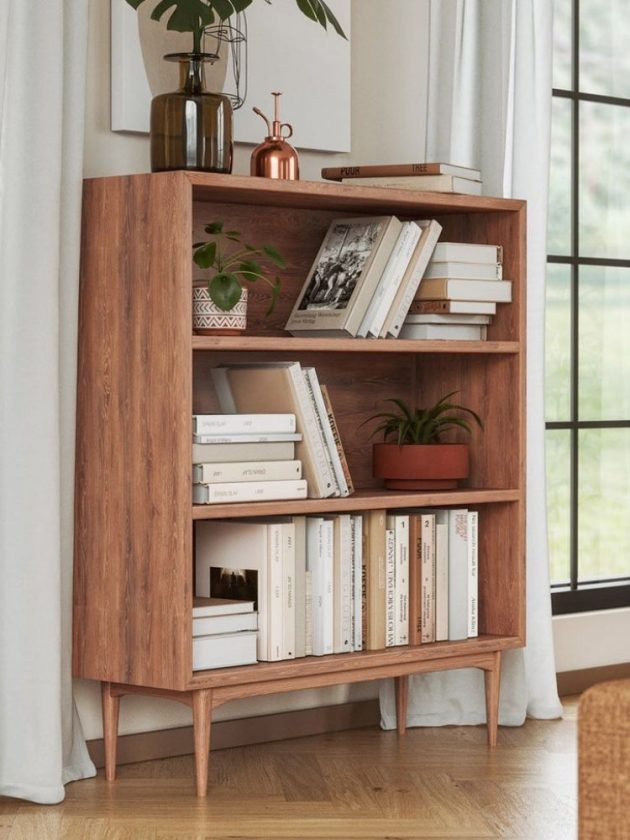
Medley’s bookshelves are elegant and elevated, perfect for a living room. Each piece is made with 100% solid FSC-certified hardwood for the tops and sides, though low-VOC CARB 2 compliant plywood is used for the shelves.
Every eco-friendly bookcase is handcrafted in the US (California or North Carolina) and completed with a low-VOC wood finish.
Price: $2,395 – $2,995
Materials: White Maple, American Walnut Wood
Conscious Qualities: Made-to-Order, US-Made, FSC-Certified Wood, Natural Finish
2. Thuma
Best for: non-toxic modular bookshelf
Thuma’s eco-friendly bookshelf is made from upcycled wood sourced from rubberwood trees no longer being used to source rubber. The brand’s bookshelf is also GREENGUARD Gold certified.
What makes Thuma’s bookshelf stand out to me, though, is its modularity — their Pillar Bookshelf can be set in 10 different configurations. And if you start with just a few shelves but later decide you want a larger bookshelf, you can simply buy an additional shelf or two to add on to it!
Price Range: $550 – $3,300
Materials: Upcylced Rubber Wood
Conscious Qualities: GREENGUARD Gold Certified, Repurposed Materials, Adaptable
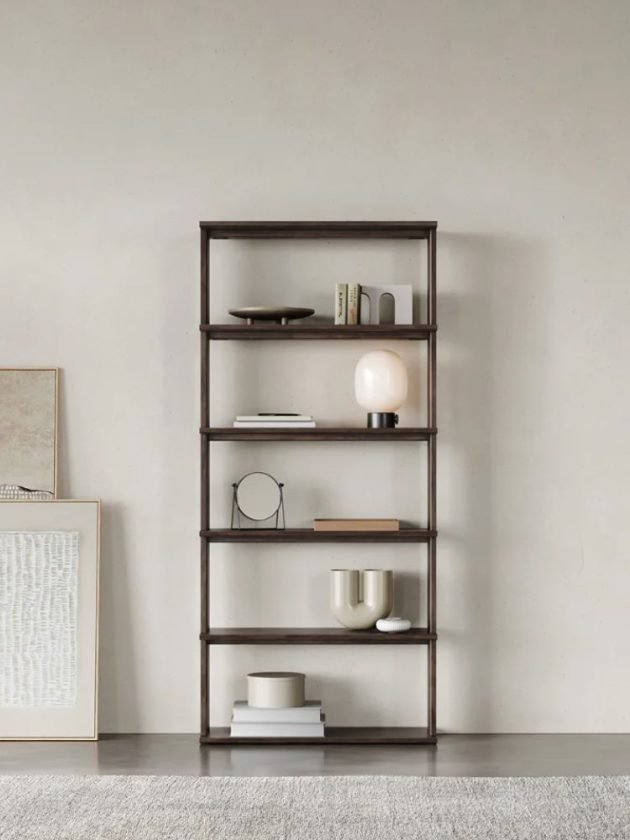
3. West Elm GREENGUARD Certified
Best for: low-tox bookcases and bookracks for kids
This furniture retailer has plenty of adorable, but functional, bookshelves for a playroom or kids’ bedroom. From cubby bookcases to mid-century bookracks, you’ll find plenty of options that are not only GREENGUARD certified, but made in Fair Trade Certifiedfactories, and/or with FSC-certified wood. Note that the company’s bookshelves are made with engineered wood, though.
West Elm also has GREENGUARD certified bookcases large enough for the adults too!
Price: $399 – $2,897
Materials: Solid Wood, Reclaimed Wood
Conscious Qualities: Fair Trade, FSC Certified, and GREENGUARD Certified Options
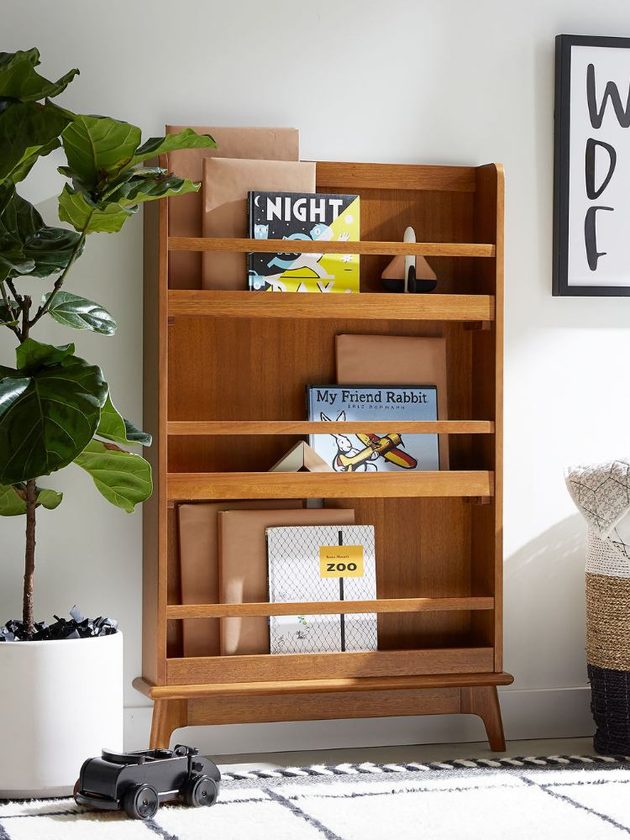
4. Urban Natural
Best for: a variety of eco-friendly bookshelves
This natural home retailer has sustainable bookcases in all shapes and sizes. From traditional bookcases to open-back asymmetrical shelving units, Urban Natural has options for any interior aesthetic. Each brand they carry values quality craftsmanship, responsible production, and sustainable sourcing.
Price: $1,099 – $5549
Materials: Solid Teak, Maple, Cherry, Walnut, Birch (varies by brand)
Conscious Qualities: FSC-Certified Options, USA-Made Options, Low VOC Finish Options (varies by brand)