

A landmark global goal to halt and reverse biodiversity loss by 2030 is close to slipping beyond reach – and may have not been achievable when it was set in 2022, according to a former UK lead negotiator.
Will Lockhart OBE represented the UK in UN nature negotiations from 2021 until the end of COP16 talks in Rome in February of this year.
He tells Carbon Brief that the agreement of the Kunming-Montreal Global Biodiversity Framework (GBF) in Canada in 2022 was a “huge personal highlight” that made nature “frontpage news”.
But when asked about whether it is possible to reverse the rapid decline of biodiversity in just five years – the headline “mission” of the GBF, commonly referred to as the “Paris Agreement for nature” – he says:
“The trajectory right now would suggest, no, it’s looking incredibly hard to achieve. But…with exactly the right interventions at exactly the right scale, it might still be possible.
“A fair question might be was it ever possible?…There has always been a contested evidence base about whether it could ever have been achieved.”
Shortly after the GBF was agreed in 2022, Carbon Brief spoke to a range of biologists who expressed doubt that it would be possible to totally reverse the decline of nature over such a timescale.
Earlier this year, Carbon Brief and the Guardian published an investigation finding that more than half of countries who have submitted plans to the UN failed to commit to protecting 30% of their territories for nature – one of the key levers for reversing biodiversity loss.
Countries have never fully met any target to help nature since the UN biodiversity convention was established in the 1990s.
The world’s biodiversity is declining at a faster rate than at any other time in recorded history. Around one million animal and plant species already face extinction.
Aiming high
The GBF is a global agreement with an aim to “halt and reverse biodiversity loss” by 2030 and achieve “harmony with nature” by 2050.
To help achieve its aims, the GBF sets out 23 targets for countries covering a wide range of topics, from protecting and restoring ecosystems to slashing subsidies for activities harmful to nature and providing funding to developing countries.
The GBF follows the Aichi targets, the previous set of UN goals for tackling nature loss by 2020 that ended in collective failure.
Towards the end of the 2010s – as it became clear that the Aichi targets were likely to fail – a flurry of research papers were published examining what it would take to “bend the curve” on biodiversity loss.
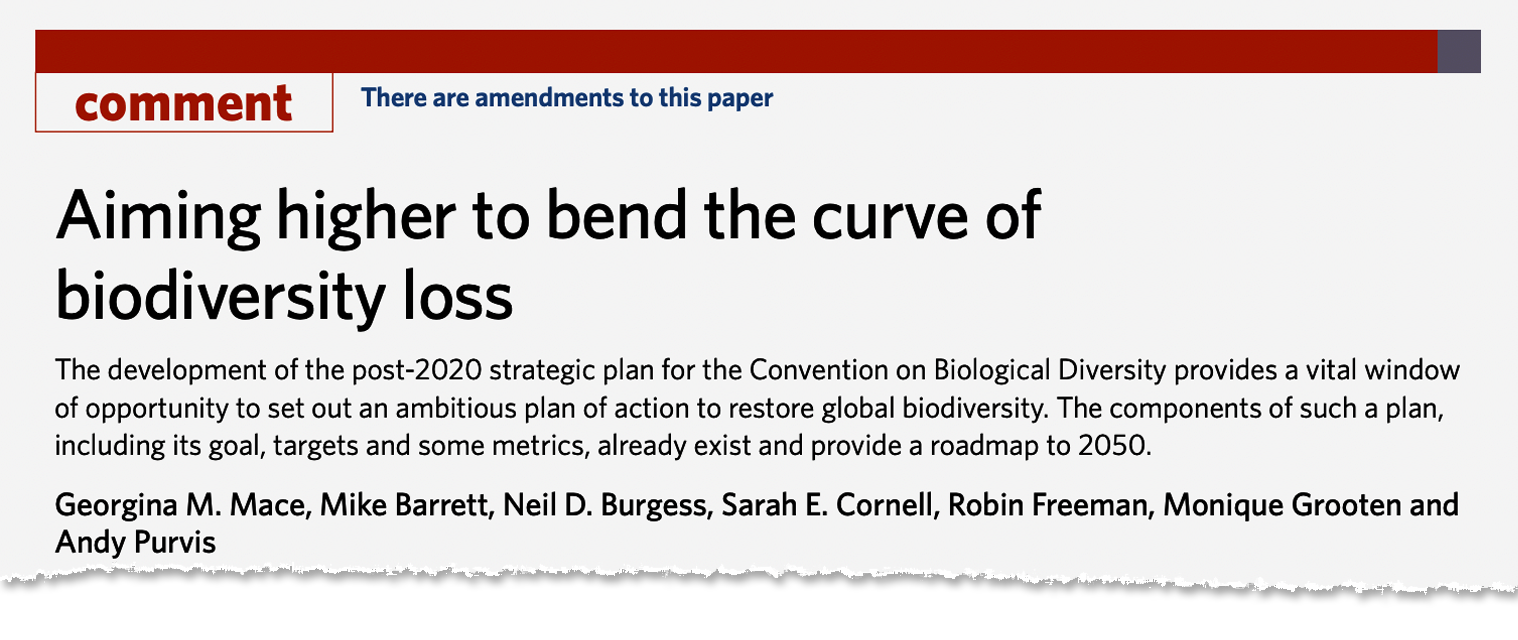
Among the most influential was a 2018 commentary in Nature Sustainability, led by the late pioneering biodiversity scientist Prof Georgina Mace. It urged countries to “clearly specify the goal for biodiversity recovery” in their post-2020 agreement for nature, “analogous to the [UN climate change] 1.5-2C target”.
On biodiversity loss, Mace and her team wrote:
“This declining trend must not only be halted, but also reversed.”
The post-2020 agreement for nature – covering the decade from 2021 to 2030 – was meant to be finalised in 2020. However, the Covid-19 pandemic caused the COP15 biodiversity summit to be postponed several times, before it was eventually held in two parts, starting in October 2021 and concluding in December 2022.
When negotiators met in Montreal to decide the details of their post-2020 agreement, the idea of halting and reversing biodiversity loss within a few years was already viewed as a steep challenge, Lockhart says:
“The important thing is that people spent a lot of time thinking about why we were setting certain kinds of targets…We wanted them to be specific, measurable and achieveable. What does achievable mean? What does ambitious mean? What message are we trying to send? This is politics; this isn’t necessarily science.
“If the answer is that it was never possible in the first place, then the question is: ‘Why did the world agree to it?’ And the answer to that is: ‘Because it matters that we try.’”

When Carbon Brief spoke to biologists about the feasibility of the goal in 2023, they expressed similar sentiments.
Dr David Obura, founding director of Coastal Oceans Research and Development, Indian Ocean (CORDIO) East Africa and current chair of the Intergovernmental Science-Policy Platform on Biodiversity and Ecosystem Services (IPBES), told Carbon Brief in 2023:
“As a scientist, whether we can achieve halting and reversing by 2030, I’m highly doubtful.
“[But] for a political document like this, there has to be a time-bound [element]. So, in that sense, I think halt and reverse by 2030 is the right language to have, for sure.”
The future of COPs
But whether setting a lofty target truly spurred sufficient action on biodiversity loss remains an open question.
Following on from the agreement of the GBF in 2022, countries were asked to submit new national plans for how they will meet its goal. These are known as national biodiversity strategies and action plans (NBSAPs).
In October 2024, Carbon Brief and the Guardian reported jointly that 85% of nations had missed the deadline for submitting their NBSAPs.
As of June 2025, only 26% of parties have submitted new NBSAPs. (Separately, 67% of parties have submitted shorter – and less detailed – national targets.)
Further Carbon Brief and Guardian reporting found that, of countries that have submitted nature plans, more than half do not commit to protecting 30% of their territories for nature by 2030, which was billed as one of the headline targets of the GBF.
And research published in Nature Ecology and Evolution found that countries that have submitted nature plans have broadly failed to commit to another GBF target to restore 30% of degraded ecosystems by 2030.
Following on from a set of fractious UN environmental negotiations last year, some experts have called for “reforms” to the way that these summits – known as COPs – work.
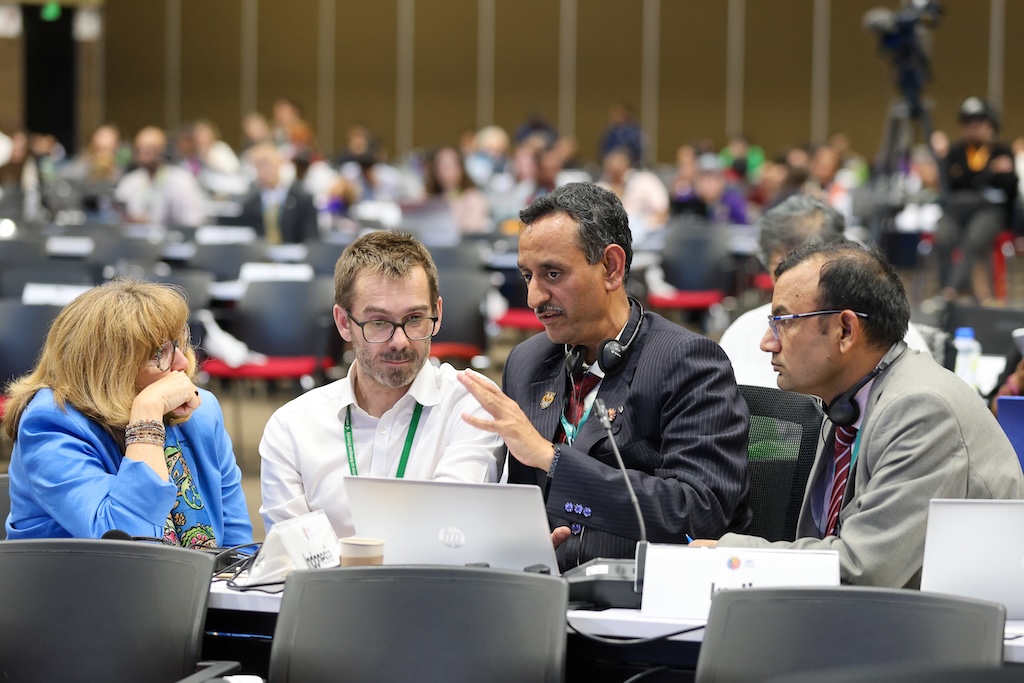
Lockhart tells Carbon Brief that, following his time representing the UK at the highest level at COPs, he still carries hope for the future of these summits. But, he says, he also has questions about how the world views the role of these negotiations in addressing environmental problems:
“A question that everyone has to bear in mind is: ‘What [is the] value the [of] COPs?’
“You pour a huge amount of time and resource into a global dialogue, which results in a very, very carefully negotiated outcome. It’s extremely important, in my view, that you have a space where the whole world can come together in a room and agree that it wants to do something.
“The question is, where does the world locate that process?”
He said that he fears the “world is simultaneously asking too much and too little of COPs”, continuing:
“It’s asking too much in the sense that there’s so much coverage and intense scrutiny of ‘this person’s arrived’, ‘this comma has moved’…There’s an extraordinary media circus. [There is] extreme expectation on each individual meeting.
“And, at the same time, it’s simultaneously asking too little of them. It’s like: ‘Great, this word was in so it was a good COP’, or ‘this word was out so it was a bad COP’. And, of course, COPs are just one tiny part of this huge global process that needs to happen if we’re going to tackle these problems. I rather worry – and I know that colleagues feel the same – they’re just viewed as ends in themselves.”
COPs were “always” meant to be just one “part of the jigsaw puzzle”, he adds:
“We agree stuff. It doesn’t get delivered, by and large. It doesn’t get delivered because the implementation processes aren’t in place back at home in different government departments.
“The reasons that the implementation processes aren’t in place varies based on political factors, capability factors, jurisdictional factors, all sorts of different things. The problem is that by focussing on COPs as an end to themselves, we risk missing the wood for the trees.”
Lockhart is now working as the director of climate and energy at Apolitical, an online platform offering training and support for governments globally.

The post World might have set itself an unachievable nature target, says former UK negotiator appeared first on Carbon Brief.
World might have set itself an unachievable nature target, says former UK negotiator

Next week, diplomats from around the world will descend on Yerevan, Armenia, to negotiate a series of decisions under the UN Convention on Biological Diversity (CBD).
Between 19 and 30 October, 196 parties will gather to hammer out the precise wording of the dozens of legal texts that make up the decisions under the Conference of the Parties (COP) to the CBD.
This year’s summit is particularly significant, as it marks the halfway point between the agreement of the Kunming-Montreal Global Biodiversity Framework and the deadline for achieving its targets.
The CBD has found that countries are currently not on track to meet 22 out of the framework’s 23 targets.
During the fortnight, delegates will also be negotiating decisions relating to the two supplemental protocols to the CBD: the Cartagena Protocol, which covers biosafety; and the Nagoya Protocol, which covers access and benefit-sharing for the use of genetic resources.
(The Cartagena and Nagoya Protocols, which are each governed by a “meeting of the parties”, or “MOP”, have fewer parties than the CBD as a whole, with 173 and 141, respectively.)
Carbon Brief is tracking the progress of countries towards consensus on dozens of negotiating texts using the interactive table below.
The tracker includes texts from the COP, as well as the MOPs for the Cartagena and Nagoya protocols. It also includes draft decisions from the most recent subsidiary body meetings, as these form the starting point for the negotiations in Yerevan.
The CBD has three subsidiary bodies: the subsidiary body on scientific, technical and technological advice (SBSTTA), the subsidiary body on implementation (SBI) and the subsidiary body on article 8(j) and other provisions (SB8J).
SB8J focuses on issues related to the Indigenous peoples and local communities. It was established at COP16 in Cali, Colombia, in 2024.
The first two columns of the interactive tracker list the topic of each agenda item and the relevant body, with subsequent columns including dates, page counts and links to the original documents.
The table is searchable and can be sorted using the arrows in the header.
Areas of disagreement in UN draft texts are denoted by square brackets. Counting the brackets in a particular iteration of a text therefore gives a sense of how far parties are from reaching consensus.
The bracket column is colour-coded, with dark green indicating a low number of brackets and red indicating a high number of brackets remaining.
Texts can also present parties with choices using “options” or alternatives (“alt”), which are counted together in the sixth column of the table.
The key discussions in Yerevan will centre around two agenda items in particular. The first is the global review, which will assess progress towards the GBF and make recommendations for accelerating action.
The second is finance, which can be separated into two parts: resource mobilisation and the financial mechanism. On resource mobilisation, biodiverse global south countries are likely to push for an increased amount of international finance for conservation.
Disagreement over the creation of the financial mechanism led to the suspension of COP16 in Cali in October 2024, as parties failed to find agreement on the mobilisation of finance before the end of the summit.
Global south countries want the establishment of a separate financial mechanism under the control of the CBD; global north countries largely prefer to maintain the existing mechanism, which sits under the Global Environment Facility.
At the resumed session of COP16 in Rome in early 2025, countries agreed on a roadmap that would lead to the establishment of a permanent mechanism.
related
Analysis: Lula presidency saved at least 20,000km2 of Brazilian Amazon since 2022
Why land-use emissions have fallen by a third this century – in six charts

Analysis: 84% of nations miss deadline to identify ‘nature-harming’ subsidies by 2025
UK withdraws millions in funding from world’s second-largest rainforest in Congo
The post Interactive: Tracking negotiating texts at the COP17 biodiversity summit appeared first on Carbon Brief.
Interactive: Tracking negotiating texts at the COP17 biodiversity summit
A beacon of love
On an outer island of Fiji, two thousand nautical miles from Sydney, is a shining light of hope and resilience for our troubled world.
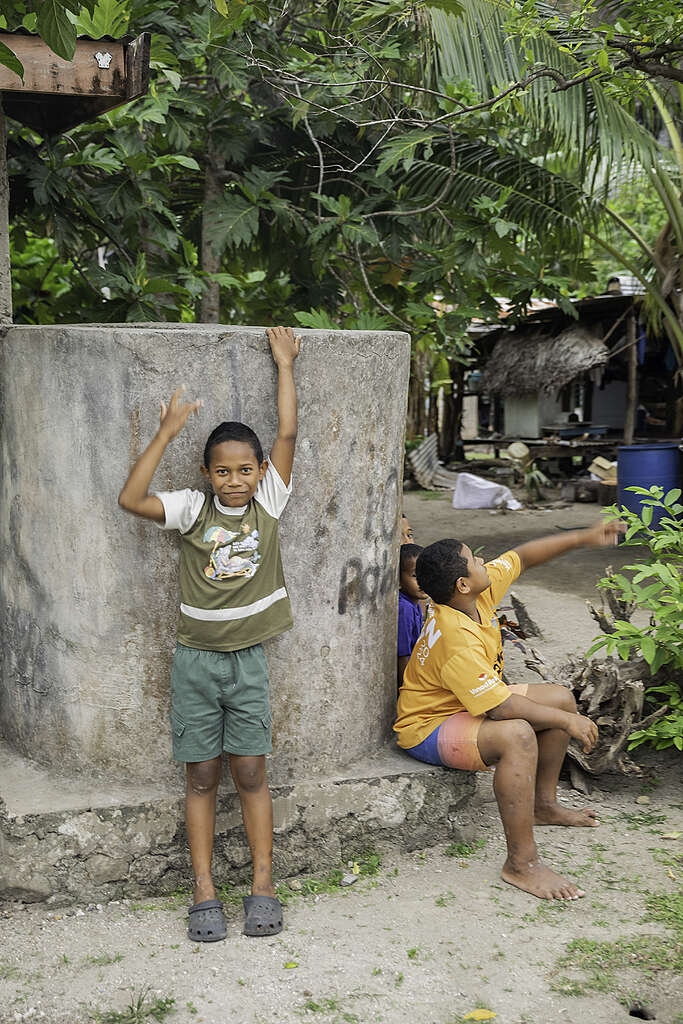
The island of Kioa is home to a Tuvaluan community who migrated from their atoll of Vaitupu in the late 1940s. It is a land of warm hearts, big smiles, and deep cultural roots; a place where the sound of a conch still summons the island together, where islanders paddle out to fish in carved outrigger canoes, and healthy happy children walk barefoot to school.
Here, culture is life. Kioans live sustainably through their traditional knowledge and practices. The island is alive with song, dance and the rhythms of a life tied to the tides, the winds, and the seasons.
Facing the future
Greenpeace has been lucky to have a relationship with Kioa for a number of years now, and we are continually learning from this remarkable community.
Last week, as part of our Voyaging Oceania project, we returned to the island. Our purpose was twofold —- to carry messages from the island to leaders gathering in Nadi this week for the Pacific Pre-COP, and to support the Kioa community in their efforts to improve water security for the island.
Unlike Tuvalu itself, with its eight atolls, Kioa is a mountainous, forested and richly fertile island. It will remain habitable far into the future. Kioans did not initially migrate from Vaitupu due to climate change, but the move was prophetic. They now have a lifeboat.
However, even Kioa faces challenges on our rapidly warming planet, in particular when it comes to water. Climate change is shifting once reliable rainfall patterns. On top of this, the island is already feeling the effect of this year’s intensifying El Niño event, which for Fiji means reduced rainfall and prolonged dry spells.
Right now, fresh water has to be carefully rationed, and is only available for a few hours a day. During last week’s visit aboard our campaigning ship Oceania, Greenpeace was privileged to work with the Kioa community on a new solar-powered water distribution project for the island.
Designed and led by the island, the project involves using a solar pump to move water from a reliable source to a storage tank and then using gravity to distribute the water around the village.
It was a lesson in how local knowledge and ingenuity can be the backbone of today’s climate solutions. To build a dam around the source, the local community knew the exact spot where they could gather gravel at low tide to mix with the cement. They took only what was needed, knowing that all resources must be carefully conserved. Kioa has no roads and no machinery, and it was an all-of-island effort to carry the materials up to the project site, including many heavy bags of sand and rock.
Such projects truly bring to life the vision of a resilient, locally-led, fossil fuel free Pacific.