

We handpick and explain the most important stories at the intersection of climate, land, food and nature over the past fortnight.
This is an online version of Carbon Brief’s fortnightly Cropped email newsletter. Subscribe for free here.
Key developments
‘Tricks’ and ‘cover-ups’
LIVESTOCK EMISSIONS: Climate scientists speaking to the Financial Times accused the governments of New Zealand and Ireland of using an “accounting trick” to “cover up” methane emissions from their livestock sectors. An open letter from 26 climate scientists and covered by the newspaper said that New Zealand’s “proposed new methane targets risk setting a dangerous precedent”. The title added that scientists have separately raised concerns about Ireland’s approach.
POTENTIAL PROBLEMS: The controversy hinges on a way for measuring the impact of methane emissions on climate change, called “global warming potential star” (GWP*), the FT said. This method “estimates [methane’s] contribution to warming based on how emissions are changing relative to a baseline”. By contrast, the “long-established approach” used by most countries “compares the total warming impact of a given mass of methane to the same mass of [carbon dioxide] over a 100-year period”, the newspaper said.
‘MISAPPLICATION’: The scientists told the FT that some governments are “misapplying” GWP* to justify setting “no additional warming” targets, which allow methane emissions to remain flat rather than decline. The governments of Ireland and New Zealand did not respond to the newspaper’s requests for comment. But the newspaper added that “proponents” of the GWP* typically argue that it “better reflects methane’s short-lived nature in the atmosphere compared to the long-lasting effects of CO2”. One of the scientists behind the letter explained more of his thoughts in a LinkedIn post. A scientist not involved in the letter also posted a response.
SOMETHING FISHY: Elsewhere, an investigation by DeSmog and the Guardian has alleged that several UK supermarkets have sold seabass linked to “devastating overfishing” in Senegal. The two publications said that the retailers are accused of selling fish from Turkish farms that import large quantities of “fishmeal” – ground up fish used as feed – sourced from the African nation. Overfishing for fishmeal in Senegal is linked to “unemployment” and “food insecurity”, according to the Guardian. Responding to the claims, several of the supermarkets said they do not currently source from the implicated farms, but declined to say whether they had in the past.
Wild weather worldwide
EARLY MONSOON MAYHEM: An “unprecedented” early monsoon caught India’s farmers off guard, with “massive crop losses in states such as Tamil Nadu, Maharashtra, Telangana and Gujarat”, IndiaSpend reported. Climate scientists attributed the pre-monsoon thunderstorms to “unusual sea surface temperature patterns in the Pacific since 2023” and a higher frequency of “western disturbances” – extratropical storms originating over the Mediterranean. In the past week, north-eastern India has been battered by flash floods and landslides, with “at least 32 people killed and tens of thousands displaced”, the Independent reported. The newspaper noted that “studies show the monsoon in south Asia is getting worse due to the climate crisis”.
DELUGE AND DROUGHT: BBC News reported that more than 700 people are believed to be dead after “devastating” floods hit Nigeria, with the farming region of Mokwa witnessing “the worst [floods] in the area for 60 years”. Separately, Reuters reported that China’s south-western Yunnan province was hit by “flash floods and mudslides”, triggered by heavy rainfall. In unconnected reporting, Bloomberg said that China had stepped up cloud seeding to “bolster rainfall across parched wheat-growing areas” in the north, adding that the country had ramped up “weather modification” investments as “climate change heightens food security risks.”
CANADA BURNS: Canada’s prairie provinces continued to reel from “record-breaking” early-season wildfires, the Guardian reported. It pointed out that in Manitoba alone, wildfires have burned “about 200,000 hectares already this year” – three times “the recent full-year average”. Manitoba premier Wab Kinew said that simultaneous fires “in every region” were a “sign of a changing climate that we are going to have to adapt to”. The Guardian added that First Nations peoples in Saskatchewan – one of three recognised Indigenous peoples in Canada – “have been particularly affected, with some entire communities evacuated”.
Spotlight
UK’s former lead negotiator on UN nature talks
In this Spotlight, Carbon Brief speaks to the UK’s former lead UN negotiator about the successes and challenges of international nature talks.
Will Lockhart OBE represented the UK in UN nature negotiations from 2021 until the end of COP16 talks in Rome in February of this year.
In 2022, he helped to negotiate the Kunming-Montreal Global Biodiversity Framework (GBF), a landmark deal which has a headline “mission” to “halt and reverse” nature loss by 2030.
Following his departure from government, he spoke to Carbon Brief about his highs and lows, whether the world is making progress towards meeting its biodiversity goals and the role of UN summits – called COPs – in tackling environmental issues.
Carbon Brief: When you look back at your time heading up biodiversity negotiations, what are your highlights?
Will Lockhart: It’s all still emotionally raw. From a global perspective, the agreement of the GBF was a huge personal highlight. That was a really, really complicated negotiation. The notion that you could have frontpage news that was about an international agreement on nature, that was immensely exciting.
CB: In your view, is it possible to achieve the GBF’s mission to halt and reverse biodiversity loss by 2030?
WL: The trajectory right now would suggest, no, it’s looking incredibly hard to achieve. But, even then, with exactly the right interventions at exactly the right scale, it might still be possible. A fair question might be was it ever possible?…There has always been a contested evidence base about whether it could ever have been achieved.
The important thing is that people spent a lot of time thinking about why we were setting certain kinds of targets…We wanted them to be specific, measurable and achieveable. What does achievable mean? What does ambitious mean? What message are we trying to send? This is politics, this isn’t necessarily science.
If the answer is that it was never possible in the first place, then the question is: ‘Why did the world agree to it?’ And the answer to that is: ‘Because it matters that we try.’

CB: Could there be a better way for countries to address biodiversity loss than the current system?
WL: It’s a very complicated question. A question that everyone has to bear in mind is: ‘What [is the] value [of] the COPs?’ You pour a huge amount of time and resource into a global dialogue, which results in a very, very carefully negotiated outcome. It’s extremely important, in my view, that you have a space where the whole world can come together in a room and agree that it wants to do something. The question is, where does the world locate that process?
I worry that the world is simultaneously asking too much and too little of COPs. It’s asking too much in the sense that there’s so much coverage and intense scrutiny of ‘this person’s arrived’, ‘this comma has moved’…There’s an extraordinary media circus. [There is] extreme expectation on each individual meeting.
And, at the same time, it’s simultaneously asking too little of them. It’s like: ‘Great, this word was in so it was a good COP’ or ‘this word was out so it was a bad COP’. And of course COPs are just one tiny part of this huge global process that needs to happen if we’re going to tackle these problems. I rather worry – and I know that colleagues feel the same – they’re just viewed as ends in themselves.
This interview has been edited for clarity and length. A longer article has been published on Carbon Brief’s website.
News and views
RECORD FOREST LOSS: Tropical forest loss hit its highest level in a two-decade record in 2024 – double the level of 2023 – according to satellite data from Global Forest Watch covered by New Scientist. The report authors “attributed the surge in forest loss to the El Niño weather phenomenon and the warming global climate, which made the rainforest a tinderbox”, the magazine said. Climate Home News added that the rate of forest loss was the equivalent of losing 18 football pitches every minute.
RATIFY THIS: The EU ratified the UN “High Seas Treaty” last Wednesday, “joining a global effort to protect the ocean, curb environmental damage, tackle climate change and preserve biodiversity”, Jurist News reported. The EU’s ratification of the landmark treaty was joined by six of its member states: Cyprus, Finland, Hungary, Latvia, Portugal and Slovenia. The EU also pledged €40m as part of a Global Ocean Programme to support African, Caribbean and Pacific countries, according to an EU Commission press release.
THOUSAND CUTS: A “cornerstone” ecological research programme could potentially be culled by the Trump administration, the New York Times reported. Abolishing the Ecosystems Mission Area (EMA) “was an explicit goal of Project 2025, the blueprint for shrinking the federal government”, the story added. However, the budget cut “still needs to be approved by Congress”, with scientists rallying to save the EMA, the paper wrote. On Monday, the Trump administration announced plans to “eliminate federal protections across millions of acres of Alaskan wilderness” that could open the region to drilling and mining, according to another New York Times story.
NET NATURE LOSS?: In the UK, the Guardian reported that the “nature-friendly farming budget is set to be slashed” for “all but a few farms” in an upcoming spending review. Meanwhile, legal analysis of the Labour government’s new planning and infrastructure bill showed that “more than 5,000 of England’s most sensitive, rare and protected natural habitats are at high risk of being destroyed by development”, per another Guardian story. A key concern for green groups, it added, is a “cash for trash” clause that allows developers to “inflict adverse effects on the integrity of a protected site” if they pay into a fund to restore nature elsewhere.
MIRAGE CITY: Reuters reported on Egypt’s plans to build a new desert city, 42km west of Cairo, that could reroute “about 7% of [its] annual Nile River quota” from fertile delta land. According to the story, an estimated 10m cubic metres of Nile water will flow daily to Jirian city to “pass by upscale glass-fronted housing units and eventually” irrigate a 2.28m acre “New Delta” agricultural project. Jirian city will include luxury housing, a free economic zone and even a “yacht marina”, the newswire added, noting that the country is facing “mounting water shortages, power constraints and deepening economic crisis”.
FOREST-FRIENDLY BATTERIES: Electric car batteries made using iron and phosphorus “that pose less of a threat to forests” are “rapidly replacing batteries reliant on cobalt and nickel”, according to an International Energy Agency (IEA) report covered by Climate Home News. From 2020 to 2024, the market share of lithium nickel manganese cobalt batteries has risen from one-tenth to almost half, according to the IEA data. Both cobalt and nickel are “mainly mined in rainforest countries”, such as the Democratic Republic of the Congo and Indonesia, the publication added.
Watch, read, listen
REFORESTED SCHOOLS: Mongabay explored how “urban forests” in schools in Niger are helping to build “climate resilience and education”.
SO LONG, SALGADO: The New Yorker examined the visual legacy of photojournalist Sebastião Salgado, who died last week. Salgado’s Genesis series is celebrated as a “paean to natural landscapes and Indigenous ways of living”.
SECOND ACT: In an Atlantic long-read, writer Emma Marris looked at the debate calling for a law to protect ecosystems along with endangered species in the US.
PROUD, NATURALLY: CBC News reviewed Animal Pride, a new documentary about queer animal behaviour that filmmaker Connel Bradwell described as “nature’s coming-out story”.
New science
- Greater fish biodiversity can help improve nutrition and make fisheries more resilient, according to new research published in Nature Sustainability. The study found that fishing waters with complementary species could provide more than 60% in additional nutrients than a similar-sized catch of the most nutrient-rich species.
- A new study in Nature Climate Change found that “natural climate solutions” in croplands offer only “modest” mitigation benefits if reductions in crop yields are to be avoided. According to the authors, this indicates that “cropland soil will constitute a fraction of food system decarbonisation”.
- New research in Communications Earth and Environment found that global agricultural labour productivity could decrease by 18% by 2100 under a scenario of high heat-stress and labour sensitivity.
In the diary
- 2-6 June: 69th Meeting of the Global Environment Facility Council | Washington DC
- 5 June: World Environment Day
- 7 June: Ocean Rise and Coastal Resilience Summit | Nice, France
- 9-13 June: 2025 UN Ocean Conference | Nice, France
- 16-26 June: UN Framework Convention on Climate Change intersessional meetings | Bonn, Germany
Cropped is researched and written by Dr Giuliana Viglione, Aruna Chandrasekhar, Daisy Dunne, Orla Dwyer and Yanine Quiroz. Please send tips and feedback to cropped@carbonbrief.org

The post Cropped 4 June 2025: ‘Tricks’ and ‘cover-ups’; Wild weather; Former UN nature negotiator interviewed appeared first on Carbon Brief.
Cropped 4 June 2025: ‘Tricks’ and ‘cover-ups’; Wild weather; Former UN nature negotiator interviewed

Next week, diplomats from around the world will descend on Yerevan, Armenia, to negotiate a series of decisions under the UN Convention on Biological Diversity (CBD).
Between 19 and 30 October, 196 parties will gather to hammer out the precise wording of the dozens of legal texts that make up the decisions under the Conference of the Parties (COP) to the CBD.
This year’s summit is particularly significant, as it marks the halfway point between the agreement of the Kunming-Montreal Global Biodiversity Framework and the deadline for achieving its targets.
The CBD has found that countries are currently not on track to meet 22 out of the framework’s 23 targets.
During the fortnight, delegates will also be negotiating decisions relating to the two supplemental protocols to the CBD: the Cartagena Protocol, which covers biosafety; and the Nagoya Protocol, which covers access and benefit-sharing for the use of genetic resources.
(The Cartagena and Nagoya Protocols, which are each governed by a “meeting of the parties”, or “MOP”, have fewer parties than the CBD as a whole, with 173 and 141, respectively.)
Carbon Brief is tracking the progress of countries towards consensus on dozens of negotiating texts using the interactive table below.
The tracker includes texts from the COP, as well as the MOPs for the Cartagena and Nagoya protocols. It also includes draft decisions from the most recent subsidiary body meetings, as these form the starting point for the negotiations in Yerevan.
The CBD has three subsidiary bodies: the subsidiary body on scientific, technical and technological advice (SBSTTA), the subsidiary body on implementation (SBI) and the subsidiary body on article 8(j) and other provisions (SB8J).
SB8J focuses on issues related to the Indigenous peoples and local communities. It was established at COP16 in Cali, Colombia, in 2024.
The first two columns of the interactive tracker list the topic of each agenda item and the relevant body, with subsequent columns including dates, page counts and links to the original documents.
The table is searchable and can be sorted using the arrows in the header.
Areas of disagreement in UN draft texts are denoted by square brackets. Counting the brackets in a particular iteration of a text therefore gives a sense of how far parties are from reaching consensus.
The bracket column is colour-coded, with dark green indicating a low number of brackets and red indicating a high number of brackets remaining.
Texts can also present parties with choices using “options” or alternatives (“alt”), which are counted together in the sixth column of the table.
The key discussions in Yerevan will centre around two agenda items in particular. The first is the global review, which will assess progress towards the GBF and make recommendations for accelerating action.
The second is finance, which can be separated into two parts: resource mobilisation and the financial mechanism. On resource mobilisation, biodiverse global south countries are likely to push for an increased amount of international finance for conservation.
Disagreement over the creation of the financial mechanism led to the suspension of COP16 in Cali in October 2024, as parties failed to find agreement on the mobilisation of finance before the end of the summit.
Global south countries want the establishment of a separate financial mechanism under the control of the CBD; global north countries largely prefer to maintain the existing mechanism, which sits under the Global Environment Facility.
At the resumed session of COP16 in Rome in early 2025, countries agreed on a roadmap that would lead to the establishment of a permanent mechanism.
related
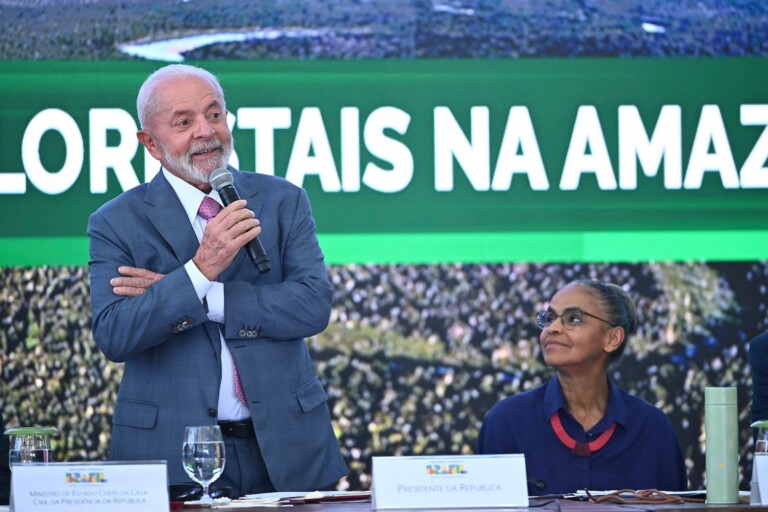
Analysis: Lula presidency saved at least 20,000km2 of Brazilian Amazon since 2022
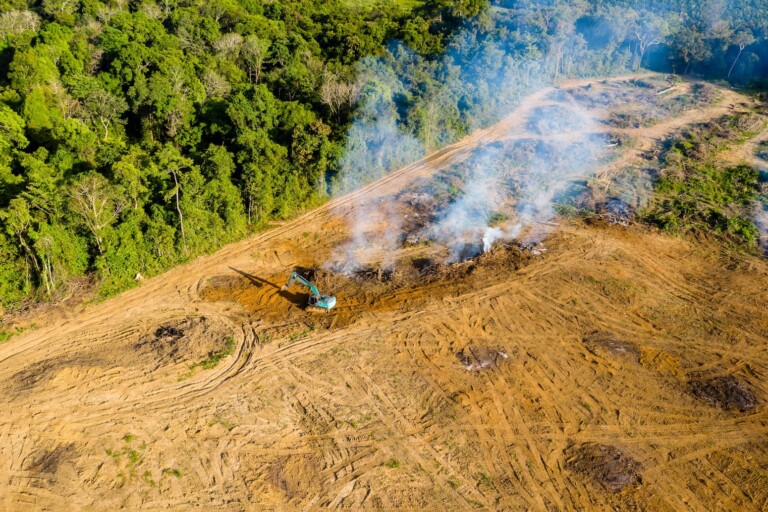
Why land-use emissions have fallen by a third this century – in six charts
Analysis: 84% of nations miss deadline to identify ‘nature-harming’ subsidies by 2025
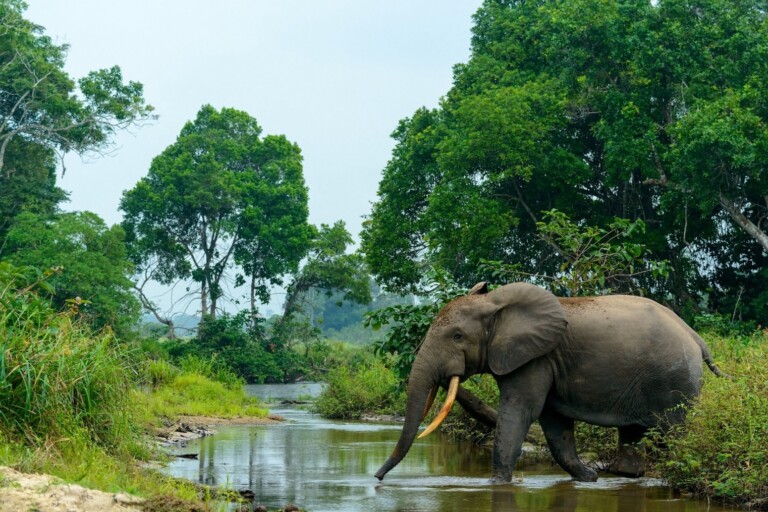
UK withdraws millions in funding from world’s second-largest rainforest in Congo
The post Interactive: Tracking negotiating texts at the COP17 biodiversity summit appeared first on Carbon Brief.
Interactive: Tracking negotiating texts at the COP17 biodiversity summit
A beacon of love
On an outer island of Fiji, two thousand nautical miles from Sydney, is a shining light of hope and resilience for our troubled world.
The island of Kioa is home to a Tuvaluan community who migrated from their atoll of Vaitupu in the late 1940s. It is a land of warm hearts, big smiles, and deep cultural roots; a place where the sound of a conch still summons the island together, where islanders paddle out to fish in carved outrigger canoes, and healthy happy children walk barefoot to school.
Here, culture is life. Kioans live sustainably through their traditional knowledge and practices. The island is alive with song, dance and the rhythms of a life tied to the tides, the winds, and the seasons.
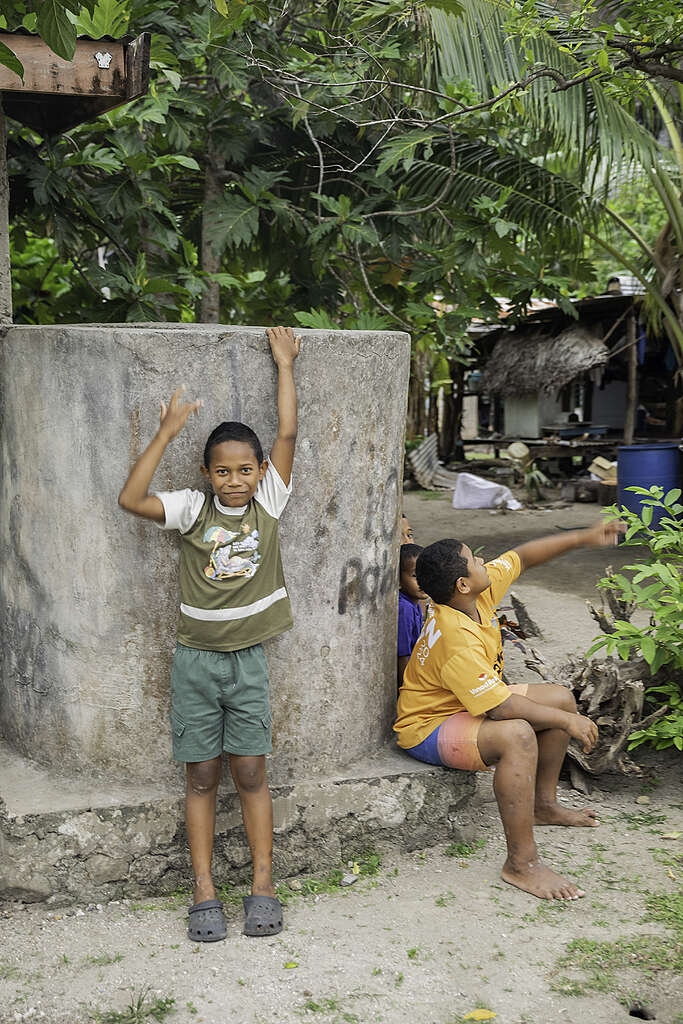
Facing the future
Greenpeace has been lucky to have a relationship with Kioa for a number of years now, and we are continually learning from this remarkable community.
Last week, as part of our Voyaging Oceania project, we returned to the island. Our purpose was twofold —- to carry messages from the island to leaders gathering in Nadi this week for the Pacific Pre-COP, and to support the Kioa community in their efforts to improve water security for the island.
Unlike Tuvalu itself, with its eight atolls, Kioa is a mountainous, forested and richly fertile island. It will remain habitable far into the future. Kioans did not initially migrate from Vaitupu due to climate change, but the move was prophetic. They now have a lifeboat.