

Weather Guard Lightning Tech
Wind Energy O&M Australia’s Success in Melbourne
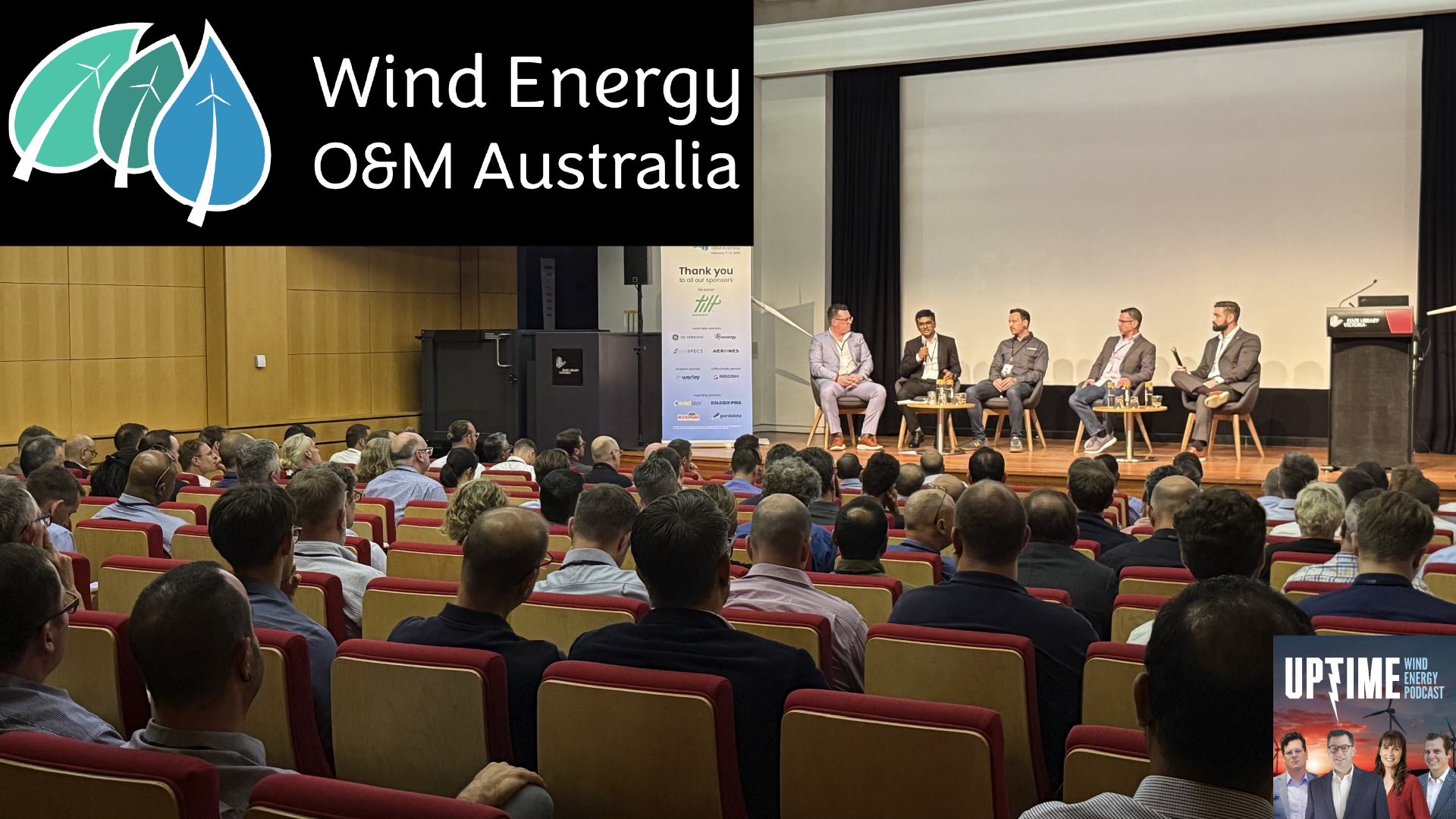
For the first time ever, all the Uptime hosts are in the same place! They discuss the fantastic outcome of the Wind Energy O&M Australia conference last week, highlighting the amazing presentations, attendees, and discussions. Keep an eye out for next year’s event!
Fill out our Uptime listener survey and enter to win an Uptime mug!
Sign up now for Uptime Tech News, our weekly email update on all things wind technology. This episode is sponsored by Weather Guard Lightning Tech. Learn more about Weather Guard’s StrikeTape Wind Turbine LPS retrofit. Follow the show on Facebook, YouTube, Twitter, Linkedin and visit Weather Guard on the web. And subscribe to Rosemary Barnes’ YouTube channel here. Have a question we can answer on the show? Email us!
You’re listening to the Uptime Wind Energy Podcast, brought to you by BuildTurbines. com. Learn, train, and be a part of the clean energy revolution. Visit BuildTurbines. com today. Now here’s your hosts, Allen Hall, Joel Saxum, Phil Totaro, and Rosemary Barnes.
Allen Hall: For the first time ever, I think all four of us on the podcast are in The same location at the same time.
Rosemary Barnes: If you include our amazing producer. So
Allen Hall: this is a unique time and we just finished wind energy, O& M Australia. which was completely packed, insanely full, and it was a day and a half of informative discussions, no sales talks per Rosemary’s strict instructions. Good call. To get the information out to the industry and let everybody know what’s happening around the world?
Is it, Australia is a really unique place, Rosemary. There’s a lot going on here.
Rosemary Barnes: Yeah, I think so. And the wind market is definitely unique. We’ve got a few unique problems. We also, a little bit different to other markets I’ve worked in, like in in Europe and in North America, where there are a lot of engineers around who’ve worked on the design and manufacturing side.
We don’t have those industries in Australia. And there aren’t as many people filtering through with that deep technical knowledge. So it’s taken us a bit longer to get to the point where one, people realize that they need to have that information. It’s not enough to just have, a service agreement and trust that they know what they’re doing and that they’re acting in your best interest at every moment.
And two, for people to begin to, yeah, get that expertise. There was no shortage of, Expertise on the panels. And yeah, my favorite thing about the conference was hearing just conversations going on, just, overhearing people just geeking out over some, really niche topic that they hadn’t thought of that they’d heard, someone mentioned on stage, a couple of people connected who didn’t know each other, and now they know that they’re got the same problem or one of them’s got a solution and one of them’s got a problem.
It’s yeah, just exactly what I wanted from the conference.
Joel Saxum: I think one of the things I took is this joke was told a few times, literally and figuratively on an island here in Australia when it comes to wind energy knowledge, right? So we tried to, when we put this conference together, we tried bringing some expertise from around the world.
Simply because, it’s hard to travel down here, right? That’s just a simple fact. It’s geographically remote. So bringing that expertise in here and And after we went through a bunch of things on stage, a lot of people talking on the sides like, I didn’t know this solution existed. Like the Soren Kellenberger stuff from CNC Onsite.
I didn’t know you could precision machine things up tower. That was just like, to a lot of people that, that exists, right? Lightning protection upgrades do exist. There’s people that can do it. There’s things you can sense. Shadow monitoring of your fleet. Even when you have an an FSA with an OEM.
Oh, this is a great concept. These are things that like in the States. In Europe, we’ve been doing for quite a long time and these things are there, but it’s just not down here because it’s a smaller market as well.
Rosemary Barnes: Yeah. It’s also hard for Australian Australians that are working in the industry, can’t all get over to those international conferences.
And to be honest, they’re not always great either. They’re, often very sales pitchy and yeah, cover the same topics over and over again, the kind of more lowest common denominator stuff, rather than that really technical. Geeky stuff that sometimes you just need .
Phil Totaro: So I was fortunate enough to moderate the operator panel where it’s funny because we all joked before the event that might be one of the more contentious things that would come out of this is, the challenges that are being faced by owners and operators with these full wrap service contracts.
But I was struck by the remarkable amount of, maybe they were biting their tongue a little, but the remarkable amount of collaboration that they were talking about and espousing and saying, we, we want to be able to, we’re a small market and we need to be able to depend and rely on each other.
And so we can’t burn bridges and we can’t, do things to, to disrupt the the OEM relationship. Even if we choose to, eventually rely on an independent service provider. So that was very that was very interesting. And it was a very free flowing dialogue. Not only in that session, but throughout the whole day and a half.
People actually opened up. Which is one of the things we wanted with developing the program. Was we wanted people to start talking. And they did
Joel Saxum: sometimes when you do a panel and you say, Hey, can we get some questions from the audience? And you have to like pry one out. Oh, I know Alan, you and I, when we’re at conferences, it’s usually you and I, Hey, I got a question.
We had no shortage of that at every single panel. We were running around with mics. Here’s a question. We got a question over here. We’ve got a comment over here. And I think the spirit of that culture, Went through the whole event up until the second day when we’re doing
roundtables.
Joel Saxum: You were, I was in the back of a few of them guiding some things.
You were bouncing through, man, there’s conversations going on over here.
Yeah. I know I was
Joel Saxum: in one I had there was like 30 people in there and nearly half of them had different questions during the roundtables. So the audience here the wind industry here in Australia, it’s hungry for knowledge.
Phil Totaro: Absolutely. And actually that’s one thing that I didn’t get a chance to say at the end was, We’re all here for you, not only the four of us, but the companies organizing the event, anybody that came from the States we came or anywhere else around the world, for that matter, we came because we are interested in helping the Australian market grow.
The whole thing with us doing events is we’re not event planners, as Rosie said at the end of the session, but. We don’t measure success based on, how many pictures we get taken shaking hands with a politician. We measure success based on how many megawatts go in the ground and how efficiently you’re able to operate them.
So whether you need Rosy’s, technical expertise, whether you need lightning upgrades, whether you need, CMS and sensor technology from eLogic’s Ping, or, any kind of strategy consulting or benchmarking that we can provide at Intel Store. Ask us. Please rely on us. We’re here to help you, and we want to help you, and I will bear the 15 and a half hour flight to come all the way back down here very gladly.
One thing
Joel Saxum: we should touch on there too, as we said, the four of us here, Matthew Stead and Thomas Schlegel from Eologics Ping. They’re not in this room right now, but they were key components of putting this thing together. Of course, Ping is a Australian born company. So the local connections here and all the way down to where we should go eat.
That was fantastic, but much, much more than that. We wish those guys could be sitting here with us, but everybody’s got to travel.
Allen Hall: Melbourne has been a great city. I’ve been pleasantly surprised. I thought it was gonna be really too hot, according to Rosemary. I
Rosemary Barnes: think it’s gonna be 37 today, so you may still
Allen Hall: get that wish.
We did enjoy walking along the river. The restaurants are fantastic. There’s just a buzz to the city, which you don’t necessarily see the United States at the minute. So everywhere we walk, even this morning, there’s just people. Happily walking down the street and going to their offices and having coffee.
And it’s, it is a lively city, which is enjoyable. You don’t always see that wherever you travel. So that was quite nice. And the, the piece I pulled out of yesterday was the expertise that Australia has developed, and I thought a lot of the things that Operational side should be coming over to the United States, actually, particularly on noise.
I thought the session on noise was really informative about how the operators deal with noise and how they try to address it and how they deal with the neighbors. We don’t have that. And we just don’t do that. No. At all. In the States. Rarely. And it is a huge stumbling block. Yeah. But some of the approaches that Tilt and some of the other companies that were represented were surprisingly good.
Thought out and were planned ahead. They weren’t just trying to be reactionary. They were proactive about noise.
Rosemary Barnes: I think it’s cause I think Australia got hit turbine syndrome thing. And Yeah. Yeah. I know that you had problems with people thinking wind turbines made you sick in the United States.
Maybe it was as bad as here, but it was pretty shocking here. Like even while I was doing my PhD, like just just sitting in an office by myself running finite element analysis models and publishing in academic papers, I was getting people emailing me about how, evil I was and how much damage I was doing to the world because I was captured by big wind and, you Making everyone sick.
And like I know I was really shocked cause when I first heard about that, I was like that’s not a real thing, so I’m not going to worry about it. And I think the industry thought that, and then we realized, oh, okay, we can’t actually put new projects in because everybody thinks this. So thinking it’s a problem means it is a problem.
And yeah, if you go to the more mainstream wind energy conferences in Australia, The word social license is mentioned at least once in every session, no matter what the topics are. I think that it’s just like super duper front of mind for developers here and yeah, and operators.
Allen Hall: And supply chain also. Because you’re on an island and nothing is really manufactured in country. It always comes from somewhere else. The planning involved in supply chain was surprisingly aggressive and good. They’re thinking ahead, way ahead. In America, if something breaks, they just think I’ll just order it from China and maybe it’ll come soon.
We have the Amazon syndrome there. Totally do. on
Joel Saxum: Amazon.
Allen Hall: And it doesn’t always arrive like you think it’s supposed to. And the term is down for much longer. In Australia, they don’t tend to do that. They tend to be much more ready for those situations, which is, I think, good. Beneficial to them. You want those turbines to be running all the time.
Joel Saxum: Yeah. The one slide that someone popped up and I don’t remember exactly which assessment it was in. And there was, I think, Phil and you and I talked about it. It was like, these are the installed turbines in Australia. And it was like, there’s 13 of these and there’s eight of those. And there’s 11 of these and there’s, I think
Rosemary Barnes: it was Katrina
Joel Saxum: Swallow from Wind Lab.
There’s 22 of these and there’s 46 of these. It was like, man, to find parts for that, to get them down here for those specific turbines, like that’s going to be tough. Tough as they start to age. So I think that was actually a really good session we had was the lifetime extensions session that the people were when you turn around and you look in the crowd and I did this quite regularly during the whole event was just to see how many, when slides are up, how many people had their phones up, trying to take a picture of a slide or how people paying attention stuff.
And it was all eyes forward. Everybody, You didn’t see a lot of people sitting back like, yeah, I’m at a conference because I have to be here because I’m typing away on my computer. People were engaged. It was good content.
Phil Totaro: And one other thing with that panel that Rosie moderated, the Life Extension panel, was You know, when my biggest question coming down here and having studied this market for a while was they’ve got a lot of assets that underperform because the market is so highly dependent on wholesale market.
For their power sales and those prices fluctuate wildly, day to day and even year on year. But the proactive thinking about wanting or frankly even needing to to life extend and how much benefit is that buying you. That was something that I still feel like we didn’t quite fully address it.
So hopefully that’s a topic that we continue to talk about next year. But also it was interesting the foresight that you know, Katrina, who represents WIDLAB and Christian Peek, who was also on that panel from Mint Renewables the, they were the two the two owner operators there. They.
had some very good insight on, what’s going to be necessary in terms of both market conditions and technical requirements to be able to do any kind of life extension. And it was it’s obviously fundamentally different than the kind of market we have in the United States where it’s subsidy driven, repowering after 10 or 11 years.
This requires, just like you were talking about with logistics and everything, Joel, it’s, this requires a lot more forethought to, all right if we get to, 20 years of life and we haven’t necessarily fully paid back the capital that got spent on this project, what do we do? Because we have to life extend, we can’t be underwater on a project.
What do we do to ensure that we get the kind of operational life out of this thing while maintaining the performance level? And
Joel Saxum: the flow of the sessions worked out well for that conversation is at the same time because we had a complete session on just CMS and CMS for, yes, we can solve problems with it, like the noise mitigation thing.
But also CMS for understanding the health of the assets before we get to that stage of lifetime extension. And then you roll that in with having some of these MCE providers at Gearbox, people with the ZF and the Schefflers up there. Hey, if we’re going to be doing this, let’s all work together. We can get kit here.
We’ll have it in country stationed and ready to go. There was quite a few of those collaborative conversations and that’s something we even say in the U S all the time, transparency and collaboration. Everybody’s saying to the operators, to the OEMs, involving the ISPs, involving the supply chain and the, those conversations were flowing with the gates wide open during the day and a half.
I was impressed with that.
Phil Totaro: Yeah. And the one thing about that too, is that the more, and I talked to three or four different people, both, folks that came from other countries, including the U S down here or Australians about this. And the consensus was that, Hey, we recognize the fact that if we are more transparent.
It’s going to attract more foreign direct investment into this market. And that’s something that not everybody in the world kind of understands. So again, good foresight on their part to recognize the fact that, they, the whole reason we’re able to do all of the analysis we do on profitability of assets, et cetera, et cetera, is because they take the five minute Skated data and put it online so that the entire public can get access to it, which is nuts.
Try getting that in Germany or, anywhere else in Europe or, we barely have that in the United States, but we get it published after, nine months later. We’re gonna wait until September of 2025 to get data on what happened in 2024. to every single wind farm in the US. It’s preposterous.
So the fact that they have, the five minute average data available like that for every project, every type of renewable to solar battery storage, you name it it’s all out there and it’s public and they’re transparent about it, which gives you the ability to analyze it, to see where things are working well and where it’s not and focus investment to, to help improve it.
But that’s the thing about Australia,
Allen Hall: which is a little bit different than any other country in the world at the minute, is that they have a large renewable grid and they’re able to do it every time in the States. And Rosemary knows that when we get criticized in the States, it’s renewables are never going to have a place.
And I just say Australia. Yeah, we have
Rosemary Barnes: the same conversation here. It’s power prices spiked because a coal power plant blew up in the hate and two other coal mines are flooded. It’s renewables. Renewables can’t, they’re not reliable. Look how high our prices are. It doesn’t matter what happens.
There’s a storm that blows out of our power line. Oh, wind power to blame again. It’s it’s a political conversation,
Joel Saxum: not a technical one. Yeah. Yeah. The,
Rosemary Barnes: It happens, I think. But what I think is a little bit unique, or it’s not unique, but like rare in Australia, is that it’s not it is really primarily not governments pushing for this to happen.
Coal power plants have announced their closure date based on economics projects are going in based on the economics of it. And yeah, there are some struggles at the moment. There’s a lot of negative power prices. A lot of, a lot more curtailment than people would like, but we’ve also got.
So many batteries that are online. I was just trying to Google to find but the pipeline of projects under construction is gigawatts. And I think I saw that it was like four or 500 megawatts in the last quarter connected. So I think even within the next 12 months. that you’re going to start to see batteries make a huge difference and like slice out like a huge amount of the high evening prices where gas peakers come on and, demand a lot of money for doing that.
I think you’re going to see like in regular days where, you got really sunny middle of the day and batteries can charge, which is nearly every day in Australia, let’s be honest. You’re going to see the, yeah, pricing environment completely change. I’m not a. Financial analyst or energy market modeler, so I’m not going to try and guess what the impact is going to be, but yeah, you like, look at the number of gigawatts of batteries we’re going to have compared to the number of gigawatts of gas in the evening, and it’s very similar.
There’s not like much of a difference. And so intuitively, that’s going to make a difference. And Yeah projects that are struggling now I do hope that they are going to struggle a bit less. We’ll get a lot further with renewables before before we start to see the same sort of pricing thing happen again.
Allen Hall: Yeah, that’s actually a good question because Australia is leading in so many different areas. Solar for one battery two now. Does that battery addition make profitability and wind go up? Because there’s just evening out the grid and you’re not going to, the curtailment basically stops. Is that the magic ingredient that a lot of countries are not really invested in at the moment to make the solar, wind grid work?
Rosemary Barnes: Yeah, I think so. And I think it has the most obvious effect on solar because solar is all, it all comes on at the same time in the middle of the day when price is negative. It would be, horrible to be trying to make a profit off a, Utility scale solar farm that was just, exposed to market prices and nothing else.
But yeah, no, I think it is a solution, but I think also you need to have the problem before anyone will invest in the solution. So I think like Australia has really high volatility and it’s electricity prices and you need that to attract people to want to buy. A battery and install it.
Joel Saxum: We’re seeing that same thing. I would say the closest market to here in the states would be Ercot in Texas. Yeah. And you’re seeing how many you and I driving around there, how many battery installations are going in and talking with some of the ISPs out there and the construction companies, EPCs, they’re just like Word.
We’re building batteries, we’re servicing batteries, we’re signing contracts. So battery, that’s going to be the key to the renewable mix as we go forward.
Rosemary Barnes: But it’s another, it is really similar and I think actually the same people were involved in designing the electricity market in, I can’t remember who got inspired by who, but Australia and Texas’s.
Energy only markets are very similar in design, and I understand that it’s not a coincidence. But, it’s not like the Texan government. It’s yay renewables, let’s do whatever it takes, right? That’s happening because the, conditions are right there for it to make money for developers, and so they put it in.
It’s similar here.
Joel Saxum: I could say something that’s a little bit controversial, but one time I was told that Australia is basically British Texas. Here we go. Here we go.
Phil Totaro: Now, there’s one other comment on this concept, though, of energy storage solving the problem. Theoretically, yes, but keep in mind two things.
One, as Rosie just said, how much Price volatility and how much dependence there is. So for wind energy projects in Australia, I think about 94 percent of the power offtake is done through a wholesale market. Like a, merchant, what we call a merchant market. With very few projects actually having a fixed price or some kind of firm power offtake.
With, a utility company or, some kind of government entity or what have you. That’s very different than in the United States where it’s 80 percent of our projects have some kind of utility fixed price off take contract etc. The second thing is, Storage can solve a problem like curtailment and negative pricing in Australia because of the transmission and grid constraints as well.
So if they were to build more transmission, then you don’t need as much storage. But the question then becomes is a battery cheaper and faster to implement than it would be to build additional transmission?
Allen Hall: Yes.
Phil Totaro: The answer to that is yes. Yes. Absolutely. Yeah. And we
Rosemary Barnes: did see in one case, Broken Hill, which is a it’s connected to the main grid, but it’s quite far away.
It’s very far inland and away from most of the grid. They have transmission connection, but it’s not enough. So they considered, do we want to upgrade that or, assumed that they would need to upgrade it, but then did, ran the numbers and found that energy storage would be the cheaper way to get that same reliability.
I think they actually went with compressed air energy storage for a big part of that. So we’ll see how that goes. And I also have to caveat with yeah, recently they had a very lengthy period of blackouts or brownouts yeah in the town because, yeah, so it’s not totally smooth sailing, but they, at least the concept is there.
And I think that household batteries is going to be a big thing too, cause we have Like at the moment in Australia, rooftop solar, if you add it all up, that’s the biggest generator in Australia by quite a lot, but there’s not many batteries and yeah it’s a really challenging for the grid because it’s not controllable, like it’s just yeah, it just goes in, we’re starting now to come up with some mechanisms to be able to control it, super duper unpopular.
You can imagine, you’ve spent 10, 20 grand putting solar panels on your roof, you don’t want to be told you can’t use it. But I think that yeah, home batteries, even though I know I’ve been told over and over again by very smart engineers who have very good models, it’s not the cheapest way to get storage in the system, but I think we’ll see it anyway because it means that individual households can make that decision on their own and use their own power later in the evening or whatever.
And I think that’s going to be a big thing in Australia in a couple of years time. That’s my unpopular prediction.
Joel Saxum: Democratizing power generation.
Rosemary Barnes: Yeah. Yeah. And it’s yeah, I don’t probably necessarily disagree with your British Texas thing. Maybe the British part, I don’t like that bit so much, but Australians do to not have to rely on the utilities.
Like people, Australians do not like utilities in, in general. They don’t like the government telling us what to do with stuff that we’ve bought. I’m putting our
Phil Totaro: own house, like how very right wing of you.
Joel Saxum: Interesting. Let me shift gears a little bit to the, in within the context of our conference here that we put on.
There’s a difference between of course, how the market operates down here and how say we operate in the U S versus with ISPs, OEMs, full service agreements. However, Down here I was. ’cause I wanna see what each of you heard and what your opinions are on the ISP involvement in the market for operations and maintenance.
So to, we saw RES, we had a conversation with RES, of course RES, huge ISP around the world. Rig comm was here, rig comm, of course. The sponsored the coffee carts. Fantastic team. They were up there on some panels as well. They’re a part of a larger blade group, GEV, that’s operates all over the world as well.
So they’re bringing that expertise down here at, from a local standpoint.
Rosemary Barnes: Worley.
Joel Saxum: Worley. Of course, Worley. Dr. Larry’s presentation on some leading edge erosion stuff. Fantastic. So there is some ISPs down here. I don’t see the market fully saturated, right? Cause it’s just, there isn’t the want or the drive for it.
The market’s not big enough. But you started to see a lot of the ISPs that I saw here were really happy about this conference. They were happy about the conversations we were having and saw the opportunity. My question, Alan, what did you hear and see from the ISP world as far as operations and maintenance opportunities here?
Allen Hall: Everybody’s trying to break into Australia. They’re still trying to find a foothold. There’s a lot of ISPs outside of Australia that have been looking at Australia for quite a while. Four or five years, roughly, and are trying to find that time to make the transition over. With the amount of growth that Phil pointed out that’s going to happen over the next ten years, you better get into Australia relatively soon if you want to be part of that growth.
It is such a dynamic market. It’s insanely changing from what I could tell. And just listen to the people talk. One of the key things I picked up was they, the engineers working for ISPs or operators, know what they’re doing. We talked to a lot of operators around the world and sometimes it’s wow, they really are struggling.
Not here. There’s a game plan. There is a process. There’s a reason why they’re doing what they’re doing to get return on investment or try to create more power to level out the grid. It is all planned, which is amazing. And when one of the beneficial things I pulled out of it was like, wow, it’s a lot of resources and maybe we need to bring some of these people over to Europe and then we get them into America and start talking to some of the operators over there, because There is a lot of knowledge here, and that marketplace is going to explode.
Now, one of the things that happened at the end of the discussion yesterday was we were all gathered around figuring, Are we going to do this next year? Was there enough response back that we would see people wanting to do it again? Was it a high enough quality conference? Did they learn enough that they would want to do it again?
Overwhelmingly, yes. Everybody was like, you got to do this again. When can we schedule it? Can we get on the books? Can I sponsor? Whoa, okay, we just finished this. We’ve been working pretty hard, not necessarily me, but everybody else on the team has been working really hard on it. And yeah, it’s just whoa, okay, great.
So we, I think we did fill a little bit of a void and that is important. I think that’s one of the things about the podcast and Rosemary, you’ve been on it with me the longest.
Rosemary Barnes: Yeah, out of the current crew.
Allen Hall: Yeah. Yeah. How many years has it been? We’re almost about five years, by the way.
Rosemary Barnes: The podcast as a whole.
Yeah. Every now and then I I’m like researching a topic and I I, a 20, 20, 20 episode of Uptime Podcast comes up and I go back and listen to it. You and Dan. Jokes about Godzilla and stuff like that. That’s what it was like when I started, it was really fun. Yeah, but it has been fun to see it evolve and have, having more people is good.
Obviously it gets hard to find the time every single week to, to get together. So yeah, it’s nice to be able to tap out, but yeah, Yeah. I think we agreed that we will, we might change things up a bit because this year we really wanted it to be not for profit because that’s one of the ways that we could get people.
It’s hard on your first event to get people to trust that it’s going to be good. And I was like, really I don’t know, I felt really I’m trying to think of a word that doesn’t sound like really over the top, but I’m thinking like blast. I don’t use that word, something like that, but turn it down a bit.
I was pleased that people trusted us to, people came from overseas, people, took time off work and came to this little conference that has never been put on before by people have never put an event on before. I think all of us heard like probably dozens of times. That’s better than I thought.
That was like
the
Rosemary Barnes: number one comment for the first day at lunchtime was off. Wow. Yeah, no, this is better than I thought. And then a lot of people have told me, I haven’t been to a conference that had so many topics that I really needed to know about in so long. So we’ll do it again. I think none of us can manage the organization effort again.
So we’ll probably partner with a event. organization next time, which will necessarily remove the not for profit part of it, because they’re going to want to make a profit, but it’s definitely still keep the thrust of it, use the money to get good people in. I think that’s a big difference with our conference and others is like really focus on getting the right people speaking, not the person that has the most money, definitely still not doing pay to present.
That’s not a thing that you’ll ever see at this event. I don’t think, Oh yeah, not while I’m working on it anyways. So yeah, put together a really good program and we’ll still manage the agenda and the speakers and definitely people listening get in touch if you’ve got a good speaker.
Cause yeah, it was we won’t be able to come up with another program based on people we just know next year. So we’re going to need help.
Joel Saxum: Yeah. I think that’s a good point here is to touch on some of the speakers that we had.
Rosemary Barnes: Yeah.
Joel Saxum: We had a couple come from, we had Jeremy Hanks from CIC NDT bringing that NDT experts, expertise over here from the States.
Our friend of the show, John Zalar, he’s been on the podcast a few times. 22 years in GE, right? So he’s bringing a lot of information over. He came over and got onto a few panels. We had operators here from, of course, Tilt. We’re in Tilt’s office recording right now. Thank you, Tilt. Yeah, thank you, Tilt.
Baron was fantastic. We had some of the team from Sky Specs here talking about CMS, right? How you can shadow monitor some of these assets to Make sure your OEM FSA is getting fulfilled the way you want to. We talked about some brand new technologies that, say, the Rowan’s team is putting forth, internal inspections.
I sat on a roundtable with, about some of these technologies and the questions were just boom. You couldn’t keep the hands down enough. So the new technologies bringing in asset management strategies, some of the supply chain stuff. It was,
Allen Hall: To get that level of knowledge exchange, you would have to Travel to their sites.
Like you would have to go to Latvia. It was a lot easier to go to Melbourne. And it’s nicer in the
Joel Saxum: wintertime. Way better. The northern winter, northern hemisphere winter. I’d rather be here than Latvia right now. No offense to the Rowan’s team.
Rosemary Barnes: The last session of the conference was really good too, because we had two international people who had come over and brought knowledge of solutions I didn’t know exist.
Yeah. Kellenberger. Talking about precision machining up on a tower, while it’s swaying around they’re doing precision machining so you don’t have to, do component replacements. You can repair. We had, yeah, Jeremy how do you say his name? Hanks. Hanks. We had Jeremy Hanks who has similarly like amazing repairs for blades.
But then we had two Australians, Katrina Swalwell and Christian Peake. Both of who have been working in the Australian wind industry since 2001, which is day one of Australian wind. So they’ve seen the whole thing happen. And I think that’s just like the, I don’t know, the conference in a nutshell.
It’s that mix. It’s, like everyone that knows, The specifics of the Australian industry are specific problems. People from overseas who know, how the range of solutions available there, so we don’t have to travel there to see them. And I think it’s really important that it’s not just it’s not a flow of speakers to audience for, these are the solutions now, receive them.
I think it’s as valuable for sponsors and any other company that’s there to hear the problems. Yeah, like a lot of us in the industry are engineers and that’s our favorite thing. It’s to know the right problem to solve. That’s how you get a really good product and, sales and profitability is much easier if you’re solving the right problems, I think.
So I, yeah, I really think it’s that,
Joel Saxum: that
Rosemary Barnes: good
Joel Saxum: mix. One other person that we had on stage that was on multiple panels and the guys literally in encyclopedias, David King from Golfwind technology.
Rosemary Barnes: Yeah, he was good.
Joel Saxum: You ask him a question and it was like he had rehearsed, no matter what the question was, What’d you have for lunch today, David?
It was like he had rehearsed and had a perfect speech written for it. But I think the overwhelming wealth of knowledge, this back to your point, Alan, you said earlier about like, I didn’t realize we would run into as much knowledge as we did down here. I thought it was going to be a little bit more nascent of a market and the people that were on stage, Christian Peak from Mint Renewables and his, the strategies and the things you think all everybody up there, I was really surprised.
So the, to be honest with you,
Allen Hall: that’s not a negative. It just, we deal with the whole world, Rosemary. It’s a thing when we run across somebody that’s like super confident. And then we ran into a whole room full of super confident people. It’s wow, this is great. I love this place. Yeah. That’s why we’ll be back next year.
Yeah.
Allen Hall: And if anybody’s interested in being a sponsor next year or be a speaker, and I know there’s a lot of people that wanted to speak this year that couldn’t do it, so they need to start planning for it. I’m planning for next year right now.
Rosemary Barnes: Yeah topic ideas for the round tables were we had these small breakout sessions where people got together to discuss a certain topic that they were all interested in.
Those worked really well. We’ll do more of them next year. So more scope, tell us what you, where you, you want the ability to, yeah, get together in a small setting to discuss your problem in detail, then, suggest the topic.
Allen Hall: And you need to get a hold of Phil to start that process.
And Phil’s going to be the repository of all emails that come in. So if you send it to Rosemary, Rosemary’s going to send it to Phil.
Phil Totaro: We can, everybody can just go back to windaustralia. com and we’ll update the website with those kind of submittal forms. So we’ll be capturing ideas and capturing speaker requests as soon as we can.
Get the website updated. As soon as you get some sleep and get back on California time. Or at least more than three hours of sleep.
Allen Hall: Well, Rosemary this whole conference started because you and I had a complaint session on, with microphones at the time. And then Matthew Stead heard it and said Why don’t you just run a conference?
And my first response is are you insane, Matthew?
Rosemary Barnes: The magic words, I’ve got some people that can help. Organize, we could do it. We
Allen Hall: could do we totally do it. It’s Australia. People will pitch in and that is exactly what happened. So I appreciate your participation and your idea to kick this thing off because it’s been tremendously successful.
It really has. I’ve
Rosemary Barnes: been blown away. Yeah. I didn’t know we were capable of putting on such a high quality event. So lots of teething problems, like small little details that you can see why, like expert conference planners, they have learned a trick or two, but it’s not the part that people really care about.
People will. We’ll tolerate a few little teething issues if the agenda is right, if the speakers are right, and I think that’s what we, that’s what we achieved.
Allen Hall: Yeah, so thanks to everybody and good to see everybody in Australia, and I guess we’ll see everyone a year from now. And reach out, yeah, if you’re interested in participating in Wind Energy O& M Australia 2026, you better start now because that room was full.
We’re going to have to expand this thing, but you want to get your tickets and get a hold of Phil and Rosemary and Go to windaustralia. com as soon as you can.
https://weatherguardwind.com/wind-energy-om-australia/

Renewable Energy
Is a Team of Is a Bunch of MAGA Thugs Beating the Snot Out of a Woman a New Low, or Is it What We Now Need to Expect?
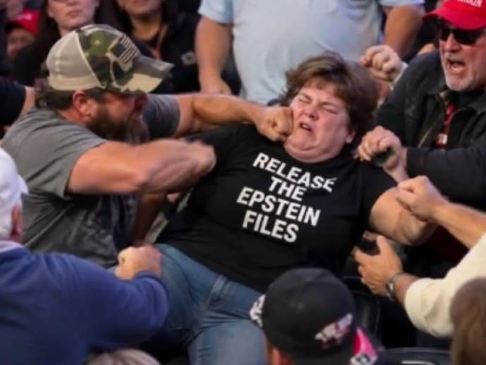 Just when we think there is a bottom, the United States sinks just a bit lower. It’s our brand nowadays.
That’s quite a left cross this thug delivered to this helpless female protestor.
It wasn’t too long ago that beating up women was taboo in America. My 11-year-old, sixth-grade son saw a male classmate of his badly bruise a girl by pushing her hard down to the ground–and proceeded to punch him in the mouth. A fellow father witnessed the scene and told me, “Your son’s fist was in that kid’s teeth within a fraction of a second.”
I had brought him up to avoid violence and achieve peaceful resolutions to conflicts, but I couldn’t fault him here.
What a disgusting bunch of turds we’ve become.
We’re starting to see intimations that stupidity like this is generated and posted by Russian data centers so as to appeal to MAGA idiots and favor the Republicans in the upcoming midterms.