

Ana Yang is Director of the Environment and Society Centre at Chatham House.
In recent months, Brazil has been portrayed by the media, activists and other commentators as either angel or devil.
On the one hand, the country that houses 60% of the Amazon rainforest and an enormous wealth of biodiversity is touted as a climate champion, progressive host of the next UN climate talks, the potential saviour of multilateralism.
On the other, the fifth-largest and seventh-most populous country in the world is demonised as hypocritical for pursuing oil exploration and production, investing in agriculture as a key export industry, and – most recently – building a new road on the outskirts of the northeastern city of Belem, which will host the COP30 UN climate summit in November.
As a Brazilian working and living in London, this is a deeply familiar and frustrating story of a developing nation that cannot be trusted to act in its own interests on climate change, nor in those of the world. It is a story that holds low- and middle-income countries to different standards from rich ones, and denies them the same rights and routes to development.
Oil production supports development
Recent criticism of Brazil’s decision to join the oil producers club, OPEC+, and of President Lula’s support for a new oil project typify this gleeful tendency to attack pragmatic leadership and deny political complexity. Such criticism is not only condescending, but counterproductive and short-sighted.
By joining OPEC+ Brazil – with only 4% of global oil production and less than 2% of global trade oil – gets to be part of the club of countries that dictates oil prices. Crude oil is Brazil’s main export commodity, with China its main customer. Joining OPEC+ is a geopolitical move by a middle power designed to support commercial interests and trade diversification.
The Amazon rainforest emerges as the new global oil frontier
Of course, rapid decarbonisation is imperative if the world is to limit global warming to 1.5 degrees Celsius above pre-industrial levels, as per the Paris Agreement. But just as other countries scramble to balance climate goals against other policy objectives, including the opportunities of investment in fossil fuels, or provision of infrastructure, so too should Brazil be able to determine its own path to net zero.
Brazil, a country at the forefront of the climate crisis, whose wealth is concentrated in its abundant natural resources, knows full well the importance of a managed fossil-fuel phase-out. The climate transition and decarbonisation is owned at the highest political level. The country already generates over 90% of its electricity from renewable sources, and has per capita emissions well below the global average.
But President Lula was also elected on a promise of addressing the deep inequality, poverty, hunger and other challenges affecting the Brazilian population. Oil production and exploration contribute to the national coffers and help pay for the national health service, anti-poverty initiatives, and climate adaptation actions.
If we genuinely want to support and encourage progress, we cannot expect Brazil to forgo its biggest commodity overnight. Instead we need an approach which acknowledges that policy-making is a game of balancing competing demands.
No one-size-fits-all path to decarbonisation
Indeed, the truth is that, with three quarters of its emissions coming from deforestation and agriculture, Brazil’s decarbonisation challenge lies less in oil production and more in land use. To effect an equitable and low-carbon transition, the country will need to move away from a deforestation-based agriculture production model, cut methane from cattle herds and reduce reliance on fertiliser.
Its farmers – from large to micro producers – will need to shift to integrated land management approaches that enable the protection of nature. And the country will need to continue to expand renewable energy capabilities while ensuring benefits are shared with local communities, and invested in climate adaptation.
“Not silver bullets”: COP30 CEO downplays impact of yearly climate summits
As for the international community, supporting Brazil as COP30 host means being inclusive rather than prescriptive. It means engaging the COP30 Presidency on areas of mutual interest and bringing the private sector along. It means offering solutions for climate and nature finance, focusing on the link with inequality, and aligning net-zero target dates with Lula’s own plans. It also means rich countries keeping their promises on climate finance.
There are so many expectations around Brazil’s presidency of COP30, some unrealistic. But there are clear opportunities to make progress on climate finance, on emissions reduction targets and on nature. With the right sort of engagement from the international community and the private sector, Brazil will be able to start delivering on its climate promises, setting an example for others to follow.
At its best, COP30 could kick off a decade of action, where the economic opportunities of the energy transition are turned into reality, and the polarised narrative of growth vs. climate action is consigned to history.
To realise this potential, Brazil needs constructive partners who understand that decarbonisation is not a one-size-fits all policy. In a context of heightened geopolitical instability and competing fiscal pressures, collaboration between coalitions of the willing, characterised by mutual respect, must be at the heart of climate action in 2025 and beyond.
The post Why accusations of Brazilian hypocrisy on climate are ill-judged appeared first on Climate Home News.
Why accusations of Brazilian hypocrisy on climate are ill-judged

Next week, diplomats from around the world will descend on Yerevan, Armenia, to negotiate a series of decisions under the UN Convention on Biological Diversity (CBD).
Between 19 and 30 October, 196 parties will gather to hammer out the precise wording of the dozens of legal texts that make up the decisions under the Conference of the Parties (COP) to the CBD.
This year’s summit is particularly significant, as it marks the halfway point between the agreement of the Kunming-Montreal Global Biodiversity Framework and the deadline for achieving its targets.
The CBD has found that countries are currently not on track to meet 22 out of the framework’s 23 targets.
During the fortnight, delegates will also be negotiating decisions relating to the two supplemental protocols to the CBD: the Cartagena Protocol, which covers biosafety; and the Nagoya Protocol, which covers access and benefit-sharing for the use of genetic resources.
(The Cartagena and Nagoya Protocols, which are each governed by a “meeting of the parties”, or “MOP”, have fewer parties than the CBD as a whole, with 173 and 141, respectively.)
Carbon Brief is tracking the progress of countries towards consensus on dozens of negotiating texts using the interactive table below.
The tracker includes texts from the COP, as well as the MOPs for the Cartagena and Nagoya protocols. It also includes draft decisions from the most recent subsidiary body meetings, as these form the starting point for the negotiations in Yerevan.
The CBD has three subsidiary bodies: the subsidiary body on scientific, technical and technological advice (SBSTTA), the subsidiary body on implementation (SBI) and the subsidiary body on article 8(j) and other provisions (SB8J).
SB8J focuses on issues related to the Indigenous peoples and local communities. It was established at COP16 in Cali, Colombia, in 2024.
The first two columns of the interactive tracker list the topic of each agenda item and the relevant body, with subsequent columns including dates, page counts and links to the original documents.
The table is searchable and can be sorted using the arrows in the header.
Areas of disagreement in UN draft texts are denoted by square brackets. Counting the brackets in a particular iteration of a text therefore gives a sense of how far parties are from reaching consensus.
The bracket column is colour-coded, with dark green indicating a low number of brackets and red indicating a high number of brackets remaining.
Texts can also present parties with choices using “options” or alternatives (“alt”), which are counted together in the sixth column of the table.
The key discussions in Yerevan will centre around two agenda items in particular. The first is the global review, which will assess progress towards the GBF and make recommendations for accelerating action.
The second is finance, which can be separated into two parts: resource mobilisation and the financial mechanism. On resource mobilisation, biodiverse global south countries are likely to push for an increased amount of international finance for conservation.
Disagreement over the creation of the financial mechanism led to the suspension of COP16 in Cali in October 2024, as parties failed to find agreement on the mobilisation of finance before the end of the summit.
Global south countries want the establishment of a separate financial mechanism under the control of the CBD; global north countries largely prefer to maintain the existing mechanism, which sits under the Global Environment Facility.
At the resumed session of COP16 in Rome in early 2025, countries agreed on a roadmap that would lead to the establishment of a permanent mechanism.
related
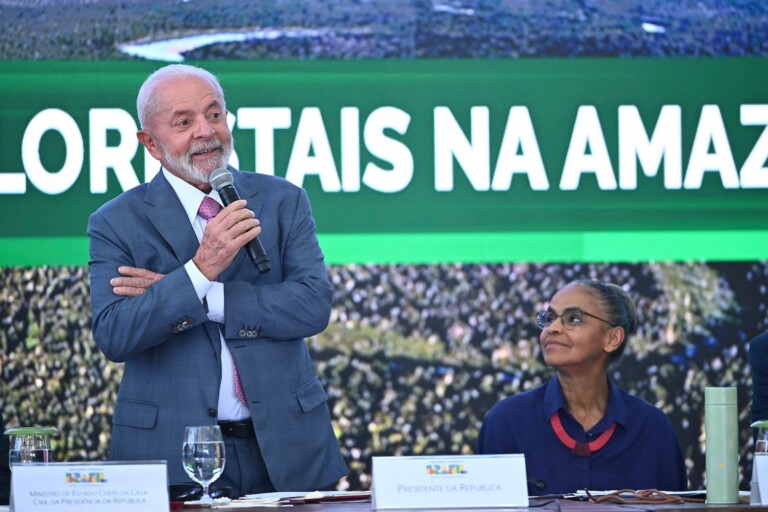
Analysis: Lula presidency saved at least 20,000km2 of Brazilian Amazon since 2022
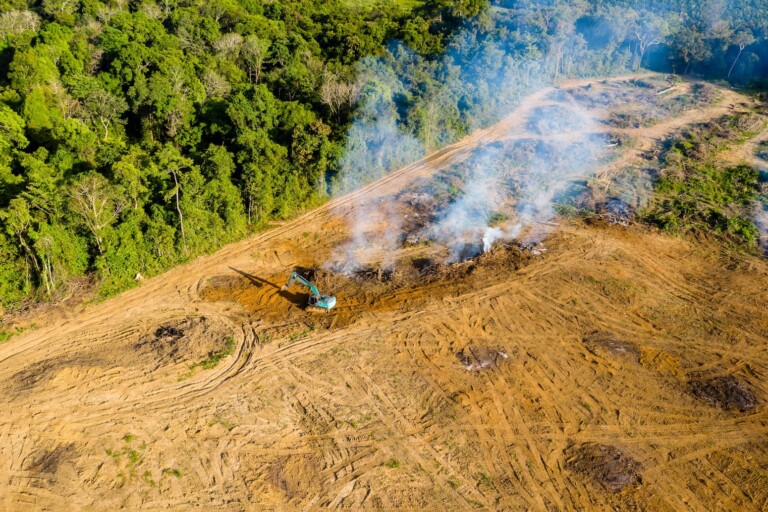
Why land-use emissions have fallen by a third this century – in six charts

Analysis: 84% of nations miss deadline to identify ‘nature-harming’ subsidies by 2025
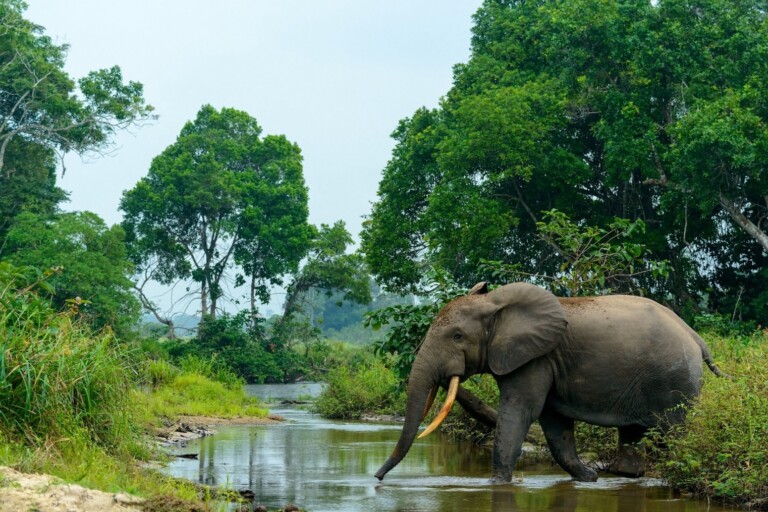
UK withdraws millions in funding from world’s second-largest rainforest in Congo
The post Interactive: Tracking negotiating texts at the COP17 biodiversity summit appeared first on Carbon Brief.
Interactive: Tracking negotiating texts at the COP17 biodiversity summit
A beacon of love
On an outer island of Fiji, two thousand nautical miles from Sydney, is a shining light of hope and resilience for our troubled world.
The island of Kioa is home to a Tuvaluan community who migrated from their atoll of Vaitupu in the late 1940s. It is a land of warm hearts, big smiles, and deep cultural roots; a place where the sound of a conch still summons the island together, where islanders paddle out to fish in carved outrigger canoes, and healthy happy children walk barefoot to school.
Here, culture is life. Kioans live sustainably through their traditional knowledge and practices. The island is alive with song, dance and the rhythms of a life tied to the tides, the winds, and the seasons.
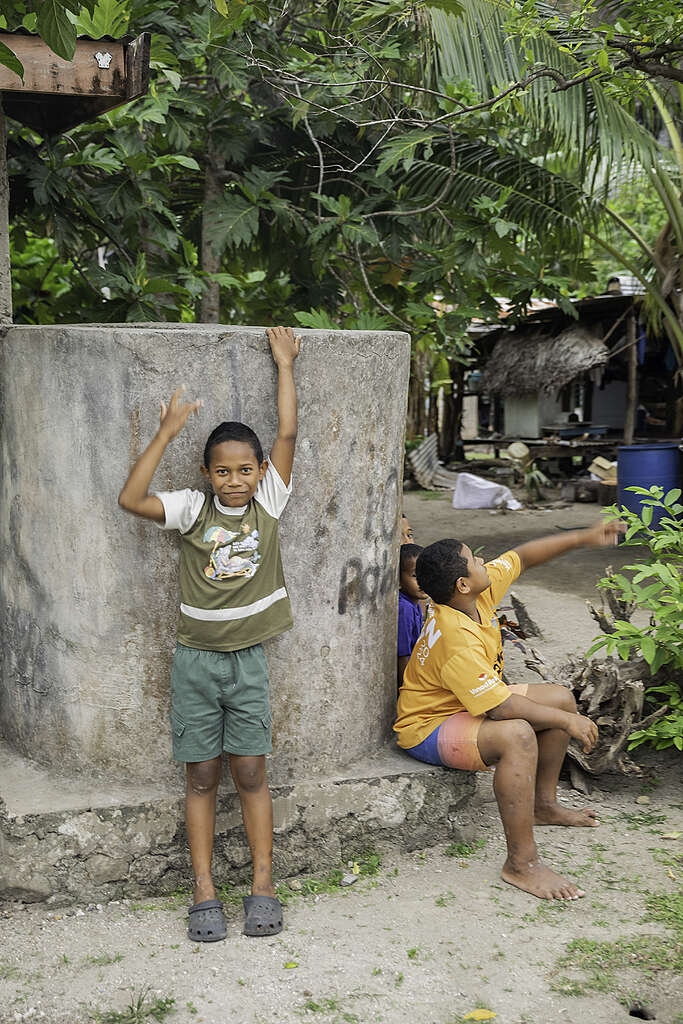
Facing the future
Greenpeace has been lucky to have a relationship with Kioa for a number of years now, and we are continually learning from this remarkable community.
Last week, as part of our Voyaging Oceania project, we returned to the island. Our purpose was twofold —- to carry messages from the island to leaders gathering in Nadi this week for the Pacific Pre-COP, and to support the Kioa community in their efforts to improve water security for the island.
Unlike Tuvalu itself, with its eight atolls, Kioa is a mountainous, forested and richly fertile island. It will remain habitable far into the future. Kioans did not initially migrate from Vaitupu due to climate change, but the move was prophetic. They now have a lifeboat.
However, even Kioa faces challenges on our rapidly warming planet, in particular when it comes to water. Climate change is shifting once reliable rainfall patterns. On top of this, the island is already feeling the effect of this year’s intensifying El Niño event, which for Fiji means reduced rainfall and prolonged dry spells.
Right now, fresh water has to be carefully rationed, and is only available for a few hours a day. During last week’s visit aboard our campaigning ship Oceania, Greenpeace was privileged to work with the Kioa community on a new solar-powered water distribution project for the island.
Designed and led by the island, the project involves using a solar pump to move water from a reliable source to a storage tank and then using gravity to distribute the water around the village.
It was a lesson in how local knowledge and ingenuity can be the backbone of today’s climate solutions. To build a dam around the source, the local community knew the exact spot where they could gather gravel at low tide to mix with the cement. They took only what was needed, knowing that all resources must be carefully conserved. Kioa has no roads and no machinery, and it was an all-of-island effort to carry the materials up to the project site, including many heavy bags of sand and rock.
Such projects truly bring to life the vision of a resilient, locally-led, fossil fuel free Pacific.
Gallery photos taken by Raeed Ali, Pacific Community Mobiliser at Greenpeace Australia Pacific