


Trafigura Group, a global leader in commodities trading, is making a bold bet on the recovery of the carbon credits market. Despite its recent struggles, the company views emerging regulatory frameworks and international agreements as pivotal for mainstreaming carbon credits in emissions accounting.
With new policies creating clearer pathways for businesses to meet climate targets, Trafigura expects a surge in demand for record growth.
The Carbon Market Makeover: Regulations Reshape Voluntary Credits
The voluntary carbon market (VCM) allows companies and individuals to buy carbon credits to offset emissions voluntarily, rather than as part of regulatory compliance. These credits fund projects that reduce or avoid greenhouse gas emissions, such as renewable energy, reforestation, or community-based initiatives.
Unlike mandatory carbon markets governed by laws, VCM operates through independent standards and registries, providing flexibility for participants. As the VCM evolves, efforts to enhance quality and credibility are shaping its role in global climate action.
Hannah Hauman, Trafigura’s global head of carbon trading, highlighted the impact of increased regulations in Europe, the US, and Asia. These frameworks are designed to help companies achieve net-zero emissions, reinforcing the importance of a robust carbon credits market.
- RELATED: EU Regulations Poised to Catalyze Global Carbon Market Convergence, Says Trafigura’s Hauman
At the recent COP29 summit in Baku, negotiators finalized rules under Articles 6.2 and 6.4 of the Paris Agreement, laying the groundwork for a global carbon trading system.
Article 6.4 introduces a UN-backed mechanism with standardized guidelines for carbon credit quality. It offers a more transparent and structured approach. In contrast, Article 6.2 allows countries to set their own criteria for carbon credit exchanges, which some critics fear could weaken the market.
Danny Cullenward, senior fellow at the Kleinman Center for Energy Policy, warned that Article 6.2 could create an “anything goes” market. This can potentially undermine both Article 6.4 and broader climate efforts.
Industry Challenges and Corporate Retreats
The voluntary carbon market has faced criticism over greenwashing and the issuance of low-quality credits. In 2023, the market’s value dropped by 23% as shown in the graph below. This declining trend started in 2021 when critics began to shake the market. Moreover, key players like HSBC Holdings, Shell Plc, Delta Air Lines, Google, and EasyJet have scaled back their involvement.

Just recently, HSBC abandoned plans to build a carbon credits trading desk, while Shell began selling off a majority stake in its nature-based credit portfolio.
Despite these challenges, regulatory advancements have led to optimism. Hauman remarked that countries now have a “regulatory line of sight” to guide them through 2030, providing clarity for companies on expectations, investment strategies, and emissions reductions.
According to BloombergNEF’s data, Europe is leading the UN-backed carbon credit investment while Ghana gets the most funding for Article 6 projects.

Trafigura’s Sustainability Strategy: Restoring Forests, Reviving Markets
Trafigura is capitalizing on this evolving landscape. As the world’s largest trader of carbon-removal credits, the company is expanding its portfolio to meet rising demand.
In November 2024, Trafigura announced a $500 million investment in a carbon credits project to restore Africa’s Miombo woodlands. The project aligns with Article 6.4 guidelines, emphasizing quality and environmental impact.
In the same month, the giant commodity trader, alongside Temasek-owned GenZero, has pledged $100 million to Colombia’s largest nature-based carbon removal project. The project seeks to restore degraded land in the South American nation while generating carbon credits.
- SEE MORE: Colombia’s Largest Carbon Project Secures $100M Backing from Temasek-Owned GenZero and Trafigura
Hauman noted that carbon credits are evolving from experimental tools to investment-grade assets, thanks to regulatory shifts. This transformation is expected to enable companies to incorporate credits into their long-term sustainability strategies confidently.
The company itself is pursuing ambitious carbon reduction goals, aiming to:
- cut Scope 1 and 2 emissions by 50% by 2032, and
- achieve net zero by 2050.
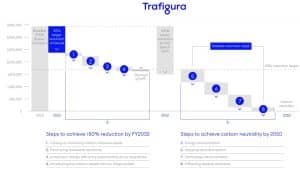
In addition to reducing its direct emissions, Trafigura is focused on lowering Scope 3 emissions intensity. This includes the impact of its traded products. To accelerate its energy transition, the company does these measures:
- Invest heavily in renewable energy, including solar and wind projects.
- Develop low-carbon fuels like green hydrogen and ammonia.
- Launched a $2 billion fund in 2023 to support energy transition projects.
The fund is also for advancing its emissions trading activities, helping clients offset their carbon footprints with high-quality carbon credits.
A New Era of Investment-Grade Carbon Assets
While the carbon market faces hurdles such as inconsistent legal definitions and price volatility, companies like Trafigura, Cummins, Bosch, Daimler, Toyota, and Volvo see potential for growth. Regulators across regions recognize the role of carbon credits, especially removal-based units, in helping businesses achieve net-zero emissions by mid-century.
COP29 also marked a turning point for reforestation and afforestation projects under the UN’s Clean Development Mechanism (CDM). These projects, previously stalled, have been transferred to the revamped Article 6.4 framework, benefiting countries like India and Colombia, which host 27 eligible projects.
The carbon market is moving away from being policy-driven to becoming a dynamic investment arena. Trafigura’s strategic partnerships and investments position it to lead this transition. The company aims to drive both market growth and meaningful climate action, by addressing regulatory requirements and maintaining high-quality standards.
As the industry adapts to new rules, Trafigura’s efforts show the shift toward a more structured and credible carbon credits market. It underscores the company’s readiness to thrive in the evolving carbon market landscape.
The post Trafigura Bets Big, $600M, on Carbon Credits Market Revival appeared first on Carbon Credits.

EU carbon credit claims changed on 27 September 2026, the day the Directive (EU) 2024/825 began to apply across the European Union. The change is narrow. It changes how a company can talk about the credits it buys. A product can no longer be called neutral on the strength of compensation alone; however, every specific, evidenced statement about what a company measured, reduced, and funded stays fully available.

The post Promoting Improved Cooking Practices in Nigeria appeared first on Terrapass.


Ming Yang Eyes 33 MW Turbine, Greenvolt Delays FID
‘A strong start’: WA’s transition to renewable energy powerhouse aided by Premier’s announcement
WA EPA warned Woodside of ‘serious, significant and irreversible’ harms to Scott Reef from gas plans, new documents reveal
-
Climate Change1 year ago
Guest post: Why China is still building new coal – and when it might stop
-

 Greenhouse Gases2 years ago
嘉宾来稿:满足中国增长的用电需求 光伏加储能“比新建煤电更实惠”
-
Greenhouse Gases1 year ago
Guest post: Why China is still building new coal – and when it might stop
-

 Climate Change2 years ago
嘉宾来稿:满足中国增长的用电需求 光伏加储能“比新建煤电更实惠”
-

 Renewable Energy1 year ago
Sending Progressive Philanthropist George Soros to Prison?
-
Climate Change2 years ago
Bill Discounting Climate Change in Florida’s Energy Policy Awaits DeSantis’ Approval
-
Greenhouse Gases1 year ago
嘉宾来稿:探究火山喷发如何影响气候预测
-

 Climate Change2 years ago
Analysis: China’s CO2 falls 1% in Q2 2024 in first quarterly drop since Covid-19