When José Antonio Kast took office as Chile’s new president in March, one of his first moves was to put the brakes on plans to expand two protected marine parks – raising doubts about the country’s high-profile bid to host the headquarters of the High Seas Treaty.
But during the UN General Assembly last month, the right-wing leader reaffirmed his leftist predecessor’s ambition for Chile to host the landmark global pact, which came into effect in January and provides a legal framework to protect the waters of the high seas beyond national jurisdiction that cover about two-thirds of the world’s oceans.
Hailing the country’s “maritime vocation”, Kast’s government said the bid to host the treaty’s secretariat in the port city of Valparaíso was state policy and testament to its commitment to multilateralism.
“For the government of Chile, it is of high interest to achieve this recognition, and we will carry out all the efforts to obtain the necessary support,” Foreign Minister Francisco Pérez Mackenna was quoted as saying by local media.
-
At pre-COP, UN climate chief warns of heat threat to mothers and babies
The spotlight on maternal health came on the first day of the pre-COP31 meeting in Fiji, where Pacific concerns are set to top the agenda as ministers gather for talks -
Big banks behind “net zero” alliance continued lending to coal firms
New data shows coal finance has stayed steady at the global level since 2022, as international efforts to cut the ties between lending and emissions faded -
Jordan’s mega-plan for water security risks locking in fossil gas demand
A giant desalination plant will help Jordan confront water scarcity, but solar power’s limited role in the energy-hungry project has raised questions about how climate adaptation finance is being spent


Tough competition from Chinese, Belgian bids
But to garner the votes it needs, Chile must fend off competing bids by Belgium – which has proposed its well-connected capital, Brussels – and China, whose well-funded bid includes the provision of free premises in the coastal city of Xiamen and five years of free utility costs.
Parties to the treaty, formally called the Agreement on Marine Biological Diversity of Areas Beyond National Jurisdiction (BBNJ), will choose the headquarters at their first summit (COP1), in New York from January 11 to January 22, 2027. They will seek consensus, falling back on a two-thirds majority in successive secret ballots.
Chile has offered to provide a restored waterside warehouse “at its own expense” as office space, pitching itself to developing countries as a Global South alternative to Europe-centred Brussels. Among richer countries, it is promoting its democratic credentials and greater transparency as an alternative to China.
Rolling back environmental safeguards at home?
While the South American country remains the top pick among environmental campaigners and other civil society groups, critics of Kast’s government say recent policy moves may make it harder for the country to garner the support it needs.
On March 12, the day after Kast took office, the Environment Ministry withdrew 43 decrees awaiting legal approval, including a push to expand the Mar de Juan Fernández and Nazca-Desventuradas marine parks – vast protected areas in Chile’s Pacific Ocean waters. Both remain under review, the ministry told Climate Home News.
The decrees also included an emission standard for coal power plants and regulations for Chile’s new biodiversity and protected areas service.
A month after holding up the decrees, Kast questioned aspects of Chile’s urban wetlands protection law, suggesting it was sometimes an unjustified obstacle to much-needed housing development, and his administration has also sought to ease the rules on salmon farming in the world’s second-largest producer.
In August, the Constitutional Court struck down the salmon farming reform after a challenge by opposition lawmakers and warnings from green groups including Greenpeace, which said it could help farms relocate into protected areas such as the Kawésqar National Reserve.
Valparaíso mayor Camila Nieto, from former leftist President Gabriel Boric’s party, backs the bid to host the High Seas Treaty, but said she hoped “the government’s support also translates into public policies consistent with the goals of protecting and conserving the oceans”.
“The decisions a country makes on environmental matters can influence international perceptions of its commitment to protecting the oceans. That is something we cannot ignore,” Nieto told Climate Home News.

China’s bid stirs concerns over data access, fishing
Chile’s past record on marine protection – it has protected 43% of its jurisdictional waters – could yet give it an edge.
“Chile deserves it for its conservation record as a state. For more than 15 years Chile has been following this path,” Liesbeth van der Meer, executive director at conservation group Oceana in Chile, told Climate Home News.
Concerns in some quarters about the rival bid by China – for example, over a potential conflict of interest due to the vast Chinese fishing industry – may also weigh in Chile’s favour, experts say.
Chinese-flagged vessels did about 30% of detected high seas fishing between 2022 and 2024, according to an Oceana analysis of Global Fishing Watch data. China also sponsors five of the International Seabed Authority’s 31 deep-sea mining exploration contracts, more than any other country.
The secretariat would host sensitive marine data, making transparency paramount, experts say.
China says hosting the secretariat in Xiamen would help make the treaty more globally representative, fostering cooperation between rich and developing countries and aiding equitable access to marine science and technology.
Wang Yi, China’s minister of foreign affairs, said in a statement that the country has “all along championed true multilateralism” and “firmly defended” UN institutions. Given Xiamen’s $38-billion ocean industry, the city lives up to the treaty’s “significance and promising future”, he added.
Meanwhile, Chile is proposing the treaty’s first high seas marine protected area for the Salas y Gómez and Nazca ridges, a chain of more than 110 seamounts stretching about 4,000 km from off Peru to Rapa Nui (Easter Island) that is rich in endemic fish and other marine species.
The ridges are “a true oasis of productivity”, said Carlos Gaymer, director of the Centre for Ecology and Sustainable Management of Oceanic Islands at Universidad Católica del Norte and co-author of a 2021 scientific review of the area.

The water is so clear that phytoplankton thrive around 200 metres down, feeding zooplankton, small fish and, up the chain, sharks and seabirds. Whales, turtles and sharks use the ridges as “a real highway” across the Pacific, Gaymer said. Parts of the Nazca ridge are likely nursery grounds for jack mackerel and swordfish.
Chile has already asked the body that regulates the industry in the area – the South Pacific Regional Fisheries Management Organisation (SPRFMO) – to close the ridges to all fishing vessels. According to Chilean data, more than 80% of fishing in the area involves Chinese vessels.
Meeting on the Chilean request in early September, SPRFMO’s scientific committee agreed only to recommend closing the area to bottom fishing. SPRFMO’s commission will take the final decision at its next meeting, in early 2027.
For Gaymer, Chile’s push to close the area to fishing should be seen as a “starting point” for the treaty proposal.
“Every time there’s a new expedition, species new to science appear,” Gaymer said. “If you don’t protect areas like these … those species simply disappear from the planet.”
The post Race to host High Seas Treaty HQ heats up as Chile reaffirms bid appeared first on Climate Home News.
Race to host High Seas Treaty HQ heats up as Chile reaffirms bid

Dozens of countries – from big emerging economies to the world’s poorest nations – are calling for the UN’s new carbon market to reassess climate integrity rules, in a push that campaigners and researchers have blamed on industry lobbying.
At COP31 talks on the Paris Agreement Crediting Mechanism (PACM) this weekend, the Like-Minded Developing Countries – a group that includes Saudi Arabia, India and China – the Least Developed Countries (LDCs) and landlocked developing countries raised concerns about the requirements project developers must meet, according to sources familiar with the closed-door discussions.
They warned about the cumulative weight of those requirements developed under Article 6 of the Paris Agreement as barriers to implementation. Several countries, including Singapore and some Latin American states, said rules must keep projects financially viable, while South Korea asked for proportionate requirements, the sources said.
Their demands closely track arguments from carbon market industry groups, which claim PACM’s conservative approach to counting emission reductions is so strict that few projects will ever come to fruition.
Industry and NGOs lobby to weaken UN carbon credit rules in “coordinated” push
In a letter published ahead of COP31, the lobby groups asked governments to “raise implementation concerns” and to request that the Supervisory Body – the UN body that oversees the market – assess the “combined impact” of its rules on the feasibility of projects.
The letter was signed by the International Emissions Trading Association (IETA), a business group whose members include fossil fuel giants Shell, BP, Saudi Aramco and Chevron, along with the Project Developer Forum and the Wildlife Conservation Society, which develops forest conservation programmes.
Draft text reflects industry demands
Those demands are reflected in the first draft of the COP31 decision on the mechanism, published late on Saturday. To guard against over-crediting, PACM’s rules deliberately err on the side of issuing fewer credits when emissions cuts from projects are uncertain.
The document asks the Supervisory Body to look at how these cautious assumptions add up across its rules and what that means for the number of credits, project costs and prices. The aim, it says, is to avoid “excessive compounding of conservative adjustments”.
Other parts of the draft tell the body not to make its rules too cautious or too rigid. That includes efforts to guard against the risk that carbon captured by a project is later released. Most of these passages add that environmental integrity must be maintained.
Risk of another ‘failure’
“Weakening the rules is not climate ambition – it is a license to pollute,” said Erika Lennon, a senior attorney at the Center for International Environmental Law (CIEL). “As we are on the brink of permanently breaching 1.5C, we cannot afford to turn the carbon market into another loophole for polluters,” she added.
Axel Michaelowa, research director at Perspectives Climate Research, said that if attempts to weaken the rules succeed, it could lead to another failure of an international carbon market. Demand for credits rests on trust, he said, and the slightest doubt over integrity erodes buyers’ willingness to pay.
Calls to revise requirements “must be supported by scientific evidence, not unsupported claims of under-crediting – especially when these assumptions come from private actors whose revenues depend on the volume of transacted credits rather than real mitigation outcomes,” Michaelowa said.
The EU, Switzerland and Senegal are among a handful of countries pushing back against demands to re-assess the market rules, according to the sources, and are opposing requests to weigh up the profitability of projects or to lower standards.

Cookstove credits in focus
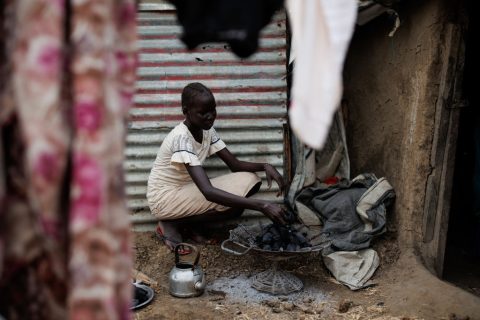
At the centre of the fight are new methodologies for projects that aim to cut emissions by distributing cleaner cookstoves – one of the carbon market’s most popular credit types and also one of its most criticised for overstating climate benefits. A 2024 study in Nature Sustainability found cookstove projects had been over-credited roughly tenfold.
Under the rules adopted by the Supervisory Body in October, cookstove project developers are required to set aside part of their credits in a buffer pool, in case the forests they claim to save later burn or are cleared.
The body rejected an exemption from this requirement sought by developers, corporate buyers, some conservation groups and the UN Environment Programme, in what critics called a coordinated lobbying campaign, as reported by Climate Home News.
Industry groups and some countries have seized on the cookstove methodologies to warn against excessively stringent requirements, which they say undercount emission reductions and deter developers. The LDCs told negotiators that developers had found some approved methodologies, including on clean cooking, difficult to apply.
Industry group calls for revisions
Industry representatives attacked the Supervisory Body’s approach in interventions that sources in the room described as very aggressive.
In a subsequent Linkedin post, IETA’s Andrea Bonzanni accused the regulator of following an unscientific approach that would deliver systematic under-crediting. He called on environmental integrity standards to be amended and rulebooks to be revised.
The mechanism “has had a false start”, he said, but countries in Antalya have a chance to agree on clear guidance that puts it back on track. “Unless the mechanism becomes workable across countries and activity types, its impact on the atmosphere risks remaining marginal,” he added.
IETA did not respond to a request for comment.
-
UN carbon market forces cookstove projects to protect against forest loss
Despite lobbying for an exemption, the UN regulator has for the first time made cookstove projects cover the risk that the trees they save are later destroyed -
Most “zombie credits” locked out of new UN carbon market after China and India snub
Fears of a flood of environmentally-dubious carbon credits have faded, with most old projects not able to transition to new UN market
Campaigners and researchers have pushed back on the claims. Arguing there is currently no evidence of under-crediting in the UN market, they stressed that more credits do not necessarily mean more emissions reductions if the rules underpinning them are not grounded on science.
“Having a Paris Agreement carbon crediting mechanism that cheats the atmosphere completely misses the point,” said Isa Mulder, a policy expert at Carbon Market Watch. “Countries should not allow Article 6 to become just another dangerous distraction from real, urgent climate action.”
The draft of the rules is an early version and will be negotiated during the COP31 summit’s final days. Under the Paris Agreement rules, the Supervisory Body must follow guidance that governments give through COP decisions.
The post Countries take up industry push to loosen UN carbon market rules at COP31 appeared first on Climate Home News.
Countries take up industry push to loosen UN carbon market rules at COP31
Mohamed Adow is director of Power Shift Africa.
International Energy Agency chief Fatih Birol celebrates the electricity demands of AI and electric cars, but the revolution must be about more than luxuries for the rich. It must bring clean, affordable power to the hundreds of millions still living without it.
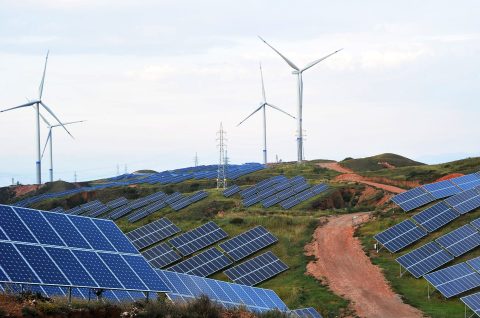
The world is entering the age of electrification. But while wealthy countries focus on powering AI data centres, electric cars and other energy-hungry technologies, hundreds of millions of people across Africa and the developing world still lack access to electricity.
The real promise of the electricity revolution is not simply meeting the growing demands of those who already have plenty, but bringing clean, affordable power to those who have none.
So the decision by Türkiye and Australia to make electrification a flagship initiative at COP31 should be welcomed. Their proposed 35 by 35 goal, increasing electricity’s share of global final energy consumption to 35 per cent by 2035, could accelerate this transformation.
But who is this revolution actually for? Birol has celebrated the arrival of the electricity age, identifying AI data centres, electric transport and air conditioning as three major drivers of growing electricity demand.
-
Can AI data centres help power underserved African communities?
Three African countries join a pledge for sustainable AI at COP31, but the jury is still out on whether the energy-hungry industry can bring benefits for all -