Carbon credits are becoming a major part of how the world fights climate change. A carbon credit represents the removal or reduction of one ton of carbon dioxide or equivalent greenhouse gas. Companies use these credits to meet emissions targets or to help reach climate goals.
By 2026, analysts predict that carbon markets will be growing quickly. More firms are integrating carbon credit strategies into their business models. Some generate credits directly. Others build markets or invest in credits. This article highlights the top public companies that stand out in the carbon credit space.
Carbon Credit Market: Key Facts and Stats
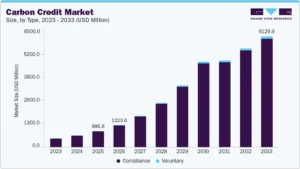
The global carbon credit market is already large, and it is expected to grow quickly in the coming years. In 2025, the total carbon credit market was estimated at around $887 billion.
By 2026, it is projected to reach about $1.22 trillion, driven by stricter rules and corporate demand for offsets. This growth reflects rising demand from companies and governments that want to meet climate targets and comply with emissions rules.
The market includes credits created for reducing emissions and credits created for removing carbon from the atmosphere. Markets fall into two main types: compliance markets and voluntary markets.
- In compliance markets, companies buy credits to meet legal limits.
- In voluntary markets, firms purchase credits to enhance their sustainability and climate goals, but are not required to do so.
Compliance markets currently account for most of the market’s size. Voluntary markets are much smaller, amounting to about ~$2 billion only.
Many countries have set up carbon pricing systems or cap‑and‑trade programs to limit greenhouse gases. Over 70 countries now use some form of carbon pricing or carbon trading, which helps drive demand and creates a large pool of buyers and sellers.
These statistics show that carbon credits are no longer a niche environmental tool. They have become a major global market linked to climate policy and corporate emission reduction strategies.
Here are the top carbon credit innovators to put on your radar this 2026 and even beyond.
Tesla: Leading Carbon Credit Revenue
Tesla is known for electric vehicles, but it is also a major player in carbon credit markets. The company earns money by selling regulatory carbon credits to other automakers. These credits help other companies comply with emissions rules in the U.S., Europe, and China.
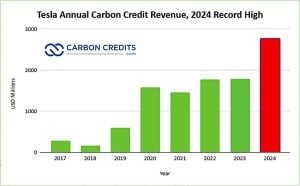
In 2024, Tesla earned about $2.76 billion from carbon credit sales, up from $1.79 billion in 2023. This marked a 54 % increase in one year and showed strong demand for emissions credits from legacy automakers.
Since 2017, Tesla has earned more than $10.4 billion from selling carbon credits. That revenue stream is crucial for the company’s finances. It matters more as competition in the EV market grows and profit margins shrink.
Tesla’s credits come from producing zero‑emission vehicles that exceed regulatory targets. Companies that cannot meet those targets buy the credits. This dynamic makes Tesla both a leader in EVs and an innovator in carbon compliance markets.
Carbon Streaming Corporation: A New Model for Credits
Carbon Streaming Corporation is a different kind of public company focused on future carbon credits. Rather than building carbon projects itself, it finances project developers around the world and receives rights to future carbon credits in return.
This model works like a royalty or streaming deal. Carbon Streaming pays upfront to help projects get built. In exchange, it receives credits over time. This gives investors exposure to carbon credits without the complexities of running a project.
Carbon Streaming is listed on Canadian and U.S. markets under tickers such as NETZ and OFSTF. As carbon markets grow, the model could expand. More credits might come from forest protection, clean energy, or carbon capture programs. These would then boost its balance sheet.

This approach means Carbon Streaming can benefit from rising carbon prices and volumes in compliance and voluntary markets. Investors looking for direct exposure to carbon credit supply may find its growth model interesting.
Intercontinental Exchange: Exchange Infrastructure for Carbon Markets
Intercontinental Exchange (ICE) is a financial markets company known for running major exchanges. ICE supports carbon markets by providing the infrastructure for trading carbon allowances and credits. This includes platforms for compliance markets like the European Union Emissions Trading System (EU ETS) and other regional cap‑and‑trade programs.
Carbon credits and emissions allowances traded on ICE help companies meet regulated limits. By offering transparent pricing and reliable settlement, ICE reduces barriers for institutional participation. As carbon pricing systems expand globally, the need for strong trading infrastructure grows, too.
ICE is not a carbon credit producer. Instead, it is a market facilitator. Its platforms help buyers and sellers discover prices and exchange credits efficiently. This makes carbon markets more liquid and accessible for corporations and financial investors.

For investors, ICE provides exposure to the growth of carbon markets without tying performance to any single project or credit type.
Xpansiv: Leading Carbon and Environmental Commodities Exchange
Xpansiv is a technology company that operates one of the world’s largest carbon credit exchanges for voluntary environmental commodities. Its platform, the Carbon Business Line (CBL), is used by companies trading voluntary carbon credits and other climate‑linked assets.
Xpansiv’s system has handled more than 250 million metric tons of carbon dioxide equivalent (CO₂e) transactions since 2020. In 2025, weekly trading volumes often exceeded 300,000 tons, with most credits coming from nature‑based projects like forestry and land restoration.
Xpansiv has also expanded its listings to include removal‑only credits and CORSIA‑compliant aviation credits. Its new partnership with the Korea Exchange (KRX) seeks to create a carbon credit trading market in Asia. This will connect KRX to Xpansiv’s global platform. This could increase liquidity and price discovery in new regions.
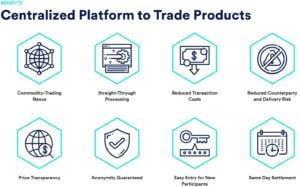
Xpansiv offers investors a key role in carbon credits. It provides market infrastructure, which is important as trading volume and price visibility increase with rising demand.
Drax Group: From Power Generation to Carbon Removals
Drax Group plc is a British power generation company listed on the London Stock Exchange. In recent years, Drax has expanded into carbon removal projects, including bioenergy with carbon capture and storage (BECCS).
Drax has a carbon removals deal. They will provide 25,000 metric tons of CO2 removals using BECCS credits. The price starts at $350 per ton. These credits represent permanent carbon storage rather than simple emissions reductions.
Drax’s core power business has used biomass fuel. Now, it is shifting focus to carbon removals. This change places Drax in markets where high-quality credits are in demand. As markets shift toward removal‑based credits, companies with validated removal projects may gain a strategic edge.
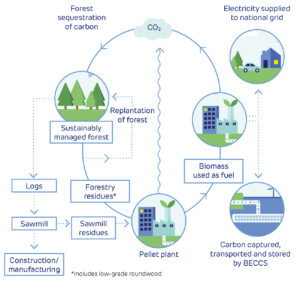
Drax gives investors a chance to tap into energy generation and new carbon removal credits. This area could grow as climate goals become more ambitious.
Why These Carbon Credit Innovators Matter
These companies represent different parts of the carbon credit ecosystem:
- Carbon revenue streams: Tesla shows how compliance markets can create meaningful income from emissions‑reducing products.
- Credit financing models: Carbon Streaming provides a way to invest in future carbon credits via streaming agreements.
- Market infrastructure: ICE and Xpansiv build the platforms that make carbon trading efficient and transparent.
- Carbon removal exposure: Drax participates in projects that generate high‑quality removal credits, helping meet tougher climate targets.
Key Carbon Market Trends to Track in 2026 and Beyond
Carbon markets will likely keep growing. This is due to stricter regulations and tougher corporate climate goals.
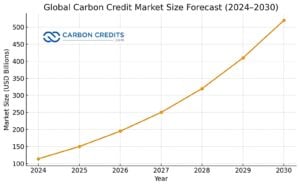
The chart above shows a steady and accelerating rise in the global carbon credit market from 2024 to 2030. Market size grows from just over $110 billion in 2024 to more than $520 billion by 2030, which signals strong and sustained demand.
The upward curve becomes steeper after 2026, suggesting faster growth as climate rules tighten and more countries expand carbon pricing systems. It also reflects rising corporate demand as companies use credits to meet emissions targets.
Overall, the chart supports the view that carbon credits are shifting from a supporting role to a core market tied closely to regulation, compliance, and long-term climate strategy.
Here are key trends that could shape carbon credit investing:
- Expansion of compliance markets: More regions are adopting emissions trading systems and carbon pricing.
- Quality of credits: High‑integrity removal credits are gaining attention from corporations and regulators.
- Voluntary market growth: Companies with net‑zero pledges will continue purchasing credits, especially removal‑based ones.
- Market access: Easier trading through exchanges and platforms will help investors participate.
Carbon credit markets are becoming part of corporate strategy and financial planning. The five companies reflect both business models and market mechanisms that matter for sustainability‑focused investors in 2026 and beyond.
The post Top Carbon Credit Companies to Watch in 2026 appeared first on Carbon Credits.
Carbon Footprint
Rocking the Carbon Clock: ERW Could Cut 350 Million Tonnes of CO₂ Annually by 2050
- Enhanced Rock Weathering (ERW) is gaining attention as a scalable carbon removal solution. A recent study suggests the method could remove up to 350 million tonnes of CO₂ per year by 2050 if widely deployed.
What is Enhanced Rock Weathering?
Enhanced Rock Weathering is a carbon removal method that speeds up a natural geological process. Rocks such as basalt and silicates naturally react with carbon dioxide (CO₂) over thousands of years.
ERW involves crushing these rocks into fine powder and spreading them on the soil. The larger surface area makes the rocks react faster with CO₂ in the air and soil. Scientists believe this could permanently capture and store carbon as stable minerals or ocean carbon pools.
This carbon removal has emerged as a promising part of the climate toolkit to help lower atmospheric CO₂ levels.
How ERW Removes Carbon
Natural rock weathering already captures about 1.1 billion tonnes of CO₂ per year from the atmosphere. ERW accelerates this process by increasing the rock’s contact with CO₂.
When rainwater dissolves CO₂, it forms carbonic acid, which reacts with silicate rocks. This reaction locks carbon into bicarbonate ions. Some of the ions wash into rivers and reach the ocean, where they can stay for thousands of years. Because the carbon is stored this way, it is unlikely to return to the atmosphere soon.
In agriculture, ground rocks applied to the soil enhance this process. The rocks react with CO₂ around plant roots and soil microbes. Some companies source rock dust from quarries. They use industrial byproducts instead of new mining.
350 Million Tonnes: The Mid-Century Potential
New research shows that ERW could make a major contribution to climate goals by mid-century. Scaling ERW on suitable agricultural land and other surfaces worldwide could remove an estimated 350 million tonnes of CO₂ per year by 2050. This would come from fast-tracking the natural weathering process across large areas of cropland.
Global modelling studies also suggest even bigger potential. ERW could cut hundreds of millions to billions of tonnes of CO₂ each year by 2050. This depends on widespread use, strong policy support, and proper infrastructure.
Some studies focused on the United States have reported similar potential. Research shows that ERW in U.S. agriculture could cut CO₂ by 160 to 300 million tonnes each year by 2050. If expanded, this number could reach 250 to 490 million tonnes by 2070.

This 350 million-tonne figure sits within a broader picture of potential CDR capacity. Some analyses suggest that ERW could remove billions of tonnes every year. This would occur if the method is used widely across continents with big agricultural sectors.
Why ERW Stands Out in the Carbon Removal Race
One key reason ERW attracts attention is its durability. Carbon captured through rock weathering is stored in stable forms that can last thousands to millions of years. This permanence can make ERW more durable than some nature-based solutions that store carbon only for the lifetime of trees or plants.
ERW also builds on existing farming and mining systems. The technology uses known equipment and methods for crushing and spreading rock. This means ERW is likely easier to use widely than complex methods like direct air capture (DAC). DAC needs big new facilities and a lot of energy.
Enhanced rock weathering has additional benefits beyond carbon capture. When applied to agricultural soils, silicate rock dust can improve soil nutrition and structure. This can enhance crop yields and reduce the need for some fertilizers. Some research has even shown that certain enhanced weathering practices can improve crop performance while removing CO₂.
ERW Carbon Removal Credits Snapshot
ERW has begun to enter this market with real, verified credits. In early 2025, InPlanet and Isometric issued the first independently verified ERW carbon removal credits. These credits show long-lasting CO₂ removal. They are certified with strict monitoring, reporting, and verification (MRV) protocols.
While ERW still makes up a very small share of total credits traded in 2025, its emergence marks a milestone for carbon removal markets. Early tracking shows that nearly one million ERW credits have been sold, and the total investment in ERW projects is about US$121 million. This reflects increasing interest from companies and offset buyers.

ERW carbon credit prices now range from $200–$500 per tonne. This spread comes from differences in project size, location, and how mature each method is.
Early ERW credits add variety to the carbon market. They focus on carbon removal, which is attracting buyers like Google and Microsoft. They want long-term, verified removal credits along with avoidance credits.
- SEE MORE: Microsoft Backs InPlanet’s Enhanced Rock Weathering Push to Remove 28,500 Tons of CO₂ in Brazil

Scaling Up: Verification, Logistics, and Adoption Hurdles
Despite its promise, ERW faces several challenges before it can deliver on its full potential by 2050.
- Monitoring and verification: Measuring exactly how much CO₂ ERW removes is complex. The process occurs over time and involves soil chemistry, water movement, and geological cycles. Accurate monitoring, reporting, and verification (MRV) systems are needed to ensure that carbon removal amounts are real and not overstated.
- Deployment logistics: Scaling ERW globally would require vast amounts of crushed rock. This means expanded quarrying, crushing, transport, and spreading infrastructure. These steps must be done efficiently to avoid high emissions from transport and machinery.
- Agronomic adoption: Farmers and landowners would need incentives and support to adopt ERW. Also, the use of rock dust must align with soil types, crops, and local farming practices. Long-term studies are ongoing to determine the best application rates and conditions for different regions.
- Environmental questions: While ERW can benefit soil fertility, some uncertainties remain about long-term ecosystem impacts and potential side effects. Careful planning and studies are needed before very large-scale deployments can occur.
A Key Piece in the Net-Zero Puzzle
Climate models show that reducing emissions alone won’t be enough to meet the Paris Agreement’s goals. Many experts argue that carbon dioxide removal (CDR) must play a role in keeping the temperature rise below 1.5°C. ERW is one of several CDR methods being considered.
Other CDR approaches include direct air capture (DAC) and bioenergy with carbon capture and storage (BECCS). DAC uses machines to pull CO₂ directly from the air, but it is still expensive and energy-intensive.
BECCS captures CO₂ from biomass energy but depends on large dedicated biomass supplies. ERW, by contrast, can leverage natural soil processes and agricultural lands for scalable removal.
Policy makers and climate planners see enhanced rock weathering as one piece of a broader carbon removal portfolio. ERW, along with strong emissions cuts, nature-based solutions like reforestation, and new technologies, can help balance hard-to-abate emissions in sectors such as industry and agriculture.
To reach 350 million tonnes of CO₂ removal per year by 2050, ERW must scale rapidly. This will require stronger global commitment from governments, research institutions, and private investors.
Moreover, investment in field trials and pilot programs will help refine practices and decrease uncertainty. As more data becomes available, ERW techniques can be optimized for different soils, climates, and crop systems.
Public policy support will also be key. Carbon markets, incentives, and crediting systems that recognize verified removal could help fund large-scale ERW deployment. If aligned with broader climate goals, ERW could become a major contributor to meeting global net-zero targets.
The post Rocking the Carbon Clock: ERW Could Cut 350 Million Tonnes of CO₂ Annually by 2050 appeared first on Carbon Credits.
Carbon Footprint
Heathrow Boosts 2026 Sustainable Aviation Fuel (SAF) Incentive 2% Above UK Government Mandate
Heathrow Airport is raising its climate ambition once again. In 2026, the airport plans to use Sustainable Aviation Fuel (SAF) at levels 2% higher than the UK government’s mandate. This means total SAF use at Heathrow could reach 5.6% of all jet fuel next year.
The UK requires 3.6% SAF blending in 2026. Heathrow’s extra incentive pushes that figure higher, which could translate into around 350,000 tonnes of SAF being used at the airport. About 124,000 tonnes of that would come directly from Heathrow’s own incentive scheme.
To support this effort, Heathrow has set aside more than £80 million to help airlines cover the higher cost of SAF compared to traditional jet fuel. SAF remains more expensive to produce, so this financial support helps narrow the price gap and makes cleaner fuel more attractive for carriers.
This is the fifth year in a row that Heathrow has expanded its SAF support program, showing a consistent push toward lower-carbon flying.
How SAF Cuts Aviation Emissions
Sustainable Aviation Fuel works in today’s aircraft without major changes. Airlines can blend it with regular jet fuel and use existing engines and infrastructure. The key difference lies in how SAF is produced.
It can be made from waste oils, agricultural residues, household waste, or through synthetic processes that combine renewable electricity with captured carbon. Because of these production methods, SAF can reduce lifecycle greenhouse gas emissions by more than 70% compared to fossil jet fuel, according to the UK government.
If Heathrow achieves its 5.6% SAF target in 2026, the airport estimates emissions could fall by around 600,000 tonnes in one year.
To understand the scale:
- A round-trip economy flight from London Heathrow to New York JFK produces about 612 kilograms of CO₂ per passenger, based on ICAO calculations.
- Cutting 600,000 tonnes would equal roughly 950,000 return passenger journeys on that route.
That level of reduction highlights how even small percentage increases in SAF use can create large carbon savings.
Understanding the UK SAF Mandate
The UK introduced the SAF Mandate to ensure steady growth in cleaner aviation fuel. Instead of relying only on voluntary airline commitments, the policy legally requires fuel suppliers to blend increasing amounts of SAF into their total jet fuel supply.
The system includes two parts. The main obligation requires suppliers to meet a rising SAF percentage each year.
- It started at 2% in 2025 and will increase to 10% by 2030 and 22% by 2040. A second requirement, known as the Power-to-Liquid obligation, focuses on advanced synthetic fuels made using renewable electricity. This part begins at 0.2% in 2028 and grows to 3.5% by 2040.
Suppliers earn certificates based on how much carbon savings their SAF delivers. The greater the emissions reduction, the more certificates they receive. They can use these certificates to prove compliance, trade them with others, or pay a buy-out fee if they fail to meet targets. The buy-out price is designed to encourage real SAF supply rather than paying the penalty.
- By 2040, the UK government estimates the mandate could deliver up to 6.3 megatonnes of carbon savings each year.
Matt Gorman, Heathrow’s Director of Sustainability, said,
“Sustainable Aviation Fuel is not a hypothetical concept for the future, it’s already producing real impact in 2026. Heathrow is leading the way globally, with 17% of the world’s SAF supply in 2024 used at the airport. SAF is a key lever on aviation’s journey to net zero by 2050, and a key element of Heathrow’s Net Zero Plan. Our incentive delivers real progress today, as well as a future promise for tomorrow.”
- FURTHER READING: Greening the Aviation: Lufthansa and Airbus Team Up to Cut Business Travel Emissions Using SAF
Heathrow’s SAF expansion fits into a larger strategy to reach net-zero emissions. As one of the world’s busiest international hubs, the airport is working to cut carbon both in flight operations and in ground activities.
By 2030, Heathrow aims to reduce flight-related emissions by up to 15% compared to 2019 levels. Achieving this depends heavily on scaling up SAF use and improving aircraft efficiency.
Looking further ahead, the airport targets at least an 80% reduction in emissions by 2050. The remaining emissions would need to be removed from the atmosphere to achieve full net zero.

Heathrow’s main roadmap assumes three key developments: continued improvements in aircraft efficiency, introduction of zero-carbon aircraft from the mid-2030s, and large-scale replacement of fossil jet fuel with SAF. In its lead scenario, SAF could replace up to 90% of remaining kerosene by 2050, delivering major lifecycle carbon savings.
There is also a more ambitious scenario in which fully synthetic fuels with near-zero lifecycle emissions replace all fossil-based jet fuel by mid-century.
Use of Hydrogen and Drop-in SAF
Hydrogen-powered aircraft could also play a role in aviation’s future. These planes may use hydrogen in fuel cells or burn it directly in turbines. However, experts expect hydrogen aircraft to serve mainly short-haul routes by 2050.
Shorter flights represent about 30% of global aviation emissions. Long-haul flights, which account for roughly 70%, will likely continue to depend on liquid fuels for decades. For those routes, drop-in SAF remains the most practical and scalable solution.
Heathrow says it must prepare its infrastructure to support hydrogen aircraft while keeping a strong focus on expanding SAF use for conventional planes.

Global SAF Market Reaches a Turning Point
The year 2025 marks a major shift for the global SAF market. Blending mandates in both the European Union and the UK have begun to drive demand growth. SAF demand in the EU could reach about 0.9 million tonnes in 2025, while the UK could require around 0.25 million tonnes. Globally, total demand may approach 2 million tonnes this year.
Industry report says, by 2030, global SAF demand could climb to 15.5 million tonnes. Around 4.4 million tonnes of that would come from existing mandates, while the rest would depend on new policies, incentives, and voluntary airline commitments. Nearly 60 airlines have pledged to use 10% SAF by 2030, creating additional market momentum.
However, supply remains fragile. Announced global SAF production capacity for 2030 stands at about 18 million tonnes. While this appears enough on paper, delays and project cancellations in Europe, the UK, and the United States have raised concerns. Lower fossil fuel prices, policy uncertainty, and broader economic pressures have slowed some investments.
Beyond 2030, the challenge grows even larger. By 2035, global SAF demand could reach 40 million tonnes. Meeting that level will require rapid expansion of production capacity over a short period.

A Strong Signal to the Aviation Industry
Heathrow’s decision to exceed the national SAF mandate sends a clear message. Airports can influence the pace of decarbonization, not just governments and airlines.
By offering financial incentives and committing to higher SAF uptake, Heathrow strengthens confidence in the long-term growth of sustainable aviation fuel. Whether supply can scale fast enough remains the key question. For now, the airport’s 5.6% SAF target for 2026 marks a bold and practical step toward cleaner aviation.
The post Heathrow Boosts 2026 Sustainable Aviation Fuel (SAF) Incentive 2% Above UK Government Mandate appeared first on Carbon Credits.
Carbon Footprint
Fusion Breakthrough: Google Venture-Backed Inertia Raises $450M to Build World’s Most Powerful Clean Energy Laser
Inertia Enterprises, a fusion energy startup, has raised $450 million in a Series A funding round. The capital will help the company build the world’s most powerful laser and advance its fusion power technology.
The funding round was led by Bessemer Venture Partners. Other investors include GV (formerly Google Ventures), Modern Capital, Threshold Ventures, Long Journey Ventures, and others.
Inertia was founded in 2024. The company’s mission is to make fusion energy a practical and clean power source for the grid. It plans to use its new funds to build key parts of its fusion system and to scale components that are essential for commercial power plants.
Fusion energy has long been viewed as a potential source of abundant, clean power. Inertia’s recent funding round is one of the largest for any fusion startup. It reflects growing investor interest in bringing fusion out of the lab and into real-world use.
What Fusion Energy Is and How Inertia’s Approach Works
Fusion is the process that powers the sun. It happens when light elements such as hydrogen combine to form a heavier element. This process releases a large amount of energy. Fusion does not produce carbon emissions, and it generates much less long-lived radiation than fission nuclear power.
Inertia’s technology is based on a fusion method called inertial confinement fusion (ICF). ICF uses powerful lasers to compress tiny fuel pellets. When the pellets reach high temperature and pressure, fusion reactions occur.
The company plans to build a laser system called Thunderwall. This system is designed to deliver powerful beams at a rapid rate. The laser will fire repeated pulses into fuel targets, generating the conditions needed for fusion.
Inertia’s founders include leaders with experience in fusion science and large-scale research facilities. This includes scientists from the Lawrence Livermore National Laboratory’s National Ignition Facility (NIF). Their experiments showed fusion ignition, which produced more energy than they used on the target.
The company’s CEO and co-founder, Jeff Lawson, previously led Twilio, a technology company that grew into a major communications platform. He now leads Inertia’s effort to translate fusion science into clean energy technology. He said,
“Our plan is clear: build on proven science to develop the technology and supply chain required to deliver the world’s highest average power laser, the first fusion target assembly plant, and the first gigawatt, utility-scale fusion power plant to the grid. Inertia is building the team, partnerships, and capabilities to make this real within the next decade.”
Inside the $450M Bet on Commercial Fusion
The $450 million funding round is considered one of the largest for a fusion startup in its early phase. The money will support several major activities, including:
- Building Thunderwall, the powerful average-power laser system.
- Developing manufacturing lines for fusion fuel targets.
- Creating the first pilot plant and laying the groundwork for future commercial plants.
- Scaling supply chains for components like laser diodes and fuel pellets.
Investors say Inertia’s technology has the potential to reach commercial-scale fusion energy faster than other approaches. They cite the company’s focus on proven physics from earlier lab experiments.
Co-founder, Dr. Annie Kritcher, remarked,
“In just three years, we’ve gone from the first experiment to ever produce more fusion energy than was delivered to the target, to repeating that result many times and pushing the target gain higher. We’re now focused on translating physics we know works into a pathway toward commercial-scale fusion energy, and the real benefits it can deliver for people and the planet.”
From Lab Ignition to Grid Ambition: Inertia’s Fusion Roadmap
Inertia’s approach relies on key breakthroughs made at the NIF in Lawrence Livermore National Laboratory. In December 2022, researchers reported a major breakthrough. They conducted the first controlled fusion experiment that generated more energy than it received.
The NIF success provided proof of concept. It showed that inertial confinement fusion could technically produce net energy in a single experiment. Inertia’s team includes some of the scientists from that effort.
- Inertia’s long-term goal is to build a fusion power plant with 1.5 gigawatts (GW) of capacity. A plant of this size could supply electricity for about 1 million homes.
The next challenge is to make the fusion process repeatable and efficient enough to produce continuous power. Inertia plans to use advanced diode lasers. These lasers are expected to be about 10x more efficient than older technologies. The company believes this will significantly lower the cost of fusion energy production.
Fusion Joins the Clean Energy Investment Surge
Fusion energy investment has grown quickly in recent years. Both governments and private companies are putting large sums into the sector. It is now part of a broader clean energy funding trend that includes startups pursuing both fusion and fission technologies.

Private fusion funding has exploded over the past five years. Total investment reached $13.2 billion by the end of 2025. That amount is up 8x from 2020, when just 15 companies raised $400 million.
The US leads with 53% (~$7B) while China holds 34%. Active companies surged 400% from 15 to 77, reflecting broader investor diversification across ICF, tokamaks, and stellarators. Inertia’s $450M sits atop this record-breaking year.

Some other fusion startups that have attracted significant capital include:
- Commonwealth Fusion Systems, with roughly $2.86 billion raised to date.
- Helion Energy, with more than $1 billion in funding and commitments.
- Pacific Fusion, reported to have raised about $900 million.
- General Fusion, with about $357 million raised.
Private capital flows into fusion are increasing as the global demand for clean energy rises. Many countries are moving to reduce carbon emissions and to invest in technologies that can provide large amounts of clean power with minimal environmental impact.
In the United States, the Department of Energy (DOE) awarded $134 million for fusion research programs. These include the Fusion Innovative Research Engine (FIRE) and the INFUSE program. The DOE said it could invest up to $220 million over four years in the FIRE initiative. The goal is to link national labs, universities, and private firms to speed up fusion development.
The DOE has also partnered with companies such as Kyoto Fusioneering to test fusion fuel cycle systems at Oak Ridge National Laboratory. These efforts aim to prepare key technologies for future fusion plants.
Private capital is also rising, as shown in the chart.
Italian energy major Eni signed a more than $1 billion power purchase agreement (PPA) with Commonwealth Fusion Systems (CFS). The deal covers electricity from CFS’s planned 400-megawatt ARC fusion plant in Virginia. The plant is expected to connect to the grid in the early 2030s.
CFS has also signed a deal with Google for 200 megawatts of future fusion power. These agreements show that large energy buyers are planning for fusion in long-term clean energy strategies.
- READ MORE: Google Backs Fusion Energy: Signs 200MW Offtake Agreement with Commonwealth Fusion Systems
Governments and corporations now see fusion as a long-term clean energy option backed by serious funding and market commitments. That is because fusion energy does not emit carbon during power generation and uses fuel that is abundant in nature, such as isotopes of hydrogen. This makes it attractive as a long-term clean energy option alongside renewables such as wind and solar.
Could Fusion Become the Ultimate Baseload Power?
Inertia’s $450 million funding round is a landmark moment for the fusion industry. It shows that investors are willing to back ambitious clean energy technologies with long-term horizons.
Fusion has the potential to provide baseload clean power — power that is stable and available around the clock. This could complement intermittent renewables like solar and wind.
If commercial fusion is achieved, it could transform the global energy landscape. Countries could reduce dependence on fossil fuels. Power systems could become cleaner and more resilient.
However, fusion still needs major technological breakthroughs before it becomes a practical energy source. Inertia and other fusion companies are working to solve the remaining scientific, engineering, and supply chain challenges.
The next few years will be critical for measuring progress. Successful fusion commercialization could mark a turning point in the global effort to achieve deep decarbonization and sustainable energy systems.
The post Fusion Breakthrough: Google Venture-Backed Inertia Raises $450M to Build World’s Most Powerful Clean Energy Laser appeared first on Carbon Credits.
-
Climate Change6 months ago
Guest post: Why China is still building new coal – and when it might stop
-
Greenhouse Gases6 months ago
Guest post: Why China is still building new coal – and when it might stop
-
Climate Change2 years ago
Bill Discounting Climate Change in Florida’s Energy Policy Awaits DeSantis’ Approval
-
Greenhouse Gases2 years ago嘉宾来稿:满足中国增长的用电需求 光伏加储能“比新建煤电更实惠”
-

Climate Change2 years ago
Spanish-language misinformation on renewable energy spreads online, report shows
-
Climate Change2 years ago嘉宾来稿:满足中国增长的用电需求 光伏加储能“比新建煤电更实惠”
-
Climate Change Videos2 years ago
The toxic gas flares fuelling Nigeria’s climate change – BBC News
-
Carbon Footprint2 years agoUS SEC’s Climate Disclosure Rules Spur Renewed Interest in Carbon Credits


