


Biofuel
Sustainable bioenergy presents a promising solution for developing countries.
Bioenergy derived from organic matter, such as agricultural residues, forestry waste, and energy crops, offers an opportunity to meet energy needs while promoting sustainable development, reducing greenhouse gas emissions, and fostering economic growth.
In this article, we explore the importance of sustainable bioenergy in developing countries and its potential benefits and challenges.
Outlook Sustainable Bioenergy in Developing Countries
1. Energy Access and Rural Development
Many developing countries face challenges in providing reliable and affordable energy access, particularly in rural areas. Sustainable bioenergy can play a crucial role in addressing these energy gaps. Locally available biomass resources can be converted into biofuels or used for decentralized power generation, providing clean energy options to communities.
This not only improves energy access but also stimulates rural development by creating job opportunities, supporting local economies, and enhancing livelihoods.
2. Climate Change Mitigation and Reduced.
le bioenergy offers a viable pathway for developing countries to reduce greenhouse gas emissions and contribute to global climate change mitigation efforts.
By replacing fossil fuels with biofuels or utilizing biomass for heat and electricity generation, developing countries can significantly reduce their carbon footprint. However, it is important to ensure that bioenergy production follows sustainable practices to avoid unintended environmental consequences, such as deforestation or land degradation.
3. Waste Management and Environmental Benefits:
Developing countries often face challenges in managing agricultural waste, forestry residues, and other organic waste streams. Sustainable bioenergy provides an opportunity to utilize these wastes as valuable resources. By converting waste biomass into bioenergy, developing countries can address waste management issues, reduce pollution, and prevent the release of harmful greenhouse gases from decomposing organic matter. This contributes to both environmental and public health benefits.
4. Agricultural Productivity and Rural Resilience:
Energy crops grown for bioenergy production can enhance agricultural productivity and promote rural resilience. By diversifying income streams, farmers can reduce their dependence on single crops and generate additional revenue from energy crop cultivation. This, in turn, improves agricultural resilience and supports food security. However, it is important to ensure that energy crop cultivation is done sustainably, without compromising food production or causing land use conflicts.
5. Knowledge Transfer and Capacity Building:
The development of sustainable bioenergy in developing countries requires knowledge transfer, technology sharing, and capacity building. International cooperation and partnerships play a vital role in supporting developing countries in adopting sustainable bioenergy practices.
This includes sharing best practices, providing technical expertise, and facilitating technology transfer to ensure that bioenergy projects are implemented in an environmentally and socially responsible manner.
Conclusion Sustainable Bioenergy in Developing Countries
Sustainable bioenergy holds great potential for promoting sustainable development, reducing emissions, and improving energy access in developing countries.
By harnessing locally available biomass resources, these countries can meet their energy needs while addressing environmental challenges and fostering economic growth.
However, it is essential to prioritize sustainability in bioenergy production, considering factors such as land use, biodiversity conservation, and community engagement.
Through comprehensive planning, supportive policies, and international collaboration, sustainable bioenergy can contribute to a greener and more inclusive future for developing countries.
https://www.exaputra.com/2023/06/sustainable-bioenergy-in-developing.html


Weather Guard Lightning Tech

Nordex Invests in Türkiye, Vestas Wins First V182 Order
Allen covers Nordex’s Türkiye expansion, Chinese turbine makers seeking European partners, Vestas’ first V182 order, and two Pennsylvania repowers.
The Uptime Wind Energy Podcast is brought to you by Weather Guard Lightning Tech, creators of the StrikeTape Ultra LPS retrofit. Subscribe to Uptime’s Substack newsletter. And check out Rosemary’s “Engineering with Rosie” Youtube channel. Have a question we can answer on the show? Email us!
 I’m not sure it’s as simple as this, insofar as Bush 41 and 43 weren’t criminal sociopaths.
I happened to be driving through Manhattan on the very day that Colin Powell was addressing the United Nations just a few miles away and claimed, and I think honestly, that Saddam Hussein had “weapons of mass destruction,” and must be stopped by a U.S. military invasion.
Contrast that against what we’re doing in Iran. Fifteen years ago, the Joint Comprehensive Plan of Action (JCPOA), included Iran, the P5+1 nations (the United States, China, Russia, France, the United Kingdom, and Germany), alongside the European Union made an agreement in which most of the developed world agreed that Iran must not have a nuclear weapon.
That stood firmly in place until Trump’s latest war crime, which is costing lives and choking the world economy, solely to defend our president’s neuroses.
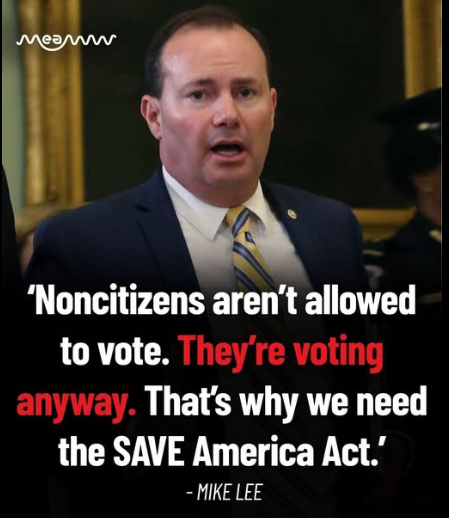 The Brennan Center at NYU’s seminal report on this issue, The Truth About Voter Fraud, found that most reported incidents of voter fraud are actually traceable to other sources, such as clerical errors or bad data matching practices. The report reviewed elections that had been meticulously studied for voter fraud and found incident rates between 0.0003 percent and 0.0025 percent.
Does that stop liars like Mike Lee from spreading disinformation of the subject? Of course not.
There is no judgement day. There is no Saint Peter standing in front of the Pearly Gates discerning good from evil and acting according.
That’s a lucky break for Mike Lee.



-
Climate Change1 year ago
Guest post: Why China is still building new coal – and when it might stop
-

 Greenhouse Gases2 years ago
嘉宾来稿:满足中国增长的用电需求 光伏加储能“比新建煤电更实惠”
-
Greenhouse Gases1 year ago
Guest post: Why China is still building new coal – and when it might stop
-

 Climate Change2 years ago
嘉宾来稿:满足中国增长的用电需求 光伏加储能“比新建煤电更实惠”
-

 Renewable Energy11 months ago
Sending Progressive Philanthropist George Soros to Prison?
-
Climate Change2 years ago
Bill Discounting Climate Change in Florida’s Energy Policy Awaits DeSantis’ Approval
-
Greenhouse Gases1 year ago
嘉宾来稿:探究火山喷发如何影响气候预测
-

 Climate Change2 years ago
Analysis: China’s CO2 falls 1% in Q2 2024 in first quarterly drop since Covid-19