

Participants at COP31 in Antalya will have a “duty” not to interfere in Türkiye’s internal affairs under the country’s hosting deal with the UN, reviving a clause dropped for last year’s climate summit in Brazil that human rights groups warn could put activists at risk.
Türkiye has faced growing criticism from human rights groups over the jailing of opposition figures, journalists and activists and imposed a blanket protest ban around July’s summit of the NATO military alliance in Ankara.
The contested provision is included in the binding agreement between the UN climate secretariat and the Turkish government that sets out responsibilities over logistical arrangements and details participants’ rights and obligations.
The document, signed in June but only made public on Wednesday, gives accredited COP31 attendees immunity from legal action over what they say, write or do in connection with the conference. Climate Home News understands that this safeguard can be applied to what takes place both inside and, in certain circumstances, outside of the UN-controlled COP “Blue Zone”. For the first time, this protection explicitly continues after the summit ends.

But participants enjoying these “privileges and immunities” also have a duty to respect Türkiye’s laws and regulations and not to interfere in its internal affairs, the agreement states. Rights groups fear its wide-ranging formulation could be used to discourage criticism of the host government.
Climate Home News understands that whether an action is covered by the immunity or infringes on the host’s internal affairs would be evaluated on a case-by-case basis, with close coordination between the country’s authorities and the UN climate change body.
A separate provision states that immunity shall be waived where the UN believes it would “impede the course of justice”.
‘Chilling effect’
Those same provisions featured in the host country agreements for COP28 in the United Arab Emirates and COP29 in Azerbaijan, both regarded as authoritarian regimes, before being dropped for COP30 in Brazil.
Ann Harrison, climate justice policy advisor at Amnesty International, said it is “extremely disappointing” that the COP31 agreement re-introduced clauses that could “hinder the ability of human rights defenders and civil society organisations to conduct their work safely”.
COP31 electrification pledge leaves out clean power commitment
She added the provisions could have a “wider chilling effect” on rights to freedom of expression and peaceful assembly, given concerns over the human rights situation in Türkiye, including laws that “have shrunk civic space” and their “abusive” implementation by authorities.
The UN climate change body declined to comment.
Rights groups have documented blanket protest bans, unlawful use of force by the police and prosecutions of journalists, human rights defenders and lawyers across Türkiye in the last year.
Arrests and protest bans
Last July, environmental activist Esra Işık was sentenced to more than two years for “resisting” a public official over what Amnesty International described as a peaceful protest against an urgent expropriation order linked to the expansion of coal mining in south-western Türkiye. She is appealing the conviction.
Ahead of a summit of the NATO alliance in the capital Ankara in July, authorities put in place a 13-day blanket ban on demonstrations, citing “national security”, and arrested over 200 people. Human Rights Watch said the crackdown showed Türkiye’s “ruthless intolerance of freedom of speech and assembly”.
Earlier this month, Turkish police detained dozens of people as part of what rights groups described as the government’s widening crackdown on LGBTQ+ activists and venues.
Questioned by media as to how he would guarantee the right to protest at COP31, Kurum said earlier in September that his team would “try to meet” any request they receive from civil society and give them “a free space to express themselves”.
“Don’t worry, thinking you will not be able to voice your opinions or really share your thoughts,” he said in an attempt to reassure campaigners, adding that he had put former deputy environment minister Mehmet Birpinar in charge of liaising with civil society.
Civic space needed
Camilla Pollera, human rights and climate change campaigner at the Center for International Environmental Law (CIEL), said meaningful participation at COP31 is fundamental to the legitimacy of climate action.
“At a climate summit, civil society participation necessarily includes being present, speaking out, scrutinising governments’ decisions and climate policies, and advocating for communities most vulnerable to climate change,” she added.
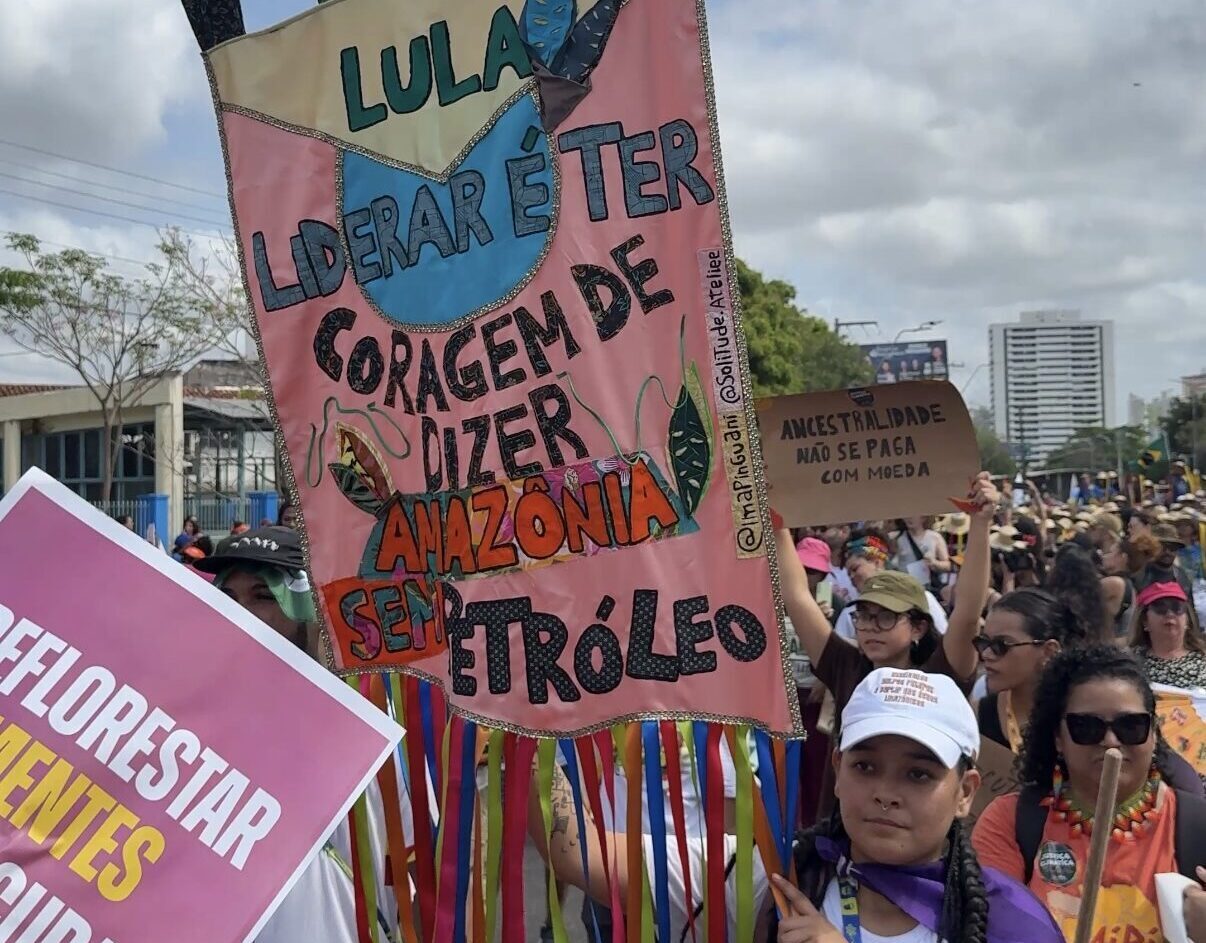
At last year’s COP30 summit, thousands of Indigenous people and climate activists peacefully marched through the Amazonian city of Belém in the first major demonstration outside the UN venue in four years. Smaller-scale demonstrations were largely confined to the “Blue Zone” at COP27 in Egypt, COP28 in the UAE and COP29 in Azerbaijan.
In two other separate incidents in Belém, members of the Munduruku tribe blocked access to the conference centre for hours, demanding an end to development projects in their ancestral land, and protesters stormed through the venue clashing with UN security officials.
The COP31 hosting agreement keeps some of the safeguards previously hailed by civil society groups. The government and the UN secretariat commit to upholding “the fundamental human rights” of all participants in the agreement’s preamble.
Under the deal, Türkiye also needs to ensure that security personnel follow “the highest ethical and professional standards and are expected to behave with integrity and respect”.
The post COP31 attendees told not to interfere in Türkiye’s “internal affairs” appeared first on Climate Home News.
COP31 attendees told not to interfere in Türkiye’s “internal affairs”

More than a dozen countries, including Germany, South Korea, Pakistan and several small island states, have publicly backed the Turkish COP31 presidency’s flagship electrification pledge.
The voluntary pledge aims to raise electricity’s share of global final energy consumption to 35% by 2035, from 23% currently, but does not specify how that electricity should be generated.
The COP31 presidency is not expected to publish a full list of backers until next week, as it continues to rally support. But at least 14 countries have publicly endorsed the pledge, according to a Climate Home News analysis of speeches and official statements.
Alongside COP31 co-host Australia and COP32 host Ethiopia, they include Germany, Norway, Finland, South Korea, Pakistan, Zimbabwe, Eswatini, Togo and Liechtenstein, as well as the small island states of Palau, Seychelles and the Solomon Islands.
The European Union is widely expected to join the pledge this week, although member states still need to formally approve the decision, Politico reported. On Wednesday, President Ursula von der Leyen supported the pledge in her personal capacity and encouraged others to do the same.
Major economies still on the fence
Other major economies have welcomed COP31’s focus on electrification while stopping short of endorsing the pledge.
British Prime Minister Andy Burham said on Thursday that he was proud to support the summit’s focus on electrification. He said it matters for energy security, for creating good jobs in clean energy and manufacturing, and for lowering people’s bills.
-
Big fossil-fuel countries back Brazil-led transition roadmap
Some countries including Germany and the Netherlands call for the roadmaps to inform a key global review of climate progress in 2028 -
COP31 outcome needs to prioritise transition away from fossil fuels
Many countries are already working on parts of their transition, such as phasing out coal or ending fossil fuel subsidies, with more expected to follow soon
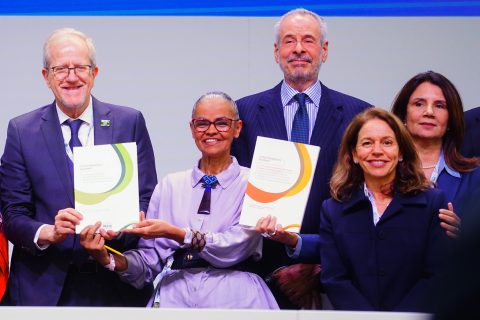

Brazil’s environment minister João Paulo Capobianco ssaid on Thursday that electrification was “an important front” in climate action, but warned it should not be pursued “for the sake of it”. It should instead serve as a means of improving efficiency and cutting emissions. He said Brazil would work with the Turkish proposal and suggest adjustments to allow “specific solutions” that reduce emissions, without giving details.
Saudi Arabia was more openly sceptical. Energy minister Prince Abdulaziz bin Salman told the leaders’ summit that emissions reduction is “what unites us”, “not necessarily the track to achieving it”. “The expansion of electrification does not necessarily mean cutting emissions, so long as we do not consider the sources of its production,” he said, adding that countries’ choices must be respected.
Clean power strings attached
Many of the nations formally backing the initiative have attached some strings to their support. At a high-level roundtable on Wednesday, the low-lying Pacific island nation of Palau said it would sign on to the pledge. But it added that electrification “must not become a substitute or a distraction” from the chief goal of transitioning away from fossil fuels.
Seychelles also endorsed the pledge but added that it must be connected with cleaner electricity. “Electrifying more activities while continuing to burn fossil fuels will not deliver the full economic or climate benefits,” the country’s representative told the roundtable.
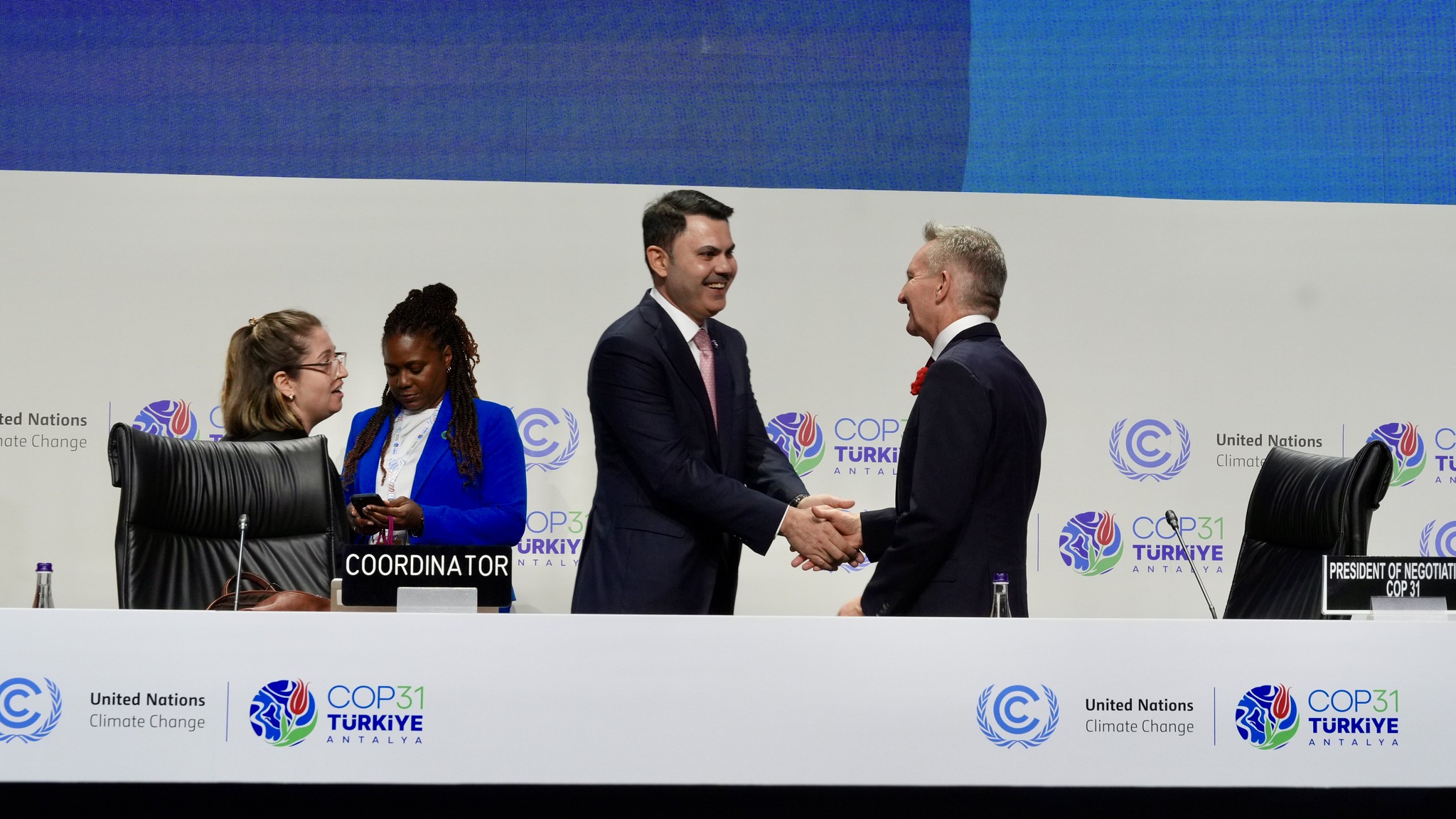
Australia’s climate and energy minister Chris Bowen, whose country is co-leading the pledge with Türkiye, has defended its design. “Electrification is almost always a good thing,” he told the Outrage and Optimism podcast recently. He argued that switching to an electric car cuts emissions by 60% even on a coal-fired grid, and by 90% when powered by solar.
Doug Arent, senior fellow at the WRI Polsky Center for the Global Energy Transition, said the most important thing “is that there is significant support for the concept of electrification”. He expects more countries to “recognise their pathway to be behind the 35 by 35” in the coming years.
Calls for finance
Other developing countries backing the pledge have underlined the critical importance of access to finance. Pakistan’s Prime Minister Shehbaz Sharif showed off his country’s people-led boom in rooftop solar and growing rollout of electric vehicles. But he added that “momentum without finance cannot be sustained,” and said the burden of new technologies cannot fall on countries already in debt.
Zimbabwe backed the pledge but warned of the high capital costs and financial bottlenecks facing developing countries. Its representative proposed a global electrification investment facility that would provide first-loss guarantees for projects under Mission 300, an initiative to connect 300 million people in Sub-Saharan Africa to electricity by 2030.
The Solomon Islands, another supporter of the pledge, asked for a dedicated finance access window for small island nations and least developed countries (LDCs).
Tuesday saw the launch of a global finance coalition backed by COP31 host Türkiye and COP32 host Ethiopia aimed at supporting clean electrification in developing countries.
Closing the roundtable, Türkiye’s energy minister Alparslan Bayraktar, who chaired the session, claimed the 35×35 pledge had found broad support worldwide. He called for a “smart” energy transition that draws on all available technologies, including carbon capture, use and storage.
The post COP31’s electrification pledge wins support, with caveats on clean power and finance appeared first on Climate Home News.
COP31’s electrification pledge wins support, with caveats on clean power and finance
Climate Change
Albanese must deliver credible action to end fossil fuel chokehold, not just rhetoric
ANTALYA,Türkiye, Thursday 12 November 2026 — In response to Prime Minister Albanese’s COP31 Leaders’ Summit address, Shiva Gounden, Head of Pacific at Greenpeace Australia Pacific, speaking from Antalya said:
“Prime Minister Albanese’s COP31 address was full of nice rhetoric, but once again failed to confront or even mention the root cause of the climate crisis — fossil fuels.
“In Antalya, UN climate chief Guterres told leaders to “tell the truth”. The truth is Australia can not credibly talk about its clean energy transition while continuing to expand the industry it needs to leave behind. Australia must reckon with reality; its damning track record of 38 coal and gas approvals since it took office in 2022.
“We meet in Antalya amidst a global energy shock and dire projections of 1.5°C overshoot. Overshoot means something in the Pacific — it means irreversible harm, lives and cultures lost forever, entire nations at stake. We must face the fierce urgency of now.
“Never before has the need to end the fossil fuel chokehold been so abundantly clear, as our Pacific communities again suffer the consequences of a global economy hooked on coal, oil and gas. The Pacific needs credible roadmaps and clear timelines to unhook from fossil fuels — Australia can’t keep saying implementation and not reflect it with credible action.”
ENDS
COP31 images and video available here in Greenpeace Media Library
Media contact: Kate O’Callaghan in Antalya (GMT+3) on +61 406 231 892 (Whatsapp/Signal)
Albanese must deliver credible action to end fossil fuel chokehold, not just rhetoric
A second set of world leaders give their speeches on Thursday before heading out of town and leaving their negotiators to it. After around 40 leaders spoke on Wednesday, today there will be just 25 or so including the UK’s Andy Burnham, Venezuela’s Delcy Rodriguez and Bangladesh’s Tarique Rahman.
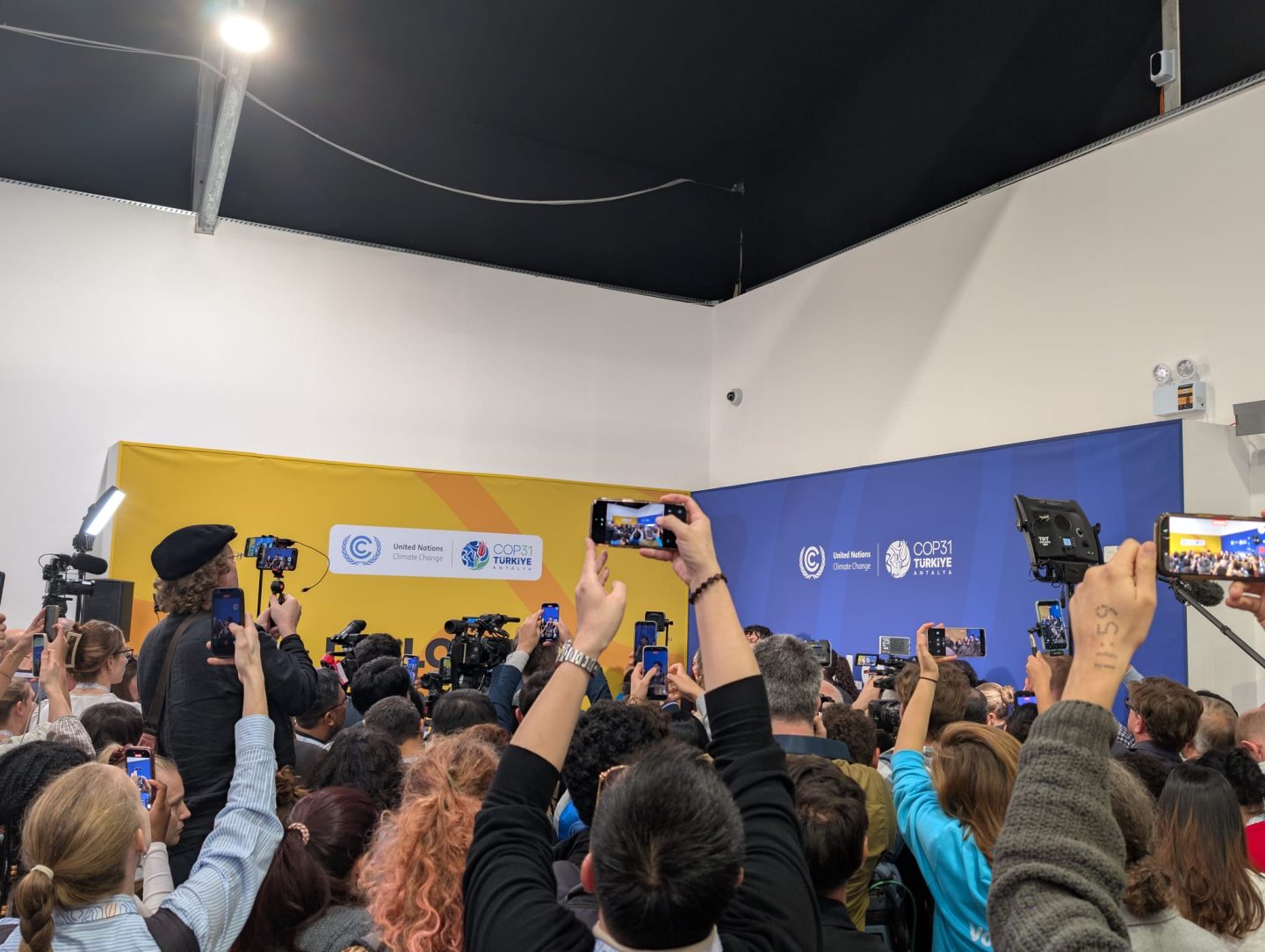
But Brazil’s President Lula is still there and is expected to keep grabbing headlines, along with California’s Governor – and maybe next US president – Gavin Newsom – and Swedish climate activist Greta Thunberg who has lost none of her star power, if the crowd around her in the press centre was anything to go by.
We’ll bring you highlights through the day on issues ranging from finance to methane, and update you on a pledging event for the Pacific Resilience Facility, which the climate-vulnerable region is relying on to keep small island nations as safe as possible in the face of intensifying storms, drought and sea level rise.
The post COP31 Bulletin Day 4: Burnham speaks with UK climate policy under fire appeared first on Climate Home News.
COP31 Bulletin Day 4: Burnham speaks with UK climate policy under fire


COP31’s electrification pledge wins support, with caveats on clean power and finance
Albanese must deliver credible action to end fossil fuel chokehold, not just rhetoric

What Drivetrain Failures Reveal, w/ Oskefer Consulting
-
Climate Change1 year ago
Guest post: Why China is still building new coal – and when it might stop
-
Greenhouse Gases1 year ago
Guest post: Why China is still building new coal – and when it might stop
-

 Greenhouse Gases2 years ago
嘉宾来稿:满足中国增长的用电需求 光伏加储能“比新建煤电更实惠”
-

 Climate Change2 years ago
嘉宾来稿:满足中国增长的用电需求 光伏加储能“比新建煤电更实惠”
-
