

This letter is a bit more direct and longer than most of those which I write, but I hope you will be okay with that, because the times seem to call for being plain.
A few weeks ago I got a text message from an old and dear friend —let’s call her Hannah.
I have enough shared life with Hannah that, whenever we talk, the conversation always feels current and effortless, despite gaps of months or even years.
Hannah has been talking with her son — we’ll call him Neil — who is a teenager and doing well in school, but wildly worried about the state of the world, including the imminent trajectory of global warming. Hannah and I don’t text each other other very often, but on this occasion she’s reached out with something visceral:
Neil has challenged me to point him to something hopeful, if I can find it. He says so far no one is showing any will to uphold the Paris Agreement. I am checking in to see how you still manage to have real hope.*
Then, just a few days later, the United Nations Environment Programme Limiting Overshoot report landed, containing the principal finding that it is likely the global temperature will soon exceed 1.5°C.
After that news, and the real time devastation in Nepal, and in the context of the broader state of the world, I found myself having multiple conversations with friends and colleagues about the structure of hope. I want to openly share that after a few of these exchanges, I metaphorically closed the blinds, and wondered how to feel, and what to do, because there is no avoiding the dreadfulness of the news, and what it means for the suffering of people and life on Earth.
But if you are fortunate enough to have time, space and security to do so, then after the darkness, you open the shutters and once again there is light. This is the structure of my innermost resolve.
* * *
Our lives — those of us living on our magnificent earth now — have the greatest possible purpose.
There is virtually no problem that we endlessly clever and creative, human beings cannot solve, when we work together.
And we are not just intelligent and ingenious; we are inherently social, nurturing and brave; capable of the deepest enduring love.
Each of the roughly 12,000 generations of humanity so far has made life possible for those who have followed, through acts of devotion.
Babies have been held and fed. Water and food have been found and shared. Shelter has been built. For 12,000 generations we have held the hands of our children.
Every single one of us was once carried in the arms of another, unable to walk ourselves. It is our thoughtfulness, kindness and care that have seen us through as a species. Sometimes this has been in the most exigent of circumstances, when enough of our ancestors did not give in, faced incredibly difficult things, to somehow make it through.
And so it comes to this. To what we now must do. We must do as 12,000 generations of people did for us.
The struggle to keep global warming to under 1.5 degrees may be over. The battle of return—to get our planet back to safe temperatures at emergency speed and scale — is just beginning. Upon this struggle depends the future of all we care about, and that of all life on Earth. The prospects of the next 12,000 generations are conditioned by our efforts now.
Our work now is to keep the overshoot as low as we can, make it as brief as possible, and do everything within our power to alleviate other pressures on nature. It is to take care of humanity — of one another — in the face of mounting climate and ecological damage. And by these efforts, create the conditions for future flourishing. Every fraction of every degree matters.
What must now be done is hard, much tougher than should have been necessary, because of the vested interests in coal, oil and gas and deforestation, and the failures of decision makers. And while renewable energy has surged, making the case for change much simpler, on the other side of the ledger there’s the reactionary and gangsterist turn of politics and the multiplier effects of wars and mass violence, with the existential destabilisation of big tech looming over all.
There is no sugarcoating the scale of difficulty. But what is necessary remains within our collective power. We must never, for one second, say that returning our planet to flourishing is impossible — many of the obvious solutions already exist; but even where transformation relies on reforms, technologies or capabilities that might sound fanciful, or historical changes that are unprecedented, this can be no barrier to our conviction. After all, much of what we take for granted today as ordinary features of social life, would have been considered impossible by every single generation before us.
The world has not been destroyed by nuclear war; we solved the growing hole in the ozone layer; Antarctica was kept sacrosanct from exploitation. Humanity has collectively triumphed before, and can do so again.
We can find the necessary social and political will to do what is needed because these are endlessly renewable resources. The necessary financial capital exists. Apart from the fossil fuel industry, the greatest barrier we face is to mistakenly concede that what lies before us is insurmountable. It is not.
We must avoid the siren song of fatalism. Because. It. Is. Never. Too. Late.
None of which is to be insensitive to the horrors already unleashed — the deadly and grotesque harm to people, places and species that cannot be undone; or to be blind to the impacts that are coming. But where we have the power to act, we also have the responsibility — and the extraordinary privilege — to do what must be done.
Although she is wounded, our planet is still alive and beautiful beyond all of our comprehension. Hundreds of billions of creatures live and thrive still upon this earth. Nothing has happened until it has happened, and life fights for life. Every beetle, every tree, all the fish in the ocean, the smallest of the geothermal shrimps, the greatest of the whales and the mightiest of the birds — all demand life every second of their existence, so that their species too may have future generations.
No individual has to know how to solve this alone. Indeed, finding some detachment and humility is essential to concentrate on the role that each of us can play.
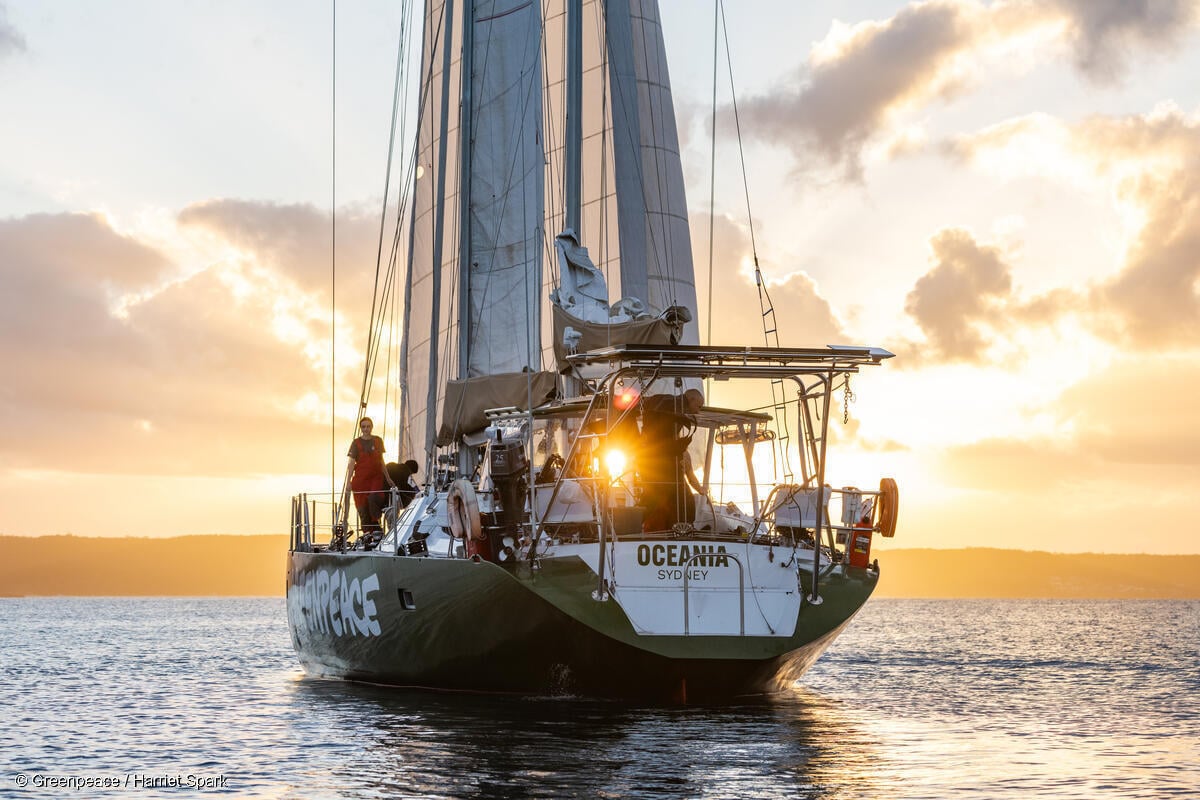
Hope is not merely a mindset or a story we tell ourselves. Collective power is not abstract; it is what we do, together, applying ourselves to the practical mechanics of change and contestation within society, by being part of the organisations and networks of people that are dedicated to effective strategies. It is why I am so committed to Greenpeace.
Working from without and within, there are opportunities to make rapid change within institutions, governments, businesses and communities to create the social, economic and political momentum for emissions reduction at speed and scale, reminding ourselves always of what remains possible, even if it hasn’t happened yet.
We can return the planet to safer temperatures. We can put technologies back in the service of people and life. We can return to the assumptions that seemed so obvious just one generation ago — that it is both possible, and our obligation, to build a better future for all people, and for life on Earth.
I did write back to Hannah and Neil, to say honestly to a treasured friend and her son, that yes, as a matter of faith, conviction, evidence and strategy, absolutely there is real hope. And this is a pledge not just to Neil and his generation, but to the next 12,000.
Together, we have the power. Together, we cross this bridge through the dark. To secure an Earth capable of nurturing life in all of its magnificent diversity.
We did not choose to carry this historic responsibility, but here we are. And it is so lucky that we are here.
I wouldn’t choose any other time to be here, alive on Earth, with you.


More than a dozen countries, including Germany, South Korea, Pakistan and several small island states, have publicly backed the Turkish COP31 presidency’s flagship electrification pledge.
The voluntary pledge aims to raise electricity’s share of global final energy consumption to 35% by 2035, from 23% currently, but does not specify how that electricity should be generated.
The COP31 presidency is not expected to publish a full list of backers until next week, as it continues to rally support. But at least 14 countries have publicly endorsed the pledge, according to a Climate Home News analysis of speeches and official statements.
Alongside COP31 co-host Australia and COP32 host Ethiopia, they include Germany, Norway, Finland, South Korea, Pakistan, Zimbabwe, Eswatini, Togo and Liechtenstein, as well as the small island states of Palau, Seychelles and the Solomon Islands.
The European Union is widely expected to join the pledge this week, although member states still need to formally approve the decision, Politico reported. On Wednesday, President Ursula von der Leyen supported the pledge in her personal capacity and encouraged others to do the same.
Major economies still on the fence
Other major economies have welcomed COP31’s focus on electrification while stopping short of endorsing the pledge.
British Prime Minister Andy Burham said on Thursday that he was proud to support the summit’s focus on electrification. He said it matters for energy security, for creating good jobs in clean energy and manufacturing, and for lowering people’s bills.
-
Big fossil-fuel countries back Brazil-led transition roadmap
Some countries including Germany and the Netherlands call for the roadmaps to inform a key global review of climate progress in 2028 -
COP31 outcome needs to prioritise transition away from fossil fuels
Many countries are already working on parts of their transition, such as phasing out coal or ending fossil fuel subsidies, with more expected to follow soon
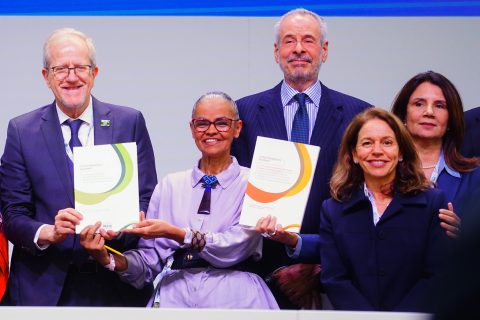

Brazil’s environment minister João Paulo Capobianco ssaid on Thursday that electrification was “an important front” in climate action, but warned it should not be pursued “for the sake of it”. It should instead serve as a means of improving efficiency and cutting emissions. He said Brazil would work with the Turkish proposal and suggest adjustments to allow “specific solutions” that reduce emissions, without giving details.
Saudi Arabia was more openly sceptical. Energy minister Prince Abdulaziz bin Salman told the leaders’ summit that emissions reduction is “what unites us”, “not necessarily the track to achieving it”. “The expansion of electrification does not necessarily mean cutting emissions, so long as we do not consider the sources of its production,” he said, adding that countries’ choices must be respected.
Clean power strings attached
Many of the nations formally backing the initiative have attached some strings to their support. At a high-level roundtable on Wednesday, the low-lying Pacific island nation of Palau said it would sign on to the pledge. But it added that electrification “must not become a substitute or a distraction” from the chief goal of transitioning away from fossil fuels.
Seychelles also endorsed the pledge but added that it must be connected with cleaner electricity. “Electrifying more activities while continuing to burn fossil fuels will not deliver the full economic or climate benefits,” the country’s representative told the roundtable.
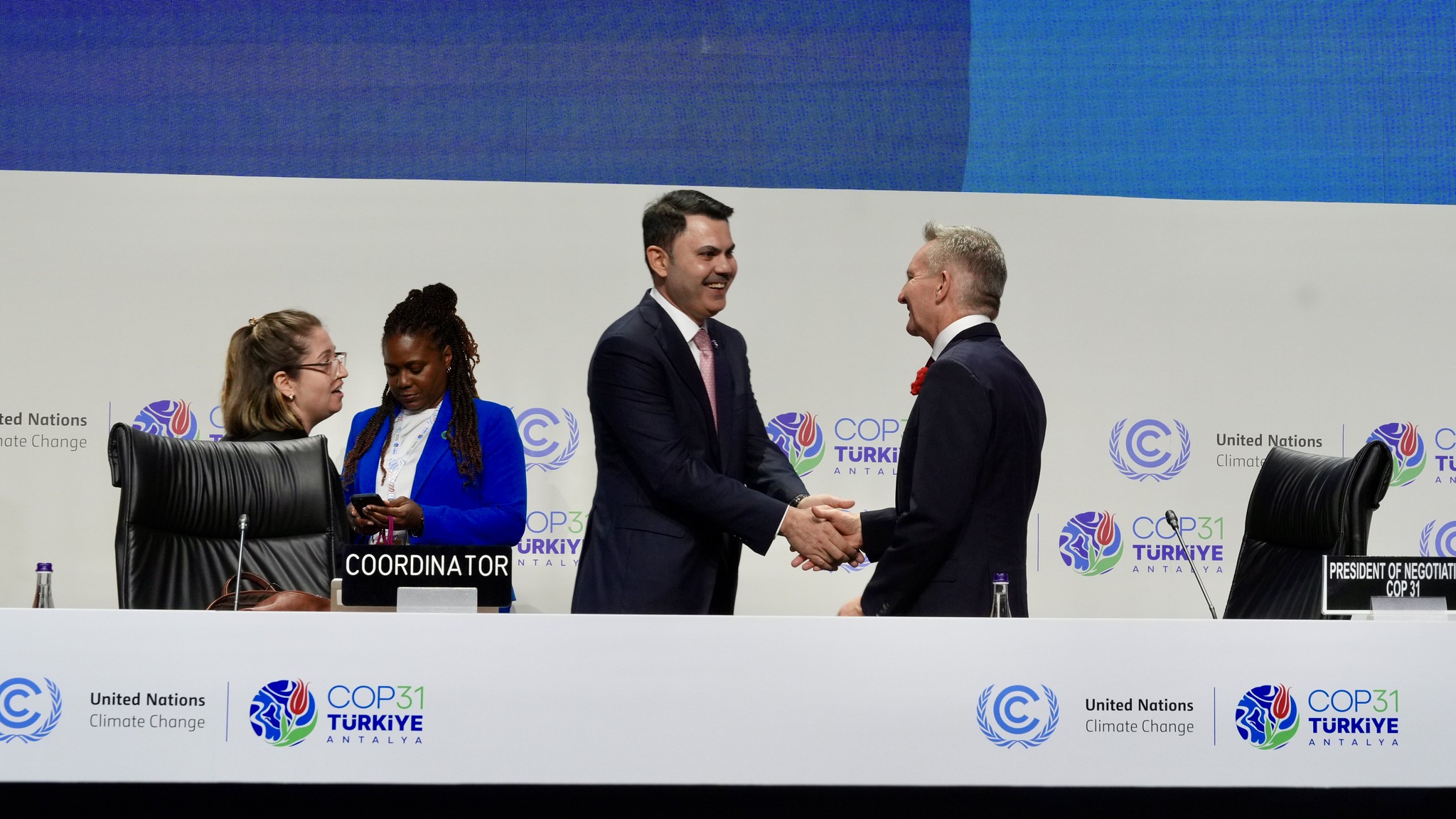
Australia’s climate and energy minister Chris Bowen, whose country is co-leading the pledge with Türkiye, has defended its design. “Electrification is almost always a good thing,” he told the Outrage and Optimism podcast recently. He argued that switching to an electric car cuts emissions by 60% even on a coal-fired grid, and by 90% when powered by solar.
Doug Arent, senior fellow at the WRI Polsky Center for the Global Energy Transition, said the most important thing “is that there is significant support for the concept of electrification”. He expects more countries to “recognise their pathway to be behind the 35 by 35” in the coming years.
Calls for finance
Other developing countries backing the pledge have underlined the critical importance of access to finance. Pakistan’s Prime Minister Shehbaz Sharif showed off his country’s people-led boom in rooftop solar and growing rollout of electric vehicles. But he added that “momentum without finance cannot be sustained,” and said the burden of new technologies cannot fall on countries already in debt.
Zimbabwe backed the pledge but warned of the high capital costs and financial bottlenecks facing developing countries. Its representative proposed a global electrification investment facility that would provide first-loss guarantees for projects under Mission 300, an initiative to connect 300 million people in Sub-Saharan Africa to electricity by 2030.
The Solomon Islands, another supporter of the pledge, asked for a dedicated finance access window for small island nations and least developed countries (LDCs).
Tuesday saw the launch of a global finance coalition backed by COP31 host Türkiye and COP32 host Ethiopia aimed at supporting clean electrification in developing countries.
Closing the roundtable, Türkiye’s energy minister Alparslan Bayraktar, who chaired the session, claimed the 35×35 pledge had found broad support worldwide. He called for a “smart” energy transition that draws on all available technologies, including carbon capture, use and storage.
The post COP31’s electrification pledge wins support, with caveats on clean power and finance appeared first on Climate Home News.
COP31’s electrification pledge wins support, with caveats on clean power and finance
Climate Change
Albanese must deliver credible action to end fossil fuel chokehold, not just rhetoric
ANTALYA,Türkiye, Thursday 12 November 2026 — In response to Prime Minister Albanese’s COP31 Leaders’ Summit address, Shiva Gounden, Head of Pacific at Greenpeace Australia Pacific, speaking from Antalya said:
“Prime Minister Albanese’s COP31 address was full of nice rhetoric, but once again failed to confront or even mention the root cause of the climate crisis — fossil fuels.
“In Antalya, UN climate chief Guterres told leaders to “tell the truth”. The truth is Australia can not credibly talk about its clean energy transition while continuing to expand the industry it needs to leave behind. Australia must reckon with reality; its damning track record of 38 coal and gas approvals since it took office in 2022.
“We meet in Antalya amidst a global energy shock and dire projections of 1.5°C overshoot. Overshoot means something in the Pacific — it means irreversible harm, lives and cultures lost forever, entire nations at stake. We must face the fierce urgency of now.
“Never before has the need to end the fossil fuel chokehold been so abundantly clear, as our Pacific communities again suffer the consequences of a global economy hooked on coal, oil and gas. The Pacific needs credible roadmaps and clear timelines to unhook from fossil fuels — Australia can’t keep saying implementation and not reflect it with credible action.”
ENDS
COP31 images and video available here in Greenpeace Media Library
Media contact: Kate O’Callaghan in Antalya (GMT+3) on +61 406 231 892 (Whatsapp/Signal)
Albanese must deliver credible action to end fossil fuel chokehold, not just rhetoric
A second set of world leaders give their speeches on Thursday before heading out of town and leaving their negotiators to it. After around 40 leaders spoke on Wednesday, today there will be just 25 or so including the UK’s Andy Burnham, Venezuela’s Delcy Rodriguez and Bangladesh’s Tarique Rahman.
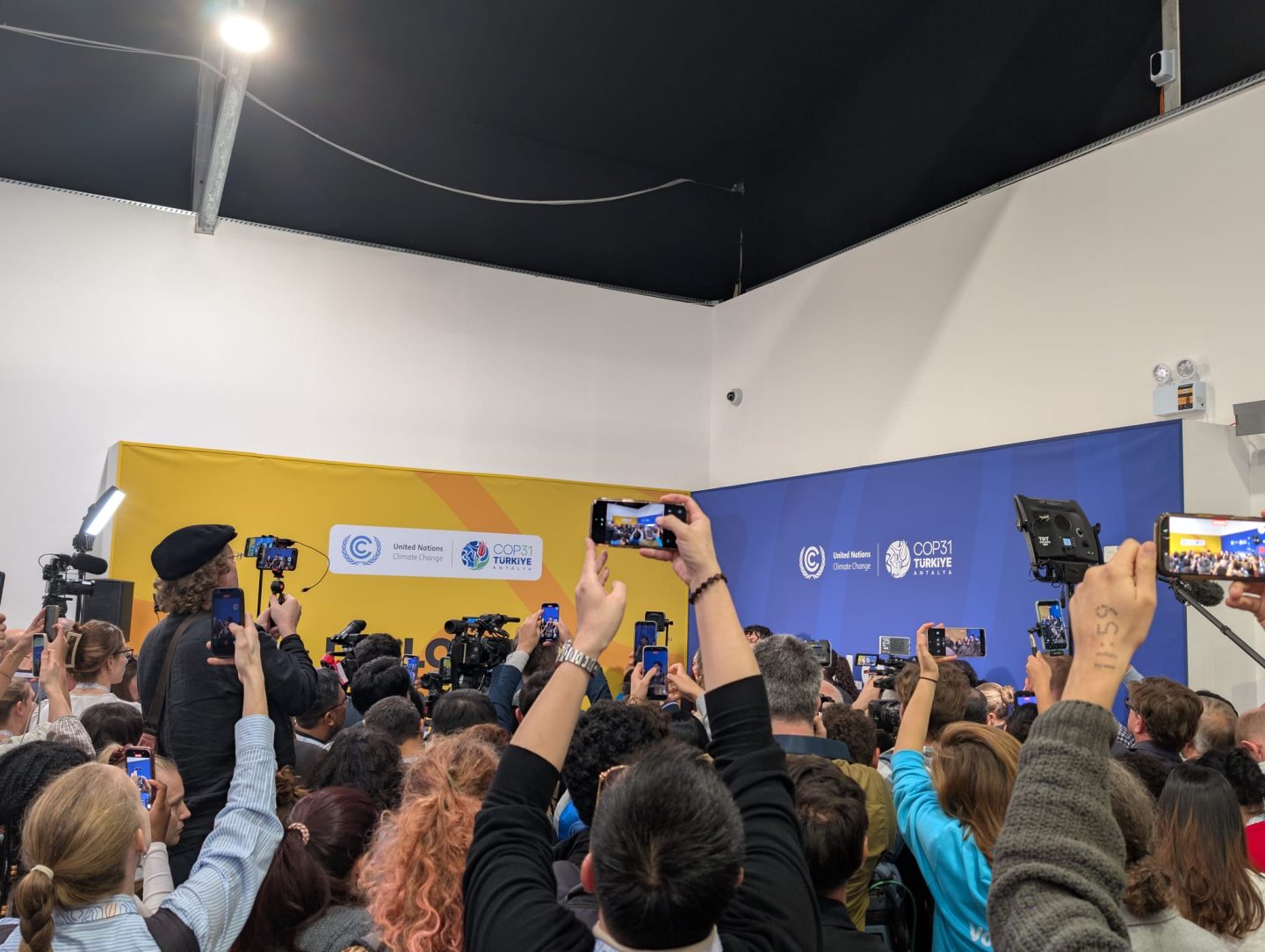
But Brazil’s President Lula is still there and is expected to keep grabbing headlines, along with California’s Governor – and maybe next US president – Gavin Newsom – and Swedish climate activist Greta Thunberg who has lost none of her star power, if the crowd around her in the press centre was anything to go by.
We’ll bring you highlights through the day on issues ranging from finance to methane, and update you on a pledging event for the Pacific Resilience Facility, which the climate-vulnerable region is relying on to keep small island nations as safe as possible in the face of intensifying storms, drought and sea level rise.
The post COP31 Bulletin Day 4: Burnham speaks with UK climate policy under fire appeared first on Climate Home News.
COP31 Bulletin Day 4: Burnham speaks with UK climate policy under fire


COP31’s electrification pledge wins support, with caveats on clean power and finance
Albanese must deliver credible action to end fossil fuel chokehold, not just rhetoric

What Drivetrain Failures Reveal, w/ Oskefer Consulting
-
Climate Change1 year ago
Guest post: Why China is still building new coal – and when it might stop
-
Greenhouse Gases1 year ago
Guest post: Why China is still building new coal – and when it might stop
-

 Greenhouse Gases2 years ago
嘉宾来稿:满足中国增长的用电需求 光伏加储能“比新建煤电更实惠”
-

 Climate Change2 years ago
嘉宾来稿:满足中国增长的用电需求 光伏加储能“比新建煤电更实惠”
-
