Connect with us

Published

on

Weather Guard Lightning Tech

Standardizing Rain Erosion Testing Results with Wind Power LAB’s Rocky Software

Rocky, a cloud-based software developed by Wind Power LAB is helping to standardize the analysis of rain erosion test data for wind turbine coatings. By precisely annotating damage progression in test photos, Rocky eliminates human variability in interpreting results and generating accurate velocity vs. impact (V-N) curves. This innovative tool promises to improve coating durability predictions, reduce operational costs, and accelerate rain erosion solutions for the wind industry. Visit https://windpowerlab.com/ for more info!

Sign up now for Uptime Tech News, our weekly email update on all things wind technology. This episode is sponsored by Weather Guard Lightning Tech. Learn more about Weather Guard’s StrikeTape Wind Turbine LPS retrofit. Follow the show on Facebook, YouTube, Twitter, Linkedin and visit Weather Guard on the web. And subscribe to Rosemary Barnes’ YouTube channel here. Have a question we can answer on the show? Email us!

Pardalote Consulting – https://www.pardaloteconsulting.com
Weather Guard Lightning Tech – www.weatherguardwind.com
Intelstor – https://www.intelstor.com

Allen Hall: Welcome to the special edition of the Uptime Wind Energy Podcast. I’m Allen Hall, and I’m in San Diego, warm San Diego with at ACP OM&S and I’m here with Anders Røpke, who is this founding partner and CEO of Wind Power LAB based in Copenhagen, Denmark. Welcome to the show.

Anders Røpke: Thank for the invitation.

Allen Hall: So we’re gonna have a really technical discussion, but a really timely discussion. Yeah, about rain erosion and rain erosion testing. I was just over in Denmark, went to DTU, saw the Leading Edge Erosion Conference. Fascinated, great speakers, a lot of great data. One of the main discussion points was when you run a rain erosion test on a particular coating for a wind turbine, there’s a lot of variability.

And the holy grail is to get what they call a V N curve for a coating. That’s the velocity versus the number of impacts. You should be able to draw roughly a straight line. Okay. When I was over at Copenhagen, and watching all this go on, there’s a lot of slides up about V in curves where the V in curve was up and down.

The tilt of it was all over the place. When they had done testing at different rain erosion facilities, or had tested in the same erosion facility on the same kind of sample. Getting what they thought was a different result. Now, that seems to be driven by in part, the human element. Exactly. Everything about that test is pretty well controlled and the people at R&D test systems, which designed those rain erosion rigs have made a really nice machine.

Let’s just be honest. It’s a really good machine. But as when PowerLab is determining, the issue is looking at the photos of the damage and then saying, Oh, here’s where damage starts. And this is how it propagates. That’s a human element problem that’s added to this very technical decision making. We’re making errors there.

And that’s where Wind Power LAB comes in. And at Wind Power LAB, you guys are blade experts, right?

Anders Røpke: We are blade experts. So we are actually coming from the field observation side, if you like. So we see the products when they fail. Sorry to bring the bad news, but we see leading edge erosion out there still, even though we have big LEP campaigns.

Yeah. And one thing is the application, it’s a hard environment to turn out offshore, for instance. But we also see coatings fail earlier than anticipated. And the long term effect is a lot of unnecessary cost for these wind farm owners. Because then they’re looking into yet one more LEP campaign.

Through the end of, before the end of life of this wind farm. That’s extremely expensive. Onshore, but it’s maybe 20 times more expensive offshore. It is. So if we should fix this. We should. We should. Then why don’t we try to test our products a little bit better?

And that’s where the Leading Edge Erosion Symposium you visited.

It’s really good. We get some focus on this. Oh, yeah. Because you look at the, at all the erosion test thing that is going on with our partners R&D.

Allen Hall: Yes.

Anders Røpke: You have the most sophisticated machine. You can control the droplet size, the speed and whatnot. It’s magnificent. And then it is the tons of data coming out of the system will have to be processed by some highly skilled experts, right?

Test engineers. And here the trouble starts, right? Because if we are the test engineers, you are getting your 200, 000 pictures in from the test, right? It’s fairly expensive to run the test. I look at the same data. I will almost, I’m almost certain that I can promise you that we will not get the same results.

So that means if you produce one VN curve, I’ll produce another one. Somebody Third parties should select which one is the right one. And that is what we base our product on.

Allen Hall: It is. It’s, there’s literally millions of dollars going in per year on rain erosion coatings based upon the data and the published data on the VN curves.

Anders Røpke: So when you invest in a leading edge shell, protection shell like this is something we bought from our friends at Polytech, then it’s a matter of the durability. So when will this start eroding? That’s what you basically test in a erosion test. The VN curve tells you something about when that time is, right?

Yes. And if we are incorrect, because we have some accuracy issues in our assessment between the two of us, then the durability of this product may not be better. Oh, it could be better. It could be worse. It could be worse. We don’t know. That’s the whole point.

Allen Hall: Yeah.

Anders Røpke: So with the software here. Then we assisting our leading edge protection developers or manufacturers in handling all the many thousand hours of tests coming through and tons of data.

It’s organized. You can share your your test between inside your test department, right? And then you can go first and do your test down to my test. We can do an overlay. And from that, you can actually see that we agree, right? Because we have. A more accurate view on when we start to see the erosion for the first time.

In here, you mark up with small polygons around the various items from the test results. Yes. And you should have the same picture as, or the same results as I should.

Allen Hall: Wind Power LAB has developed this piece of software. Yeah. It’s based in the cloud. It’s called Rocky, like Rocky Balboa. And what it does is it takes all those photographs from the rain erosion test.

So as the rain erosion test proceeds, it runs for a little while, then it stops and they take a high resolution photo. They started back up again. They continue the count, right? So there you have a series of photos showing increasing levels of damage over time. But the issue is How do you track that VN curve from those images?

That’s where the human element has to come in and a lot of times if they’re not using a Rocky type system They’re actually using like Excel or PowerPoint to sort through all these photos and go Oh, it was at minute 52 that this issue started that is highly interpretive.

Anders Røpke: And today we see that happening, right?

We see clients with spreadsheets and PowerPoints. And they’re really doing their best. The problem is I cannot reproduce your test result, right?

Allen Hall: Which is the ultimate point of a test. It should be reproducible. Otherwise, something is wrong with the test setup.

Anders Røpke: So we have tried to standardize. The way you should annotate in here, yes.

Not annotate, but mark up with polygons track when certain track and when something happens, you can play back and forth inside your time series to get even more accurate, the assessment results. Yeah. And by doing that we will actually be able to, the two of us will be able to come up with the same test result.

Allen Hall: So the results out of the Rocky system have been, from what I’ve seen, remarkable. Because I didn’t think the human element had played that much into the, to the results. It is, you get wide differences in basically the same test data. So if we had the same data set in front of two engineers going through it, they would pick different VN curves out of that same set of data.

That’s a problem for the industry. It is.

Anders Røpke: And then, And it’s very costly as well.

Allen Hall: It’s super costly.

Anders Røpke: Or it could be even better to ability, right?

Allen Hall: So it could go both ways. Sure. Because you ever, what the, what happens with those VN curves is that if I’m an operator, I have a rough idea of the number of water impacts of, at my site, because I track that.

It’s one of the things I track. So then I know okay, I’m going to have X many raindrops hit this material over time, therefore I have a lifetime of X. And. If that VN curve is wrong, I could be overpaying for a material. I could be having material that just fails too early again, overpaying for this thing.

So it’s a cost issue for the operator at the end of the day. And then the operators are struggling because from what I could tell, and I’m not an operator, but if I were an operator, it’d be really confused right now on rain erosion products, because we’re at ACP OMS and I run into four or five different providers of coatings.

Here, and they all saying the same thing to me, but when I talk to the operators, they say, no, like this one works in our site and that one didn’t. Yeah.

And it’s a consistency on the engineering side.

Anders Røpke: It is, but it’s not only on, the test side, but it’s definitely also on the application side out.

Sure. Oh, sure. Sure. So I’m not saying that we have a poor products on the market. I’m just saying that we need to step it up on the testing side so we sure get the correct VN curves.

Allen Hall: We need to test the variability. Exactly. But the problem is if we interpret the photos incorrectly, we don’t have any data.

We can’t make any heads or tails of that. We don’t have, we can’t sort draw on the line. Exactly. That is a huge problem. Yeah, and I think that’s where, based upon the , the number of doctorate students, ed, who really educated people that are working the rain erosion issue. Andres, you’re right. The application is really key, but also just being able to interpret the data.

It’s just a huge learning and there really isn’t any tools to them.

Anders Røpke: And then being able to share those results and reproduce those results. So we have a proper workflow that I’ll quality check your work, your analysis, and I can reproduce it. Then we are aligned and following a standardized way. That’s the dream.

It is. This is a, ladies and gentlemen, this is Lean and Six Sigma. It’s not something new. Any other industry would test their products like this.

Allen Hall: So you should be able to take the same coding to two different, essentially R&D test systems, Rainrose facilities, they’re all in Europe, and get the same results out of both sites.

Yes. That is the goal. You can’t do that today. No.

Anders Røpke: At least then it’s based on luck. Yeah. That you hit the same number inside your spreadsheets, for instance. Or whatever system you’ve developed. And then then of course we can do this for all kinds of rain erosion test facilities. And we can do this not just only for what is applied in the wind industry.

I pray for that we get some more proper testing inside the aerospace.

Allen Hall: Aerospace needs it horribly bad.

Anders Røpke: Yes, they do. That’s sad news in my ears. Yeah, that’s true.

Allen Hall: Because it’s a difficult problem. They have, the aerospace has the same problem that wind turbine engineers have. is what do you do with all this data?

How do I interpret it? Every engineer interprets it different. If you, it’s hard to be independent, especially if it’s your coding, and you’re the designer of the coding, and you’re going through the photos, you want to lean towards, ah, this is working better. It’s hard. You got to take that human element out of it to really get down to the raw data, and that, that has been the hurdle.

Rocky, though, gets rid of that, right? Rocky, takes that data, even old data. So the data you have been sitting on for two or three years in the past, you can actually put it through the Rocky system and say, okay, the real VN curve is this. So not even on, you don’t have to repeat the test.

Anders Røpke: No, where you can reuse your data if you like.

And optimize your quality in hindsight and then know where you are. Maybe you are in a really strong position. You can have the great material. Just, I know it. Let’s hope for it for us. And, but going forward. Then your entire test engineering team will have the same tool available.

If somebody leaves the company, it’s still in here. It’s still there. Yeah. And as we know from the Rocky movies, it does Rocky one, two, three, and so forth. So this is Rocky one, and now we’re generating a lot of data. And of course we are also AI side of things because all this annotation will eventually be automated.

So our test engineers can focus that time on, optimizing. And making it even more accurate in here, so you get even more accurate VN curves, right? Nobody enjoys watching these tons of images just day in and day out. No. Let’s try to, in Rocky 2, get that one fixed.

Allen Hall: Just get it yeah, as you accumulate more data in the system, that is obviously going to occur, so it’s going to get smarter as you go along.

But in terms of going back and using old data, so I can put my existing data, upload it to the cloud. process it with the Rocky system, get a better data right there. So now obviously codings have evolved. I can start comparing codings. I have, I probably have a lot of data that I can upload to Rocky, a lot of photos.

I can go track each one of them. I can start getting now real VN curves out of it. And now I have a better understanding. And as a manufacturer of a coding, now I can really help my customers say, if you have a, Site where there’s a lot of rain. You want to use this coding because they’ll usually offer more than one coding, or if I have maybe a sandy territory, I want to go to use this coding, but I think from the operator side, also, the operators are starting to go back and do some of the testing on their own and say, okay, I have this curve, I’m not really sure I want to verify, I want to verify this, but they have the same problem.

They need to have a system to go through that data logically. So they can get a true set.

Anders Røpke: Exactly. So if if you can share maybe then as an operator, you would pay for your own tests, right? Maybe you should do that. If you have a probably should have fit 10, 000 turbines and quite a huge investment in doing this, right?

Sure. So making sure that the durability is anticipated. So you can start planning for those LEP campaigns and not get surprised that you need to add one more in.

Allen Hall: Yeah. I do think the R&D test systems, rain erosion test rigs are. As good as they’re ever going to get. The technology, the one I saw at DTU is amazing.

So the technology on the test side is there. But, yeah, we just haven’t figured out the human element and eliminated it. It’s good that Wind Power LAB has stepped into that void. Because you’re Blaine experts. And you understand what’s happening out there. And you can correlate it. So now that you’re creating this data set, you guys will have a data set of these different codings, in a sense.

And plush. You have a lot of people out in the field reporting back this blade has this issue, that blade has this issue, this coating has this issue. It should start to correlate back to the data set, right? The VN curves should start to match. And feed into the innovation process of the next generation of products.

We’re moving too slow on rain erosion.

Anders Røpke: And then last but not least, this project here, or the software, this project here, Something we have commercialized now and it’s available for anyone in the industry that would like to, use it. It is something that started in a grain funded project back home in Denmark between the Technical University of Denmark and R&D Systems.

Okay. So it’s actually a good use of innovation funding. Sure. Came all the way out to the marketplace as a tool you can buy and have on subscription.

Allen Hall: It’s actionable information, which is needed today across the world. There’s two problems in the world and wind turbines, mostly.

Lightning and rain erosion. Okay. And sometimes rain erosion is more than lightning, but those are the two. Yeah. Danny Ellis from Sky Specs told me years ago, every wind turbine has rain erosion problems, every one of them. And I think that is going away, but until we have better data and people start using the Rocky system to evaluate their photos and their damage, we’re just not going to solve this problem.

It’s just going to continue on.

Anders Røpke: And eventually this could be what will save maybe one or two leading edge protection campaigns. In an offshore scenario, we have clients in Netherlands, for instance, where they save like millions in vessel costs.

Allen Hall: Oh, easy.

Anders Røpke: Because they could, get rid of some part of the scope because they were actually able to pinpoint which of the turbines that were in need of a LEP coating.

Yeah. That case could have been even better if the durability on these products applied were actually as anticipated and planned.

Allen Hall: Yeah. So the engineering results in the LAB have to match what happens in the field.

Anders Røpke: Exactly.

Allen Hall: It has to happen that way. So how do people get in contact with Wind Power LAB to evaluate Rocky and take a look at it, maybe throw some images up on the Rocky cloud?

Anders Røpke: Yeah, so you can look me up at LinkedIn, of course, and connect. I’m happy to connect with anyone that invites me. Or go to wind power app.com. Yeah. And you will find a contact phone. We’ll be in touch , and you can see our phone number. Come and visit us in Denmark or invite us for a meeting. We are happy to.

Allen Hall: How fast could they implement that system? They give you the phone calls, the auditors, Hey, I’m ready for this. Give the demo how soon before you can hook ’em up and run through it.

Anders Røpke: Basically, we need to create a use account. That’s it. That’s it.

Allen Hall: Wow.

Anders Røpke: Of course, they need to have a, the RainyMotion data.

Allen Hall: They have the photos. Yeah. Okay. But as fast as they can upload them, it’s as fast as you can process.

Anders Røpke: And of course, then a proper introduction to the tool.

Allen Hall: Sure. Sure. A little bit of training. Yeah. But that’s it. It’s pretty user, you guys make great software. So it’s pretty much user intuitive things.

Yeah. So no problem with that.

Anders Røpke: And yeah, then we could discuss, another topic would be that the test results. We could open up and do maybe joint innovation on products and that whole deal, but it’s not like we’re sharing your results with anyone else.

Allen Hall: No, but hey, if you’re working with WinPowerLab, there’s a lot of smart people working there and they understand that issue.

They can help with the codings. And plus we have seen real life. Yeah. Does it make sense? It gives good advice, which is what we need. We need some good advice. Ander, this is fantastic. This is a really, this is a really innovating piece of software and it’s going to be used and it already is being used at GTU and R&D test systems.

But anybody that has an R&D test system rig can use it. Anybody who has R&D test system data can use it today.

Anders Røpke: Yeah.

Allen Hall: Amazing.

Anders Røpke: So if you have a test system with R&D today, then reach out to R&D colleagues as well. Yes. Or contacts and then we can get in touch that way as well.

Allen Hall: Wow. That’s fantastic. Anders, thanks so much for being on the program.

This is fantastic.

Anders Røpke: Thank you very much.

Standardizing Rain Erosion Testing Results with Wind Power LAB’s Rocky Software

Continue Reading

Renewable Energy

ECO TLP Brings Concrete Foundations to Floating Wind

Published

on

Weather Guard Lightning Tech

ECO TLP Brings Concrete Foundations to Floating Wind

Nicole Johnson Murphy, CEO of ECO TLP, and Gordon Jackson join to discuss concrete floating wind foundations, production-line construction, and markets from Hawaii to Japan.

Sign up now for Uptime Tech News, our weekly newsletter on all things wind technology. This episode is sponsored by Weather Guard Lightning Tech. Learn more about Weather Guard’s StrikeTape Wind Turbine LPS retrofit. Follow the show on YouTube, Linkedin and visit Weather Guard on the web. And subscribe to Rosemary’s “Engineering with Rosie” YouTube channel here. Have a question we can answer on the show? Email us!

Welcome to Uptime Spotlight, shining Light on Wind. Energy’s brightest innovators. This is the progress powering tomorrow.

Allen Hall: Offshore wind obviously is a big deal right now. There’s a lot of, uh, countries looking at it and investigating it, doing it, uh, but not really at scale yet. And this is where ECO TLP comes in and. Nicole, let’s just start there with a background. What problem were you trying to solve when you started Eco TLP?

Nicole Johnson-Murphy: Yeah, so, so we were designing for, uh, a site off of Hawaii in 2011, uh, for the Hico RFP. And so we were designing for 300 meter water depth from the beginning. Um, so we were always trying to find a way to work with the ports, with the vessel, with the infrastructure that was existing off Hawaii. And with, and that worked with Jones Act vessels.

So we were always trying to meet that [00:01:00] requirement with, you know, and meet the cost, try to, we saw there were much tighter margins in offshore wind than in oil and gas, for example, at that water depth. So we’re trying to find something that was cost effective.

Allen Hall: Next question, obviously is what makes those deep water foundations so difficult?

Gordon Jackson: Well, it’s the water depth, uh, primarily, um, you know, uh, you need to put foundations down in, uh, extremely deep water. Um, and they’re gonna be pretty flexible. Um, so you’re trying to control the, the amount of motion that you get at the surface through your, uh, uh, you know, your deep water, uh, facility. So, um, it’s really.

Really that challenge, you know, and, uh, you know, the weight of components through the water depth, like, um, you know, likes of chain would be completely impossible. Um, in 300 meters of water. Uh, you need to use something that’s a little bit lighter. Yeah, to mow you to the, uh, to the seabed

Allen Hall: [00:02:00] because it does seem a little odd just not to make the foundations taller, basically.

More steel drive it down in, we know that process, we understand that process. It works offshore, uh, near shore in a, in a lot of locations. But once you get to what depth as it becomes financially or engineering wise, impossible

Gordon Jackson: for offshore wind, fixed, fixed structures in, I mean, maybe a hundred meters of water are gonna be.

Economic. Um, but you know, they’ll be costly compared to what’s been done now because, uh, you know, of all the extra structure you need for the, uh, for the deeper water. But, uh, I think you’ll see, you know, a crossover between fixed and floating, you know, around the, um, you know, 70 to a hundred meter water mark.

You know, that’s sort the range.

Allen Hall: Well, and that leads to the next question, which is. It’s all financial, right? At some point, the numbers [00:03:00] don’t work. If the cost of foundations don’t come down, especially in fixed bottom offshore or floating offshore, we lose a lot of offshore wind resource. Uh, Nicole can, can you gimme a scale at what we’re missing if we don’t get to a more economical solution for floating offshore?

Nicole Johnson-Murphy: So we’ve estimated for our market for, um, a very deep water market. So we, we now actually have a, a solution that goes across all water depths. So we’re starting with, um, you know, this, this gravity based structure now with, and, and Gordon’s team has been really involved in that, uh, development. And then now we can take that same slip form, concrete cylinder.

Format and take it across all the water depths. So, so we basically can hit every water depth now for a very low cost. It’s a very simple, just, you know, local, regionally designed and built, uh, system. We, we crowdsource the labor and the inputs. Um, and so we [00:04:00] try to, and we also try to give the procurement team of our clients their, you know, an ability to do their job and, and be able to bid out aspects of our design, um, across.

Different vendors. So you always wanna give, in construction, you always wanna give, uh, the procurement team a job to do so they can actually get that price, keep that price down on the installation.

Allen Hall: Yeah, that’s a unique look that eco TOP is putting to this problem. Which is moving away from steel, which is expensive obviously, and it’s sort of difficult to transport at times to a more localized solution, which is concrete.

And thinking about the problem a little bit differently, does that open up a number of doors then in terms of the countries that can get involved in, in floating or near shore, uh, wind projects, but just because you’re driving the cost down?

Nicole Johnson-Murphy: Absolutely. And I’ll let Gordon speak to the ax. He’s worked. His whole career in offshore concrete.

But I think it’s, I think it’s a, it’s a great, it’s the only way we would do it. We actually have shipyards in our companies, our partners own [00:05:00]shipyards, and we, we just would never probably ex try to try to create this many units across the world and scale and steel. We’d only do concrete.

Gordon Jackson: Yeah. My first concrete project sort of broke the mold of how you do, uh, construction of concrete offshore structures.

Uh, it was entirely built within a dry dock and, uh. After we’d gone on and delivered that project, um, that was in the late eighties. I spent the next 10 years, uh, working on projects all around the world, looking at doing the same sort of thing in different countries. Um, because you, you only needed, you know, 10, 12 meters of water, um, at the shore and you could, um, build a structure and um, you know, get it out there in the water.

Um. It really opened up the market for, for offshore concrete structures that, uh, that, uh, first project that we did.

Allen Hall: So using that first project as leverage and knowledge of how to do these things, how much advantage [00:06:00] does concrete give you over steel?

Gordon Jackson: It, it’s difficult to say because it bends country to country.

Um, and, um, you know, quite often you’re competing against, um, you know, steel built in some, uh, very low cost fabrication countries. Um, so if you’re in a high cost, you know, high labor cost country, like, you know, I worked in Australia, um, and um, you know, the labor cost there was extremely high. So concrete wasn’t particularly cheap, but the overall solutions that we came up with, um, were cheap.

You know?

Allen Hall: So does that involve basically like slip forms or how are you, how are you thinking about that problem? Because it’s a huge engineering task and you only learn. By doing it on some level because all great plans, uh, always run into trouble as soon as you try to implement them. So you took all that previous knowledge and then applied it to this problem, and now you have, uh, uh, basically [00:07:00] trimmed or, or slimmed, uh, the design down into, you have a, a very economical model, even in more uneconomical economies because of labor laws and cost of labor and access and those kind of things.

What does that look like now? And what’s your thought process on, Hey, this is what it’s gonna look like? Can we get, uh, keyside, how do we do this and how do we keep this thing simple?

Gordon Jackson: Uh, well the key thing is we’re looking at, uh, a production line approach, which has been, you know, it’s tried and tested for, um, for marine, for marine concrete construction, you know, construction of key walls and um, and you know, the like, um, we’re using exactly that same system.

We’ve just been tried and tested to create a production line of, um, eco TLP units or eco GBS units where we’re building, you know, onshore and where we’re going from station to station, doing a task at each station. [00:08:00] So it’s exactly like a production line, um, you know, that you’re be familiar with and, you know, you load out the completed structure onto a, a barge, um, and then you.

Submerge that barge and your structure floats off and that’s, that’s the real key to getting the, uh, the economy from the, the concrete basis.

Nicole Johnson-Murphy: Yeah, and I’ll say that the opex is really something we focus a lot on because it’s, it’s not just what you’re doing on the CapEx and the development and the port, it’s actually that 30 year lifetime maintenance.

And this is a, when you, we fully submerge our floater, which is basically inert in the ocean. It’s, it’s very eco-friendly with the ocean. There’s no paint, there’s no, you know, maintenance on the floater over the lifespan. You’re, you’re monitoring those, the moorings and the, the weight of any marine, you know, buildup on those moorings and things like that.

But generally it’s a very low maintenance solution and it’s very heavy and kind of like a comfortable car [00:09:00] ride for the turbine. It, it really has slow motions. It, it’s, um, almost like a, you know, a high skyscraper in the water. You know, you’re just the top of that skyscraper is moving a little bit. But you’re, um, you’re really giving it that comfortable, slow ride over its lifetime.

It’s not hitting a lot of turbulence, like a, a different type of odor.

Allen Hall: Yeah. It is a different concept, really, right? That you have this mass at the bottom and you have this mass at the top, which is the, the cell on the wind turbine. And if you can design it just right, everything dampens becomes stable.

Even in turbulent water. How long did it take you to figure out that aspect of the design? Because it does seem like a lot of projects hit a, an end point right there because the motion of the turbine is not good for the lifetime of the turbine.

Nicole Johnson-Murphy: We, we look at it as a, a kind of hybrid spar, CLP, so, so the original design came from my late father who was, who had designed echo fis for children’s [00:10:00] petroleum in the early.

Uh, late sixties, I guess. And, um, so he’d come from oil and gas and he’d come from that concrete, uh, construction background. And, and he is very comfortable with it. And I think, um, Gordon, that’s part of why I like working with Gordon. ’cause Gordon has that same, uh, sort of long-term view on, on these construction principles.

Um,

Nicole Johnson-Murphy: and I think that, that what we saw though is the margins are so different from oil and gas, and so you have to have almost a poor man’s TLP is what we would call it because it’s. It’s gotta be a very simple version of A TLP that can roll out in mass quantities. And, and as you know, coming up with a company that, you know, business plan, you’d wanna be able to, to really scale the business.

And so we had to come up with something that you can make. In different parts of the world at the same time, you’re not tied to one shipyard or one construction.

Allen Hall: Well, even in terms of ship usage, you’re going to reduce the size of the ship considerably. You’re not using big dedicated ships that are really [00:11:00] expensive to operate or to keep in the area, even just to have them there as a lot of money.

You’re thinking about, uh, a different design in terms of. Simple ships that you can find locally. How much does that really lower the cost of deployment?

Nicole Johnson-Murphy: Quite a lot actually. I, I mean, it depends on, you know, so the other, there’s this other, other aspect of installing the wind turbine on the foundation. So we have this fixed to fixed platform concept where you come further, a little bit further offshore and, and give you that, that draft depth that we need.

And then we have a fixed platform that just stays in place and, and we bring the turbines to it and, and float them out. It’s all a self floating. Unit, whether it’s the GBS that, um, Gordon’s been working with us and or the eco TLP. So we, so we we’re really independent of those large vessels. Um, for the most part, you know, we’re, we’re really try and then you, once you install the turbine, you can tow the entire unit out with two tugs.

Two to three tugs.

Allen Hall: That’s remarkable. So essentially because you [00:12:00] used, uh, a basic. Uh, Henry Ford type process to, to create these foundations and to think about the problem differently. Not only can you deploy it, uh, easier than a lot of things we’re doing right now on top of it, it works over a variety of depths and I think that’s a the hard thing for people to grasp because when we talk about offshore particularly start getting off the continental shelves here, you’re talking about.

More than a hundred meters typically of water. But you also have a, the gravity based system and the TLP system are all sort of interconnected into the basic philosophy. Can you, can you explain like the, the, the backbone of how that engineering works?

Gordon Jackson: Uh, well it’s essentially, it’s, um, we’re using the same structural form in both, both fixed and floating.

It’s, it’s basically, it’s two cylinders, uh, you know, one inside the other. A little bit of structure, which joins the two cylinders together. Um, that’s it.

Allen Hall: Gord, you make it sound so simple, but the, the [00:13:00]engineering is complicated to get to that point. And once you get to that level of, oh, that design actually works in a variety of depths, that opens up your customer base quite a bit.

Have you had inquiries from sort of nearshore people? Or fixed bottom people thinking like, whoa, I could actually save myself a bunch of time and money, which is the, the real limiting factor on offshore wind at the moment. Are you starting to see some momentum there that, uh, operators, developers are starting to rethink this problem and not just do what they did last week?

Nicole Johnson-Murphy: Absolutely. I mean, one of the ways we came about the g you know, taking the Ecot P and transforming it to the eco GBS was, was recommended by a client, was, you know, that was their, their ask actions. That’s, that’s always the best way to start. A product development cycle because, you know, somebody’s interested.

Um, and I think, you know, and part of the reason I found Gordon to work with early on in our, um, the life of our company is, is his background in, in GBS development. He did, he developed the gravitas, uh, GBS [00:14:00] 10 years ago. So I think we, we got lucky that our, uh, civil structural engineering partner with AUP was, was already really comfortable with, you know, looking at this.

Allen Hall: Um,

Nicole Johnson-Murphy: so I think that’s, that’s part of, you know, you always want the clients to be interested, you know, before you start investing. You know, you don’t wanna design a product that’s in your head or your, you know, in your, in your company lunchroom without a real ask for it.

Allen Hall: Right? And I, I think also you have a, once you have the engineering pretty well done and.

Obviously do now you’re trying to touch a number of countries and every culture has its own way of, of one of the construction business to do it slightly differently. South Korea does it different than Scotland, for example. You are working across cultures and trying to make the the same design. Uh, apply to all those different areas.

Are, have you learned [00:15:00] some things from that? Is it, are you able to basically set the same assembly line in every place? Or, or are there different, different kinds of concrete, different kinds of access, different kinds of ports that you have to deal with? What are those variables there that, that change the way you do business?

Gordon Jackson: All the characteristics, ports are, uh, you know, obviously different. Um, but you know, really you just need space. Um. And access to reasonably deep water. Um, you know, from, from that, uh, from that space. And, uh, you know, it can get surprisingly difficult to find that, um, certainly in the UK and, uh, you know, in Northern Europe, people wanna build marines and, uh, waterfront living, uh, rather than having, uh, you know, an industrial facility, uh, you know, on the doorsteps.

So, you know, in, you know, developed countries. Um. It can be hard to find that space. But, um, you know, in some, some parts of the world, you know, there’s lots of [00:16:00] space, um, available. Um, some good port facilities that can be, can be utilized. Uh, and then it’s just in, in all civil engineering works, you know, um, you go to do the job, you go wherever the job is, you mobilize there.

Um. You know, you put in the systems, uh, and equipment that you need to build, build a structure, and then normally you go away at the end of the job, you know, you hand it over to the client. Um, you know what, what, um, what would be good here is if we could set up some regional centers where you’ve done the, done the investment in the yard, um, and then you can, uh, you can amortize those costs of development over a number of projects.

Then you should start to see, uh, you know, real, real good cost savings.

Nicole Johnson-Murphy: Just one thing, you know, our footprint of our, of our cylinders is about a third of the footprint of a semi sub, for example. So, [00:17:00] so our footprint on the land port is very small.

Allen Hall: Well, I think that makes sense because if you watch the fixed bottom projects, particularly in the United States.

The first thing they had to do is rebuild the ports. The ports weren’t set for the scale and so they needed to expand the ports. That means you have to acquire land, you’ve gotta develop it. There’s a lot of processes involved. ’cause you’re talking about city, state, and federal government being involved.

Obviously federal in the United States is a problem. Uh, so just getting the port developed was a huge process for. Fixed bottom. You’re thinking about that differently though, because the, the reduced amount of space, the, uh, you don’t have to be in a huge industrial area, but all obviously it would be nice, but you do run against that problem.

Are you thinking, uh, when you talk about regional centers, are you thinking kind of Mediterranean, west Coast, us, Australia, one in Japan? How do you think about that problem? Because. [00:18:00] Once you get a a site established, it does seem like because of the, how fast you can move these things around that it’ll become a pretty good job center for a lot of people.

Nicole Johnson-Murphy: Yeah. There’s a long-term maintenance, you know, crew that needs to be developed while we build these. Um, yeah, I think, I think, you know, it’s been a moving target of what’s really gonna develop in offshore wind. It’s like Lucy and Charlie Brown with football. I think we, we constantly try to, you know, get lined up to, to kick football and then it falls.

It’s more of the developers I, I feel for on that ’cause they’re these investing tremendous amount of money for these, these development sites. Um, so, you know, we are open to any, you know, we’ve been, we’ve looked at, um, some developers are looking at steel production and concrete production, you know, two different reports servicing.

An array and we’re really flexible. It doesn’t, doesn’t matter. When we first started on that Hawaii project, we were gonna do floating pla, you know, floating, um, [00:19:00] barges to slipform. And, and we talked about that with Arab. Some still this floating dock idea and, and submerging that dock. And it’s just a matter of finding the right, uh, a large enough, um, dock for that type of, so then you’re not even using the land base port.

You’re learn, you’re using kind of just to. Maybe a 400 foot frontage on the, on the, along the port.

Allen Hall: Well, that’s amazingly small, right? Because if you look at some of these ports right now that are doing, uh, fixed bottom offshore, they’re massive, they’re huge sites. You’re talking about something roughly a 10th of the scale to get the same end result, which is turbines in the water

Nicole Johnson-Murphy: for our part of it.

I mean, we still, you still have the components and, and those are, that’s a, it’s another logistical challenge, and so I understand why the ports are. Looking at a lot more lay down space and things, but you know, maybe at a certain point these components are so large that they just stay on a vessel and they, and we, we take them off of a vessel directly and load them in.

Allen Hall: Yeah, I think that’s one of the, the considerations [00:20:00] is do you really tie it to land in, in terms of needing a, a massive amount of space, acres of space, thousands of square meters of space. Do you need that or is this, or can you do it much more efficiently because that overhead adds up over time. Not only are you trying to save on, on the ships and the, especially the dedicated ships, you’re also looking at smaller footprints on shore and doing it a lot more economically.

What does that future look like now, because it does seem like we’re at a precipice where floating wind is no longer just being discussed. In theory, it’s, it’s going to be implemented. What are those next steps here for Eco TLP?

Nicole Johnson-Murphy: So next week we’re headed to Tokyo, to Japan for the wind. Expo and, um, Eric is also presenting at the Asia Wind Offshore Show.

Um, I think we’re, you know, we’re, we’re good to learn. I mean, there’s just so much to learn about each culture, and I think this is something that, you know, Gordon and I’ve talked about in terms of these international [00:21:00] projects, you’ve, you’ve gotta understand your culture that you’re moving into and you’ve gotta understand how to mediate across those different companies that come in.

Our company has seven different. Countries represented in our team. So right now, so, so we’re, we’re a US company, but we’re barely, you know, we’re just kind of by name, but I think most of our team members are, are not in the us and, and that’s international collaboration is something, um, I, I really, I really loved working on it.

And I think, so when we go to Japan next week, it’s really mainly just to learn. You know, we don’t. We have a lot to learn about Japan, and, and that’s what’s fun about each of these, these regions.

Gordon Jackson: And that’s where we can help because, uh, you know, we’ve got a presence in Japan. We’ve been doing offshore wind in Japan, so we’re there, we’re there to help eight to eco TLP with our, those little contacts and uh, you know, h do business, uh, uh, in Japan and things like that.

So, you know, [00:22:00] we have a big international network, so you know, it can help. Some, uh, in some areas, you know, open some doors and, uh, forge some, uh, some friendships between, uh, count companies.

Allen Hall: Courtney did a big project out in Perth, Australia, which is a difficult place, right. Australia is a very difficult place to manufacture things.

What are some of the lessons learned and and what was that process like?

Gordon Jackson: So he had a, a client, uh, a very small client who was prepared to. Seed responsibility for delivering his project to a, to a team, an alliance team. Uh, and he just, um, interviewed a number of teams and, uh, we were lucky enough to be selected, uh, as the team to deliver their project.

There was no tendering, uh, it was just done on, you know, how the, how the client felt about the, the individuals that he met. Um, and that, that was [00:23:00] very new to me. Um, and, um, the whole project was delivered, uh, by companies from the uk, from from Australia, from Singapore, uh, from be Netherlands, you know, the Marine, uh, the marine, uh, vessels.

You know, a lot of ’em are coming from, uh, from, uh, Northern Europe, uh, even though you’re in Australia. Um, and, um, you know, every company wants to do things differently and they all want to look after their interests, but the big thing about this alliance project was that, uh, you were, you were focused on one particular project and we were, um, we were coached and, and facilitated, and trained to, um, to throw away our, you know, our company affiliations and work together.

And, uh, you know, to collaborate together. And, um, [00:24:00] you know, we’re all working towards the, the end goal of delivering a particular product. And I think that’s, I think it’s got a lot of, um, lot of potential to be used in the offshore wind sector. This, this was, uh, you know, uh, an oil platform that we were gonna build on the, uh, the northwest shelf of Australia, um, which happened to be built in concrete, um, because the client.

The client came to us with a, with a, a notion of, of doing something in concrete, um, which we, we took his idea, uh, decided we could do something a little bit cheaper and more straightforward and, um, you know, went on to deliver it. We were given the opportunity to deliver it. And, uh, yeah, I, it was my best project.

Uh, it was a tremendous experience for all the companies involved. And you know, everyone made money so everyone’s happy.

Allen Hall: That is difficult, right? You, you do see on these offshore projects, people coming from around the world to [00:25:00] work on this one big effort, a lot of money, and at times, thousands of people involved.

You see companies stu stumble there, uh, obviously because you’re trying to tie cultures, you’re trying to tie companies together, but at the end of the day, you have to get this project done. Are, are there some top level lessons learned from that of, of how to bridge those differences?

Gordon Jackson: Well, I did another project, uh, this was a, a steel project, um, where we had a, a US oil company.

Uh, and, um. The successful contractor was Hyundai in Korea. And they said to, said to me over the course of the project,

Nicole Johnson-Murphy: uh,

Gordon Jackson: we always lose money with, um, with American oil companies. You know, why, why are we doing business with them? Uh, and it, and it all came down to the, you know, the, the approach to the [00:26:00]contract.

You know, um, Hyundai used to. Working in a more collaborative way with our clients, whereas, you know, this project, you know, this is what the contract says, this is what you’ve taken on to do, you know, there’s no negotiation, you know, you’ll do it and that’s how much money you’re getting. And, uh, you know, um, but they find that very difficult.

And, uh, it was at the time when they were sort of opening up their business more internationally. Um, and I think it was a big learning experience for them. Um. So, yeah. Um, I think a lot of the offshore wind tried to follow the same path and, um, yeah, I think more collaborative working is to be encouraged for me.

Um, you know, more talking to each other and negotiating rather than, uh, you know, imposs.

Allen Hall: Where should developers go to find out more about Eco TLP? [00:27:00] Because you have a gravity based system. You got attention lake platform, there’s a, there’s a lot inside of the company. What’s the first stop? Should they visit your website?

Should they connect with you on LinkedIn? Where do they go?

Nicole Johnson-Murphy: The LinkedIn where website is great.

Allen Hall: So go visit Eco TLP. It’s E-C-O-T-L-P. Com, Nicole and Gordon, this has been a great discussion. I’ve learned a lot. It’s very exciting because I think you’re on the precipice of something great. So thank you for joining me today.

Gordon Jackson: Thank you. Thank you.

ECO TLP Brings Concrete Foundations to Floating Wind

Continue Reading

Renewable Energy

Trump’s War in Iran

Published

on

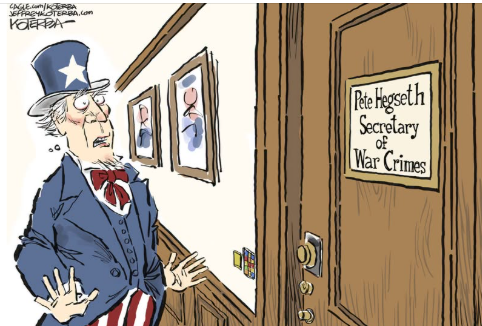
The meme here depicts where the United States has gone recently.  Our president starts an illegal and unnecessary war.

Can he stop it?  Neither quickly nor easily.

Does he deserve the Nobel Peace Prize?  Absolutely.

Trump’s War in Iran

Continue Reading

Renewable Energy

Trump Faces Opposition from Our Top Entertainers

Published

on

In case it’s not already clear, Trump supporters buy virtually zero of Neil Young’s music, if only because it’s aggressively anti-racist, e.g. “Southern Man,” and “Alabama.”

Imagine you’re a white person living in the Deep South, and you come across these lyrics: “Alabama, you have the rest of the union to help you along.  What’s going wrong?”

How large is your appetite for this man’s music?

Trump Faces Opposition from Our Top Entertainers

Continue Reading

Trending

Copyright © 2022 BreakingClimateChange.com