



- What timeline options were delegates debating?
- How did the timeline discussions unfold?
- What were the main points of disagreement?
- Why is the IPCC in a ‘serious funding crisis’?
- How have scientists reacted?
- What other issues remain unresolved?
- How are the IPCC AR7 reports progressing?
- How might the IPCC use AI and enhance gender inclusivity?

Ten days of extreme heat killed 2,305 people in a sample of 12 European cities last month, with almost two-thirds of those deaths caused by climate change’s intensifying effect on heatwaves, new research estimated on Wednesday.
The early summer heatwave, which sparked wildfires and health warnings from Spain to Turkey, was between 2 and 4 degrees Celsius hotter than it would have been without climate change, according to the study by the Grantham Institute at Imperial College London and the London School of Hygiene and Tropical Medicine (LSHTM).
“These numbers represent real people who have lost their lives in the last days due to the extreme heat”, said Imperial College London climate scientist Friederike Otto.
“If we continue to follow the wishes of the fossil fuel industry and delay serious mitigation [emissions-cutting] further, more and more people will lose their lives for the financial benefit of only a tiny rich influential minority,” she told reporters during a conference call.

Separately, a report by the European Union’s Copernicus Climate Change Service said last month was the hottest June on record in Western Europe.
Otto highlighted the researchers’ rapid work in calculating the role of climate change in the overall death toll, which she hailed as a first.
Rapid attribution study
Previously, such research has taken months. A study into Europe’s 2022 heatwave, which found that climate change was responsible for just over half of the 68,000 deaths, was published a year later.
The new study has not been peer-reviewed, a sometimes lengthy process where other scientists evaluate the research, Otto said, adding that the methods it used to attribute deaths had undergone peer review and been approved.
She said publishing studies quickly is important because the immediate aftermath of a heatwave is “when people talk about it”. That is also why the researchers focused on a sample of just 12 cities, she said, making their analysis more manageable.

Previous studies from the World Weather Attribution group, which Otto co-leads, have only estimated how much hotter climate change has made a heatwave. Otto said she wanted to translate this into numbers of additional deaths because a temperature increase of a few degrees Celsius “might not sound very much”.
Otto said the reason the first study like this was carried out in Europe is because scientists have established the relationship between heat and deaths better in Europe than elsewhere. But there are parts of southern Africa, Asia and the USA where this relationship has been established by scientists, she said, so “we will probably do this again in other parts of the world”.
But LSHTM climate professor Malcolm Mistry, warned that carrying out this kind of study across the world would be “very challenging because not every public health authority wants to give out the mortality record reports for research purposes”. This data on deaths is key to establishing how many people are killed by a certain increase in temperature.
Silent killer
The study did not attribute any individual death to climate change and heat is generally not listed on death certificates. Most people who died had health problems exacerbated by the heat, and more than half of them were aged over 85.

Heatwaves are a “silent killer” because the deaths mostly take place in homes and hospitals, away from public view, and are rarely reported, said Pierre Masselot from the LSHTM.
But media reports have blamed last month’s soaring temperatures in some specific cases, such as the death of 48-year old builder who collapsed while laying concrete in 35C heat in the Italian city of Bologna, and a 53-year old woman with a heart condition who died in Palermo. Climate Home has spoken to relatives of people who died during extreme heat in Saudi Arabia and the Gaza Strip.
Otto said that too many media reports about heatwaves include photographs of children eating ice cream and happy people playing on the beach. “That’s a massive problem”, she said, although she added that more articles were now referring to the role of climate change in driving heatwaves.
The researchers behind the study said ways to cope with extreme heat included installing air conditioning, improving government heatwave warnings, planting more trees, building more parks, insulating buildings and painting roofs white.
“But at the end of the day,” said Masselot, “all these measures won’t probably be as efficient as just reducing climate change altogether [by] reducing our greenhouse gas emissions.”
The post Scientists hail rapid estimate of climate change’s role in heat deaths as a first appeared first on Climate Home News.
Scientists hail rapid estimate of climate change’s role in heat deaths as a first
Continue Reading
Three countries have been named by the Paris Agreement’s compliance committee for failing to submit a nationally determined contribution (NDC) and repeatedly snubbing offers of help with their climate plans.
After months of internal debate over whether to identify serial non-responders, the Paris Agreement’s Implementation and Compliance Committee (PAICC) named the three countries which have failed to engage with it over their NDCs on Friday.
It named Democratic Republic of Congo, Senegal and North Korea in a footnote of its annual report, adding that it decided to name them “with a view to facilitating engagement”, adding that representatives of the three nations had been invited to its meeting in early 2027 “with the purpose of identifying any challenges and constraints”.
“The Committee noted the importance of Parties engaging with the Committee in a timely manner, while noting that some delays may be due to the national capabilities and circumstances of the Parties”, the report said.
-
Under US pressure, World Bank says it will back gas “where appropriate”
The US wants the World Bank to expand its gas support while climate campaigners are pushing for it to end – its head spoke this week of limited backing for the fossil fuel -
IPCC scientists vow to press on with climate reports despite political deadlock
After governments again failed to agree a timeline, nearly 120 IPCC authors pledged to complete their assessment on time and with full scientific rigour -
Paris Agreement committee snubbed over missing NDC climate plans
Many governments have still not submitted a nationally determined contribution to the UN, breaching a key requirement of the Paris Agreement
In July, PAICC said 12 countries had ignored its repeated attempts to discuss why they had not published an NDC as required every five years under the 2015 Paris accord.
Members of the committee had been divided over whether to name them, but at a September meeting decided to do so in their annual report to the annual climate COP summit.
By the time the report was published on Friday, only Congo, Senegal and North Korea “had not communicated an NDC or submitted a [Biennial Transparency Report] and had not yet responded to any of the Committee’s notifications, despite several reminders issued by the Committee in this regard”.
Rainforest and renewable energy ambitions
The silence from Congo and Senegal is notable because the former is home to much of the Congo Basin rainforest while the latter has sought billions of dollars in climate finance to support its renewable energy ambitions.
After Brazil, Congo has more rainforest than any country in the world. This forest, and the country’s peatlands, absorb huge amounts of greenhouse gas but are fast being lost to expanding farmland, charcoal production, logging and mining.
Senegal signed a Just Energy Transition Partnership with Canada and wealthy European nations in 2023, to help it meet its renewable energy targets under the-then government of Macky Sall. It was chair of the Least Developed Countries group between January 2022 and December 2023.

Tejas Rao, who is researching the PAICC as part of a doctoral thesis at Cambridge University, said the governments of the three countries should engage with the committee.
“Engagement costs these governments very little and the committee has shown it will listen,” he said.
“Silence leaves the committee with no basis to help, and it leaves the [governments] exposed to the narrative that they are simply disengaged,” he told Climate Home News.
Paris Agreement requirement
The 2015 Paris Agreement requires all parties to publish an NDC every five years outlining their emissions reduction targets, with each plan meant to be more ambitious than the country’s last NDC.
The latest set – the third round of plans, with new targets for 2035 – was due in February 2025. While most countries missed this deadline, all but around 30 – mostly small emitters but including Egypt, Vietnam and Argentina – have now submitted them.
Over the year, the PAICC – which is made up of government climate officials from developed and developing countries – has been communicating with governments that have not submitted NDCs and trying to overcome barriers to them doing so.
Some nations have cited exceptional circumstances as the reason for not submitting an NDC, a process that requires a significant amount of work in tracking emissions and consulting on how to curb them across the economy. For example, a letter from a Sudanese official to the PAICC, seen by Climate Home News, said that the country’s civil war had led to the suspension of its NDC preparation.
-
IPCC scientists vow to press on with climate reports despite political deadlock
After governments again failed to agree a timeline, nearly 120 IPCC authors pledged to complete their assessment on time and with full scientific rigour -
Under US pressure, World Bank says it will back gas “where appropriate”
The US wants the World Bank to expand its gas support while climate campaigners are pushing for it to end – its head spoke this week of limited backing for the fossil fuel -
Who shapes climate science? The equity question facing the IPCC
Early completion of the next global climate science assessment reports risks excluding research from the Global South, which is key to ensuring the findings are fair
The US and Iran are not signed up to the Paris Agreement and so do not have active NDCs, nor does Taiwan, which is not a UN member state.
Rao said that because the PAICC is “facilitative and non-punitive”, naming the countries “is meant to open a door, not close one – the invited consultation is the point”.
“In recent months, governments that explained their constraints, whether capacity, finance or domestic process, have been met with follow-up and support rather than sanction, and the number of silent governments has fallen sharply,” Rao said.
The post Paris Agreement committee names three countries snubbing it over NDCs appeared first on Climate Home News.
Paris Agreement committee names three countries snubbing it over NDCs
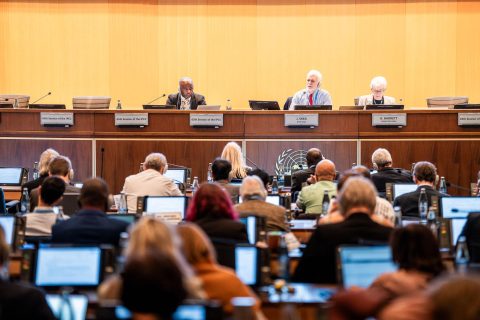
Countries have failed – for the sixth time running – to agree on the timeline for publishing the Intergovernmental Panel on Climate Change’s (IPCC) next set of influential reports.
The IPCC’s 65th session (IPCC-65) was seen by many to be the final opportunity for countries to agree on a schedule where its seventh assessment report (AR7) would be published in time for the UN’s second “global stocktake” of climate action.
Before last week’s meeting in Addis Ababa, Ethiopia, IPCC chair Prof Sir Jim Skea had warned that releasing the reports in time for the stocktake in 2028 would depend on a timelines being agreed by the end of 2026.
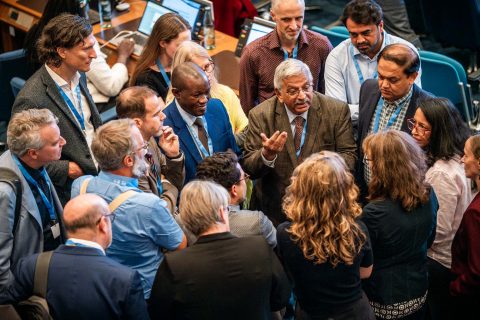
But the week-long meeting descended into fraught disagreements between governments, resulting in Skea “suspending” the talks on Friday evening with no decision made.
Countries were also unable to agree on the IPCC’s budget for the rest of the AR7 cycle, leaving the body with a “serious funding crisis”.
The IPCC has pledged to reconvene the meeting at the “earliest opportunity”; however, it has not yet given an indication of when this will be.
In his concluding remarks, Skea described the Addis Ababa summit as a “profound disappointment” and “among the most difficult IPCC meetings”, according to reporting from the Earth Negotiations Bulletin (ENB).
Some countries have reacted with dismay to the breakdown of negotiations, warning that a failure to have the IPCC’s latest assessments on climate adaptation and mitigation ready f