

Kenyan environmentalists have overtaken the government again in a fifteen-year legal battle to stop the expansion of a road inside the Aberdare Forest, where wider tensions between economic development and protection for nature and the climate are playing out.
Conservationists have challenged the road construction project in the East African nation’s courts since 2009, arguing it threatens the region’s rich ecosystem and wildlife. But in January, President William Ruto declared his government would proceed with the works, a decision critics said undermined his climate-friendly image on the global stage.
The road – now a rough dirt track punctuated with mounds of elephant dung – dissects the Aberdare Forest in central Kenya, cutting through an expanse of dense woods mingled with thick bamboo and colourful alpine vegetation. It also crosses the mountainous Aberdare National Park, a haven for wildlife including lions, antelope and elephants.
The government wants to widen and tarmac the picturesque road to connect the two agricultural counties of Nyandarua and Nyeri, which it says would reduce local travel time and the cost of farm produce while boosting tourism.
Environmentalists argue that the potential negative consequences for the forest, biodiversity and climate change far outweigh the purported benefits.
“I don’t feel that this is what we want to offer to the Kenyan people in terms of connectivity,” Christian Lambrechts, executive director of conservation trust Rhino Ark, told journalists during a trip to the Aberdare Forest in Nyeri County.
“We feel that this road is not justifiable from a socioeconomic standpoint. It will cut the Aberdare ecosystem into two, and lead to road user-wildlife conflicts.”

Rhino Ark Executive Director Christian Lambrechts addresses journalists in Nyeri County, Kenya, during a media tour of Aberdare Forest and National Park on February 29, 2024. (Photo: Joseph Maina)
Threat to wildlife and water
In March, the East African Wild Life Society – in response to Ruto’s decision to press ahead with the project – filed a fresh petition to a local court in Nyeri. It ordered the road’s construction to be put on hold, pending a hearing in early June.
Conservationists are calling for the government to upgrade an alternative road instead, which largely skirts around the forest, saying it will still cut travel time while protecting wildlife and the Aberdare ecosystem that is vital for the water cycle.
Enock Ole Kiminta, CEO of KeNAWRUA, a national organisation bringing together local water user associations, told Climate Home that expanding the Ihithe-Ndunyu Njeru road in the Aberdare Forest would destroy almost 400 hectares of indigenous forests and 327 water springs.
It would also negatively impact close to 70 percent of local biodiversity, including endangered birds and animals, and elephant breeding areas, he added.
“And yet the president appears to be saying, ‘To hell with you – go to court. We don’t care what the courts will say; we’ll still go ahead and do it’,” Kiminta said, before the latest suspension of the project.

A scene in the Aberdare National Park, central Kenya, pictured on March 1, 2024 (Photo: Joseph Maina)
In January, the National Environment Management Authority approved the road’s construction in a surprise move, after earlier opposing it, and issued a license for the roadworks to the Kenya National Highways Authority (KeNHA).
It did, however, give instructions to reduce the road’s width from 40 metres to 25 metres in sections traversing the Aberdare Forest and the Aberdare National Park.
On a tour of the region that month, Ruto asked a local crowd if they wanted the road’s expansion to proceed or to wait for the court’s final decision. After gaining their backing, Ruto instructed government officials to allocate funds to push ahead immediately.
Neither KeNHA nor the Kenya Wildlife Service responded to requests for comment for this article.
International accolades
Kenyan climate policy experts told Climate Home the Aberdare case symbolises a wider disconnect between Ruto’s vocal support for greater climate action on the global stage and decisions by his government that threaten natural ecoystems and carbon sinks at home.
Ruto has pushed for more climate finance for the African continent and hosted the African Climate Summit last September in Nairobi, which secured $23 billion in funding for green projects for the continent.
Last November, he made it onto Time Magazine’s list of the 100 most influential leaders driving business to real climate action.
He also rolled out an ambitious plan in 2022 to plant 15 billion trees in Kenya by 2032, in a bid to reach 30% tree cover, with all ministries urged to allocate funds for the initiative.
Loss and damage board speeds up work to allow countries direct access to funds
“His right hand doesn’t know what his left is doing,” said Kiminta. “He’s not being honest when he’s out of the country speaking all about climate change in rosy terms and doing something different on the ground.”
While attempting to plant billions of trees, the Kenyan authorities have also been dishing out permits to timber dealers, Kiminta added.
According to the Global Forest Watch monitoring service, tree loss in Kenya increased to 11,000 hectares in 2023, of which about 10,000 hectares was natural forest. That rise followed a two-year decline in 2021 and 2022, when the country recorded its lowest deforestation levels since 2001.
Failed effort to lift logging ban
The Aberdare row is not the first time Ruto has pitted himself against the justice system over decisions involving forests.
Last July, less than two years after coming to power, he unilaterally lifted a six-year logging ban in the country’s forests, saying it would benefit local economies – sparking a legal backlash.
The Law Society of Kenya (LSK) petitioned against the move, saying it disregarded the crucial role forests play in mitigating climate change, preserving biodiversity and safeguarding vital ecosystems.
“It may be for lack of vision, foresight, or even commitment to sustainable development, but it is by all means a blow to Kenya’s environmental conservation efforts and international standing,” wrote Faith Odhiambo, the current LSK president, in a post on Twitter.
The LSK argued the public had not been involved in the process leading to the decision to lift the ban, as stipulated in the constitution – and in October succeeded in its push for the Environmental and Lands Courts to void the president’s directive.

Farmers tilling land cleared from the forest in Kinale on March 7, 2024 (Photo: Joseph Maina)
Indigenous rights
Another row erupted last year over the Mau Forest Complex in Kenya’s Rift Valley, following an effort by the government to evict indigenous communities who have resisted such attempts for years.
The evictions are part of an official strategy to protect Kenya’s principal water catchment areas, with speculation the latest round may also have been tied to a deal with UAE-based firm Blue Carbon to generate carbon credits for use under the Paris Agreement on climate change.
The Mau – Kenya’s largest forest – has been the theatre of drawn-out conflict between the government and forest communities, particularly the Ogiek, a minority ethnic group that lays claim to the forest as its ancestral land.
The African Court on Human and Peoples’ Rights determined in 2022 that the state had violated the Ogiek’s rights over a substantial period and directed it to adopt appropriate measures to prevent the recurrence of abuses.
But in a surprise twist last October, the government embarked on another forceful eviction of forest communities, including the Ogiek.
Damaris Bonareri, an advocate of the High Court of Kenya and senior programme advisor for legal affairs at the Kenya Human Rights Commission, told Climate Home the Ogiek people are protected by the constitution and the African Charter on Human and Peoples’ Rights.
“According to our constitution, the Ogiek have a right to be in that forest. The president is wrong,” she added, noting that Ruto has spoken about the country’s judiciary in ways that could turn public opinion against it.
The president has publicly defended his green agenda, and often ties climate change and its causes to the extreme weather hitting the country, including torrential rains that have caused severe flooding and landslides in recent weeks, killing around 230 people.
“We must be careful on environmental issues,” Ruto told a political rally in March in Kericho, one of four counties covered by the Mau Forest, stressing that his administration would not permit people to graze animals or cultivate crops in forests.
“You have heard about climate change. Kenya was almost destroyed by adverse weather conditions just the other year and it was because of environmental degradation,” he said.
(Reporting by Joseph Maina; editing by Megan Rowling)
The post Road row in protected forest exposes Kenya’s climate conundrum appeared first on Climate Home News.
Road row in protected forest exposes Kenya’s climate conundrum

Saturday, 17 October 2026
7.18 AM AWST
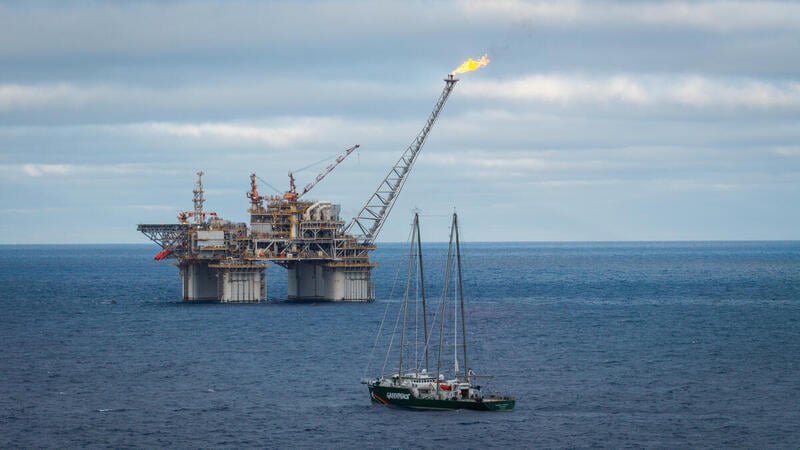
Hi folks! We’re joining you live from the Rainbow Warrior where we will be providing you with updates as our four activists continue scaling and occupying Woodside’s gas platform. The activists are peacefully protesting against Woodside’s latest gas expansion plans, the Browse project, which would see up to 57 toxic wells drilled at Scott Reef.
“Right now our activists are scaling Woodside’s massive Floating Production Unit. They are scaling the South-East pillar and the underside of the Helideck. They’ll be setting up camp soon and have plenty of provisions with them – so stick around!”
5:45 AM AWST
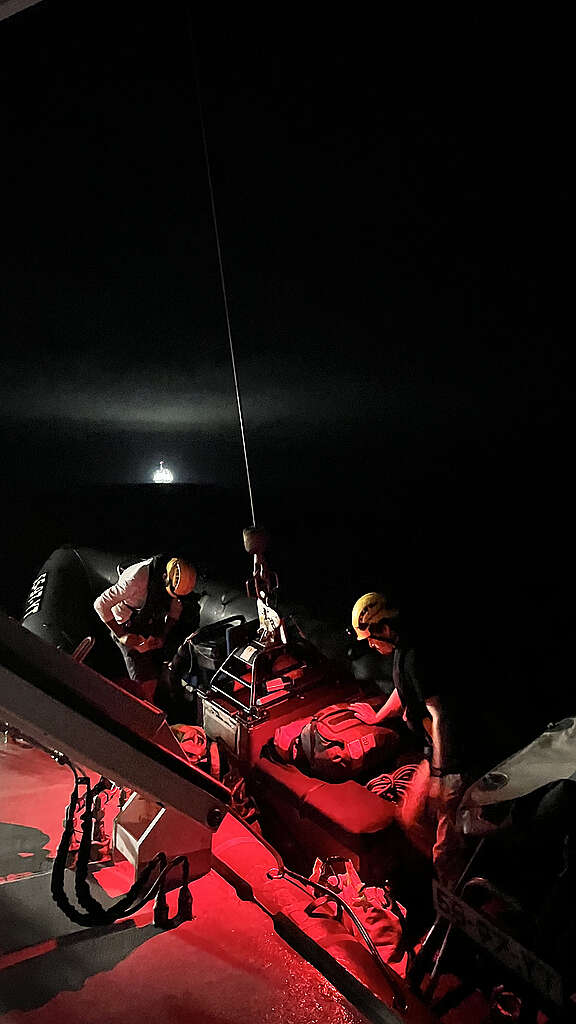
Our RHIBS are in the water! We’ve deployed our four activists and our ship crew on our small fast boats, headed to the gas platform. We’re carrying crew and equipment, plenty of food, all of our safety climbing gear, some big banners, cameras and a whole lot of heart… someone even has something to read after they get settled in.
5:26 AM AWST
Before sunrise activists prepared to launch RHIBS from the Rainbow Warrior.
Looking for a front seat view?
You can follow along with the Live Rainbow Warrior bow cam here!
Looking for more?
Follow us on Instagram for a peek behind the scenes and hear from our Rainbow Warrior crew.
Live blog: Greenpeace activists occupy Woodside gas project to save Scott Reef
Climate Change
Greenpeace activists climb and occupy Woodside’s Scarborough gas project calling on the Australian government to “Stop Woodside’s Dirty Gas” and “Save Scott Reef”
PERTH, Saturday 17 October 2026 — Four Greenpeace Australia Pacific activists are scaling and occupying a Floating Production Unit at Woodside’s Scarborough gas project off the coast of Western Australia, displaying banners reading: “Stop Woodside’s Dirty Gas. Save Scott Reef.”
- Photos and video available here and here. More will be uploaded throughout the day.
- Content and live updates will be uploaded to a live blog and to Instagram
Early this morning at 05:45 AWST, Greenpeace Australia Pacific activists launched from the Rainbow Warrior, Greenpeace’s flagship vessel, scaling and attaching themselves to a Floating Production Unit (FPU), a key piece of gas processing infrastructure at the Scarborough gas field over 200km off the coast of Exmouth.
Woodside has since confirmed it has initiated a temporary shut down of the FPU.
Greenpeace Australia Pacific is occupying the gas platform in peaceful protest of Woodside’s plans to drill for oil and gas at Scott Reef as part of its Browse proposal.
David Ritter, CEO at Greenpeace Australia Pacific, said: “Greenpeace Australia Pacific is taking action today to expose the unacceptable risk to Scott Reef posed by Woodside’s plans.
“Australians love our oceans. Woodside’s reckless Browse gas proposal would turn the magnificent Scott Reef into an industrial gas zone. Woodside wants to drill up to 57 toxic wells around Scott Reef, Australia’s largest oceanic reef, home to nesting green sea turtles, and endangered species like pygmy blue whales and the dusky sea snake; it is a place like nowhere else on Earth.
“Woodside has an alarming track record of oil spills, incidents and environmental neglect, and can’t be trusted with our oceans. From whaling in Albany in the seventies, to Woodside’s threat to Scott Reef today, there’s more than fifty years of history, of Greenpeace taking action off WA’s coasts to protect our oceans.
“There’s no future in new gas projects. Our future is in secure homegrown renewable energy, green industry and exports, where communities and places like Scott Reef are protected — there’s no future in dirty gas shipped offshore.
“The prospect of drilling for oil or gas on the Great Barrier Reef would be considered absolute madness today, but that is exactly the decision before the government: save Scott Reef or risk its destruction at the hands of a gas corporation.”
From aboard the Floating Production Unit, Dr Chris Holden, Greenpeace Australia Pacific activist said: “As a doctor, when I see new fossil fuel projects like Woodside’s Browse project being put forward, I can’t help but think about the impact this is going to have on the health of our communities and planet, and feel a sense of duty to act.
“Not only will this project do irrevocable harm to nature at Scott Reef, it will have a terrible impact on our climate, putting all of our lives at risk.
“On the Rainbow Warrior I’m carrying a copy of the 2025 Lancet countdown report, which warns that health impacts of climate change are worsening, with millions dying needlessly each year due to fossil fuel dependence, growing emissions, and failure to adequately adapt.
“With warnings like this from the leading global health professionals, our government simply can’t allow fossil fuel projects like Woodside’s Browse project to go ahead. It is their duty to do what is in the best interest of our communities.”
Almost half a million people have signed a petition calling on the government to Save Scott Reef and Woodside’s Browse gas project.
-ENDS-
Notes:
- Dial-in, SimSat and Zoom interviews with Geoff Bice, WA Campaign Lead at Greenpeace Australia Pacific, currently aboard the Rainbow Warrior, can be organised separately
Media contact:
Greenpeace Australia Pacific media team on +61 406 231 892 or +61 407 581 404
The board of the Fund for Responding to Loss and Damage (FRLD) will decide on Thursday on whether to “provisionally set aside” $20 million for Nepal to deal with some of the effects of the climate-driven flood it suffered in August.
The motion, seen by Climate Home News, has been drafted by a group of board members from both developed and developing countries and so is likely to pass easily at the fund’s first-ever extraordinary board meeting on October 22.
It invites the government of Nepal to submit a proposal for how to use the money, with the board then deciding at one of its regular board meetings whether to approve the proposal or not.
While Nepali officials have described $20 million as merely “symbolic” in the face of the $4.8 billion estimated costs of recovery and reconstruction, it would be the first time the new FRLD – agreed in 2022 months after devastating floods in Pakistan – has set aside money for a specific disaster.
Until now the fund has only taken requests through a single call for proposals, launched at COP30 in Belém last November, that gave countries six months to submit requests.
Most of the 180 projects the FRLD is currently considering are designed to help countries avoid damage from future climate disasters, for example by strengthening responses to floods in Bangladesh and Lagos.
The draft decision says Nepal’s proposal will serve as a pilot for how funding requests can be submitted outside of the fund’s current timetable. That could let governments seek funds quickly after a climate disaster strikes, rather than waiting for the next call.
This arrangement would set the fund apart from other United Nations funds designed for climate adaptation or cutting emissions like the Green Climate Fund.
Climate campaigners from Fill the Fund said the draft decision is “a real step forward” as it is “the first time this Fund has moved to respond to a specific disaster”.
Too little, too late
The FRLD was agreed by governments at COP27, set up and operationalised at COP28 in 2023 but has yet to award any money. The 180 funding requests it is currently considering would cost around $2.8 billion, but it only has $350 million to allocate.
The United Nations Secretary-General António Guterres has described the amount of money available in the fund as “ridiculously small” and Fill the Fund said $20 million “is a meaningful signal but it is a drop against an ocean of need”.
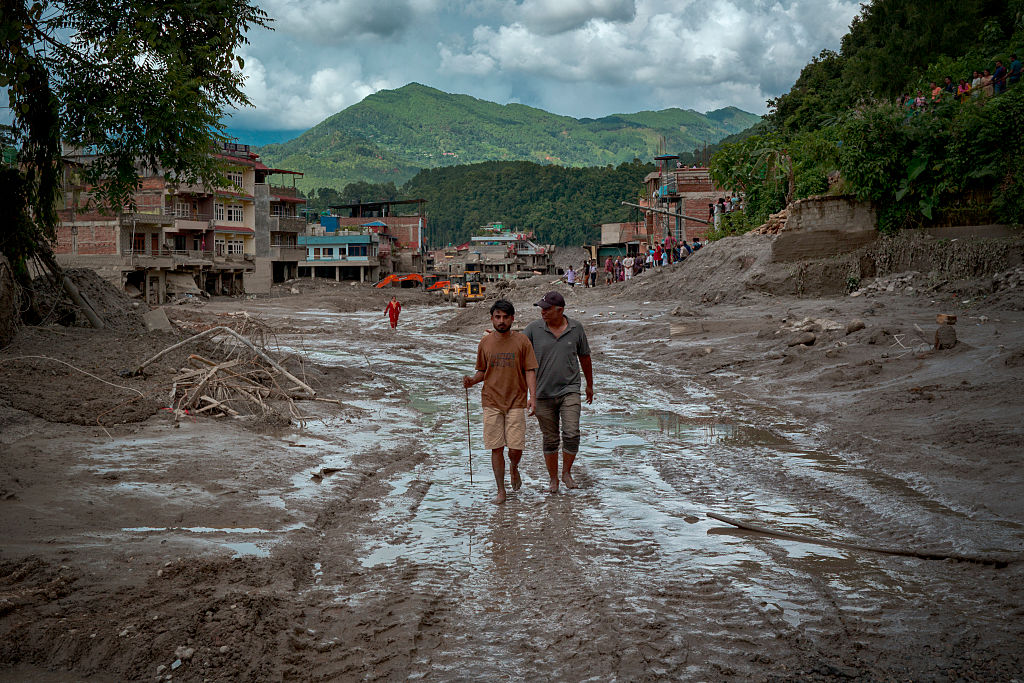
A glacial rock and ice collapse sent a torrent of water and debris through Nepal and the Chinese-administered region of Tibet on August 26. It killed more than 1,400 people, left thousands more missing and destroyed homes, bridges, roads and hydropower plants. Nepal’s finance and environment ministers quickly appealed to the FRLD board for funds, saying that “time is of the essence”.
Their call was followed swiftly by a letter from developing country FRLD board members urging the board’s co-chairs to organise an extraordinary meeting to allocate funds to Nepal.
But developed countries initially called for an informal consultation rather than a full board meeting. It took a further 45 days for the board’s co-chairs to organise an extraordinary board meeting for October 22 and to draft a motion for adoption.
Fill the Fund called for a permanent way of the fund rapid responding to disasters as “Nepal should not have required historic letters, an informal drafting group and the Fund’s first-ever extraordinary meeting simply to unlock an emergency response. The next country cannot wait two months and a bureaucratic marathon. Speed must be built in, not improvised.”
The post UN’s loss and damage fund set to give Nepal $20m for flood recovery appeared first on Climate Home News.
UN’s loss and damage fund set to give Nepal $20m for flood recovery
