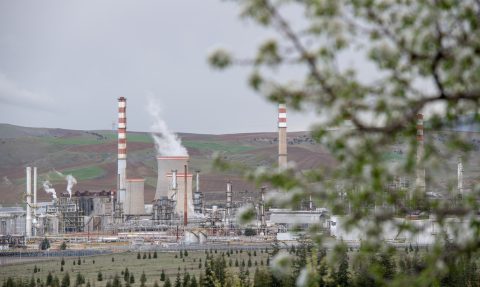
In January, China announced an end to export subsidies for solar panels and a phased end to value-added tax rebates on batteries. The cuts, which took effect on April 1, have raised concerns for renewable energy markets globally, including African countries, which rely heavily on Chinese imports.
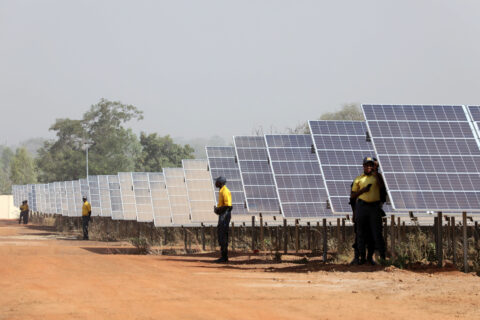
With solar increasingly becoming a reliable power source across the African continent, it has seen a boom in imports of related technology, mostly from China. The first decisive evidence of a solar take-off in Africa was recorded in 2025 when imports of solar panels from China to Africa rose sharply over 12 months, adding 60% more potential electricity generation capacity than in the previous year.
Energy think-tank Ember found that the growth was led by countries that have suffered widespread power cuts like South Africa, Nigeria and Zambia, where solar panels are increasingly appealing to businesses and households seeking reliable power without having to use expensive fossil fuel generators.
But experts fear this explosive growth could be affected by the cut in tax rebates for clean technology from China – and because of the Iran war, the prices of these technologies could rise even higher, making the transition unaffordable for many Africans.
-
Nigerians bet on solar as global oil shock hits wallets and power supplies
Fed up with an increase in outages and surging fuel prices, a growing number of homes and businesses are ditching their backup generators for solar systems -
Nepal’s EV revolution pays off as oil crisis causes pain at the pumps
Import subsidies, abundant hydropower and charging investments have spurred EV adoption, with electric vehicles now making up about three-quarters of new car sales -
Major oil producers among 46 nations joining fossil fuel phase-out summit
Canada, Australia, Brazil and Norway are set to attend the Santa Marta summit, but the world’s biggest fossil fuel producers are missing from the list


Climate Home News spoke to Karl Boyce, Chief Executive Officer of ARC Power, a renewable energy developer that works in Africa, about what these subsidy cuts could mean for the continent, how it can prepare for price and demand shocks, and what must be done to bridge Africa’s energy access gap.
Q: How will the recent export subsidy cuts by China affect the growth of clean energy usage in Africa where it’s increasingly becoming a reliable source of power for communities?
A: China’s removal of the export subsidy will certainly impact this sector in Africa, but probably not as extensively as we might first think. Solar pricing has dropped significantly in recent years, so this might just level it out to a more realistic and stable price in the longer term.
A product shortage in the near term could be a possibility, as rushed procurement might occur to secure products ahead of the next phased rebate drop in 2027. In parallel, we have already seen shipping pricing increasing from some of our recent orders, due to the war in the Middle East.
Regarding battery storage, various potential manufacturing opportunities are being explored, but these are still nascent, despite Africa having significant amounts of the critical minerals needed for battery manufacturing.
African leaders seek investments in ailing grid infrastructure to achieve energy goals
Q: About 600 million people still lack access to electricity in Africa. What are some of the barriers to bridging this gap?
A: One reason is a lack of access to funding at scale across the sector. Another is that regulations in some African countries are still evolving and changing, which makes the process slow.
With mini-grids, it’s quite challenging because most of the connections in a community will be households who are probably paying [about] $3 a month for their power, which makes it really difficult for developers or investors to actually get their money back. It might take 10 years.

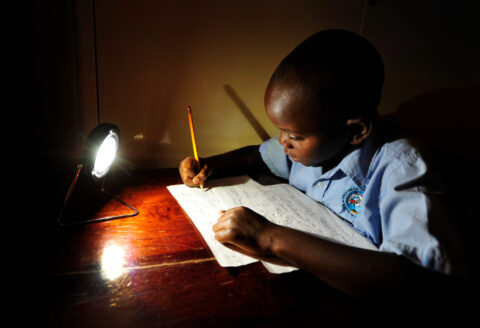
A lot of funding has gone into these solar home systems, which is great just to give people lights for the first time. But we’ve seen with all the communities where we’re working that people want more than that. They want to be able to set up their business, and they don’t just want to be able to charge their phone and have a few lights – they actually want the ability to have appliances and things like that.
I think the risk appetite for investments in solar mini-grids seems to be changing, hopefully for the better. Also we seem to be seeing more and more investors focusing on impact as well, which is so nice and so positive to see.
Q: We’re less than four years away from the deadline for the UN’s universal energy access target and the gap is still far from being bridged in Africa. Can the continent meet the 2030 target and how are initiatives like Mission 300 helping?
A: Last year at an event in Kenya, the secretary-general of Sustainable Energy for All, Damilola Ogunbiyi, was talking about the fact that the last few years were the first time energy access was actually reduced because it hasn’t kept up with population growth.
Funding gap threatens next round of IPCC climate science reports, chair warns
But, while I would confidently say that we’re not going to achieve the Mission 300 target of connecting 300 million people in Sub-Saharan Africa to electricity by 2030, I think they’ll go a long way towards it.
Even though there are only about three-and-a-half years left, with the funding that’s being focused on it, I think the World Bank seems to have made it kind of a priority now [through Mission 300]. I am hoping that there will be a big step towards it. Even if they achieve half of their target, that would be such a significant step forward.
To go further towards achieving the 2030 target, there has to be a really big push on improving regulations in the countries so they become less bureaucratic. It just speeds up the process, because that’s the thing we have seen firsthand, where even if you have funding and you have the ability to do it, things are still being slowed down by regulations.
It’s hard because you’ve got so many different countries with totally different kinds of business environments and business cultures, different regulations. This is the challenge. Obviously there’s not going to be one thing that just fixes everything across the continent.
Also, I think that the approach to funding definitely has to change. We need more concessional funding to support other funding to come in, to de-risk it slightly. Access to capital has been one of the biggest barriers. And it always frustrates me, because they always say there’s so much capital out there, but not enough good projects. But when you speak to any developer, they’re always saying the same thing: it’s just trying to access capital.
Q: ARC Power operates a model called FUSE and, with support from the World Bank under the Mission 300 initiative, you are helping fund energy access in some African countries. How are models like yours helping to move the needle in areas that lack access?
A: We were building mini-grids in Rwanda and the government changed their strategy and decided they wanted everyone connected to the national electricity grid, which is obviously very ambitious. But they basically said, we don’t want any more mini-grids in Rwanda.
Some other developers left and pulled out of the market – and it forced us to rethink how we work, and this is where we developed the FUSE model. It’s a public-private collaboration with the utility company and the government, but we’re bringing in private investment to build out their energy infrastructure.
-
Africa records fastest-ever solar growth, as installations jump in 2025
Africa’s solar power installations have increased sharply, driven by utility-scale projects and privately financed rooftop and commercial systems -
Boom in solar panel imports boosts hopes for clean energy take-off in Africa
Africa’s solar imports from China jumped 60% in the 12 months to June 2025, reaching an all-time high -
How off-grid solar is beating the odds to transform lives in rural Africa
By embracing solar power, many African countries are seeing improvements in electricity access, but financial barriers remain

So we’ll sign a FUSE agreement with the utility company. We will then finance, design and construct grid expansion, so this is still first-time energy access, it can still be real rural areas, but we will basically build out an extension to the national grid. We put in solar, we’ll see what’s connected and how to connect everyone.
Our strapline as a company is “to power” and we are very clear with the utility companies and governments that when we go into an area we want to connect everyone. We’ll connect everyone and then once it’s all constructed and built, and the utility company has ensured it’s to their standards and they sign off, then they pay us over, say, 10 years.
What this is allowing us to do is really accelerate energy access. So, for each dollar invested, we can probably do five times as many connections as we would have been able to do if we were building just a mini-grid, just because we get our capital back quicker.
It’s also good for households because one of the challenges you have is often that you might have a utility company and a mini-grid developer almost competing for a site.
The other thing is the tariffs. You have to have this kind of cost-reflective tariff as a mini-grid operator to get your money back, which means it could be five times the price of the national grid tariff. In Rwanda, we saw houses connected to the national grid probably 500 metres away from a house that’s connected to a mini-grid and the house connected to the mini-grid is paying five times the price.
To meet Africa’s clean energy goals, investors urged to tolerate higher risk
Q: Which would serve Africa better – is it mini-grids, utility-scale renewables that can be fed into the grid, or smaller-scale rooftop installations that serve households?
A: In Rwanda, the FUSE model definitely works. Because it’s a small country, nowhere is more than probably a few kilometres from the grid. In some of the larger countries like Mozambique – which is a great example where we’re operating – I think there will always be a requirement for mini-grids, but they complement each other.
In places where you’ve got the national grid infrastructure and it’s growing slowly, we would go to the utility company and say: “You obviously have your plan of where you would like to expand the grid, and all of these tens of thousands of houses that you’d like to connect – let us do it, and we will bring in funding from the private sector”, and then it makes it much more affordable and we can accelerate it.
India sets achievable green electricity and emissions intensity targets
West Africa is absolutely on our radar, it’s where we will be definitely targeting. At the moment we are in Rwanda, Mozambique and Zambia, we’re targeting another eight countries in East and Southern Africa in the next six months, and then our plan is to go and start pitching to West African countries.
The World Bank and its International Finance Corporation arm have clearly said to us that they’ve seen the FUSE model can be one of the key solutions in this Mission 300 because it’s so scalable.
This interview was shortened and edited for clarity.
The post Q&A: Will subsidy cuts for Chinese clean-tech exports hurt Africa’s solar boom? appeared first on Climate Home News.
Q&A: Will subsidy cuts for Chinese clean-tech exports hurt Africa’s solar boom?

Countries’ climate plans would cut global emissions only half as much by 2035 as the UN projected a year ago, its annual assessment showed, after the US exit from the Paris Agreement and weaker new pledges worsened the outlook.
Taking into account the nationally determined contributions (NDCs) of 154 countries, which cover about 71% of global emissions, and current policies in the rest of the world, global emissions would fall to about 6% below 2019 levels by 2035. Last year’s update, based on 113 countries, put the figure at 12%.
According to the Intergovernmental Panel on Climate Change, emissions need to go down by 60% over the same period to limit global warming to 1.5C – a threshold that is now inevitably going to be breached, at least temporarily.
The latest NDCs put the world on course for between 2.1C and 3.2C of warming by the end of the century, depending on what countries do beyond 2035. That is slightly higher than the 1.9C–3.0C range that the UN climate body estimated in last year’s update, published during COP30.
-
Early speakers’ list suggests few powerful leaders will attend COP31
Just 77 heads of state or government are scheduled to address the COP31 climate summit in Antalya, a third less than the COP28 peak -
Paris Agreement committee names three countries snubbing it over NDCs
More than 30 countries have failed to submit an NDC, but only three have repeatedly ignored the committee’s efforts to engage with them


US exit worsens picture
A major factor is the US, the world’s second-largest emitter. Last year’s UN assessment included the pledge to cut emissions by between 61% and 66% by 2035, made under the administration of former President Joe Biden.
But, since the US has officially left the Paris Agreement, its NDC has been excluded from the tally and its emissions projections have now been derived from current policies, which point to far higher levels of pollution.
US emissions grew significantly last year as a result of growing electricity demand and the policies of President Donald Trump’s administration, which has rolled back support for clean energy and backed the burning of fossil fuels.
Weak new NDCs
Another reason for weaker emission reduction projections is that the approximately 40 new NDCs submitted since last year’s update have been less ambitious than the earlier UN modelling had hoped for.
India, the world’s third-largest emitter, submitted its NDC in April. Its plan would let emissions climb to 6.3 billion tonnes by 2035, almost 64% above 2023 levels, according to analysis by Climate Action Tracker (CAT). Its targets are weaker than India’s current policies and it could meet them as early as 2030.
-
Turkish giant sponsoring COP31 cut climate goals then cashed in on oil boom
COP31 sponsors should be screened for “climate integrity”. Yet Koç Holding has become a top partner while its oil refiner runs flat out and its climate targets slip -
Early speakers’ list suggests few powerful leaders will attend COP31
Just 77 heads of state or government are scheduled to address the COP31 climate summit in Antalya, a third less than the COP28 peak