

New PTC Legislation, AES Potential Sale
Register for the SkySpecs webinar! The crew discusses the resignation of Wind Europe CEO Giles Dickson and his impact on the organization. They examine a new executive order from the White House targeting ‘unreliable’ wind and solar energy sources, analyzing its potential effects on tax credits and the renewable energy market.
Sign up now for Uptime Tech News, our weekly email update on all things wind technology. This episode is sponsored by Weather Guard Lightning Tech. Learn more about Weather Guard’s StrikeTape Wind Turbine LPS retrofit. Follow the show on Facebook, YouTube, Twitter, Linkedin and visit Weather Guard on the web. And subscribe to Rosemary Barnes’ YouTube channel here. Have a question we can answer on the show? Email us!
You are listening to the Uptime Wind Energy Podcast brought to you by build turbines.com. Learn, train, and be a part of the Clean Energy Revolution. Visit build turbines.com today. Now here’s your hosts, Alan Hall, Joel Saxon, Phil Totaro, and Rosemary Barnes.
Allen Hall: Welcome to the Uptime Winner d podcast. I’m Alan Hall in the Queen City, Charlotte, North Carolina.
I got filter the tower out in California and Joel Saxon is in wet Austin, Texas. It rained again today. The storm waters have been severe, like a hundred year flood Situations in Texas have been very dangerous and a lot of people have been injured down there. yeah, our condolences go out to everybody affected down in Texas and there’s supposed to be some more severe.
Rainstorms in the East coast of the United States. So hold on tight. there’s a lot of news going on [00:01:00] this week around the world. the one that sticks out first and I wanna bring this to the attention of everybody that, if you haven’t heard yet, is, wind Europe. CEO Giles Dixon has announced he’s stepping down after 10 years as leading WIN Europe.
And I was stunned when this happened. And obviously, I. Don’t have any influence in when Europe being an American. I just watch from the outside and I, from what I’ve seen and attended the conferences over in Europe, everything from what I’ve seen under his tutelage has been great. And the promotional materials and all the information that when Europe provides, has been outstanding.
so Giles is going to go back to teaching. He’s gonna go back into the schoolhouse. but it, seems like it’s a shock to everybody at, Wind Europe, at least that’s the outward appearance. Board chair Henrik Anderson, who is the head of Vestus Praise Dixon’s, tremendous contribution, noting [00:02:00] that he will leave Wind Europe stronger than he when he arrived.
And that’s clearly the case. Phil, do you have any insight as to what’s going on behind the scenes over in Wind Europe and with Giles?
Phil Totaro: I do not, but I can also speak from personal experience, having met him, I wanna say back in 2018 or probably 2017. and I can certainly attest to the, the work that they’ve done.
As you might be able to see, I’ve got two, things sitting here behind me that are awards from, the Wind Europe and, predecessor to, that, we’ve, done a lot of work over in Europe and it’s been facilitated by, the Wind Europe, events that they do as well as the publications that they’ve put out.
certainly my thanks go out to, to him and, [00:03:00] wish him well on his, future endeavors.
Joel Saxum: I would say from an American standpoint, been to wind Europe now, man, I don’t know how many times, half a dozen times or something like that. They do a really good job over there. And this is from, the leadership comes from the top of just circling the wagons, right?
Bringing everybody out to the show, getting more voices involved, giving, getting executive leaders from a lot of these large operators, giving them the space to talk and putting them, in an area where their voices are listened to. So like when, the last time I was at Wind Europe, I think it was in, bill Bao.
so I went, walked into Bill Bau, and when you walked into the conference center, there was big banners hanging of all of the key speakers and what their messages were with pictures of their faces, six feet tall, hanging in all the hallways. And I thought, what a great way to get visibility to the industry, right?
Because if anybody walks in here, because of course at those shows you get, impartial news [00:04:00] agencies and other things going. You see that stuff right in the, European realm. I’m like, I recognize the face of the CEO of RWE and, these things like they pop up. They’re, good at getting in the face of the, public and getting their message across.
And I would like to see us do more of those things here. under giles’s tutelage there, fantastic job. he said he’s gonna step back and go to teaching and give back to his local community where he’s from, and I think that’s fantastic. it’s a, a career shift.
He’s given a lot to the wind industry. and moving on. So now, we have those Giles in Pierre walk and talk videos that they put out every, so often, they’re gonna have to find someone else to walk and talk with.
Allen Hall: That’s gonna be hard to do. Those win flicks are really well done. They’re great promotion for the industry in, Europe.
I, there’s very little that I’ve seen that even really compares to them the amount of knowledge you’re gonna get in about four and a [00:05:00] half minutes about what is actually happening on the ground in Europe. You just don’t find it anywhere like that. The, they are really good tuned to all the inner workings of the eu, the individual countries, all the manufacturers.
They have the pulse of that industry and it’s, gonna be a lot to live up to wherever they nominate to be. The next CEO win Europe. It. It has a high bar. A very high bar. Don’t let blade damage catch you off guard. OGs. Ping sensors detect issues before they become expensive. Time consuming problems from ice buildup and lightning strikes to pitch misalignment and internal blade cracks.
OG Ping has you covered. The cutting edge sensors are easy to install, giving you the power to stop damage before it’s too late. Visit eLog ping.com and take control of your turbine’s health today. Over in the United States, the White House has issued an executive order targeting, what has been described as [00:06:00] quote unquote unreliable wind and solar energy sources, which is a matter of strong debate.
The executive order titled, ending Market Distorting Subsidies for Unreliable Foreign Controlled Energy Sources. Does that make an acronym, guys? I don’t think it does. The order directs the Treasury Department to strictly enforce termination of clean energy tax credits already included in the recently passed budget reconciliation bill.
the feeling on the street is this was done to placate some of the. Congress, people that wanted more action against wind and solar, mostly from petroleum, based states, and that they didn’t feel like they got enough in the legislation, so they wanted to reinforce it. I, don’t think this has any real effect, but in in the larger scheme, but the one area which can.
Be adjusted with or played with is the [00:07:00] timing of when projects have to go in and what the percentage of projects has to be done to qualify for the tax credits. And Phil, you want to provide some insights into what can happen with the qualification aspect.
Phil Totaro: Yeah, so let’s start with understanding what got approved in the bill.
Any project that starts construction after July 4th, 2026 will no longer be eligible for a production tax credit. Going back to Alan’s comment about this executive order, the intent. There is to direct the Treasury Department, which oversees obviously the IRS, which has a final say in what the qualification criteria are for getting the, Companies who wanna claim the production tax credit, you have to submit an application to be able to do that. they are being directed under this executive [00:08:00] order to reexamine whether or not there needs to be changes. That would be I. Basically considered anti renewable. So anything that can take, money off the table for wind and solar is, what they’re trying to accomplish with this.
And what they can do, that’s outside the scope of the bill is they can. Have, the threshold for what constitutes start of construction raised such that, let’s call it about 15.3 gigawatts out of the 30 gigawatts that’s already, into the, construction and permitting queue.
There’s about 15 gigawatts of that is at jeopardy if we can’t. if they raise these thresholds and if we can’t get started on construction with all that by, July 4th, 2026.
Joel Saxum: Phil, I got a question for you ’cause I wanna clarify this. We know that solar PV [00:09:00] onshore wind almost exclusively, and I think it is exclusively, will harvest PTCs over the lifetime instead of the 30% ITC credit for CapEx, however.
Offshore wind usually goes for ITC. And so I wanna clarify this also pertains to ITC as well. That’s, under, under the same rule set as the PTC. Yes. and ITC if you don’t know, is investment tax credits versus production tax credits. So you, that’s a onetime, wham. on, I think 30% of the CapEx of a project.
And that’s why you see it in offshore wind because it’s so dang expensive for offshore wind. But this, so the same set of rules is gonna hit both of those, right?
Phil Totaro: Yes. And, regardless of the executive order, Joel, the, it, the changes in the law that they just made in the tax and budget bill, they passed these changes in the law, actually potentially preclude.
The Mar Wind project in Maryland and the New England one and two [00:10:00] projects, in, Massachusetts, Connecticut, et cetera. that general vicinity where, multiple states are gonna be off taking power, those projects may not be able to get their construction finance in place and. Meet the start of construction threshold, by the time that they need to be able to, in order to claim the, tax credit.
So they could be, these projects are potentially in jeopardy now of not being able to claim that ITC, because of these, the change in the law passed by Congress and the con in combination with. The executive order that is likely to, increase the threshold for what constitutes startup construction on a project.
Joel Saxum: Could you see someone with a bold strategy saying, you know what, because PTCs may run out, we’re gonna take the 30% ITC bam right now on an onshore wind project. A big one. Could you see that?
Phil Totaro: Potentially, yes. Particularly if it’s [00:11:00] gonna, it’s the down to the number crunchers at that point. And if somebody says, you know what?
That makes a lot more sense than getting a reduction. look, we’ve, Intel store’s done this analysis. We released a research note about this. It’s gonna reduce, this. Change in the law is gonna reduce what? the revenue that asset owners for wind in the USA get by about $16 billion.
Now, keep in mind that ever since they started this production tax credit back in the early nineties, it’s paid out about $66.3 billion to date. And is $16 billion really saving us a whole lot, especially when you consider that we’ve got increasing demand, a five year backlog on gas. Nuclear that can’t be built.
And we talked last week about, the situation with, trying to sell people liquified natural gas. where exactly are we gonna get our electricity from? Because you’re all about to face brownouts in [00:12:00] about, a year and a half here. So if it’s not coming from wind and solar, I, don’t know where it’s coming from.
Allen Hall: The offshore projects on the east coast will have to be finished. They’ll just go back to the states and renegotiate the contracts for the offtake pricing.
Phil Totaro: If they can.
Allen Hall: I, think there’s always opportunity in tax law for things to get a little funky if you haven’t noticed that. the IRS can do all kinds of crazy things on its own, and obviously, things get tagged onto additional bills.
There’s all kinds of bills going through Congress and nobody knows exactly what’s going on at midnight when they pass. So it wouldn’t shock me if some of these projects get a little bit of coverage by the states and the senators in particular that backdoor it to protect them. Because otherwise what’s gonna happen is Connecticut, Massachusetts, New York, maybe all the way down towards Virginia, New Jersey, are going to have to raise the prices to get those projects in.[00:13:00]
They’re still gonna happen. I, just don’t see them not happening. Back to your point, Phil, what are they gonna do for power? If they don’t have any other opportunities. Can I shift gears a little
Joel Saxum: bit here? The I’m, what I wanna understand now is, okay, bill, big beautiful Bill has passed, executive order, signed, enforcing it, whatever.
Today is July 9th that we’re recording. What does July 10th look like for the next two years? For all of our friends in the wind industry that are ISPs. That are specialists that are, technical field advisors for construction and crane companies and bolting companies and all this stuff. What does the next two years look like for them?
Because in my mind it means hammer down pedal to the metal. People are gonna be scrambling to get support to build their projects out. So everybody that’s in ISP is gonna be busy as hell for the next few years. At the same time, if I’m an operator, I’m thinking I’ve got a, an odd fiscal cliff. Coming and I need to [00:14:00] make sure that my turbines are running tip top shape while I’m still harvesting PTCs.
Before that date, because when that date comes, I gotta be o and m efficient. I gotta be spend efficient, these things have to be running well. I need to get ’em up to snuff, tear that apart. Does that make sense?
Phil Totaro: Oh, it, makes perfect sense. So right now what everybody, particularly anybody that built a project that.
They wouldn’t be able to repower prior to the end of this PTC cliff in 2027. What they’re looking to do is exactly what you just mentioned, Joel. They have to get operational efficiency improved and they have to hunt for the best possible PPA that they can get. now the good news is that. the market average right now for PPAs is about 55, just under $56 a megawatt hour, but if that drops, it’s gonna throw folks like that.
And they’re 65, or, I’m sorry, 62.115 [00:15:00] gigawatts worth of projects in that time period I mentioned 2019 to 2023 that are not gonna be able to do a PTC driven repowering. So they’re gonna have to improve. Performance they’re gonna have to life extend, and they’re gonna have to go find, a better, whether it’s a corporate offtake or something, a high PPA, that’s gonna help them sustain their profitability.
Allen Hall: The data I’ve seen more recently about what electricity prices are going to be in a year or two shows them up almost 10%, or sometimes more than 10%. So they’re gonna have to climb the, money’s gonna come from somewhere because. Back to Phil’s original point, if you don’t develop it, you’re gonna have problems with power supply.
you’re gonna have brownouts and restrictions and all the things you’ve been trying to avoid for the last 20 years, it’s going to come about. So I think the offtake companies and all the corporations involved in this that are pulling massive amounts of power off the grid are going [00:16:00] to have to encourage these projects to go forward.
They’re going to have to renegotiate PPAs. the, sites are gonna get built. I think there may be more opportunity for a little bit more money for wind and particularly solar just because. Gas isn’t gonna fill it, no one else is gonna fill it. The prices are gonna go up, and I think you could ask for a higher PPA price and get it because there’s nobody else that can provide the power.
Joel Saxum: I think we should benchmark this, right? Like a couple a month ago or so, the three of us, or more than that, we talked about what our, local power prices were and we’re in completely different markets. Alan, you’re on the east coast. Phil, you’re on the West coast. I’m down in Austin. In the Ercot market, I think the Ercot market will adjust quicker.
Simply because it’s, unregulated, right? It can, it’ll move. It’ll move. It’ll move now. So I think we should do that. let’s once a month collect that data again, just to see what it looks like over the next few years and check the trend. Because I think, like you said, [00:17:00] it’s gotta come from somewhere at the end of the day, who’s paying the bills, the consumer, And that’s the frustrating thing about, to me, just the frustrating thing about what’s going on with this bill is. Is the consumer’s gonna end up paying and a lot of times the consumers in these deep red states, that’s where wind is. It doesn’t make sense to me, but I don’t make all the decisions.
Allen Hall: just play it out in your head.
If GE is making the, gas turbines that are gonna provide electricity, just say GE is a focal point, probably is. Are they gonna increase production 50% over the next year, two years, five years, 10 years? They can’t do it. It’s impossible. It’s impossible. Exactly right. So although the current administration is going to downplay wind and solar.
It’s a physics problem. You can’t do it. This is not a Pol politics problem. This is a physics
Joel Saxum: problem.
Phil Totaro: But he, so here’s the good news though. Going, back to Joel’s point, if you work [00:18:00] at an ISP, if you own a company that owns cranes, you are gonna be in demand. full employment for everybody.
And here’s the other thing, a lot of these companies that have been overlooked as far as, kind of asset management, platforms and digital services, our friends over at Sky Specs, as, being one example. they are gonna be also very in demand because the companies, the asset owners that said, oh, I can get by without, digital solutions.
You’re not gonna be able to, when you need to be able to optimize your performance to hold out until 2029. Because if, your project starts dropping off precipitously, you don’t have a PTC that you can leverage to repower your project anymore. And who knows what actually happens in 2029. Hopefully we get something back in place that, like Alan mentioned, and Joel mentioned, a week or two [00:19:00] ago where oil and gas already have permanent subsidies.
we can argue about whether or not. subsidies for renewables are a good or a bad thing and all that, but wind energy alone in the United States is a $500 billion plus industry, and we’re talking about, again, $66 billion paid out over 30 plus years, and $16 billion in the immediate term to help support an industry that creates, more than half a trillion dollars worth of value.
In the United States jobs, tax, revenue, et cetera. let’s hope everybody gets the message and, starts playing it smart from here on out.
Allen Hall: As Wind energy professionals staying informed is crucial, and let’s face it difficult. That’s why the Uptime podcast recommends PES Wind Magazine. PES Wind offers a diverse range of in-depth articles and expert insights that dive into the most pressing issues facing our energy future.[00:20:00]
Whether you’re an industry veteran or new to wind, PES Wind has the high quality content you need. Don’t miss out. Visit PES wind.com today. In this quarter’s, PES Wind Magazine, which you can Google PES Wind and it’ll take you right there. You can download your own copy. There’s a really good article from Safe Lifting Europe, bv and some of their sustainable practices.
And if you’ve seen some of the work that they do, they provide. All the green colored equipment, the lifting equipment, and they’ve shifted from, a traditional ownership model where you buy the harness or the lifting piece to a rental service, which is a totally different model because most of the time that I’ve been around heavy lift, we ended up buying all the pieces, but renting this makes a lot more sense.
But there’s a lot to that when that happens. And it is, a. Truly a different approach to what has been a very, [00:21:00] wanna call a, very state industry where it hasn’t moved around too much. you lift things, you check, make sure the everything is the, same. But the, problem has been, is that.
It’s pay to play and it’s hard to get into that industry if you wanna buy the equipment. And so safe lifting Europe is, has a different model and it’s about time. Joel, I, know you’ve been around some heavy lift equipment yourself. This is, this, doesn’t happen very much. I have not seen hardly any of this in the United States ’cause these guys are based in the Netherlands.
Joel Saxum: So again, I, and I dial back to this offshore oil and gas. Offshore oil and gas is such a specialized industry with, when you’re lifting something, you may be using a piece that looks like you’re lifting something in a yard, but you’re actually using that in 3000 feet of water. so there’s all this specialized equipment all the time, and if you’re an operator or an IIRM consultant or whoever else that’s doing this work, it’s so cost prohibitive, capital [00:22:00]intensive to get into these things and it reduces the amount of players in the market.
That’s the trouble it, concentrates ’em, right? You get to these certain projects and Only Cype can take it on because they’re the only ones that can afford to buy the kit. What this does is it opens up the market to money. More people, right? Because then that offshore oil and gas world, this is a model they use all the time.
There’s companies dedicated to this expensive kit, like there’s a company called Unique Group that we used to use all the time, and they have water weights for testing and this, and the good thing about them, and it was electric, it was electronics and all kinds of stuff. When you got the kit, it was tested, calibrated, certified, ready to roll, beautiful in a crate.
You know what I mean? So it showed us like, Hey, we need this piece. And it showed up on site and it was ready to run, and it was all done by a third party. You pay the day rate on it. Once you’re done, you ship it back. Now, from a contract standpoint, that’s awesome because you just charge cost plus whatever percentage you put on it to your client.
It’s a pass through cost, you’ve dealt with it. Project gets done. That’s awesome. I think that’s, it opens up again, it [00:23:00] opens up the market. You can use mult, more vessels, more companies, good on them. And they’ve done a, this is a, this is something you and I really Alan, is this clever marketing.
Clever marketing, clever branding. There’s companies that do this well, and this is good, right? Because it’s rental kit that all looks the same. So no matter what vessel it’s on, you’re gonna see this, specific color of green right down here in Texas. Whenever I see a red, f two 50 go by, I go, oh, that’s Weatherford.
You know them, you know those guys right away, right? The Weatherford guys with the red jumpsuits and the red bumpers on the truck and stuff. you always see that. Or, like, in the offshore world, deme, blind green, Deme, you can see a deme vessel from miles away and you go, that’s that.
That’s them. That’s them. This will catch on. I like their, what they’ve done. Kudos to whoever thought of that as a branding initiative. I think this is only good things for the entire market, having a player like this that’s, specializing in that lifting kit.
Allen Hall: Yeah, great [00:24:00] article and you need to go check it out.
You can download this article at PS Wind. Just visit, your Google engine type in PS Wind. It’ll take you right there. Download it. There’s a ton of great articles in this quarter’s edition. and good on to safe Lifting Europe, bv. A lot of discussion about companies being, sold at the minute, and Joel and I have heard.
Quite a number of stories over the last probably month or so, but a ES corporation is, stock has gone up and down quite recently because the impression is, that they are for sale and they’re a Virginia based, renewable power company. And it sounds like they’ve had takeover interest from, investors, including Brookfield Asset Management, BlackRock of course, and Global Infrastructure Partners.
Now, a ES has a unique client base. They are really tied into the [00:25:00] data centers and ai centers, which from which are the big names, and Microsoft, Google, and Amazon, if you named the three. Those are the three. but it has more recently, as has seen their stock fall since about 2022. So it’s down quite a bit.
However, the future will look bright. This would be the perfect time to pick up a ES at probably a, what would be considered a reasonable price. But the dollar numbers, the market cap on a ES is pretty big at the moment. Joel? Yeah, I think what, what did, we see today? Like 40
Joel Saxum: billion. 40 billion. So there’s been a couple of big.
Acquisitions in the last year, right? There was the, GIP bought that company, New Mexico, can’t remember the name of it, that one. And then the Constellation bought Calpine for 16 billion. So that was another big one that just happened. of course we know BP is for sale. We should see an announcement on that at any [00:26:00] time.
We don’t know who or what that price is. but that’s gonna happen for bps, US onshore assets. So there is some big things moving and grooving. I could see, like I, I think off air I was talking BlackRock. GIP is a big one. Brookfield, I know Phil, you had some opinions on Brookfield, but, if a ES.
They’ve got some stuff in, in the states. They’ve got a lot of stuff in the Latin American countries, south America as well, Argentina, Chile, Mexico, they got some cool wind farms. If they’re doing some due diligence and you need someone to go, the uptime crew can go to Hawaii for the one you got out there, we’ll definitely take a peek at that for you or whoever the prospective buyer is.
but yeah, we, have friends over there. We know some of the engineers at a ES. of course, when these acquisitions happen, for the most part, it doesn’t change much. they just have a different t-shirt to wear and a different email signature. there’s some good people over there.
but yeah. Phil, what are your thoughts on who a prospective buyer for this a [00:27:00] ES thing could be?
Phil Totaro: Yeah, besides the two companies that have been named, you could have Masar also potentially kicking the tires if they wanted to expand their footprint. but I think Brookfield is probably the best fit.
besides some of the operational synergies that they already have with projects they’ve got, it fits Brookfield’s, as you mentioned, Joel, they’ve got assets in, Peru, Chile, and, I wanna say some transmission related assets as well in, in Brazil. that probably fit Brookfield’s portfolio a little bit better than anybody else, but I wouldn’t put it out of the realm of possibility that.
somebody dives in and, tries to gobble them up because they’ve built a pretty good portfolio, and a healthy one as well. This
Joel Saxum: week’s Wind Farm of the week is the Wheat Ridge Hybrid Energy Project. Why this one popped up on the Wind Farm of the Week is looking [00:28:00] forward to what’s going on in politically in the states right now, thinking about operational efficiencies and how do we squeeze as much more out of a project as we can.
And the interesting thing about this is the first project in the United States that combines the three most common renewable energy kind assets. You have wind on site, you have solar on site, and you have battery storage on site. Now, the advantage to that, of course, is it’s pretty simple. it’s combines the BOP costs.
So you have the same transmission, lines. the same o and m crews and that kind of stuff all in one spot. So it makes more sense. You’re double dipping on these, capital costs from the beginning. so a little bit about the wind farm. It’s up in Oregon, marrow County, near Lexington.
It’s about 300 megawatts of wind. There’s a, there’s 120 GE turbines up there. Have 2.3 and 2.5 megawatt units. There’s also a 50 megawatt, solar [00:29:00]array. And there’s a 30 megawatt, 120 megawatt hour lithium ion battery storage system. So together there’s 350 megawatts of production plus that nice smoothing, side of the batteries with a little bit of, there’s about four hours with the storage there.
so you can power efficiently a hundred thousand homes off of this one project from one spot. it was jointly built by Portland General Electric and NextEra. So NextEra’s got their hands in a lot of stuff. They got their hands in this one. and it was the first of its kind. It’s a util utility scale facility with wind, solar, and storage all on one site.
and because of that, you’re, balancing, the storage or the storage balances that grid variability and delivers power even when, you know the sun, wind aren’t optimal. I personally would love to see a ton more projects like this. it, and it has a lot of those same numbers we see on a lot of the Wind Farm of the week, or, anything.
It, 300 jobs created, 10 [00:30:00] full-time staff, millions of dollars in tax benefits. so really cool project. And as we go into the next phase of the energy transition, would love to see more projects done like this, or even retrofitted like this would be pretty cool. so the Wheatridge Hybrid Energy Project up in Oregon,
Allen Hall: you’re the Wind Farm of the week.
And that’s gonna do it for the Uptime Wind Energy Podcast. Thanks for joining us. Stay tuned. There’s a lot happening in wind. Don’t get discouraged. It’s all gonna be okay, and we’ll see you here next week on the Uptime Wind Energy Podcast.
https://weatherguardwind.com/ptc-legislation-aes/

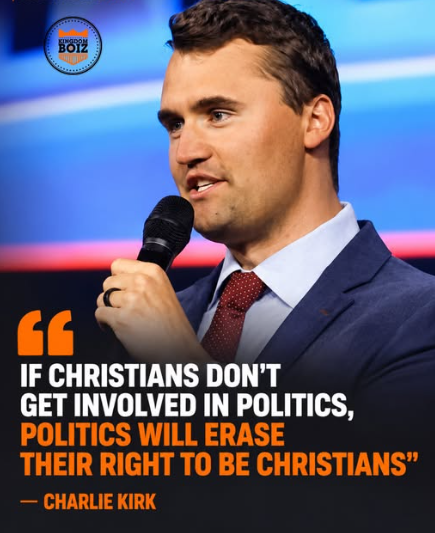 I suppose there are people who believe that the radical left is on a path to make Christianity illegal, and perhaps to install Islam as the official religion of the United States. This is remarkable for two reasons:
a) Every schoolchild in America learns about the First Amendment’s guarantee of freedom of religion at a very young age, and
b) This country made it successfully though 250 years with no one being ignorant enough to bring up this ridiculous concern.
One would hope that this figure of near 60% would indirectly translate into Trump’s ouster before he can take full control of the U.S. government.
We vote Trump’s stooges out of office in November and replace them people of honor. Trump is impeached, convicted and removed. From there, justice takes its course.
Nordex Q3 Orders Jump 30%, Vestas Bets on Australia
Nordex Q3 orders jump 30% and Vestas lands about a gigawatt in Australia. Plus why turbine factories skip Australia, high project costs, and whether batteries can replace coal.
The Uptime Wind Energy Podcast is brought to you by Weather Guard Lightning Tech, creators of the StrikeTape Ultra LPS retrofit. Subscribe to Uptime’s Substack newsletter. And check out Rosemary’s “Engineering with Rosie” Youtube channel. Have a question we can answer on the show? Email us!



