Connect with us

Published

on

Australia has over 2.3 million rooftop solar power systems, with nearly 20,000 new installations each month. Using the sun’s energy is a wise and environmentally friendly way to meet our energy needs.   

But, optimising their performance requires thoroughly understanding Australia’s best solar panel orientation. So you’ll need to know the best place to put your solar panels. And today, we’ll try to understand the best place, direction, and orientation to put your panels.   

Understanding the best orientation and place for solar panels is essential to get maximum output from solar panels.

Why is The Orientation of Solar Panels Important?

The positioning of solar panels plays a crucial role in their efficiency, as they rely on exposure to sunlight to function effectively. To optimise the performance of your solar panels, careful consideration of their placement and angle is necessary.   

The chosen angle directly impacts the energy produced from sunlight and the potential savings on your energy bill.  

However, the structural capacity of your roof, like trees blocking the sun, may limit the ideal positioning. Ultimately, your specific circumstances will influence the direction you place your solar panels.   

Solar installers can work closely with you to design a system that best suits your needs and energy consumption. If you’re interested in installing solar panels on your rooftop, check out ratings and reviews on solar panel installers to find the most reputable options.

The Optimal Direction for Solar Panels in Australia

Solar panel orientation refers to the direction that your solar panels face. It is a critical factor in determining the amount of sunlight your panels can capture and convert into electricity.  

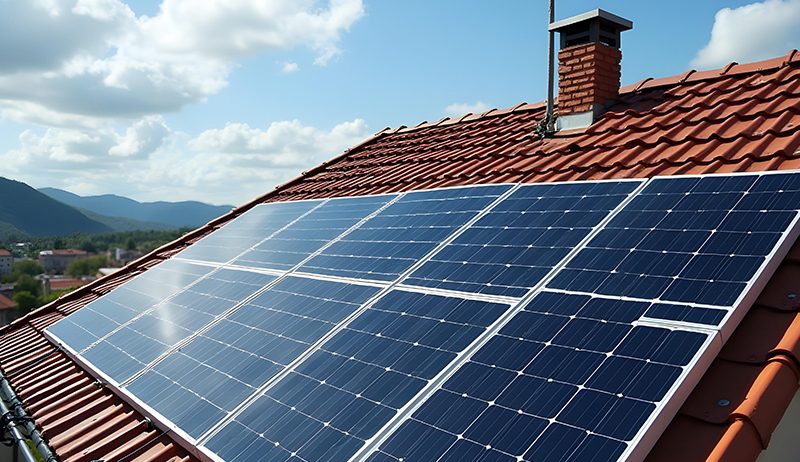
The best direction for solar panels in Australia is typically north-facing. North-facing solar panels in the Southern Hemisphere, including Australia, receive the most direct sunlight throughout the day, and it maximises solar energy production.   

North-facing panels capture sunlight from the Northern Hemisphere, where the sun is positioned at its highest point.  

By orienting your solar panels towards the north, you can take advantage of the sun’s path and optimise the amount of solar energy your panels generate. This north-facing orientation ensures that the panels receive sunlight from sunrise to sunset for most of the day.   

While a north-facing direction is a general recommendation, solar panels can still generate energy facing east or west. East-facing panels capture the morning sunlight while west-facing panels receive the afternoon sunlight.   

If your roof has limited space or shading issues, consider installing panels on east or west-facing roofs to maximise sunlight’s benefits.  

However, it’s important to note that while east and west orientations may provide some energy production, they typically generate less energy than a north-facing orientation.   

By facing your solar panels north, you can ensure they receive the maximum sunlight throughout the day, increasing their energy production.   

Moreover, tilting the panels at a perfect angle plays a significant role. Ideally, this angle should equal your location’s latitude to capture the most sunlight over the year.  

North-facing panels tilted at 30 degrees achieve the highest solar energy production throughout the year. This configuration is particularly beneficial for those with a fixed feed-in tariff, as it maximises savings.

West-facing panels in Australia

West-facing panels generate the most solar energy between 1:30 pm and sunset. This orientation is ideal for individuals away from home in the morning and present during the afternoon.   

By utilising appliances during these hours, one can lower their electricity bill. Otherwise, they would have to purchase power from electricity retailers at a higher rate during peak demand periods.  

East-facing panels in Australia

Conversely, east-facing panels produce the most solar energy in the morning hours. They are well-suited for households with higher electricity consumption during the mornings, providing savings on peak morning electricity rates.

South-facing panels in Australia

South-facing panels generate the least solar energy compared to other directions. However, they become viable when shading or roof direction makes different orientations impractical.   

North-facing panels in Australia

In most regions of Australia, north-facing panels achieve at least 99% of their maximum output. But if installing panels in a north-facing direction is physically challenging, the following plausible locations are east or west.  

While this may reduce solar output, it is still a better recommendation for maximum energy production. 

The Ideal Placement

North-facing roof: North-facing roofs in the Southern Hemisphere, including Australia, receive the most direct sunlight throughout the day. Install your solar panels on a north-facing roof to maximise solar energy production 

Tilt and angle: The optimal tilt angle for solar panels in Australia is generally around 30 to 35 degrees to capture the maximum amount of sunlight. However, this can vary depending on your location. You can consult with a solar installer or use online tools that calculate the ideal tilt and angle based on the site.  

Shading: Avoid shading as much as possible. Even a small amount of shading can significantly reduce the efficiency of solar panels. Trim or remove any trees or objects that cast shadows on your panels during peak sunlight hours.  

Climate considerations: Australia has diverse climates, ranging from tropical in the north to more temperate in the south. Consider your specific environment when determining the placement of solar panels. In hotter regions, leaving a small gap between the panels and the roof may be beneficial to allow for airflow and prevent overheating.  

Mounting options: Solar panels can be installed on various surfaces, including rooftops, ground mounts, or solar carports. Evaluate the available space on your property and choose the mounting option that best suits your needs.  

Local regulations and guidelines: Familiarise yourself with local laws, permits, and policies related to solar panel installations in your area. Some neighbourhoods or homeowners’ associations may have specific rules regarding panel placement.  

We recommend consulting with Cyanergy, a professional solar installer. Our energy experts can assess your property’s specific nature and provide personalised advice for optimal solar panel placement for your home.

How Technology Has Helped Solar Panel Placement

The location of solar panels is of utmost importance for their efficiency and overall functionality. It is much like the significance of location in the real estate world. Solar technology has seen significant improvements over the years.  

It provides homeowners with more flexibility in selecting where to position their panels. In the past, solar panels were most effective when facing true south and installed in regions with consistent, year-round sunlight.   

This made it less advisable for homes not oriented towards the south or located in rainy, cloudy areas to invest in solar panels, as the potential savings might not have justified the costs.  

However, current solar technology has made the direction and region more open. Nowadays, panels can be placed on roofs or the ground, facing east or west, while still capturing substantial energy. This increased adaptability allows for significant cost savings on monthly electricity bills and an overall reduction in energy consumption.

Why Can’t Everyone Angle Their Panels Toward the North?

Some property owners have their panels facing west due to the direction of their rooftops. Typically, panels align with the roof and largely avoid shade when installed.  

If trees or structures shadow one side of a roof, the logical choice would be the unshaded side. These could be east, north, west, or any direction. With the decreasing cost of solar batteries, the optimal solution is to cover the entire roof, regardless of orientation. The idea is to store the necessary energy with reduced energy costs.

How to Decide on A suitable Plan for Your Home?

For owners of solar energy systems, the most precise way to monitor solar performance is through a proactive tracking system. These systems can quickly pay for themselves, depending on the size and dependability of a solar energy system.  

An active monitoring system is essential to ensure accurate solar performance tracking. It enables users to monitor energy usage and net electricity transactions. It provides solar panels to function with optimal energy efficiency.   

With a smart monitor, you can also compare your system’s projected energy generation with the energy produced on a specific day. Additionally, you can assess whether your solar panels function at peak energy efficiency.

Select Solar Emporium to Get Your Desired Solar Package

solar power

Every home and business is unique, so it’s always a good idea to consult a solar installation professional to determine the best setup for your needs. Several cost-effective packages are available at Cyanergy.    

Get a free solar quote today! We have created these packages considering your energy needs, location, and budget.   

These packages combine tier-1 solar panels, Australian-designed battery systems, and inverters. These will allow you to store excess solar energy and power your home day and night.   

Various financing options are now accessible for installing solar panels and solar batteries. You can pay them off gradually over time.  

Optimising is a crucial aspect of designing a solar power system. It enables you to maximise your solar system’s potential. The ideal configuration of a solar power system depends on your electricity usage and solar production.  

A reputable solar installer like Cyanergy can design a solar system based on property details and electricity consumption habits. It will help you achieve the best return on investment for your solar power system.  

Use the sun and enjoy the benefits of sustainable, renewable energy in Australia. Get a free solar quote or talk to an expert today!

Your Solution Is Just a Click Away

The post Best Place To Put Your Solar Panels In Australia appeared first on Cyanergy.

https://cyanergy.com.au/blog/best-place-to-put-your-solar-panels-in-australia/

Continue Reading

Renewable Energy

Storm Damages ENGIE Wind Farm, Mexico Plans 7 GW

Published

on

Weather Guard Lightning Tech

Storm Damages ENGIE Wind Farm, Mexico Plans 7 GW

Allen covers a storm that damaged ENGIE’s South Dakota wind farm, Sumitomo exiting two Belgian offshore farms, Envision’s loss in Denmark, and Continental building its own wind farm.

Sign up now for Uptime Tech News, our weekly newsletter on all things wind technology. This episode is sponsored by Weather Guard Lightning Tech. Learn more about Weather Guard’s StrikeTape Wind Turbine LPS retrofit. Follow the show on YouTubeLinkedin and visit Weather Guard on the web. And subscribe to Rosemary’s “Engineering with Rosie” YouTube channel here. Have a question we can answer on the show? Email us!

Happy Monday everyone.

Sometimes … Mother Nature reminds the wind industry who is really in charge. Late last month … hurricane-force winds ripped through Hyde County, South Dakota … tearing into the Triple H Wind Farm operated by French energy giant Engie. One hundred and thirty-one miles per hour … as strong as a Category Four hurricane. More than twenty of the site’s ninety-two turbines … damaged. The two-hundred-fifty-megawatt complex is out of service … and turbine supplier GE Vernova is on-site now … assessing the wreckage. No injuries … but the governor declared a state of emergency. The machines that harvest the wind … taken down by the wind itself.

Now … while one wind farm goes dark in the American plains … ownership is reshuffling across the North Sea. Japan’s Sumitomo Corporation has exited two Belgian offshore wind farms … selling its stakes to joint venture partner Jera Nex BP. That is the partnership between oil major BP and Japan’s largest power generator Jera. Jera Nex BP now has full ownership of the two-hundred-nineteen-megawatt Northwester 2 … and has raised its stake in the one-hundred-sixty-five-megawatt Nobelwind to eighty percent. Both farms operate out of Ostend, Belgium … and have been generating power since 2017 and 2020. Sumitomo walks away … Jera Nex BP doubles down.

Meanwhile … in Denmark … China’s Envision Group is seeing red for the first time in fifteen years. The company’s global innovation center in Silkeborg … a strategic research hub for wind turbine components and advanced manufacturing … posted a loss of just under one-point-three million Danish kroner. That is a swing of more than one hundred fifteen percent from last year’s profit. The culprit is not the technology … it is the currency. The U.S. dollar fell nearly twelve percent against the Danish krone in 2025 … and Envision’s books took the hit. Revenue also dropped eighteen percent … but management says the underlying operations remained stable. The machines still work … the math just changed.

And speaking of money flowing into wind … a Turkish energy company just tapped an unusual source. Aksa Enerji … the largest publicly listed independent power producer in Turkiye … has secured one hundred twenty-four million dollars in financing backed by China’s export credit agency Sinosure. The money will fund a one-hundred-megawatt wind-plus-storage project in the southern province of Mersin. This is the first renewable energy project in Turkiye to receive a license as a storage-integrated facility. Aksa now operates power plants across seven countries … with more than three gigawatts of total capacity. Chinese capital … backing Turkish wind … with battery storage baked in from day one.

Now … here is a story that might surprise you. Continental … the German tyre maker … yes … the tyre company … is building its own wind farm. Three Nordex turbines … each standing two hundred sixty-seven meters tall … right next to its tyre factory in Korbach, Germany. When they are online … those turbines and the factory’s existing solar panels will cover two-thirds of the plant’s electricity demand. Fifty-five gigawatt-hours a year … powering rubber mixing and extrusion lines … directly from the wind. Continental calls it a model for its production sites worldwide. Cheaper power … more predictable costs … and less exposure to volatile energy markets. The wind industry just gained a tyre company as a customer … and a competitor for electrons.

And finally … south of the border. Mexico has eight gigawatts of wind power installed today … more than thirty-three hundred turbines across sixteen states. But the next chapter is already being written. The government plans to add nearly seven gigawatts of new wind capacity this term … part of a broader push for thirty-two gigawatts of new generation overall. More than two gigawatts of wind projects are pending allocation right now … and the industry estimates this next wave could mobilize four to five billion dollars in investment … building thirteen to fourteen new wind farms before the decade is out. The final decisions come in October.

Here is what stands out this week. The wind industry is no longer just selling kilowatt-hours to utilities … it is selling energy independence directly to manufacturers … and that changes the customer base entirely. At the same time … capital for new wind projects is coming from places it never came from before … export credit agencies … cross-border joint ventures … and government allocation programs with billions on the line. The money is there … but so are the risks … currency swings … extreme weather … and the constant reshuffling of who owns what. For wind energy professionals … the takeaway is simple … the industry is growing … but the business model around it is getting more complex by the quarter.

The turbines keep turning.

And that’s the state of the wind industry for the 5th of July 2026. Join us for the Uptime Wind Energy podcast tomorrow.

https://weatherguardwind.com/engie-storm-mexico-gw/

Continue Reading

Renewable Energy

How Trump Outwitted the Founding Fathers Will Be an Enduring Mystery

Published

on

What Trump has done to this nation and how he accomplished it will be the subject of much discussion by historians for as long as human civilization exists on Earth.

Certainly, the Founding Fathers never imagined that Americans would elect such a manifestly terrible person, and that congress would be so feckless to keep him in power.

How Trump Outwitted the Founding Fathers Will Be an Enduring Mystery

Continue Reading

Renewable Energy

The Economics of Mass Deportation

Published

on

The only one in America whose life is improved by mass deportation is Donald Trump.

Ignorant and hateful people (the MAGA base) love the idea of punishing people with brown skin. Yet working class white supremacists actually lose financially, as prices rise due to loss of workers in low-income jobs in agriculture, restauranting, childcare, landscaping, construction, hospitality, etc.

The Economics of Mass Deportation

Continue Reading

Trending

Copyright © 2022 BreakingClimateChange.com