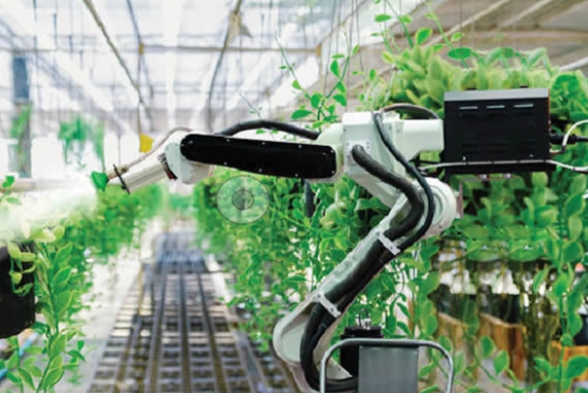
Modern Agriculture: Rise of the Robot Farmers
The fields of our future might look a lot different than the ones we see today. Gone are the days of backbreaking manual labor and dependence on unpredictable weather patterns.
Modern agriculture is embracing a new era of automation, where robots are steadily replacing human hands in tending to our crops.
Planting the Seeds of Change
Imagine a fleet of autonomous tractors gliding across vast fields, meticulously planting seeds at precise intervals. This is no longer science fiction, but a reality rapidly transforming the agricultural landscape. Robotic planting machines equipped with GPS and AI can map fields, determine soil conditions, and plant seeds with optimal spacing and depth, leading to higher yields and reduced waste.
Weeding Out the Inefficiencies
One of the most tedious and time-consuming tasks in agriculture is weeding. But robots are coming to the rescue, armed with sophisticated computer vision and dexterous manipulators. These weed-seeking machines can identify and remove unwanted plants with laser precision, minimizing the need for herbicides and protecting the environment.
Harvesting the Rewards of Precision
The robots don’t stop at planting and weeding; they’re also revolutionizing harvesting. Imagine robotic arms, programmed with delicate movements, gently picking delicate fruits or meticulously selecting vegetables based on color and ripeness. This level of precision minimizes damage and ensures only the highest quality produce reaches our tables.
Beyond the Brawn: The Brains of the Operation
The rise of agricultural robots is not just about replacing muscle power; it’s about harnessing the power of data and artificial intelligence. These robots are equipped with a network of sensors that collect real-time data on soil moisture, temperature, and even plant health. This information is then fed into AI algorithms that analyze the data and make informed decisions about irrigation, fertilization, and pest control.
The Benefits of a Robotic Revolution
The integration of robots into agriculture promises a multitude of benefits:
- Increased Productivity and Efficiency: Robots can work tirelessly 24/7, significantly boosting productivity and efficiency compared to traditional manual labor.
- Reduced Labor Costs and Shortages: The aging farm workforce and the exodus from rural areas can be addressed by robots, alleviating labor shortages and reducing labor costs.
- Improved Sustainability: Precision agriculture enabled by robots minimizes resource waste, reduces reliance on harmful chemicals, and promotes more sustainable farming practices.
- Enhanced Food Security: By optimizing yields and reducing losses, robots can contribute to improved food security and stability, especially in areas facing challenges like climate change.
Challenges and Concerns
Despite the exciting possibilities, the rise of agricultural robots also raises concerns:
- High Initial Investment Costs: The upfront cost of purchasing and maintaining robots can be a significant barrier for small-scale farmers.
- Job Displacement: While robots create new opportunities, they may also lead to job losses in traditional agricultural roles.
- Ethical Considerations: Questions arise about the ethical implications of relying on machines to manage our food production systems.
The Future of Farming: Humans and Robots in Harmony
The future of agriculture is not about robots replacing humans; it’s about humans and robots working together in harmony. Farmers will remain crucial for their knowledge, expertise, and ability to adapt to changing conditions. Robots will serve as powerful tools, augmenting human capabilities and enabling farmers to make data-driven decisions for optimal crop production.
As we embrace this new era of agricultural robotics, it’s essential to address the challenges and ensure that this technological advancement benefits both farmers and consumers, promoting a sustainable and food-secure future for all.
Agricultural Robots: Statistics and Data Shaping the Future of Farming
The rise of agricultural robots is transforming the farming landscape, promising increased efficiency, sustainability, and food security. Let’s delve into the data and statistics that paint a picture of this burgeoning industry:
Market Growth:
- The global agricultural robots market is estimated to reach USD 30.5 billion by 2028, growing at a CAGR of 17.7% from 2022 to 2028. (Source: Future Market Insights)
- North America currently dominates the market, accounting for 38.9% of the global revenue share in 2022. (Source: Future Market Insights)
- The Asia Pacific region is expected to witness the fastest growth in the coming years, driven by factors like rising labor costs and government initiatives promoting automation. (Source: Mordor Intelligence)
Robot Types and Applications:
-
The market is segmented into various robot types, including:
- Field robots for planting, weeding, and harvesting.
- Livestock robots for milking, feeding, and monitoring animal health.
- Indoor farming robots for managing vertical farms and controlled environments.
-
Field robots currently hold the largest market share, followed by livestock robots and indoor farming robots. (Source: MarketsandMarkets)
-
Fruit and vegetable harvesting is the leading application for agricultural robots, followed by planting and weeding. (Source: Mordor Intelligence)
Impact and Benefits:
- Agricultural robots can increase yields by up to 20% through precision planting, weed control, and optimized irrigation. (Source: World Economic Forum)
- They can reduce labor costs by up to 50%, addressing labor shortages and increasing farm profitability. (Source: ABI Research)
- These robots can minimize pesticide and herbicide use by targeting specific weeds and pests, promoting environmental sustainability. (Source: The Guardian)
Challenges and Concerns:
- The high initial investment cost of robots can be a barrier for small-scale farmers.
- Job displacement due to automation is a concern that needs to be addressed through reskilling and training programs.
- Ethical considerations regarding the use of robots in food production need to be carefully evaluated and addressed.
The Future of Agricultural Robots:
- Advancements in artificial intelligence, sensor technology, and machine learning will lead to more sophisticated and adaptable robots.
- Increased collaboration between robotics companies, farmers, and policymakers is crucial for developing and implementing sustainable solutions.
- The focus will shift towards human-robot partnerships, where robots augment human capabilities and enable data-driven decision-making for optimal crop production.
As the data suggests, agricultural robots are not just a futuristic trend; they are rapidly becoming a reality with the potential to revolutionize the way we grow food. By addressing the challenges and capitalizing on the opportunities, we can harness the power of these machines to build a more sustainable and food-secure future for all.
Table of Agricultural Robots: Statistics
| Statistic | Dat | Source | |
|---|---|---|---|
| Global Market Value (2028) | USD 30.5 billion | Future Market Insights | |
| CAGR (2023-2028) | 17.7% | Future Market Insights | |
| Dominant Region (2022) | North America (38.9% share) | Future Market Insights | |
| Fastest Growing Region | Asia Pacific | Mordor Intelligence | |
| Market Segments | Field robots, Livestock robots, Indoor farming robots | MarketsandMarkets | |
| Leading Market Share | Field robots | Mordor Intelligence | |
| Leading Application | Fruit and vegetable harvesting | Mordor Intelligence | |
| Yield Increase Potential | Up to 20% | World Economic Forum | |
| Labor Cost Reduction Potential | Up to 50% | ABI Research | |
| Pesticide/Herbicide Use Reduction Potential | Significant reduction | The Guardian | |
| Main Challenge | High initial investment cost | ||
| Other Challenges | Job displacement, Ethical considerations | ||
| Future Trend | Advancements in AI, sensor technology, and machine learning | ||
| Future Focus | Human-robot partnerships |
Note: This table is not exhaustive and can be further expanded based on your specific interests. If you have any particular data points or statistics you’d like to see included, please let me know!
Agricultural Robots: The Companies Leading the Automation Revolution
The fields of the future are teeming with metallic life. Gone are the days of backbreaking manual labor; agriculture is entering a new era where robots are reshaping how we grow food. From planting and weeding to harvesting and data analysis, these tireless machines are transforming the industry, promising increased efficiency, sustainability, and food security. Let’s delve into the world of agricultural robots and meet some of the companies leading the charge:
1. Naïo Technologies (Japan)
Naïo Technologies is a pioneer in autonomous field robots, developing machines that navigate fields with precision and perform various tasks. Their flagship robot, the Scout™, is a weed-killing marvel that uses cameras and lasers to identify and eliminate unwanted plants, reducing herbicide use and protecting the environment.
2. Iron Ox (United States)
Iron Ox is redefining farming by bringing it indoors. Their robotic farms are controlled environments where AI-powered robots tend to crops with utmost precision. This vertical farming approach minimizes water and resource usage, making it ideal for urban areas and reducing reliance on unpredictable weather conditions.
3. Blue River Technology (United States)
Blue River Technology tackles the problem of weeds not in the field, but during harvest. Their LettuceBot™ is a marvel of engineering, gently guiding romaine lettuce heads through a vision system that identifies weeds and removes them with targeted bursts of air, ensuring pristine harvests without damaging delicate produce.
4. Abundant Robotics (United States)
Abundant Robotics is focused on automating the apple-picking process, a notoriously labor-intensive task. Their robots, affectionately called “ARMies,” use advanced perception systems and gentle grippers to navigate orchard trees and pick apples with remarkable dexterity, minimizing bruising and maximizing fruit quality.
5. Ecorobotix (Switzerland)
Ecorobotix focuses on developing robots for smaller farms and vineyards. Their Rosalie™ robot is a multi-talented assistant, capable of weeding, mowing, and even spraying, making it a versatile tool for organic farmers who prioritize sustainability and precision agriculture.
These are just a few examples of the many companies pushing the boundaries of agricultural robotics. With constant advancements in technology and AI, the future of farming promises even more sophisticated robots capable of performing complex tasks and adapting to diverse agricultural needs. As these innovations take root, the fields of tomorrow may not just be greener, but also filled with the whirring hum of robotic helpers, ensuring a bountiful harvest for generations to come.
Remember, the rise of agricultural robots is not about replacing farmers; it’s about empowering them with powerful tools to work smarter, not harder. The human touch and expertise will always be crucial in managing and adapting to changing conditions. The future of agriculture lies in a harmonious collaboration between humans and robots, working together to cultivate a sustainable and food-secure future for all.
https://www.exaputra.com/2024/01/modern-agriculture-rise-of-agricultural.html
Renewable Energy
Big Win for Those Incapable of Elementary School Math
The Chinese ownership of American farmland is less than 0.00036, or 0.036%. To put this into perspective, if the entirety of U.S. farmland were reduced to one acre, the Chinese government and business interests would own less than 15 square feet, about half the size of a small broom closet.
Yet, true to form, this is a huge issue for the MAGA base.
Renewable Energy
Social Justice and Despotism?
This guy is quite effective in talking to uneducated, conservative Americans, most of whom have never traveled to, or even read anything about the happiest countries on Earth.
If I were going to make a statement about the relationship between social justice and despotism, I would at least consider the lives of the people in places that consider social justice to be something of importance, and compare/contrast this to the list of the countries that are perennially at the top of the World Happiness Rankings.
What makes the people in New Zealand, Iceland, Costa Rica, Northern Europe, etc., so happy? Why do these are these nations suffer exactly zero despotism?
I would be completely ashamed of myself if I were to forward a political theory that had precisely no basis in fact.
Renewable Energy
Technical Training Academy Expands Across Renewables
Weather Guard Lightning Tech

Technical Training Academy Expands Across Renewables
Nick Martocci, founder of Technical Training Academy in Las Vegas, joins to discuss expanding from wind technician training to other energy technologies and career pathways for veterans in energy.
Sign up now for Uptime Tech News, our weekly newsletter on all things wind technology. This episode is sponsored by Weather Guard Lightning Tech. Learn more about Weather Guard’s StrikeTape Wind Turbine LPS retrofit. Follow the show on YouTube, Linkedin and visit Weather Guard on the web. And subscribe to Rosemary’s “Engineering with Rosie” YouTube channel here. Have a question we can answer on the show? Email us!
Welcome to Uptime Spotlight, shining Light on Wind. Energy’s brightest innovators. This is the Progress Powering tomorrow.
Allen Hall: Nick, welcome back to the program. We’re Tower Trading Academy. Now your technical trading Academy since we last spoke and we last spoke at OM and S in Nashville. Yep. Now we’re here in Orlando. A lot’s changed over the last year.
Nick Martocci: We went through a lot of growth and changes, if you will, to the point where, because I added the program from just wind turbine technician to battery energy storage technician as well.
And obviously like always I’ve got something brewing behind the green curtain. Right, right. Uh, we’re, we’re always doing something and adding and changing training. And what we really did is get to a place where we’re getting really technical with some of the things that we’re doing. And what I did want to [00:01:00] do is rebrand, go through all of the, you know, uh, marketing and pieces again, and try to change things.
And so I tried to find what was the most simplistic, easy pivot, but also kept us out in the people’s eye. Yeah. And we went to Technical Training Academy. So we really didn’t have to do a whole heavy rebrand. We didn’t have to change a lot, but those that are already working with us, it was just letting them know, Hey, we are still Legally Tower Training Academy.
Even the Department of Labor recognizes that, uh, we just have a DBA in place and the DBA doing business as, uh, allows us to now really open that up as far as what are we capable of doing when it comes to. Deliverables for, you know, people in energy and those types of security places.
Allen Hall: Well, I’ve been watching your shorts.
I, they’re on YouTube or on LinkedIn. They’re really good. The little clips about what you [00:02:00] guys are up to, they’re excellent. And the, what I follow, because I, I met you several times, it was just kind of cool to follow the progression there. The state of Nevada has recognized you. There’s a lot of, uh, congratulatory, uh, events that are happening and like, all right, Hey, Nick’s making this thing happen because it’s so hard to be in that training business.
Mm-hmm. To get to where you have brought that whole company. Two is all right. This, this is a, this is a good spot.
Nick Martocci: Yeah. Uh, you’re
Allen Hall: making some progress
Nick Martocci: there. We had Susie Lee’s office last year help us announce the Battery Energy Storage Program, so there was a congressional recognition there as well. Uh, we’ve also been working with other local politicians and things of that nature to be able to showcase some of the things that not just TTA is doing, but veterans and energy.
Because of my partnership with Project Vanguard, I am a state, uh, representative [00:03:00] for Project Vanguard in the state of Nevada. So it’s another piece of also being able to showcase, hey, this is not just what TTA is doing, but what are veterans doing in energy? And I want to be able to not only highlight, you know, obviously TTA, but those pieces as well.
And whatever you state, you know, the veteran pieces, obviously legislators will listen, if that makes sense. That when you start saying, Hey, a veteran is speaking legislation. We’ll quiet down for a second to see, hey, what is this rumble that you guys are creating? And they start to see what we’re doing and they wanna be a part of that.
Allen Hall: Well, I think that’s wonderful. And all the effort and time that you put towards veterans and veteran efforts. Mm-hmm. Thank you so much for doing that. You’re a veteran, you’re a helicopter pilot, you served Yep. Uh, for a number of years. That’s a difficult job. I, you know, obviously the US is involved in some activity at the moment, but.
You know, shout out to all the veterans out there, [00:04:00] obviously. And, and there’s a lot of ’em in renewable energy right now.
Nick Martocci: Well, I mean, not just renewables, but energy, period. ’cause I, I speak to a lot of veterans throughout my downtime, if you’ll say I have that. And you know, the, there’s people that are PMs, program project managers, there are folks that are doing logistics, warehouse hr, and seeing that movement migration.
Of transitioning individuals from active duty, even some folks that are in my program that are in the guard and now getting into a position where, hey, you know, I’m a technician. I’m in energy. Whether they’re a wind turbine tech, they’re in battery, solar, hydro, what have you. Uh, there are quite a number of veterans in the energy market and industry.
Allen Hall: So if you’re a veteran right now or just exiting, uh, the military. I, I think a lot of opportunity is there. They may not [00:05:00] realize. Mm-hmm. Uh, so getting trained up is a lot easier than it used to be. I remember years ago, I think I, we knew people that came outta the military and, and they were just sort of tossed out the door and had to go find things for themselves.
There’s a lot more resources now I would Right. I it feel like than there were even a couple of years ago. And it’s people like you that are kind of bridging that gap for the military to, to get people onboard, to get people trained, to get ’em out in. And doing work in the civilian world, that’s huge.
Nick Martocci: Yeah.
There’s so many leadership traits and skills that veterans already bring to the table. It’s a matter of taking some of those skills that maybe they, you know, worked in motor T and uh, and the motor pools, and they were turning wrenches and fixing, you know, Humvees and other, you know, mechanical vehicles, or they were.
Um, A and p, so airframe and power plant for, uh, aviation and things of that nature. Sure. So now they understand these different types of systems. Already it’s a matter of, oh, how, [00:06:00] how do I transition this over to wind? How do I transition this over to solar? How do I transition this to battery and such? And then be able to pick that up?
It, it, it makes it easier for them because of the familiarity, if you will. To be able to say, Hey, this is very similar to that. All I gotta do is change this information here and now I’m good to go.
Allen Hall: Right. And Project Vanguard’s helping with that a a great deal.
Nick Martocci: Oh yeah. You talked about Project Vanguard, if you don’t know what that is, so Project Vanguard is an initiative to help veterans get into renewable energy careers, utilizing the network that we already have because.
Um, America’s energy is our security as well, and so who better to help take care of the nation’s security of energy than veterans who have already been doing it. And so being able to help individuals, like I said, not always be a technician. Maybe they wanna be able to get into, uh, program or project management.
Maybe they want to get into hr. And by utilizing the [00:07:00] vast network that Project Vanguard has, it, it gives them that ease of entrance and access that maybe they didn’t have before.
Allen Hall: Well, that’s the key. Finding out where those opportunities lie, and it’s hard to do that on your own. Right. Reaching out for some help is the right answer, I think all the time.
And every, especially now, uh, there’s a lot of, uh, military focused companies that, like technical training Academy that are bridging that gap and, and absolutely. That’s fantastic. Now, the amount of training you’re doing on site is impressive and you’re, you’re growing. You’re into Best now, and you’re into more, more and more training, doing some OSHA training.
So there’s a lot of resources available and the website’s been updated. Right. And I think a lot of people are, go to the website, just Google it. You can get there. But the offerings are getting more expansive. The, the technical details are getting deeper into the aspects of all parts of the industry,
Nick Martocci: right?
We’ve worked with, uh, a few entities, uh, to name Drop Ner [00:08:00] and um, destructible. They’ve donated quite a bit of different pieces for our training programs, for blades, for brake systems and things of that nature. For us to be able to take our program to that next level and actually put what technicians are going to be putting their hands on in our training places rather than something as simple as a, uh, like an theory plate piece and actually putting something that a manufacturer is building for these entities.
And saying, Hey, here, this is the exact same thing you’re gonna see, uh, they donated a, a unit that goes to a GE one X, but you know, if you go out to a four X, it’s gonna be the same thing, just a little bigger.
Allen Hall: Bigger. Right,
Nick Martocci: right. And, and so it, it makes it so that it goes from serious hands-on theory to, oh, I’ve seen something just like this, but it was a little smaller.
This is just bigger. I get it. Same thing. And so with destructible being able to make those donations for blades and other pieces. Uh, we’re putting together a LPS program, lightning [00:09:00] Protection Systems. Oh,
Allen Hall: good.
Nick Martocci: And so that’s something That’s awesome. Yeah, it’s something that, it’s a
Allen Hall: lightning protection company.
That’s fantastic.
Nick Martocci: You know, uh, there’s a lot of stuff coming down the pipe for all of those additional pieces. We, we even revamped our whole website when we did the name change back in July, and it allows people to be able to go in and see all those pieces that we’re doing. One of the things is we became a Sprat facility, so being able to do rope access, especially when it comes to those offshore technicians and things of that nature.
So we’re gonna be able to. Help out the wind industry with a lot more of those pieces that they’re looking for. Uh, like I said, the rope access, they’re definitely gonna need, uh, for offshore and things of that nature. Uh, being able to do LPS training, there’s so many other pieces. I’m gonna try not to reveal that we’re working on that are in addition to just the apprenticeship program, but okay.
Somebody went out to the field, I want to get a certification in. Become better SME in this piece and start putting building blocks into people’s [00:10:00]careers.
Allen Hall: Well, that’s the key, right? It it’s the industry’s grown to be more SMEs being on site.
Nick Martocci: Yep.
Allen Hall: And there you have your gearbox people, you have your electrical, diagnosing, debugging people that are out there.
And I think as the industry evolves, we’re gonna have more subject matter experts on sites. Mm-hmm. Doing LPS systems, doing gear boxes, handling some of the electrical things that are happening, even in blades and blade repair. They’re becoming more of subject matter experts. ’cause you have people that, that’s what they do.
They are the expert in fixing this particular kind of blade problem. And they make a great living doing that.
Nick Martocci: And uh, one of the other things that we’re doing is the complimentary training. Right. And what I mean by that is I’ve partnered with, uh, CSN
Allen Hall: Oh Good
Nick Martocci: College of Southern Nevada. Uh, I’m also partnering with some other universities and working on those pieces because I understand that technicians, as they grow in this industry, they want to be able to do other [00:11:00] things, whether that be be a pm, be an engineer.
They want to be able to go and get that piece. And so if I can help refer through our partnerships. Hey, if you want to go get your construction management at CSN, we’re a preferred partner, go talk to. This individual and we can actually, rather than say, Hey, go forth and do great things, we can actually say, Hey, you need to speak to this person, and you know what?
Better yet, let me do an email intro. Making it easier for the end user to actually now say, Hey, you know what? That was so much easier when you create that holistic program similar to what I’ve done, which doesn’t just say, Hey, here, you’re a technician. Bye. Um, you’re actually a part of their career. That, that’s one of the major big things that just really stuck out as far as a different difference maker from me to everybody else.
I don’t just say, Hey, here you go. I, I create a program [00:12:00] with you and your career in mind. You can call back to either TTA or my other business, IFC, infinite Fidelis Consulting, and that is exactly what they do. They, it’s a nonprofit that does workforce development. That is exactly what they do, and they will help.
And so through those partnerships, you now have access immediately to those resources. And I think some of the misnomers and steps that I’ve seen before me is, is exactly that of, hey, you know, we’re finished, right? We’ve taken care of your certs, we’ve taken care of your basic training. Bye-bye. And there there is no un until you see ’em in two years and you do their recertification.
Then you don’t really get to interact with them. And so there’s two years of just what I call dead space. There’s just two, two years of I’ve never seen this person again. And that’s, if they come back to me, they might work for company A, B, or C. And that company might have an internal recertification program where now I’m not [00:13:00] able to still help them and they’re just on a maybe.
Well, that’s where Technical Training Academy
Allen Hall: is doing something different. I, I think you’re right about. The, some of the training schools that exist today are very focused on getting technicians out on a site, and then that’s where it ends. The, the problem is those people tend to grow, especially if they’re from the military.
They tend to go up and rank as they get out in the field a little bit because they do, are doing the right things and every, the, the management realizes I’ve got these people out there that know what they’re doing. I’m gonna promote them, I’m gonna make them the lead, I’m gonna make them the project manager, I’m gonna expand their role.
But you have to also learn that skillset, right? And I think that’s where you’re thinking ahead and trying to help those people grow as they get more experience.
Nick Martocci: And I’m probably repeating myself from two years ago, but this is why I built it. I built it off of the similar frame of leadership style and progression piece that is familiar to us as veterans in the military.
When you’re an E [00:14:00] one, you’re being groomed to be an E two. E two to be groomed to be an E three in, in the civilian world, there really is no grooming process to help you do that ladder climbing piece. And what I wanted to do was help bridge that gap,
Allen Hall: right?
Nick Martocci: And help put those support structures and pieces in place so that somebody could say, Hey, I want to do this.
Who can help me? Well, you can come over to TTA or IFC and we’ll give you a hand. No problem.
Allen Hall: Well, that’s a part about TTA and I think if I was coming outta the military. I, and I wanted to get into renewables. I wouldn’t necessarily necessarily think Las Vegas. I would think Texas, Oklahoma, maybe Indiana, where there’s wind turbines and there’s solar and there’s batteries.
But the reality is, is that the resources that Nevada is putting into veterans and into supporting you make your facility much more powerful than a lot of other places.
Nick Martocci: Well, and and I kind of remember this conversation we had last year about. [00:15:00] The negative connotation of a two mile square space in Las Vegas.
Right. Right. And, and when people immediately think of Las Vegas, that two mile strip is what they immediately think of.
Allen Hall: Sure.
Nick Martocci: Without understanding. And they’re doing a little homework. And that’s why even, you know, tell people, Hey, come out for a tour, check this out and see where we are. Because we’re right across from Nellis Air Force Base right next to the speedway.
One more exit from my, uh, my training center and you’re out of Las Vegas.
Allen Hall: A lot of people coming up in the industry just don’t think about outside that Midwest, that Texas spot. Mm-hmm. And they need to have their horizons open a little bit and realize that there are other places to get training that are high quality, that are gonna be caring about you as a person and the growth of you.
Think about that when you’re applying to school, Joe. Absolutely. Just take whatever’s the closest. And head toward it.
Nick Martocci: We, we don’t play, and we’re going to treat this just like a career. That’s why [00:16:00] training at our school is a 12 hour training day. It’s not an eight hour day, it’s a 12 hour day.
Allen Hall: Right.
Nick Martocci: And that gets them acclimated to a 12 hour work day.
Allen Hall: But that’s
Nick Martocci: what it’s gonna be. Exactly. So that way when you hit the field and some supervisor says, Hey, it’s gonna be a long day. We’re doing 10 hours today. Ah, part-time job. Got it. You know?
Allen Hall: Right. Right. That’s it. So I, I think there, uh, a lot of people have choices if they’re trying to get into renewables.
Mm-hmm. And they need to be thinking about the choices they make. Technical training Academy should be high up on the list.
Nick Martocci: Absolutely
Allen Hall: high up on the list now, especially with veterans. I mean, that, that’s, that’s a no brainer that Do people get ahold of you? How do they contact you? Where should they start that process?
Should they reach out to you on LinkedIn? Should they go to the website? What’s the best way?
Nick Martocci: Best way is really just to go to the website and, uh. O one of the misnomers I made was the Technical Training Academy, and there, there are so many in the United States, I did not realize that. But if you do Technical Training Academy Las Vegas, it narrows it down to four and [00:17:00] we’re the ones on top.
And it makes it easier. And so if you do, uh, technical Training Academy in the Google Bar and just say, Hey, technical Training Academy, Las Vegas will pop up. Otherwise, on LinkedIn, you’ll find us under Technical Training Academy. Uh, Facebook and Instagram. Were still Tower Training Academy. I’m working on getting that changed over, uh, and then from there, yeah, the, I, I think that’s, oh no, we have a YouTube channel.
Tower Training Academy. We’re also on YouTube. Yeah, YouTube. But as far as reaching us, go on our website. Hit enroll now. Uh, also on our website is our phone number, (725) 272-9495.
Allen Hall: There you go.
Nick Martocci: And so you can just ping that or you can even. Hit up my head of administration at admin1@towertrainingacademy.com.
Allen Hall: Great. So everybody reach out, connect up with Nick, get started, figure out what your future looks like because Nick’s here to help and uh, it’s great to connect with you [00:18:00] again because year it’s something more exciting. Like, alright, this is, this is great. It’s expanding. You’re doing training, you got technicians out in the world, you’re going to the best.
That’s fantastic. I’m always cooking. Congratulations because it’s hard. Your business is hard. Yep. And And that is amazing. It’s amazing.
Nick Martocci: I’ve always got something brewing behind the green curtain.
Allen Hall: Yes.
Nick Martocci: Always got something brewing back there.
Allen Hall: Thank you so much for being on the podcast.
-
Greenhouse Gases9 months ago
Guest post: Why China is still building new coal – and when it might stop
-
Climate Change9 months ago
Guest post: Why China is still building new coal – and when it might stop
-
Greenhouse Gases2 years ago嘉宾来稿:满足中国增长的用电需求 光伏加储能“比新建煤电更实惠”
-
Climate Change2 years ago
Bill Discounting Climate Change in Florida’s Energy Policy Awaits DeSantis’ Approval
-
Climate Change2 years ago嘉宾来稿:满足中国增长的用电需求 光伏加储能“比新建煤电更实惠”
-
Renewable Energy6 months agoSending Progressive Philanthropist George Soros to Prison?
-
Climate Change Videos2 years ago
The toxic gas flares fuelling Nigeria’s climate change – BBC News
-
Carbon Footprint2 years agoUS SEC’s Climate Disclosure Rules Spur Renewed Interest in Carbon Credits


