

The surprise re-election of Brazil’s President Luiz Inácio Lula da Silva on Sunday, in a tight race against right-wing candidate Flávio Bolsonaro, has raised hopes the country can meet a flagship target to end deforestation in all its biomes by 2030 and advance international fundraising to protect rainforests.
Defying expectations to win an unprecedented fourth term in office, Lula – who turns 81 this week – said in his acceptance speech that “we will show the world how climate policy is handled in this country”, and highlighted that, during his last four years as leader, the country has reduced deforestation every year.
Earlier this month, new data from Brazil’s space agency showed that forest-clearing in the Amazon fell to its lowest on record, after the introduction of a deforestation action plan that constrained illegal cattle ranching from expanding into the world’s largest rainforest.
Brazil leads “encouraging” decline in global rainforest destruction in 2025
At an international level, the country has long championed forest conservation, spearheading the creation of the newly established Tropical Forest Forever Facility (TFFF). As president of last year’s COP30 climate summit, the country is also developing a global roadmap to halt forest loss by the end of the decade, in line with a global goal, which will be presented at the upcoming UN climate summit in Antalya.
‘Much more needs to be done’
In 2023, Lula’s previous administration introduced a deforestation action plan that set a target of zero deforestation by 2030, achieving swift results. His re-election paves the way for this downward trend to continue.
Carlos Nobre, a veteran Brazilian climate scientist and co-chair of the Science Panel for the Amazon, said Brazil now has a “historic opportunity” to prevent a tipping point where large parts of the Amazon rainforest could turn into savanna, with dangerous impacts for the planet’s climate.
“The reduction in deforestation over recent years has been crucial, but much more needs to be done. Ending deforestation by 2030, tackling forest degradation and accelerating large-scale forest restoration are urgent priorities,” he said.
Anders Haug Larsen, advocacy director at the Norway Rainforest Foundation, described the election result as a “relief”, adding it makes it more attractive for donors to support rainforest protection in the country.
“Hope is a scarce commodity these days,” he said. “The international community must grasp this opportunity to strengthen efforts towards zero deforestation in the Amazon.”
Rainforest fund boosted by election result
Brazil was the original proponent of the TFFF, one of the highest-profile initiatives aimed at channelling new finance to protect the world’s rainforests. The fund aims to raise public seed capital to invest in financial markets, and then pay rainforest countries from the returns on those investments.
Despite being a developing country, Brazil has pledged $1 billion to the fund and is expected to play a key role in helping reach its goal to raise $10 billion from governments by the end of this year.
“We need more countries to come on board to meet the mobilisation target of $10 billion this year, and this election should inject trust in the calls from rainforest countries for support to their forest protection efforts,” Larsen said.
Brazil confident new rainforest fund will reach $10bn donor milestone
On Monday, the day after the election result, the Netherlands announced a €500-million contribution to the fund, which will be disbursed over ten years and is still subject to parliamentary approval. This brings the total pledged to the TFFF from a range of countries to $7.8 billion.
Norway’s climate minister Sigrun Aasland told a TFFF event on the sidelines of the UN biodiversity summit in Yerevan that she was hopeful the $10bn goal could be achieved by the end of this year.
Brazilian officials have led the TFFF’s fundraising efforts and said they are in conversations with more potential donors including China, Korea and Japan.
Congress shifts further to the right
Sonia Guajajara, former minister of Indigenous Peoples in Lula’s government, celebrated the president’s re-election but cautioned that the 20 indigenous territories created under his current administration must be consolidated, as they are “essential to tackling the climate crisis and preserving our biomes”.
Veteran Brazilian diplomat Bráulio Ferreira de Souza Dias, meanwhile, noted that Lula faces a difficult political scenario, as right-wing pro-Bolsonaro lawmakers have gained more seats in both legislative chambers. He added that the courts will become key battlegrounds to challenge anti-climate legislation.
Observatório do Clima, a network of Brazilian green groups, said seven out of every ten representatives and senators who will make up the next legislature are likely to vote against the climate and environmental agenda, urging Lula’s administration to strengthen its action in parliament and expand alliances.
Still, Ferreira de Souza Dias echoed the widespread view among climate policy-makers that a Bolsonaro win would have been “terrible” for the rainforest and Indigenous peoples, and said the country had avoided a scenario where deforestation threatened to increase again.
The post Lula’s election win in Brazil raises hopes for zero deforestation drive appeared first on Climate Home News.
Lula’s election win in Brazil raises hopes for zero deforestation drive
African governments are developing policies to manage waste from solar panels, batteries and other clean tech equipment as installations surge, with officials warning the energy transition could create a new environmental problem unless it is accompanied by investment in recycling and reuse.
Many African households and businesses are increasingly turning away from unreliable grid power or deciding not to wait for access, and are installing more solar panels and battery storage. Data from energy think-tank Ember, published in August, projects that the continent will install a record 17 gigawatts (GW) of solar capacity in 2026 – equal to around 100,000 solar panels every day. This would mark the third consecutive year of record growth, following increases of 51% in 2025 and 25% in 2024.
While generally a welcome sign of progress towards a cleaner energy mix, this trend could also create a headache for African officials. Anselm Marungu, Namibia’s deputy minister of environment, forestry and tourism, believes rules should be put in place to ensure that valuable materials can be recovered from discarded solar panels, batteries and inverters at the end of their useful life.
-
Made in Nigeria: The race to build an African solar industry from scratch
A solar power revolution is gathering pace in Africa and Nigeria wants a slice of the fast-growing industry, but competing with Chinese imports won’t be easy -
Indian start-ups mine e-waste for battery minerals but growing industry has a dark side
Recycling e-waste can unlock a vast and sustainable supply of transition minerals but in India the sector relies on a neglected informal economy -
DR Congo’s power-hungry mining sector drives record solar surge
As solar deployment rapidly accelerates across Africa, miners in the DRC are driving significant demand for clean energy to replace expensive diesel


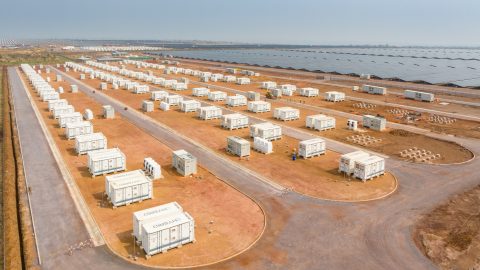
Some of the materials and minerals the world needs for manufacturing clean energy technologies – including glass, aluminium, copper, cobalt, lithium and nickel – can be obtained by recycling solar panels, inverters and batteries.
The International Energy Agency (IEA) estimates that recycling could reduce growth in new mining needs by 40% for copper and cobalt and by 25% for lithium and nickel by 2050, thereby reducing the social and environmental impacts associated with conventional extraction.
Speaking at a pan-African policy conference on circular value chains this month, Marungu said the success of these technologies depends not just on how quickly they are installed, but also on whether the materials are sourced responsibly, the equipment maintained and its components recovered to create economic opportunities across their entire life-cycle.
He called for sound policies, sustainable investment and circular business models that can become the foundation of new industries, green jobs and stronger African value chains. Solar panels, batteries, inverters and tubes “must not become tomorrow’s environmental burden”, he added.
From importation to end of life
When not properly disposed of or handled during recycling, discarded solar panels and batteries can release hazardous substances into the environment, contaminating soil and water and exposing waste workers and nearby communities to toxic materials which can cause lung cancer and damage vital organs.
Innocent Barikor, director-general of Nigeria’s National Environmental Standards and Regulations Enforcement Agency (NESREA), said the rapid uptake of off-grid renewable energy has made it necessary to strengthen waste management rules and develop a framework for reusing materials from equipment.
UN sets steep emission cuts to reverse 1.5C overshoot by end of century
Nigeria is Africa’s second-largest importer of solar technologies, bringing about 400 billion naira ($295 million) worth of equipment into the country in 2025. This has led to the drafting of a national policy on waste management for off-grid renewable energy equipment, which has been validated by relevant government institutions, regulators and development partners, and is now awaiting cabinet approval.
According to Barikor, once approved, the policy will require producers, distributors and importers of renewable energy technologies in Nigeria to “to take responsibility for these products from the beginning to their end of life”. Commonly known as Extended Producer Responsibility (EPR), the policy is expected to support the development of a recycling value chain by requiring companies to take back and properly manage products once they become waste, Barikor said.
“We believe a policy will enable us to be able to manage what will become a very rowdy outcome of this particular [renewable energy] space,” he said.
Some countries develop regulation
Last week, energy ministers of the Economic Community of West Africa States (ECOWAS) adopted a regional framework on the deployment of battery energy storage systems and similar technologies, with requirements for the safe management, dismantling, reuse, recycling and disposal of batteries.
Some other African countries have previously strengthened rules on e-waste involving renewable technologies.
In 2024, Kenya introduced the Sustainable Waste Management (Extended Producer Responsibility) Regulations, requiring producers and importers of listed products, including electrical and electronic equipment and batteries, to put in place a system for dealing with them even after consumers stop using them. Companies are required to arrange for or finance the collection of discarded products, as well as their recycling and safe disposal.
Can giant batteries unlock Africa’s green industrial future?
Namibia, meanwhile, is preparing investment opportunities for waste buy-back centres and innovation hubs, said Marungu, with pilot projects already incentivising recycling in the country. The southern African country’s Sixth National Development Plan, launched last year, includes plans for modern recycling infrastructure aimed at reducing landfill waste, attracting private investment and creating green jobs.
The country wants to move from a linear to a circular society through the principles of reduce, reuse, recycle and regenerate to minimise waste and reduce environmental impacts, according to the plan.
Regional corporation and investment
Policies alone, however, cannot guarantee success, the conference heard. Diana Dalton, deputy high commissioner and development director at the British High Commission in Nairobi, said collaboration is needed. The African Continental Free Trade Area (ACFTA) offers a platform to strengthen regional value chains and promote a more integrated approach to recycling renewable energy equipment, she said.
Loss and damage fund agrees $20m for Nepal but rich nations warn it should not set precedent
Regional coordination could help harmonise standards, align regulatory approaches, strengthen markets and enable cross-border trade, creating the scale needed to attract investment and develop regional recycling value chains, she added.
Dalton said this would require investment in infrastructure and skills, as well as collaboration between governments, industry, academia and development partners. She also called for stronger systems to collect, repair, refurbish and recycle renewable energy equipment, alongside support for local manufacturing and innovation.
Namibia’s Marungu said regional cooperation will enable the recycling of large volumes of materials and improve commercial viability, adding that African countries should share experiences, harmonise standards so that equipment and materials can move across borders, and pursue shared treatment and recovery solutions.
The continent needs a plan to tackle renewable energy waste before large volumes of obsolete equipment accumulate, he said, urging development partners and financial institutions such as the African Development Bank to de-risk investments that can support a circular materials value chain.
Nigeria’s Barikor said international support could help African countries develop data systems and a regional registry to track producers’ responsibilities for managing waste. He added that countries could also align their Extended Producer Responsibility rules through the African Continental Free Trade Area, helping ensure that global manufacturers face similar requirements across African markets.
“Africa needs to have common standards,” he emphasised.
The post African governments strengthen waste rules as solar and battery use surges appeared first on Climate Home News.
African governments strengthen waste rules as solar and battery use surges
Climate Change
After a week of plenty of activity and drama for Greenpeace at sea, I felt like writing to you on a much quieter theme…

Do you have a favourite book, poem or story about the ocean?
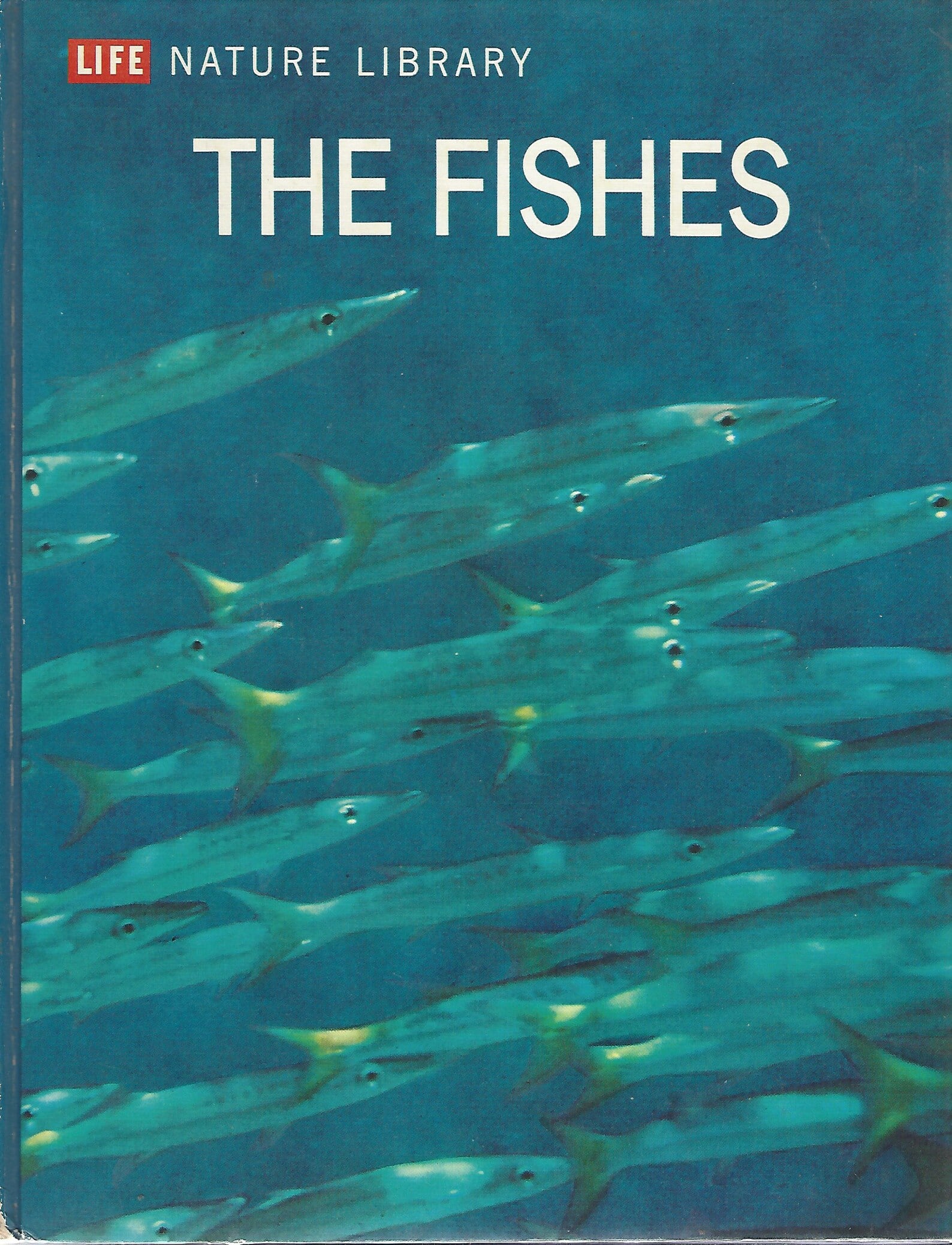
When I was very small, it was the TimeLife book of The Fishes, by F. D. Ommanney, which I remember endlessly poring over, my child’s mind gripped, in total fascination. The cover illustration showed a shoal of barracuda, mid-water and heading upwards, lit up as an iridescent blue by a column of sunlight. Oddly, it is only the cover and the illustrations of the deep sea creatures which I now remember—but I loved that book, as the weakened spine, blunted pages and dog-eared corners attested.
The Fishes has been on my mind recently, because I’ve been working with some dear friends on our own illustrated oceans book, to be published by Upswell Publishing. The book is called Scott Reef: Like Nowhere Else on Earth, and I want to share with you a bit of the story behind its creation.
Scott Reef is absolutely magnificent: Australia’s largest freestanding oceanic reef, brimming with life, including rare and threatened species such as a genetically distinct population of green sea turtles, pygmy blue whales and the wonderfully elegant dusky sea snake. But Scott Reef isn’t near our capital cities; it is way off the north-west coast of WA. And it is threatened with devastation by Woodside, which wants to drill up to 57 toxic wells at the Reef for its vast, dirty Browse gas project.
One of the main challenges in the fight to save Scott Reef from being turned into an industrialised gas zone by Woodside is bringing this incredible location to life for people who haven’t actually experienced it first hand. Because despite its ecological significance and dazzling beauty, ‘Scott Reef’ is also—at least not yet—exactly a household name.
To help get over this barrier, Greenpeace has enabled a number of photographers to travel to Scott Reef by boat (including the Rainbow Warrior) to document its astonishing diversity of colour and life. We then brought these images together in a remarkable photobook, produced by our talented in-house team, which we’ve been putting into the hands of as many leaders as possible—including the MPs whose decisions can determine the Reef’s future.
Back in June this year, I was sharing a copy of our in-house book at a business gathering in Perth when someone pulled me aside. Had we thought about publishing the book commercially? Apart from anything else, he wanted to buy a copy himself! He had a point. We were proud of what we’d created, but a commercially published version could reach a much wider audience and have even greater campaign impact. I immediately turned to my dear friend, Terri-ann White, who runs Upswell Publishing in WA, for advice.
Terri-ann has a huge heart and terrific vision. So many wonderful things in WA owe their existence to her doings, and, true to form, she was immediately encouraging and enthusiastic. “But,” she said, “it would add a whole new dimension if we had some words to accompany the incredible pictures.”
Fair enough, I thought. I could ask a few authors.
“And when would you like it published?” she asked.
“Ideally November,” I answered sheepishly.
Now, in publishing terms, nobody goes from idea to finished work, beautifully produced by a commercial publisher, in just four months. It. Just. Doesn’t. Happen. A book of this scale would ordinarily take nine months, I was told. But Terri-ann was undeterred. “If you can get a rapid turnaround on the writing, I will give it a shot.”
Over the following few days, I sent out 24 emails to prospective writers. To my joy and surprise 23 of them responded almost immediately with an enthusiastic yes!
Terri-ann was somewhat alarmed and perplexed when I told her the good news… we’d discussed a few authors, not more than twenty! “Impossible,” she texted. “Editing is important and you are talking about thousands of words!” But I also know Terri-ann. She does the impossible. And so, here we are… Terri-ann is going to hit that improbable deadline. Scott Reef: Like Nowhere Else on Earth will be on shelves in November.
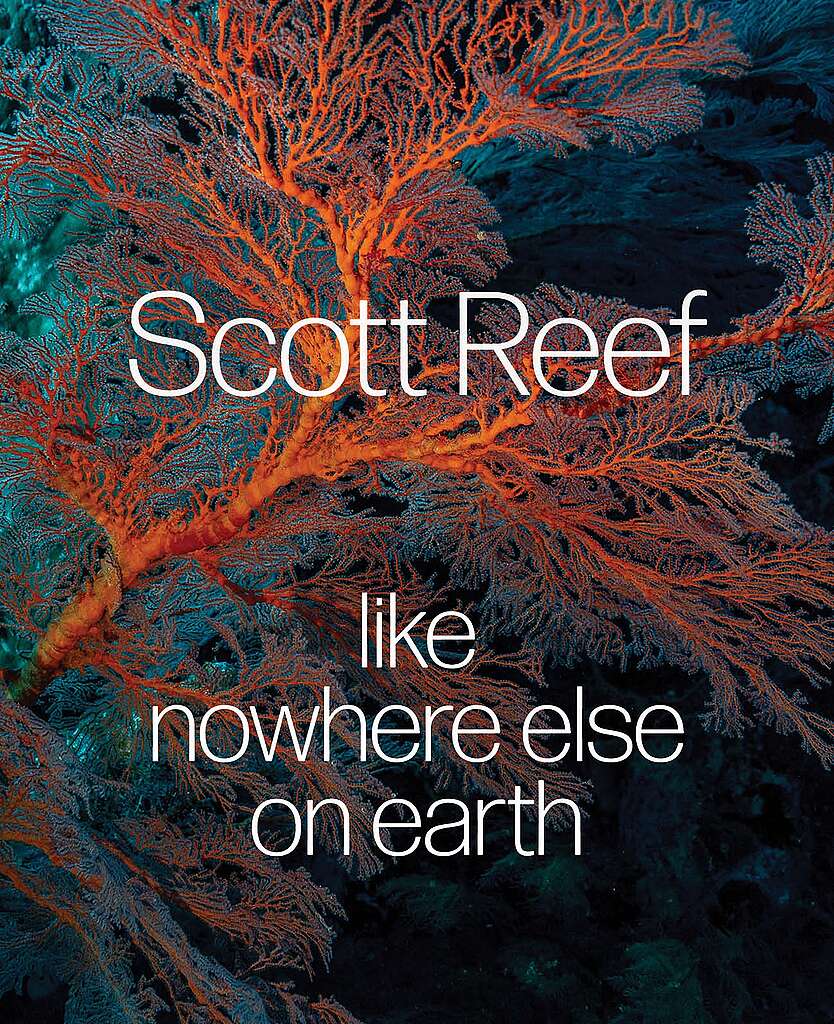
The contributors are a wonderfully diverse bunch, united by their enthusiasm for Scott Reef — and their extraordinary speed!
It’s a brilliant mix. The book brings together national icons like Peter Garrett, Tim Winton, Mick Dodson, Janet Holmes à Court and Fiona Stanley; the intellectual heft of professors Frank Bongiorno, Jessica Meeuwig, Rick Steiner and Samantha Hepburn; the poetic vision of Prema Arasu, Berndt Sellheim and Saadiah Freeman; the field expertise and passionate first hand witnessing of Imogen Zethoven, Tooni Mahto, Ben Fitzpatrick, Geoff Bice, Olaf Meynecke, Paul Gamblin, Sarah Gittoes and Hayley Baillie; and the determination of emerging activist voices Jackson Reid and Emma Sangalli.
Their elegant words wrap themselves around the sheer wonder of the underwater world, brought to life by the work of the photographers — of whom one, Wendy Mitchell, has also contributed a wonderful essay.
Terri-ann showed me the full physical proofs this week and they are breathtaking. This book contains some of my absolute favourite images of wildlife beneath the waves -– and believe me, after almost 20 years at Greenpeace, I’ve been privileged enough to see some remarkable shots! The essays bring a whole new depth and richness to the story of Scott Reef.
If I am being honest, and maybe a bit sentimental, I hope that a four or five-year-old child somewhere in Australia will spend part of their summer holidays turning the pages of this book, wide-eyed with curiosity and awe at the beauty and strangeness of the creatures that call our oceans home.
Our shared commitment is to make sure that, as those children grow up, the wonders of Scott Reef will exist not just in the pages of the book, but out there in the wild waters off north-western Australia—alive, thriving, and every bit as extraordinary as they are today; a living wonder beneath the waves.
Pre-orders of Scott Reef: Like Nowhere Else on Earth are available here.


Q & A
Sometimes you get asked a question so often that you decide to produce a report to answer it!
We know there is strong public opposition to voter opposition to gas drilling at Scott Reef and fracking in the Kimberley in Western Australia. But I am frequently asked whether, even if people don’t want it, more gas drilling is a necessary evil to sustain WA’s prosperity?
The short answer is an unequivocal ‘No’. The longer answer is our new report, From Gas to Green: Building Western Australia’s Future State, which makes the comprehensive case that Asia’s gas market is declining — while WA has an enormous untapped opportunity to become a global leader in green industries and exports, helping drive the region’s shift away from fossil fuels. The faster that WA embarks on a decisive shift away from gas—and that includes no fracking in the Kimberley, or drilling at Scott Reef — so much the better for the state’s people, ecology and economy.
