Connect with us

Published

on

An average big-budget movie creates about 3,370 metric tons of CO₂, according to the Sustainable Production Alliance’s 2021 report. That’s like driving over 700 gas-powered cars for a year, or about 33 metric tons of CO₂ for each day of filming. A single TV season can have the same impact as 108 cars. With thousands of productions happening every year in North America, Hollywood’s environmental impact is hard to overlook. Zena Harris, founder and president of Green Spark Group, has spent more than ten years helping the industry turn sustainability goals into practical steps that productions can track. On this episode of Sustainability In Your Ear, she shares how to build sustainable practices into film and TV projects from the very start, instead of adding them at the end when most waste has already been created. Zena started Green Spark Group in 2014 after earning a master’s in sustainability and environmental management at Harvard. She pitched Vancouver’s major studios on a simple idea: sustainability can save money. Her first big project, the X-Files reboot, managed to divert 81% of its waste across 40 filming locations. Since then, her certified B Corp consultancy has worked with Disney, NBCUniversal, Amazon, and other major studios, and she founded the Sustainable Production Forum, which is now in its tenth year.
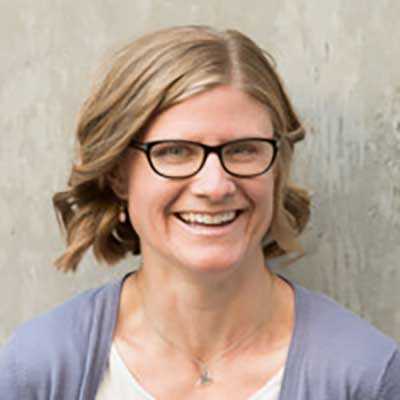
Zena Harris, founder and president of Green Spark Group, is our guest on Sustainability In Your Ear.

This conversation comes at an important time. Soon, California’s climate disclosure laws will require studios to report emissions from every vendor in their production supply chain, both before and after filming. Zena points out that while studios are getting ready, most of their suppliers—like small companies that rent generators, handle waste, or provide lumber on tight schedules—are not prepared. The Sustainable Entertainment Alliance has released Scope 3 guidance for productions, and updated Scope 1 and 2 guidance came out in August 2025, but there is still no single tool that everyone uses. The real challenge over the next two years will be closing the gap between what studios must report and what their suppliers can provide. Zena also makes a bigger point about culture. After 12 years in the industry, she sees sustainability experts facing the same obstacles again and again because the way content is made hasn’t changed. The day-to-day work is important, but the bigger opportunity is in climate storytelling. Only about 13% of recent top-rated films mention climate change at all. Tracking the carbon footprint of a TV season is important, but what really matters is how a billion viewers see what’s normal on screen. That’s the influence Hollywood hasn’t fully used yet.

To follow Zena’s work, visit greensparkgroup.com. You can also learn more about the conference she started at sustainableproductionforum.com, or listen to her podcast, The Tie-In, which she co-hosts with Mark Rabin.

Interview Transcript

Mitch Ratcliffe  0:00

Hello, good morning, good afternoon, or good evening, wherever you are on this beautiful planet of ours. Welcome to Sustainability In Your Ear. This is the podcast conversation about accelerating the transition to a sustainable, carbon-neutral society, and I’m your host, Mitch Ratcliffe. Thanks for joining the conversation today.

We’re going to talk about film and television, because every film and TV production starts the same way: with a creative vision, a budget, a shooting schedule, and a huge amount of stuff. Generators burn diesel all day and night at shooting locations. Trucks idle as they wait to move between locations. Sets are built from raw materials only to end up in the landfill when filming ends. Craft services rely on single-use items for literally everything that’s placed on the table for the production team.

Now multiply that by the thousands of productions happening in North America each year, and the scale of the problem becomes clear. The average feature film emits 3,370 metric tons of carbon dioxide, which is like driving more than 700 gas-powered cars for a full year. And a single season of a TV show can match the emissions of 108 cars — and that’s not even counting the supply chain, everything that comes onto a set and everything that leaves. Hollywood has promised to be more sustainable many times, and our guest today has spent the last 10 years figuring out what it really takes to make these promises come to life in practice.

Zena Harris is the founder and president of Green Spark Group, a certified B Corp sustainability consultancy that she launched in 2014 with a mission to change the environmental impact of entertainment. She holds a master’s degree from Harvard in sustainability and environmental management, and she came to this work not as an environmentalist, but as a systems thinker — someone who spent her early career in engineering and HR identifying where organizations were leaking efficiency and money. But when she moved to Vancouver and discovered that nobody was focused on sustainability in what had become one of North America’s largest film production hubs, she saw a gap and filled it.

For more than a decade, she’s worked with major studios — including Disney, NBCUniversal, and Amazon — helping them embed sustainable practices in video production projects, and she’s developed measurable goals and built cross-industry collaborations that make lasting change possible.

She also founded the Sustainable Production Forum, which is now in its 10th year and has become the industry’s premier gathering place for turning sustainability talk into coordinated action.

We’ll talk with Zena about what it looks like when a production plans for sustainability from the very beginning, instead of adding it on at the end of the process like we usually do with all of our waste. And she’ll explain her idea of radical collaboration and why making real progress in Hollywood requires everyone — that includes unions, guilds, city governments, power companies, and those top-talent stars — to work together. We’ll also discuss how she uses the circular economy on set, the accountability gap that remains even as California’s new climate disclosure laws start to roll out, and whether the same systems-thinking approach can help business outside the film world.

To find out more about Zena’s work and Green Spark Group, visit greensparkgroup.com — that’s all one word, no space, no dash. Hollywood has the power to change how people think about sustainability, but can it also change how it works behind the scenes? Zena Harris is tackling both challenges at the same time. Let’s see what she’s discovered, right after this brief commercial break.

Mitch Ratcliffe  3:49

Welcome to the show, Zena. How you doing today?

Zena Harris  3:50

Hi. Thanks for having me. I’m doing great. The sun is shining in Tacoma, Washington, and I’m happy to be talking with you.

Mitch Ratcliffe  3:59

Well, I’m so happy to hear that you live in Tacoma. I lived there for almost 50 years. It’s a beautiful place, and I’m glad you’ve inherited it. I really like it. But you started your sustainability career in Vancouver, and you had no entertainment experience, and your first project was helping The X-Files reboot series divert material at 40 shooting locations — and you reduced their waste by 81%. What gave you the confidence to, you know, just call and say, ‘Hey, can I make you more sustainable?’

Zena Harris  4:31

It was a little more than that. You know, there was a lead-up to it. I had studied the film and TV industry in graduate school — I did my master’s thesis on it — so I had a little bit of a background. And the reason I studied it in grad school: I was in a sustainability master’s program, and I wanted to figure out how to shift culture. The first thing I thought of was, okay, people watch TV, we all love movies — that’s where I should start digging in to see what they’re doing. And they weren’t doing a ton. They were doing a little bit, but not too much.

So I talked to all the studio reps and found out what was going on and created a whole framework, like you do in graduate school, and wrote it all up. And then I pitched it to every studio. I sent out a white paper, essentially, to all the studios, and I was like, ‘Hey, let’s talk about this.’ Flew to LA, met with people in person. And I’m like, ‘I’m in Vancouver. I know it’s a major film hub. Put me to work.’ And one person did. She said, ‘Hey, you know, The X-Files is coming. It’s a big show. We have room in the budget to make this great. Let’s see what we can do.’ And that’s what really got me going.

One of the first people I met in the industry was Kelsey Evans. She is the owner of Keep It Green Recycling, which is a local vendor in Vancouver. Now, I had studied the film and TV industry, I know management practices and sustainability and the science, and she knew — like, really knew — the industry. So we worked together on that production, and we still work together today. She’s a friend of mine. She’s fantastic.

We got a lot of stuff done on that show, and that was my introduction into the film industry in practical terms. Vancouver, because it’s a major film hub, has — let’s just say — 20 shows filming at any given time. Sometimes it’s a lot more. But I knew that the work I was doing on that one show could scale. We needed to do it on all the shows. We needed to engage the industry. We needed to train people. So I started Green Spark Group as a vehicle to do this in the industry more broadly.

I think my past experience — prior to even going to grad school — in HR for a multinational company, and I was also an executive director at an international nonprofit where we had working groups and people from all over the world coming together to solve problems and create programs, all that gave me confidence to step into the film industry, look around, learn from others, apply my skills, and build this momentum locally. The company, locally, ended up — now we work across North America and even in other countries. So it’s been a journey.

Mitch Ratcliffe  7:52

Well, you point out that they said, ‘We’ve got room in the budget to make this great,’ but that isn’t always the case. So what’s the pitch to a new client?

Zena Harris  8:00

Yeah, yeah. Well, those are the magic words: ‘We can save you money.’ That is it. That’s it. I mean, look, this has been a movement over the last, let’s say, 12 years — that’s how long I’ve been working in this space. And it’s rare for folks to say, ‘Yeah, we can figure this out in the budget.’ Sometimes it happens, but most people want to know how they can save money. So if you can show them very clearly that they can save money, that pushes the door open. And then you can talk about lots of other things too.

Mitch Ratcliffe  8:43

So tell us about The Amazing Spider-Man 2. You saved them a lot of money. How’d you do it, and how much did you save them?

Zena Harris  8:48

I did not work on that. A colleague of mine, Emellie O’Brien, worked on that. That was actually one of the first productions publicized for saving a lot of money. I think they saved something like — well, I have the number here — $400,000. The cool thing about what happened with that, and also what happened with The X-Files and some others shortly thereafter, is that the studio recorded behind the scenes. They interviewed crew members to talk about what they had done. Then they published some of the stats in a case study and a video.

People in our industry love watching videos, right? So we did a behind-the-scenes for The X-Files, which caught lightning in a bottle — really created a whole movement in Vancouver. We showed that little five-minute behind-the-scenes video to everyone, and they saw their peers in that video because they were crew members speaking about what they had done. Things like that really sparked action in people and this excitement that, ‘Wow, things I have seen and kind of felt uncomfortable with — like waste, nobody likes seeing waste — people saw solutions in those videos. People saw themselves, saw their peers, and that inspired action, awareness, intrigue — like all the stuff you would want to create a movement. I can’t say enough about those early videos. They really helped kind of put us on a trajectory for more awareness and more action.

Mitch Ratcliffe  10:42

A set is kind of like a microcosm of a city. A lot of stuff comes together and then disperses again. We actually did some consulting a few years ago with Hollywood about recycling the material on site — they use the PCs for the first time and then send them to recycling. It’s amazing how wasteful it could be. Tell us about what happens on a set. What’s the input, and what’s the output?

Zena Harris  11:10

Yeah, you are right. It is definitely akin to a city. I mean, if you think about it, for a large film or TV series, there can be 20 different departments working together to make that project happen. Each of those departments brings in some kind of material, some kind of input. The production office will have lots of office supplies, equipment, office equipment, furniture for the office — that kind of thing. Those things are coming in, and then you use them, and then they go out.

Then you can think of production design and construction. These two departments work really closely together, and they’re the ones creating and then building the sets in the sound stage. You can think about all the materials that might be associated with that. Construction is a big input department, where we’re bringing in lots of wood — and other types of material. It’s not just wood, but essentially we’re building a village inside a sound stage to shoot. And it’s all the wood and any other material that goes into that: wallpaper, paint, all sorts of props, set dressing that will go into that space.

So all that’s coming in, and then we use it for a short period of time, and then we have to do something with it. A lot of times, set walls are kind of standard — they can be reused. These are things that, if we recognize the patterns here, we’re using these things all the time. We’re breaking them down, and then we do something with them. A lot of times the breakdown is fast. You don’t have a ton of opportunity to really think. But if we know that there’s a pattern associated — prep, production, and wrap every single show — we know that we can disrupt that pattern. We can plan for it.

This is where thinking ahead and planning like, ‘Hey, we can reuse these walls. Got a lot of doors here — we’re going to reuse these doors. We’re going to send them to a place that will hold them temporarily, like a reuse center, and then those can be redistributed back into the industry.’ Some productions will store this stuff on their own if they have reshoots they think they might have, or another series they might come along. So all of these are options.

The default historically has been — because this is a dynamic industry, because timelines are short, people need to get out of their stage space — to use it, break it down, put it in the dumpster, get that thing out of here, and move on. So we’re saying there’s another way to do it, and just that alone saves the production a lot of money, because those big dumpsters at the end of it all are expensive to haul away. If we can reduce even a few of those, that is a cost savings, and then that material can be diverted and reused. So everything coming in — food, big material like construction material that people think a lot about, anything coming in — has an opportunity to be diverted, redistributed on the back end. And then that action saves money.

Mitch Ratcliffe  14:59

Well, you describe what’s needed as radical collaboration. I’m wondering if you can explain what that means, because Hollywood’s going through a lot of changes right now, and it sounds like sustainability may be the keystone of some new talent or new careers during the production process. So what are the hardest stakeholders in that radical collaboration to get to move from where they are today?

Zena Harris  15:22

Yeah. I think, like I said, I’ve been doing this for a really long time, and one of the things that I’ve picked up over the years is that people in the industry have been conditioned to point fingers. There are different stakeholders in the industry. Crew will point to the union or the studio, for example, and say, ‘You know, those folks need to do something so that I can integrate sustainable practices.’ The unions will point to crew or studios. The studios will point to production or unions. And so at the end of the day, that doesn’t get us anywhere. We’re kind of swirling in this finger-pointing. And nobody really knows what to do. They’re waiting for something. So progress is slow when you do that.

In order to move the needle, I think one of the things we need to do is actually work together in ways that might seem unconventional or radical. I keep reminding myself of the saying, ‘What got us here won’t take us forward.’ So we have to get over ourselves and do something differently. We know that there’s no single organization that’s going to solve all the problems or change the existing system. We need a different approach, a different narrative around all of this — not just kind of deferring to another stakeholder.

This is what I call radical collaboration, because it’s different. Collaboration between crew and unions and studios and creatives and suppliers and industry organizations — in ways that have been different than we’ve tried before, that really haven’t worked so well, or not to the degree we wanted them to work. So instead of reinventing the wheel on that, we need a whole different tack. I think that in order to see success, we need positive reinforcement for people. We need to actually say, ‘Yes, this worked,’ and in increments too — not just the big things. When people see that positive reinforcement, they actually lean in. They actually have more confidence in what they’re doing. And then this increases momentum. That’s kind of my view of radical collaboration and what I think is needed to keep the ball rolling.

Mitch Ratcliffe  18:07

Well, you’re making a really interesting point, which is that people don’t dislike change. They may be a little afraid of it, but they want to see that the extra effort involved in making the change actually is paying off. As the orchestrator of the sustainability activities on set, how do you communicate that to them so that the Teamsters and the members of the Screen Actors Guild all say, ‘Oh, I’m in’?

Zena Harris  18:37

Yeah, yeah. Well, you know, it’s interesting. You mentioned a couple of different positions there — Teamsters and actors and these sorts of things. Everybody is coming to the production with a different perspective, a different viewpoint, kind of a different mandate within their department. Like, their job is to do this. So everybody sees sustainability in a slightly different way.

One of the things we really strive to do — and I would say this is kind of a standard practice, but what we’re trying to do as a team at Green Spark Group — is go beyond surface-level conversations. Not just say, ‘Here are a few things you could do,’ but really try to have a deeper conversation with people in each of these departments and ask them what they see, what they need to be successful in doing any one of the things that they might want to do differently, and really help them get there. If they’re afraid to talk to someone, well, we’ll help them do that. We will have their back. We will go with them and be a backstop for anything they may not know or feel confident talking about. If it is finding a vendor and they don’t have time to look around, we’ll help them do that.

You know, people say, ‘Meet you where you are.’ But it’s really going beyond surface-level conversations. It’s really tapping into people’s wants, needs, level of confidence, and helping them grow that and helping them shine in their role — whatever it is. I think that sort of human-centric approach is really helpful, and what really moves the needle, or actually builds trust. Because at the end of the day, we can go in there and talk about all sorts of gear. There’s a lot of gear out there. There’s a lot of batteries out there that are going to save emissions. But I have seen multiple times where batteries have been rented, they sit in the gear truck, and people are afraid to use them. Why is that? Let’s talk about that. Let’s really unpack it, and let’s find a safe space to do it. Maybe it’s that lightweight one over there, and we want to just test it out. Totally cool. Let’s make that happen. What’s it going to take to get there?

Mitch Ratcliffe  21:24

This very meta moment — talking about telling stories to storytellers to get them to change their behavior — is a great place to take a quick commercial break. Folks, we’re going to be right back to continue this really interesting conversation.

Welcome back to Sustainability In Your Ear. Let’s get back to my conversation with Zena Harris, founder and president of the Hollywood sustainability consultancy — although Vancouver, too — Green Spark Group. Zena, your mission is to change the climate of entertainment, and that has a double meaning that clearly was deliberate. But I’m wondering, in the current environment and thinking about the stories we tell about why we do things, with all the whiplashing political winds of the last couple of years, how has that changed your message and your perception of what Hollywood’s trying to accomplish?

Zena Harris  22:16

Yeah, I mean, I’ve said this a few times. We have a lot of momentum. Right now, in 2026, there are more organizations, there are more people thinking about sustainability, there are more tools out there for people to use. There’s a lot of momentum in the industry. So for us at Green Spark Group, we are on a mission to change the climate of entertainment, and it’s incremental, year over year, year over year — and so we’re still working on it. It’s very relevant for us today.

We have had a hand in changing a lot in the entertainment industry over the last 12 years. We started programs, we’ve created strategic plans for industry organizations and training in the C-suite, and started the industry’s first conference. We’re uplifting people and trying to give a platform to people to collaborate and share their ideas. But there’s a lot of opportunity out there. There are still a lot of people who are new to sustainability, and they need someone to help them make sense of it all. It’s taking all this wonderful information that’s been created by various organizations — and we’ve contributed as well — and distilling it and helping them make sense of it all, make decisions that are in line with their values, and implement the things that they want to implement. Save the money that they can save, that they know they can, when they start doing the math.

Mitch Ratcliffe  24:11

Is the money the key thing right now? Is it the sustainable savings, or is it still a commitment to the climate, in the context of, again, all the backlash against the idea of environmentalism?

Zena Harris  24:24

Yeah, I mean, the idea of environmentalism, I think, is kind of in the broader ethos. I think when you get down to talking to people one on one, they want solutions to things — waste they’ve seen, or emissions they’ve encountered on production, or food waste, or whatever it is. Whether they call themselves an environmentalist or they just are a caring and concerned person, everybody wants a positive working experience. And they don’t want that tension internally between, ‘I’m doing this great, creative, wonderful thing in my job, and then I look over here and some negative thing is happening environmentally or whatever.’ People want a holistic, positive work experience. So I think that’s core at the end of the day — to tap into that, and, like I said, just go beyond surface-level conversations and really help people figure that out.

Mitch Ratcliffe  25:35

Let me ask about the other side of that equation, about changing the climate of entertainment. Hollywood has enormous cultural reach, but we did a little research and found that only about 10%, 13% was the number we came up with, of recent top-rated films even acknowledge the idea of climate change on screen. Do you hear creatives on the content side talking about climate? Do they ask you? Do they say, ‘You know, this is interesting, I’d like to learn more, and I might tell a story about it someday’?

Zena Harris  26:05

Yeah. I mean, this idea that the industry reach is certainly enormous — the cultural influence of the industry, wherever you’re interacting with it, whether you love a character on screen, whether you follow an actor in real life and kind of just like what they do, whether you follow — like, I’m an operations kind of person, I like looking at how things work and trying to improve that. But this idea of climate storytelling, a lot of people are thinking about it right now. It’s a huge lever. You will hear that batted around a lot. A lot of industry organizations are doing research on it and trying to get into writers’ rooms and in film schools.

There’s a lot of momentum in that space. We have been engaged a few times in that effort, and it’s proven beneficial. So I would say that 13% — there’s a lot of momentum around this subject, and I can see that number increasing over time. People want stories that reflect the current reality they’re feeling in real life. There are a lot of people working in environmental jobs, or in some shape or form, and I think those kinds of professions will be reflected on screen a lot more in the future. So, yeah, I think there’s a lot of momentum in that space.

Mitch Ratcliffe  27:52

I can see a film about a ranger saving a family from a fire.

Zena Harris  27:57

You can think it, they can do it.

Mitch Ratcliffe  28:00

Let’s turn back to the operational question, as you pointed out you focus on that. One of the common problems that production has, along with every other business, is trying to fully measure what’s going on. Like we were talking about, this set is this midpoint in a very complex supply chain where stuff has flowed in, now it needs to go somewhere in order to either be reused or appropriately recycled, but we can’t fully measure all that. What’s still in the invisible category of information? In the same sense that Scope 3 emissions are hard for a typical corporation to measure, is there a comparable issue with production sustainability?

Zena Harris  28:36

Oh yeah, 100%. Look, there are always more things to measure. As an industry, we have focused a lot on carbon emissions from things like utilities, fuel, air travel, and accommodations. We have a really good handle on that. But those are, like, four categories, right? And, as you said earlier, materials are coming onto production — food, wood, office supplies, you name it, it comes onto production. So those are the things we don’t have a solid handle on. There’s embedded carbon and all that stuff.

There are also lots of industry tools, industry carbon calculators out there — some measure more than others.

Mitch Ratcliffe  (interjects)

Are any of them any good?

Zena Harris  (continues)

Yeah, yeah, they’re good. But some have more inputs than others. Some will only measure those four categories that I mentioned. For years, for example, everybody in the industry wants to know the waste diversion rate, right? But nobody focuses on the carbon emissions associated with that material. We just get a diversion rate, and we call it good. So you have to choose: if you want to know all of that, you have to choose a tool that will allow you to input more of that information. And we don’t have a standard tool yet in the industry that everybody uses, so we can compare apples to apples.

We have guidance in the industry, and that’s really helpful. The Sustainable Entertainment Alliance, which is an industry consortium, has put out guidance on Scope 1, Scope 2, and Scope 3. Their Scope 3 guidance is the most recent, and with new information, new methodology, a lot of people don’t really know what to do with that, and maybe aren’t sure which tool to use to capture some of that stuff. So there’s a lot of uncertainty even around the guidance that’s out there. That’s where you can seek out professionals to help you understand all that stuff.

Mitch Ratcliffe  31:11

One of the characteristics of the change we’re undergoing right now is the recognition of externalities. And in Hollywood production generally — I have some friends who are in the industry — it seems to me that they focused almost entirely on who was in front of the camera and who was behind the camera, and only now are starting to recognize that they’re part of this deeper supply chain. And now California’s new climate disclosure laws are going to require studios to report indirect, upstream and downstream emissions from every vendor by this year. How’s that going to change? And is the industry actually getting the traction on trying to respond to that requirement?

Zena Harris  31:47

The studios are very aware of this. They’ve been preparing for this. The suppliers upstream, downstream are not as [prepared].

Mitch Ratcliffe  31:58

So how are they not prepared? What do we need to do?

Zena Harris  32:00

Well, they haven’t been tracking.

Mitch Ratcliffe  32:10

So they’re the typical company.

Zena Harris  32:13

They are a typical company. These are small companies servicing these projects, these productions. And we’ve been so focused in the industry on pre-production and production — that piece of the content creation process. So if you think of a book that has 10 chapters, we’ve been essentially focusing on one chapter. So you’ve got all of the other ones, and all of the service companies and suppliers and all of that that still incorporates the book, and all of those are contributing in some way.

Now we’ve been collecting data from waste haulers. We’ve been collecting data from people who supply equipment, and even those folks are still trying to get organized with their data. So you can imagine, like every other company, they all have their own operations. So that’s one thing. You can incorporate sustainability into your own company operations, and then you can provide data associated with the product or service that you are providing. And that’s going to matter. Those things roll up into this production reporting, and that production reporting rolls up into the larger studio, who’s going to have to incorporate that into their corporate reporting.

Mitch Ratcliffe  33:54

So do you see this regulation as catalyzing the potential for sustainability at scale in entertainment production?

Zena Harris  34:05

Yeah. I mean, I think it provides people a solid talking point to go up and shake the tree a little bit and say, ‘Hey, we’re going to have to be doing this.’ Look, they’re not going to have all the information they need, probably, in year one. So they’re going to take what they do have, and they’re going to estimate probably across their slate. And then they’re going to work really hard to make that better, more accurate in the coming years. So if you’re not asked in year one as a supplier for certain information, you might be in year two and three. It would be wise, I think, to kind of get your house in order and be able to start reporting on these things, even if you’re never asked. It’s good for you as a company, because you start to understand where your waste is, where your emissions lie, and then you can start making changes accordingly. And yes, that stuff saves money. So it’s good for everyone to be thinking about this, whether you’re asked by a studio or not.

Mitch Ratcliffe  35:16

Well, that’s really the key — that it’s also rewarding to make that kind of additional positive impact, as well as save some money and make more profit in the long run. I mean, that’s what’s rewarding about progress in general.

Zena Harris  35:30

Totally, totally. It’s a ripple effect, right? And then we just get better as an industry, and then an industry that contributes to broader society.

Mitch Ratcliffe  35:40

So after 10 years, how far has the industry come toward the vision that you had when you started Green Spark Group?

Zena Harris  35:50

Oh, gosh. Well, there’s a lot that has happened over these years. Like I said, more people are aware, more people are engaged. But I think that we are swirling within the existing system. Sustainability practitioners that started working on production like I did years ago — we just entered this existing content creation system. And what I’m noticing now is that we’re swirling within the same system. We’re all running up against similar challenges around the world with regard to implementing sustainable practices. So we’re coming up against consistent hurdles, barriers within this system.

For me, that’s an opportunity to look a little bit bigger and say, ‘Okay, well, if we keep running into the same barriers, what if the system shifted? What if the entire system shifted? What are the incentives involved in the system to keep it the way it is?’ And there’s a lot — that’s a whole separate podcast — but all to say, this is where we need to be thinking: how we shift the system, how we have that radical collaboration, how we shift the needle on what suppliers are doing and reporting, and these sorts of things. And that’s what’s going to take us to the next level. We’re going to get over the hump.

Mitch Ratcliffe  37:34

So, given that, imagine that you are Zena, goddess of sustainability, and can put your finger on one thing and change it. What would it be, in order to drive much more rapid transition to a more sustainable production environment?

Zena Harris  37:51

I mean, I think it all comes down to the people — the people in the system that are either allowing or not allowing, either making excuses or open to possibility. It all comes down to that. There are some core elements associated with people, behavior change, these sorts of things. I think mindset is core, absolutely core. I think courage — even to talk about this stuff within your small team or your department, or even in a larger conversation — is pretty critical, to voice some things you’re noticing, or what ideas you have for doing things differently. I think that collective confidence — once you do that, people get on board. They come together. Confidence is critical as well. If you don’t have it, you’re not going to take the next step, right? So there are fundamental human elements that need to be developed, to be encouraged, to be demonstrated. And I think that is going to shift the needle.

Mitch Ratcliffe  39:08

It’s a storytelling challenge in a lot of ways. There’s some carrot, there’s some stick, there’s a lot of nuance to that tale that we need to really make embedded into everybody’s approach to thinking about the work. Zena, thanks so much for your time today. How can folks follow both Green Spark Group and the work you’ve done with the Sustainable Production Forum?

Zena Harris  39:28

Sure. You’re always welcome to check out our website, greensparkgroup.com. We post insights there monthly and have a lot of great information for folks. Also on social media at @greensparkgroup — pick a platform, we’re probably on it. And then the Sustainable Production Forum is online as well, sustainableproductionforum.com, and from there you can get to all of their content, videos, anything you want to know is there too.

And I’ll also just give a quick plug for my podcast that I co-host with my longtime friend Mark Rabin. It’s called The Tie-In, and so folks can also check out stories from crew members, from people doing amazing work behind the scenes. We talk to them all there.

Mitch Ratcliffe  40:21

Zena, thanks so much. It’s been a fascinating conversation. Really enjoyed it.

Zena Harris 

Thank you.

Mitch Ratcliffe  40:31

Welcome back to Sustainability In Your Ear. You’ve been listening to my conversation with Zena Harris, founder and president of Green Spark Group, the certified B Corp sustainability consultancy she launched in 2014 to change the climate of entertainment. You can find Zena and her team’s work at greensparkgroup.com — that’s all one word, no space, no dash. And check out their conference, the Sustainable Production Forum, now in its 10th year, at sustainableproductionforum.com, also all one word, no space, no dash.

I think the headline from Zena’s work is a pitch, not a principle: ‘We can save you money.’ That’s how she opens a conversation with a studio, and it’s why The Amazing Spider-Man 2 became an early case study, based on the work of a colleague of hers at Green Spark who helped that production save roughly $400,000 through sustainable practices. The implications of these savings are clear when you stand next to the dumpster at the end of a chute and watch a village’s worth of lumber, furniture, wallpaper, and props get hauled away to a landfill because the stage needs to be empty by Monday.

The sustainability opportunity in film and TV isn’t a values problem — the industry’s values are already stated on the record. It’s an operational capacity problem, and Zena’s work is translating aspiration into line items a production accountant can track. And that’s to the benefit of the environment, even if it’s not visible on the bottom line.

California’s new climate disclosure laws are about to change the equation, too. Beginning this year, studios will have to report upstream and downstream emissions from every vendor in their production supply chain. That’s the chapter of the book, as Zena put it, that the industry has never actually opened. The studios knew that this is coming, and they’ve been preparing for it. Their suppliers — the small companies servicing productions on short timelines — mostly haven’t. That gap is the real story over the next 24 months in the entertainment sustainability business.

Zena’s advice to suppliers is the same advice my recent guest Steve Wilhite, who leads Schneider Electric’s power management division, offered corporate energy buyers just a few weeks ago: get your house in order now, because even if you’re not asked for data today, you will be in two or three years. The companies that can report cleanly will win work, while those that can’t will become a balance sheet burden to the studios.

A digital nervous system is arriving now in Hollywood, and every waste hauler, every generator rental company, every lumber supplier is becoming a data-producing node in a network that didn’t exist just one or two production cycles ago. California’s environmental policy is forcing that network into being, and once it exists, it will not unbuild itself, because people are going to see the benefits. They’re going to see the savings that we’ve been talking about throughout this conversation.

And after 12 years in the business, I think Zena’s comment near the end of our conversation — that sustainability practitioners in entertainment are ‘swirling within the existing system’ — is important to note. The hurdles they hit on one production look identical to the hurdles they hit on the next, because the content creation system itself hasn’t changed. That’s the green living myth problem I discussed recently with author Michael Maniates, but with a Hollywood accent: individual actors are doing the right thing inside a structure that continues to produce the same outputs by default. And that can easily become disenchanting. On-set greening is necessary and it’s real, but the industry’s deepest cultural lever is the one that we discussed in passing.

Only about 13% of recent top-rated films even acknowledge climate change on screen. The carbon accounting for a single TV season matters, but the cultural accounting — for what a billion viewers see, what they feel is normal, and what film and television characters drive and eat and care about — that’s the lever that this industry hasn’t yet pulled. Production sustainability builds the operational muscle and the credibility, but climate storytelling is where that credibility will be built at scale, because it will spread these ideas, changing not only Hollywood’s practices, but the practices of an entire world. One without the other leaves the most influential narrative engine on the planet running on the old script, and it’s time for a change.

So stay tuned. We’re going to keep talking with people rewriting what’s possible on set and on screen. And could you take a moment to help spread the word about the sustainable future we can build together? You are the amplifier that can spread more ideas to create less waste. So please take a look at any of the more than 550 episodes of Sustainability In Your Ear in our archives. Writing a review on your favorite podcast platform will help your neighbors find us. So please tell your friends, family, and co-workers they can find Sustainability In Your Ear on Apple Podcasts, Spotify, iHeartRadio, Audible, or whatever purveyor of podcast goodness they prefer.

Thank you, folks, for your support. I’m Mitch Ratcliffe. This is Sustainability In Your Ear, and we will be back with another innovator interview soon. In the meantime, take care of yourself, take care of one another, and let’s all take care of this beautiful planet of ours. Have a green day.

The post Sustainability In Your Ear: Zena Harris Brings a Green Spark to Hollywood appeared first on Earth911.

https://earth911.com/podcast/sustainability-in-your-ear-zena-harris-brings-a-green-spark-to-hollywood/

Continue Reading

Green Living

Sustainability In Your Ear: EarthRating’s Martin Johnston On Making Sustainability Claims Creditable

Published

on

A traditional sustainability certification can take six to eight weeks and thousands of dollars in consultancy fees, and still leave purchasers wondering whether the claims actually hold up. Martin Johnston, founder of EarthRating.ai, thinks he can deliver a more useful answer in 10 minutes. His London-based startup is building a universal credibility score for sustainability — a 1,000-point rating, drawn from roughly 100 public data points, that measures whether what a company says about its environmental and social performance is consistent with what its audited filings and regulatory disclosures actually show. The premise borrows directly from consumer credit scoring: a FICO score doesn’t tell a lender whether you’re a good person, only whether your behavior is consistent enough to be trusted. On this episode of Sustainability In Your Ear, Martin explains how EarthRating’s “accelerated impact engine” gathers verified data instead of relying on questionnaires, and why the small and mid-sized businesses now caught up in the EU’s Corporate Sustainability Reporting Directive and the UK’s Procurement Act 2023 need an affordable way to prove their credentials.

Martin Johnston, founder of EarthRating.ai, is our guest on Sustainability In Your Ear.

Most sustainability frameworks rely on self-reported questionnaires; EarthRating pulls data from audited annual reports, regulatory filings, press coverage, and marketing materials, then cross-checks them against each other to surface contradictions before they become a regulatory or reputational problem. A near-term emissions target that appears in a press release but not in the audited annual report is exactly the kind of credibility gap the platform is designed to flag. Importantly, EarthRating isn’t measuring environmental impact — it’s measuring whether a company’s story is internally consistent and externally verifiable. That sidesteps the impossible problem of reducing carbon, water, biodiversity, and social performance into a single comparable number, and replaces it with a more tractable question: are the claims true? That speed and accessibility comes with real caveats, and Martin and I dig into them. A credibility score isn’t an impact score: a small landscaping firm with a modest, well-documented commitment to electric mowers could rate higher than a multinational with aspirational but unverified net-zero pledges. That’s the right calibration for measuring trust, but it isn’t the same as measuring environmental performance. EarthRating also exists at “Google 1.0,” in Martin’s own words — a launch-stage platform with a proprietary methodology that hasn’t yet been externally audited. Global standards aren’t willed into existence; they’re earned through adoption. The underlying problem EarthRating is trying to solve — making credible sustainability measurement accessible to the businesses that have been priced out of it — is a real one, and worth watching.

To find out more about EarthRating, visit EarthRating.ai.

Interview Transcript

Mitch Ratcliffe  0:09

Hello, good morning, good afternoon, or good evening, wherever you are on this beautiful planet of ours. Welcome to Sustainability In Your Ear. This is the podcast conversation about accelerating the transition to a sustainable, carbon-neutral society, and I’m your host, Mitch Ratcliffe. Thanks for joining the conversation today.

We’re going to talk about, well, in a way, credit scores. Every sustainability claim made today faces the same fundamental problem: we lack a credible common language that quantifies a business’s impact on planet and people. A company, of course, can call itself sustainable simply by cherry-picking a single metric, commissioning a favorable audit, or simply repeating the word often enough that it seems to stick.

However, regulatory pressure is tightening. The EU’s Corporate Sustainability Reporting Directive now covers roughly 50,000 companies, and the UK’s Green Claims Code is actively prosecuting misleading environmental marketing. Here in the United States, the SEC’s climate disclosure rules are still in effect, although they are under attack. Of course, regulation alone doesn’t solve the underlying problem. Businesses, investors, and consumers still lack a fast, affordable, and trustworthy way to evaluate whether a sustainability claim actually holds up.

Our guest today is Martin Johnston, founder of EarthRating.ai. It’s an early-stage company building what it calls a universal credibility score for sustainability. The Earth Rating is a 1,000-point scale generated in minutes using AI and verified data from a company. It’s designed to measure, manage, and monitor sustainability performance across businesses of all sizes, from a regional landscaping firm to a global fashion house.

But unlike legacy frameworks built for large corporations with dedicated sustainability teams and consultancy budgets, EarthRating is designed to be accessible to small and medium-sized companies. They constitute the vast majority of economic activity worldwide and have been almost entirely locked out of credible sustainability measurement. EarthRating’s core proposition is that sustainability credibility should work more like a credit score — standardized, legible, and universally available — rather than opaque, expensive, and inconsistent.

So we’re going to talk with Martin about what makes a sustainability score genuinely credible, rather than just another layer of greenwashing; how EarthRating’s methodology handles the inherent incompleteness of any single score across carbon, water, biodiversity, and governance; and what guardrails prevent businesses from gaming the system he’s designing. We’ll dig into who the primary audience for an Earth Rating actually is — whether it’s regulators, investors, supply chain partners, or even consumers — and how the company is thinking about the gap between giving a business a number and actually changing its behavior. We’ll also look at the roadmap: what EarthRating is building, which markets it’s targeting first, and what would have to be true for a startup like this to become the universal standard it’s aiming to be.

You can learn more about EarthRating at EarthRating.ai. EarthRating is all one word, no space, no dash. EarthRating.ai. So can a single AI-powered score do what decades of sustainability frameworks have failed to accomplish — make environmental credibility fast, affordable, and impossible to fake? Let’s find out right after this brief commercial break.

Mitch Ratcliffe  3:43

Welcome to the show, Martin. How are you doing today?

Martin Johnston  3:45

Oh, yeah, not bad, actually. Thank you very much.

Mitch Ratcliffe  3:47

Well, thanks for joining me. We had a really interesting conversation a couple of months ago about what EarthRating is up to. And I want to start off by asking — you’re describing this as a universal credit score for sustainability. What will make EarthRating credible when so many sustainability scores and certifications have been accused of serving mostly as marketing tools?

Martin Johnston  4:07

Yeah, it’s a good question. I think the difference between us and other people really is the fact that we can summarize it in three words: we don’t actually ask, we find out. Where most other frameworks are reliant upon questionnaires and self-reporting — and I know a lot of them are now catching up on verifying the data and that kind of stuff — we’ve built an accelerated impact engine that gathers 100-plus data points and feeds them into a scoring system where we can verify what people are saying against what they’re actually doing. We search for verified information and verified data, and therefore what comes out of the platform is quite a good indication of the maturity of where a company is at from a sustainability perspective, based on evidence and based on real data, rather than based on a questionnaire that someone else has filled in for them.

Mitch Ratcliffe  5:13

Can you describe briefly what kind of data you get when you make that assessment?

Martin Johnston  5:18

Yeah, I can describe it. Obviously, I don’t want to go too much into detail, but we research the four pillars of sustainability — so human, environmental, economic, and social. Data that comes out includes things like: Is it verified carbon measurement? Do they have a near-term target? Do they have a future target? We then assess whether that is actually verified by an independent body. So it’s not just what the company says about itself — has it actually got third-party endorsement? From there, what we can then look for is any flags or any conflicting statements, because we go into detail from actual reports that have been signed off by their accountancy teams, versus what the press and what marketing materials say. It looks to verify that data and compares the conflicts. So from our point of view, it’s not really a certification. It’s a B2B tool which allows organizations to genuinely use it in an impactful way. It’s not there to scrutinize and be used as a lens so other people can jump on the bandwagon of having a go at businesses who are trying to do the right things and be positive towards the planet and the people who live on it.

Mitch Ratcliffe  6:40

Roughly how long does it take to establish that score once I decide to do it as a company? What does the timeline look like?

Martin Johnston  6:48

To be honest with you, it varies, but we’re talking minutes.

Mitch Ratcliffe  6:52

Minutes?

Martin Johnston  6:53

We’re talking anything up to 10 or 15 minutes. We can do it sometimes in three or four. It depends on the veracity of the information we’re searching for, how much information is available, and whether we have to cross-check that information using our accelerated impact engine. Literally, the speed is how quickly we can ascertain that information — whereas, you know, comparable processes take six to eight weeks for a certification, and 12 months-plus for others.

Mitch Ratcliffe  7:27

Sustainability measurement is fragmented across carbon, water, biodiversity, social impact, the human implications that you described a moment ago. How do you handle that kind of inherent incompleteness in any single score? And how does EarthRating express explicitly what it doesn’t measure as well as what it does?

Martin Johnston  7:49

Good question. Well, we’re measuring the credibility — this is our differentiator. We measure the credibility of what an organization is saying, rather than the impact itself. So what we look for is: What does an organization say it’s doing? What claim is it making? And then we offer data to verify that claim. That’s why it’s a credit score in the true sense of the word — a credit score is actually credibility. That’s what credit means. It’s based on the idea of trust: if you are paying back your debts to your financial institutions on a regular basis within the timeframe and show that you can manage your financial responsibilities in a considerate way, you will get a good trust score, which is what a credit score is. That means you are a good opportunity for underwriters to look at and say, ‘Yeah, you’re a good person to loan my money to. I live where I live, I bank with the right bank, I’m on the electoral roll, and I have a credit history of doing the right thing on a timely basis.’ If you take that financial model and recategorize it to sustainability and change the inputs — are the claims credible? Are they historically valuable? Do they prove themselves time and time again, consistently? — when you do that, you build up a nice picture of an organization that you can actually trust on what it’s claiming to do. And that’s what we’re trying to do.

Mitch Ratcliffe  9:15

That’s interesting. You think about the timeliness of a credit score, which goes down if you don’t use credit. At some point, it will be necessary to be on the system on an ongoing basis. But how frequently would a review be completed? Or is this integrated into the businesses’ systems in such a way that it’s just a continuous score?

Martin Johnston  9:39

Okay, so we’re kind of in launch process at the moment. We’re doing Google 1.0 — not what Google is now, but what Google was back then. For us, we are continuously going to be checking, but continuously means we’ll be giving updates on a quarterly basis to organizations. However, we want to move this to real time, because we believe that, in the words of Douglas Adams, bad news travels fast. If a claim that an organization is making hits the headlines, then that needs to be alerted to the business — just like a credit score has alerts which say somebody’s checked your file, somebody’s looking at your profile, an underwriter or whatever. We think the same process has to happen for businesses to be able to respond quickly and responsibly to potential threats or risks.

Mitch Ratcliffe  10:32

I was particularly intrigued by your focus on small business. Can you explain what a landscaping company, for instance, or maybe a regional logistics firm, might actually do with the sustainability score? Who are they going to show it to, and why does it matter to them to do it?

Martin Johnston  10:50

To be honest, this is the current problem for small businesses. Inherently, reporting on sustainability is too costly, too time-consuming, overwhelming, and confusing. The whole thing needs to be looked at from a complexity level. That means that 91% of small businesses do not report on sustainability at all, yet they make up the vast majority of the economies of the world. If you combine the numbers and the impact, and the ability we could give if small businesses have the same opportunities as larger businesses to report on sustainability — and we break those barriers down — then that allows a business to operate in a world where sustainability needs to be taken a lot more seriously. It needs to be shown as innovative and commercially valuable, not just a nice-to-have. In the UK particularly, we’ve got the new Procurement Act, which has come out, and if you cannot show sustainability and the progress of sustainability for your business, you could be excluded from government contracts. You could be excluded from the largest supply chains. Bigger businesses are looking to regulate their supply chains and their ESG claims throughout, because they’re responsible for their own supply chains. That means small businesses, if they can’t do this, might risk losing or reducing their work or opportunities to gain work. And then the biggest thing as well is tender writing. If we can give them an instant ability to showcase where they sit on a maturity level of sustainability, and how easy it is for them to implement a reporting process that takes minutes, not months — not even years — and costs no time at all in terms of labor to produce, then that removes the bureaucracy and the friction that small businesses face when trying to come up with stuff that they’re required to do for procurement.

Mitch Ratcliffe  12:56

A credit score is typically paid for by another organization that wants to see how my credit is, or my business’s credit is. What’s the business model? You described it as a B2B metric. Am I going to, when I’m reviewing a supplier, pay you to get a rating?

Martin Johnston  13:11

The idea is that eventually, when we process this out and it’s a bit more mature and the business has grown, then, yeah, we will be hopefully selling the reporting processes that organizations can pay for. But for us, this is a tool for a small business to use to implement and to make sustainability actionable, so they pay for it, and they pay to be on the platform.

Mitch Ratcliffe  13:32

Could you also begin to roll up individual entities’ carbon impact? For instance, there’s Scope 1 and 2 emissions, in order to provide some other organization up or downstream visibility into their impact, so they could calculate their Scope 3 score?

Martin Johnston  13:49

Yeah. Well, this is also interesting, because sustainability has a complexity attached to it where consultancy is required for stuff like that. So what we’ve done, and what we are doing, is we’re building a sustainability navigator, which effectively is a tool that sits on a platform. If they need to understand where to go and get their SBTi carbon Scope 1, 2 or 3, or need to do something that requires heavy lifting in terms of what sustainability metrics look like for their business, then our sustainability navigator will point them to the right places without the fees of a consultancy — £800 to £1,500 a day.

Mitch Ratcliffe  14:35

Okay, so this is where the AI comes in. As you’ve developed this guidance you just described, what is it based on — for instance, the SBTi standards? How did you develop the methodology that it’s going to use to coach those small businesses? Because that’s really an interesting opportunity.

Martin Johnston  14:55

Yeah. Well, we’ve been doing sustainability for quite a while, and I’ve looked at all of the frameworks. We haven’t sort of adopted any particular one. But what we do understand is the standardization of questions that are being required through tenders and through responses by businesses. We’ve developed 100-plus data points, which we developed our own over a number of years. It’s proprietary information that we gather. It’s not based on any one framework, but the sustainability navigator will point them to people who actually can help them — organizations that can give guidance in the right way. So that’s what we’ve done. That’s what we’re aiming to do. It’s still in its infancy, and we’re in launch mode, so we’ve got to do more of the doing, rather than more of the talking about what we’re going to do in order to implement this stuff.

Mitch Ratcliffe  15:54

It does sound like one of the functions of that AI guidance in the future could be to look across the market space and say, ‘Here’s a partner who can solve this problem for you.’ Becoming the marketplace, in the long run.

Martin Johnston  16:08

No, absolutely not. It’s not a way to become the marketplace at all. It’s a three-in-one platform. It provides a credit score instantly — or almost as instant as you can be — which gives information to an organization showing how well they are performing against the four pillars of sustainability and where the information gaps are. We then have a Green Claims Code checker, so we actually go out and search for: Are they compliant with the Green Claims Code? Is there anything out there that could put them at risk, and is that affecting their credit score effectively? And then we have the sustainability navigator, which can help them correct anything, fill in the gaps, or provide them with information to say, ‘Look, these are the best three things you can do to increase your score and make the immediate impact you need to do.’ We’ve got a growth mindset built into the platform. The idea is to reward the businesses that want to improve quickly and get them on the journey. Because even having a low score — that’s the difference between us and everybody else. There’s no pass/fail. It’s not negative. A low score is, ‘Well done. You’re on the journey.’ It’s not ‘You need to improve.’ It’s ‘You’ve made the step, you’ve made the commitment, you’ve made the positive commitment to actually want to do something that’s positive for your business.’ For me, commercially, sustainability leads to innovation, it leads to cost efficiencies in the long term, and it helps businesses future-proof themselves. So it’s an absolute no-brainer to want to do something that protects the business from itself in the future.

Mitch Ratcliffe  17:50

You are at the launch stage, and Google version 1.0, as you just said. What are you finding that early customer discussions are pointing towards in terms of what they’re most interested in — the continuous monitoring, the transparency in their supply chain, getting benchmarked?

Martin Johnston  18:08

The most interesting thing is the fact that we do all the work for them. They’re astonished. They say, ‘Well, what do we have to do?’ And we say, ‘Nothing. You give us your company name, you give us your company registration number, and we do the rest.’ The fact that they don’t have to fill in a questionnaire, the fact it doesn’t take them weeks to produce answers to all of these questions, the fact that it’s not labor-intensive — that’s the game changer, we think, which will be the non-bureaucratic, non-burdensome process that stops businesses from wanting to do good.

Mitch Ratcliffe  18:41

Simplification. And we’re talking about an incredibly complex system that’s growing more so all the time, especially with the growing impact of climate change on all of our businesses. This is, I think, a great place to stop and take a quick commercial break. I want to dig into a lot more of this. We’ll be right back. Folks, stay tuned.

Welcome back to Sustainability In Your Ear. Let’s return to my conversation with Martin Johnson. He’s founder of EarthRating.ai, which aims to make environmental impact an easily measured and understood business metric with a universal credibility score for people and planet. So Martin, as we were talking about, this is an immensely complex problem, and you’re at this early stage, still gathering a lot of interest from organizations. What does your roadmap look like? And what are the particular areas of complexity you think you can tackle in the next 12 to 18 months?

Martin Johnston  19:35

Some interesting questions there. I think you’ve nailed on something — the landscape for sustainability is incredibly complex, and it shouldn’t be. The reality is that it took rocket science to get us off the planet, but we only need trees, water, and air to breathe and live on it. So we need to simplify sustainability, and that’s our purpose. The whole idea is to look at how we can make it easier, simpler, and less complex for businesses to start to report and then create operational efficiencies by making the right decisions for their business. The whole concept of sustainability is really about literally the word ‘sustain’ and ‘able.’ If you aren’t doing the right things, you’re putting your business at risk in the future. There’s supply chain risk, demand risk, regulatory risk, and reputational risk that all need to be put into the mix when you start to think about what the future looks like for your business. For us, the roadmap really is to create a universal — and ‘universal’ doesn’t necessarily mean the same; it means available to every business. Making that available to every business means we need to break those barriers down, which create the complexities, and allow businesses to start doing the right things, rather than spending time, money, and energy on reporting the wrong things. That’s where we need to change the system. We need to create a new operating system for sustainable business. Look at how we can then seriously make inroads, so it becomes almost the standard, if you like, by simplifying sustainability and getting mass adoption as quickly as we can. That’s the aim.

Mitch Ratcliffe  21:25

What would you describe as the most important question you can help a business answer about itself or a supplier in the next couple of years? Let’s talk simplification. Bring it down to that level.

Martin Johnston  21:38

I guess the simple question is: if you’re looking to regulate your supply chain and you’re looking to de-risk your supply chain as an organization from above, you need to know that your supply chain is saying what they’re doing and actually implementing what they’re doing — not just saying the right things to help them win tenders, because they’d be putting everybody at risk. So what we’re doing, first of all, is just absolutely putting the credibility back into what sustainability is for businesses and for people. And then what that means for a smaller business who’s looking upwards is that they can show they’re on the journey, show they’re good enough to win and be part of a regulated supply chain, and actually want to be in an ecosystem where businesses think beyond profits and balance sheets — because it’s commercially not astute not to. It’s because it’s commercially the right thing to do.

Mitch Ratcliffe  22:43

When we talked a couple of months ago, when we first met, you mentioned that you’re focused on — and this is a quote — ‘detecting credibility gaps early.’ Can you describe what a credibility gap is going to look like in practice, and how your monitoring will catch it, particularly before it becomes a reputational crisis for the company?

Martin Johnston  23:02

Yeah. One of the things we are doing, as I said right from the beginning — and we didn’t make this statement, Douglas Adams did — bad news travels fast. Bad news travels really quickly, and the ability for businesses to put out statements which are unintentionally wrong is where this goes pear-shaped for them. The well-intentioned statement by any large organization is genuinely probably well-intentioned, but when it doesn’t take total impact into consideration, it can then be taken out of context and actually be untrue. That’s where you need to look at the regulatory complexity and the gap in the marketplace. Look at the statements that they’re making applying across the board. So it’s total impact considerations, actually saying, ‘You can’t say that, because over here you’re not doing it.’ That means you can pull out what could be a compliance risk, a damaging reputational risk, and an opportunity for fines risk, and show businesses, ‘This is how you should be rephrasing this, or sourcing some evidence to prove it,’ before you then spend loads of money on an advertising campaign and getting it all wrong.

Mitch Ratcliffe  24:26

One of the concerns that a lot of people have when we talk about artificial intelligence and sustainability, frankly, is a credibility problem in and of itself. Models can hallucinate. The training data could be biased, and as you’ve pointed out, verification can be really hard. How do you validate all of the inputs and the AI inference that is applied to those inputs when generating the score?

Martin Johnston  24:52

Yeah, okay. There is a lot of hallucination in AI, which is why we use it very minimally. The idea is the gathering of the data. If you take a credit score model, it gathers realistic data from all kinds of places. It then aggregates that data, and that aggregated data can give you a very solid viewpoint of what you can do. You can then potentially use AI to look into that data — which you know is correct — to give you the right information much quicker than if you were to do it with human eyes. That’s the thing you have to do: gather the correct data, the right data, and evidence against that data. The other good thing you can do is compare data sources from one to the other, and by doing that, show the gaps from, say, a news source against the annual report. The annual report will be signed off. The annual report will be true. The annual report will have an accountancy stamp all over it to say this is legally correct. So what you need to do is look at the legally correct information, take the legally correct information, benchmark it against marketing information, and showcase where things could go wrong. That is not necessarily a hallucination AI job. That’s just using AI to show how you can display data quicker than you could do in any other way. But you have to still gather the data and gather the data sources, which is why our accelerated impact engine has gathered all of that. It’s taken years to build. It’s not just sticking something into Claude and saying, ‘What do you think of this?’

Mitch Ratcliffe  26:23

Specialized models are going to be particularly important as you think about the emergence of a universal standard, which, of course, you’re trying to build. What has to be true in terms of the technology — our ability to integrate into systems and do these kinds of credibility checks — in terms of regulation? Do you need to have… as you pointed out, the UK government has a new procurement law. The European Union has transparency laws in terms of the sustainability and environmental impact of a variety of products. Is that all moving in the direction to support your work?

Martin Johnston  26:56

No, I don’t think we need more regulation. I really don’t. I think AI maybe needs regulation, but that’s not what I’m about. It’s not what we’re here to talk about at all. I think the point is, sustainability and more regulation, more red tape, will just stop businesses from doing it. The best example of self-regulation we have in this country is the Law Society, and it’s a system which everybody adopts, everybody understands and learns. It’s almost like the industry self-regulating. I think we need to get businesses to understand that they need to self-regulate against stuff. That’s where sustainability can actually start to take a much bigger impact and a much bigger step forward — if we actually lost a lot of the regulation. For example, you have repurpose and recycling, and then so much insurance invalidation from using materials that have been used before, because of the risks involved. Yet the questions behind that are not necessarily commercially correct. It’s just that the risk is too great. So I think regulation, and imposing stuff on businesses — particularly around wanting to be more sustainable — is just another tax that they don’t need. Innovation moving forwards, doing the right things to de-risk their business from future demand, from future supply chain restriction because of global issues around the world that stop things from happening or trap movement from happening, and international trade being available, is something that needs less friction, less friction — rather than more barriers.

Mitch Ratcliffe  28:44

In the long term — and I’m asking you to think maybe five or 10 years out in the future — who’s the ultimate consumer of the EarthRating score? Does it include investors, and maybe ultimately consumers who would say, ‘Is this business one that I can trust to be sustainable?’

Martin Johnston  29:00

I think that’s a good question, actually. In five years’ time, the aim really is for us to be globally recognized, like a credit score for environmental and social impact — transparent, credible, and recognized worldwide. We’d love investors and consumers to look at it and back businesses with real sustainability credentials, which doesn’t involve greenwashing. It drives demand for genuine impact. Honestly, if we could build this into finance so the highest scores influence lending — they influence decision-making — so that sustainability becomes a strategic financial advantage, that would be incredible. And to finalize it all off, access for small businesses — giving them the tools and the resources to adopt sustainable business practices — is probably the biggest opportunity for us as a race to make a difference to the planet and the businesses that are on it.

Mitch Ratcliffe  30:11

Based on what you’ve learned so far, what’s your advice for a small business that’s thinking about its sustainability moves? Where would you urge them to focus first or second?

Martin Johnston  30:22

I’d obviously go and get yourself an EarthRating.

Mitch Ratcliffe  30:24

Well, beyond that, what would make their EarthRating score really shine?

Martin Johnston  30:31

Well, I think what they need to do is look at their business model. The best businesses solve problems, and they expressly say so through their brand. For example, you’ve got Tony’s Chocolonely in Europe — I don’t know if you have them in the US — although they exist to eradicate poverty in chocolate supply chains. They’ve got an open supply chain methodology, and they’ve grown exponentially by doing something really positive and being really good, then showcasing the problem they solve for the world through their brand. Patagonia do it as well — ‘Don’t buy this jacket.’ All the best brands are universally challenging what a marketing campaign looks like. But I’m actually going back to what they stand for. Where do they fit into this world, and what difference can they make? A small business should apply the same model: What are you doing? Why are you here? And what difference can you make? Then start championing that, because that’s an authentic positioning that no one can copy. That’s most important for any business — to start operating in a way that amplifies that process, because that means you’ll engage suppliers, you’ll engage partners, you’ll engage opportunities, and create advocates for brands and businesses more than any other way. In doing so, you’ll automatically want to adopt sustainable business practices, which just make you a better business.

Mitch Ratcliffe  31:56

I think of an orchestra when you describe that. A lot of people will focus only on the rhythm section or only on the violins because that’s what they do, but they have to see themselves in this larger picture — the way that Patagonia or Tony’s Chocolonely does, where they’re trying to help and create opportunities and solutions for the world, rather than simply meet some demand. As you design EarthRating, how do you describe that vision for your contribution to the larger world?

Martin Johnston  32:23

You just mentioned an analogy I really like — the orchestra. If you take it up to a bigger stage, you know, we’re called Earth, and the only reason we are alive on this planet is because we operate and are located within a larger solar system, where the gravity of the worlds pulls us in a way where we are equidistant from the sun, which allows life and oxygen to exist, right? So if you can take that orchestra analogy and explode it out to the solar system and then bring it back to the planetary system, to the ecosystem — we’re all part of it. It’s really important to understand that, to play a part in its future, we need to think in systems. We need to think system-wide. You can’t operate in isolation, because you just don’t operate within a structure where impact matters — if you don’t understand what your impact is on others.

Mitch Ratcliffe  33:21

You’ve got to look up, take a wider view of the world, it sounds like, and I wholeheartedly agree with that perspective. Now you’re early. You’re still collecting a lot of interest from people. How can folks — say, a small business — get involved with EarthRating.ai?

Martin Johnston  33:39

Well, we’ve got a holding website up there, which you can sign up to, and we can get in contact with you. We’ve also got a LinkedIn page, and I think those are the best two ways. Yeah, that’s probably the right way to go — to EarthRating.ai and register interest, and then we can get in contact. We do need adoption at scale. So yeah, one of the things we want to do is to challenge and transform sustainability by simplifying the whole thing and making it easier, more accessible, and more available to a larger audience group than it currently is.

Mitch Ratcliffe  34:15

Well, Martin, thanks very much for a fascinating conversation.

Mitch Ratcliffe  34:23

Welcome back to Sustainability In Your Ear. You’ve been listening to my conversation with Martin Johnston. He’s the founder of EarthRating.ai, an early-stage company building what it calls a universal credibility score for sustainability claims. You can learn more about Martin and his team’s work at EarthRating.ai. EarthRating is all one word, no space, no dash. EarthRating.ai.

Artificial intelligence has incredible power to find, organize, and systematize large amounts of unstructured information, which humans have plenty of — though its reasoning over that information may not always be sound. AI’s promise for sustainability work, which, as Martin pointed out, is to gather and analyze far more information for contradictions that undermine the credibility of a company’s claims that it achieves a reduced environmental and adverse social impact, is significant. But it’s early days for AI and EarthRating, and they’ve made a lot of promises that we’re going to have to see whether the technology and EarthRating can keep.

EarthRating doesn’t try to measure a company’s environmental impact. It measures whether the claims a company makes about its impact hold up against the evidence available in the public record. So like a FICO score that doesn’t tell a lender whether you’re a good person, this tells them whether your behavior is consistent enough to be trusted. EarthRating proposes to do the same for sustainability claims by pulling roughly 100 data points from audited reports, regulatory filings, news coverage, and marketing materials, and then flagging the gaps between what a company says and what the verifiable record shows.

The promise of a sustainability credibility score generated in minutes, not the six to eight weeks a conventional certification takes, would deliver simplicity. If that works as advertised, it would represent a real application of AI to a problem that has resisted simplification for two decades — the slow, expensive, fragmented mess that sustainability reporting has become. But perhaps we can take simplicity too far.

So two ideas from this conversation come wrapped with a healthy stack of promises still to be kept. The first is the reframe itself — credibility instead of impact. This is interesting because it sidesteps the impossible problem of trying to reduce carbon, water, biodiversity, and social performance into a single comparable number, and replaces it with a more tractable one: whether a company’s statements are internally consistent and externally verifiable. That has obvious value for procurement teams under, for instance, the UK’s new Procurement Act or the EU’s Corporate Sustainability Reporting Directive, which now covers about 50,000 companies and is pushing accountability down the supply chain.

But there’s a limit to transparency too. A high credibility score means a company is telling the truth about what it does, but it doesn’t mean the company is necessarily doing enough. A small landscaping firm with a modest, well-documented commitment to, say, electric mowers and edgers could rate higher than a multinational with ambitious but aspirational net-zero targets that have not been independently verified. That’s probably the right calibration for a trust score, but it’s not the same thing as an environmental performance score. As we’ve discussed with prior guests, the limits of single-metric thinking in a systems world are that every framework leaves something out, and the question is whether the thing it leaves out matters more than the thing it captures.

The second idea is the small business democratization play, and this is where the opportunity is largest and the proof is thinnest. Martin cited a striking number: 91% of small businesses don’t report on sustainability at all, even though they constitute the vast majority of economic activity worldwide. The reasons are exactly as you’d expect — cost, frameworks built for companies with dedicated sustainability teams, and bureaucracy that is overwhelming for a regional logistics firm or a five-person landscaping outfit. If EarthRating can give those companies a credible, low-friction way to participate in regulated supply chains and government tenders, it solves a real economic exclusion problem.

But the platform is, in Martin’s own words, at Google 1.0. And I was there when Google 1.0 was launched, and it did some important and interesting things that set it apart. But it was a launch-stage project with a proprietary scoring methodology — the PageRank algorithm — that wasn’t yet externally audited, and it had no business model. They were still trying to work that out. The vision for EarthRating to become a global standard that influences lending decisions and consumer trust is genuinely interesting, but global standards aren’t willed into existence by founders. They’re ratified by customers, by usage, embraced by regulators, and ultimately require widespread education to ensure that the seal of approval it grants is well understood in the market and not just another meaningless symbol or certification.

So let me add one note of friction here. Martin made the case that sustainability needs less regulation, not more, and that self-regulation is the path forward. I don’t think the historical record supports that argument. The real reason that small businesses are suddenly facing sustainability scrutiny at all is because of the regulation. The UK Procurement Act, the EU’s wide-ranging environmental and circular economy programs, and the SEC climate disclosure rules here in the United States are pushing sustainability reporting down the supply chain. EarthRating exists in a market that regulation created. That’s not a knock on the product — it’s an observation about the soil that it must grow in.

So count me intrigued, but with asterisks. An AI-powered credibility score for sustainability claims is a useful idea, particularly for small and medium-sized businesses that have been left on the sidelines of the reporting economy. Whether EarthRating becomes a standard or is absorbed by a larger framework is a question only adoption will answer, and so we’ll be watching.

Hey, and would you do me a favor? If you’ve enjoyed this conversation, please share it with a friend or a family member. You folks are the amplifiers who can spread more ideas to create less waste. So please tell your friends and family that they can check out more than 550 episodes in our archive and hear us on Apple Podcasts, Spotify, iHeartRadio, Audible, or whatever purveyor of podcast goodness they prefer. Writing a review on your favorite podcast platform does help people find us. Thank you for your support.

I’m Mitch Ratcliffe. This is Sustainability In Your Ear, and we will be back with another innovator interview soon. In the meantime, folks, take care of yourself, take care of one another, and let’s all take care of this beautiful planet of ours. Have a Green Day.

The post Sustainability In Your Ear: EarthRating’s Martin Johnston On Making Sustainability Claims Creditable appeared first on Earth911.

https://earth911.com/podcast/sustainability-in-your-ear-earthratings-martin-johnson-on-making-sustainability-claims-creditable/

Continue Reading

Green Living

Earth911 Inspiration: Complex Is the New Normal

Published

on

Today’s quote is from author Ken Webster and philanthropist Ellen MacArthur: “Ordered, complex, intertwined mutually interdependent systems are the new normal.”

Humanity is learning to mimic nature. As we embrace complexity, humanity can evolve new solutions to providing itself food, shelter, and waste elimination.

Ken Webster wrote The Circular Economy: A Wealth of Flows, which was edited by Ellen MacArthur, founder of the Ellen MacArthur Foundation, a charity committed to creating a circular economy.

Earth911 inspirations. Post them, share your desire to help people think of the planet first, every day.

"Ordered, complex, intertwined mutually interdependent systems are the new normal." -- Ken Webster and Ellen MacArthur

This poster was originally published on June 21, 2019.

The post Earth911 Inspiration: Complex Is the New Normal appeared first on Earth911.

https://earth911.com/living-well-being/earth911-inspiration-complex-is-the-new-normal/

Continue Reading

Green Living

My Weekly Meal Planning System That Prevents Food Waste

Published

on

Last Updated on May 14, 2026

Meal planning is a great way to reduce both packaging waste and food waste, because you’re thinking ahead. It can also help keep grocery costs down because you’re actively planning the menu for the week, not making impulse buys.

But a lot of people (myself included) fail at it for one simple reason: We’re thinking about meals and not ingredients.

My Weekly Meal Planning System That Prevents Food Waste

For example, if my meal plan says Tuesday is lasagna night, how will I know if I’m still craving that by Tuesday? Keeping a flexible meal plan will help you succeed.

Once you have a meal plan you love, you can get to actually prepping your ingredients for the week. Here’s how I create a weekly meal planning system that I can actually stick to. Bonus? My tips for actual meal prep!

meal planning vs. prepping

Lets first take a moment to separate these two terms, as I’ll be talking about both.

Meal planning is simply the act of planning out what you’ll eat for the week. This can be in regards to your breakfast, lunch, dinner, or even snacks.

Meal prepping is when you cook your food for the week in advance. If you’d like to meal prep, it’s a good idea to have a meal plan. However, you don’t have to meal prep to meal plan.

Both help you save money and reduce waste in the long run. For example, lets say you want carrot soup on the menu this week. Knowing the ingredients you need to make it helps you stick to a grocery budget. Plus, you can save even more by using up whatever’s already in your fridge!

RELATED: How I Cut My Grocery Bill to $300 a Month

My Weekly Meal Planning System That Prevents Food Waste

meal planning

how do you create a meal plan?

The first step is to make a master list of all of your favorite recipes. The ones that you love, the ones your family loves, and most importantly – the ones you know how to cook.

Here are a few of my favorites for inspiration:

  • Shepherds Pie
  • Burgers
  • Mac & Cheese
  • Quesadillas
  • Fajitas
  • Chicken/Eggplant Parm
  • Lasagna
  • Fried Rice
  • Beef/Mushroom and Broccoli
  • Cheese Steak/Balsamic Mushroom Subs
  • Sloppy Lentil Joes
  • Caeser Salad

You can write these on a notepad, on your phone, or on the computer. Refer to this master list whenever you’re planning meals for the week – and don’t be afraid to add meals to it over time.

It’s also a good idea to jot down some of your favorite breakfasts, lunches, and snacks – not just dinner. This will help you better plan your grocery haul for the week ahead.

Try to stick to one particular day to grocery shop every week – be it on Tuesday nights or Saturday mornings. Whatever works for you.

You’ll want to check the calendar and make sure there’s no upcoming events in the week ahead. This will keep you aware which nights you won’t be cooking.

You may also want to factor in weather and seasons – for example, I love eating soup on cold days! But hot days, I’d prefer something lighter, like a tofu stir fry.

Now comes the fun part – actually writing your meals for the week! Make sure you have that master list of recipes you made on hand, then start jotting down what dinners you’d like to eat.

You don’t have to set specific days for when you serve these meals, unless you want to. Feel free to shuffle the meals around, depending on what you’re in the mood for.

Next, make a grocery list based on the meals you’ve written down. You can organize the list into sections of produce, pantry, protein, etc.

For me, proteins will include beans, lentils, seitan and hummus. And for produce, I always try to stick to what’s currently in season – like sweet potatoes in the fall, lettuce in the summer.

Once you’ve done your shopping, you can come home and prep a few items to make your life easier during the week. For example, if one of your recipes calls for kale, having it washed, chopped, and properly stored will make it super easy to add into your cooking.

My Weekly Meal Planning System That Prevents Food Waste

what about breakfast, lunches and snacks?

For me, breakfast, lunch and snacks are often more consistent than dinner. I could eat a sandwich every single day and be happy.

Peanut butter and jelly with chips was my go-to lunch from elementary to high school. So I’ve decided to lean into that, focusing on simple breakfasts and lunches that keep me full.

Knowing what you like to eat is a good place to start! I love high protein yogurt jars for breakfast, sandwiches for lunch, sliced apples, hummus, and chopped veggies for snacks.

If I don’t prep these items ahead of time, I have a bad habit of waiting until 2PM to eat. Which leads to really poor food choices. 

If you’re also like this, chances are meal planning and prepping doesn’t have to just begin and end with dinner.  

Figure out what it is you struggle with most before deciding which foods, ingredients, and meals to prep for the week. Ask yourself what would be more convenient to have ready to grab-and-go: breakfast, lunch, dinner, or snacks? Perhaps a combo of the four? 

Your job and schedule can also influence this decision. For example, if you’re working from home, you may have more time to whip up breakfast than someone who needs to be at work at 8AM. 

My Weekly Meal Planning System That Prevents Food Waste

meal prepping

I personally like to meal prep ingredients instead of meals to give myself freedom and reduce waste. This helps get food on the table fast.

And always check your fridge and pantry before grocery shopping. Try planning your menu around what’s already available, then grocery shop for the rest of the ingredients you’ll need to complete each dish.   

I recommend dedicating 2-3 hours a week to meal prep. You can make it fun by turning on the TV, listening to music or a podcast. For me, meal prepping means peeling and chopping carrots, washing and cooking my vegetables, etc.

However, feel free to make full-on meals if you know you won’t have time otherwise. I’ll do this with my breakfast yogurt jars, veggie sandwiches, and snacks on a Sunday afternoon.

Setup glass snapware to contain whatever it is you’re making, and always ask yourself if you have a carb, a protein, a fat, and fiber. This will keep your meals balanced and help you stay full longer.

And if you’re short on time, just focus on getting your vegetables all washed, chopped, and stored in glass containers. No need to cook anything. This will make your life so much easier when you go to cook after a long day at work.

mistakes to avoid

Here are a few mistakes to avoid when it comes to meal planning and prep:

  • Not checking your weekly schedule first.
  • Using containers that don’t seal or close properly.
  • Making cuisines and recipes outside your comfort zone / your family’s preferences.
  • Making servings too big or too small.
  • Trying to do it all (maybe start out by prepping just one or two meals for the week instead of all 5 days)
My Weekly Meal Planning System That Prevents Food Waste

how to keep it budget-friendly

Definitely work with what’s in season! I find that shopping for tomatoes in summer tends to be cheaper than in winter, because there’s an abundance of them. 

Always try to prioritize local farmers markets and CSA boxes whenever possible. You can also try growing your own produce, joining a local community garden, or even just doing an herb container garden to save money.

Also, shopping at low-cost grocery stores or farmers markets can help cut costs. Looking for discounts, coupons, and sales is also ideal.

I love shopping the discount section of my grocery store – sometimes they’ll have imperfect produce at half price, and I always scoop that up first.

You’ll want to also prioritize what’s in your fridge already, and what’s about to go bad. Have some sad looking celery? Toss it into a soup for the week. Stale bread? French toast casserole it is for breakfast.

And factor in leftovers too! If you have some rice that needs to be used up, make sure to prioritize a dish in the beginning of the week that requires it.

That goes double for food scraps – don’t toss out all your vegetable ends and peels. You may be able to make them work overtime by making veggie stock for your meal prepping!

You may also be surprised at what’s edible – like beet tops, carrot tops and celery leaves. Here are some other recipes to help you reduce food waste.

benefits of meal prep

There are so many benefits to meal prepping, but the biggest one is peace of mind. You don’t have to think about what you’ll eat every single day, because half (or all!) the work is done for you.

And, if you’re checking your pantry and fridge before meal prep, you’re probably reducing a lot of food waste. Because you’re going to prioritize using up what you have.

Some more benefits to meal prepping include:

  • Big time saver.
  • Helps prevent drive thru or take out orders because you have food at your fingertips.
  • You’ll know exactly what goes into your food.
  • Zero waste food, so little to no waste.

Prefer video content? Check out my tips for crushing meal prep below!

What are your meal planning and prepping tips? Let me know in the comments!

The post My Weekly Meal Planning System That Prevents Food Waste appeared first on Going Zero Waste.

My Weekly Meal Planning System That Prevents Food Waste

Continue Reading

Trending

Copyright © 2022 BreakingClimateChange.com