

Like with so many products, staring at the shelf of chocolate chips and baking bars can be overwhelming. What are the “right” labels to pay attention to: “Certified Compostable,” “Direct Trade” or “Fair Trade?” Does higher price mean better wages for the workers that produced it? Cacao is produced in humid regions near the equator — mainly Central and South America and West Africa. So unless you live in this region, the cocoa beans used to make your chocolate need to travel long distances. When choosing between different brands of chocolate, here’s what to pay attention to.
Why Does It Matter?

Chocolate is a $128 billion dollar industry, and the average American consumes about 12 pounds of chocolate every year. However, chocolate production is tied to both labor and human rights violations, as well as environmentally destructive practices. With such a huge market for chocolate products, choosing ethical and sustainably produced options can make a difference.
Labor issues — particularly child labor — are widespread in the cocoa industry. Forced labor for low wages and dangerous working conditions are commonplace. About 70% of the world’s cocoa comes from Ghana and the Ivory Coast (or Côte d’Ivoire), where over 2 million children are known to work illegally on cocoa plantations. Hershey, Mars and Nestlé — some of the best-known chocolate brands in the world — cannot guarantee that they produce their chocolate without child labor, and have consistently missed deadlines they’ve established to eradicate such labor from their supply chains.
Cocoa bean production has long been associated with deforestation and water use. Like lots of agricultural industries, cocoa production often entails cutting down forests for farmland. Ghana and the Ivory Coast in western Africa produce most of the world’s cocoa, and have lost the majority of their forest cover in the past 60 years, approximately a third of which is attributed directly to cocoa plantations. According to the National Wildlife Federation, tropical trees are being lost quickly in the places where cocoa is grown due to deforestation, which is directly linked to the loss of worldwide migratory songbird populations. Additionally, 21 liters of water are needed to produce one small chocolate bar.
The Problem With Labels

You might recognize some of those stamps on chocolate products, some of which are on other groceries like coffee, sugar or tea. These stamps — like Fairtrade Certified, Fair for Life, and Rainforest Alliance Certified Cocoa — indicate that the products have been certified and endorsed by specific organizations. Different organizations focus on different things when granting their certifications. Fairtrade, for example, focuses on poverty alleviation and labor standards, and UTZ and Rainforest Alliance focus largely on environmental protection.
“Fair trade” labels, however, aren’t a guarantee. Fairtrade International and Rainforest Alliance/UTZ Certifiers are among the most well-known certifications that consider labor practices, but they are only required to visit 10% of cocoa farms when determining whether a product is fit for their label. Sierra Magazine reports that Tony’s Chocolonely — a popular chocolate brand that is Fairtrade Certified — also states that their chocolate is “100% free from exploitation,” but admittedly found 1,700 cases of child labor in the production of their products.
So, while these labels might provide a good place to start when choosing chocolate products, they aren’t necessarily a guarantee of their practices and ethics.
So, What Can Be Done?
Pay Attention to Packaging
The packaging of food products is often plastic, which either sits in landfills after disposal, or makes its way into oceans where it breaks down into microplastics. Some companies boast of their “compostable” packaging made of bioplastics. Because these often require special industrial composting facilities to be processed, bioplastics are sometimes sent to landfills anyway. In fact, these compostable products might even cause further environmental damage, as anything organic in landfills emits methane during its slow decomposition.

Choose products with minimal or paper packaging, especially those made out of recycled materials or that can be recycled. Some paper wrappers are compostable at home; just make sure to read the labels and confirm before purchasing. Ordering online also entails extra packaging and extra shipping processes that emit fossil fuels, so in-person purchasing is best.
Avoid Palm Oil
A lot of chocolate producers use palm oil in their products to improve texture and appearance. Unlike other oils, palm oil is solid when at room temperature, which makes it advantageous in chocolate. Deforestation and clear-cutting are commonplace in the formation of palm oil plantations. These processes remove important carbon sinks, and devastate landscapes and the species that live there, like Orangutans, pygmy elephants and Sumatran rhinos. Check the ingredients on chocolate products and choose those without palm oil.
Choose Organic

Chocolate bars from the Dagoba and Endangered Species brands. Tanke Çelik / Flickr
While not a perfect standard, the USDA organic label is pretty stringent, and relates to the growing process of products. Organic cocoa beans are “shade grown,” which creates habitats for birds and contributes to a healthier, more diverse ecosystem. They’re also grown without synthetic pesticides and fertilizers, making them a more sustainable choice than conventional chocolate products.
Choose Brands That Have Been Vetted by Third Parties

Instead of only following certifications on chocolate products, choose those that are recommended by other environmental and human rights groups. Food Empowerment Project has a recommendations list of hundreds of brands that they confidently recommend, those with mixed results, and many that they do not recommend, even if they are stamped with certifications. They also have an app for referencing on the go. Other lists by Slave Free Chocolate, The Good Shopping Guide, Green America and Chocolate Scorecard also provide a good starting point.

Divine brand chocolate bars. Brett Jordan / CC BY 2.0
Regarding specific brands, the National Wildlife Federation recommends Endangered Species Chocolate, Equal Exchange and Divine Chocolate. The Sierra Club recommends The Good Chocolate’s (TGC) large bars, which are organic and contain no palm oil or plastic, and can be shipped without excess packaging, as well as Sjaaks and Equal Exchange’s Organic Dark Chocolate Minis. Remember too that higher prices don’t necessarily mean better practices or wages for the farmers who produce it.
Research a Company Yourself
Look at the FAQs for a company, and see if they mention how their chocolate is sourced — or contact them directly with your questions. See if they have sustainability goals, or an impact report that you can reference.
Another good tactic is to look into whether vendors have direct relationships with their farmers, and know exactly where their ingredients come from. This is sometimes called a “bean-to-bar” product, or you might see a package stamped with the term “direct trade,” which isn’t a certification, but simply means that the producer of the beans has a relationship with the buyer, and the ingredients within the chocolate are traceable. Beyond Good is one such company, which makes single-origin chocolate bars with cocoa produced in Madagascar.
The post How to Choose Chocolate That’s Truly Sustainable appeared first on EcoWatch.
https://www.ecowatch.com/sustainable-chocolate-ecowatch.html

Last winter, we kept our house at 60 degrees and our electric bill was STILL $280. I’ve been interested in solar for a long time, but on the long list of house projects (especially when you’re restoring a 200 year old house on the historic registry) some are more pressing than others.
But with a few of those major projects wrapping up, and a daunting bill before me, I figured now was the time for a quick google search on solar panels, and let me tell you….. It can be very overwhelming.
Figuring out the rules (cough, cough, historic society), incentives or rebates if applicable, how much it would cost, how much we could save, etc. felt a little like a part-time job. But, one website made it really easy to compare things, and I am happy to be partnering with Aurora Solar to share that site with you.
Because I think you should be able to easily run the numbers on your house without a lot of hassle!

This post is sponsored by Aurora Solar, but all thoughts and opinions are my own.
If you’ve ever gotten a solar quote, there’s a good chance that Aurora Solar was involved. Aurora was founded in 2013 after its co-founders spent seven months trying to design a solar energy system using a patchwork of different tools.
Afterall, designing a solar system shouldn’t be harder than actually installing one. So they built software specifically for solar professionals. Today, more than 7,000 solar organizations use Aurora, and more than 20 million solar projects have been designed using the platform. They are also the largest solar software provider in the world. Their software is used by roughly 80% of the top 75 residential solar companies in the U.S.
All of this tech has been primarily used by professional installers to map your roof and then create a proposal, but now Aurora is offering this tech to us to help compare quotes.
So instead of having to call a bunch of different installers, I could use the Aurora Solar Marketplace to understand my solar potential, compare estimates, understand my possible savings, look into battery storage and other home electrification incentives, and map out different financing options.
1. know how much electricity the system will actually produce
Before you even get into the price, make sure you understand what you’re actually being quoted.
Two solar systems can have very different prices because they may not be the same size or produce the same amount of electricity. A cheaper system might simply have fewer panels and offset less of your electric bill.
With Aurora, you can compare solar estimates and see the system size, energy production, and how much electricity the system should offset.
You can also upload your utility bill to get a solar estimate based more closely on your actual energy usage, to make the quote accurate for you instead of a ‘generic household’.
2. understand the solar payback period
Aurora calculates things like payback period and lifetime savings, which makes it much easier to understand the long-term finances.
The solar payback period is basically how long it takes for your estimated savings to make up for what you spent on the system, and this is the number that surprised me most!
One estimate had a payback period of around 7 years, and another was closer to 11 years! Over 25 years, two of the estimates I looked at had almost a $13,000 difference in projected savings.
Of course, these are still projections as electricity rates can change (HELLO 2026) but when you’re trying to compare two options for the same house, knowing that one is projected to pay for itself four years sooner is pretty useful information.
3. look beyond the monthly payment
Depending on the installer, you may be looking at a cash purchase, solar loan, lease, or power purchase agreement.
But thankfully with Aurora you can compare the different financing options side-by-side which makes it a lot easier to see the trade-offs. One option may have a lower upfront cost, another may have a lower monthly payment, and another may give you better long-term savings.
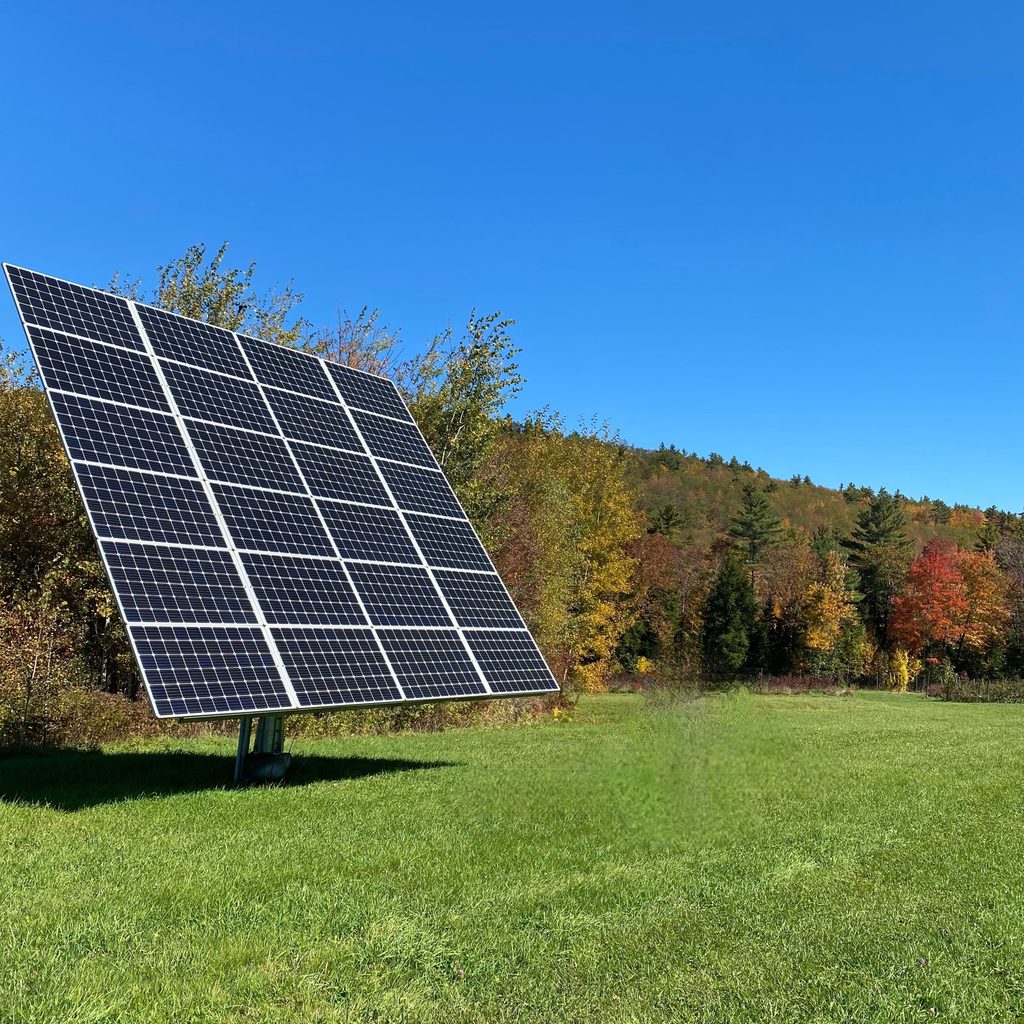
4. find out which solar incentives actually apply to you
The minute you start Googling solar, you can find federal incentives, state incentives, utility programs, rebates, net metering, and a whole bunch of information that may or may not even apply to where you live.
And some of the articles ranking at the top of Google are several years old! (RIP to the federal incentives canceled at the end of 2025.) But, Aurora can account for solar incentives when calculating the cost and savings of a system, including state, local, and utility-specific programs.
I would still double check any incentive or tax benefit you’re planning to use before signing a contract, especially because programs and eligibility can change, but having all the relevant information in the same place makes the research process much less overwhelming.
5. research the installer, equipment, and warranties
Aurora lets you compare solar installers based on things like reviews, reputation, pricing, and financing options, which I think is just as important as the actual quote.
I’d also look closely at what equipment is included. What panels are they using? What kind of inverter? How long are the equipment warranties? Is there also a workmanship warranty from the installer? Who handles repairs if something goes wrong five or ten years from now?
And, I know I’ve said it a million times, but it’s nice to see it side-by-side without having to fill out a bunch of forms and be hounded on the phone just to get an idea of what solar may look like.
The post How to Compare Solar Quotes: What to Look For Before You Choose appeared first on Going Zero Waste.
How to Compare Solar Quotes: What to Look For Before You Choose
Green Living
Sustainability In Your Ear: XPRIZE’s David Babson on Why Climate Grand Challenges Need Buyers, Too
Buyers contracted nearly 30 million tons of durable carbon removal in 2025, more than triple the 2024 total, according to CDR.fyi data reported by Heatmap. About 90% of those purchases came from a single company, Microsoft, and suppliers delivered only about 450,000 tons during the year. That is a sliver of the six to 10 billion tons of removal a year that climate scenarios suggest the world will need by 2050. The technology to pull carbon out of the air works, but the customers needed to scale it remain scarce.
Our guest today, David Babson, is executive vice president of the Energy, Climate, and Nature domain at the XPRIZE Foundation. He calls the slow progress a market failure, because the technology is progressing faster than it is being adopted. Babson previously led MIT’s Climate Grand Challenges initiative and was a program director at the U.S. Department of Energy’s ARPA-E. His portfolio includes XPRIZE Carbon Removal, which drew 1,334 teams and whose participants have raised more than $3.3 billion. In April 2025, Mati Carbon won its $50 million grand prize for spreading crushed basalt on smallholder farms in India, where the rock locks away carbon dioxide. “If people could make money taking carbon out of the air and putting it underground, as opposed to only being able to make money taking it from underground and putting it in the air, we would be in a better place,” Babson says. Mati is weathering the slump in part because its rock dust also improves soil health and crop yields, giving farmers a reason to participate that doesn’t depend on carbon credit prices.

XPRIZE’s answer is to change what winners receive. Babson describes “mixed purses” that pair a cash award with a guaranteed buyer through an advance market commitment, a power purchase agreement, or an offtake contract. In one thought experiment, a carbon removal prize would come with a separate $1 billion fund raised from credit buyers, which qualified teams could draw on as they deliver verified tons. XPRIZE is applying the same thinking to a planned series of fusion energy prizes, pairing technical milestones with market mechanisms to build the supply chain that commercial fusion will require. The same gap between invention and adoption shows up in other XPRIZE competitions. On September 23, XPRIZE Wildfire awarded about $4.55 million from its $11 million purse, with defense contractor Anduril Industries taking first place in autonomous fire response along with a $1 million Lockheed Martin bonus. Babson expects costs to fall as fire agencies adopt the tools and as startups license individual components into cheaper platforms, though underfunded agencies will need a way to buy the first systems. He also notes that the competition left fuel management and ground-based autonomy for future prizes. Earlier this year, program director Andrea Santy told us that field testing had moved ahead of drone regulations. In biodiversity, Limelight Rainforest won $5 million for surveying 100 hectares of tropical forest in under 24 hours and identifying more than 250 species. Biodiversity still lacks a price, but Babson argues that once ecosystems can be measured, slow-walking policy becomes “a dereliction of what they should be doing.”
We also discuss the tension inside XPRIZE’s vision of “equitable abundance,” including a $101 million Healthspan prize that could add years of consumption to longer lives. Babson argues that abundant, cheap clean energy would let society move beyond efficiency as its organizing principle, powering uses such as indoor vertical farms that could return millions of acres of farmland to nature. You can follow XPRIZE’s new competitions and get involved in its prize ideation workshops at xprize.org.
- Subscribe to Sustainability In Your Ear on iTunes
- Follow Sustainability In Your Ear on Spreaker, iHeartRadio, or YouTube
Interview Transcript
Mitch Ratcliffe 00:36
Hello. Good morning, good afternoon, or good evening, wherever you are on this beautiful planet of ours. Welcome to Sustainability In Your Ear. This is the podcast conversation about accelerating the transition to a sustainable, carbon-neutral society, and I’m your host, Mitch Ratcliffe. Thanks for joining the conversation today.
Let’s talk about the power and the uses of grand challenge programs to kickstart low-carbon industries and respond to the changing environment. Over the past several years, we’ve talked on the show with leaders of grand challenge programs designed to accelerate progress on humanity’s most difficult challenges, from pulling carbon out of the atmosphere to fighting rapidly growing wildfire threats in cities and rural communities. Many of these competitions have been launched by XPRIZE, whose leaders have shared on the show the stories of these competitions as they launched and unfolded.
Today is a chance to take stock, to look back and think about how climate markets, technology, and politics are changing fast, and how that makes this a good moment to ask the question: Are these programs designed to accelerate progress actually delivering that progress?
Our guest today designs XPRIZE’s climate bets. David Babson is executive vice president of the Energy, Climate, and Nature domain at the XPRIZE Foundation. Before XPRIZE, he was the executive director of MIT’s Climate Grand Challenges initiative and a program director at the U.S. Energy Department’s ARPA-E energy technology research agency.
His portfolio includes the largest incentive in prize history. In 2025, Mati Carbon received a