

Fungi are learning to adapt to climate change, posing a major threat to human health.
Fungal infections range from minor conditions, such as athlete’s foot, to life-threatening respiratory diseases and bloodstream infections.
Fungi are known for their ability to adjust to – and thrive in – new and changing environments.
Now, they are learning to adapt to the rising temperatures, changing rainfall patterns and extreme weather events that characterise a warming planet.
This is increasing their ability to colonise and cause disease in the human body.
However, there is a severe lack of diagnostics, treatments and vaccines available for fungal infections – and fungal resistance to existing drugs is on the rise.
An increase in fungal infections driven by climate change could also have devastating consequences for agriculture, damaging crops and threatening food security.
New fungal pathogens
Fungi are one of five “kingdoms” of life on Earth – putting them in a distinct category separate from animals or plants.
There are millions of fungal species – from saccharomyces cerevisiae, or baker’s yeast, to penicillium chrysogenum, which is the source of the antibiotic penicillin.
Fungal infections can be transmitted to humans through direct contact in the environment, with contaminated surfaces or via infected individuals.
Historically, most fungi do not cause disease in humans, meaning they are not “pathogenic”.
This is because – unlike viruses and bacteria – most fungi cannot survive or spread in body temperatures of 37C.
But, as global temperatures rise, some fungi are adapting to survive in hotter environments, including the human body.
(How fungi adapt to their environments is still not fully understood. However, their large genomes and diverse metabolic pathways – the chemical reactions which allow organisms to function – are thought to play a key role in their ability to survive and grow in a wide range of conditions.)
An example of this is candida auris, a fungal infection that emerged simultaneously on three continents in the late 2000s. The fungus mostly infects people with weakened immune systems and is a real concern as it can cause bloodstream infections. It is a serious problem in intensive care units, where the fungus sticks to medical equipment and grows rapidly.
Many infection, prevention and control measures are unable to get rid of it. Candida auris is already resistant to several antifungal drugs, making it very challenging to treat. One study in Oman, for example, recorded a fatality rate over more than 50%.
Due to lack of surveillance and routine monitoring, we do not know exactly how many people are impacted by candida auris infections.
To address this, the World Health Organization Global Antimicrobial Resistance and Use Surveillance System (WHO-GLASS) – a programme that provides a standardised approach to collect and analyse data for antimicrobial resistance surveillance – has included a protocol for candida auris.
Candida auris is one of four fungal species identified by the World Health Organization (WHO) as a “critical” threat to public health, alongside aspergillus fumigatus, candida albicans and cryptococcus neoformans.
Scientists have pointed to the likelihood that the emergence of candida auris is being driven by rising temperatures caused by climate change.
A 2022 study noted that higher temperatures driven by human-caused climate change may have added “selective pressure” on candida auris – leading to the spread of strains “adapted to salinity and higher temperatures – similar to the conditions found in the human body”.
The emergence of candida auris is just one example of how climate change is exacerbating fungal infection.
A study currently undergoing peer review suggests that – without effective strategies to tackle climate change – the aspergillus family could expand its reach to more northerly swathes of Europe, Asia and the Americas, exposing more people to life-threatening respiratory infections as temperatures rise.
Aspergillus infections can cause permanent damage to lungs and lead to serious illness in individuals with existing respiratory conditions or weakened immune systems.
Extreme weather
Rising temperatures are not the only cause of rising fungal infections linked to climate change.
Changing rainfall patterns, increasing humidity and worsening extreme weather events are also driving fungal pathogens to new areas.
Heavy rainfall, flooding and humidity leads to increased moisture in homes, increasing the growth of indoor mould. Mould – which encompasses a diverse group of fungal species – can cause substantial health impacts when inhaled for those with underlying health conditions, such as asthma.
Meanwhile, extreme weather events, such as wildfires and floods, transport fungal pathogens to new regions by spreading spores far beyond where they would typically be found. This increases the threat fungi pose to both human health and agriculture.
For instance, the fungus coccidioides, which is found in soils in the south-western US and parts of central and South America, causes valley fever – a lung infection which can be fatal to humans and animals.
Outbreaks occur when extreme events, such as wildfires, disturb large amounts of soil and spread fungal spores into the air. These enter the human body when inhaled. Cases are often unreported, but it is estimated that the fungi causes around 206,000-360,000 cases per year in the US.
The fungus thrives in a hot and dry climate. Coccidioides is now being seen in regions that would not normally support its growth, as the climate heats up.
A 2019 study used climate models to project that the range of valley fever could expand into more northerly US states such as Idaho, Wyoming and Nebraska. It also estimates that, by 2100, cases across the US could rise by approximately 50% as more regions develop climates suitable for transmission.
Threatening food security
Fungal pathogens also threaten human health indirectly by damaging harvests and causing a range of plant diseases, including blights, root rot and mildew.
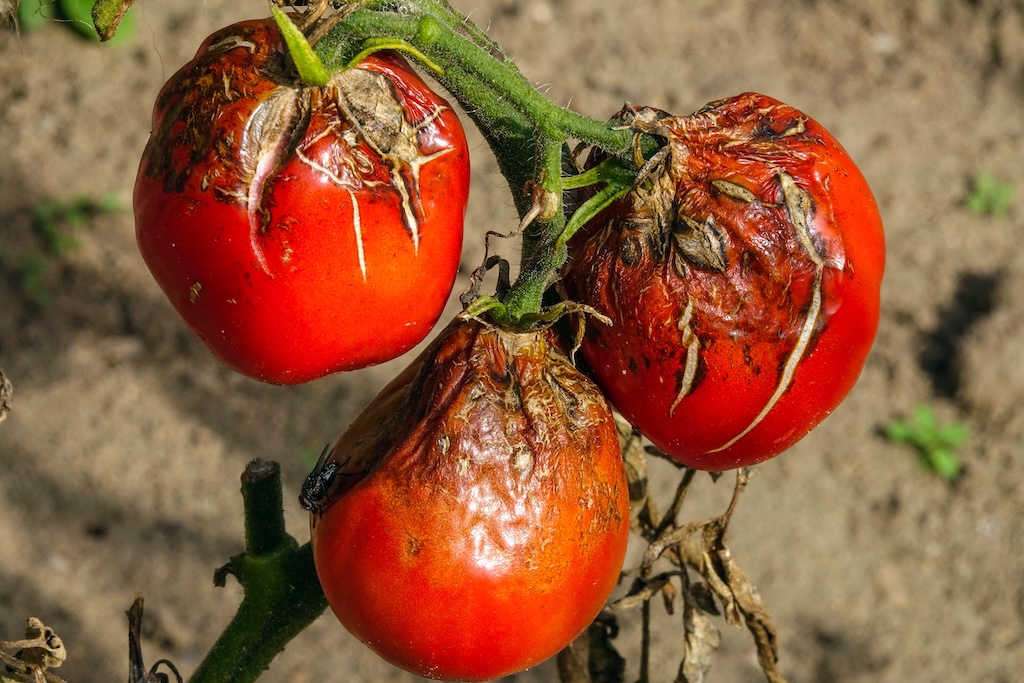
Fungi are a key part of soil ecosystems, but plant pathogenic fungi can cause growers to lose between 10-23% of their crops every year – and a further 10-20% after they are harvested, as food that is incorrectly stored goes mouldy at different points of the supply chain.
Rising temperatures can spread and introduce more pathogens to an area, which can reduce harvests and, in some cases, wipe out entire crop families. This could result in food insecurity globally and economic instability in regions that rely on agricultural exports.
Modern agriculture’s reliance on growing genetically uniform crops, known as monocultures, puts the global food system at increased risk of fungal disease, as pathogens learn how to colonise crops.
Developments in the global banana market are a prominent example of the threat posed by fungus to crops. In the 1950s, the Gros Michel banana – once the main export variety of banana – was wiped out by a disease caused by the fungus fusarium oxysporum.
Now, the banana variety that was grown and exported in its place – the Cavendish banana – is under threat by a new strain of fusarium. This poses a major threat to the global banana trade, given that the Cavendish banana accounts for 47% of banana production and virtually all bananas supplied to the US and Europe.
In another example, the fusarium graminearum fungus, which flourishes in wet conditions and warm temperatures, causes a disease that is thought to cause wheat and barley yield losses amounting to more than $1bn every year.
Rising antifungal resistance
The spread of fungal infections caused by climate change is particularly concerning given the lack of available treatment options, as well as limited awareness among the public and healthcare professionals.
Most healthcare professionals receive little training around how to identify fungal infections, leading to delayed diagnosis and treatment. In the developing world, fungal infections can be deadly because both awareness and access to diagnostic tests are lacking.
There are just four types of antifungal drugs and no approved fungal vaccines.
Antifungal treatments are harder to develop than antibiotics because fungi are more biologically similar to humans than plants – making them difficult to kill without harming human cells.
Meanwhile, resistance to the antifungal drugs that are available is growing.
The fungicides used to kill fungi in agriculture often share “modes of action” with medical antifungals. The overuse of these fungicides has led to fungi in the environment building up their resistance – creating hardier fungi that are more difficult to treat in clinical settings.
As climate change puts additional stress on the food system, the risks and benefits of using fungicides to ensure food security need to be balanced with safeguarding the effectiveness of antifungal drugs.
However, there is limited communication between agricultural and medical sectors around how to juggle these priorities.
And yet – despite all these challenges – fungal infections receive a fraction of the funding and attention that bacterial or viral diseases do.
Fungi that tackle climate change
Fungi have historically been an asset in medical research – most notably the discovery of the drug penicillin. They could also prove valuable in the fight against climate change.
Some fungi are used to suppress populations of pests or pathogens in agriculture. This method – known as natural biocontrol – uses fungi, or other forms of naturally occurring organisms – such as bacteria, insects or viruses – as a replacement for chemical pesticides.
Natural biocontrol is seen as a more environmentally friendly method for treating crops than manmade chemicals because the organisms break down naturally in the environment and do not leave toxic residues in the soil.
Meanwhile, researchers have also found that mycorrhizal fungi – which grow in association with plant roots – store roughly 13bn tonnes of carbon (GtC) – equivalent to 36% of annual global fossil fuel emissions. The fungus does this by absorbing carbon from plants and locking it in their underground networks and soil, where it stays stable for long periods.
There are groups looking at how the mycorrhizal fungi could be harnessed to help deliver decarbonisation – similar to tree planting.
However, more research is needed to better understand the valuable properties of fungi, including how they could be part of “nature-based solutions” to help tackle climate change.
Discovering the unknown
There is still a lot that remains unknown about fungi. Scientists estimate that less than 10% of all species have been identified globally.
Fungi are essential to healthy ecosystems. They recycle nutrients by breaking down organic matter and play a critical role in the carbon cycle.
But climate change is disrupting this balance. Rising temperatures and environmental shifts threaten to wipe out some fungal species before they’re even discovered, while enabling others to thrive in new – and often harmful – ways.
These changes signal deep trouble for the natural world.
It is, therefore, critical that more scientific attention is paid to the risks and opportunities of fungi as they learn to adapt to a warmer climate.



The post Guest post: Fungal infections are adapting to climate change – and threatening public health appeared first on Carbon Brief.
Guest post: Fungal infections are adapting to climate change – and threatening public health

Three countries have been named by the Paris Agreement’s compliance committee for failing to submit a nationally determined contribution (NDC) and repeatedly snubbing offers of help with their climate plans.
After months of internal debate over whether to identify serial non-responders, the Paris Agreement’s Implementation and Compliance Committee (PAICC) named the three countries which have failed to engage with it over their NDCs on Friday.
It named Democratic Republic of Congo, Senegal and North Korea in a footnote of its annual report, adding that it decided to name them “with a view to facilitating engagement”, adding that representatives of the three nations had been invited to its meeting in early 2027 “with the purpose of identifying any challenges and constraints”.
“The Committee noted the importance of Parties engaging with the Committee in a timely manner, while noting that some delays may be due to the national capabilities and circumstances of the Parties”, the report said.
-
Under US pressure, World Bank says it will back gas “where appropriate”
The US wants the World Bank to expand its gas support while climate campaigners are pushing for it to end – its head spoke this week of limited backing for the fossil fuel -
IPCC scientists vow to press on with climate reports despite political deadlock
After governments again failed to agree a timeline, nearly 120 IPCC authors pledged to complete their assessment on time and with full scientific rigour -
Paris Agreement committee snubbed over missing NDC climate plans
Many governments have still not submitted a nationally determined contribution to the UN, breaching a key requirement of the Paris Agreement



In July, PAICC said 12 countries had ignored its repeated attempts to discuss why they had not published an NDC as required every five years under the 2015 Paris accord.
Members of the committee had been divided over whether to name them, but at a September meeting decided to do so in their annual report to the annual climate COP summit.
By the time the report was published on Friday, only Congo, Senegal and North Korea “had not communicated an NDC or submitted a [Biennial Transparency Report] and had not yet responded to any of the Committee’s notifications, despite several reminders issued by the Committee in this regard”.
Rainforest and renewable energy ambitions
The silence from Congo and Senegal is notable because the former is home to much of the Congo Basin rainforest while the latter has sought billions of dollars in climate finance to support its renewable energy ambitions.
After Brazil, Congo has more rainforest than any country in the world. This forest, and the country’s peatlands, absorb huge amounts of greenhouse gas but are fast being lost to expanding farmland, charcoal production, logging and mining.
Senegal signed a Just Energy Transition Partnership with Canada and wealthy European nations in 2023, to help it meet its renewable energy targets under the-then government of Macky Sall. It was chair of the Least Developed Countries group between January 2022 and December 2023.

Tejas Rao, who is researching the PAICC as part of a doctoral thesis at Cambridge University, said the governments of the three countries should engage with the committee.
“Engagement costs these governments very little and the committee has shown it will listen,” he said.
“Silence leaves the committee with no basis to help, and it leaves the [governments] exposed to the narrative that they are simply disengaged,” he told Climate Home News.
Paris Agreement requirement
The 2015 Paris Agreement requires all parties to publish an NDC every five years outlining their emissions reduction targets, with each plan meant to be more ambitious than the country’s last NDC.
The latest set – the third round of plans, with new targets for 2035 – was due in February 2025. While most countries missed this deadline, all but around 30 – mostly small emitters but including Egypt, Vietnam and Argentina – have now submitted them.
Over the year, the PAICC – which is made up of government climate officials from developed and developing countries – has been communicating with governments that have not submitted NDCs and trying to overcome barriers to them doing so.
Some nations have cited exceptional circumstances as the reason for not submitting an NDC, a process that requires a significant amount of work in tracking emissions and consulting on how to curb them across the economy. For example, a letter from a Sudanese official to the PAICC, seen by Climate Home News, said that the country’s civil war had led to the suspension of its NDC preparation.
-
IPCC scientists vow to press on with climate reports despite political deadlock
After governments again failed to agree a timeline, nearly 120 IPCC authors pledged to complete their assessment on time and with full scientific rigour -
Under US pressure, World Bank says it will back gas “where appropriate”
The US wants the World Bank to expand its gas support while climate campaigners are pushing for it to end – its head spoke this week of limited backing for the fossil fuel -
Who shapes climate science? The equity question facing the IPCC
Early completion of the next global climate science assessment reports risks excluding research from the Global South, which is key to ensuring the findings are fair
The US and Iran are not signed up to the Paris Agreement and so do not have active NDCs, nor does Taiwan, which is not a UN member state.
Rao said that because the PAICC is “facilitative and non-punitive”, naming the countries “is meant to open a door, not close one – the invited consultation is the point”.
“In recent months, governments that explained their constraints, whether capacity, finance or domestic process, have been met with follow-up and support rather than sanction, and the number of silent governments has fallen sharply,” Rao said.
The post Paris Agreement committee names three countries snubbing it over NDCs appeared first on Climate Home News.
Paris Agreement committee names three countries snubbing it over NDCs