


Google has announced a new deal with Mombak, a Brazilian reforestation company, to buy 200,000 metric tons of carbon removal. The goal is to expand forest restoration projects in Brazil and remove more carbon dioxide from the atmosphere.
Mombak will team up with Google DeepMind’s Perch group. They will use AI and bioacoustic tools to see how forest restoration boosts biodiversity. In simple terms, the project will not only track how much carbon the trees store but also how wildlife returns and ecosystems recover.
The new agreement is part of Google’s wider climate strategy. Along with nature-based removals, the company recently unveiled plans for solar-powered data centers in space. These centers will provide clean energy for computing. These initiatives show how Google blends natural and tech solutions. They aim to cut emissions and create a more sustainable future.
Why Nature-Based Carbon Removal Matters
Forests are among the most effective natural systems for storing carbon. When trees grow, they capture CO₂ and store it in trunks, roots, and soil. Over time, healthy forests help slow global warming. But restoring damaged land takes money, time, and clear monitoring to prove results.
Nature-based solutions may take up to 85% of the total carbon credits supply annually by 2030, per McKinsey analysis below. Carbon credits are certificates representing the number of tonnes of carbon avoided or removed from the atmosphere.
In contrast, technology-based solutions could account for about 34% for the same period.

Nature-based projects can also deliver extra benefits, often called co-benefits. These include:
- Protecting wildlife habitats.
- Preventing soil erosion and flooding.
- Creating local jobs.
- Supporting Indigenous and rural communities.
However, measuring these outcomes is complex. Forests vary by region, and climate, soil, and species all affect how much carbon is stored. That’s why the use of advanced technology and transparent data reporting has become a key part of modern carbon removal projects.
Mombak Mission: Rebuilding the Amazon, One Native Tree at a Time
Mombak is a Brazil-based startup focused on restoring degraded land in the Amazon using native tree species. The company aims to rebuild natural forests rather than create single-species plantations. Its projects also aim to generate carbon credits that meet strict quality standards.
Mombak’s founders are seasoned entrepreneurs and scientists. They have expertise in forestry and sustainable finance. Since its launch, the company has gained support from climate investors and global brands focused on verified carbon removal.
Earlier this year, Mombak raised around $30 million to expand its planting programs and improve monitoring systems. The company’s current projects cover thousands of hectares in the Amazon region. Over the next few years, it plans to scale up to tens of millions of trees planted.
The new Google deal builds on a previous, smaller partnership. This latest purchase of 200,000 metric tons of carbon removal makes Mombak one of Google’s largest nature-based carbon suppliers.
Reilly O’Hara, Carbon Removal Program Manager at Google, stated:
“Mombak’s proven approach balances high integrity reforestation – such as the use of native, biodiverse forests and strong durability safeguards – with industrial scale and operations. We’ll need both to ensure a large and lasting impact, and Mombak is well-positioned to do so across Brazil. And excitingly, today Mombak was also selected as the first nature restoration project by the Symbiosis Coalition, further validating their approach to measuring impact with a high standard of scientific rigor.”
The Role of AI and Bioacoustics in Measuring Forest Health
An important part of this partnership is the use of AI through DeepMind’s Perch project. Perch uses machine learning to analyze natural sounds, such as bird calls and insect noises, recorded in restored forests. These recordings help scientists understand which species are returning and how ecosystems are recovering.
Bioacoustics works by placing microphones in the forest to capture the “soundscape” of nature. Each species has a unique sound, so by analyzing these patterns, AI can estimate biodiversity levels. This allows for tracking recovery more accurately and continuously. Plus, it won’t disturb wildlife.
Traditional field surveys can take months and cover limited areas. AI-powered monitoring offers faster and larger-scale data collection. It also lets people verify biodiversity outcomes independently. This has often been absent from many carbon credit projects.
One of the main criticisms of past carbon offset programs is a lack of clear reporting. Some projects overstated their impact, while others failed to monitor long-term results.
By using these tools, Mombak and Google aim to set a new standard for transparency in forest monitoring. This approach could make nature-based carbon credit projects more credible and easier to verify for buyers and regulators alike.
If a project’s credits lose value, like from forest fires or other risks, Google will replace them. This way, they can keep real climate benefits.
This “replacement plan” shows a move toward permanence and accountability. It means that companies buying carbon credits must ensure their impact lasts for decades, not just a few years.
Transparency also helps local communities and independent experts see progress. It builds trust that promises are being kept.
How the Symbiosis Coalition Sets New Carbon Standards
This project has also received the first official endorsement from the Symbiosis Coalition. The coalition is a group of major corporate buyers that commit to purchasing high-quality carbon removal credits. It supports projects that have strong environmental integrity. They also provide clear social and biodiversity benefits.
The endorsement shows that Mombak’s methods meet higher standards. These include climate impact, community engagement, and scientific monitoring. The coalition aims to boost investment in verified, nature-based solutions. They plan to do this by ensuring steady demand for these credits.
Companies like Google work with Symbiosis to make sure their credits meet industry standards and support global climate goals.
What It Means for Brazil and the Carbon Market
Brazil is emerging as a global hub for reforestation and carbon removal projects. With the Amazon rainforest as one of the world’s largest carbon sinks, the country plays a central role in climate mitigation.
The new Mombak project supports both local restoration and global climate efforts. It also matches Brazil’s goal to cut deforestation. This supports climate talks before COP30, which is taking place in Belém in 2025.
This deal shows how big buyers in the carbon market are shifting. They are moving from avoidance credits, which stop emissions, to removal credits that take carbon out of the atmosphere.
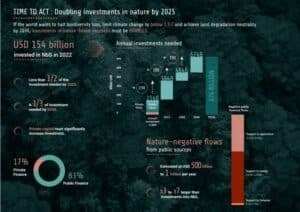
Reports say global investment in nature-based carbon removal projects hit almost $20 billion between 2021 and 2024. However, this is still less than the total finance needed by 2050, which is around $674 billion. Expanding reforestation projects like Mombak’s will help close that gap.
Beyond Earth: Google’s Solar-Powered Space Data Centers
Google launched Project Suncatcher this year. This initiative aims to create solar-powered data centers in space. It supports their climate and forest-restoration goals. The company plans to launch prototype satellites by early 2027. These satellites will have their custom TPU (Tensor Processing Unit) chips.
Solar panels in low-sunlight zones around Earth can be up to eight times more efficient than those on the ground. For instance, Google research shows that in a dawn-dusk sun-synchronous orbit, panels can produce almost constant power. This helps cut down on the need for big battery systems.
By the mid-2030s, management estimates say launch and operational costs for these satellites may fall below $200 per kilogram. This would make space-based data centers as affordable as those on Earth.
The move is significant for several reasons. Data centers on Earth use a lot of electricity and water for cooling. This becomes a climate and resource problem as AI use grows. By shifting computing to space, Google hopes to reduce strain on land-based grids and ecological systems.
The plan still has big engineering challenges, including:
- heat management,
- high-bandwidth optical links between satellites, and
- making the hardware resilient to radiation.
Google’s Dual-Frontier Climate Vision
The partnership between Google, Mombak, and DeepMind reflects how large technology companies are linking AI, clean energy, and reforestation to address the climate crisis. Google’s efforts in climate innovation now cover many areas. They include restoring forests on Earth and capturing solar power in space.
If successful, these projects could become models for combining technology and nature to achieve measurable, lasting results. Google aims to tackle carbon removal and energy sustainability in many ways. The company combines large-scale reforestation with advanced monitoring and next-gen clean power systems. This approach shows its commitment to the environment.
- READ MORE: After $102B Quarter Revenue and Record Stock, Google Turns to Nuclear to Power the AI Boom
The post Google’s Bold Climate Actions: AI in the Amazon and Solar Power in Space! appeared first on Carbon Credits.

The post Promoting Improved Cooking Practices in Nigeria appeared first on Terrapass.
For most companies, the largest figure in the carbon inventory is not the office, the vehicle fleet, or the electricity bill. It sits upstream, in the goods and materials a business buys to make and sell its products. These purchased inputs form the bulk of a company’s Scope 3 emissions, which routinely exceeds everything the business controls directly, and can add up to 90% of their global footprint.




-
Climate Change1 year ago
Guest post: Why China is still building new coal – and when it might stop
-

 Greenhouse Gases2 years ago
嘉宾来稿:满足中国增长的用电需求 光伏加储能“比新建煤电更实惠”
-
Greenhouse Gases1 year ago
Guest post: Why China is still building new coal – and when it might stop
-

 Climate Change2 years ago
嘉宾来稿:满足中国增长的用电需求 光伏加储能“比新建煤电更实惠”
-

 Renewable Energy12 months ago
Sending Progressive Philanthropist George Soros to Prison?
-
Climate Change2 years ago
Bill Discounting Climate Change in Florida’s Energy Policy Awaits DeSantis’ Approval
-
Greenhouse Gases1 year ago
嘉宾来稿:探究火山喷发如何影响气候预测
-

 Climate Change2 years ago
Analysis: China’s CO2 falls 1% in Q2 2024 in first quarterly drop since Covid-19