

Wall Street investors have earned billions financing activities linked to deforestation in the tropics, with forest loss reaching record highs last year. But a major proposal by Brazil’s COP30 presidency wants to turn financial markets into allies of the rainforest.
The Tropical Forest Forever Facility (TFFF), a proposed new fund seeking to raise cash for conservation efforts in tropical countries, is set to be launched at the COP30 climate summit in Belém later this year.
Brazilian President Luiz Inácio Lula da Silva has rallied behind the initiative and secured key endorsements from the eight South American nations home to the entire Amazon Basin. Private banks and countries in the BRICS group of large emerging economies have voiced support.
COP30 president André Corrêa do Lago has said “the TFFF is the right answer for forest conservation”.
The initiative comes as developing countries have complained about being unable to access existing forest funds at the Global Environment Facility (GEF), while foreign aid budgets which have funded forest conservation shrink in the US and Europe.
Yet finance needs in developing countries are large and growing, with estimates ranging between $20 billion and $72 billion every year to protect forests. In contrast, in 2022, the total finance destined for forests was just $2.3 billion.
-
Amazon nations pledge support for Brazil’s COP30 rainforest fund
In a joint declaration issued at the Amazon summit, eight South American nations pledged to support Brazil’s Tropical Forest Forever Facility (TFFF) -
The Amazon rainforest emerges as the new global oil frontier
Half a century of oil drilling has left the world’s largest rainforest scarred by deforestation and pollution. Now it is bracing for a new wave of fossil fuel extraction -
COP30 PR firm found to be “uniquely reliant” on fossil fuel clients
Edelman relies on work with oil and gas firms like Shell and Chevron for a higher percentage of its income than any other PR agency, a new report found


What is the Tropical Forest Forever Facility (TFFF)?
The TFFF is being proposed as a blended finance instrument, with funding from both public and private sources. It would seek to directly pay tropical countries that can show effective forest protection.
On paper, the TFFF will get its money similarly to an investment fund. Donor countries and private investors put their money in the fund, which then invests the capital in financial markets. A part of the returns is used to pay back investors and what remains is allocated to forest protection in tropical countries.
“Think of a bank that runs normal market operations but that directs its profits not to shareholders but to forests,” said João Paulo de Resende, undersecretary for economic and fiscal affairs at Brazil’s Ministry of Finance.
In its most recent version, Brazilian officials propose that the fund starts with $125 billion in capital, of which $25 billion would come from donor countries and $100 billion from private investors.
The payments to forest countries would depend on the returns of the fund, but an 8% yield would allow the fund to pay at a rate of about $4 per hectare of protected forest — which in total could raise an estimated $2.8 billion for rainforests every year.
The Brazilian government has said donor countries could include the United Kingdom, Norway and the United Arab Emirates, while private investors endorsing the fund include investment managers PIMCO, Bank of America and Barclays.
Recipients would include tropical countries in major rainforest basins such as Colombia, the Democratic Republic of Congo (DRC) and Indonesia, among others.

How is the TFFF different from other climate funds?
Other UN funds like the Green Climate Fund (GCF) or the GEF mostly give out one-time grants to countries that reduce emissions through projects and programmes to protect or restore forests (an approach known as REDD+). The TFFF would instead aim to reward countries that have kept their forests standing and can show results.
This “results-based payments” system is not new – the GCF, for example, gave out more than $500 million between 2015 and 2020 in this way. However, a fund solely for countries that can show success in preventing deforestation is a new way to target large intact rainforests, which struggle to receive REDD+ funding, said Torbjørn Gjefsen, international forest finance advisor at the Rainforest Foundation Norway.
“There is complementarity. It’s not competing with REDD+,” said Gjefsen. “If fully operational, it will substantially increase the amount of funding available for this kind of results-based payments.”
Amid a context of tighter foreign aid spending, another key difference is that the TFFF would seek to attract investments rather than depending on donations from public budgets.
The fund’s concept note claims that, if fully operational, the one-time investment from donor countries would allow payments to forest nations for as much as 40 years in the future.
Finally, unlike the other UN environmental funds, the TFFF is being proposed as a mechanism hosted by the World Bank outside of UN environmental conventions.
Sandra Guzman, founder of the Climate Finance Group for Latin America and the Caribbean (GFLAC), said this could potentially help convince large developing countries like China to contribute funds without having to assume donor-country responsibilities at the UN negotiations. Chinese officials have welcomed the TFFF and said they “hope it plays a positive role”.
Colombia announces fossil fuel phase-out summit to be held in 2026
How will the TFFF make money from financial markets?
In tapping financial markets, the TFFF will have to also deal with risk. If investments don’t generate the expected yields, payments to forest countries would need to be paused and paid out later, de Resende said.
The Brazilian government’s estimates show that if the TFFF had been operating in the last 20 years, it would have been under financial stress on two occasions: during the 2008 financial crisis and during the COVID-19 pandemic. The TFFF’s models project a 60% chance that payments to forest countries would need to be slightly reduced at some point in the fund’s lifespan.
The Brazilian authorities remain optimistic, as most value fluctuations are likely to be small, they say. De Resende said that “over the long run, this risk is minimal.”
The TFFF’s main strategy is to get cheap money from investors and lend money to emerging economies at much higher interest rates. Emerging market bonds would account for as much as 80% of its investments.
Critics say this could be a risky strategy, which is precisely why these emerging countries pay higher interest rates. “The risk of Egypt’s state bond is just not the same as the risk of US treasury bonds,” said Max Alexander Matthey, co-founder of Climate Impact Auctions.
Another key point is that, for the fund to achieve the promised payments, it would need to borrow money at a very low cost, so it would need a top-category AAA rating from credit rating agencies. Brazilian authorities have been in discussion with agencies on this and have said they aim to receive a “shadow rating” for the TFFF before COP30.
As part of the strategy, the fund will also exclude any investments in polluting industries such as coal, oil and gas.
Can COP30 turn adaptation talks into real-world investments?
Who is allowed to receive payments from the TFFF?
According to the fund’s concept note, the 74 countries that are home to rainforests could be eligible to apply for TFFF payments if they meet the required criteria.
To access funds, tropical countries must demonstrate that they are reducing deforestation in a defined area, have a robust forest measurement system and a set of forest policies, and demonstrate that the payments will not replace national resources.
Countries would also have to commit to reserve at least 20% of payments for Indigenous people. While an important step, Guzman said this could be tricky in practice because of the challenges of directly transferring funds to these communities.
“Indigenous communities do not always have formal legal structures or administrative capacity,” she said. “It’s not easy, but it is desirable that communities start building these legal mechanisms.”
Currently not many forest countries meet the minimum requirements to be eligible for TFFF payments.

Online platform TFFF Watch, built by NGO Plant for the Planet, calculates that major countries like the DRC and Indonesia would not qualify for payments due to high deforestation rates, and would be missing out on annual deals worth $400 million and $450 million respectively.
On the other hand, Papua New Guinea would benefit greatly if the TFFF goes into operation exactly as laid out in its concept note, according to TFFF Watch. The country is already eligible for around $120 million in annual rewards, the platform estimates.
As shown by recent wildfires in the Amazon, some countries could end up losing or seeing some of their forests degraded even with robust protection measures in place. In these cases, countries would get their payments cut by the same ratio as they lose forests.
Yet once they do receive TFFF funding, forest countries will have full authority over how to use the funds.
Brazilian government authorities have sent a letter of intent to the World Bank, which will have to decide by October whether it will host the TFFF. By COP30, Brazil plans to sign a declaration of intent with donor countries.
The post Explainer: Brazil’s “right answer” to forest finance turns to markets to keep rainforest standing appeared first on Climate Home News.
Explainer: Brazil’s “right answer” to forest finance turns to markets to keep rainforest standing

Muhammad Zulfikar Rakhmat is director of the China-Indonesia Desk at the Center of Economic and Law Studies (CELIOS). Bhima Yudhistira Adhinegara is executive director of CELIOS.
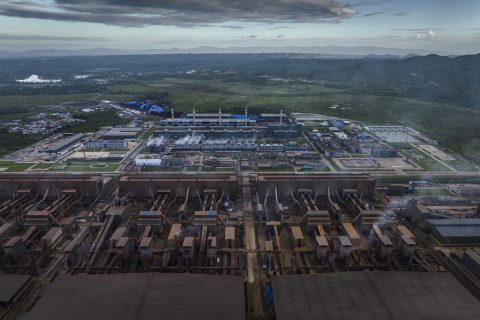
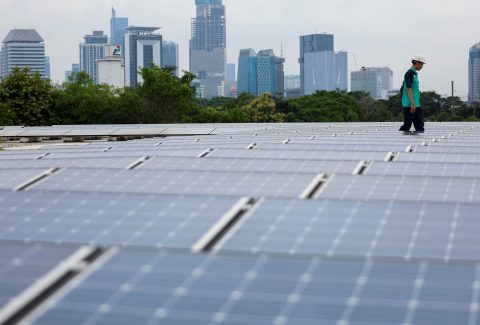
Indonesia bills its plans to mix wood with coal at dozens of power plants as a way to cut electricity generation emissions as the country transitions towards clean energy. But look closer, and the biomass co-firing plan could do far more harm than good.
Biomass co-firing involves mixing a small amount of wood or other plant matter, usually wood chips or wood pellets, into the coal that a power plant burns.
State electricity company PLN wants to use it at 52 coal-fired plants across the Southeast Asian nation – a target set out in its national electricity supply business plan and tied to Indonesia’s pledge, under its Nationally Determined Contribution to the Paris Agreement, to raise renewables to 23% of the energy mix. PLN originally aimed to secure 10.2 million tonnes of biomass a year by 2025; that target has already slipped to 2031, as the country struggles to line up enough supply.
Most plants only mix in a small amount of wood, often between 1% and 5% of the fuel load, meaning they do not even have to change machinery. In truth, it lets coal plants keep doing what they have always done, just with a little wood added to the mix.
That presents two big problems.
-
SE Asia speeds up plan for connected clean power grid after oil shock
Countries are redoubling efforts to link their grids to bolster energy security and reduce their dependence on fossil fuels – but many challenges remain -
China keeps Indonesia’s battery dream afloat but future less certain
Chinese capital and technology turned Indonesia into the world’s top nickel supplier, but its dependence on China and the rise of nickel-free batteries could upset its battery ecosystem plans -
Southeast Asia’s fragile grids threaten billions in clean energy investment
Renewables developers need reliable electricity infrastructure and stable policies to help the region meet climate goals and surging demand for power

Firstly, creating additional demand for wood would put further deforestation pressure on the country’s thick and biodiverse tropical forests, already at risk from mining and palm oil plantations.
Secondly, by making old coal plants look a little greener on paper, the plan could hand them a reason to keep operating well beyond when they would otherwise be retired, meaning the fleet keeps emitting for longer than a genuine phase-out would allow.
This is not a real climate solution. It is coal wearing a green mask.
A threat to forests
To meet its co-firing mandate, Indonesia would need more than 10 million tonnes of wood pellets every year, an area of forest equivalent to 3.27 million football fields, according to a 2024 assessment by a group of NGOs.
The same report warned this could push deforestation as high as 2.1 million hectares a year, and found that a 10% cut in coal use through co-firing could threaten 10 million hectares of untouched forest in the areas where wood is collected. At Indonesia’s biggest power plants alone, switching just 10% of coal to wood could clear an area of forest roughly 35 times the size of Jakarta.
PLN and the forestry companies that supply it insist the wood comes from dedicated “energy plantation forests” – land set aside to grow fast-growing trees for fuel, not from clearing natural forest. But the same assessment found that of the 1.2 million hectares already designated for these plantations, more than 400,000 hectares still contain undisturbed tropical forest, which will come under growing pressure as demand rises. The claim that this wood comes from already-degraded land does not hold up to scrutiny.
Advocates of co-firing say wood is a clean fuel because trees can grow back. But when old natural forests are cleared to make way for fast-growing forestry plantations to grow trees for fuel, they release carbon that took decades or centuries to build up.
One study, by the Centre for Research on Energy and Clean Air (CREA), estimated that co-firing with just 10% wood across 52 power plants could create up to 26.5 million tonnes of carbon dioxide-equivalent emissions each year, once the clearing of land and the production of wood pellets are counted.
Wood pellets for export
Government rules have made this easier, not harder. Companies that already hold industrial timber plantation permits can convert them into energy plantations, giving them a ready-made legal route into the wood pellet business without applying for new forest land.
Indroyono Soesilo, chairman of the Indonesian Forestry Entrepreneurs Association (APHI), has publicly called on the government for tax breaks and relief from state forestry levies in exchange for making that switch.
Research by Trend Asia found that the push into energy plantations for biomass is dominated not by small or informal loggers but by large companies already notorious for deforestation, including APP Group, Korindo Group, Barito Pacific and Wilmar International. In short, some of the same companies long associated with clearing forests are being given an easier path and a green label to keep doing it.
-
COP30 roadmap to end deforestation will invite countries to draft domestic plans
After promising at COP30 to produce a voluntary global roadmap to stop forest loss by 2030, Brazil provided an update on the consultations this week -
Big banks’ lending to coal backers undermines Indonesia’s green plans
Foreign banks involved in Indonesia’s $20-billion Just Energy Transition Partnership have also funded companies working on coal power expansion, a TBIJ and Climate Home News investigation reveals -
Indonesia and Vietnam set for surge in coal use this decade despite transition deals
Rising demand in Southeast Asia and India is expected to prevent coal use from falling significantly this decade, the International Energy Agency predicts


Much of this wood does not even stay in Indonesia. Japan and South Korea have bought more than 99% of Indonesia’s wood pellet exports since 2021, using them to meet their own clean energy targets.
Perhaps the biggest risk in Indonesia’s co-firing plan is what it could do to the coal fleet itself. Mixing in a small amount of wood does not require a plant to shut down or upgrade. It simply gives the plant a reason to keep running, dressed up as progress. Every year a coal plant stays open because of a paper-thin green label is a year that real clean energy, such as solar and wind, is pushed further down the road.
None of this means biomass is always bad. Using leftover farm waste or city waste to make power can make sense.
But the scale of Indonesia’s co-firing plan cannot be met by leftovers alone, which is exactly why forests are being pulled into the supply chain. The countries and banks funding Indonesia’s energy transition, along with Japan and South Korea, should stop counting co-firing as a climate win.
Real progress means closing coal plants, not feeding them wood.
The post Coal in a green mask: Indonesia’s co-firing plan will harm, not help, the climate appeared first on Climate Home News.
Coal in a green mask: Indonesia’s co-firing plan will harm, not help, the climate