

A study found that the U.S. Renewable Fuel Standard has failed to meet greenhouse gas emission targets but increased corn prices by 30%. The Renewable Fuels Association called the report "a completely fictional and erroneous account of the environmental impacts of the Renewable Fuel Standard."
The carbon intensity of corn ethanol supported by the U.S.'s Renewable Fuel Standard (RFS) is likely at least 24% higher than gasoline, according to a peer-reviewed study from University of Wisconsin researchers.
Researchers determined that the production of corn-based ethanol under the RFS policy "has failed to meet the policy’s own greenhouse gas emissions targets and negatively affected water quality, the area of land used for conservation, and other ecosystem processes." The RFS also pushed prices for corn up by 30% and other crops by 20%, they said.
The study aims to support policymakers as they determine the future of the RFS, which is among the world's largest biofuel programs. The policy was first established in 2008 and is now under review by the Biden administration.
The study, Environmental outcomes of the US Renewable Fuel Standard, will be published in the March issue of Proceedings of the National Academy of Sciences of the United States of America. The work was supported by the U.S. Deptartment of Energy and the National Wildlife Federation, among others. The Bloomberg news service noted that the National Wildlife Federation is a vocal critic of the RFS.
'Precarious' conclusions, shouts trade group
The Renewable Fuels Association, which aims to expand demand for American-made biofuels, said the RFS is the "single most successful clean fuels policy in the U.S." The group said ethanol has saved Americans money, reduced the country's dependence on foreign fuels, and supported job growth.
The Renewable Fuels Association accused the researchers of "precariously" connecting a series of "worst-case scenarios." The trade group's president and CEO, Geoff Cooper, said that the RFA previously met with the study's author and offered to collaborate on research but never heard back.
RFA released a line-by-line rebuttal of the University of Wisconsin study. The group references a study released in 2021 by authors linked to Harvard University and the Massachusetts Institute of Technology that found well-to-wheel greenhouse gas emissions of corn ethanol to be 40% lower than gasoline produced from crude oil.
The authors of Carbon intensity of corn ethanol in the United States attributed declining carbon intensity to improved farming practices, more efficient use of natural gas, and an increasing share of electric generation by ethanol refineries.


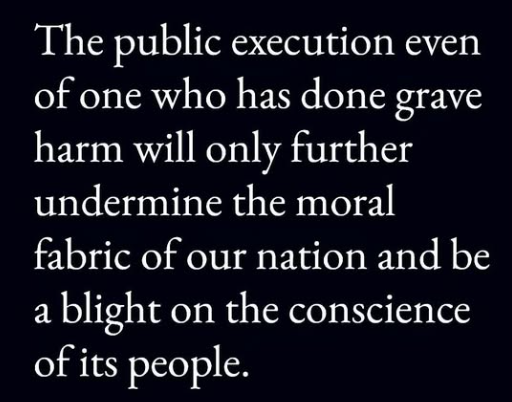 When I was young, I heard someone say, “The first execution this country televises will be the last one ever performed here.”
I think he was right at that time. You’d have millions of people watch that barbarism and realize that it was done in their name.
But today, we’re a far more insensitive, brutal, and stupid people that we were 50 years ago. If you doubt that, just look at the quality of the people at the top of the federal government–people like RFK, Jr., Hegseth, and Trump.
 As suggested at left, the world will never forget that the launch pad for all the destruction during Trump’s second term was our nation’s failure to prosecute the criminal sociopath for his attempted overthrow of the U.S. federal government on January 6, 2021.
Had these acts of treason been dealt with swiftly, all of this would have been avoided.
 The answer will probably surprise you.


-
Climate Change1 year ago
Guest post: Why China is still building new coal – and when it might stop
-

 Greenhouse Gases2 years ago
嘉宾来稿:满足中国增长的用电需求 光伏加储能“比新建煤电更实惠”
-
Greenhouse Gases1 year ago
Guest post: Why China is still building new coal – and when it might stop
-

 Climate Change2 years ago
嘉宾来稿:满足中国增长的用电需求 光伏加储能“比新建煤电更实惠”
-

 Renewable Energy12 months ago
Sending Progressive Philanthropist George Soros to Prison?
-
Climate Change2 years ago
Bill Discounting Climate Change in Florida’s Energy Policy Awaits DeSantis’ Approval
-
Greenhouse Gases1 year ago
嘉宾来稿:探究火山喷发如何影响气候预测
-

 Climate Change2 years ago
Analysis: China’s CO2 falls 1% in Q2 2024 in first quarterly drop since Covid-19