

EchoBolt Advances Wind Turbine Bolt Maintenance
Pete Andrews from EchoBolt discusses their advanced ultrasonic technology for inspecting and maintaining wind turbine bolts, which can reduce maintenance costs by up to 90%. He emphasizes the importance of proper bolt tensioning during installation and highlights recent improvements in their automated inspection processes.
Sign up now for Uptime Tech News, our weekly email update on all things wind technology. This episode is sponsored by Weather Guard Lightning Tech. Learn more about Weather Guard’s StrikeTape Wind Turbine LPS retrofit. Follow the show on Facebook, YouTube, Twitter, Linkedin and visit Weather Guard on the web. And subscribe to Rosemary Barnes’ YouTube channel here. Have a question we can answer on the show? Email us!
Allen Hall: With wind turbines growing larger and critical bolted connections under strain, the wind industry needs smarter inspection methods to prevent costly failures. This week we speak with Pete Andrews, managing director at EchoBolt. EchoBolt has developed ultrasonic technology that makes bolt inspections faster, more reliable, and saves wind farm operators up to 90% on maintenance costs while preventing catastrophic failures. Stay tuned.
Welcome to Uptime Spotlight, shining Light on Wind. Energy’s brightest innovators. This is the Progress Powering tomorrow.
Pete, welcome back to the show.
Pete Andrews: Hi, Allen. Hi Joel. Good to be back. I was trying to work out when I was last on here, but it was it two years ago. It’s been a while. Anyway, we’ve had a lot change at alt yeah, it’s good to catch up with you guys again.
Allen Hall: It’s been too long and so we’re glad to have you back because I know there’s been a lot of improvements and EchoBolt has been really busy checking bolts all over the place and we’ve, Joel and I have been traveling around quite a bit and we’ve noticed problems with.
Bolts in the United States and we think where’s Pete? Where’s Ebol? We could really use you in the United States to help us on some of these bolted connections because it does seem like there’s a lot of issues from tower bolts to blade bolts to bolts in general, there are a number of problems that exist.
And I wanna start off there, Pete, because I think you’re the knowledge base for bolts. Are bolts being tightened correctly based upon all the measurements that you have done?
Pete Andrews: Say, it’s a very mixed picture. I think you’re right to point out, it’s every wind operator will have issues in their fleets with the bolt of connections, but it’s almost always.
Blade studs that caused the most headache. You do see things on towers. You do see a kind of occasional issues elsewhere, maybe with foundations. I’d say it’s probably, I. In our experience, once, once sites are in operation, there’s not too much that happens that influences the integrity. An awful lot happens at the point of installation, and it’s what we always try and say to customers if it.
If you confirm that the bolts are tightened to the load, you expect at the point of installation, you’ve set yourself up for a fantastic operational li life. But if it’s wrong at the start, you’ve got embedded integrity issues that are really hard to manage going forward. So yeah it’s a mixed picture, but what I’d always say is focus on the QA at the point of installation and things should go easy from there on in.
Allen Hall: It does seem like blade bolts are becoming more of an issue. As you mentioned, the blade insert question of are we over tightening fasteners that go into the blades and pulling out these inserts and causing some of the problems downstream root cracking, instruments becoming loose, blades becoming loose and wobbling on the pitch bearings.
It does seem like we don’t have a really good way of consistently tightening or tensioning. Those fasteners are bolts that are in composite structure just a lot more sensitive to or the composites more sensitive to the tensioning tightening that happens? I
Pete Andrews: think without doubt it’s a harder joint to design and I think probably all of the major turbine OEMs.
It’s the area, I guess probably with the most dynamic loading or the most variable dynamic loading and probably the hardest to anticipate the performance of the joint. I guess we see a couple of things. We see a. Occasionally you do get overt tightening, particularly on torqued joints. Most blade studs tend to be tensioned, where you stretch the bolt rather than turn the nut or the bolthead.
But where it’s torked, you have a very wide degree of variability and there can be, there can be issues with going back and retalking and trying to measure an angle of turn and over overstretching the bolt and failing them. So we’ve seen that. I think on the tensioned joints, typically you get very good variability and the bolts tend to be within a narrow band, but probably not enough is being done to ensure that you’ve got as much preload safely within the bolt as you can.
And I think. The one meaningful action operators can take without having to redesign the joint or try and redesign the fastener, is just to measure the preload and see how much operational headroom you’ve got and maybe look at increasing it slightly. That’s probably the one area. If you’re suffering a lot of TED failures, you can address quickly and cheaply without getting into.
Design fundamentals.
Joel Saxum: Pete this week we were at the Blades USA conference here in Texas and we had many side, everybody’s talking blades, right? So what blade issue do you have? What blade issue do you have? And one of them that Allen and I had a couple conversations on with operators, there was, oh, we have the root bushing pullout issue.
And some people were very familiar with the issue and, but some people just weren’t. They were like, what do you mean by that? I was like, these things are actually loosening in the, breaking bonds and pulling through and all kinds of stuff. So in a blade root, you have upwards of a hundred studs or a, or a hundred of those blade bushings.
How many of them have to start to become loose before it starts to be like a cascading effect? For that blade,
Pete Andrews: the failing of the fixing within the composite structure is not really something we’ve encountered or looked into a lot. I think typically most manufacturers would place a limit on how many alts failed be before you need to stop the turbine.
Some of them have overall limits about the number in the joint and some have adjacent limits. I think it’s pretty normal for people to run with one or two failures and the structured still be still be safe to operate. But I think where you start getting consecutive failures, you have to look quite hard about.
The decision to continue to operate the unit, but particularly since the failures often in segments. So there is typically leading and trailing edge segments where you’ll see higher risk of failure. So as soon as you’ve got a couple of bolts in that area that aren’t doing what they want or what they’re supposed to be, then yeah, I think it’s a much harder decision to carry on.
Carry on operating without replacing those fasteners.
Allen Hall: Are there OEMs that are asking for those blade bolts to be torque still or has everybody moved on to tensioning? I
Pete Andrews: think every modern turbine we work on is tensioned. Some of the, we get quite involved in life extension projects where turbines have got to sort 20, 25 year operating life.
People are trying to make an assessment of, is it safe to continue? Do we need to do wholesale replacement of components, et cetera. And so a lot of the older fleet or some of the older fleet would have talked talk blade studs, but often, we can go in and if we can prove that the bolts are operating in the preload envelope.
The ideal preload envelope, let’s say. We can also look for defects, so we can look if the bots have got cracks in them and help the people make that call to just continue to operate safely with a monitoring regime in place rather than perhaps following a recommendation. From an OEM, which might involve wholesale replacement.
Allen Hall: I think that’s fascinating, but I asked that question because there’s a lot of repowering happening in the United States, and it did seem like turbines that are 10 plus years old. There was a lot of torquing of blade bolts, and now that we’re going to repower, one of the questions is, do I need to go back and look at that blade root area and do I need to address it because I overt, tightened, and or retort over the years and damaged that root section.
Is that something that EchoBolt and its technology can actually check? Because I think that’s one of the variables that we don’t know right now is this bolted connection okay. To live another 10 or 15 years. Is that something that the technology at EchoBolt can derive? We can
Pete Andrews: definitely to derive the bulk loads so we can have a look if.
If the bolt is over or under tightened, what we don’t do is the structural non-destructive testing. So we couldn’t look at the blade root bolt fixing structure and make any comments about the integrity of that. But we can look with you or with operators. What’s the tension or tithing process they’ve followed?
Does it generate the preloads that you would expect? Is there a risk of overti or in the tighten box? So that’s really our specialism.
Joel Saxum: What you guys do is very valuable at different life’s stages of a turbine, right? ’cause what earlier we talked about hey, right at commissioning you should be doing, you should be checking all these bolt connections or tension connections.
Either way. And then we talked a little bit we jumped forward, talked a little bit about lifetime extension during the repower phase. But another critical phase of life, specifically in the States that we deal with all the time is end of warranty. And it’s a worldwide problem. Are you guys getting into a lot of end of warranty campaigns right now where you’re checking everything before it gets handed back to the operator?
Pete Andrews: Yeah, we sort of, you’re absolutely right. There’s a few kind of obvious moments where you want to do more than the standard sort of asset status, asset health check and end of warranty is clearly one of those points. We have done end of warranty projects. Particularly a lot of our offshore customers, the age of the sites are at that point where sites are coming outta long-term service agreements.
The operators may be the owner is maybe taking on the operational responsibility and they want to transition from. What’s gone before to their own maintenance philosophy. So yeah, you’re right that’s one of the moments that we’ve been involved in, particularly when there’s been a serial defect.
And the OEM has proposed an upgrade, so we’ve had that on blade studs where just before end of warranty, an OEM has changed the design of the fastener. To alleviate bladed failures, we were actually able to show that in the population of the modified fastener, there were more defects than in the non-modified fastener.
So right at the end of warranty, we were able to show the customer the proposed solution was actually it actually made the situation worse. So they were able to, carry on the commercial. Debate with the their OEM and hopefully get a better res resolution.
Allen Hall: Okay, Pete, so I want to dig into that a little bit ’cause I know your technology is improving and one of the issues that’s we’ve seen quite a bit more recently is defects in the studs or the bolts themselves in the clin structure of the metal.
Occasionally there are some. Embedded defects that visually they can’t really detect. But it does sound like there’s new technology that can help delineate like that. Stud. That bolt has a defect in it where the next one doesn’t, which is incredibly valuable because depending where that bolt is on the blade ring, it could be critical or not critical.
I Is that technology now available more worldwide because of what EchoBolt has done?
Pete Andrews: Yeah, I think the. The technology we use for looking for very small defects is an ultrasonic technique called phase array, which is a more complex, non-destructive testing methodology than we would use for a preload inspections.
It’s a bit more specialist, but that can be really quite precise here. So down to the one or two millimeter. So scale or resolution for defects? So where we know there’s a problem in a population of bolts and the customer’s really keen to identify all the studs that are in the process of failing, we might use that to, to get themselves like a clean joint, if you like, of defect free fastas.
So they’ve got a good baseline to monitor from going forward, but as I said, that’s a bit more specialist. So it’s not it’s not trivial, let’s say, for customers to carry those inspections out themselves. But our bulk inspection technology that we use for monitoring a thousand bolts a day, to get through all the primary structure of a turbine.
We’ve worked on a lot over the last two years since we last spoke, to really optimize that to be as straightforward and user friendly for customers to adopt directly. And that methodology, whilst it’s primarily designed to identify the load within the bolts where we get big defects in bolts, we often see.
A fatigue rack propagating maybe 70 or 80% of the diameter of the bolt before it ruptures. So once you’ve looking at defects of that sort of size, our standard technology will also identify that, that there’s an issue with that fastener. So it does give you a chance to capture the fastener before it.
Catastrophically fails, which is quite useful, particularly for the blade studs because when they fail they can do an awful lot of damage. There’s all the hitch system, electronics, cabinets, lighting, et cetera. The number of turbines that have been in where the lights don’t work in the hub because there’s been, been half of a blade stud or a nut rattling around in there, smashing it all to pieces. So it is quite valuable to get to get the bottles out before they actually fail.
Allen Hall: I didn’t think about the associated damage when the studs fall out, but yeah, it does seem like it’s a, I guess it’d be actually dangerous and expensive when that happens.
So not only is it a structural issue, it’s just there’s equipment wiring all the. Activity inside of the hub could be damaged too. That’s really interesting. Okay, so the thing about echo belt is it’s all non-destructive. You’re doing things that don’t affect the bolt themselves.
You’re not playing around with ’em. You’re just using ultrasound technology and some really high advanced ultrasound technology to learn about the tensioning of the bolt, make sure it’s been elongated properly. That the structure of the bolt is all intact. So you know that bolted joint can have a long lifetime.
Now, there’s been a lot of advancements that at echo, EchoBolt to one, make that faster because the number of bolts that you’re doing in a day has increased quite a bit. But also the whole system, the way you guys operate, is now really automated from what I could tell. You want to describe what it would be like to have you come on site and go.
All right, Pete, we’re just gonna have you go check out the critical bolts in these turbines go. What does that look like now?
Pete Andrews: Yeah, perhaps if I go back to what it was like before. So when we started the company, we were primarily really a service provider and we were using off the shelf hardware, and we were quite technology agnostic really.
We just we’re trying to find different technologies we could bring into the wind industry to help with this problem. And we were using off the shelf ultrasonic bolt measurement devices, but I. I don’t think any of those devices were really conceived with the wind turbine use case in mind. So they’re very good at, if you have a small number of very high-end fasteners that you’ll really want to be super precise in a laboratory environment or a, a very specialized piece of equipment.
You can be very precise, but you have to be quite a skilled operator and it’s relatively time consuming. Whereas what we were trying to do is inspect a wind turbine a day, the whole primary structure. So the foundation, the tower joints, the your joints up to main shaft plate studs. Pitch bearing to hub, so all the connections that if that connection fails, a part of the turbine would fall off.
So you’re into needing to inspect a thousand bolts plus particularly on more modern machines which are getting larger and larger. You’re into the multiple thousands. So that hardware was just really suboptimal for it. It was a very clunky way of trying to export data. Onto your laptop with CSV files and manipulating Excel, and it just, it, it was taking almost as long to do the post inspection analysis as it was to do the inspection.
So we’ve completely re-looked at the technology purely from the perspective of what’s the optimum device for the wind industry. And we recognize that we are quite a small company, so the ability for ebol to service. The global Wind industries a as a service business with our own technicians is, we can only do so much.
So all of our effort has gone into really streamlining the experience. So now it’s very straightforward for a customer to pick up one of our devices. We have a sort of half day training course. The. The main sort of ultrasonic electronics device is wirelessly linked to iPhone. So you download an i an iPhone app and all the user interface is via phone.
So it’s a really familiar platform for technicians to work with rather than this complex suite of buttons and needing a 10 page work instruction or press this button followed by this. So superficial. Now we have a cloud database where you set up your projects when you’re on the turbine or in the office, you synchronize the projects to your phone.
Once you’re on the phone, on the turbine, you select the project you wanna work on. Take your inspections. It’s probably 10 seconds, a bolt. It’s really very quick. Finish inspections and then resynchronize backup to the cloud. And we’ve got a whole customer platform where you can see all the inspections that have been done, any anomalous readings you can do a level of qa, you can comment on things and say, this reading looks furious.
We’d like to check it again. These bolts look like they’re under load. We’d like to get those RET tightened, et cetera. So we’ve really tried to build this kind of end-to-end technology. Architecture that just solves this very niche problem for the wind industry. So we believe it’s a it’s a much more efficient way of carrying this work out than what it would’ve felt like two or three years ago.
They’re trying to achieve the same thing.
Joel Saxum: So one of the things of course when you introduce a new technology, everybody wants to know, of course, cost efficiency. What’s the business case? All these things. Allen and I talk about this all the time with operators on for our products. But I think one of the things that you’re doing here with EchoBolt, it’s the efficiency of how.
Fast, you can get these things done. So if you’re gonna come in and do, re just retorque or retention a turbine, you’re logging huge equipment, you’re doing all kinds of things. Even if you’re just doing like the the 10 percenting around each connection, that takes a lot of time, a lot of effort, a lot of people, you guys are able to cut that way down.
So is it can you run us through this as a single technician, how fast can you actually get things done? I,
Pete Andrews: I. A large offshore turbine, maybe six megawatts plus, we would always try and do all those primary joints, a hundred percent of the bolts in a single working day. So in a kind of eight hour working window.
Which is a much more efficient than if you tried to re-tighten all of those bolts, as you said, with hydraulic toing or attention and gear. But the really big saving. Comes from the fact that you have a measurement that you can track over time. So you have information about the condition of how the joints are behaving, and because you have that detailed information, you can extrapolate out from a sample.
So you can start to say instead of visiting a hundred percent of the turbines in a wind farm to retighten 10% of the bolts, we’re just gonna visit 20% or 15%. And if the that 20 or 15%, all the joints are where we expect them to be and are not relaxing, then you can quite comfortably start to make some engineering judgment about the behavior of the whole.
Whole wind farm. So we reckon that you could save about 90% of the cost associated with bulk maintenance by moving to an ultrasonic inspection regime. And as a kind of rule of thumb, I, for anyone interested out there, once you combine labor cost, logistics, and turbine downtime. The status quo of we’re gonna reti 10% of bolts every year and a hundred percent every five years is probably costing the industry in the region of $1.2 million per in store gigawatt per year.
If you’re running a wind farm of 500 megawatts, there’s probably five or 600,000. Dollars a year of savings to be made. So it’s, I think once our customers have tried the technology, realize it’s very doable and reliable. We’ve not had anyone make the decision to go back to bolt tightening.
That’s a good use case. Yeah. That’s the, it’s, it is getting yourself comfortable with a change. And different companies will have different levels of, um. Engineering management of change, for their assets. But once people are through that process we’ve found, adoption has really ramped
Allen Hall: up well, if you can save a wind farm a half a million dollars.
In any way. I can’t believe they’re not doing it. And maybe they just don’t realize at this point that Echo Bull exists because you’re mostly based in the UK and you’re busy doing offshore work, which is really important that UK has a lot of offshore wind turbines and those need to be running. And the loss of an offshore turbine obviously is.
Really critical there, but the onshore turbine world also needs your help. And I just think they haven’t realized the amount of money they’re spending on retentioning fasteners automatically because the spec says they need to do it. There are smarter ways to go about and do that now, and Ebot is, I think, the way to, to do it.
And the number of times you have been out in the field and all that learned experience has now culminated into this platform. Which is incredibly valuable. Simplifying the bolt experience for engineering at an operator is immensely valuable because there just aren’t a lot of engineers to go through that data.
So everything that EchoBolt has done in terms of making the platform easier is a huge advantage. So not only are you saving a lot of money on physically going out and Retentioning, but you’re also saving a lot of engineering time. This is, this makes imminent sense. So your phone must be ringing quite a bit right at this point because you’ve, you cracked the nut, so to speak.
Pete Andrews: Yeah, it’s it’s quite an interesting sort of how the business has evolved, has been a really interesting and satisfying things to witness. We’re obviously based in the uk, the majority of our works. The uk but it’s, I’d say we’re probably 60 40 between the UK and other markets.
As you said, we do a lot of offshore work in Europe, but we also do a lot of onshore. We probably do 30% of our turnovers onshore. But yeah, it’s I feel that we have been. Historically when we were running a much more service focused business using technology that was hard to put into customer’s hands, we’ve been somewhat constrained by our own size.
It’s not trivial for us to get teams out to other parts of the world. It’s not always. The most cost effective solution for people. But that said, we’ve been out to the states for a number of projects. We did a offshore project in Taiwan, which was really interesting just over a year ago.
We do a lot around Europe, a lot of the other European wind market, Germany, Denmark Netherlands, et cetera. So yeah, we’ve been growing. I guess within our being, yeah, let’s say the team’s been kept busy, for the people we have, we’ve been growing as fast as we can.
But I think we’re gonna see a bit of a step change now where it’s much more, it’s much more credible to hand the technology over to customers to deliver themselves and get really good results. Um. Yeah, I think the opportunity, it’s it’s a really timely conversation because the opportunity for people to take this on with self-service teams really, really, it’s a bit of a game changer for us.
Allen Hall: So now that EchoBolt has grown in scale and operators are reaching out to you, and they should, because if they really want to cut the cost of the operational side and save themselves literally millions of dollars here, which is what we’re talking about, you need to get a whole the P to EchoBolt.
Pete, how do they find you? How do they find Cobolt?
Pete Andrews: So probably the easiest way is our website. So that’s cobolt.co uk. We’re also on LinkedIn. I’m on LinkedIn. They’re probably the main channels we’ve got. You’ll find us on YouTube. You’ll find us on Instagram, but they’re more just for marketing and like a bit about, outward facing stuff, but yeah, website and LinkedIn are the easiest ways to get in touch.
Allen Hall: Yeah, checked out ALT’s LinkedIn page. You can check out the YouTube page. You can actually see them in action, which is really interesting, so you can understand what the process is and how efficient. Alt is at determining if your bolts are okay.
Pete, thank you so much for being on the podcast again. We love having you. You gotta come on more often because you’re really changing the wind world at the minute. Love having you.
Pete Andrews: Thanks very much guys. It was, yeah, nice being back and we’ll, we will do it again sometime.
https://weatherguardwind.com/echobolt-wind-turbine-bolt-tech/

 I have bad news for the young (32 years junior to her husband) ex-press secretary shown here (bad pic btw):
You’ve run out of people who a) are stupid enough to believe any of this, and b) even if they did believe it, many would not vote to keep Republicans in office after having enabled Trump to rape our nation.
As bad as our economy is, Democrats will make it worse?
Again, even the idiots are losing their patience with this garbage.
 Truck drivers are spending large amounts of their own money to drive into traffic-ridden Washington D.C., flying American flags, the banner that has been usurped by the MAGA right, to protest Trump’s nonsensical war in Iran that has pushed diesel prices through the roof.
Hmmm. I’m suspicious.
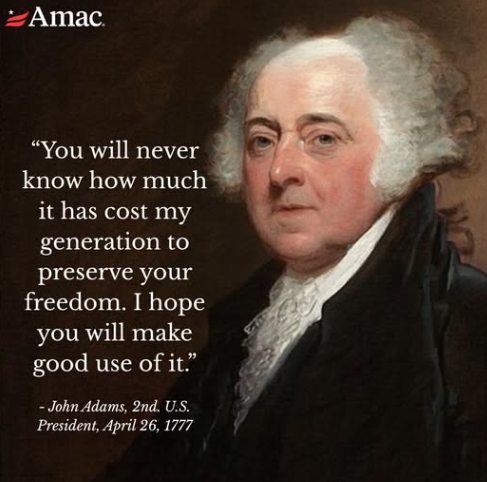 At left we see yet one more reminder of the disaster taking place in the United States.
Our Founding Fathers made huge sacrifices for us, and we’ve seen fit to elect an insane dictator to run roughshod over our beloved Constitution.
We hear that democracies do not descend into authoritarian regimes overnight. That’s true, but what’s happened here has been quite rapid indeed.



-
Climate Change1 year ago
Guest post: Why China is still building new coal – and when it might stop
-

 Greenhouse Gases2 years ago
嘉宾来稿:满足中国增长的用电需求 光伏加储能“比新建煤电更实惠”
-
Greenhouse Gases1 year ago
Guest post: Why China is still building new coal – and when it might stop
-

 Climate Change2 years ago
嘉宾来稿:满足中国增长的用电需求 光伏加储能“比新建煤电更实惠”
-

 Renewable Energy12 months ago
Sending Progressive Philanthropist George Soros to Prison?
-
Climate Change2 years ago
Bill Discounting Climate Change in Florida’s Energy Policy Awaits DeSantis’ Approval
-
Greenhouse Gases1 year ago
嘉宾来稿:探究火山喷发如何影响气候预测
-

 Climate Change2 years ago
Analysis: China’s CO2 falls 1% in Q2 2024 in first quarterly drop since Covid-19