

Duke Energy said it plans to double its renewable energy capacity by the end of the decade, and stop generating electricity from coal by 2035. CEO Lynn Good announced the plans during a call with investors on Feb. 10.
The announcement comes as Duke intends to deploy $63 billion of capital over the next five years, 80% of which is expected to support investments in grid modernization and zero or lower-carbon emitting generation. Good said Duke's wind and solar capacity would increase from 10,000 MW currently to 24,000 MW by 2030.

"As coal is phased out from our generation profile, it will be replaced with zero-carbon resources and prudent investments in cleaner natural gas," Good said, according to a transcript summary of the call.
Duke has retired 56 coal units for a total of 7.5 GW of capacity since 2010, Good said. The utility will spend around $4 billion on hydrogen-enabled natural gas generation to better ensure reliability in the absence of coal.
Around $15 billion would be spent on nuclear, renewables, storage, and hydropower over the same period, plus $33 billion on transmission and distribution infrastructure.
The financial sector is increasingly concerned about ownership of fossil fuel assets, particularly coal facilities, said Billy Pizer, vice president for research and policy engagement at the non-profit think thank Resources for the Future. Against this backdrop of regulation and financial momentum, "rapidly phasing out coal is good not just for the environment but for Duke Energy’s business."
Climate mandate

Charlotte, North Carolina-based Duke is working to comply with a bipartisan clean energy and emissions mandate signed into law by North Carolina Gov. Roy Cooper (D) in October. House Bill 951, which emerged from a Republican-controlled state legislature, requires the state to reduce carbon emissions by 70% by 2030 and reach carbon neutrality by 2050.
Under the bill, the state's utilities commission has until the end of 2022 to develop a plan with utilities to achieve the mandated emissions targets. "The Carbon Plan" would then be reviewed every two years and may be adjusted. Any generation and resource changes must maintain or improve grid reliability.
The utilities commission was authorized to direct the procurement of solar energy this year by utilities. And, regulators were directed to establish rules within 180 days for the early retirement of subcritical coal plants.
Good said that Dude planned to file its carbon plan after gathering stakeholder input. She said the utility expected an order on the carbon plan "by the end of this year."
Looking solely at Duke's North Carolina operations, Jordan Kern, an assistant professor in North Carolina State University's Dept. Forestry and Environment Resources, believes that the utility is "doing enough" to decarbonize the grid and meet the goal of the Paris Climate Agreement.
Kern added that other states and utilities can learn form the example set by North Carolina and Duke.
"House Bill 951 encourages Duke Energy to invest billions of dollars in infrastructure needed to reduce carbon emissions, and the public utilities commission will allow for cost recovery via increased electricity rates," Kern told Renewable Energy World. "Duke Energy shareholders could eventually profit from this investment, and I think that was probably important in getting buy-in from the utility.
"Electricity customers will absolutely see higher bills, but that is unavoidable if we are talking about taking meaningful steps to mitigate climate change."
Stakeholders who are engaging in the crafting of the North Carolina Carbon Plan, meanwhile, are waiting for Duke to jumpstart transmission planning to meet solar's growing demand for interconnection.
Duke "has not engaged or presented to stakeholders what kind of transmission planning that would include and how Duke plans to get that going before 2030," said Maggie Shober, research director for the Southern Alliance for Clean Energy.
Expanded emissions target

Duke also announced that the utility's 2050 net-zero goals would expand to include Scope 2 and certain Scope 3 emissions.
The utility said it would include emissions from "the power it purchases for resale, from the procurement of fossil fuels used for generation and from the electricity purchased for its own use."
Duke added a new net-zero by 2050 goal for the natural gas business that includes "upstream methane and carbon emissions related to purchased gas and downstream carbon emissions from customers' consumption."
Duke claims to have already reduced Scope 1 emissions from electricity generation by 44% from 2005 levels.
Matt Abele of the NC Sustainable Energy Association told Renewable Energy World that Duke's announced coal plant closures are the result of HB951, which allowed the utility to recoup costs from retirements. He said he remains skeptical about Duke's expanded emissions targets.
“The jury is still out" on Duke's additional commitment to Scope 2/3 emissions. He said the utility "still seems fairly committed to natural gas in its own fleet" under Scope 1. He pointed to Duke's latest integrated resource plan as evidence. He also cited "expanded efforts for cross-state collaboration" through mechanisms like the Southeast Energy Exchange Market that "may actually increase" natural gas dependency in the state.
Duke is among the 15 utilities that so far have backed the SEEM market design.

Duke Energy aims to double renewable energy capacity by 2030


 All I can say about the me here is that personally I refused, against considerable pressure from my family, to indoctrinate my children into something I myself could not accept.
Is it actually “psychological abuse” to indoctrinate children into monotheistic religion? Whether to take it that far is an open question.
My parents, both atheists, sent my brother and me to Sunday School, as they thought it wrong to cut us off from a modality of growing up in America in the early 1960s. I don’t blame them, but again, it’s not something I was willing to replicate with my own children.
 In less than a month, we’re going to learn how many idiots are buying this socialism crap.
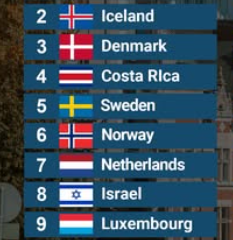
Sure, there are people who don’t know anything about the way people live in northern England, New Zealand, Costa Rica, etc. Most of these people couldn’t find these countries on this globe.
But how many can there possibly be?
Clearly, Republicans are desperate, but isn’t asking voters to believe that the Swedes have to rely on the government for their job, salary, and food a bit over-the-top?
 I got the meme here from a neighbor, but I wonder who actually wrote it. There is a ton of propaganda on social media suggesting that we need to normalize the sociopathic criminality of the U.S. president.
It’s true that not every election is an apocalypse, but 2024 was disastrous for the U.S. democracy.
Yes, the country did not end. But it took a giant leap towards authoritarianism.
Even that’s not the end of the world. Democracies fail with great frequency on this planet. I just never thought I’d be living in the biggest socio-political collapse in the last 2000 years.
In an average week, I meet quite a few travelers here from lands all around this planet. Their most common thoughts on what’s happening here: “We simply feel sorry for you.”


Australia says COP31 co-presidency will work on a cover decision
Large flotilla brings Pacific voices and message to leaders at Pre-COP meeting: Keep 1.5C Alive
A ‘victory’ for communities as High Court rules climate impacts from coal and gas must be considered even where fossil fuels are exported
-
Climate Change1 year ago
Guest post: Why China is still building new coal – and when it might stop
-

 Greenhouse Gases2 years ago
嘉宾来稿:满足中国增长的用电需求 光伏加储能“比新建煤电更实惠”
-
Greenhouse Gases1 year ago
Guest post: Why China is still building new coal – and when it might stop
-

 Climate Change2 years ago
嘉宾来稿:满足中国增长的用电需求 光伏加储能“比新建煤电更实惠”
-

 Renewable Energy12 months ago
Sending Progressive Philanthropist George Soros to Prison?
-
Climate Change2 years ago
Bill Discounting Climate Change in Florida’s Energy Policy Awaits DeSantis’ Approval
-
Greenhouse Gases1 year ago
嘉宾来稿:探究火山喷发如何影响气候预测
-

 Climate Change2 years ago
Analysis: China’s CO2 falls 1% in Q2 2024 in first quarterly drop since Covid-19