

A Canadian start-up run from a private home was chosen by Democratic Republic of Congo for a technically complex project to extract methane from the deep waters of a volatile lake, despite the company not meeting the tender’s financial criteria, documents seen by Reuters show.
President Felix Tshisekedi, who is seeking re-election in December, has promised to shake off Congo’s reputation for opaque dealings as he pushes plans to develop dozens of oil and gas blocks – many of them in environmentally sensitive areas.
First to be auctioned were three methane blocks in Lake Kivu, sometimes dubbed a “killer lake” because of a risk of deadly eruption. The extraction project aims to supply gas for power generation, including to hundreds of thousands of people living on the lake’s shores.
The auction, which took place last year, was the first of its kind to be conducted in Congo under a law from 2015 that was designed to promote transparency in the oil and gas sector.
Rooftop solar panels offer fragile lifeline to besieged Gazans
Canada-based Alfajiri Energy Corporation was included in the auction although an evaluation report produced by a government-appointed commission in October 2022 found the company did not meet minimum financial requirements.
The report, along with two others, was obtained by Reuters in collaboration with the Bureau of Investigative Journalism, a non-profit news organisation. Reuters also independently interviewed three sources directly involved in the auction.
Additionally, a technical report assessing the bid, dated 8 December 2022, appeared to have been altered in Alfajiri’s favour, according to the documents and the sources. The documents do not show why Alfajiri was included in the auction, who requested that the report be edited, or why.
No financial records
Hydrocarbons Minister Didier Budimbu denied any problems with the tender process in an emailed response to questions from Reuters.
Rich nations offer loans not grants for Vietnam’s coal transition
“The process was very transparent and it will remain so. I will make sure of it,” he said in an earlier text message exchange.
Tshisekedi’s office declined to comment, saying any questions about the auction should be directed to Budimbu.
In a written reply on 23 October, Alfajiri’s founder and chief executive Christian Hamuli called the process “rigorous, transparent and credible.”
Congo-born Hamuli registered Alfajiri Energy Corporation on January 10, 2022, three weeks after plans for the auction were first announced, using the address of his home in Calgary, Canada’s company registry shows.
The hydrocarbons ministry’s call for expressions of interest in the project spelt out a clear stipulation, only companies with three years of financial records would be considered suitable, a requirement that reflected a clause in Congo’s new oil and gas regulations.
Specifically, articles 66 and 67 of the regulations say offers will be rejected if they do not meet certain conditions including “the presentation of balance sheets and statements from the last three financial years.”
First hurdle
The first hurdle to clear was the pre-selection stage where a panel of government oil sector officials and technical experts evaluated the suitability of the companies competing for the three blocks.
Having only existed for a few months, Alfajiri failed to produce the required financial records, according to the eight-page, Oct. 22 report from the committee. It showed the three rival applicants for the Lwandjofu block met the requirement.
Joseph Nzau was a lawyer for the ministry when the regulations governing the sector were drafted. He said the financial history requirement was created after several companies that signed previous oil and gas contracts ended up lacking the means to execute projects.
“The rule is clear. A company applying for pre-selection must provide proof of its accounts and balance sheets for the past three years,” he said. He declined to comment on the merits of individual companies.
China objects to UN fund warnings on solar’s forced labour risks
In his response to Reuters, Minister Budimbu denied Alfajiri’s lack of financial records should have disqualified it in the pre-selection phase, saying this amounted to a misinterpretation of the law.
Budimbu was responsible for organising the auction to find suitable operators. He was also in charge of forming the panel that drew up the bid assessment reports and passing the panel’s conclusions to the council of ministers, which approved the winner based on the recommendations.
He said Alfajiri scored highly enough to make it through the pre-selection stage despite its lack of paperwork.
Alfajiri’s Hamuli did not directly address questions about the lack of required financial records in Alfajiri’s bid. Alfajiri has “highly qualified and experienced professionals with integrity capable of developing the project in a secure manner,” he said.
The ministry has not announced the size of the investment in the blocks, how the project will be financed, or production goals.
“Killer lake”
Lake Kivu lies in the Rift Valley on Congo’s eastern border with Rwanda. Dissolved at great pressure in water hundreds of meters down near the lake’s bed are large methane reserves and even greater quantities of carbon dioxide.
Lake Kivu is one of three lakes in Africa scientists say are at risk of limnic eruption.
Extracting methane from Lake Kivu, located in one of Africa’s most heavily populated areas, could provide power to some of the 80% of Congolese who have no access to electricity, and potentially reduce the risks from the lake, the Congolese government and experts say.
However, some scientists, including vulcanologist Dario Tedesco, say failure to properly reinject water and by-products could increase the chances of eruptions of carbon dioxide and poisonous hydrogen sulfide, pollute the lake bottom and alter its delicate chemical and physical balance.
Moving on
Despite its lack of financial history, Alfajiri advanced in the process, and its bid for the Lwandjofu block was assessed alongside those of US firm Winds Exploration and Production and Congolese-Lebanese firm Ray Group.
Alfajiri’s bid performed badly on several criteria at this stage, and a report from the panel dated Dec. 8, 2022 showed it received the lowest suitability score among the three bidders.
Of the three submissions, Alfajiri initially received the lowest score – a total of 30.7 points out of a possible 100 – on a scale that assessed how well the bids met financial and technical criteria including their proposed partnership terms with Congo, work plan, and the qualifications of key personnel.
Of that score, it received just two of a possible 30 points in the financial portion of the assessment and 28.7 out of 70 points in the technical portion.
Movement mourns ‘driving force for climate justice’ Saleemul Huq
Alfajiri failed to demonstrate it employed qualified staff, had not submitted a feasibility study or a timetable for the project and “had not taken account of public safety issues,” the report said.
Winds scored the highest of the three bidders, with 53.8 points, the report shows.
Score boosted
But then, an edited version of the report put Alfajiri in first place, the documents show.
The report’s second version – also dated 8 December and seen by Reuters – raised Alfajiri’s score to 55.75, putting it ahead of Winds.
In his response, Budimbu told Reuters the only version of the final report that mattered, and that he had received, was the one in which Alfajiri was awarded the highest score.
Although it gave a higher score, the final report added a number of concerns to the earlier version, including comments that Alfajiri had proposed insufficient financing for requisite state bonuses and social projects.
Saving the Three Basins means stopping fossil fuel expansion
Reuters was unable to establish the motive for the new scores in the second report.
Asked if he was aware about any irregular change to the results, Frank Ihekwoaba, chief executive of Winds said “we heard rumours” but had not wanted to escalate it to avoid souring relations with the government. He said the process seemed rigorous for Winds, which won another of the three blocks.
Ray Group did not respond to Reuters’ request for comment.
Hamuli did not directly respond to Reuters’ questions about the changes in the report that led to it winning the block.
Regarding Alfajiri’s suitability for the project, he said Alfajiri was a start-up that would use a better extraction method than competitors, without giving further details on this method.
“I am very proud and confident of our team’s ability to bring the project to fruition,” Hamuli said by text message in September.
The post DRC hands gas rights to Canadian start-up that failed criteria appeared first on Climate Home News.
DRC hands gas rights to Canadian start-up that failed criteria

June Rubis is a steering group committee member for the Cali Fund, from Sarawak in Malaysian Borneo.
At COP16 in Cali, governments made a significant commitment: at least half of the funding from the new Cali Fund should support the self-identified needs of Indigenous Peoples and local communities, including women and youth. It was a watershed moment for multilateral benefit-sharing.
The challenge now is to translate that commitment into access arrangements that recognise the different institutions, priorities and decision-making processes of Indigenous Peoples and local communities.
For generations, biodiversity and traditional Indigenous knowledge have provided significant value to companies who depend on nature’s genetic diversity to discover new drugs that fight diseases, create products that improve health, and grow crops resilient to extreme heat and flooding events. While some compounds are sampled directly from the source country, increasingly the digital blueprints are held in online public databases which are freely accessible to use for innovation and research.
Countries urged to ramp up “insufficient” nature policies at COP17
The Cali Fund was established at COP16 to encourage commercial users of Digital Sequence Information, or DSI, to share benefits arising from its use. Estimates suggest it could generate over $3.5 billion a year – a stark contrast to the modest $10,656 currently committed to the fund from just five SMEs, underlining how much progress must be made at COP17 over the next two weeks.
The COP16 decision that set up the fund offers two routes for money to reach Indigenous Peoples and local communities: through government authorities, and through direct payments to institutions identified by Indigenous Peoples and local communities themselves.
Varied ways of organising
Indigenous Peoples and local communities organise through a wide range of institutions. Some have national or regional organisations experienced in managing international grants. Others work through territorial organisations, customary institutions, community associations, cooperatives or networks. Some have professional finance teams and audited accounts; others have extensive experience governing territories, collective resources or conservation work without having been organised around international funding requirements.
For direct access, some questions are already apparent. Which institutions should be able to receive funds? How should they be identified? What fiduciary standards should apply? How should safeguards and accountability work where institutional capacities differ? What support may be needed where institutions have strong community mandates but less experience with international finance?
Comment: Protecting nature is a public duty, not a Wall Street profit opportunity
If access is designed mainly around institutions that already meet the expectations of large international finance mechanisms, early funding will tend to favour those already familiar to funders. They will gain further experience and become better positioned for future funding, while institutions with less administrative capacity may remain outside the system despite strong community mandates and long histories of stewardship.
These first decisions matter most, because they set the terms for everyone who follows.
The role of intermediaries requires care. Some Indigenous organisations may want a fiscal host to hold and manage funds on their behalf. Communities may choose to work through an NGO they trust. Government-facilitated arrangements may work well in particular national contexts.
What matters is the function an intermediary performs and the authority that comes with it. Providing administrative support is different from deciding which Indigenous organisations qualify, which priorities can receive support, or how success will be assessed. Direct access means communities keep that decision-making authority.
Decision-making power
The COP16 decision refers to institutions that Indigenous Peoples and local communities identify. But authority among Indigenous Peoples does not sit in one kind of body. It may sit with territorial organisations, customary institutions, community associations or combinations of these. Legal recognition and customary authority do not always align neatly.
Global deforestation slowed in 2025 but Brazil’s election could undo “fragile” gains
An important feature of the Cali Fund’s governance is that Indigenous Peoples and local communities participate as full members of the Steering Committee, rather than as observers. Seven Indigenous Peoples and local community representatives, one from each of the seven socio-cultural regions, participate in consensus-based decision-making alongside representatives of governments and UN entities. Six additional representatives from civil society, scientific institutions and the private sector participate as observers.
That representation carries responsibility. Institutional legitimacy, access and representation take different forms across the seven socio-cultural regions. Indigenous Peoples and local communities members therefore have an important role in bringing those differences into the Fund’s governance and in ensuring that arrangements developed for one context do not become the assumed model for everyone else.
Safeguards and clear responsibilities
COP17 can establish the core principles and direction, while allowing operational pathways to develop in ways that respond to different regional contexts. The decisions countries take in Yerevan will shape how that flexibility is realised in practice.
The choices made around access will influence which institutions are able to participate, which routes become established and which forms of authority are recognised within the funding architecture. The aim should be an architecture with enough structure to maintain confidence while allowing for different forms of Indigenous and community governance.
A credible direct-access pathway will need safeguards, financial oversight and clear responsibilities. This would give the 50% commitment a stronger institutional foundation.
The Cali Fund’s importance will ultimately depend not only on how much funding reaches Indigenous Peoples and local communities, but on whether they are able to determine how the money is accessed, governed and used. This requires access pathways that recognise their institutions, priorities and decision-making processes, rather than requiring them to conform to a single predetermined model.
The post COP17 must settle who decides how Cali Fund money is disbursed appeared first on Climate Home News.
COP17 must settle who decides how Cali Fund money is disbursed
The UK government has approved extraction at the Jackdaw gas field in the North Sea, despite acknowledging that this decision could make it harder for Britain to convince other countries to move away from fossil fuel production.
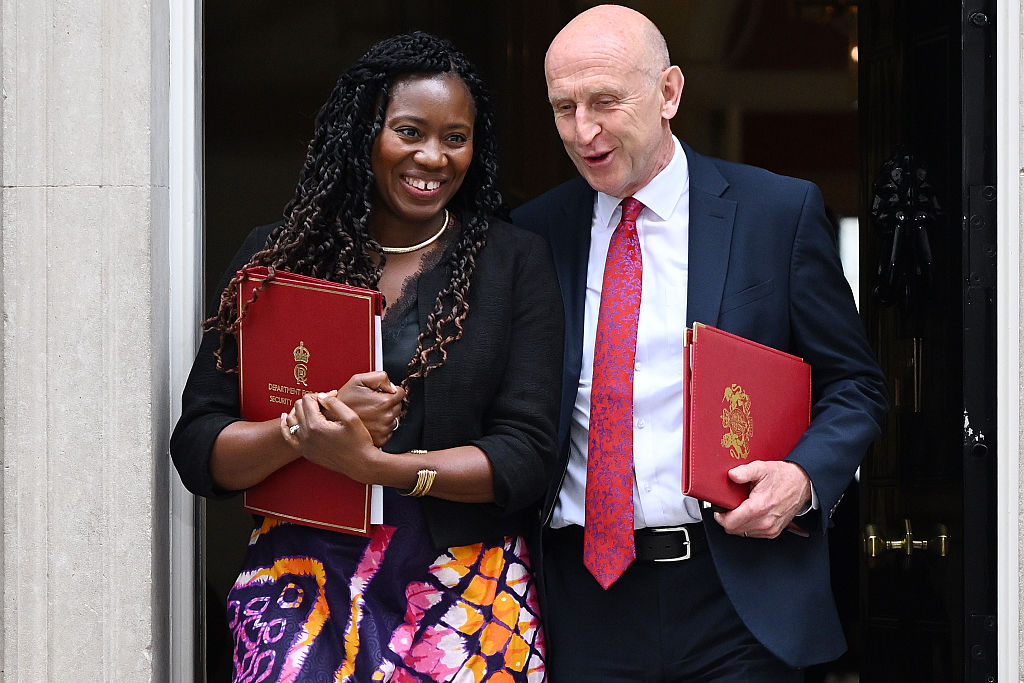
UK energy secretary Miatta Fahnbulleh approved the drilling on Wednesday after months of high-profile debate, fuelled in part by interventions from US President Donald Trump. She argued that the project would boost energy security in the wake of the Middle East fossil fuel crisis, protect hundreds of jobs and add £2.9 billion ($3.88bn) to the UK economy.
She said Jackdaw’s gas would be cleaner than imported gas and would not prevent the UK from meeting its legally-binding carbon targets and its goal of net zero by 2050. As the field is already licensed, she said extraction was consistent with the Labour Party’s 2024 manifesto promise not to issue any new oil and gas licenses.
The same morning, the government announced a new Energy Wealth Fund to reinvest oil and gas revenues in the climate transition. It will start with £2 billion ($2.67bn) from the government and be topped up over time with tax revenues from offshore oil and gas production.
Climate campaigners in the UK and abroad were quick to condemn the decision, while a leading legal expert told Climate Home News it goes against the advice of the International Court of Justice. Meanwhile, the government’s own documents reveal that it recognises the drilling could damage the UK’s reputation and its ability to push forward the global transition away from fossil fuels.
“Climate leadership” blow
The 92-page decision document says Fahnbulleh “acknowledges that international standing on climate is important and accepts that a decision to grant consent may not further the UK’s international climate leadership.”
It adds: “She acknowledges concerns about the potential implications for the UK’s credibility and influence – including the difficulty inherent in encouraging other states to move away from fossil fuel production while the UK continues, in a limited and transitional way, to draw on its own domestic resources.”
While noting that Jackdaw has not been issued with a new license – just permission to extract gas – the document says Fahnbulleh “accepts this does not fully resolve the underlying tension in the UK’s position” but “considers this alongside the substance of the UK’s wider record [on emissions reduction], which remains significant”.
It continues that she accepts these concerns are “legitimate” and weigh against approving gas extraction, but only gives this argument a “moderate negative weight” set against the benefits of gas production.
“Huge” wrong signal
In international climate talks, the UK has long supported the transition away from fossil fuels and is one of very few major oil and gas producers to ban new licenses. Across the North Sea, the Norwegian government continues to make offshore areas available for oil and gas exploration through annual licensing rounds.
Climate experts and campaigners shared the concern, acknowledged in the decision document, that approving Jackdaw could set a precedent for fossil fuel production elsewhere. Sam Fankhauser, professor of climate change economics at Oxford University, said the direct climate impact of Jackdaw is “much smaller than the debate around it would suggest” but the “wrong signal it sends, however, is huge”.
-
Carbon capture industry faces tough future, as UK raids green spending
Despite a spate of projects getting underway, the mood at an industry conference in London this week was low with government subsidies set to shrink -
Paris Agreement committee names three countries snubbing it over NDCs
More than 30 countries have failed to submit an NDC, but only three have repeatedly ignored the committee’s efforts to engage with them -
Turkish giant sponsoring COP31 cut climate goals then cashed in on oil boom
COP31 sponsors should be screened for “climate integrity”. Yet Koç Holding has become a top partner while its oil refiner runs flat out and its climate targets slip


Bob Ward, policy and communications director at the Grantham Research Institute on Climate Change, said that while Jackdaw’s output will be very small, “it will signal to other fossil fuel producers that they too should carry on with business as usual, less than a month before the COP31”.
Kenyan campaigner Mohamed Adow, director of Power Shift Africa, called the decision “a serious blow to Britain’s international climate credibility” as “the UK cannot expect developing countries to move away from fossil fuels while giving the green light to new drilling in its own backyard”.
International Court of Justice
In July 2025, the International Court of Justice (ICJ) advised that government failure to take appropriate climate action “including through fossil fuel production” may amount to an internationally wrongful act.
The UK voted in favour of a United Nations resolution welcoming the advisory opinion. Yet, in its Jackdaw decision document, it notes that the ICJ opinion is not legally binding and says the UK does not accept the court’s opinion that the customary international law duty to prevent significant harm to the environment applies to climate change.
Fahnbulleh concludes that, although it will have “significant effect on the environment”, gas drilling in Jackdaw “would not lead to significant harm to the environment” – and so does not breach any duty to prevent such harm. Instead, the government document says the duty should be considered “as a matter of policy rather than legal obligation”.
Margaretha Wewerinke-Singh, who led Vanuatu’s legal team pushing for the ICJ’s advisory opinion, told Climate Home News that treating the duty as a matter of policy rather than legal obligation is “not how international law works”. “An advisory opinion is not a judgement,” she said, “but it states the law as it stands, and that law binds the UK whether or not it accepts it.”
“Even as a matter of policy,” she added, “the decision asks the wrong question: whether Jackdaw on its own would cause significant harm. The Court found that accumulated emissions are already causing significant harm. What matters is whether approving new production is consistent with the stringent due diligence the duty requires.”
Public support for decision
While the decision was criticised by climate campaigners and the opposition Green party, polling reported by Politico suggests that 55% of British adults support drilling at Jackdaw, with just 14% opposed. Even supporters of the UK’s net zero target back new drilling by more than two to one, the polling found.
Jackdaw is one of two North Sea oil and gas fields the government has been debating whether to extract more from for months. While Jackdaw is a small gas field, the other, Rosebank, is a much larger field that holds mostly oil.
Rosebank’s emissions are estimated to be around seven times higher than Jackdaw’s. Fahnbulleh told Sky News that Rosebank is “different” to Jackdaw because its oil would be exported, whereas Jackdaw’s gas will be used in the UK, adding that she will consider it “in its own right”.
The Guardian reported on Wednesday that UK officials say Fahnbulleh is minded to refuse approval for Rosebank. She has not yet taken a final decision on Rosebank, the newspaper said, but a ruling is expected later this year.
The post UK approves gas drilling despite admitting blow to “climate leadership” status appeared first on Climate Home News.
UK approves gas drilling despite admitting blow to “climate leadership” status
A surge in wholesale costs driven by expensive gas is responsible for nearly 90% of the rise in UK household electricity bills since 2020, reveals new analysis.
The figures, shared with Carbon Brief by thinktank Nesta, show that wholesale gas costs are also behind the vast majority (77%) of the increase in household gas bills.
The analysis firmly contradicts the idea, which has become embedded in UK media and political narratives, that the UK’s net-zero target is to blame for high energy bills.
Andrew Sissons, director for sustainable future at Nesta, tells Carbon Brief that net-zero is, in fact, “helping to shelter Britain from the impact of expensive gas”. He adds:
“Rising gas prices, not net-zero, have driven most of the recent surge in Britain’s energy bills. Britain is particularly exposed, with over 80% of households connected to gas mains, while our electricity system still relies too much on gas as the marginal unit.”
The analysis comes after the UK government gave its approval for the Jackdaw gas field to be developed in the North Sea, despite stating that it “would not…affect prices”.
Another gas crisis
In January 2026, Carbon Brief reported that two-thirds of the rise in electricity bills since before the 2022 global energy crisis was due to high gas prices.
Now, amid ongoing conflict in the Middle East, wholesale gas prices are at their highest levels since Russia’s 2022 invasion of Ukraine.
Indeed, as of 19 October, UK whole