

English version below
Die letzte Woche unserer Expedition ist angebrochen und wir haben die Labradorsee in Richtung Osten verlassen. Die verbleibenden Tage werden wir mit Messungen der CTD-Rosette verbringen. Sie besteht aus einem Kranz von Flaschen, mit denen wir Wasserproben nehmen können und zusätzlichen Messgeräten, die darunter angebracht sind. Die eigentliche CTD (die Abkürzung steht für: Conductivity = Leitfähigkeit, Temperature = Temperatur, Depth = Tiefe) ist ein Messgerät an der Unterseite der Rosette. Zusätzlich gibt es noch eine kleine Kamera, die Bilder aufnehmen kann und ein Messgerät, das Fluoreszenz misst. An bestimmten Positionen müssen wir dann das Schiff anhalten und lassen die Rosette an einem Kabel bis zum Boden hinab. Bei Wassertiefen, die teilweise über 3000m betragen, kann es bis zu 2 Stunden dauern, bis die CTD-Rosette nach unten und wieder nach oben gefahren ist.
Die geplanten CTD-Stationen sollten uns Stück für Stück Richtung Grönländischer Küste führen. Die küstennahen Messungen sind dabei besonders interessant, um ähnlich wie in der Labradorsee den tiefen Randstrom zu untersuchen. Doch bei diesem Plan machte uns das Eis einen Strich durch die Rechnung. Auf der einen Seite freuten wir uns über die Schönheit der zahlreichen Eisschollen um uns herum, auf der anderen Seite verhinderten sie leider auch unser Vorankommen zu den küstennahen CTD-Stationen.

Aus dem Film Titanic haben wir alle gelernt: So ein Eisberg kann zum fatalen Problem für ein Schiff werden. Aber ist das eigentlich noch aktuell? Laut Kapitän Björn Maaß, können Eisberge heutzutage durchaus noch Schiffe versenken. Wir haben allerdings einen Vorteil, gegenüber der Titanic: das Radar, auf dem man Eisberge sehr gut erkennen kann. Nicht so gut erkennbar sind allerdings die von Eisbergen abgebrochene kleinere Eisstücke, Growler genannt. Growler (wortwörtlich übersetzt Brummer) sind nach dem Geräusch benannt, das sie beim Aus- und Abtauchen in der See verursachen. Teilweise sind sie schon mehrere Jahre unterwegs, weshalb sie häufig aus härterem Eis bestehen und nicht so weit aus dem Wasser schauen, da sie schon rundgewaschen sind. Um auch die Growler im Blick zu behalten, ist es deshalb wichtig zusätzlich zur Radarbeobachtung auch aus dem Fenster zu schauen, um alles im Blick zu behalten.
Damit kommen wir zu dem Problem, das unsere CTD-Messungen verhinderte. Es ist nämlich nicht nur das Eis, sondern die Kombination aus Eis und schlechten Sichtverhältnissen, die zur Gefahr wird. Zu Beginn der Stationsarbeit hatten wir Nebel aber nur wenig Eis. Später klarte es auf und das Eis wurde mehr. Solange die Sicht gut ist, sind bis zu 70-80% Bedeckung der Wasseroberfläche mit Eis noch in Ordnung, so der Kapitän. Doch der erneut aufziehende Nebel verringerte die Sicht drastisch. Solange die CTD-Rosette im Wasser ist, ist das Schiff in der Manövrierfähigkeit eingeschränkt und könnte damit einem auf das Schiff zutreibenden Eisberg schlecht ausweichen. Selbst nah am Schiff vorbei treibende Eisberge können zur Gefahr werden. Wie allgemein bekannt, befindet sich der Großteil eines Eisberges unter Wasser. Durch Abtauen des Eises kann es zur Verlagerung der Gewichtsverteilung und damit zum Drehen oder Kippen des Eisberges führen. Sollte das in der Nähe des Schiffes passieren, kann es zu einer Kollision kommen.

Vielleicht fragt sich an diesem Punkt der ein oder andere: ist die Maria S. Merian nicht ein Eisbrecher? Wieso ist das Eis dann überhaupt ein Problem? In der Nord- und Ostsee, wo man es nur mit einjährigem Eis zu tun hat, kann sie tatsächlich bis zu 80cm Eis brechen. In dem Gebiet, in dem wir uns jetzt befinden, kann es aber durchaus sein, dass sich eingeschlossen im einjährigen Eis auch ältere Stücke befinden. Diese haben bereits einen oder mehrere Sommer überstanden und sind dadurch schon mehr verdichtet und damit härter. Versucht man dieses dann zu brechen, kann das Schiff beschädigt werden. Das führte mutmaßlich zum Untergang des Kreuzfahrtschiff Explorer 2007 in der Antarktis. Die Besatzung des Schiffes war auf der Nord- und Ostsee ausgebildet und damit nur im Umgang mit einjährigem Eis geschult.
Fassen wir also kurz zusammen: Eisberge sind auch heutzutage noch eine Gefahr für die Seefahrt. Dank Radar kann man das Eis zwar sehr gut beobachten, doch die Sichtverhältnisse sollten trotzdem möglichst gut sein, wenn man sich in einem Eisfeld befindet. Außerdem ist nicht jedes Eis gleich und muss auf Grund des Alters, der Form und der Größe differenziert betrachtet werden.

Bleibt nur noch die Frage, was passieren würde, sollte unser Schiff die Maria S. Merian doch einmal mit einem Eisberg zusammenstoßen. Das kann auch der Kapitän nicht so leicht beantworten. Zuerst einmal ist die Geschwindigkeit des Schiffes ein wichtiger Faktor. Bei einer Kollision mit 2 Knoten Fahrt, würden die Eisstücke höchstwahrscheinlich nur zur Seite geschoben werden, während ein Zusammenstoß bei 10 Knoten Geschwindigkeit gefährlicher wäre. Außerdem hängen die Auswirkungen eines Zusammenstoßes noch von einigen weiteren Kriterien ab, zum Beispiel wie groß der Schaden ist und wo sich das Loch befindet. Da das Schiff in mehrere Sektionen unterteilt ist, die sie sich wasserdicht voneinander abschotten lassen, kommt es darauf an wie viele und welche Abteilungen volllaufen. Solange nicht Maschinenraum und Windenraum oder nur zwei Sektionen geflutet werden, bleibt die Maria S. Merian schwimmfähig. Für uns bleibt das eine hypothetische Überlegung. Am Ende hatten wir einen atemberaubenden Ausblick, der uns über die verpassten CTD-Stationen hinweggetröstet hat und wurden von der Brücke sicher wieder aus dem Eis herausmanövriert.
The downside of icebergs
The last week of our expedition has dawned and we have left the Labrador Sea towards the east. The remaining days will be spent with measurements of the CTD rosette. It consists of a wreath of bottles with which we can take water samples and additional measuring instruments attached underneath. The actual CTD (abbreviation stands for Conductivity, Temperature, Depth) is a measuring device on the underside of the rosette. In addition, there is a small camera that can take pictures and a meter that measures fluorescence. At certain locations we then have to stop the ship and drop the rosette on a cable down to the ground. At water depths, some of which are over 3000m, it can take up to 2 hours for the CTD rosette to go down and back up.
The planned CTD stations should lead us step by step towards the Greenland coast. The measurements near the shore are particularly interesting to study the deep margin current, as in the Labrador Sea. But with this plan, the ice broke our hearts. On the one hand we enjoyed the beauty of the numerous ice floes around us, on the other hand they unfortunately prevented our progress to the coastal CTD stations.
We all learned from the movie Titanic: an iceberg like this can become a fatal problem for a ship. But is this really still relevant? According to Captain Bjorn Maas, icebergs can still sink ships today. However, we have one advantage over the Titanic: the radar, on which you can see icebergs very well. However, smaller pieces of ice broken off by icebergs, called growlers, are not so well visible. Growlers are named for the noise they make when they go out and dive in the sea. Some of them have been floating around for several years, which is why they often consist of harder ice and do not look as far out of the water as they have already washed around. In order to keep an eye on the growlers, it is therefore important to look out the window in addition to radar observation to keep an eye on everything.
This brings us to the problem that prevented our CTD measurements. It is not just the ice, but the combination of ice and poor visibility that becomes the danger. At the beginning of the station work we had fog but only a little ice. Later, it cleared up and the ice became bigger. As long as visibility is good, up to 70-80% coverage of the water surface with ice is still fine, according to the captain. But the re-emerging fog drastically reduced visibility. As long as the CTD rosette is in the water, the ship is limited in maneuverability and could thus badly dodge an iceberg drifting towards the ship. Even icebergs drifting close to the ship can become a hazard. As is common knowledge, most of an iceberg is underwater. By thawing the ice, it can shift the weight distribution and thus turn or tip the iceberg. If this happens close to the ship, there may be a collision.
At this point, some may wonder: isn’t the Maria S. Merian an icebreaker? Why is ice a problem? In the North and Baltic Seas, where you only have to deal with one year old ice, it can actually break up to 80cm of ice. In the area in which we are now, however, it may well be that there are older pieces trapped in the one-year ice. These have already survived one or more summers and are therefore already more compacted and thus harder. If you try to break it, the ship can be damaged. This led to the sinking of the cruise ship Explorer in Antarctica in 2007. The crew of the ship was trained in the North and Baltic Seas and thus trained only in handling one year’s worth of ice.
So let’s summarize briefly: icebergs are still a danger to shipping today. Thanks to radar you can observe the ice very well, but the visibility should still be as good as possible when you are in an ice field. In addition, not all ice cream is the same and needs to be considered differentiated based on age, shape and size.
The only question left is what would happen if our ship, the Maria S. Merian, collided with an iceberg. The captain can’t answer that easily. First of all, the speed of the ship is an important factor. In a collision at 2 knots, the pieces of ice would most likely only be pushed aside, while a collision at 10 knots speed would be more dangerous. In addition, the impact of a collision depends on a number of other criteria, such as the size of the damage and where the hole is located. Since the ship is divided into several sections, they are sealed off watertight from each other, it depends on how many and which sections are full. As long as engine room and windroom are not flooded or only two sections are flooded, the Maria S. Merian will remain floating. For us, this remains a hypothetical consideration. In the end, we had a breathtaking view that consoled us over the missed CTD stations and were safely maneuvered out of the ice again from the bridge.


Ocean Acidification
Dr Heidarzadeh’s TV interview with SkyNews on the massive M7.7 Panama earthquake on 9 October 2026
Dr Heidarzadeh’s TV interview with SkyNews on the massive M7.7 Panama earthquake on 9 October 2026. Click here for the full story.

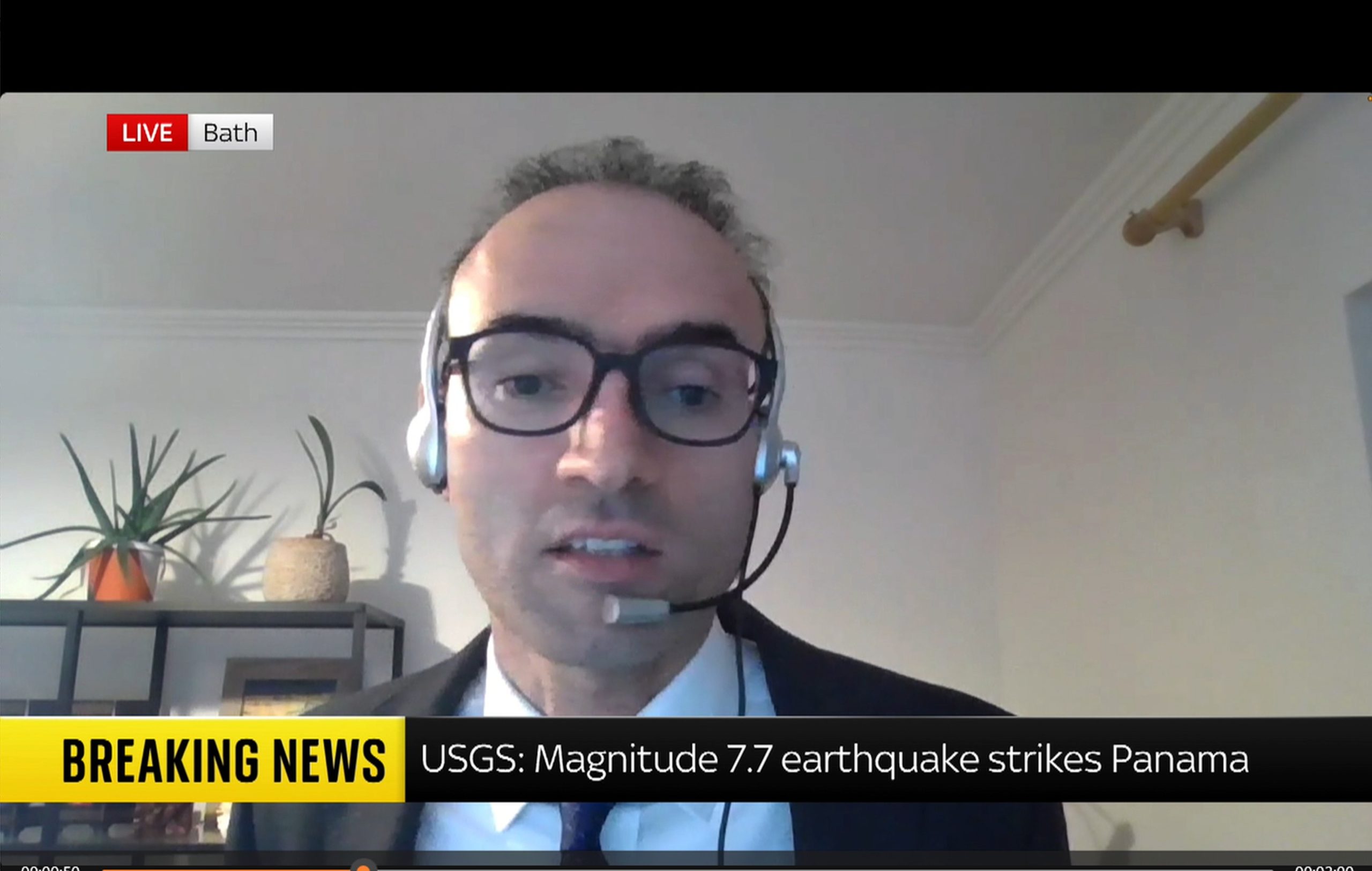
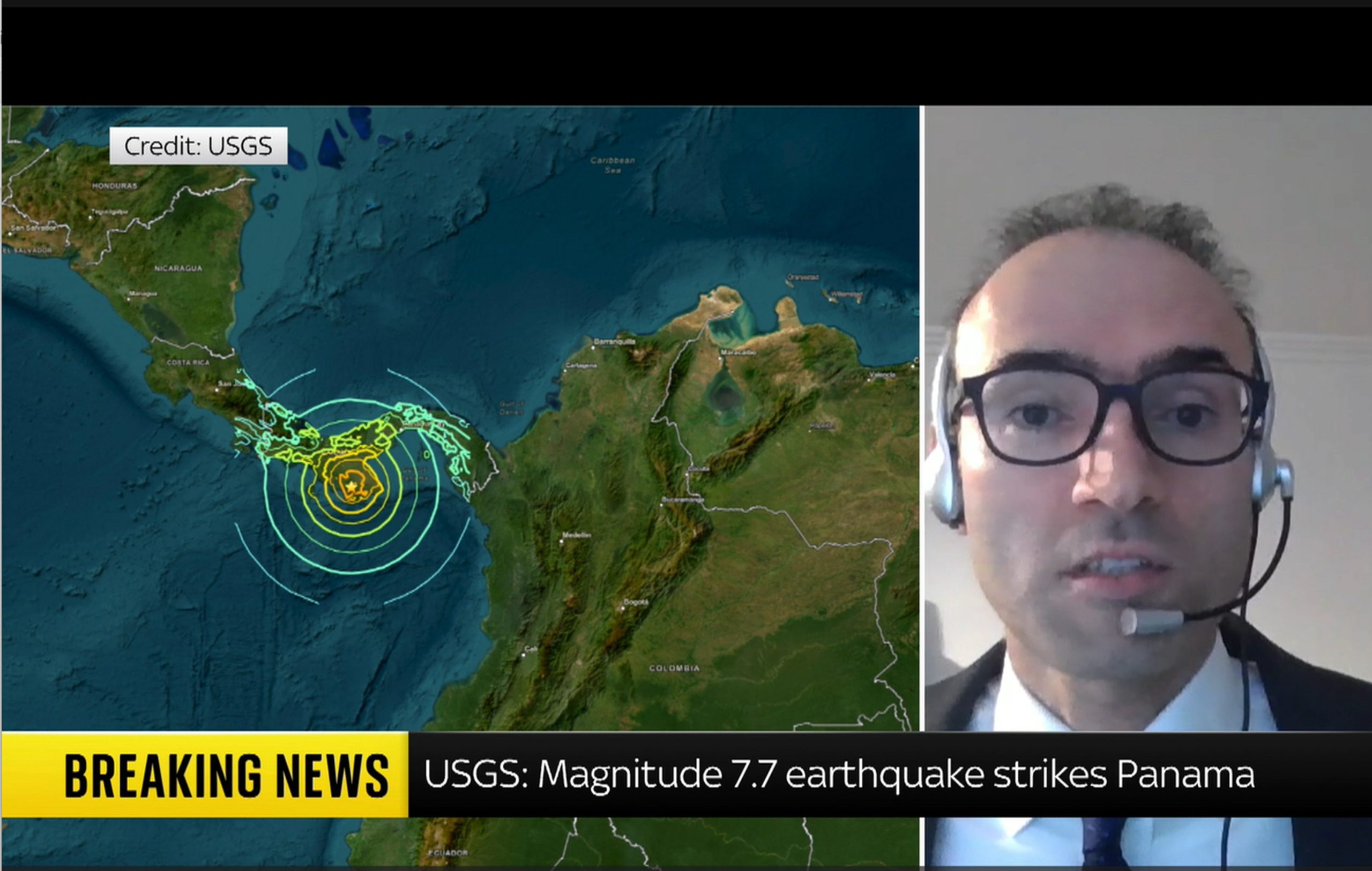
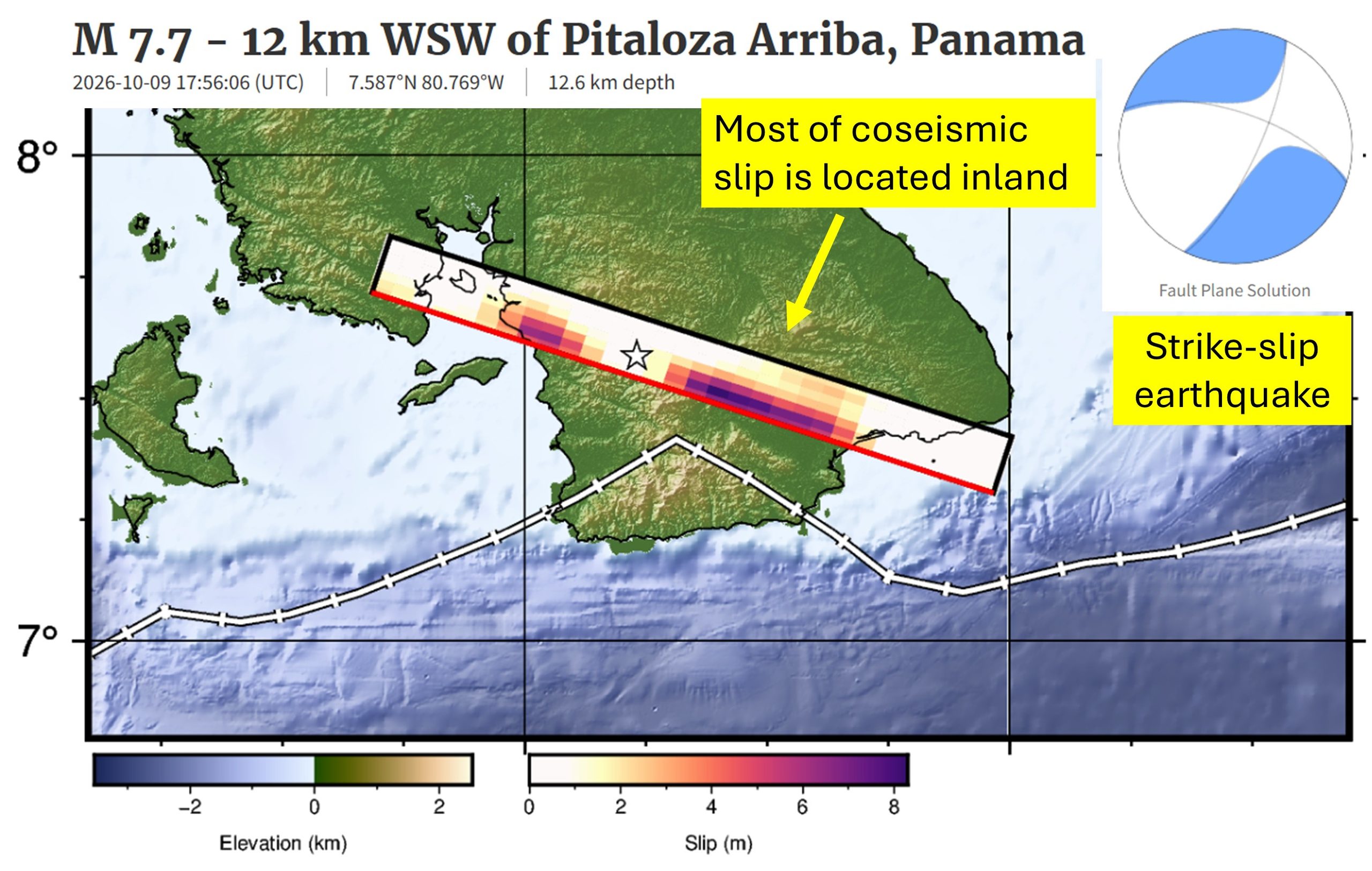
Dr Heidarzadeh’s TV interview with SkyNews on the massive M7.7 Panama earthquake on 9 October 2026
Our ocean is an incredibly vast and mysterious place. And there is no place where that is more evident than the deepest ocean area in the world: the legendary Mariana Trench. Located east of the Philippines, the Mariana Trench lies in the Mariana Archipelago in the western portion of the North Pacific. The greater area of the Mariana Trench Marine National Monument is made up of more than 95,000 square miles of ocean. Beneath these waters lie incredibly complex aggregations of submerged islands and volcanoes … and of course, an astoundingly massive trench.
Dive in with us to have your biggest questions answered about the famed Mariana Trench.
How deep is the Mariana Trench?
The deepest part of the Mariana Trench, known as Challenger Deep, is almost 36,000 feet below the ocean’s surface. For context, Mount Everest is about 29,000 feet above sea level, so the Mariana Trench is about 7,000 feet deeper than Mount Everest is tall. For one more comparison, the RMS Titanic lies at a depth of about 12,500 feet below sea level. The Challenger Deep is in waters nearly three times deeper than this ship’s final resting place.
Due to its enormous size, the Mariana Trench has at times been affectionately nicknamed the Grand Canyon of the ocean. This is certainly a picturesque image, but don’t let the mammoth size of this U.S. national terrestrial park fool you into thinking the Mariana Trench matches its size. The trench’s footprint is estimated to be 120 times larger than the Grand Canyon’s, and to reach the bottom of Challenger Deep, you’d need to descend through almost six Grand Canyons stacked on top of each other before you’d reach the seafloor.
Oh … and did we mention it’s five times wider than it is deep? It’s about 43 miles wide!
What is Challenger Deep, and how long would it take to reach it?
Challenger Deep is the deepest point of the Mariana Trench. Fewer than 30 people have ever journeyed to this area. The trek below the surface is long, dark and time-consuming, and it’s not an expedition considered lightly by scientists and explorers.
The first people to descend into the depths of this area in 1960 were oceanographers Jacques Piccard and Don Walsh, and it took them close to five hours to reach Challenger Deep. Since then, more advanced submersibles have been created, but it still takes two to four hours for modern vessels to reach such depths. For example, explorer and filmmaker James Cameron reached the seafloor in a little more than 2.5 hours in the first documented solo submarine dive to the area, and it took oceanographer Dr. Dawn Wright about four hours in 2022. It is crucial that these submersibles descend slowly and steadily beneath the surface, as the immense water pressure compounds with every mile a submersible descends. Speaking of pressure …
Get Ocean Updates in Your Inbox
Sign up with your email and never miss an update.
What is the water pressure at the bottom of the Mariana Trench?
If you thought the depth of the Mariana Trench was its only jaw-dropping feature, think again. Water pressure is one of the most important factors affecting deep-sea life. In the ocean, pressure increases by one atmosphere for every 33 feet (10 meters) of depth. One atmosphere (a unit of measurement for pressure equivalent to average air pressure at sea level) is equal to about 14.7 pounds per square inch (PSI), which is the approximate standard atmospheric pressure at sea level. If you were to convert atmospheric pressure into weight, one atmosphere is about the weight of a bowling ball. Stay with me, friends.
If a vessel were to dive 2,000 feet below the surface, the pressure would equal that of 60 bowling balls stacked atop every square inch of that submersible. But 60 bowling balls is simply nothing compared to the pressure in the Mariana Trench. The atmospheric pressure at the depths of Challenger Deep is equal to about 16,000 PSI. That pressure is about the same as the weight of an entire full-grown elephant on every square inch of a submersible!
Need a more extreme comparison? If a human were to be placed at the bottom of the Mariana Trench, the pressure would be equal to that of 50 jumbo jets piled on top of a person!
Do any animals live in the Mariana Trench?
The depths of the Mariana Trench come with immense pressure and extreme darkness, but somehow, life finds a way to survive. Organisms that live at an extreme depth, like that of Challenger Deep, have to be highly adapted to low temperatures (typically just above freezing), high pressure and virtually no light at all.
Species found in the depths of the Mariana Trench might look vastly different from animals from other ocean depths because their anatomy has been refined to thrive in harsh conditions. At such great depths, these animals typically depend on chemosynthesis (using nutrient-rich waters being pumped out of hydrothermal vents) or descending detritus (dead matter that has fallen from higher parts of the ocean) for food, such as whale falls. Just a handful of these animals include species of octopuses and squids, sea cucumbers, amphipods, sea jellies, shrimp, sea worms and some wild-looking fish!
In 2025, more than 7,000 new species were discovered in the Mariana Trench, including the hadal snailfish (Pseudoliparis swirei). This is the deepest-dwelling fish currently known to science. Now, the fish has been dubbed “the Mariana snailfish.”