


Article Contents


Welcome to Carbon Brief’s DeBriefed.
An essential guide to the week’s key developments relating to climate change.
CLIMATE VEEP: US vice president Kamala Harris’s selection of Tim Walz as her running mate is being heralded by climate advocates, Inside Climate News wrote. The Star Tribune summarised Walz’s environmental record, saying that the current Minnesota governor has “passed ambitious climate policy” while in office – but “also clashed with environmental advocates” on other issues, including the Line 3 oil pipeline.
RAINFALL WRECKAGE: Tropical Storm Debby has wreaked havoc across the south-eastern US, with slow wind speeds contributing to the historic rainfall levels, NPR said. The Post and Courier documented some of the storm’s impacts, including flooding and downed trees and powerlines. Meanwhile, fire- and flood-prone areas of the US are seeing a net influx of residents, the Washington Post reported.
The amount of “lifetime campaign contributions” that the 123 climate-sceptic members of the current US Congress have together received from the fossil-fuel sector, according to a report from the Center for American Progress.
(For more, see Carbon Brief’s in-depth daily summaries of the top climate news stories on Monday, Tuesday, Wednesday, Thursday and Friday.)

Many of the world’s largest emitting countries also stand atop the Olympic medal table, with the US and China securing the most medals so far, with Japan, France and South Korea all in the top 10 across both categories. In contrast, the world’s most populous country and third-highest annual emitter – India – has received four medals, while Dominica is the lowest-emitting country to win a medal at these games. (One notable omission from the chart is Russia, the world’s fourth-largest emitter of CO2. Russia is officially excluded from the Paris games following its invasion of Ukraine.)
This week, Carbon Brief looks at the impact of climate change-driven warming on global sport.
Amy Steel was an Australia-based professional netball player, in peak physical condition, when she collapsed following a pre-season match on a 39C day in 2016.
At the time, she was not aware that heat could have such devastating long-term consequences. “It was sort of like, ‘All right, well, off you go and get better then,’” she said. But she “just really never got better after that day”.
Today, Steel shares her experience in order to raise awareness of the risks that heat poses to athletes and to advocate for change. She told Carbon Brief:
“As an athlete, you do feel a little bit invincible. You do feel like – you’re at your peak fitness; nothing can really touch you.”
Exertional heat illness – that which arises from intense exercise – is “not the same thing as the heat stroke that would kill your grandma sitting in her apartment without AC”, Dr Madeleine Orr, an assistant professor of sport ecology at the University of Toronto, told Carbon Brief.
Exertional heat stress occurs when the body accumulates heat during exercise and – whether due to protective gear or environmental factors – is unable to dispel it. “You can experience exertional heat illness in almost any condition,” Orr said.
However, climate change is making dangerous conditions more likely – as well as expanding the range over which they occur. By 2050, 60% of urban areas around the world will be unsuitable for holding an Olympic Games in late July and early August, according to a recent analysis published by Axios.
Dr Jessica Murfree, an assistant professor of sport administration at the University of North Carolina at Chapel Hill, told Carbon Brief:
“These things are happening frequently. They’re severe. They’re happening to men and women, boys and girls.”
Murfree added that heat-related illness is “not going to necessarily discriminate” in terms of who it affects. But, she stressed, the reality of who is most affected by heat is influenced by myriad other factors, including socioeconomic status and historical discrimination.
According to Orr, there are four actions that can help mitigate the dangers of heat in sport: educating people on what heat illness looks like; providing safety equipment, such as shade and ice baths; creating and enforcing policies around heat; and rearranging the sporting calendar.
These changes do not occur without resistance, Orr said:
“The challenge again, always, is that sport is very traditional…The way things are is the way they should be. And that’s not necessarily an equation that works.”
Heat policies, when in place, are not always enforced. And particularly at the grassroots level, Steel said, there is “not a great amount of understanding of the policy and what [are] the actual risks”.
Steel told Carbon Brief she worries about the future of grassroots sport and the “ability to rock up on a weekend and know that there’s going to be sport”. Whereas professional leagues can afford to build high-tech facilities to protect their athletes, most communities do not have that luxury.
At the same time, Murfree said, those organisations have the advantage of being “ingrained in their immediate community” and, thus, being able to advocate most directly for the solutions that will work for them. That gives her hope, she told Carbon Brief:
“No one knows the realities of climate change in a community more than the people who are in it every single day.”
ISLAND IN THE SUN: Channel News Asia documented Kiribati’s efforts to fortify its land – and its geopolitical alliances – to keep the island nation from being swallowed by the sea.
HIDDEN HISTORY: A historian of science has uncovered documents revealing that US politicians have known the dangers of climate change since at least the 1960s, Grist reported.
DEADLY HOT: The Guardian’s Today in Focus podcast looked at the dangers of extreme heat – and how society can mitigate them.
DeBriefed is edited by Daisy Dunne. Please send any tips or feedback to debriefed@carbonbrief.org.
This is an online version of Carbon Brief’s weekly DeBriefed email newsletter. Subscribe for free here.
The post DeBriefed 9 August 2024: China’s first quarterly emissions fall since Covid; Harris chooses ‘climate vice president’; Athletes feel the heat appeared first on Carbon Brief.
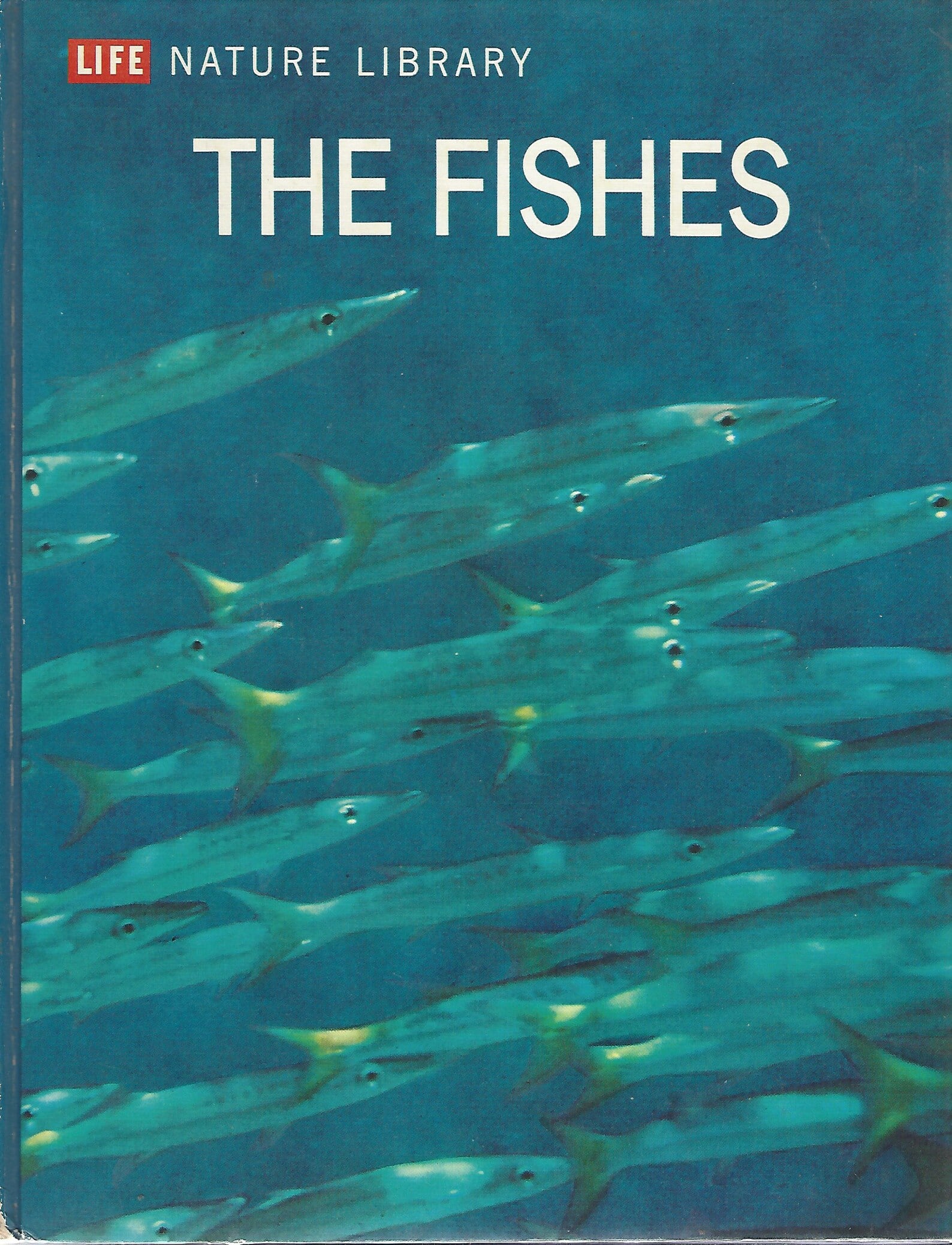
When I was very small, it was the TimeLife book of The Fishes, by F. D. Ommanney, which I remember endlessly poring over, my child’s mind gripped, in total fascination. The cover illustration showed a shoal of barracuda, mid-water and heading upwards, lit up as an iridescent blue by a column of sunlight. Oddly, it is only the cover and the illustrations of the deep sea creatures which I now remember—but I loved that book, as the weakened spine, blunted pages and dog-eared corners attested.
The Fishes has been on my mind recently, because I’ve been working with some dear friends on our own illustrated oceans book, to be published by Upswell Publishing. The book is called Scott Reef: Like Nowhere Else on Earth, and I want to share with you a bit of the story behind its creation.
Scott Reef is absolutely magnificent: Australia’s largest freestanding oceanic reef, brimming with life, including rare and threatened species such as a genetically distinct population of green sea turtles, pygmy blue whales and the wonderfully elegant dusky sea snake. But Scott Reef isn’t near our capital cities; it is way off the north-west coast of WA. And it is threatened with devastation by Woodside, which wants to drill up to 57 toxic wells at the Reef for its vast, dirty Browse gas project.
One of the main challenges in the fight to save Scott Reef from being turned into an industrialised gas zone by Woodside is bringing this incredible location to life for people who haven’t actually experienced it first hand. Because despite its ecological significance and dazzling beauty, ‘Scott Reef’ is also—at least not yet—exactly a household name.
To help get over this barrier, Greenpeace has enabled a number of photographers to travel to Scott Reef by boat (including the Rainbow Warrior) to document its astonishing diversity of colour and life. We then brought these images together in a remarkable photobook, produced by our talented in-house team, which we’ve been putting into the hands of as many leaders as possible—including the MPs whose decisions can determine the Reef’s future.
Back in June this year, I was sharing a copy of our in-house book at a business gathering in Perth when someone pulled me aside. Had we thought about publishing the book commercially? Apart from anything else, he wanted to buy a copy himself! He had a point. We were proud of what we’d created, but a commercially published version could reach a much wider audience and have even greater campaign impact. I immediately turned to my dear friend, Terri-ann White, who runs Upswell Publishing in WA, for advice.
Terri-ann has a huge heart and terrific vision. So many wonderful things in WA owe their existence to her doings, and, true to form, she was immediately encouraging and enthusiastic. “But,” she said, “it would add a whole new dimension if we had some words to accompany the incredible pictures.”
Fair enough, I thought. I could ask a few authors.
“And when would you like it published?” she asked.
“Ideally November,” I answered sheepishly.
Now, in publishing terms, nobody goes from idea to finished work, beautifully produced by a commercial publisher, in just four months. It. Just. Doesn’t. Happen. A book of this scale would ordinarily take nine months, I was told. But Terri-ann was undeterred. “If you can get a rapid turnaround on the writing, I will give it a shot.”
Over the following few days, I sent out 24 emails to prospective writers. To my joy and surprise 23 of them responded almost immediately with an enthusiastic yes!
Terri-ann was somewhat alarmed and perplexed when I told her the good news… we’d discussed a few authors, not more than twenty! “Impossible,” she texted. “Editing is important and you are talking about thousands of words!” But I also know Terri-ann. She does the impossible. And so, here we are… Terri-ann is going to hit that improbable deadline. Scott Reef: Like Nowhere Else on Earth will be on shelves in November.
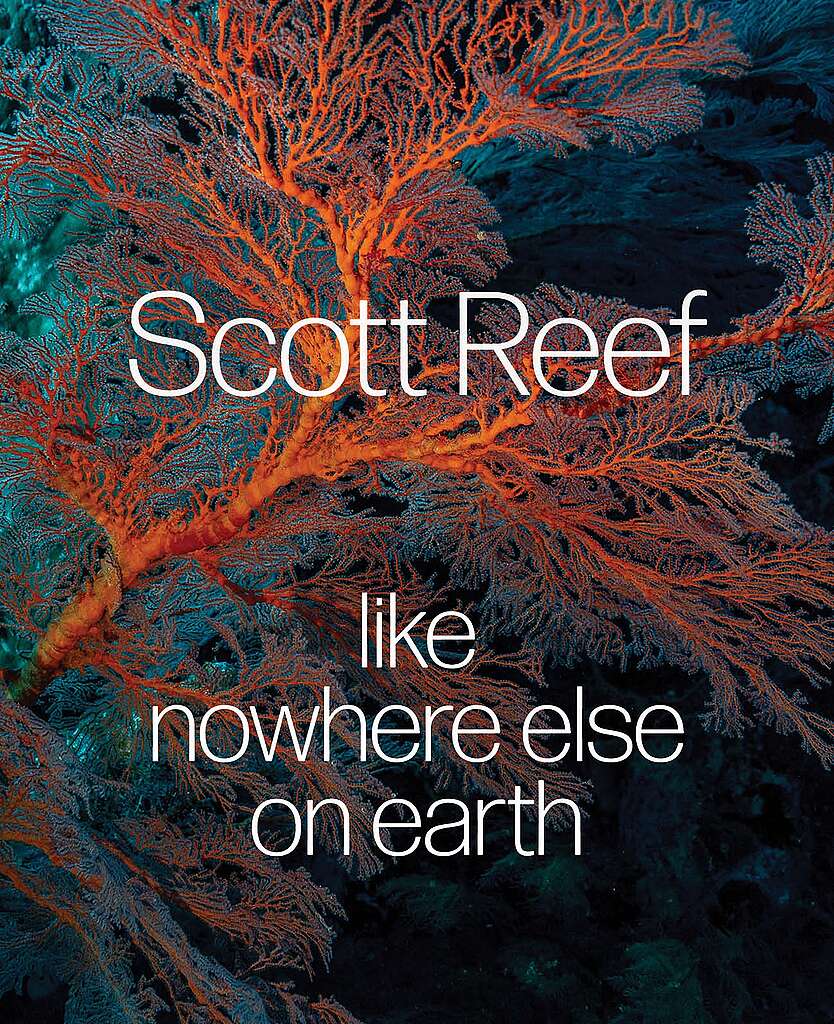
The contributors are a wonderfully diverse bunch, united by their enthusiasm for Scott Reef — and their extraordinary speed!
It’s a brilliant mix. The book brings together national icons like Peter Garrett, Tim Winton, Mick Dodson, Janet Holmes à Court and Fiona Stanley; the intellectual heft of professors Frank Bongiorno, Jessica Meeuwig, Rick Steiner and Samantha Hepburn; the poetic vision of Prema Arasu, Berndt Sellheim and Saadiah Freeman; the field expertise and passionate first hand witnessing of Imogen Zethoven, Tooni Mahto, Ben Fitzpatrick, Geoff Bice, Olaf Meynecke, Paul Gamblin, Sarah Gittoes and Hayley Baillie; and the determination of emerging activist voices Jackson Reid and Emma Sangalli.
Their elegant words wrap themselves around the sheer wonder of the underwater world, brought to life by the work of the photographers — of whom one, Wendy Mitchell, has also contributed a wonderful essay.
Terri-ann showed me the full physical proofs this week and they are breathtaking. This book contains some of my absolute favourite images of wildlife beneath the waves -– and believe me, after almost 20 years at Greenpeace, I’ve been privileged enough to see some remarkable shots! The essays bring a whole new depth and richness to the story of Scott Reef.
If I am being honest, and maybe a bit sentimental, I hope that a four or five-year-old child somewhere in Australia will spend part of their summer holidays turning the pages of this book, wide-eyed with curiosity and awe at the beauty and strangeness of the creatures that call our oceans home.
Our shared commitment is to make sure that, as those children grow up, the wonders of Scott Reef will exist not just in the pages of the book, but out there in the wild waters off north-western Australia—alive, thriving, and every bit as extraordinary as they are today; a living wonder beneath the waves.
Pre-orders of Scott Reef: Like Nowhere Else on Earth are available here.


Q & A
Sometimes you get asked a question so often that you decide to produce a report to answer it!
We know there is strong public opposition to voter opposition to gas drilling at Scott Reef and fracking in the Kimberley in Western Australia. But I am frequently asked whether, even if people don’t want it, more gas drilling is a necessary evil to sustain WA’s prosperity?
The short answer is an unequivocal ‘No’. The longer answer is our new report, From Gas to Green: Building Western Australia’s Future State, which makes the comprehensive case that Asia’s gas market is declining — while WA has an enormous untapped opportunity to become a global leader in green industries and exports, helping drive the region’s shift away from fossil fuels. The faster that WA embarks on a decisive shift away from gas—and that includes no fracking in the Kimberley, or drilling at Scott Reef — so much the better for the state’s people, ecology and economy.