

We handpick and explain the most important stories at the intersection of climate, land, food and nature over the past fortnight.
This is an online version of Carbon Brief’s fortnightly Cropped email newsletter.
Subscribe for free here.
Key developments
Ocean talks
MAKING WAVES: African and Commonwealth countries issued a “call to action” to implement the High Seas Treaty at the Our Ocean Conference in Kenya this week, reported the Associated Press. The summit, which ends on 18 June, is focused on ocean issues including “climate change, biodiversity and pollution”, said the newswire. The UK government announced £13.9m in marine-related funding at the summit.
OCEAN ‘STRAIN’: Climate change, pollution, overfishing and biodiversity loss are putting oceans under “severe strain”, according to a UN report. The third “world ocean assessment” noted that conservation efforts have also “grown”, including through “nature-based solutions, ecosystem restoration and sustainable management techniques”. Meanwhile, another UN report said that fisheries and aquaculture production reached an all-time high of 235m tonnes in 2024.
OBSERVATION ISSUES: Scientists told the Guardian that the Trump administration’s plan to dismantle a key ocean-observation system run by the US would “severely degrade” the accuracy of weather forecasts around the world. Several Democratic and one Republican lawmaker pushed back against the plan to get rid of the system, reported the Associated Press. [For more, see the first edition of Cited, Carbon Brief’s newsletter on climate science.]
Plant and fungi update
OFF-KILTER: Plant flowering times have “shifted significantly” over the last century, according to an AI-assisted analysis of 8m “digitised herbarium specimens” in the latest “state of the world plants and fungi” report from the Royal Botanic Gardens Kew. The report stated there have been “both advances and delays” in flowering date, with a median shift of 2.5 days per decade in either direction. The greatest variation was observed in the tropics, it added.
‘NEW ERA’: The report highlighted that Kew recently completed a digitisation of 7.4m herbarium and fungarium specimens in its collection. The ongoing digitisation of specimens around the world, alongside AI technology, could “transform understanding of biodiversity loss and climate change and pave the way to resolving these seemingly intractable crises”, it said.
EXTINCTION RISK: In its coverage of the report, the Guardian said that AI and digitalisation could help scientists document “vital” plant species “before they vanish”. About 40% of the world’s “assessed” 70,000 plant species are at risk of extinction, while a further 330,000 are yet to be analysed, according to the newspaper. The situation for fungi is “even more stark”, it reported, with 90% of an estimated 2m species still “unknown to science” and less than 1% of known species assessed for extinction risk.
News and views
- BEEF TRACKS: A “landmark” law in Colombia requiring the beef industry to prove supply chains are deforestation-free has taken effect, reported the Associated Press. The measure is part of efforts to “reverse decades of forest loss, much of it driven by the expansion of cattle ranching into previously forested areas”, noted the newswire.
- CONTINGENCY PLAN: With El Niño conditions officially confirmed as underway, the Indian government called for an “overhaul” of agricultural districts’ plans for managing the impact of below-normal rainfall on crops, reported Down to Earth. Around 150-200 districts have been identified as “most critical” based on projections, the outlet noted.
- MEATIER: Global meat supply has increased fourfold in the past six decades, according to a UN report covered by the Guardian. Agriculture’s “planet-heating emissions are forecast to rise by 7.6% over the next decade” as food production continues to grow, the newspaper said.
- TREES, NOT TARMAC: Kenya’s former chief justice, David Maraga, was among a number of protesters arrested in Nairobi for demonstrating against plans to turn 75 acres of Nairobi National Park into a car park, reported Kenya’s Daily Nation. Demonstrators were en route to deliver a petition to Kenya’s Wildlife Service when they were interrupted by anti-riot police officers, according to the newspaper.
- MANGROVES BACK, ALRIGHT: A new study covered by BBC News found that mangrove forests are “staging an unexpected comeback” globally. The broadcaster said mangroves had been “declining rapidly as they were cleared for fish farms and housing”, but the world is now “gaining more mangroves than it has been losing”.
- ‘LIMITED’ PROGRESS: Some 59% of the world’s largest financial institutions do not have a deforestation policy in place, according to the latest “forest 500” report from Global Canopy. The report – which assesses the 150 financial institutions that provide the most financing to the 500 companies with the “greatest influence” on deforestation – described finance sector progress on forest loss in 2025 as “limited”.
Spotlight
Coral reef ‘hope’
This week, Carbon Brief reports on research estimating coral reef resilience.
New research offers a sliver of “hope” that 30% of the world’s coral reefs could be “resilient” against the harmful effects of climate change.
The study, which is in the final stages of peer review and due to be published soon, identified swathes of reefs that have the best potential to withstand and recover from marine heatwaves and other stressors.
Climate change is a major threat to the survival of coral reefs. In a 2018 report, the UN’s science body warned that reefs could decline by an additional 70-90% at 1.5C of warming and as much as 99% under 2C.
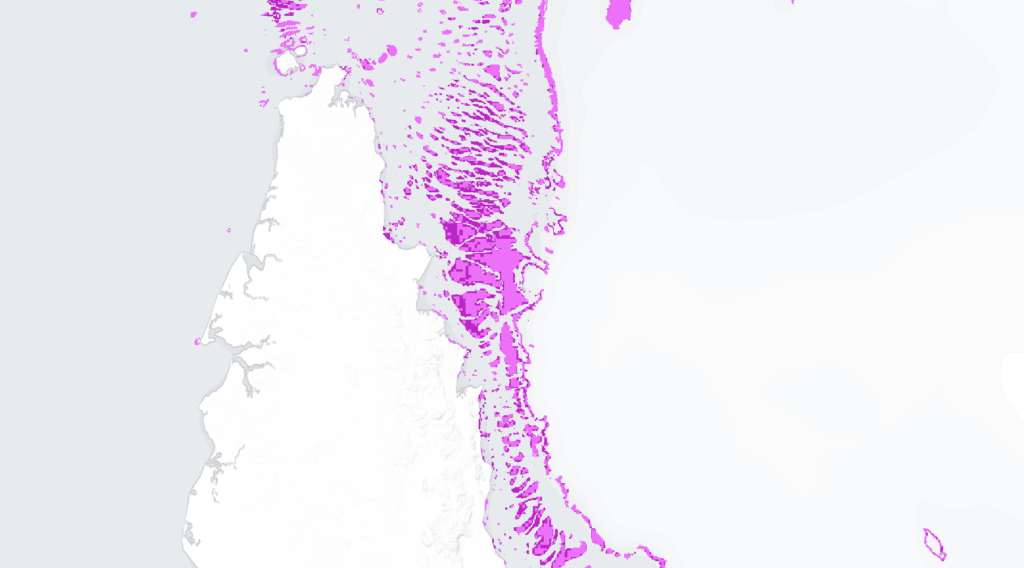
The areas of potentially resilient reefs identified in the new study span almost 166,000 square kilometres – an area twice the size of Scotland.
These reefs are spread across 71 countries and 100 territories, but 61% are found in the territorial waters of just five nations – Australia, the Bahamas, Cuba, Indonesia and the Philippines.
The lead study author, Dr Kyle Zawada from Macquarie University in Australia, told Carbon Brief that the research shows the areas that could most likely “persist through climate change”. He added:
“[Coal reefs] are obviously in dire straits – but that’s not to say there are not pockets of resistance and pockets of resilience.”
Fewer than 30% of the reefs deemed to be the most climate-resilient are contained in protected or conserved areas, the study noted.
The map below shows a snapshot of the findings, highlighting the Great Barrier Reef off the north-eastern coast of Australia. The light pink areas are regular reefs, while the slightly darker pink are “climate-resilient” reefs.
Reef maps
The team, led by researchers from Macquarie University and the Wildlife Conservation Society, used the findings from more than 45,000 research surveys on corals over 1960-2025 in modelling simulations to create a map of coral cover around the world in 2020 and projections for 2050.
The modelling looked at various scenarios of future emissions and the researchers developed criteria to determine which reefs could be best positioned to survive or recover from extreme events and higher temperatures.
This specified that, for example, larger-sized reefs and those with a wide diversity of coral species tend to be more resilient than smaller areas with a lower variety of coral.
Zawada told Carbon Brief that the study does not replace real-life observations of how reefs respond to extremes. But, he added, it offers a “good guess” of areas to protect:
“It would be nice to say that there are these little reefs of hope, obviously with the massive asterisks that this doesn’t mean that these ones are out of the woods…and to sort of use that as a rallying call for us to take that hope forward and have a look at these reefs.”
Watch, read, listen
WAY DOWN: An interactive article in the New York Times detailed the ongoing “quest” to mine the deep sea.
‘PING-PONG SPONGES’: The Guardian delved into the “secrets of the deep sea”.
DENTAL DAMAGE: A dentist wrote about how “extreme heat is turning Pakistani farmworkers’ mouths into hostile environments for their own teeth” in the Earth Island Journal.
‘PIG ELECTION’: DeSmog explored the impacts of Denmark’s plans to “radically overhaul its drinking water policy as part of a raft of sweeping reforms to the country’s livestock industry”.
New science
- Lower rainfall levels, driven by deforestation, led to a reduction in soya bean production in southern Brazil over 1982–2018 | Proceedings of the National Academy of Sciences
- A “partial ecosystem collapse scenario” that considers changes to tropical timber, wild pollination and marine fisheries services could increase the annual debt-servicing costs of 23 countries by $162bn | Nature Ecology & Evolution
- Around 7% of the global population of Tapanuli orangutans – the “world’s rarest ape” – was killed after extreme rainfall led to “widespread landslides” in Sumatra, Indonesia, in 2025 | Current Biology
In the diary
- 19 June-27 June: London climate action week
- 21 June: Colombian presidential elections (second round)
- 22-26 June: 26th meeting of the UN open-ended informal consultative process on oceans and the law of the sea | New York City
- 30 June-4 July: 4th meeting of partners of the Global Peatlands Initiative | Lima, Peru

The post Cropped 17 June 2026: Coral reef ‘hope’ | Ocean talks | Plant flowering times ‘shift’ appeared first on Carbon Brief.
Cropped 17 June 2026: Coral reef ‘hope’ | Ocean talks | Plant flowering times ‘shift’

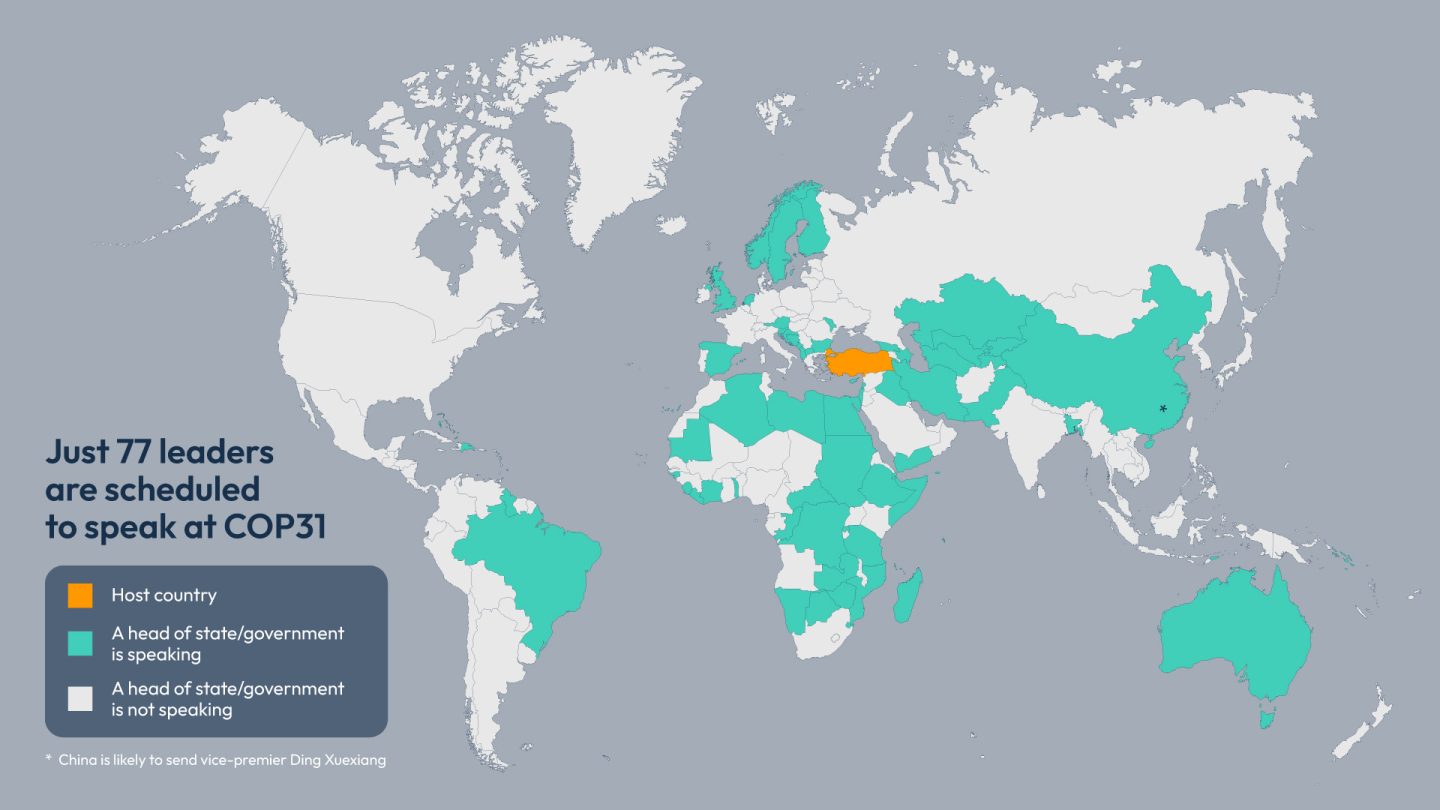
Other than the Australian and Turkish co-hosts, the only G20 nations to address the COP31 leaders’ summit with speakers at the “head of state or government” level will be the UK, Brazil and China, according to a provisional list released on Wednesday.
The list, which is published by the United Nations and subject to change, includes only 77 countries whose leaders are listed to speak at the summit in Antalya on November 11-12. That would be nearly a third fewer than the 116 who spoke at COP28 in Dubai three years ago.
Yvo de Boer, a former head of the UN’s climate secretariat, told Climate Home News that the low turnout and “the absence of many nations that should be showing leadership on climate action and support for developing nations” sends “the wrong signal at a difficult time”.
Amid geopolitical conflicts, a struggling global economy and an inevitable overshoot of the 1.5C global warming limit, de Boer said that “climate action needs a strong show of support, not empty seats at a leaders’ summit”.
-
UN sets steep emission cuts to reverse 1.5C overshoot by end of century
Emissions must by reduced by nearly 6% a year for the world to have a good chance of bringing global warming back down to the Paris Agreement limit, the Emissions Gap Report says -
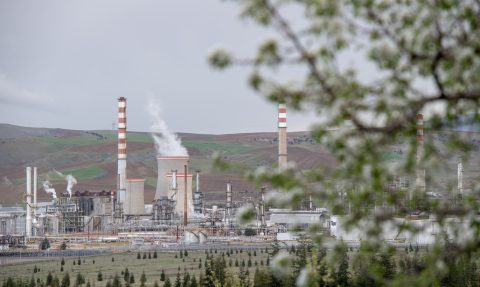
Turkish giant sponsoring COP31 cut climate goals then cashed in on oil boom
COP31 sponsors should be screened for “climate integrity”. Yet Koç Holding has become a top partner while its oil refiner runs flat out and its climate targets slip

Earlier this week, UN Secretary-General Antonio Guterres said G20 countries should lead on climate action, adding that while they have varying responsibilities in tackling global warming, “all countries, especially the big emitters, must do more”. As major economies spanning developed and developing nations, G20 countries account for more than three-quarters of annual global emissions.
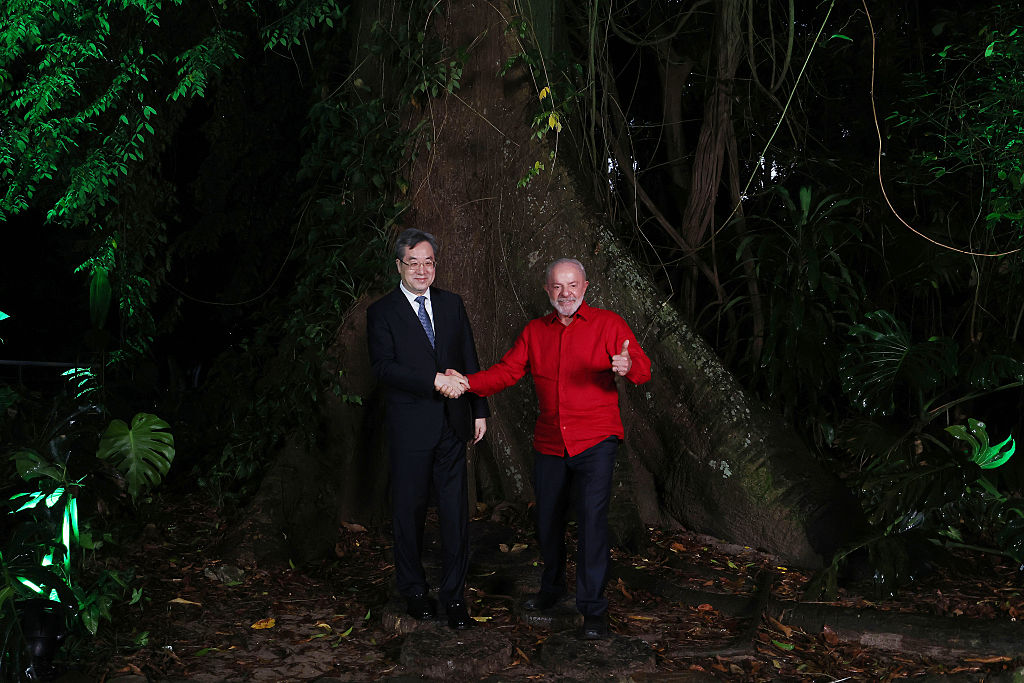
China is likely to be represented at COP31 by Vice-Premier Ding Xuexiang, as in the past three years, rather than President Xi Jinping, who has rarely left China since the COVID-19 pandemic and has not attended a climate COP since Paris in 2015.
British Prime Minister Andy Burnham is scheduled to speak, after telling parliament in September he would do so as part of his efforts to “meet the climate challenge” following a series of deadly heatwaves.
UK approves gas drilling despite admitting blow to “climate leadership” status
Brazil’s President Lula has also said he will attend. Depending on the result of Sunday’s election against his far-right rival Flávio Bolsonaro, he will speak at COP31 as either a recently re-elected or outgoing president.
While the COP31 summit is being hosted by Türkiye in Antalya, Australia has the formal role of President of Negotiations and its prime minister, Anthony Albanese, will speak at the summit. Türkiye’s President Recep Tayyip Erdogan is not on the UN’s speaker list but is likely to give an opening speech.
Many of the countries whose leaders are due to attend COP31 are those suffering the worst effects of climate change. About a third are African countries and a quarter are small island developing nations. Türkiye’s Central Asian and Balkan neighbours are also well-represented.
COP31 no-shows
Among the major emitters not on the list are French President Emmanuel Macron, German leader Friedrich Merz, Italy’s Giorgia Meloni, India’s Narendra Modi, Russia’s Vladimir Putin, Canada’s Mark Carney and Japan’s Sanae Takaichi.
Macron, who is struggling to deal with rising social unrest across France, will reportedly attend commemorations marking the end of the First World War and a European Political Community summit instead. It is not known whether the others will eventually decide to attend COP31, or what they will do instead.
Climate change-sceptic US President Donald Trump has never attended a COP and is withdrawing the US from the UN climate convention (UNFCCC), under which COP meetings are held, after quitting the Paris Agreement for a second time.
Argentina’s Javier Milei has considered exiting the Paris Agreement but has so far not done so, although his government is one of around 30 countries yet to submit an updated national climate plan to the UN.
The post Early speakers’ list suggests few powerful leaders will attend COP31 appeared first on Climate Home News.
Early speakers’ list suggests few powerful leaders will attend COP31
Muhammad Zulfikar Rakhmat is director of the China-Indonesia Desk at the Center of Economic and Law Studies (CELIOS). Bhima Yudhistira Adhinegara is executive director of CELIOS.
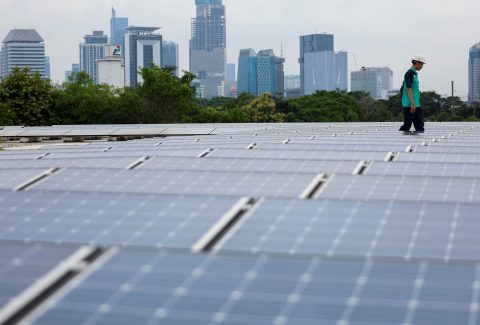
Indonesia bills its plans to mix wood with coal at dozens of power plants as a way to cut electricity generation emissions as the country transitions towards clean energy. But look closer, and the biomass co-firing plan could do far more harm than good.
Biomass co-firing involves mixing a small amount of wood or other plant matter, usually wood chips or wood pellets, into the coal that a power plant burns.
State electricity company PLN wants to use it at 52 coal-fired plants across the Southeast Asian nation – a target set out in its national electricity supply business plan and tied to Indonesia’s pledge, under its Nationally Determined Contribution to the Paris Agreement, to raise renewables to 23% of the energy mix. PLN originally aimed to secure 10.2 million tonnes of biomass a year by 2025; that target has already slipped to 2031, as the country struggles to line up enough supply.
Most plants only mix in a small amount of wood, often between 1% and 5% of the fuel load, meaning they do not even have to change machinery. In truth, it lets coal plants keep doing what they have always done, just with a little wood added to the mix.
That presents two big problems.
-
SE Asia speeds up plan for connected clean power grid after oil shock
Countries are redoubling efforts to link their grids to bolster energy security and reduce their dependence on fossil fuels – but many challenges remain -
China keeps Indonesia’s battery dream afloat but future less certain
Chinese capital and technology turned Indonesia into the world’s top nickel supplier, but its dependence on China and the rise of nickel-free batteries could upset its battery ecosystem plans -
Southeast Asia’s fragile grids threaten billions in clean energy investment
Renewables developers need reliable electricity infrastructure and stable policies to help the region meet climate goals and surging demand for power


Firstly, creating additional demand for wood would put further deforestation pressure on the country’s thick and biodiverse tropical forests, already at risk from mining and palm oil plantations.
Secondly, by making old coal plants look a little greener on paper, the plan could hand them a reason to keep operating well beyond when they would otherwise be retired, meaning the fleet keeps emitting for longer than a genuine phase-out would allow.
This is not a real climate solution. It is coal wearing a green mask.
A threat to forests
To meet its co-firing mandate, Indonesia would need more than 10 million tonnes of wood pellets every year, an area of forest equivalent to 3.27 million football fields, according to a 2024 assessment by a group of NGOs.
The same report warned this could push deforestation as high as 2.1 million hectares a year, and found that a 10% cut in coal use through co-firing could threaten 10 million hectares of untouched forest in the areas where wood is collected. At Indonesia’s biggest power plants alone, switching just 10% of coal to wood could clear an area of forest roughly 35 times the size of Jakarta.
PLN and the forestry companies that supply it insist the wood comes from dedicated “energy plantation forests” – land set aside to grow fast-growing trees for fuel, not from clearing natural forest. But the same assessment found that of the 1.2 million hectares already designated for these plantations, more than 400,000 hectares still contain undisturbed tropical forest, which will come under growing pressure as demand rises. The claim that this wood comes from already-degraded land does not hold up to scrutiny.
Advocates of co-firing say wood is a clean fuel because trees can grow back. But when old natural forests are cleared to make way for fast-growing forestry plantations to grow trees for fuel, they release carbon that took decades or centuries to build up.
One study, by the Centre for Research on Energy and Clean Air (CREA),